Knowledge Base
Property advice that actually helps
Researched, UK-specific guides for every stage of homeownership — from buying and surveys to retrofit, planning and major works.
 Buying & Moving
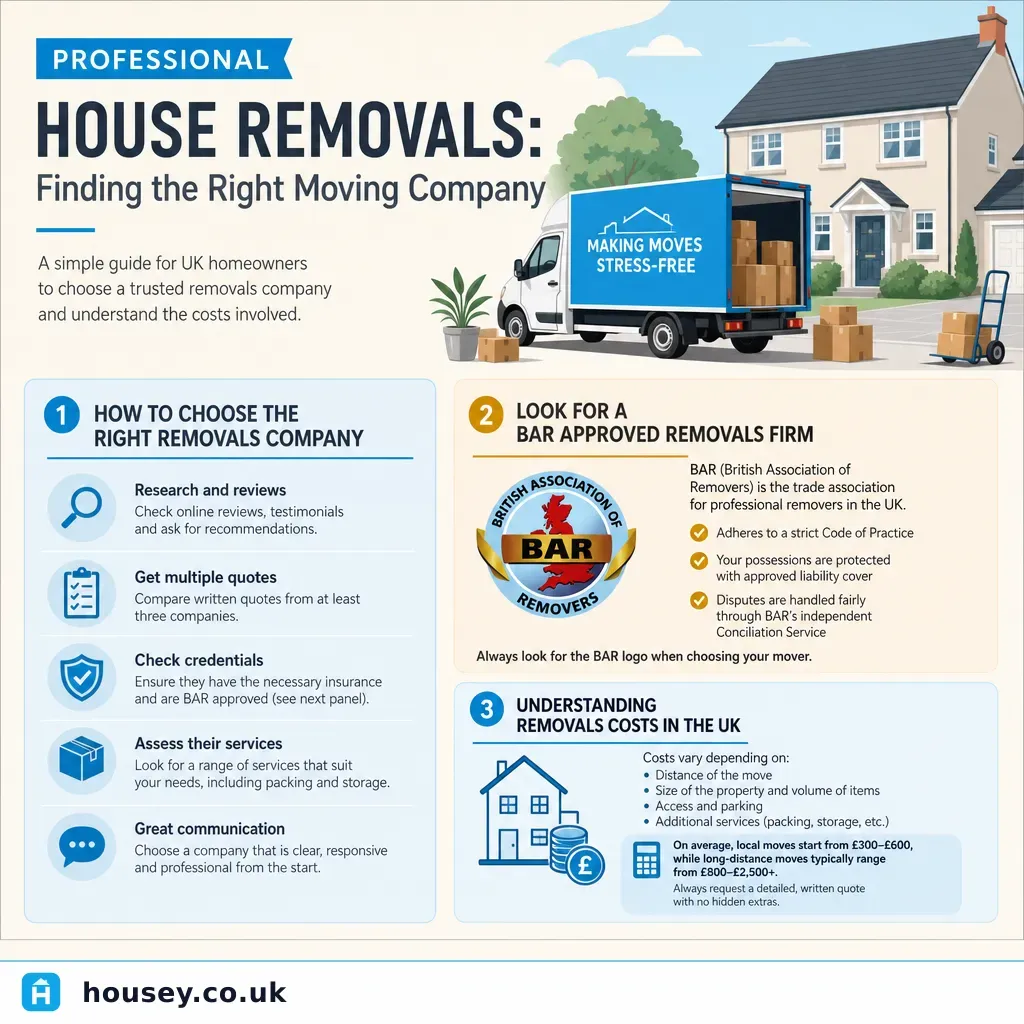
Professional House Removals: Finding the Right Moving Company
Finding the right house removals company involves checking membership of a recognised trade body such as the British Association of Removers (BAR), confirming goods-in-transit insurance cover, and comparing itemised written quotes. Most reputable firms survey your home before quoting. Booking early — particularly for end-of-month moves — and confirming exactly what is included in the price helps avoid costly surprises on moving day.
 Buying & Moving
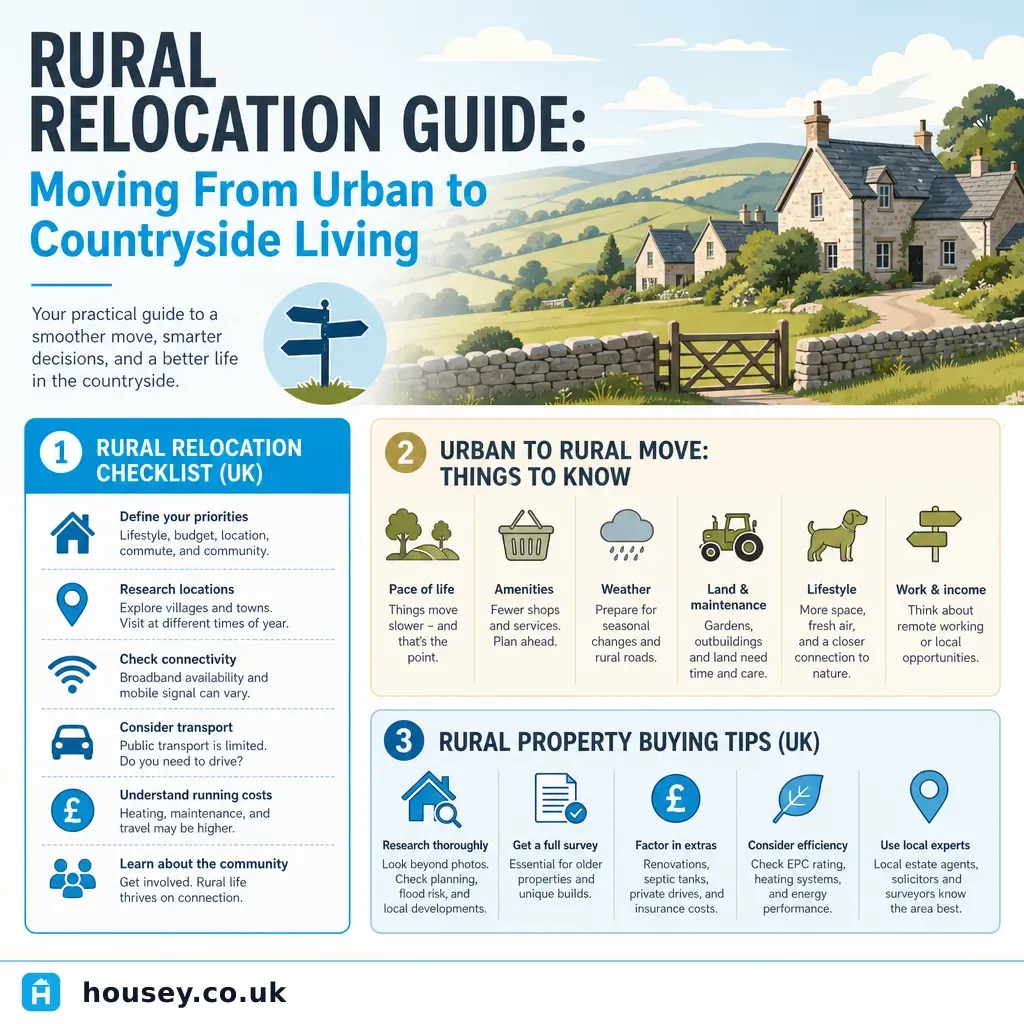
Rural Relocation Guide: Moving From Urban to Countryside Living
Moving from an urban to a rural UK property means adapting to different infrastructure, heating systems, planning rules, and travel distances. Key checks include broadband speed at the property address, drainage compliance for septic tanks, flood risk, and any planning designations that restrict future works. Rural moves reward thorough preparation more than most property purchases.
 Buying & Moving
Scottish Property Transaction Terminology: A Reference Guide
Scottish property law uses distinct terminology with no direct English equivalent. Key terms include missives (binding contractual letters forming the purchase agreement), disposition (the transfer deed), date of entry (the completion date), LBTT (the Scottish equivalent of Stamp Duty Land Tax), real burdens (title conditions binding the property), and servitudes (rights over neighbouring land that pass with ownership).
 Buying & Moving
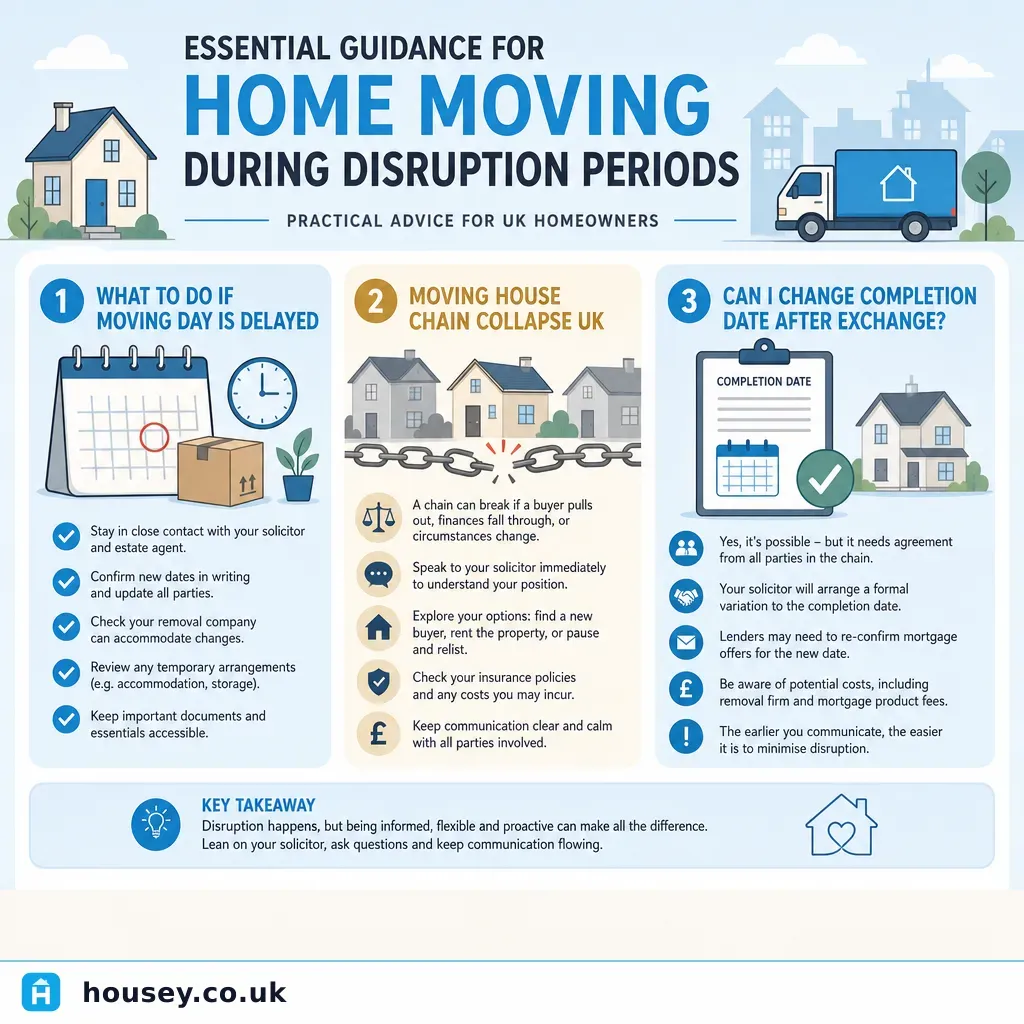
Essential Guidance for Home Moving During Disruption Periods
If disruption affects your move, your options depend on whether you have exchanged contracts. Before exchange, either party can withdraw without financial penalty. After exchange, changing the completion date requires all parties' written agreement and may incur penalties. Contact your solicitor immediately if completion looks impossible — delays can quickly become breaches of contract.
 Buying & Moving
Two Solicitors or One? Managing Conveyancing Representation in Joint Purchases
In England and Wales, both buyers in a joint purchase can usually use the same conveyancing solicitor, provided there is no conflict of interest between them. Separate solicitors are typically needed when interests diverge — for example, due to significantly unequal contributions, separate mortgages, or disagreement over the terms of ownership.
 Buying & Moving
Types of Removal Companies: Choosing the Right Mover for Your Relocation
UK removal companies range from man-and-van operators for small moves to full-service firms that pack, transport, store, and unpack. International moves need specialist freight or overseas relocation companies. The right choice depends on your volume of belongings, distance, timeline, and budget — matching the service level to your situation avoids costly mismatches on moving day.
 Buying & Moving
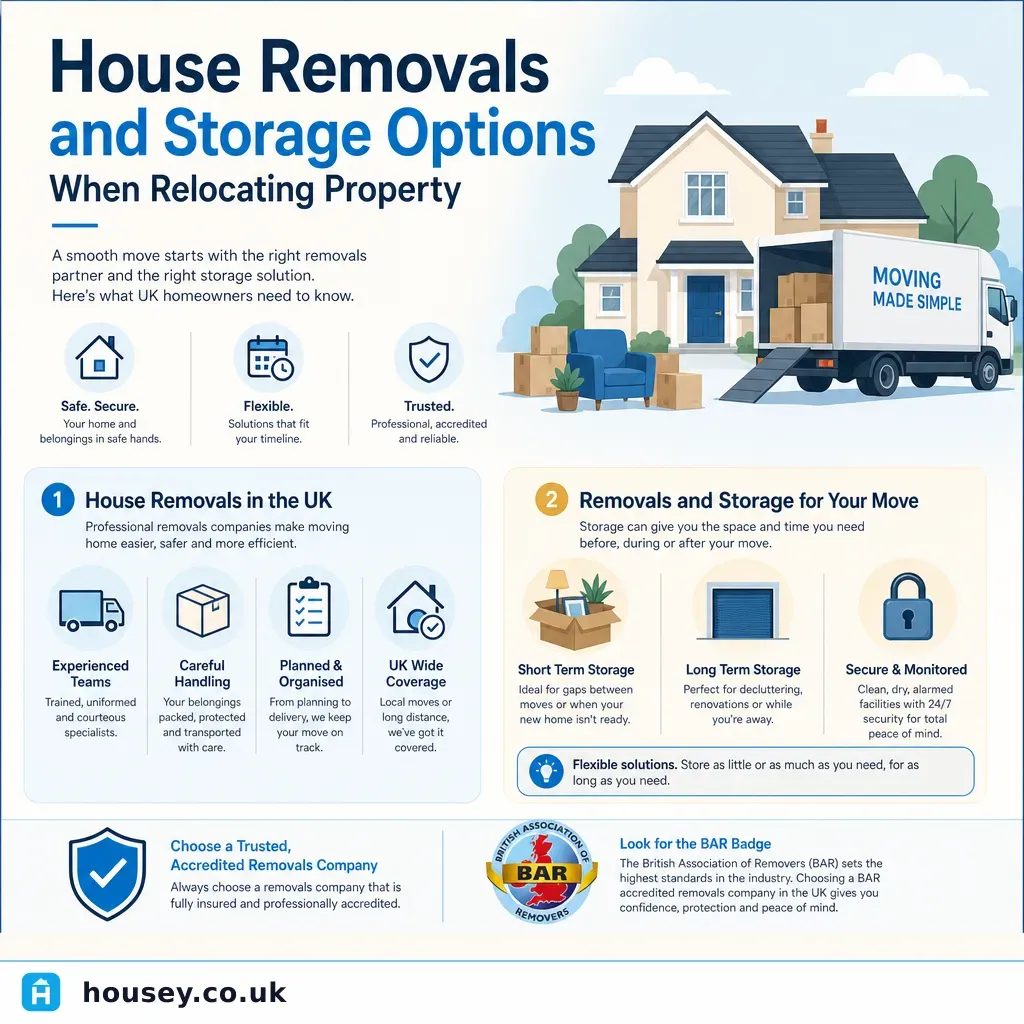
House Removals and Storage Options When Relocating Property
Choosing the right combination of removals service and storage depends on move size, timeline, and budget. Full-service removals firms handle packing, loading, and transport, while self-storage or containerised storage bridges gaps between completion dates. Book BAR or NGRS-accredited firms, confirm Goods in Transit insurance cover, and get at least three written quotes before committing to any provider.
 Buying & Moving
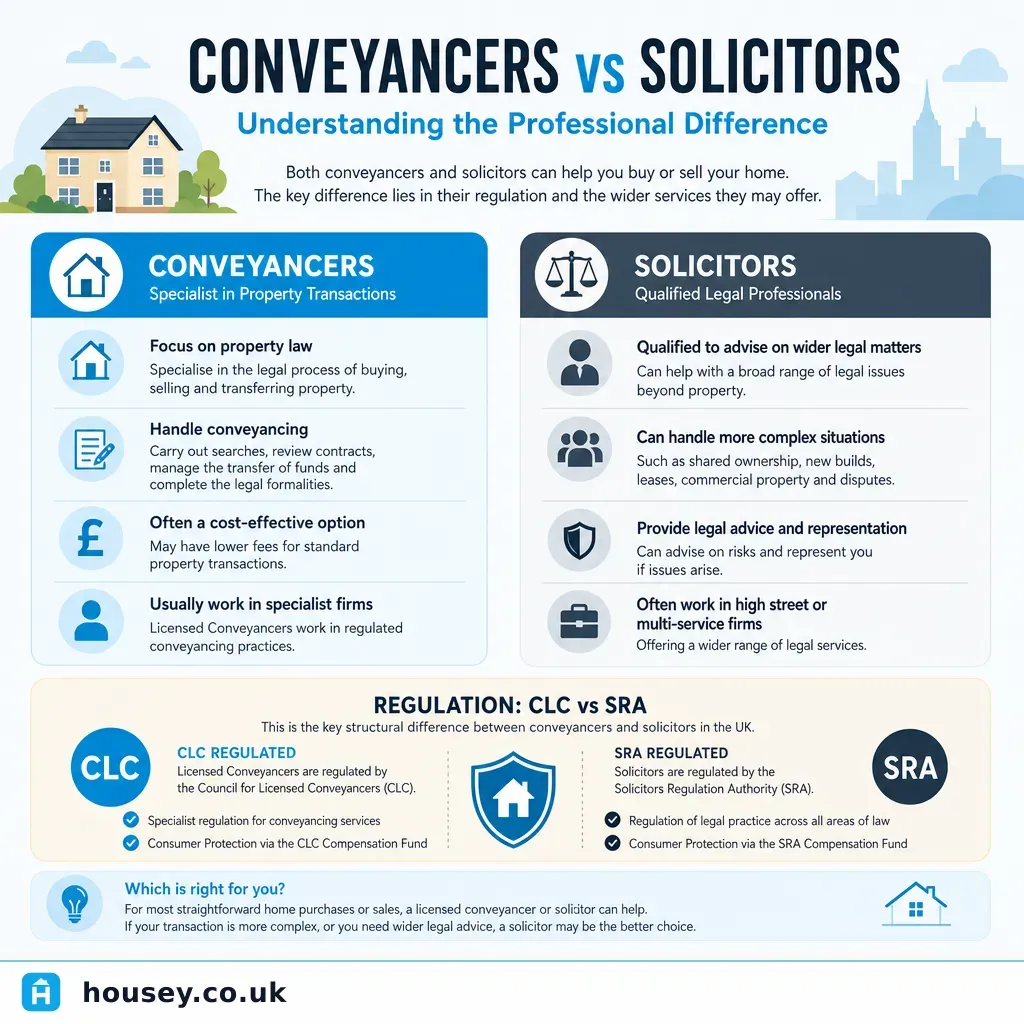
Conveyancers vs Solicitors: Understanding the Professional Difference
Licensed conveyancers and solicitors are both regulated to handle residential conveyancing in England and Wales. Licensed conveyancers, regulated by the Council for Licensed Conveyancers (CLC), specialise exclusively in property law. Solicitors, regulated by the SRA, have broader legal training and can advise on connected matters such as family law or probate. For a standard purchase or sale, either is generally suitable.
 Buying & Moving
Booking a House Removal Company: Advance Notice and Scheduling Guidance
Most UK removal companies recommend booking 4–8 weeks in advance for a standard house move. If your completion falls in the summer peak (June–August), on a Friday, or at month end, aim for 10–12 weeks. Last-minute bookings are sometimes available but offer less choice and may cost more. Starting your search before exchange is always advisable.
 Buying & Moving
Factors That Influence Property Valuation and Market Value
Property market value in the UK is shaped by location, floor area, structural condition, EPC rating, tenure, and recent comparable sold prices in the local area. RICS-registered valuers weigh these against current market evidence. A mortgage lender's valuation may differ from an estate agent's guide price or the buyer's agreed purchase price.
 Buying & Moving
Guide to Upsizing Your Home: Moving to a Larger Property
Upsizing involves selling your current home and buying a larger one, often within a property chain. Key steps include securing a mortgage in principle, budgeting for stamp duty and agent fees, commissioning a RICS survey on the new property, and instructing a conveyancer. Most upsizing moves in England take four to nine months from listing to completion.
 Buying & Moving
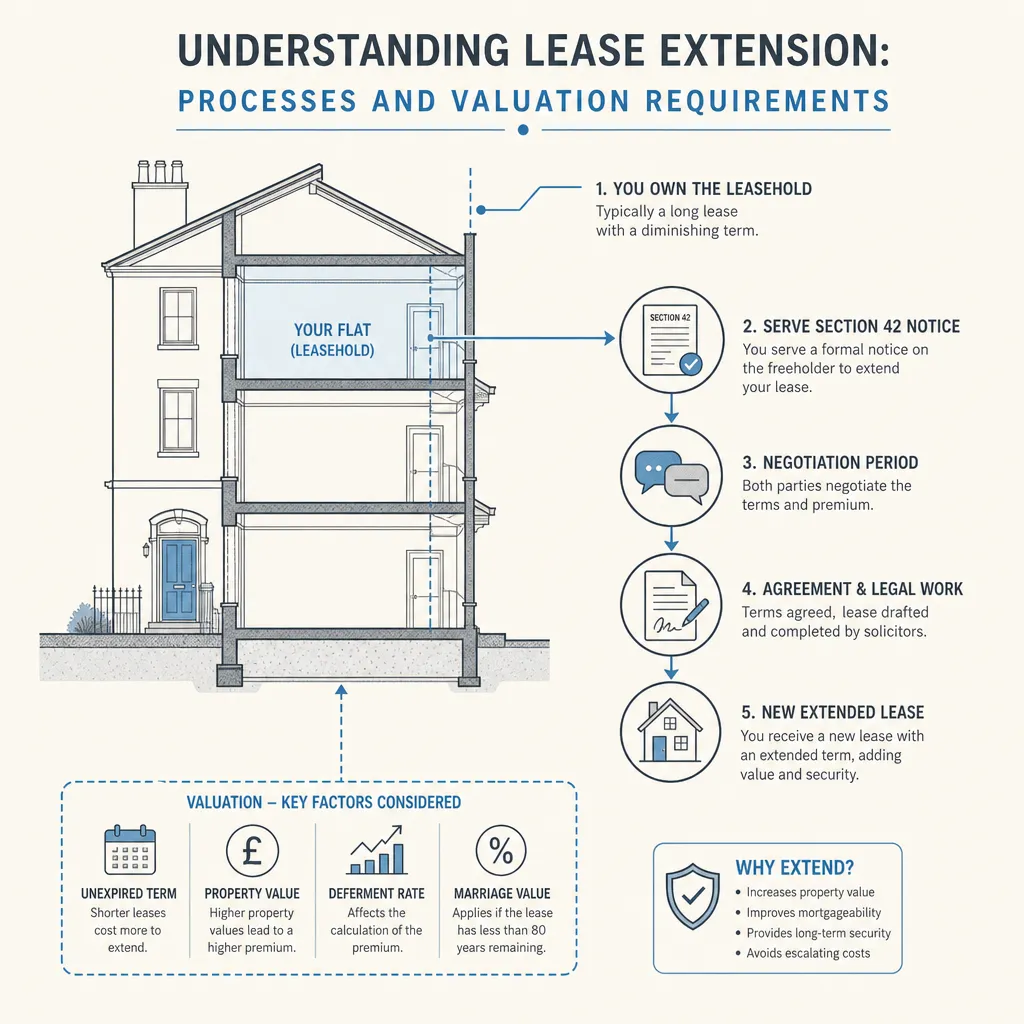
Understanding Lease Extension: Processes and Valuation Requirements
Qualifying flat owners in England and Wales can extend their lease by 90 years under the Leasehold Reform, Housing and Urban Development Act 1993, provided they have owned the property for at least two years. The cost — the premium — is calculated by a RICS-accredited surveyor using a statutory formula. Leases below 80 years attract marriage value, which increases the premium significantly. Both statutory and informal routes exist.