Knowledge Base
Property advice that actually helps
Researched, UK-specific guides for every stage of homeownership — from buying and surveys to retrofit, planning and major works.
 Buying & Moving
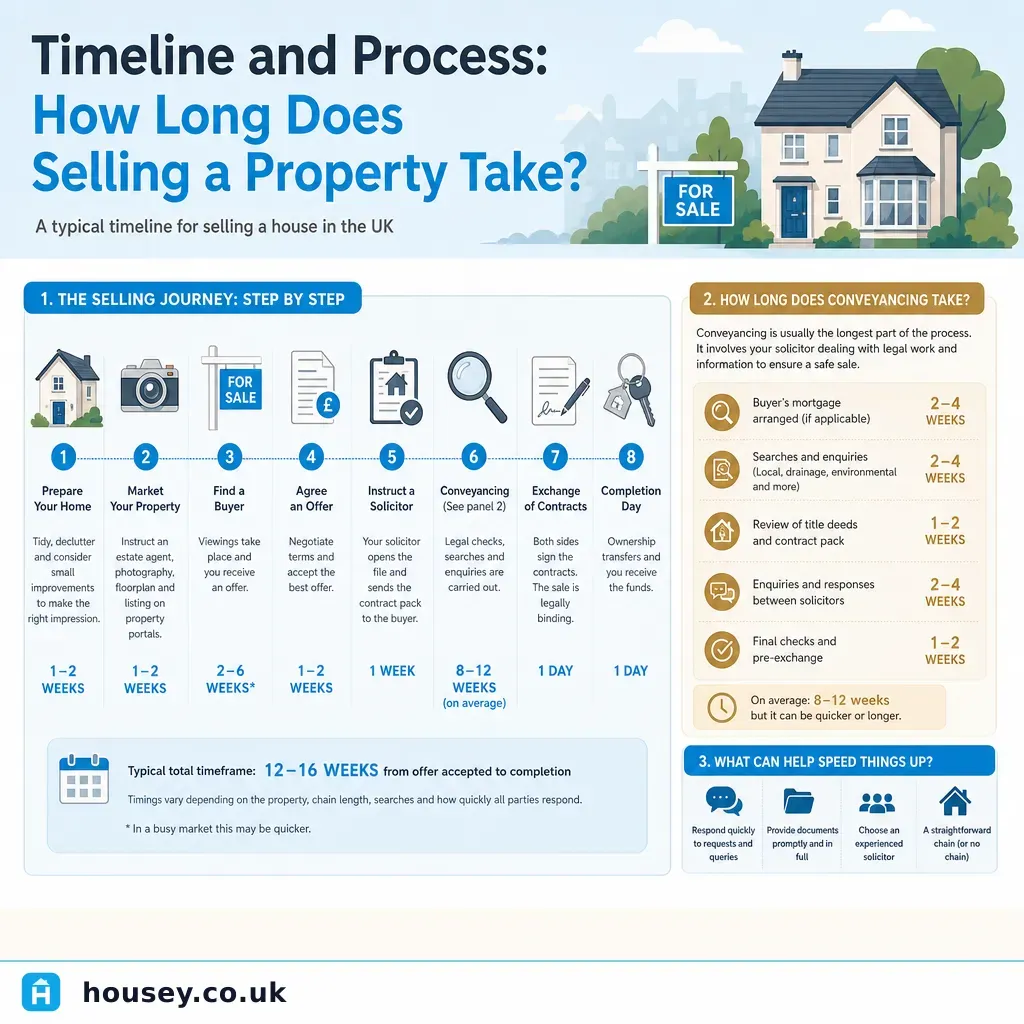
Timeline and Process: How Long Does Selling a Property Take?
Selling a property in England and Wales typically takes 4 to 6 months from listing to completion. The period between accepted offer and exchange of contracts is usually the most unpredictable stage, commonly taking 8 to 12 weeks. Chain length, missing documents, and slow mortgage offers are the main causes of delay. Chain-free sales can complete in as little as 10 to 14 weeks from offer accepted.
 Buying & Moving
Moving Home During the Festive Season: Planning and Logistics Guide
Moving home during the festive season is achievable but requires extra planning. Removal company availability drops sharply in late December, solicitors typically close for several days, and mortgage lenders may reduce staffing. Book your removals firm at least four to six weeks before your completion date and confirm with your conveyancer that a festive completion slot is realistic before committing.
 Buying & Moving
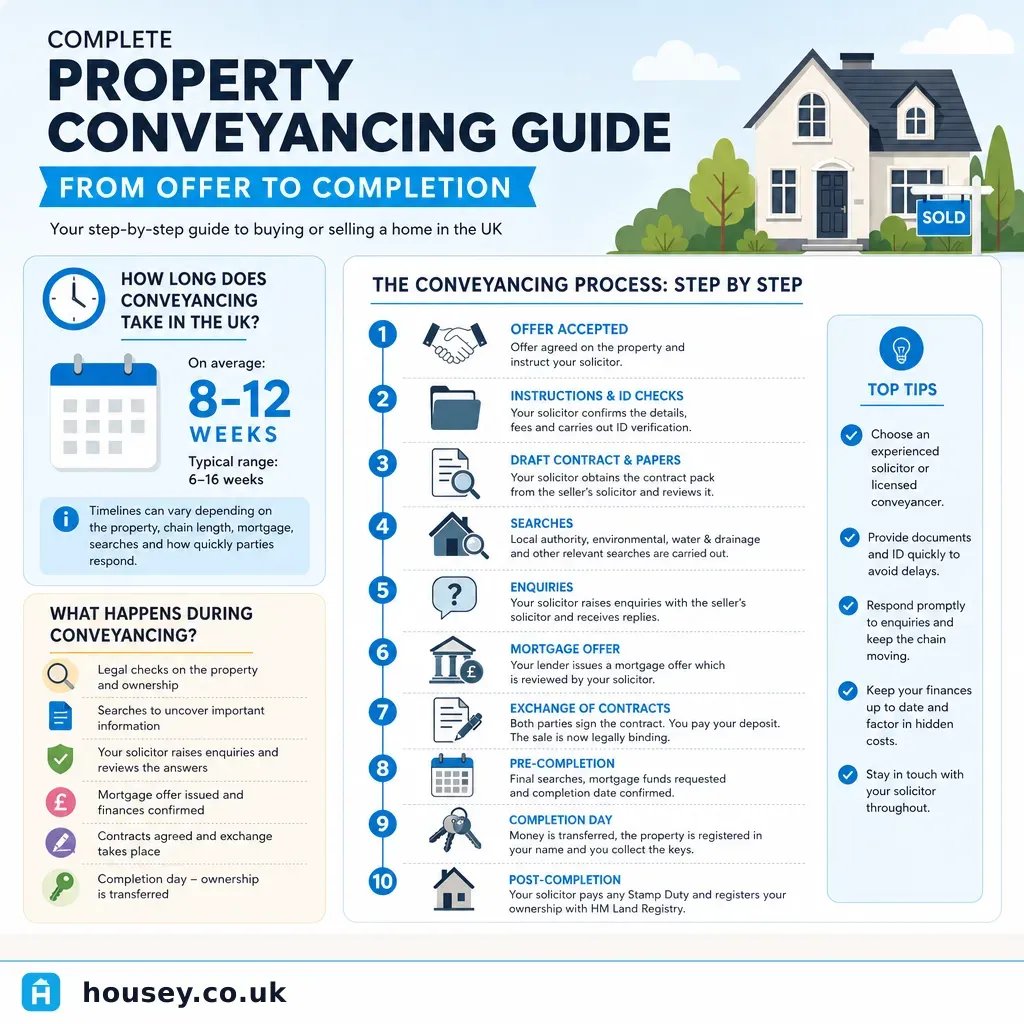
Complete Property Conveyancing Guide: From Offer to Completion
UK property conveyancing typically takes 8 to 16 weeks from offer to completion. It involves instructing a solicitor or licensed conveyancer, carrying out local authority and environmental searches, reviewing the contract, exchanging, and completing. Costs include legal fees, disbursements, and Stamp Duty Land Tax. Leasehold properties require additional checks and often take longer.
 Buying & Moving
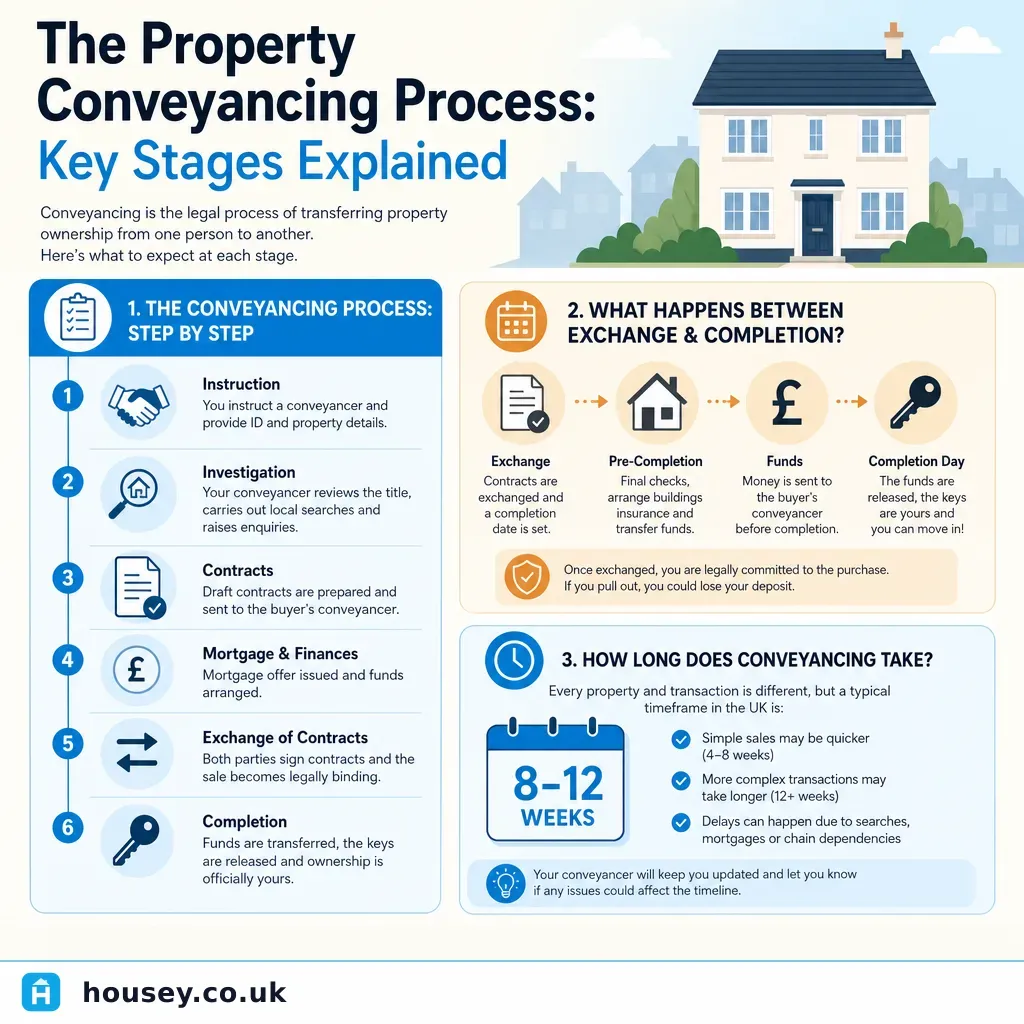
The Property Conveyancing Process: Key Stages Explained
The conveyancing process in England and Wales runs from instruction through to registration at HM Land Registry, typically in five stages: instruction, pre-contract searches and enquiries, exchange of contracts, completion, and post-completion. Exchange legally commits both parties; completion transfers ownership. The full process usually takes 8–16 weeks for a straightforward transaction, though chains and leasehold titles can extend this.
 Buying & Moving
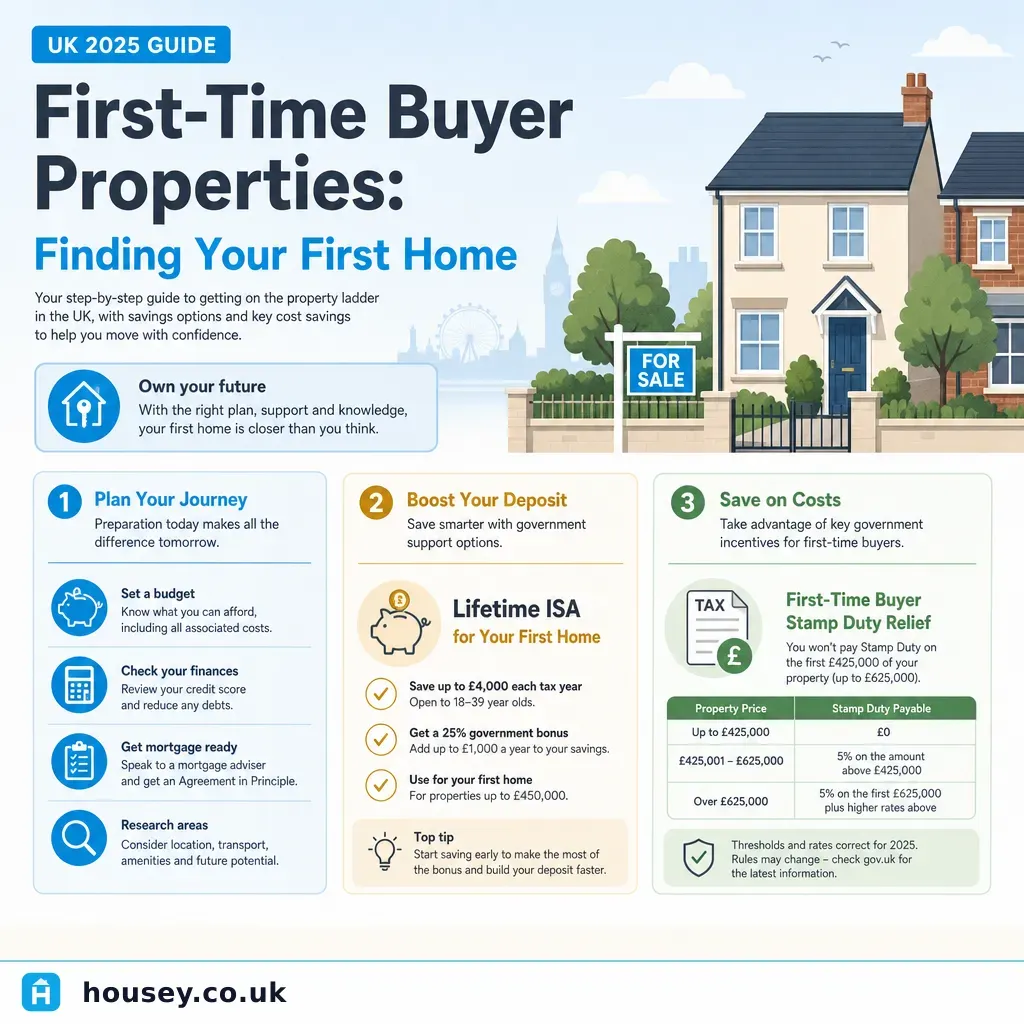
First-Time Buyer Properties: Finding Your First Home
First-time buyers in the UK can access support including the Lifetime ISA, which adds a 25% government bonus on savings of up to £4,000 per year. From April 2025, Stamp Duty Land Tax relief applies on properties up to £300,000. The buying process typically takes 3–6 months from offer to completion, and instructing a conveyancer and booking a RICS survey before exchange are essential steps that protect your legal and financial position.
 Buying & Moving
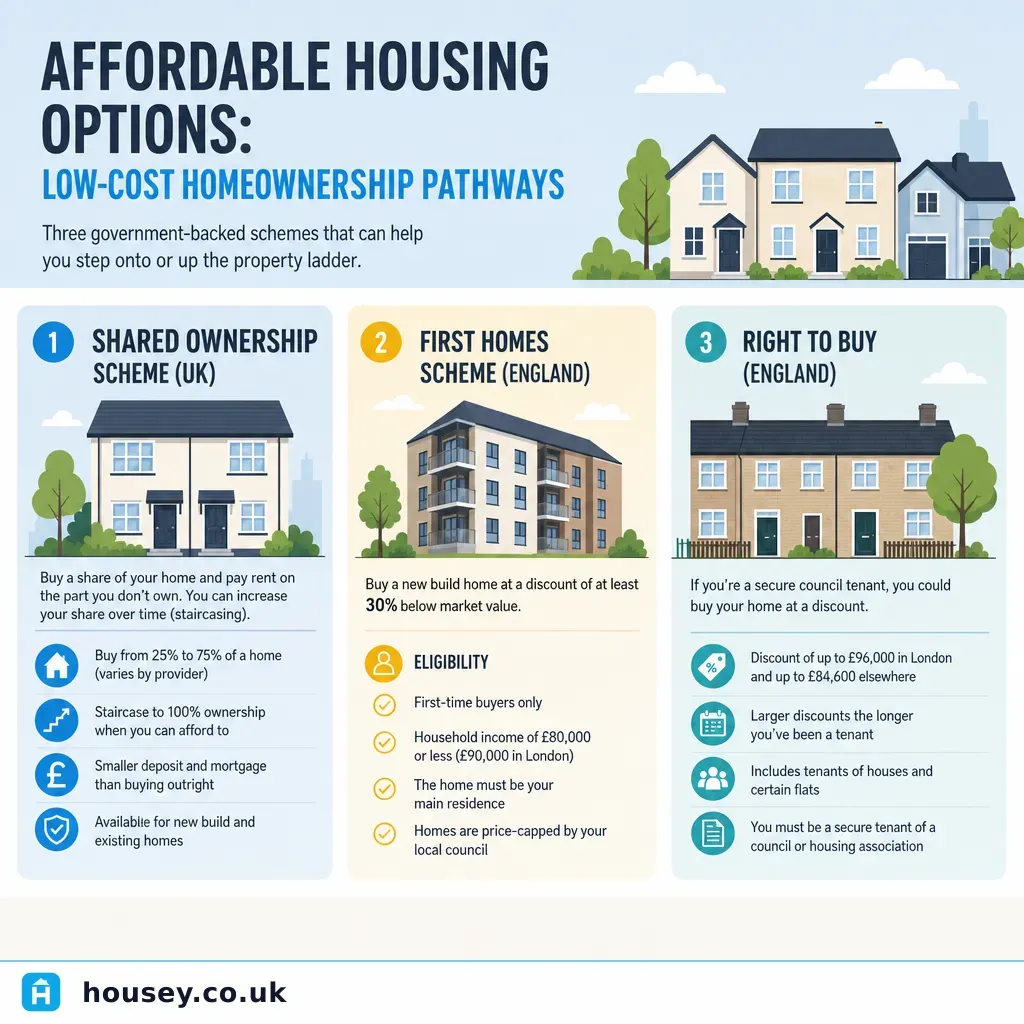
Affordable Housing Options: Low-Cost Homeownership Pathways
Affordable homeownership schemes in England include Shared Ownership (buying a 10–75% share of a home), the First Homes scheme (minimum 30% discount on new-builds for first-time buyers), Right to Buy for council tenants, and Rent to Buy for those saving a deposit. Eligibility depends on income, ownership history, and the type of property.
 Buying & Moving
Valuing Your Property for Rapid Sale: Strategic Pricing Guidance
Pricing a UK home for a quick sale means setting an asking price supported by recent comparable sales evidence — not significantly above it. Properties priced at or slightly below well-evidenced market value attract more viewings in the first two weeks and are less likely to need a price reduction. A formal RICS valuation provides the only lender-accepted, regulated benchmark of market value.
 Buying & Moving
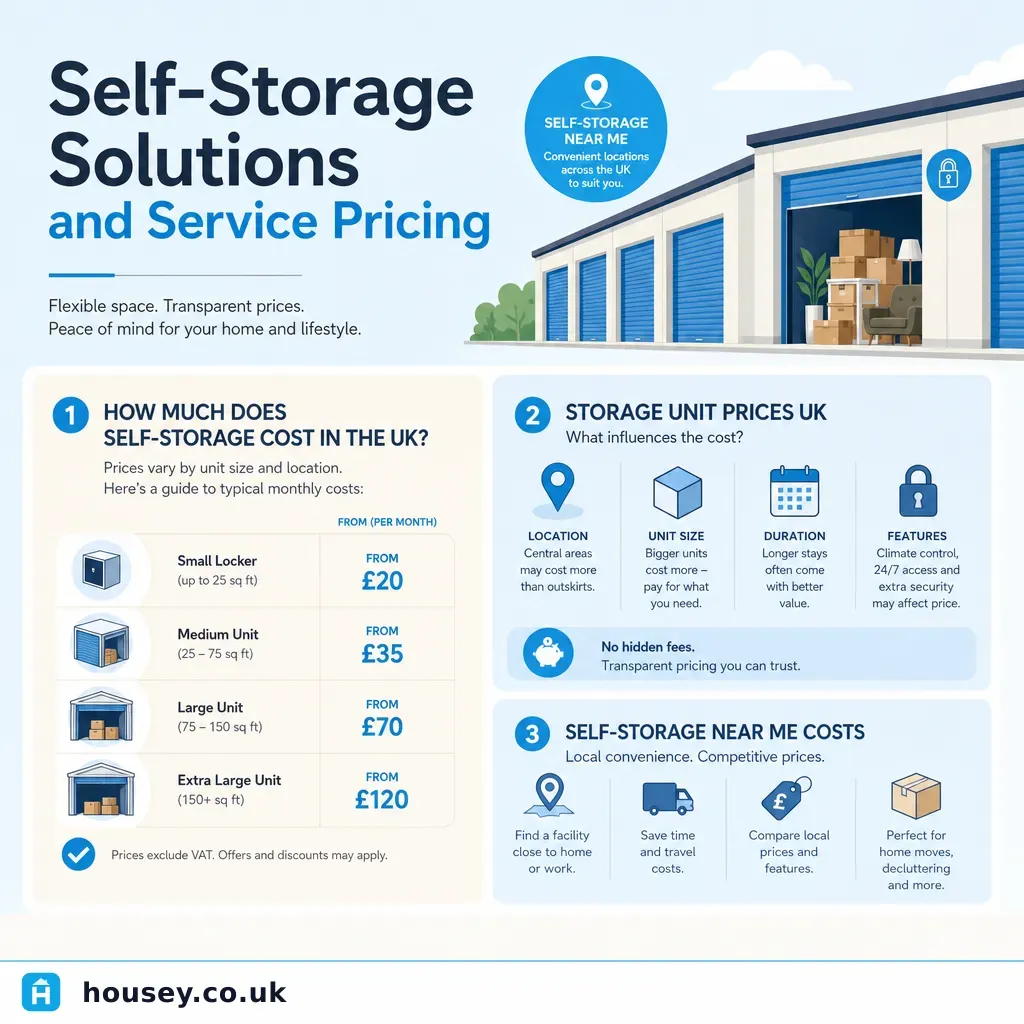
Self-Storage Solutions and Service Pricing
UK self-storage prices typically range from £8–£35 per week for small lockers to £80–£200 or more per week for large rooms in major cities. Costs depend on unit size, location, facility type, and rental duration. Always compare ongoing weekly rates rather than introductory offers, and check whether contents insurance is included before signing a rental agreement.
 Buying & Moving
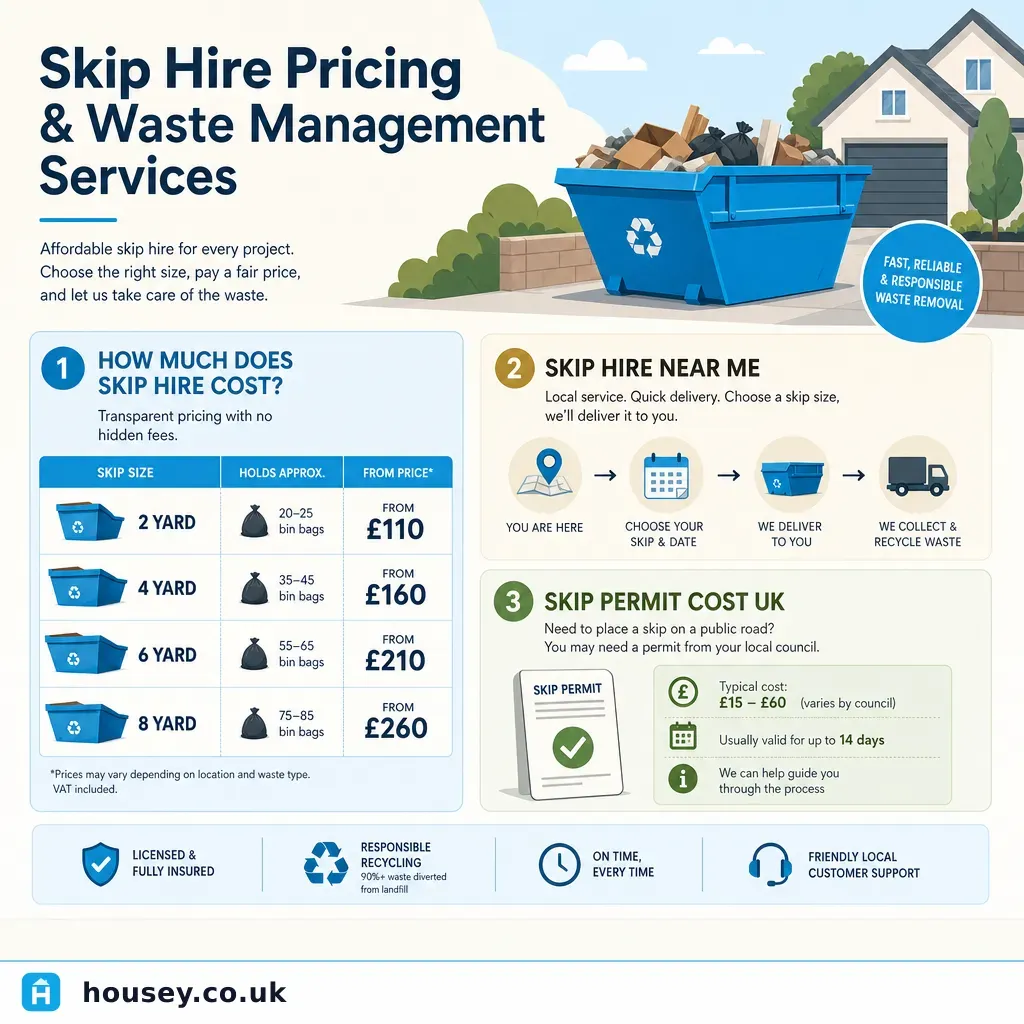
Skip Hire Pricing and Waste Management Services
Skip hire typically costs £100–£200 for a mini skip and £200–£400 for a standard builders skip, varying by region and material type. A council permit costing £30–£80 is needed if the skip goes on a public road. Hazardous materials including asbestos, tyres, and electrical appliances cannot go in a standard hired skip.
 Buying & Moving
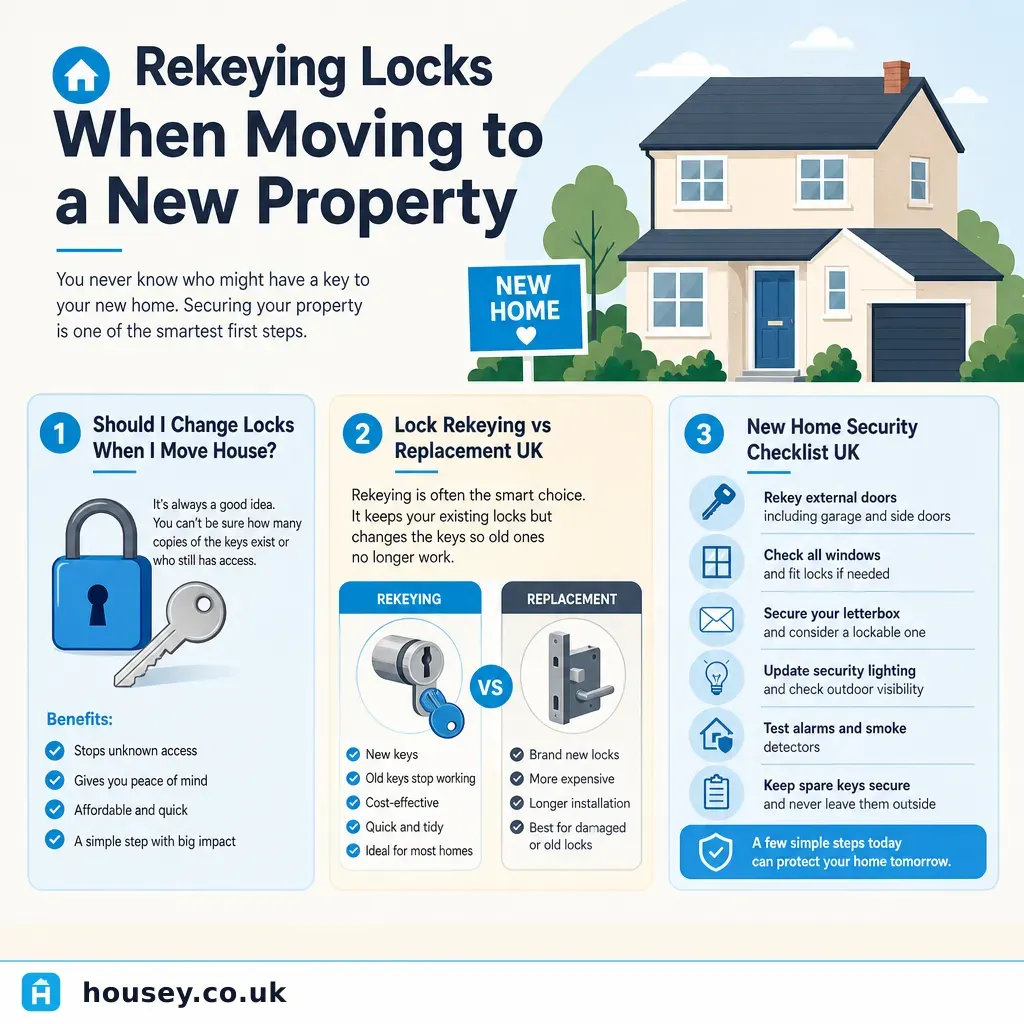
Rekeying Locks When Moving to a New Property
When you move into a property, you cannot know how many copies of the existing keys exist or who holds them. Rekeying — having a locksmith alter the lock cylinder so old keys no longer work — typically costs £40–£90 per lock and is usually cheaper than full replacement. Book an MLA-approved locksmith for the day of, or day after, completion.
 Buying & Moving
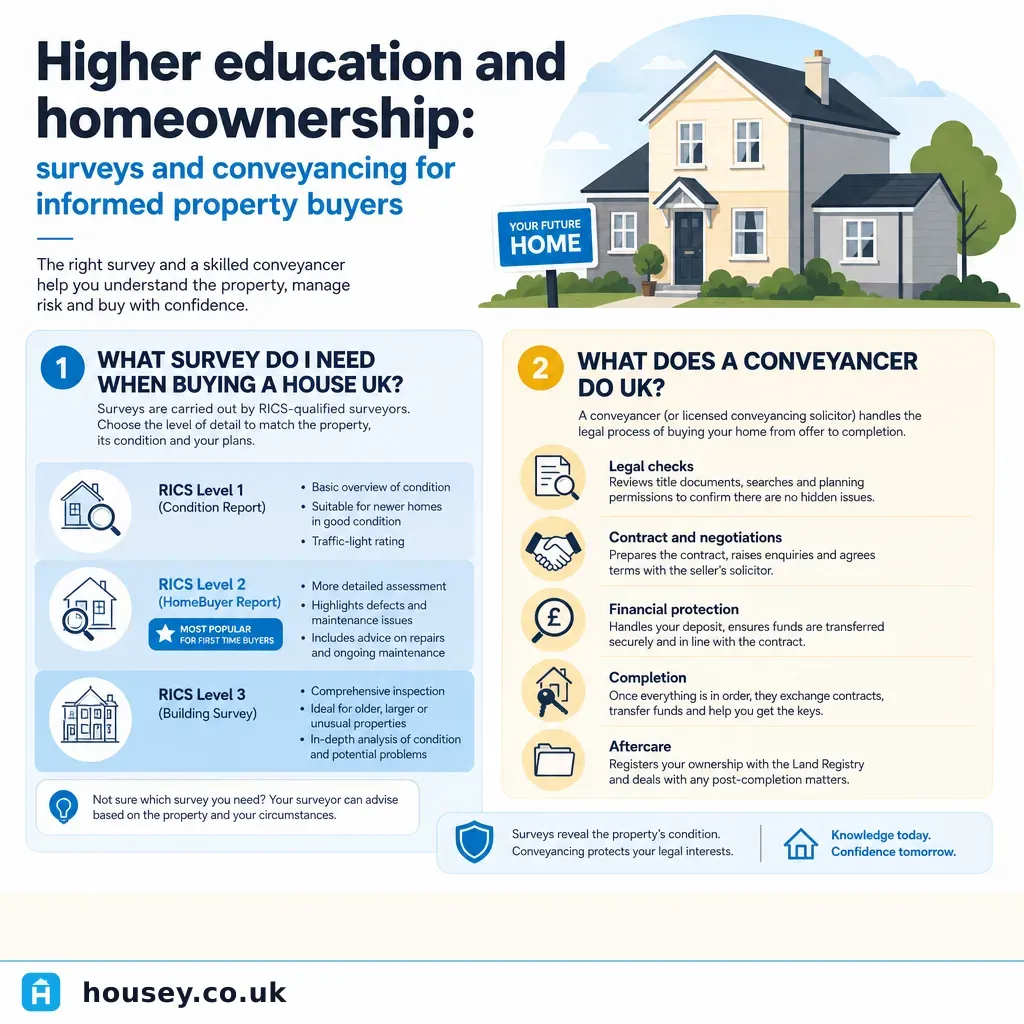
Higher education and homeownership: surveys and conveyancing for informed property buyers
Informed property buyers in the UK typically commission a RICS Level 2 or Level 3 survey before exchange, alongside instructing a conveyancer to carry out legal searches and review title. Together, these two services protect against hidden defects and legal complications — and are often the most important investments made during the buying process.
 Buying & Moving
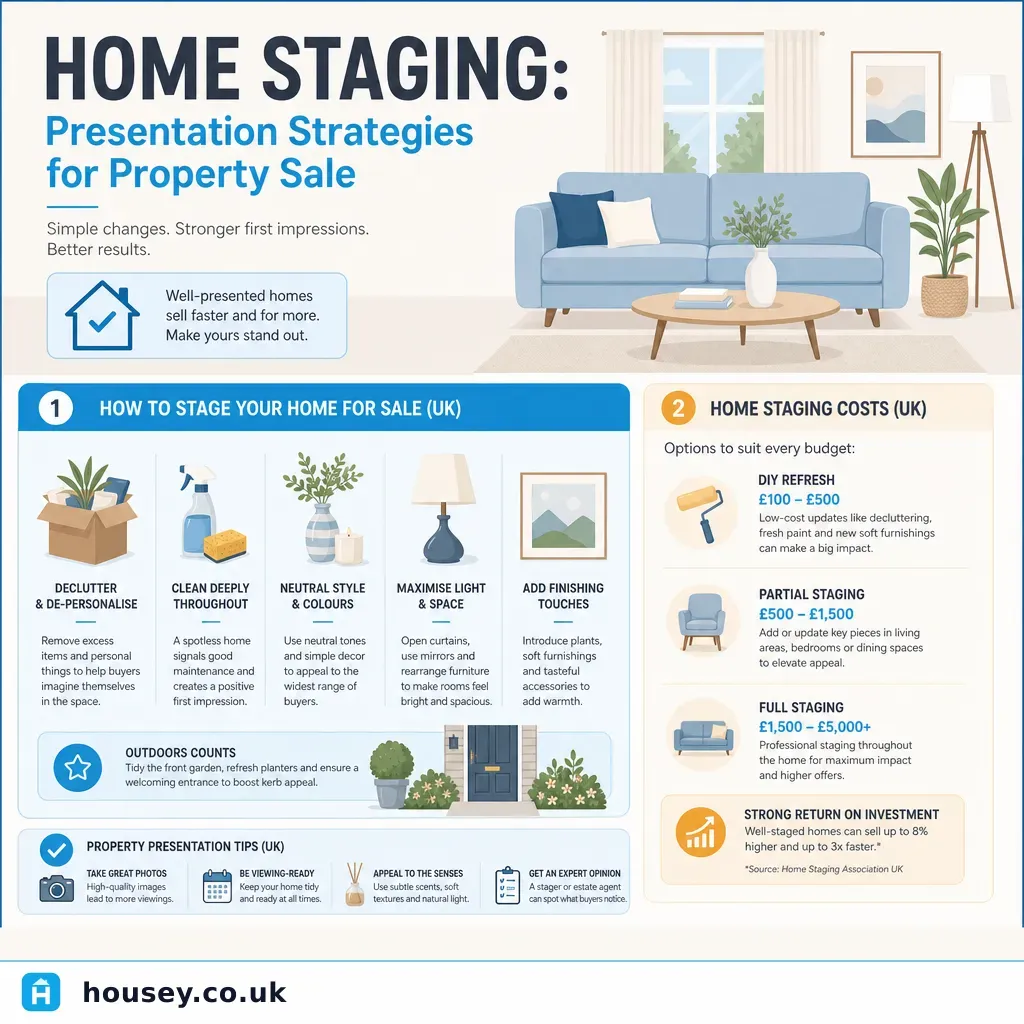
Home Staging: Presentation Strategies for Property Sale
Home staging for a property sale means decluttering, depersonalising, and presenting rooms to appeal to the broadest range of buyers. The most impactful steps — clearing worktops, making beds with fresh linen, and improving lighting — cost little or nothing. Professional photography is almost always worth commissioning before listing, at any price point, given that most buyers begin their search online.