Knowledge Base
Property advice that actually helps
Researched, UK-specific guides for every stage of homeownership — from buying and surveys to retrofit, planning and major works.
 Buying & Moving
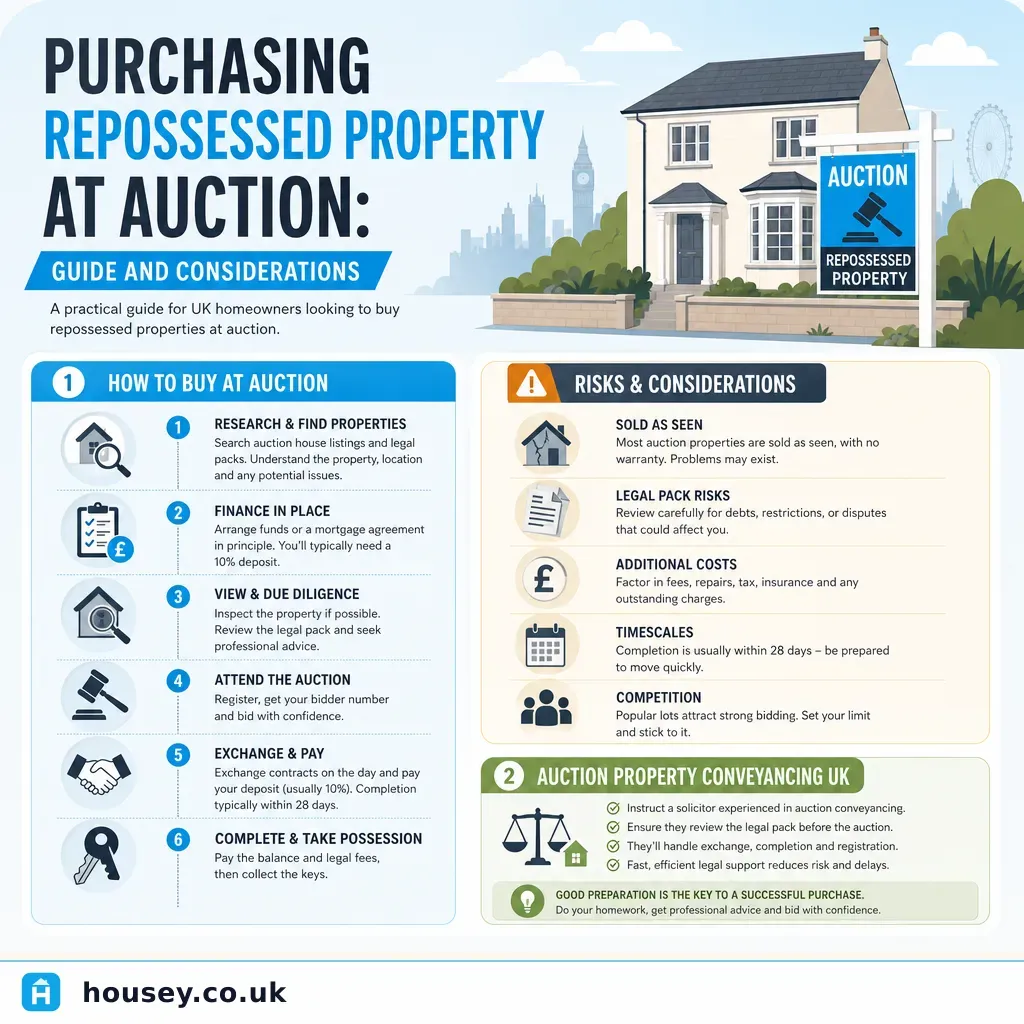
Purchasing Repossessed Property at Auction: Guide and Considerations
Repossessed properties sold at auction in the UK are legally binding from the fall of the hammer, with completion typically required within 28 days. Buyers must arrange finance, surveys, and legal searches before bidding. Repossessed homes are sold as seen with limited disclosure of their history, and can offer below-market prices — but carry real legal, structural, and financial risks that require professional advice before the sale date.
 Buying & Moving
Top Property Services in Scotland: Market Leaders and Specialists
Scotland has a separate legal system, planning framework, and building standards from England and Wales. Home Reports are mandatory for most residential property sales, transactions use Land and Buildings Transaction Tax (LBTT) rather than Stamp Duty, and offers become legally binding through missives. Using professionals qualified in Scots law and experienced in Scottish property types is essential for both buying and improving property north of the border.
 Buying & Moving
Understanding Gazumping in Property Transactions: Risks and Protections
Gazumping occurs when a seller in England or Wales accepts a higher offer from another buyer after verbally agreeing to sell to you, but before exchange of contracts — the legally binding point. It is not illegal. Buyers can reduce the risk by moving quickly through conveyancing and survey, requesting the property is taken off the market, and using a reservation agreement.
 Buying & Moving
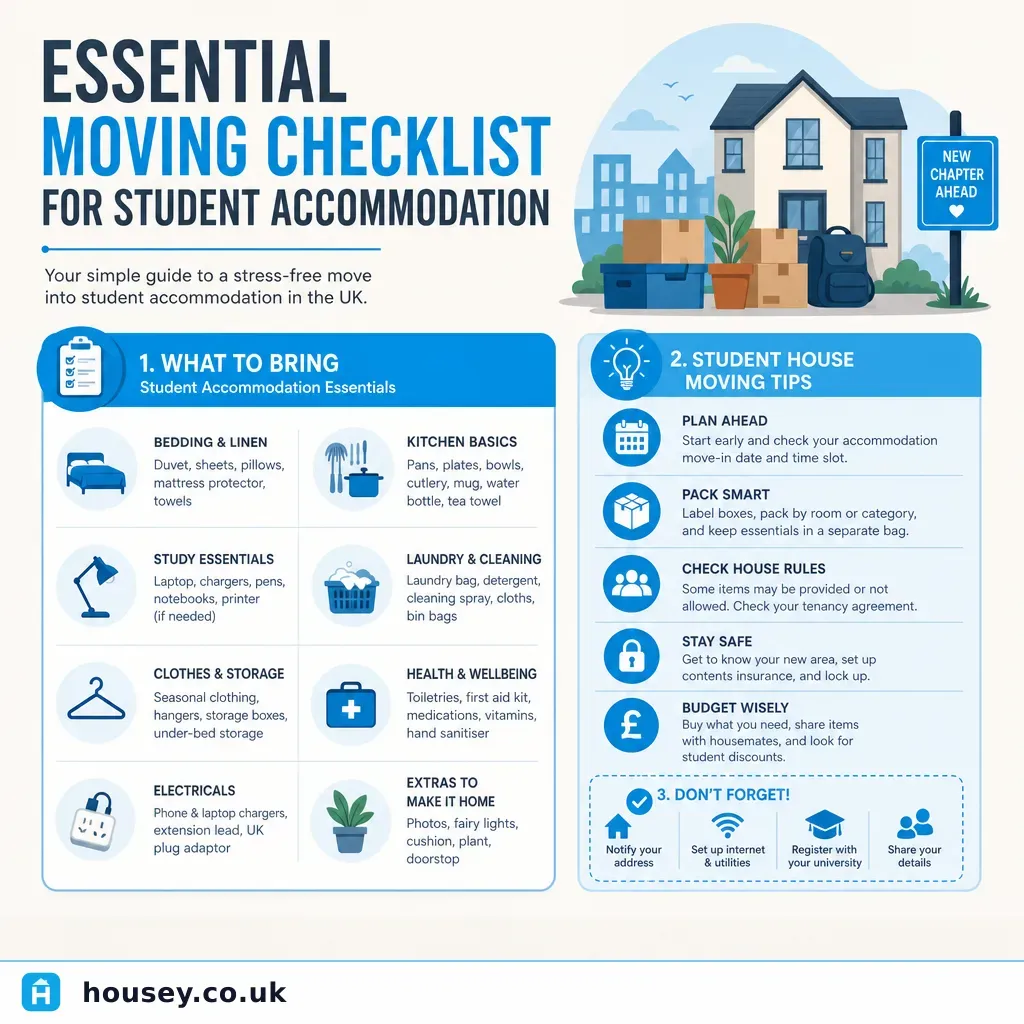
Essential Moving Checklist for Student Accommodation
Moving into student accommodation requires notifying your university and council, checking deposit protection, arranging contents insurance, and booking transport early. For private rentals, conduct a thorough room inventory on move-in day and photograph everything. Starting at least six weeks before move-in reduces the risk of missing key administrative steps that could affect your deposit.
 Buying & Moving
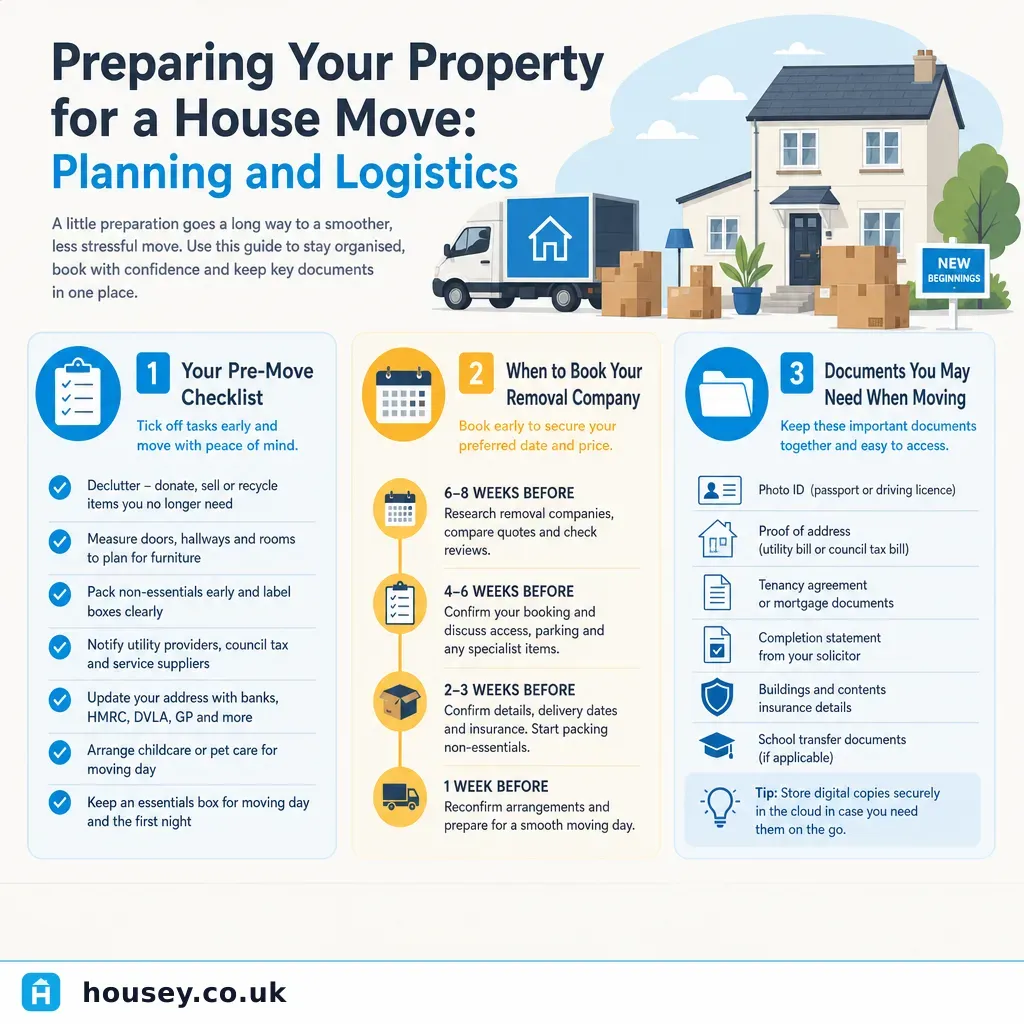
Preparing Your Property for a House Move: Planning and Logistics
Start preparing for a house move 6–8 weeks before your expected completion date. Declutter and book a removal company early — summer Fridays fill fastest. Gather key property documents such as FENSA certificates and building regulations sign-offs, set up Royal Mail Redirection, and notify utilities, DVLA, and HMRC at least four weeks ahead.
 Buying & Moving
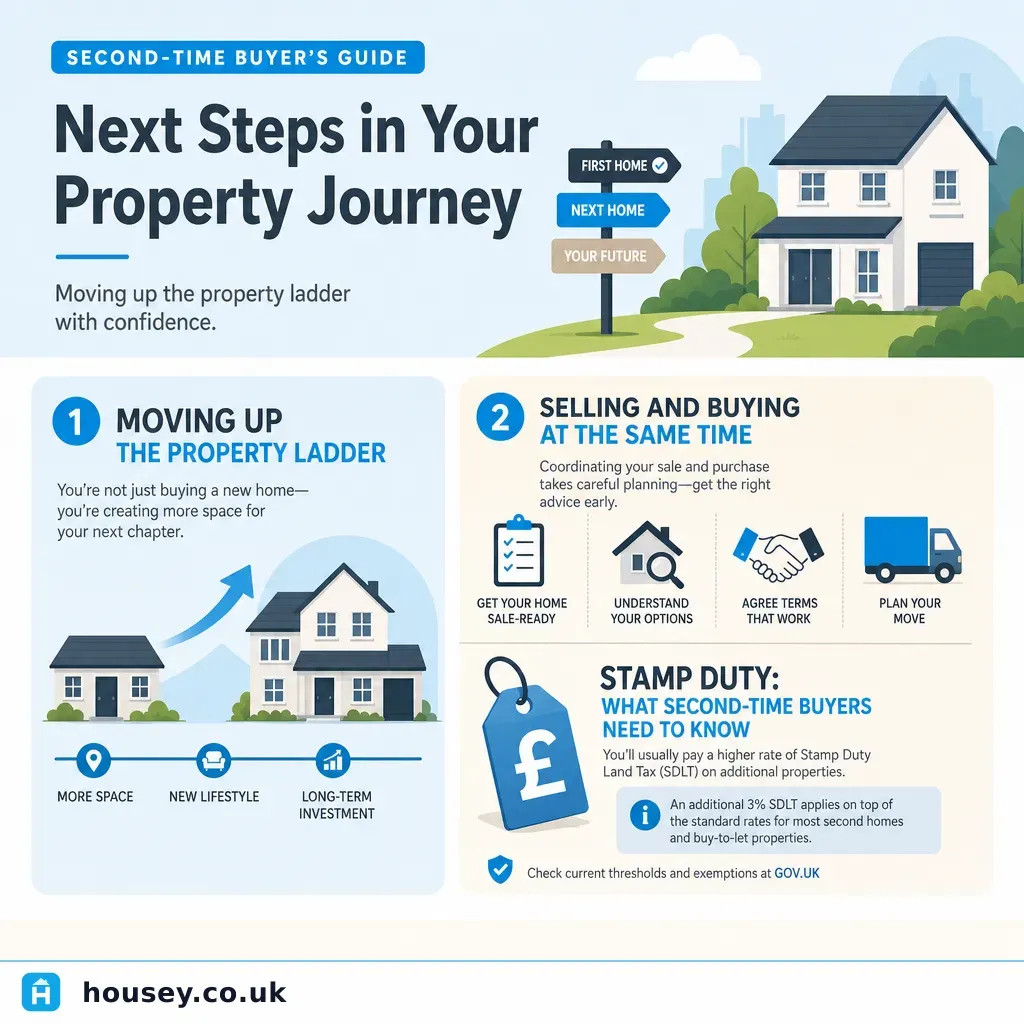
Second-Time Buyer's Guide: Next Steps in Your Property Journey
Second-time buyers manage a simultaneous sale and purchase, often within a property chain. Key steps include agreeing a sale on your current home before actively searching, instructing a conveyancer immediately after accepting an offer, commissioning a RICS survey suited to the property's age and condition, and budgeting for stamp duty at standard rates. A typical chain of two to three properties takes 10–16 weeks from offer to completion.
 Buying & Moving
Selecting a Conveyancing Solicitor in Scotland: A Buyer's Guide
In Scotland, instructing a conveyancing solicitor before beginning your property search is standard practice — your solicitor submits formal offers and concludes the legally binding missives. Choose a firm registered with the Law Society of Scotland, confirm they can respond to closing dates at short notice, and verify they are on your mortgage lender's approved panel before instructing.
 Buying & Moving
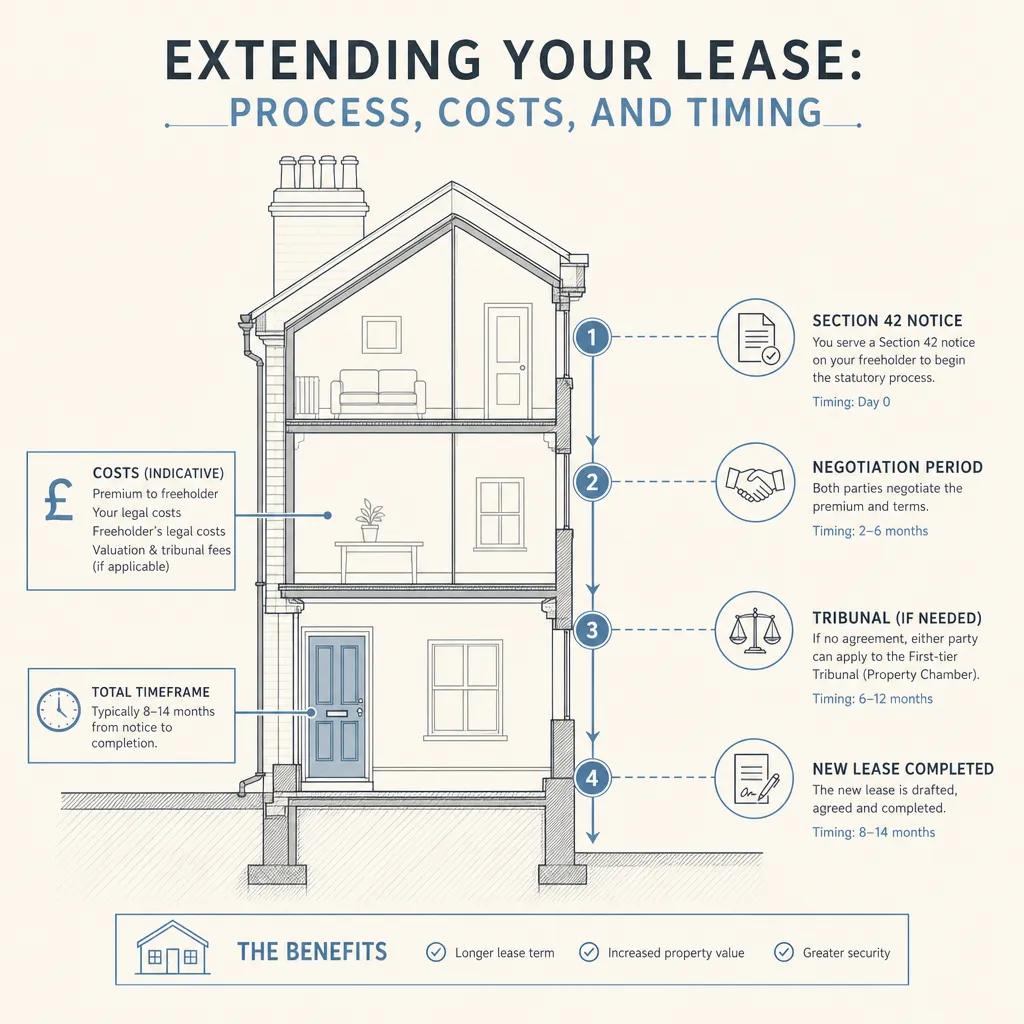
Extending Your Lease: Process, Costs, and Timing
Qualifying leaseholders in England and Wales have a statutory right to extend their lease by 90 years at a peppercorn (nil) ground rent under the Leasehold Reform, Housing and Urban Development Act 1993, provided they have owned for at least two years. Once the unexpired term falls below 80 years, costs increase significantly due to marriage value.
 Buying & Moving
Finding the Right Property to Suit Your Needs and Lifestyle
Finding the right property means separating genuine needs from preferences before you begin. Prioritise location first — it is far harder and more expensive to change than the property itself. Confirm tenure, EPC rating, school catchments, and flood risk early; these factors affect cost, mortgage terms, and long-term satisfaction more than interior features.
 Buying & Moving
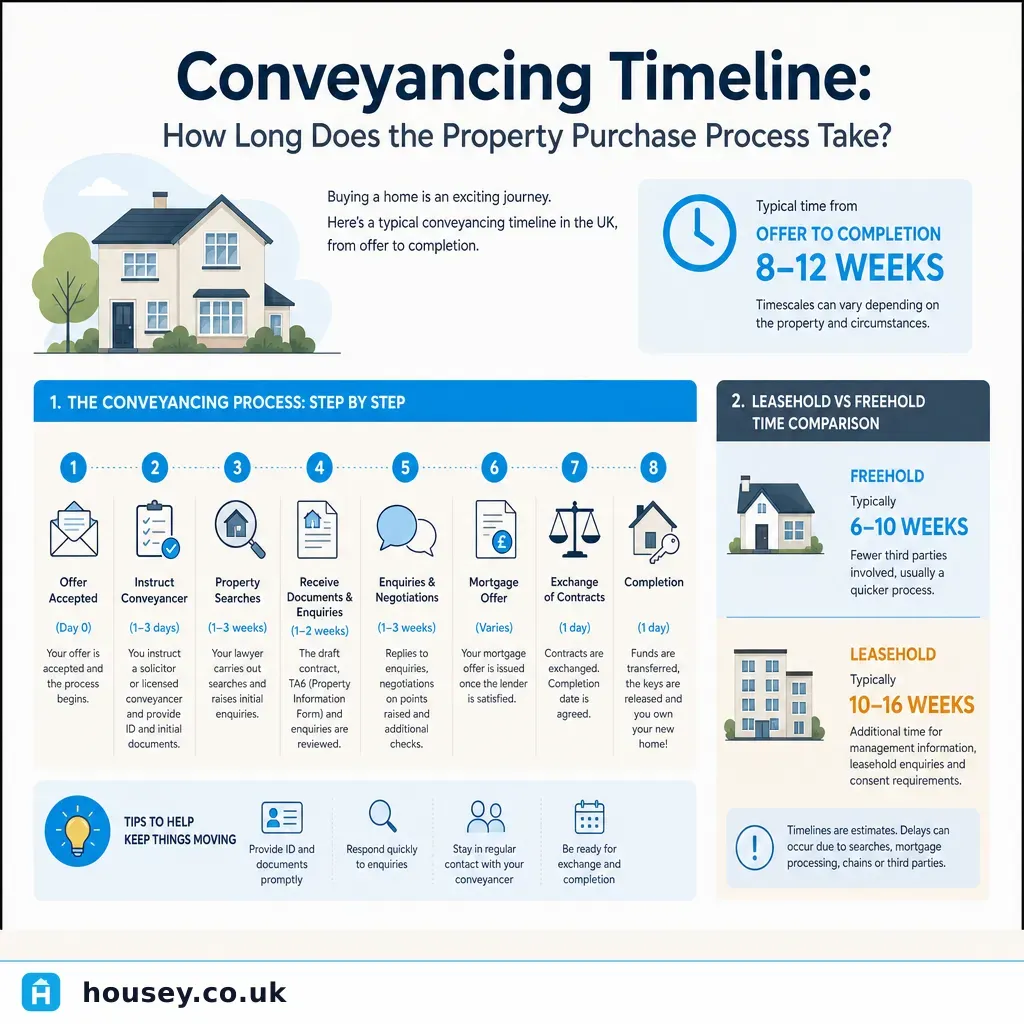
Conveyancing Timeline: How Long Does the Property Purchase Process Take?
Most UK residential conveyancing transactions take between 10 and 16 weeks from offer acceptance to completion. Chain-free freehold purchases can be faster, while leasehold transactions typically add four to six weeks. The main stages are instruction, searches, mortgage offer, exchange of contracts, and completion, with local authority search turnaround often the greatest single source of delay.
 Buying & Moving
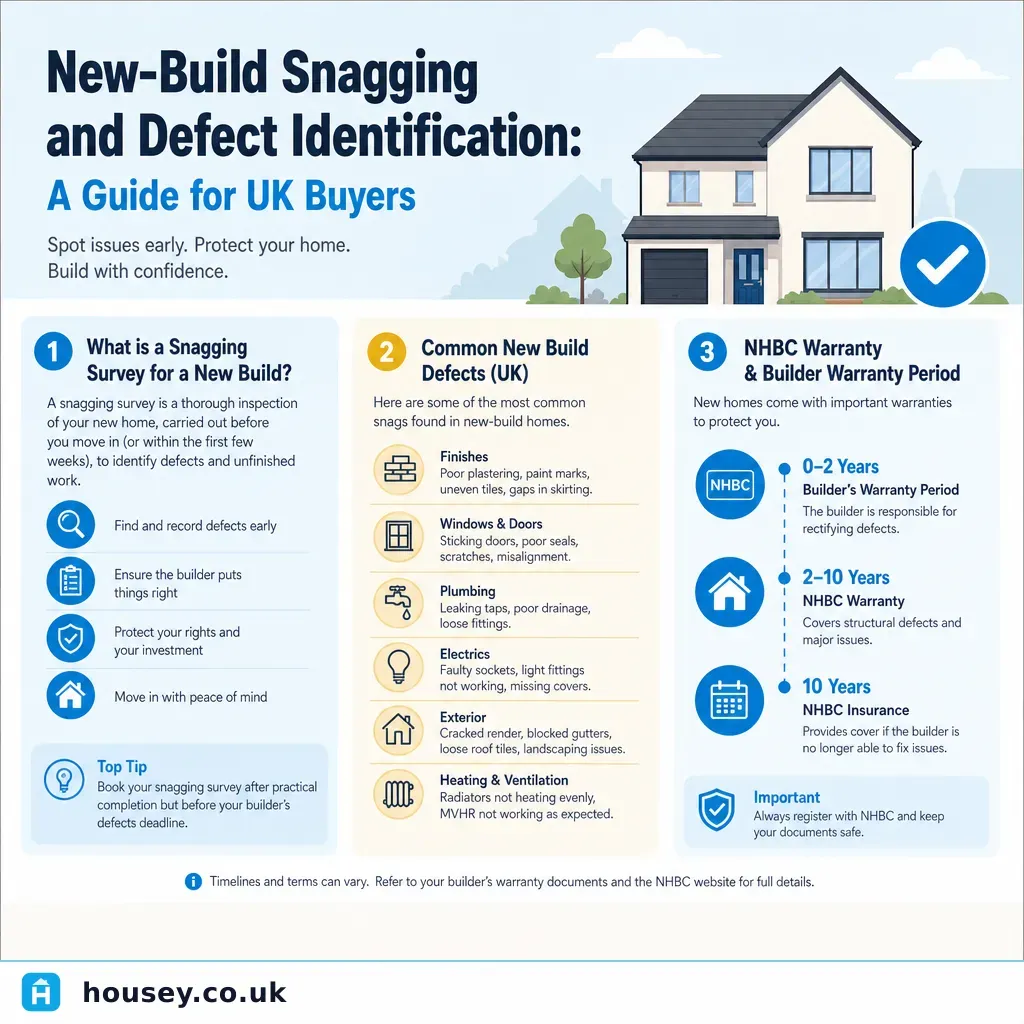
New-Build Snagging and Defect Identification: A Guide for UK Buyers
A new-build snagging survey is a detailed inspection carried out before or shortly after legal completion to identify defects in workmanship and finishes. A professional inspector typically finds 100–150 defects. The written report gives you formal evidence to require the developer to rectify issues under the NHBC Buildmark warranty or equivalent builder guarantee.
 Buying & Moving
International Properties and Overseas Property Investment Guide
UK residents buying property abroad face different legal systems, local purchase taxes, and UK income and capital gains tax obligations on any rental income or eventual sale. Overseas mortgages typically require 30 to 40 per cent deposits. Independent legal advice in the destination country and UK tax advice are essential before committing to any overseas property transaction.