Knowledge Base
Property advice that actually helps
Researched, UK-specific guides for every stage of homeownership — from buying and surveys to retrofit, planning and major works.
 Buying & Moving
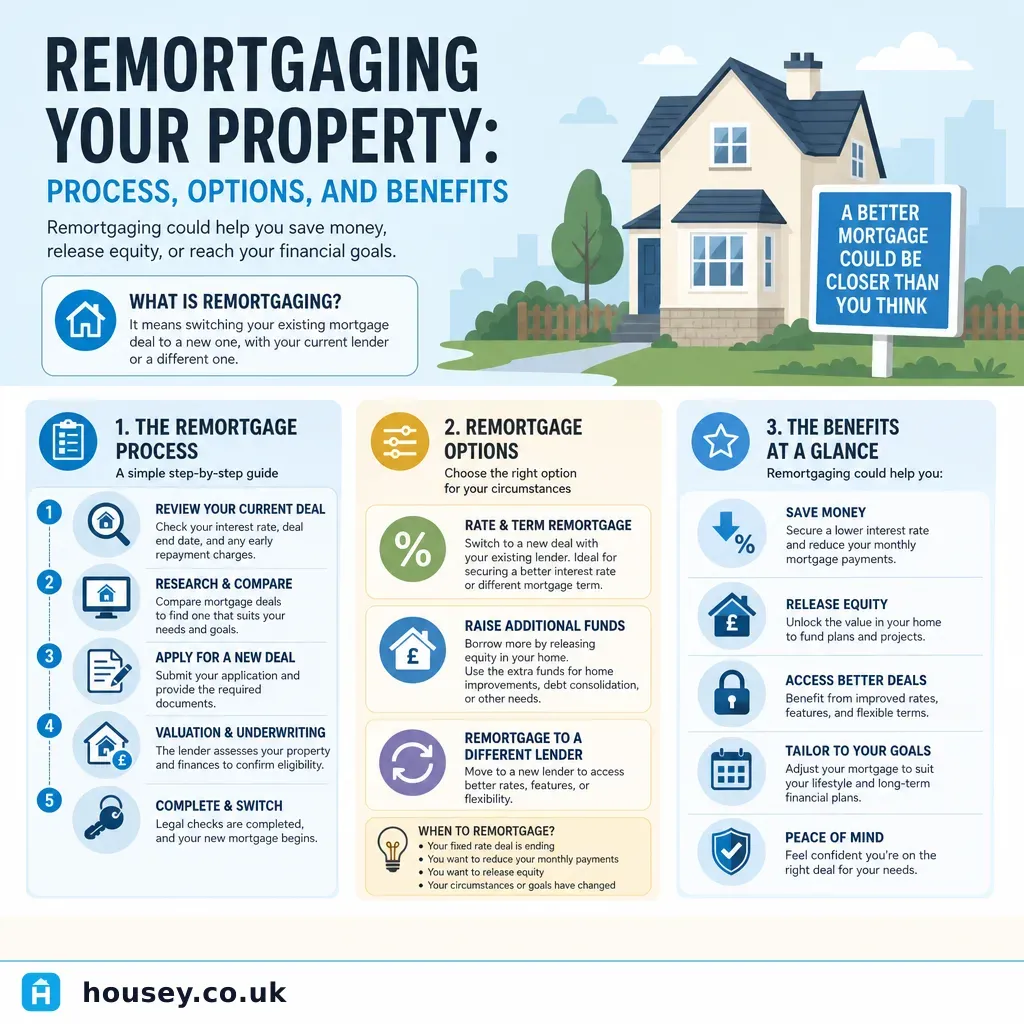
Remortgaging Your Property: Process, Options, and Benefits
Remortgaging means switching your mortgage to a new deal, either with your current lender or a new one. UK homeowners typically remortgage when an introductory deal ends to avoid reverting to a higher Standard Variable Rate. You can usually start the process 3–6 months before your deal ends and should compare the total cost of products, including arrangement fees, before committing.
 Buying & Moving
Moving to Stockport: Location Guide and Property Information
Stockport is a well-connected Greater Manchester town around 7–8 miles south-east of Manchester city centre, with direct trains to Piccadilly in 8–15 minutes and to London Euston in under two hours. The borough covers a wide range of property types and prices, from affordable Victorian terraces in Edgeley to premium detached houses in Bramhall, making it popular with buyers seeking more space within commuting distance of the city.
 Buying & Moving
What Drives Current Property Valuation Peaks
UK property valuations are driven by supply constraints, mortgage affordability, planning restrictions, SDLT threshold effects, and energy efficiency premiums. Market value and insurance reinstatement cost are calculated differently and should not be confused. For any significant financial decision — purchase, remortgage, or probate — a RICS-registered valuer should provide the formal opinion of value.
 Buying & Moving
Property Title Deed Division and Separation Costs
Splitting a property title deed in the UK typically costs £1,500 to £5,000 in total, covering solicitor fees, HM Land Registry registration charges, and a new title plan. The process is handled by a qualified solicitor or licensed conveyancer and usually takes four to twelve weeks, depending on complexity and whether mortgage lender consent is needed.
 Buying & Moving
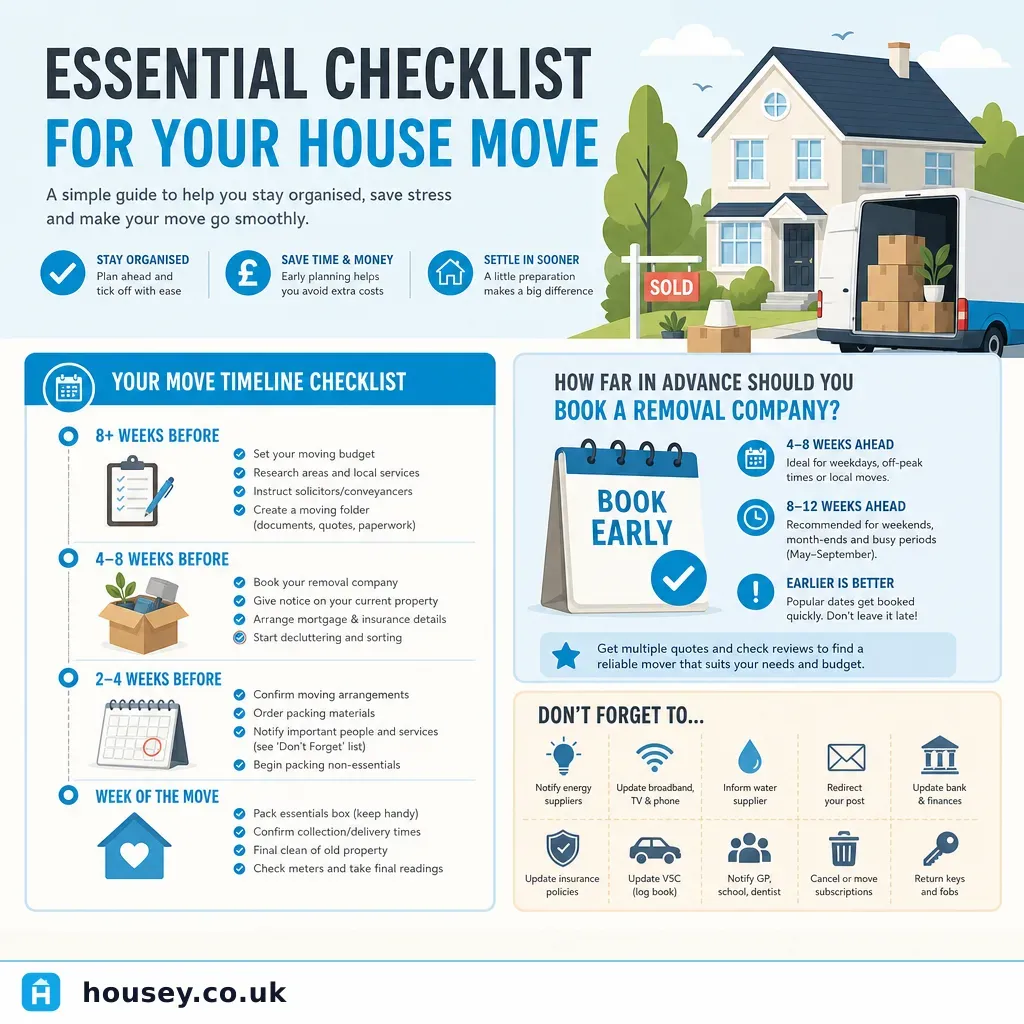
Essential Checklist for Your House Move
A successful UK house move relies on a staged checklist covering eight to twelve weeks before moving day through to two weeks after arrival. Key tasks include booking a removal company at least four to six weeks ahead, setting up Royal Mail Redirection, taking meter readings on moving day, and updating your DVLA address and Council Tax registration within two weeks of moving in.
 Buying & Moving
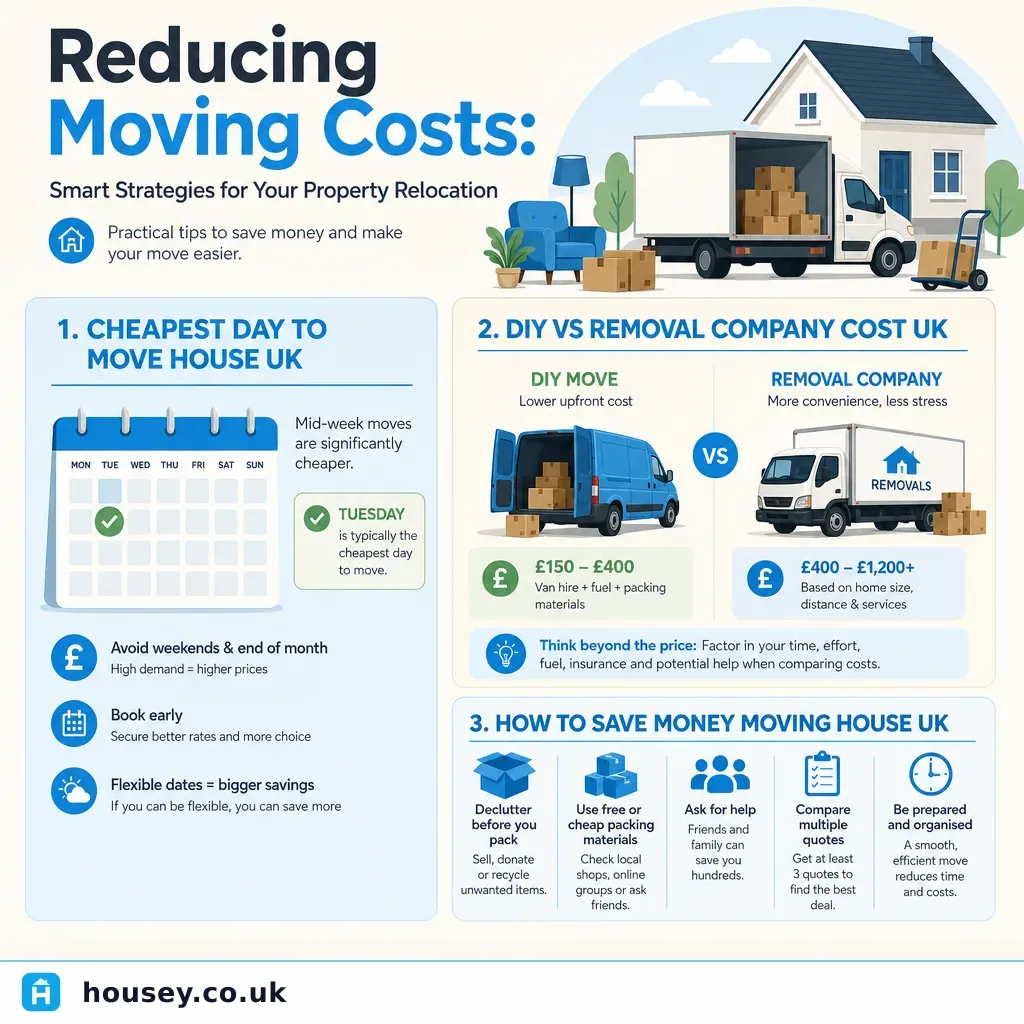
Reducing Moving Costs: Smart Strategies for Your Property Relocation
Most UK moving costs split into fixed costs set by legislation — stamp duty, search fees, Land Registry — and variable costs where genuine savings are available. Removal charges, packing, storage, and conveyancing fees all vary with planning and timing. Booking mid-week, packing yourself, decluttering in advance, and getting at least three quotes are the most reliable ways to reduce costs.
 Buying & Moving
Moving House During Operational Closures: Your Relocation Options
Completions cannot proceed on bank holidays because CHAPS bank transfers only process on Bank of England business days. If your completion date falls on a restricted day, your solicitor will normally move it to the nearest working day. Removal firms may operate at a premium on Saturdays but vary widely on bank holidays — agree dates, access conditions, and contingencies in writing well in advance.
 Buying & Moving
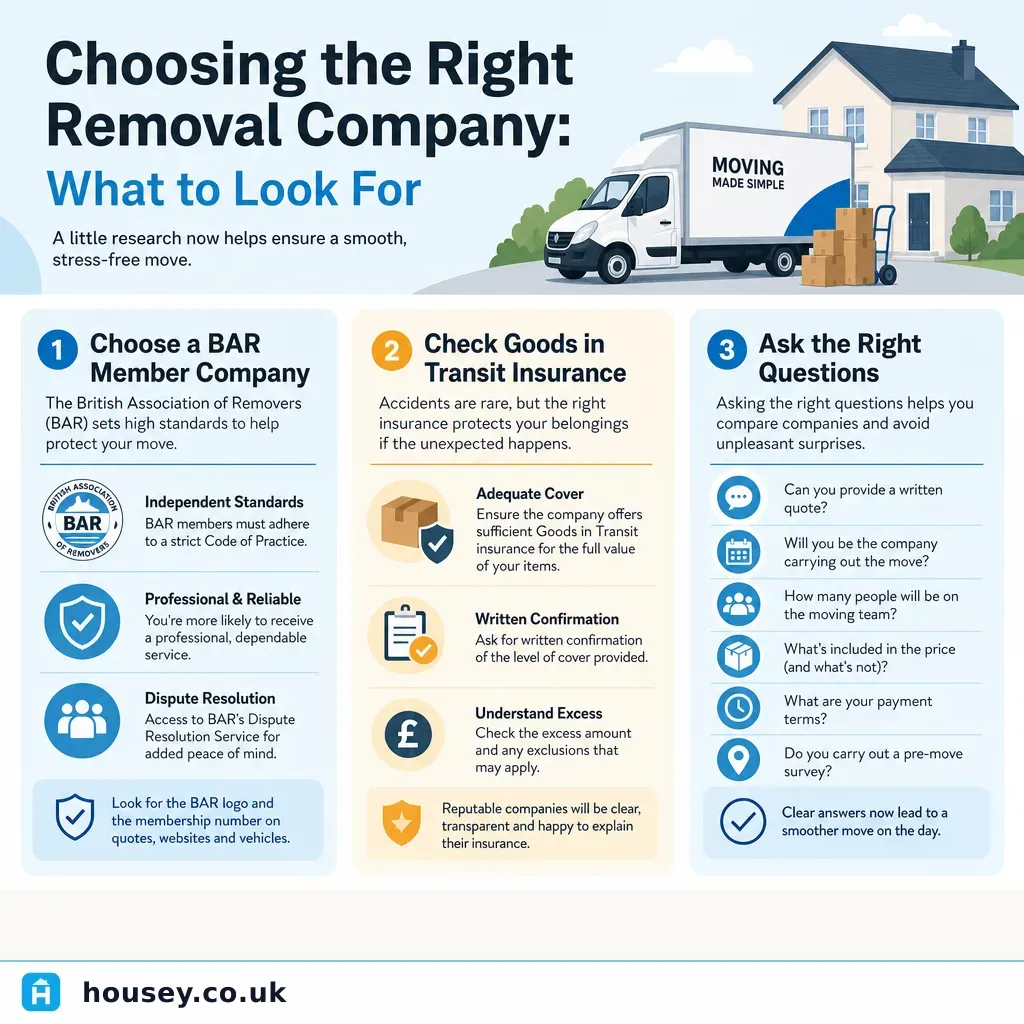
Choosing the Right Removal Company: What to Look For
Look for a removal company that belongs to the British Association of Removers (BAR), carries goods-in-transit insurance, and conducts a pre-move survey before issuing a quote. Get at least three comparable quotes, confirm what is included in insurance cover, check the firm's cancellation policy, and verify recent customer reviews before booking.
 Buying & Moving
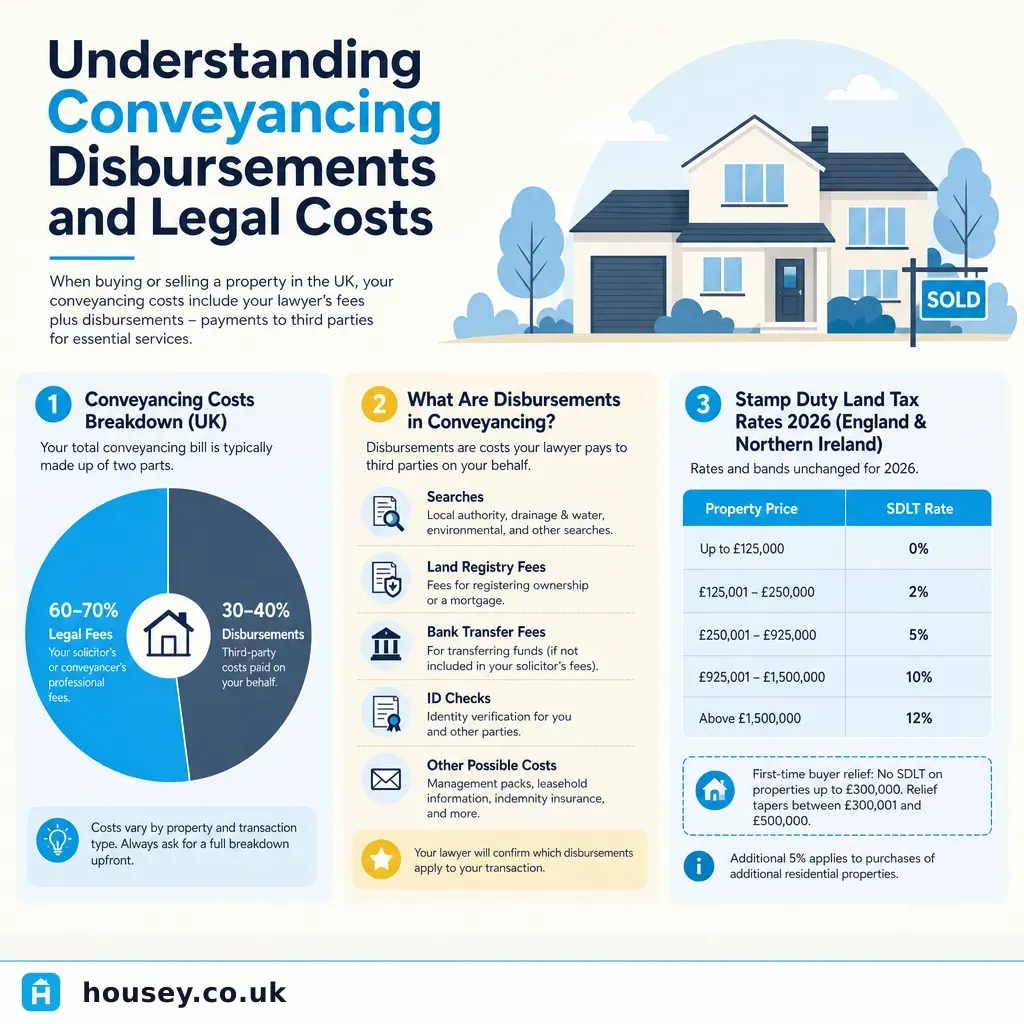
Understanding Conveyancing Disbursements and Legal Costs
Conveyancing disbursements are payments your solicitor makes on your behalf to third parties — HMRC for Stamp Duty Land Tax, HM Land Registry for registration, local councils for searches, and water companies for drainage checks. They are separate from the solicitor's own legal fee and are typically passed on at cost. For most UK buyers, SDLT is the largest single disbursement.
 Buying & Moving
The Advantages of Moving House During the Winter Months
Moving house between November and February usually costs less than in peak summer months, when removal firms are at their busiest. You're also likely to find better availability on your preferred date, less competition from other buyers in the property market, and solicitors with more capacity. Careful planning around winter weather and shorter daylight hours keeps the process smooth.
 Buying & Moving
Shared Driveway Rights: Legal Ownership and Maintenance Responsibilities
Rights to use a shared driveway are typically granted as an easement registered in the title deeds. The driveway surface itself is usually owned by one adjacent property or held jointly. Maintenance obligations are only legally enforceable if expressly stated in a deed; informal arrangements carry no legal weight. Review the full title register from HM Land Registry to understand the position for your specific property.
 Buying & Moving
Understanding Leasehold Property Terminology and Rights
Leasehold means owning occupation rights for a fixed term, not the land or structure. Key terms include ground rent, service charge, enfranchisement, and lease extension. Qualifying leaseholders in England and Wales can extend their lease by 90 years under the Leasehold Reform, Housing and Urban Development Act 1993. Always instruct a solicitor with leasehold expertise for advice on your specific lease terms.