Knowledge Base
Property advice that actually helps
Researched, UK-specific guides for every stage of homeownership — from buying and surveys to retrofit, planning and major works.
 Energy & Retrofit
Light-Coloured Roofing: Energy Benefits and Cooling Effectiveness
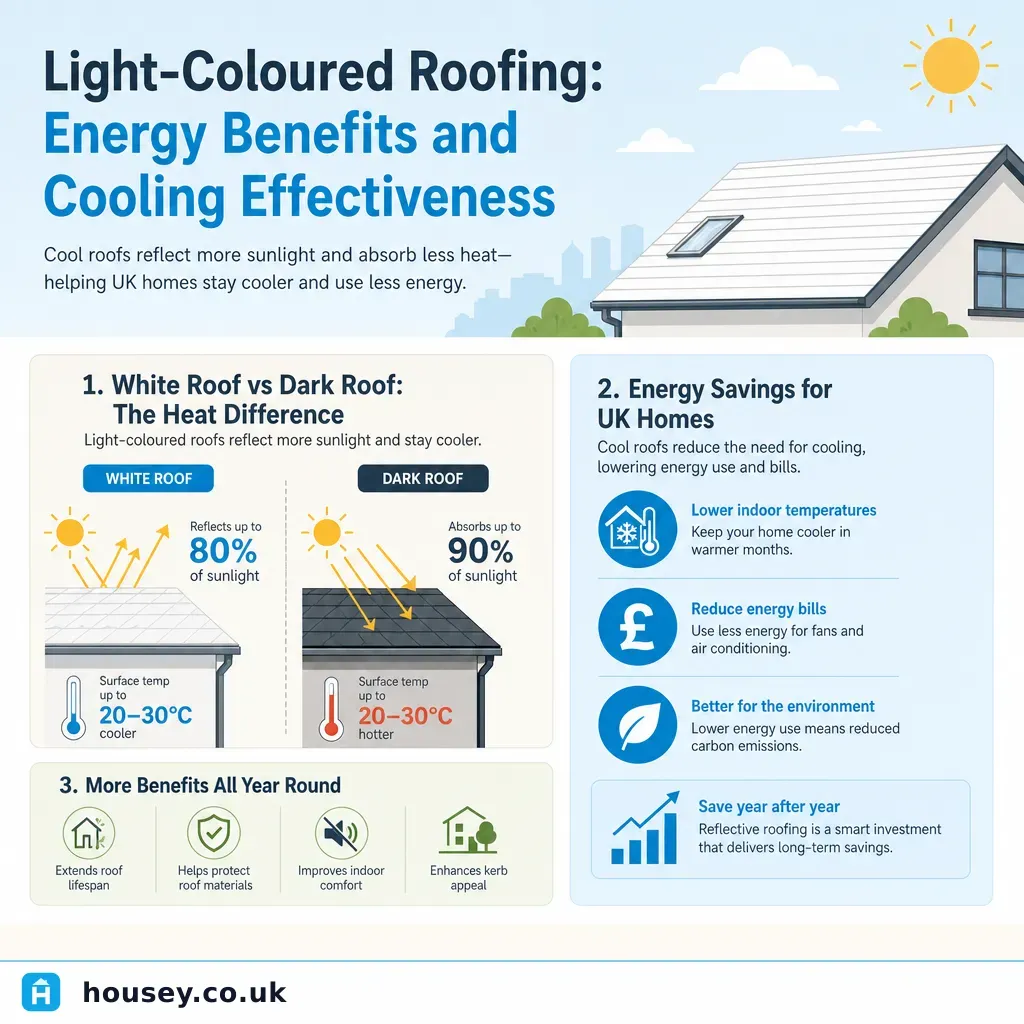
Light-coloured or reflective roofing reduces the solar heat absorbed by a roof surface, lowering temperatures in the building below during summer. In the UK's heating-dominated climate, the cooling benefit is real but modest compared with warmer countries, and must be balanced against a marginal reduction in winter solar gain. Solar Reflectance Index (SRI) is the key performance measure when comparing roofing products.
 Energy & Retrofit
Whole-Home Ventilation Systems for Improved Air Circulation and Quality
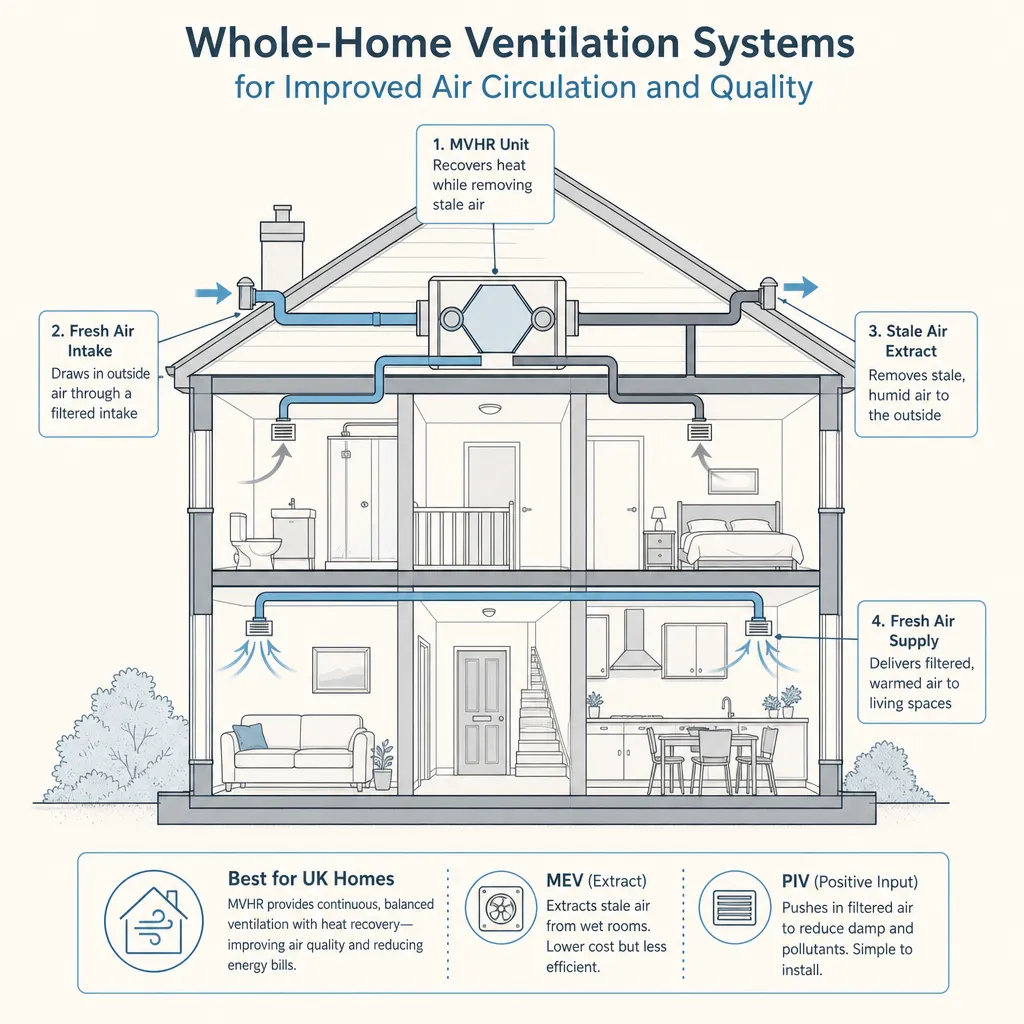
Whole-home ventilation systems — including MVHR, MEV, dMEV, and PIV — improve indoor air quality and control condensation in UK homes. The right system depends on your property's airtightness and construction type. A ventilation assessment before installation helps avoid moisture problems and ensures compliance with Building Regulations Part F.
 Energy & Retrofit
Solar Battery Systems: Costs, Installation and Storage Solutions
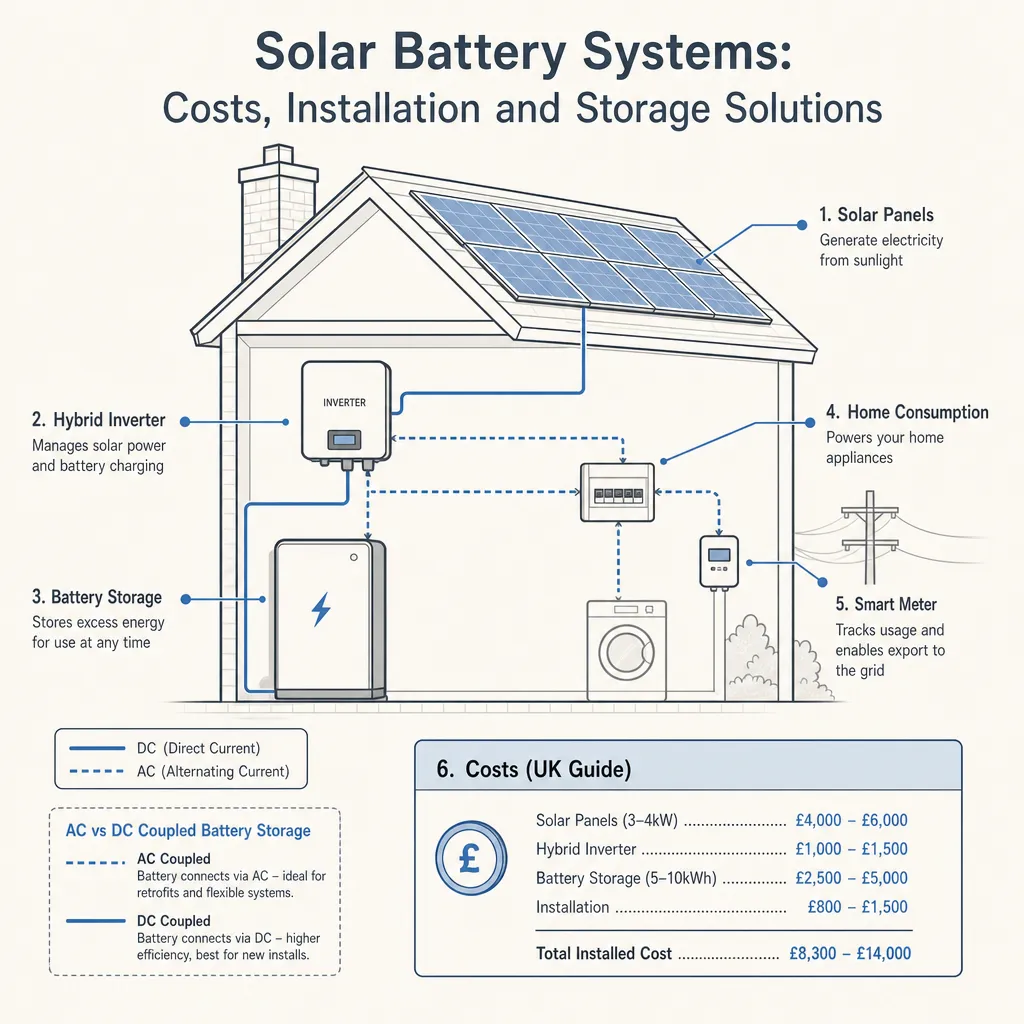
Solar battery systems in the UK typically cost £3,000–£8,000 installed for a 5–10 kWh system, though prices vary by brand, capacity, and coupling method. Installation by a qualified electrician usually takes around half a day for a straightforward retrofit. Systems qualify for 0% VAT and can significantly reduce the amount of grid electricity a household needs to import each day.
 Energy & Retrofit
Building an Environmentally Conscious Home: A Practical Guide
Making your home more environmentally conscious works best when you follow a logical sequence: reduce energy demand through insulation and draught-proofing first, then upgrade heating controls, then switch to a low-carbon heat source, then generate your own energy with solar PV. Grants are available through ECO4, the Great British Insulation Scheme, and the Boiler Upgrade Scheme, depending on your property and circumstances.
 Energy & Retrofit
Are ground source heat pumps noisy? What homeowners should know
Ground source heat pumps are significantly quieter than air source heat pumps during normal operation as they have no outdoor fan unit. The indoor unit typically runs at 40–50 dB(A) — similar to a quiet conversation. The main noise impact comes during installation, when borehole drilling or trenching is required. Once correctly installed, a GSHP is unlikely to disturb neighbours or occupants.
 Energy & Retrofit
Blown and Sprayed Insulation: Installation Costs and Benefits
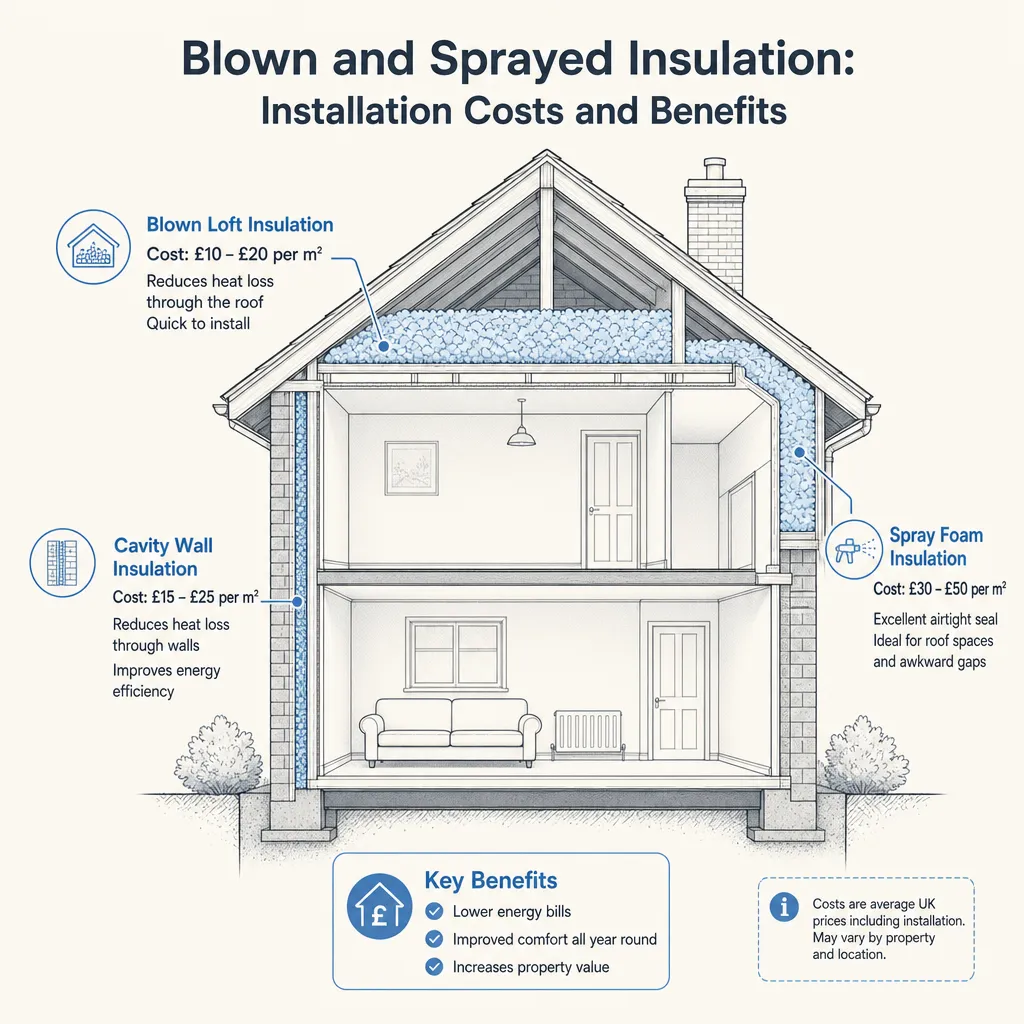
Blown cavity wall insulation for a typical semi-detached house costs £400–£1,200; blown loft insulation costs £300–£600. ECO4 and the Great British Insulation Scheme may fund these measures at no cost for eligible households. Work funded through public schemes must comply with PAS 2035. Sprayed polyurethane foam in roof spaces can affect mortgage lendability and warrants careful consideration before installation.
 Energy & Retrofit
Insulation Types: Understanding Your Options for Home Energy Efficiency
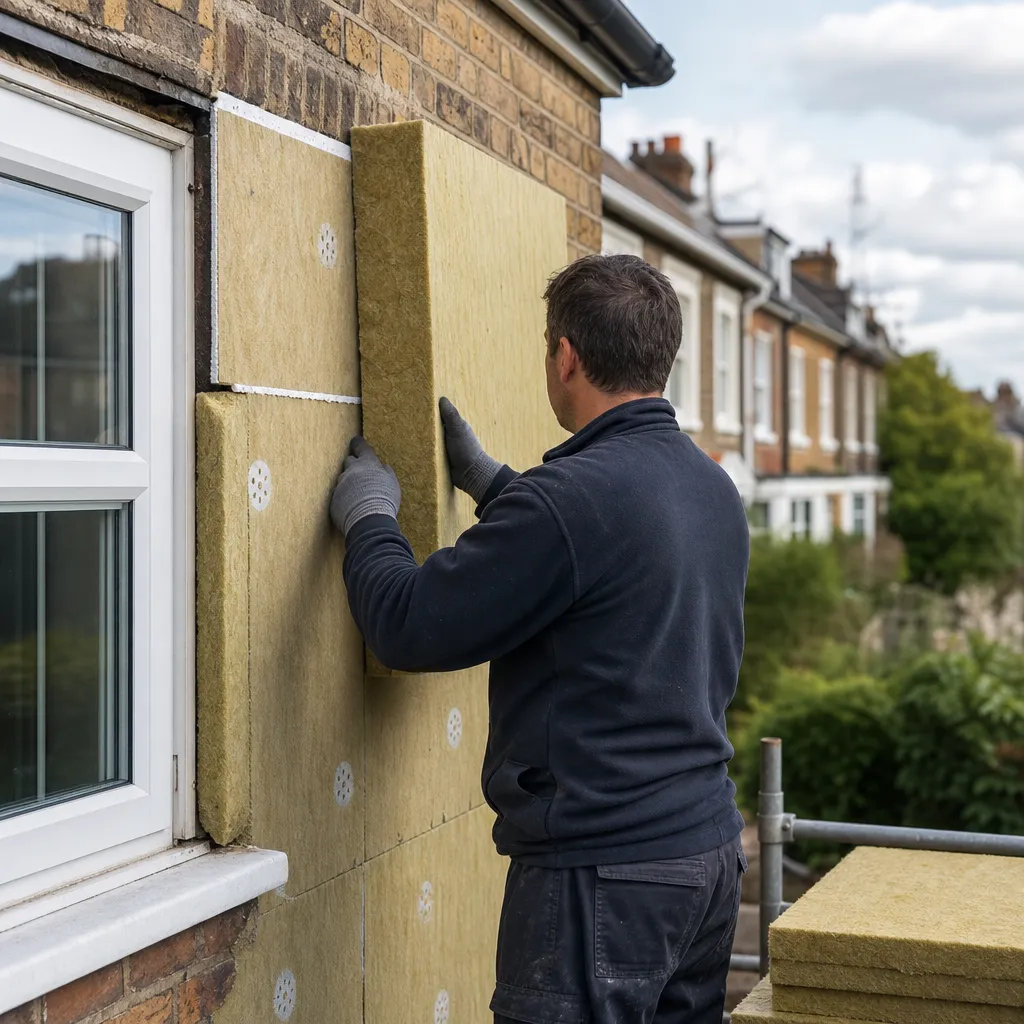
The main insulation types used in UK homes are mineral wool, rigid foam boards, blown loose fill, spray foam, and natural materials such as wood fibre or sheep's wool. The best choice depends on your property's age, wall type, and which part of the building you are insulating. A professional assessment helps match the right product to your situation.
 Energy & Retrofit
Understanding the costs of installing wind turbines on residential property
A roof-mounted domestic wind turbine in the UK costs around £2,000–£4,000 installed; a free-standing pole-mounted turbine suitable for a rural residential plot typically costs £15,000–£30,000 or more. Most urban and suburban properties generate too little electricity to justify the cost. A professional site assessment and wind speed survey are essential before purchasing any system.
 Energy & Retrofit
Common Myths and Misconceptions About Heat Pump Technology
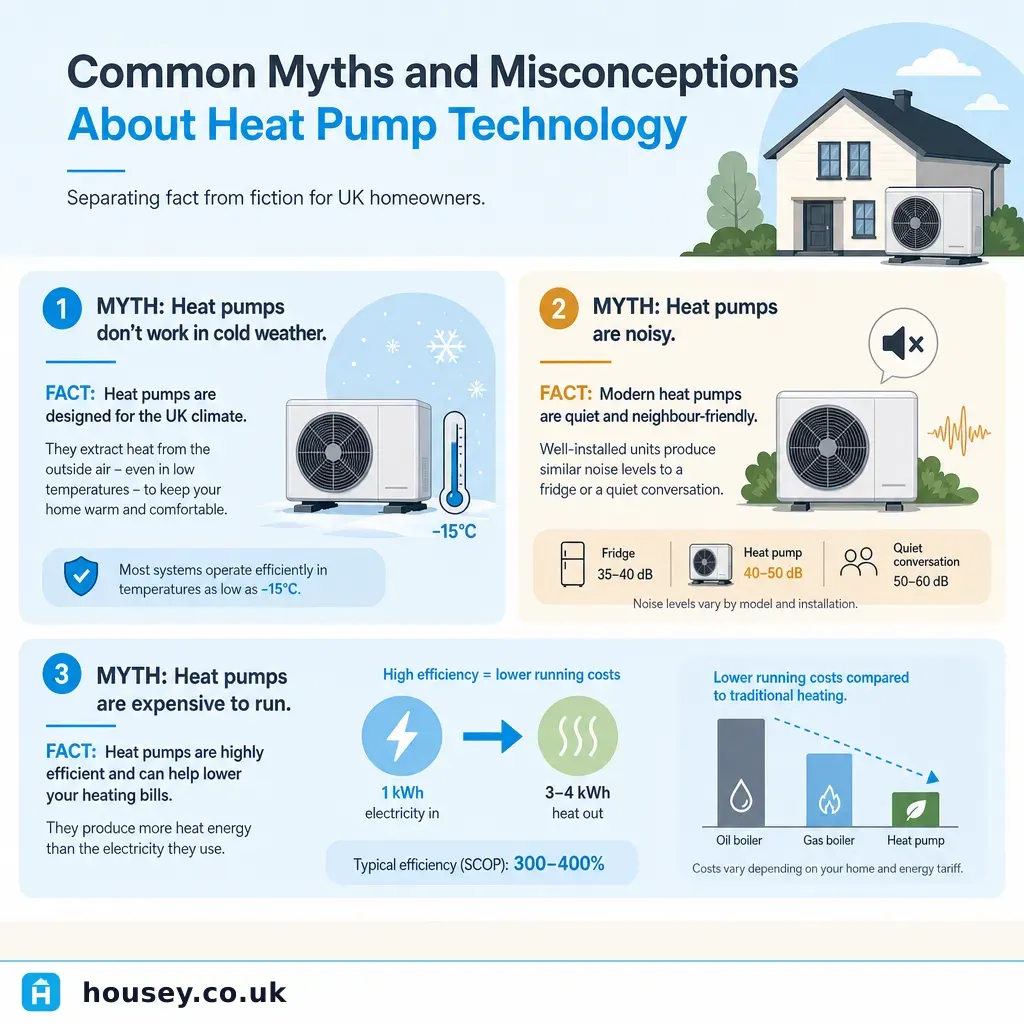
Many common beliefs about heat pumps are inaccurate. Modern air source heat pumps work efficiently in UK winters, do not require underfloor heating, and can suit older homes with adequate insulation. Running costs depend on system design and electricity tariff rather than the technology itself. An MCS-accredited assessment is the only reliable way to establish suitability for your specific property.
 Energy & Retrofit
Rental Property EPC Standards: Compliance Costs and Retrofit Requirements
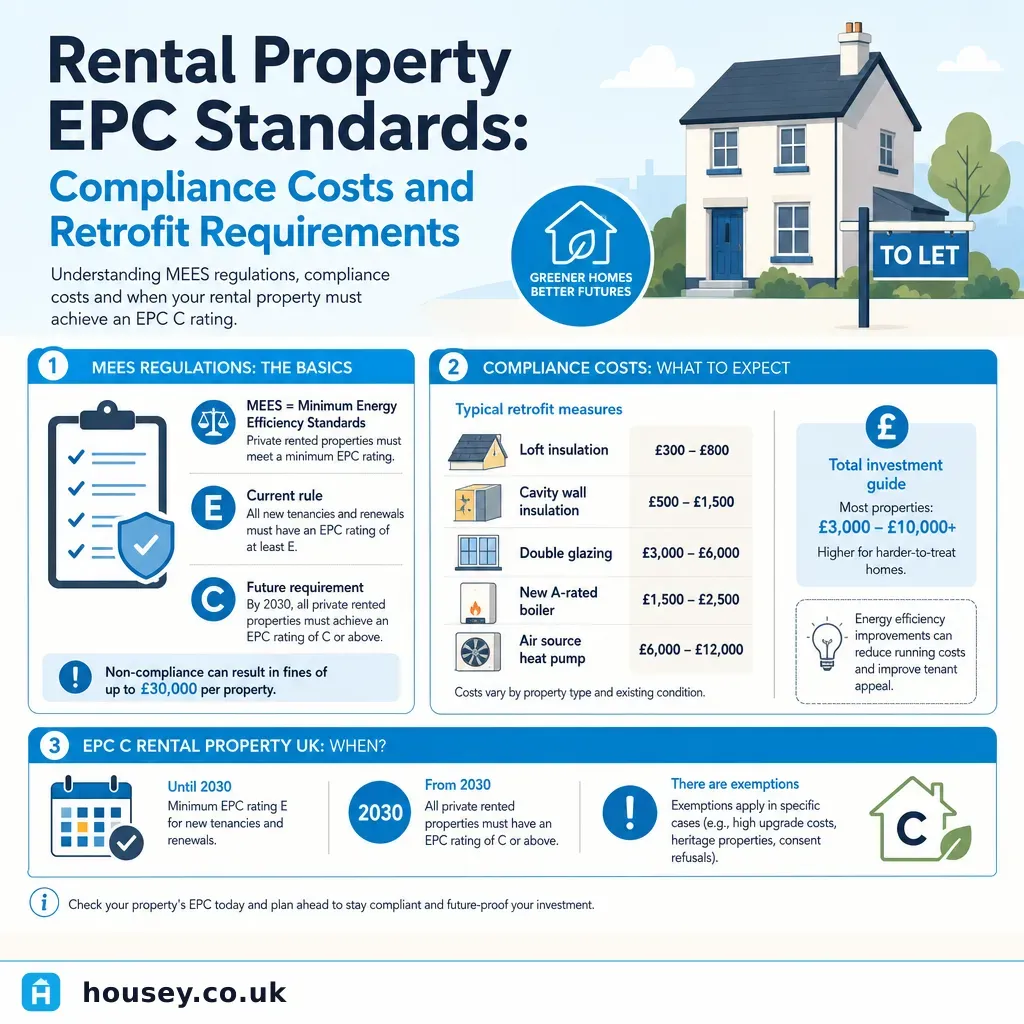
Private landlords in England and Wales must hold a minimum EPC E rating for all residential lettings under the MEES Regulations 2018. Properties rated F or G cannot lawfully be let without a registered exemption. The government has proposed raising the minimum standard to EPC C by 2030, though this is not yet law. Compliance costs vary considerably by property construction and current rating.
 Energy & Retrofit
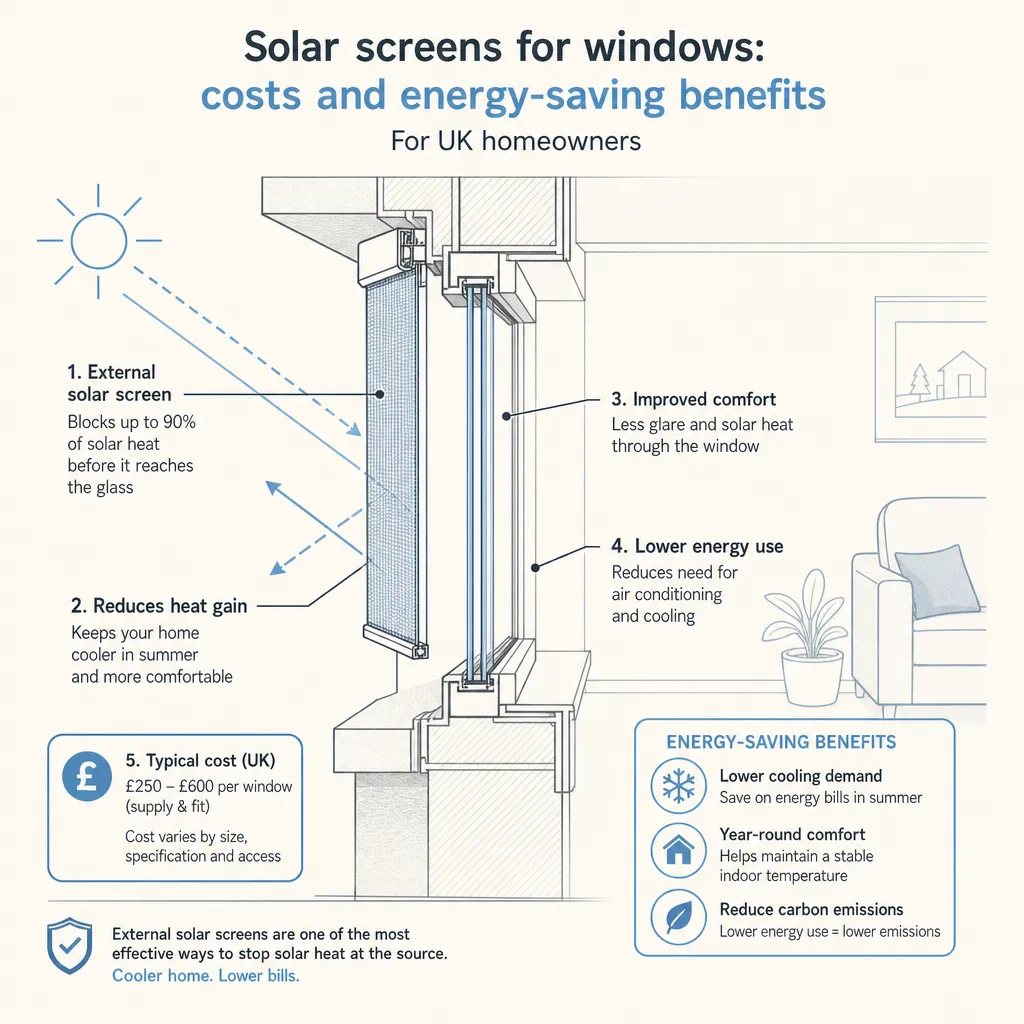
Solar screens for windows: costs and energy-saving benefits
Solar screens for windows are shading systems — external mesh screens, solar control film, or fixed louvres — that reduce solar heat gain and glare. In the UK, external roller solar screens typically cost £150–£400 per window installed, and solar control window film costs £25–£80 per m² professionally applied. Both improve summer thermal comfort, with external shading being considerably more effective than internal solutions.
 Energy & Retrofit
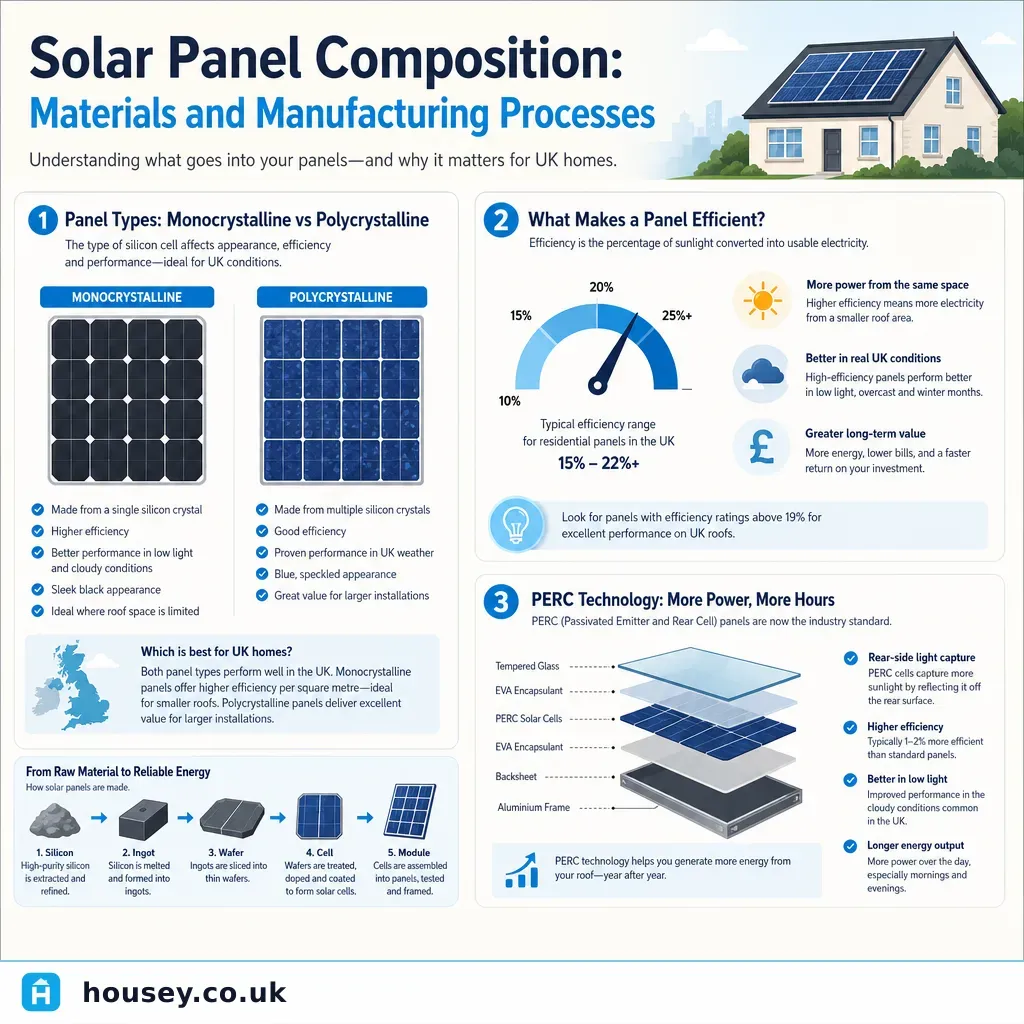
Solar Panel Composition: Materials and Manufacturing Processes
Solar panels are made primarily of silicon photovoltaic cells sandwiched between layers of tempered glass, an EVA (ethylene-vinyl acetate) encapsulant, a protective backsheet, and an aluminium frame. Monocrystalline silicon panels — the most common type fitted in UK homes — offer efficiencies of around 20–24% and carry a typical product lifespan of 25–30 years.