Knowledge Base
Property advice that actually helps
Researched, UK-specific guides for every stage of homeownership — from buying and surveys to retrofit, planning and major works.
 Energy & Retrofit
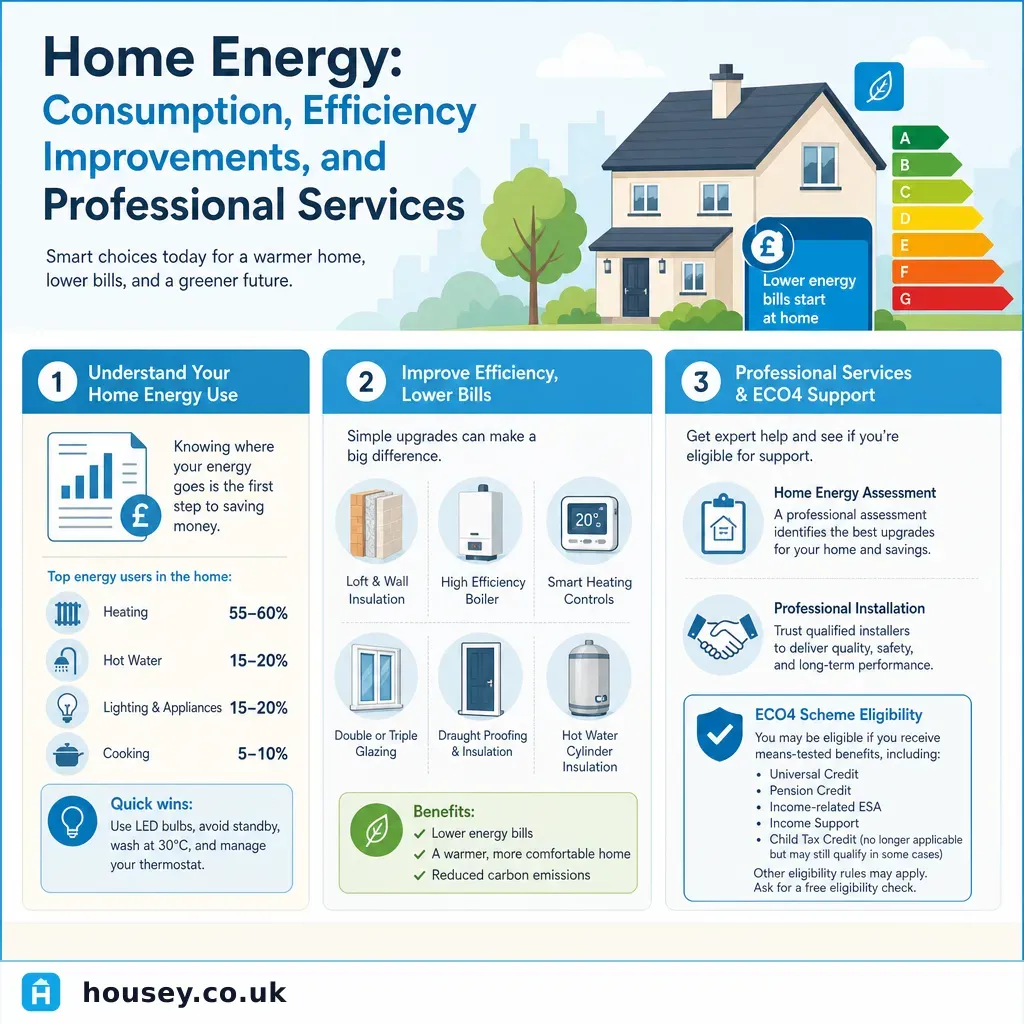
Home Energy: Consumption, Efficiency Improvements, and Professional Services
Most UK homes can cut energy use by 20–40% through insulation, upgraded heating controls, and appliance improvements. Begin with a whole-house assessment to prioritise measures by cost-effectiveness. ECO4 and the Great British Insulation Scheme may fund insulation and heating upgrades at no upfront cost for eligible households.
 Energy & Retrofit
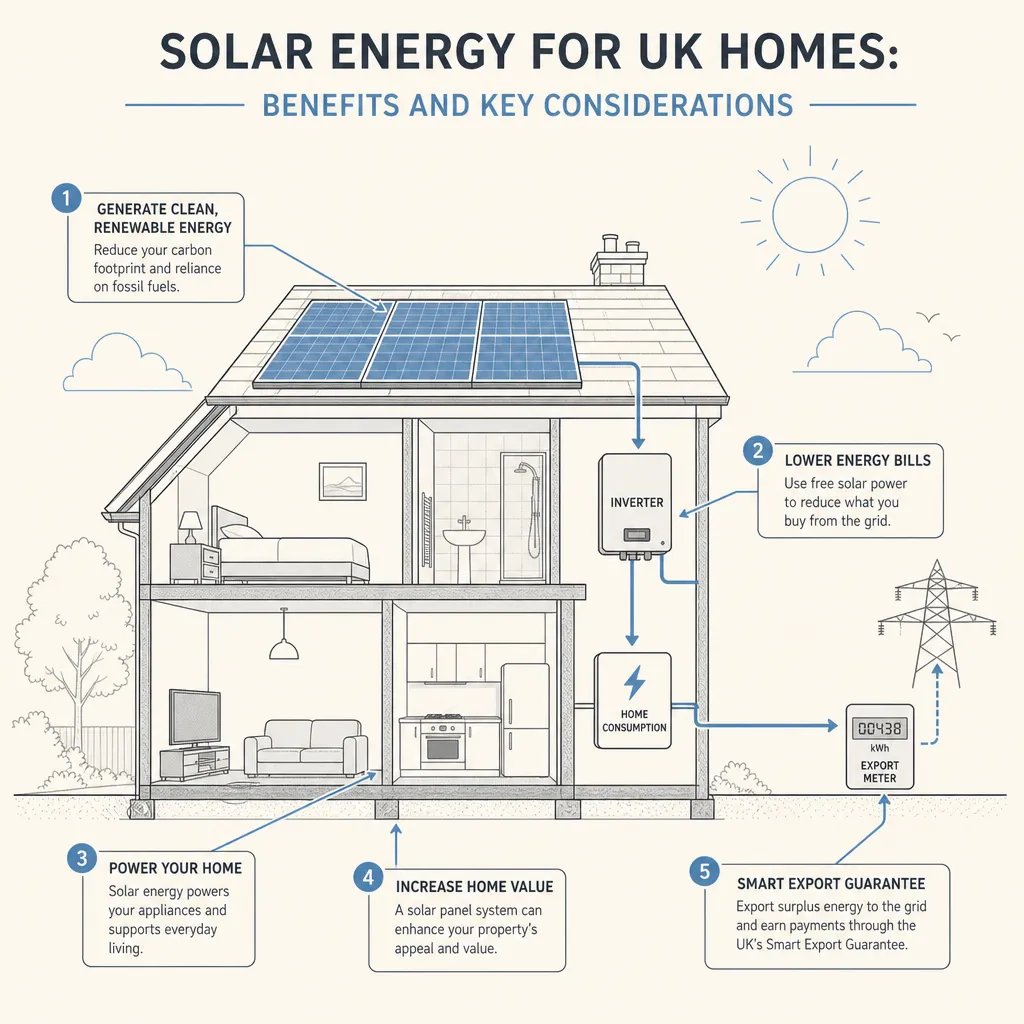
Solar Energy for UK Homes: Benefits and Key Considerations
Solar photovoltaic (PV) panels can reduce electricity bills, generate export income via the Smart Export Guarantee (SEG), and improve a home's EPC rating. Key considerations include roof orientation and pitch, shading from nearby buildings or trees, structural condition, planning restrictions on listed buildings and in conservation areas, and whether a broader retrofit plan requires a PAS 2035 assessment first.
 Energy & Retrofit
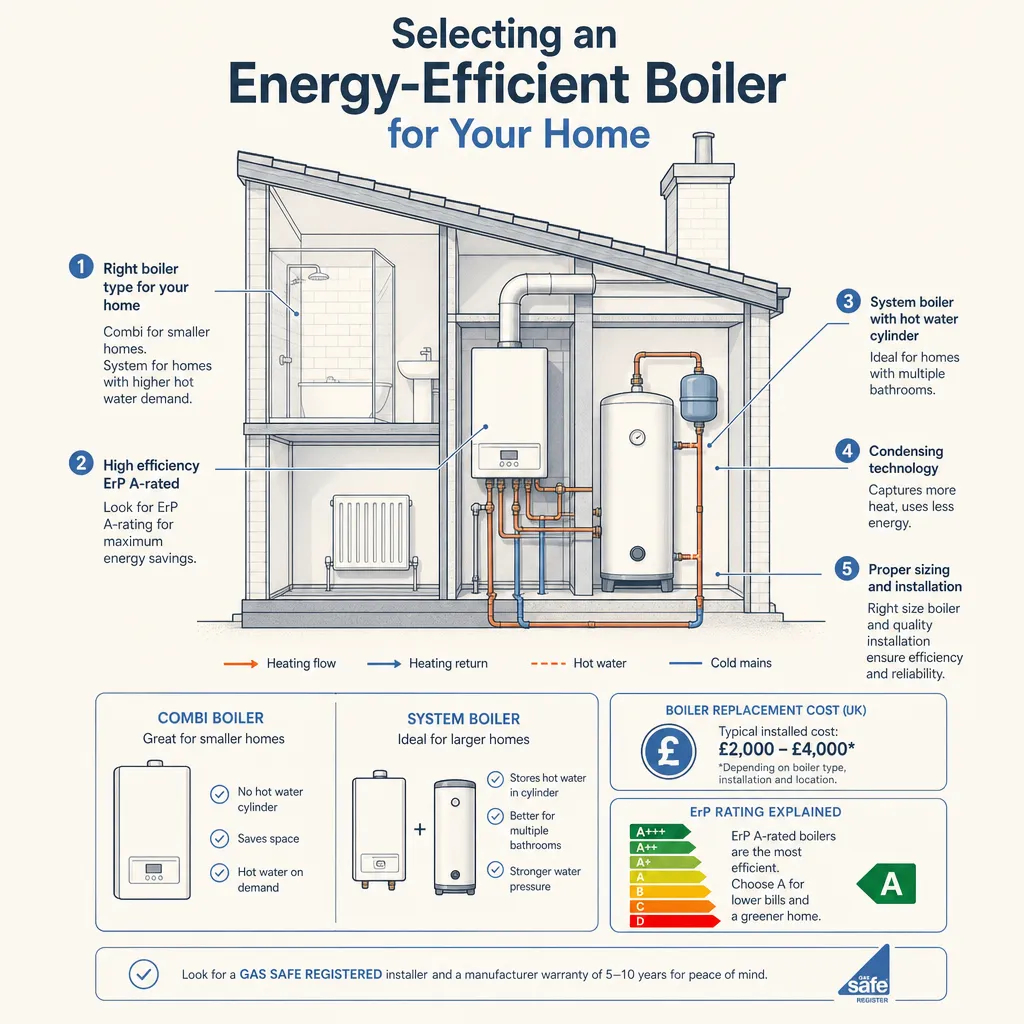
Selecting an Energy-Efficient Boiler for Your Home
For most UK homes, an A-rated condensing combi boiler is the most efficient and space-saving replacement. System boilers suit homes with two or more bathrooms or high hot water demand. All new gas boilers must be condensing type under Building Regulations Part L, and all installation work must be carried out by a Gas Safe registered engineer.
 Energy & Retrofit
Comparing wood burning stoves with gas heating options
Wood burning stoves provide supplementary heat in one room at an installed cost of £1,500–£4,000; gas central heating heats the whole house at a boiler replacement cost of £2,000–£4,500. Stoves require HETAS installation and compliance with Smoke Control Area rules; gas work must use a Gas Safe registered engineer. For most homes, the two systems complement rather than replace each other.
 Energy & Retrofit
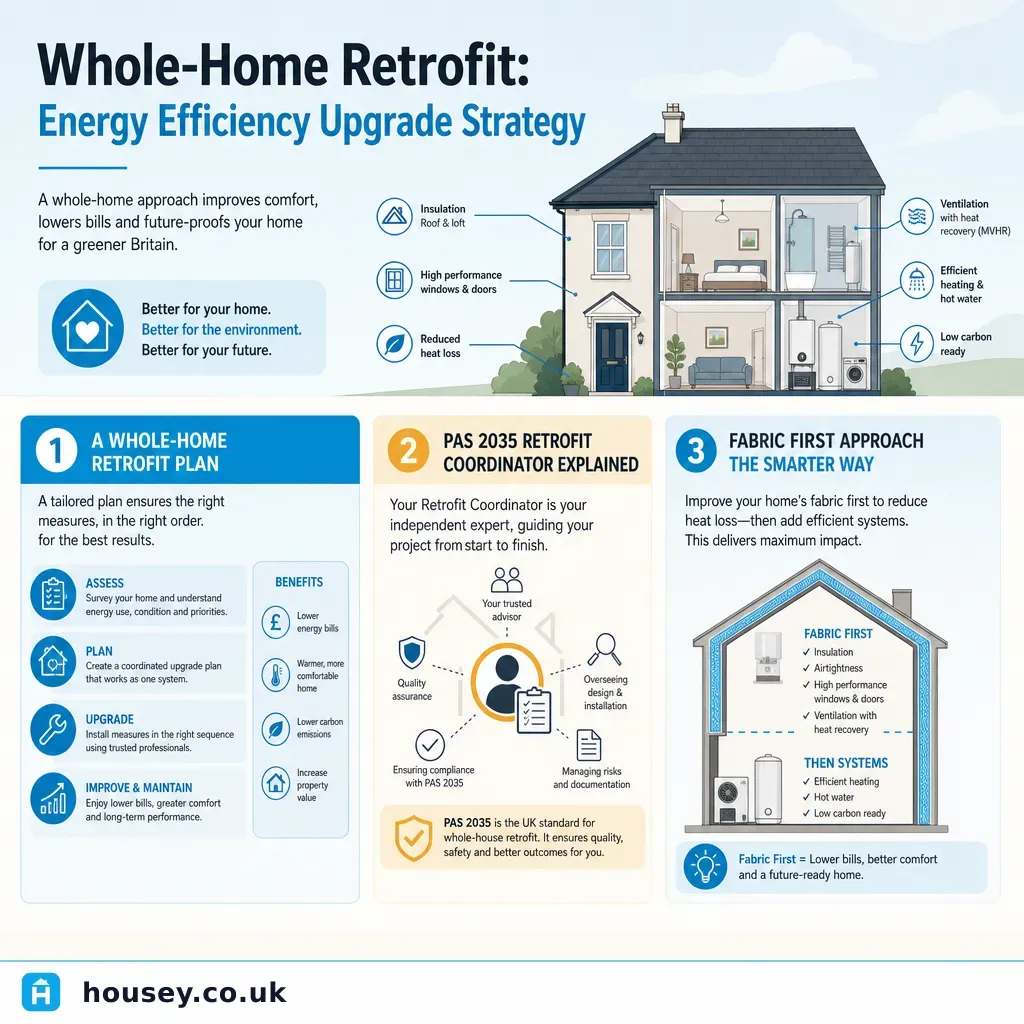
Whole-Home Retrofit: Energy Efficiency Upgrade Strategy
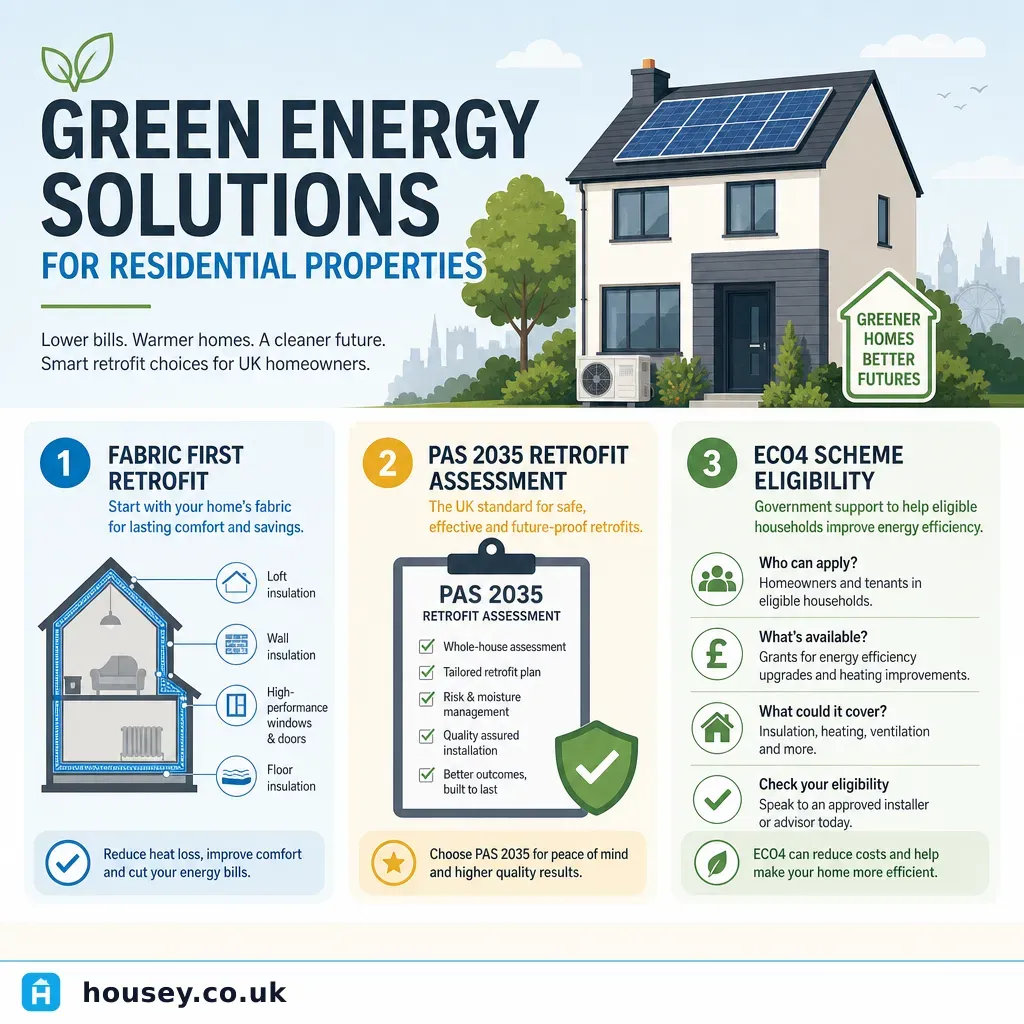
A whole-home retrofit takes a coordinated, fabric-first approach — insulating the building envelope and improving airtightness before upgrading heating or adding renewables. Under PAS 2035, a TrustMark-registered Retrofit Coordinator assesses your property and produces a Medium-Term Improvement Plan. Doing measures in the wrong order risks moisture problems, poor performance, and wasted investment.
 Energy & Retrofit
Green Energy Solutions for Residential Properties
Upgrading a UK home to green energy works best as a planned sequence: assess the property first, improve insulation and building fabric, then introduce low-carbon heating and renewable electricity. The PAS 2035 framework guides whole-home retrofit planning. The Boiler Upgrade Scheme offers £7,500 towards heat pumps for eligible homeowners, and ECO4 funds insulation improvements for lower-income households. Getting the order right prevents performance problems and moisture risk.
 Energy & Retrofit
Low-Emissivity Glazing and Window Film: Thermal Control Options
Low-emissivity (low-e) glazing uses a metallic oxide coating to reflect heat back into a room, typically achieving whole-window U-values of 1.0–1.3 W/m²K in double-glazed units — significantly better than standard double glazing at around 2.8 W/m²K. Window film offers a cheaper retrofit option for single glazing or heritage properties but cannot match replacement low-e glazing on thermal performance.
 Energy & Retrofit
Choosing the Best Materials for Pipe Insulation
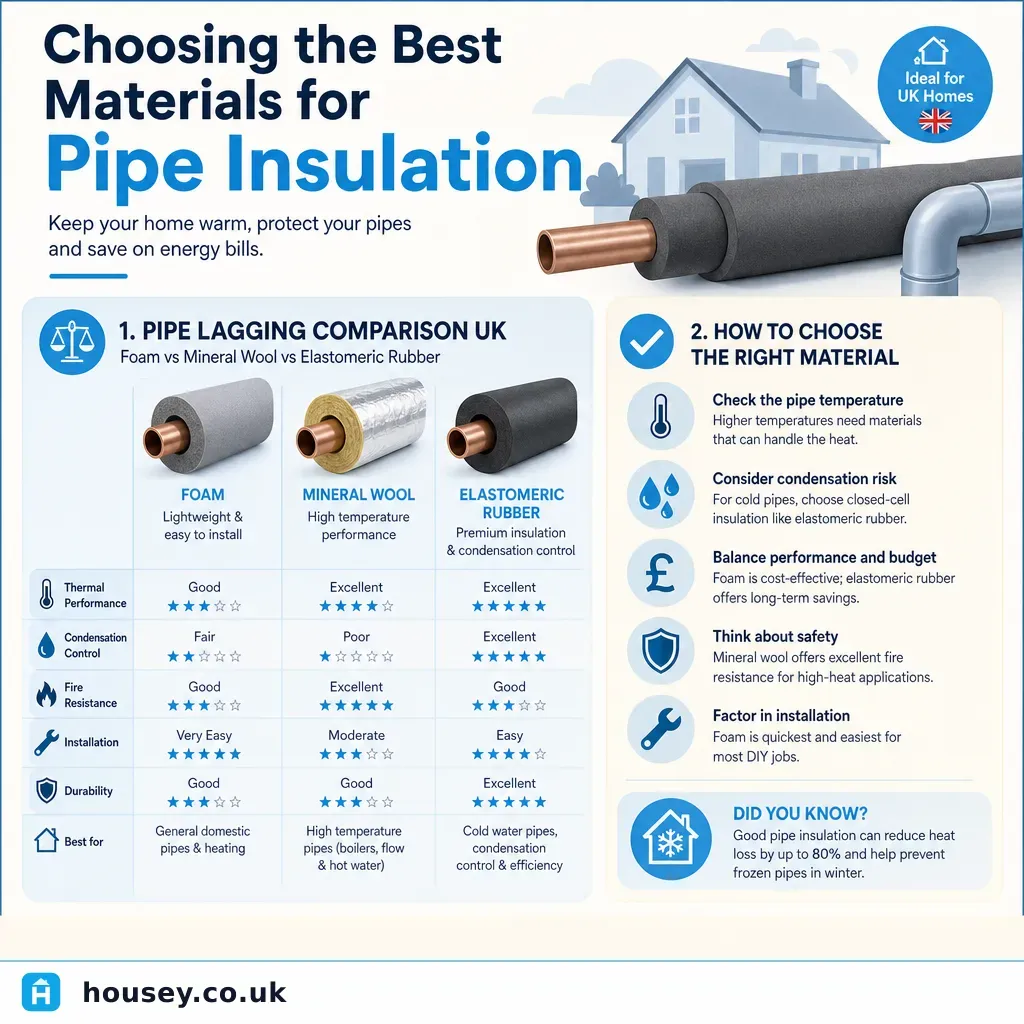
The most common pipe insulation materials in UK homes are closed-cell polyethylene foam (foam lagging), elastomeric rubber (e.g. Armaflex), mineral wool, and phenolic foam. Foam lagging suits most domestic hot and cold water pipes; elastomeric rubber is preferred where condensation resistance is critical; mineral wool suits high-temperature applications. The right material depends on pipe temperature, location, and budget.
 Energy & Retrofit
Lightweight Concrete as a Building Insulation Material
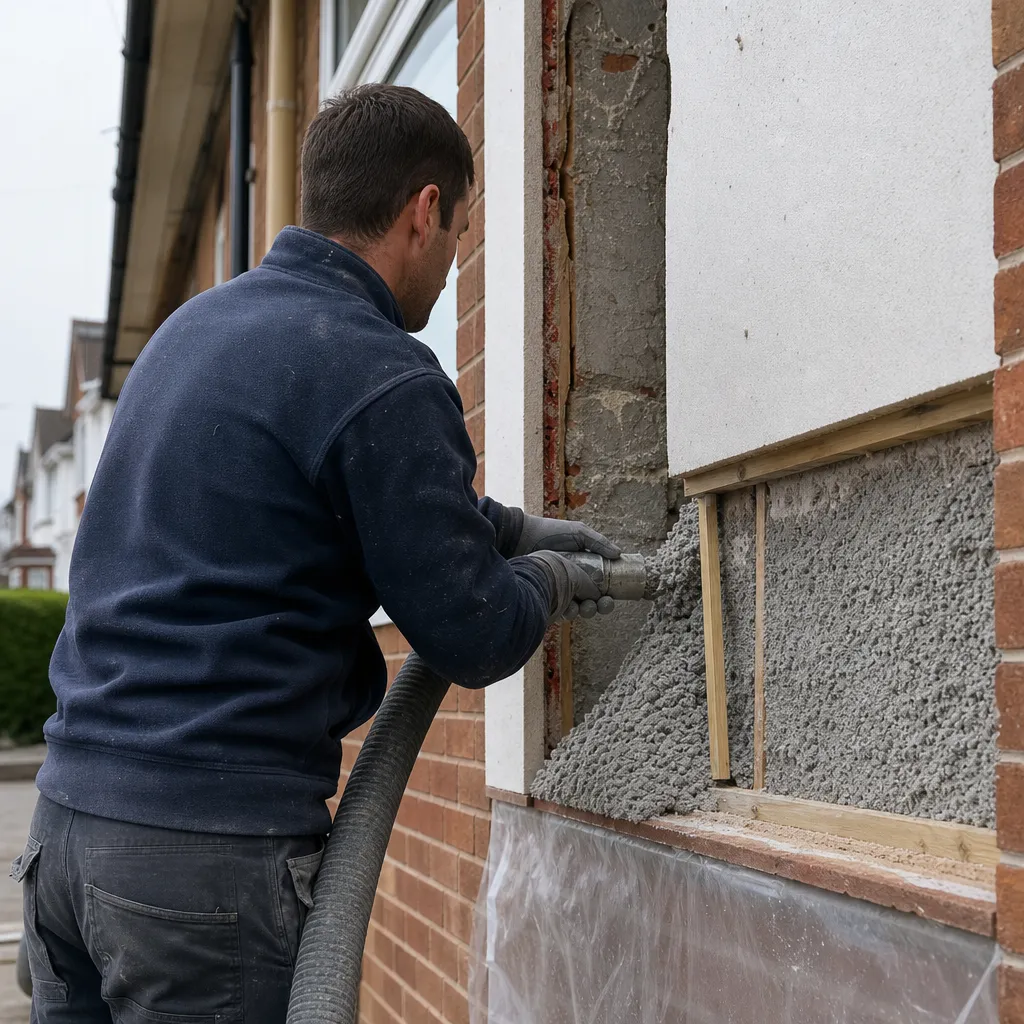
Lightweight concrete — including aerated, foamed, and expanded-aggregate types — offers meaningfully better thermal resistance than dense concrete, but it cannot replace dedicated insulation products on its own. It is best used as part of a multi-layer building envelope strategy, typically combined with insulation boards or blanket insulation to meet Building Regulations Part L U-value targets.
 Energy & Retrofit
Ultra-Low Energy Homes: Achieving Peak Efficiency Through Integrated Design
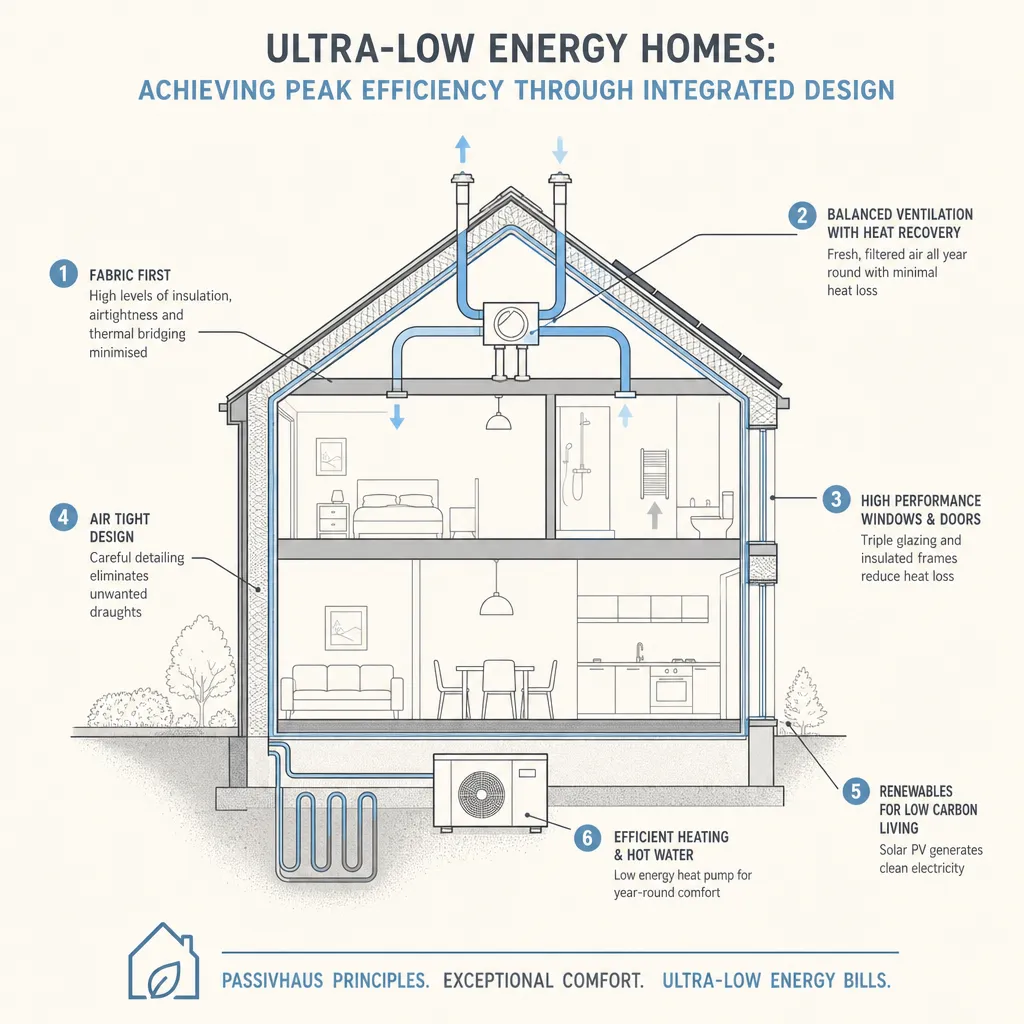
Ultra-low energy homes reduce heating demand through high-performance insulation, airtight construction, and mechanical ventilation with heat recovery (MVHR). In the UK, Passivhaus and Building Regulations Part L set the main benchmarks. An integrated design approach — coordinating architect, energy consultant, and installer from the outset — is essential to achieve certified performance levels and lasting comfort.
 Energy & Retrofit
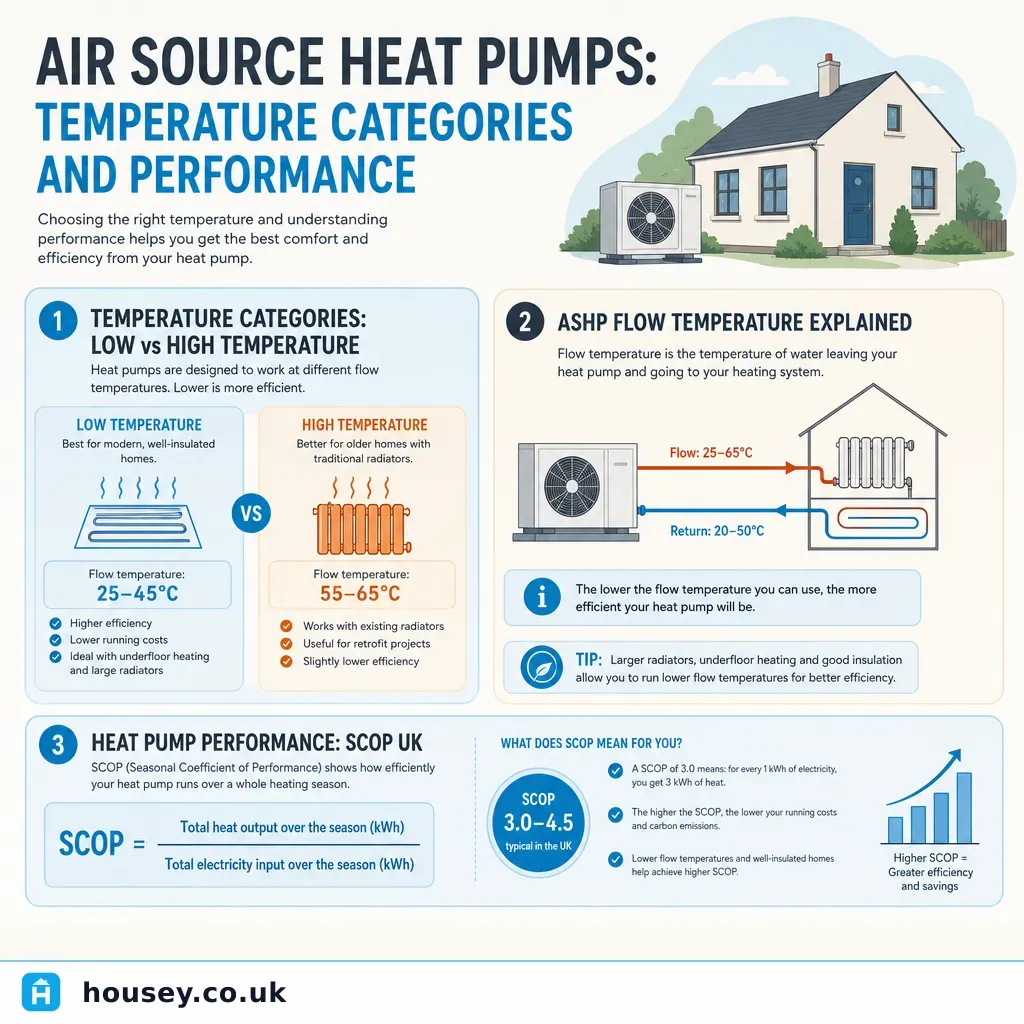
Air Source Heat Pumps: Temperature Categories and Performance
Air source heat pumps are typically classified as low temperature (flow temperatures of 35–55°C) or high temperature (up to 65–80°C). Low-temperature models run more efficiently but need well-insulated homes and underfloor heating or oversized radiators. High-temperature units suit existing radiator systems. An MCS-accredited installer must always size the system with a full heat loss calculation.
 Energy & Retrofit
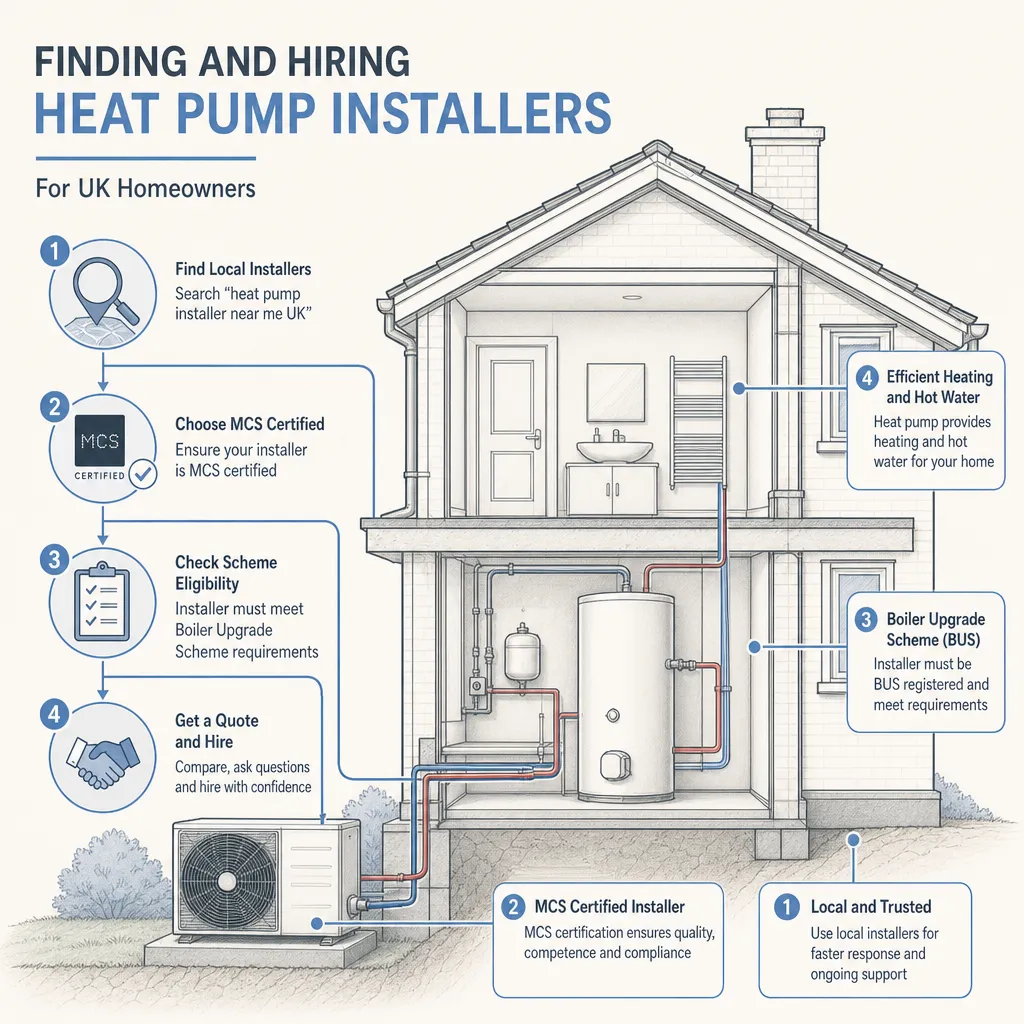
Finding and Hiring Heat Pump Installers
To find a qualified heat pump installer, check the MCS installer database for current certification, confirm the installer will carry out a full room-by-room heat loss calculation before producing a design or quote, and get at least three written quotes specifying the heat pump model, emitter sizing, and Boiler Upgrade Scheme grant process. Only MCS-certified installers can support BUS grant applications.