Knowledge Base
Property advice that actually helps
Researched, UK-specific guides for every stage of homeownership — from buying and surveys to retrofit, planning and major works.
 Energy & Retrofit
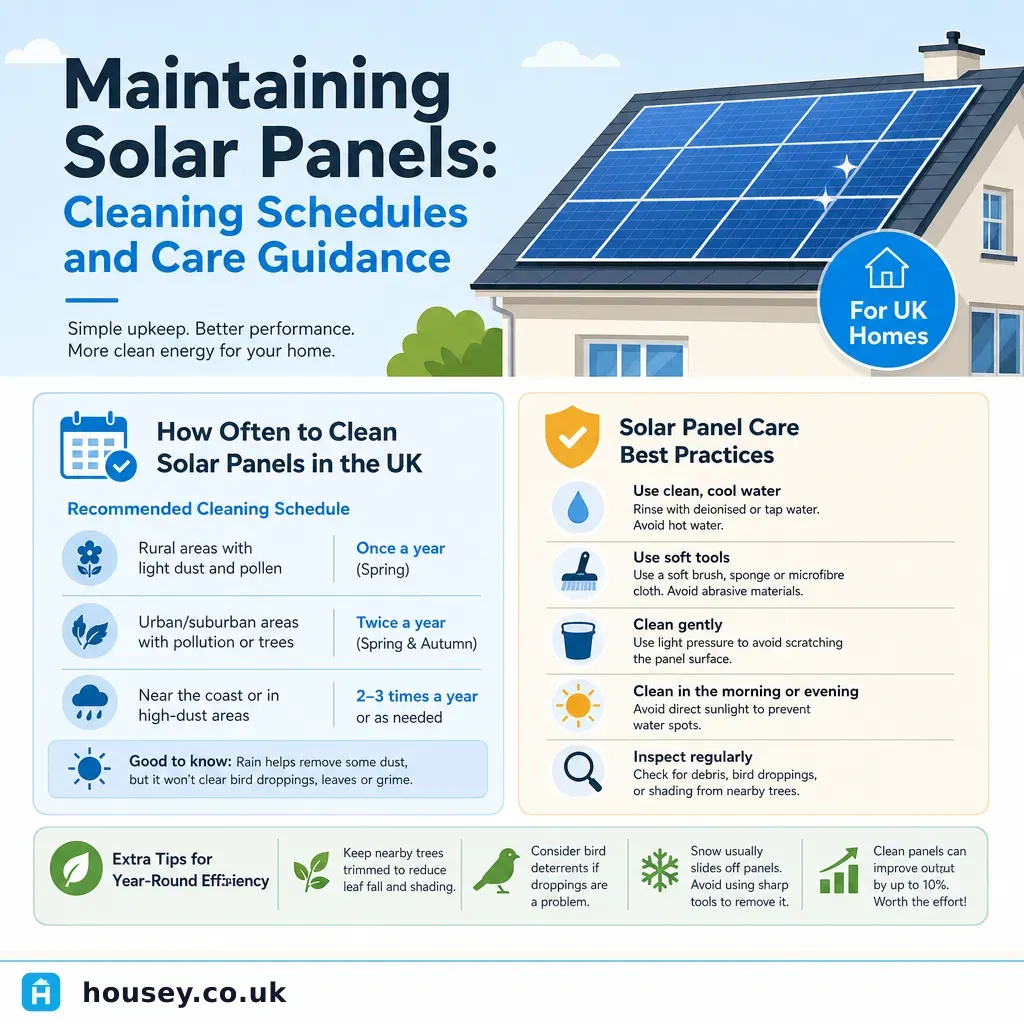
Maintaining solar panels: cleaning schedules and care guidance
Most UK solar panels need cleaning once or twice a year, typically in late winter and late summer. Routine care also involves monitoring inverter output regularly, checking for new shading from trees or obstructions, and inspecting mounting hardware visually after severe weather. Professional cleaning is worth arranging for panels on steep roofs or in areas with heavy bird activity.
 Energy & Retrofit
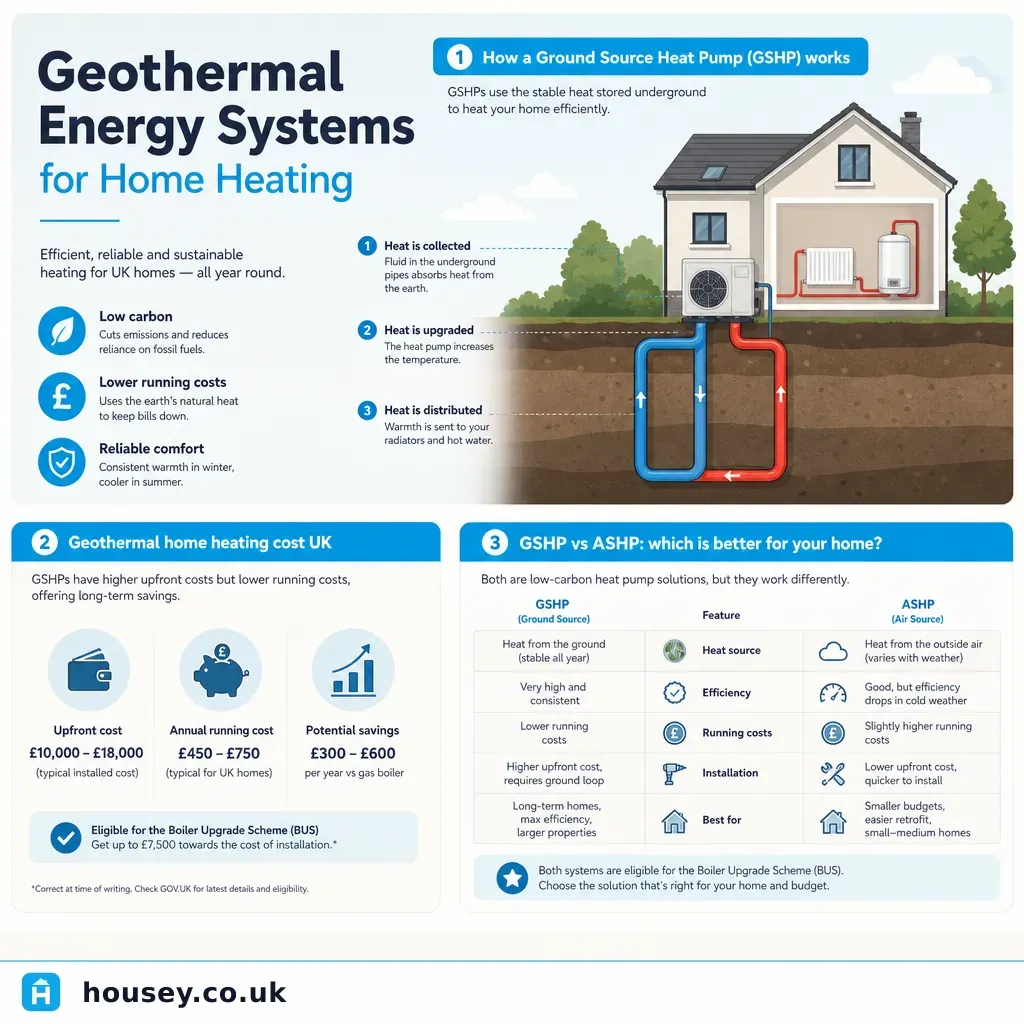
Geothermal Energy Systems for Home Heating
Ground source heat pumps (GSHPs) extract stable thermal energy from the earth via buried ground loops or boreholes, typically delivering 3–4 units of heat per unit of electricity consumed. They qualify for a £7,500 Boiler Upgrade Scheme grant in England and Wales, subject to MCS-certified installation and a valid EPC. Correct sizing, ground investigation, and adequate fabric insulation are essential prerequisites.
 Energy & Retrofit
Wall Insulation, Replastering, and Panelling: Coordinating Multiple Trades
Coordinating wall insulation with replastering and panelling requires a strict trade sequence: damp assessment first, then first-fix electrical, insulation, boarding, wet plaster, and second-fix. Skipping steps — especially moisture surveys or electrical re-routes — risks trapping damp, invalidating guarantees, or failing Building Regulations compliance.
 Energy & Retrofit
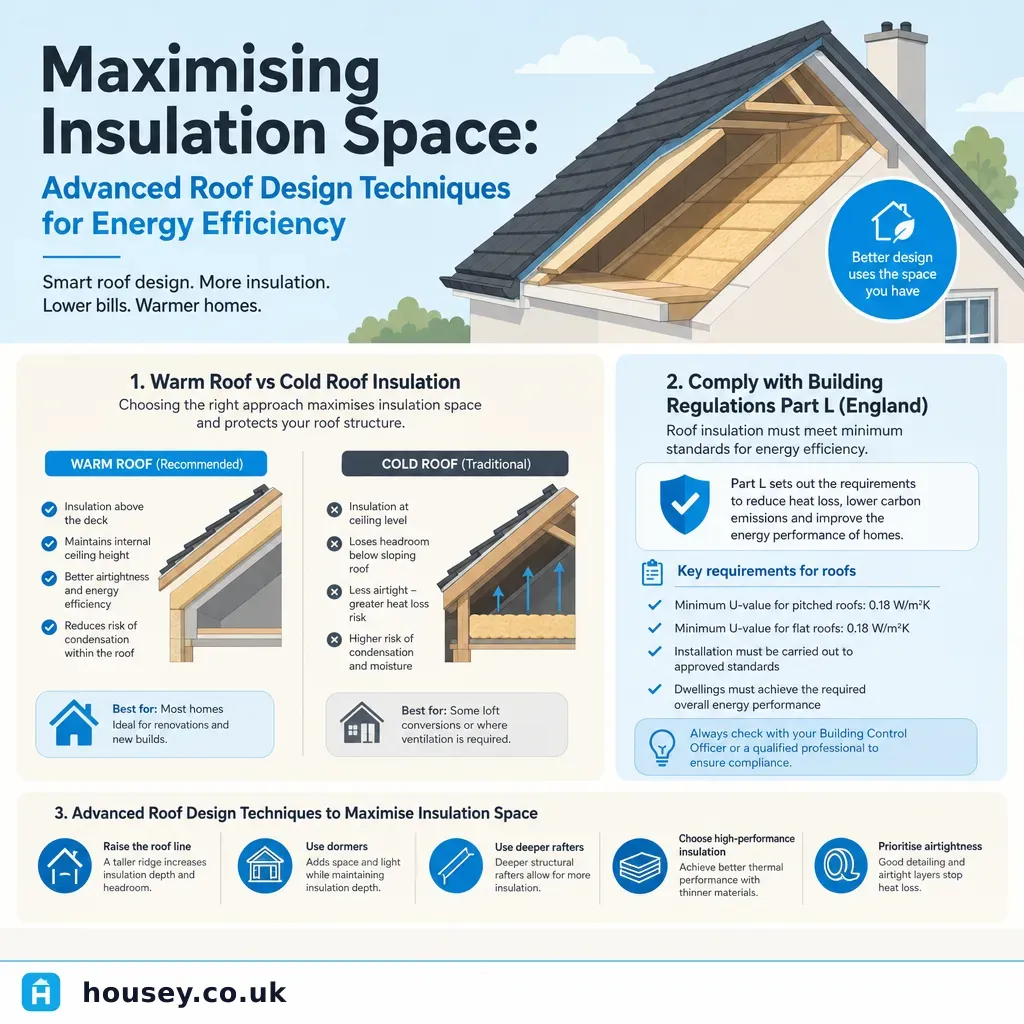
Maximising Insulation Space: Advanced Roof Design Techniques for Energy Efficiency
Maximising insulation space in a roof depends on the roof type, construction era, and energy targets. Warm roof decks, raised heel trusses, and hybrid cold-warm configurations all increase effective insulation depth. Building Regulations Part L sets minimum U-values of 0.16 W/m²K; most upgrades require a competent installer and may need building control sign-off.
 Energy & Retrofit
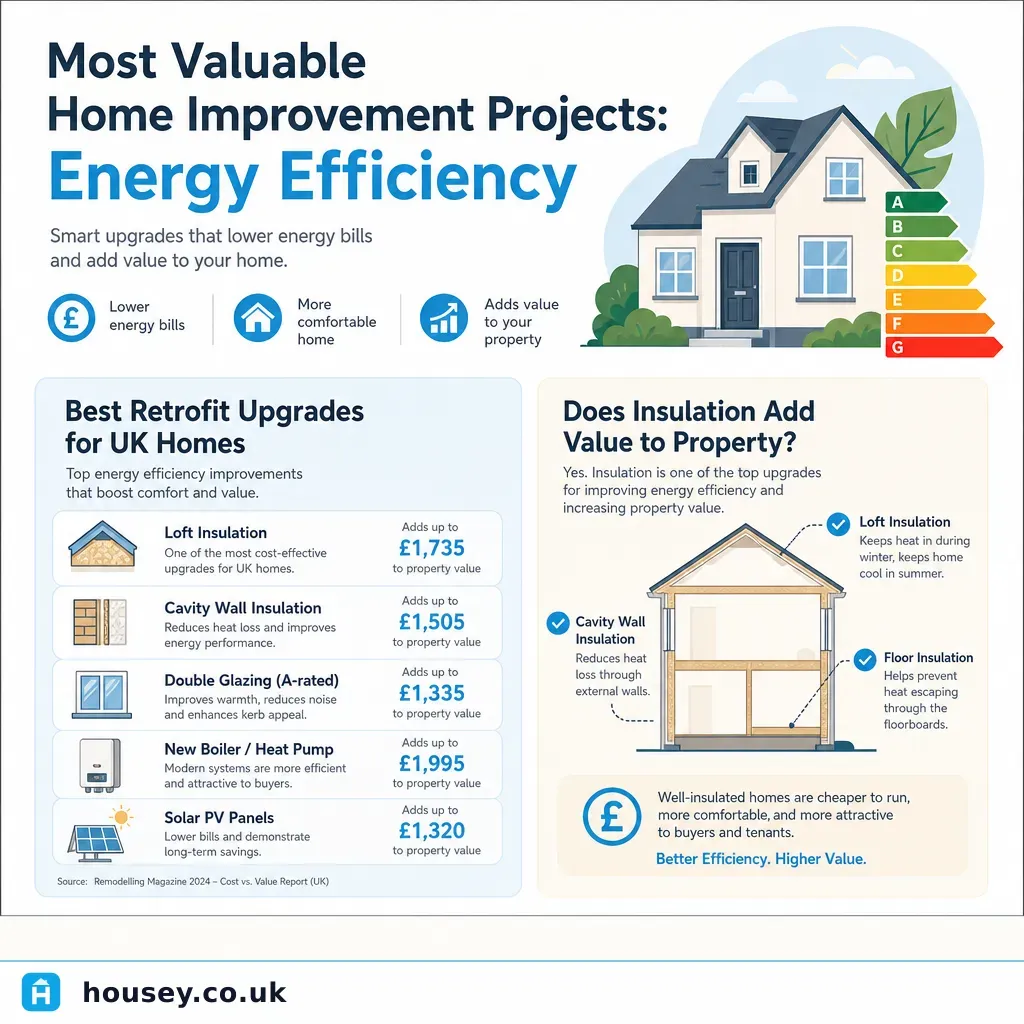
Most Valuable Home Improvement Projects: Energy Efficiency
Energy efficiency improvements with the strongest value case for UK homes include loft insulation, cavity wall insulation, double glazing, and air source heat pumps in well-insulated properties. Grants such as the Boiler Upgrade Scheme can reduce upfront costs significantly. Research suggests upgrading from EPC band E to C adds around 4–5% to a property's sale value.
 Energy & Retrofit
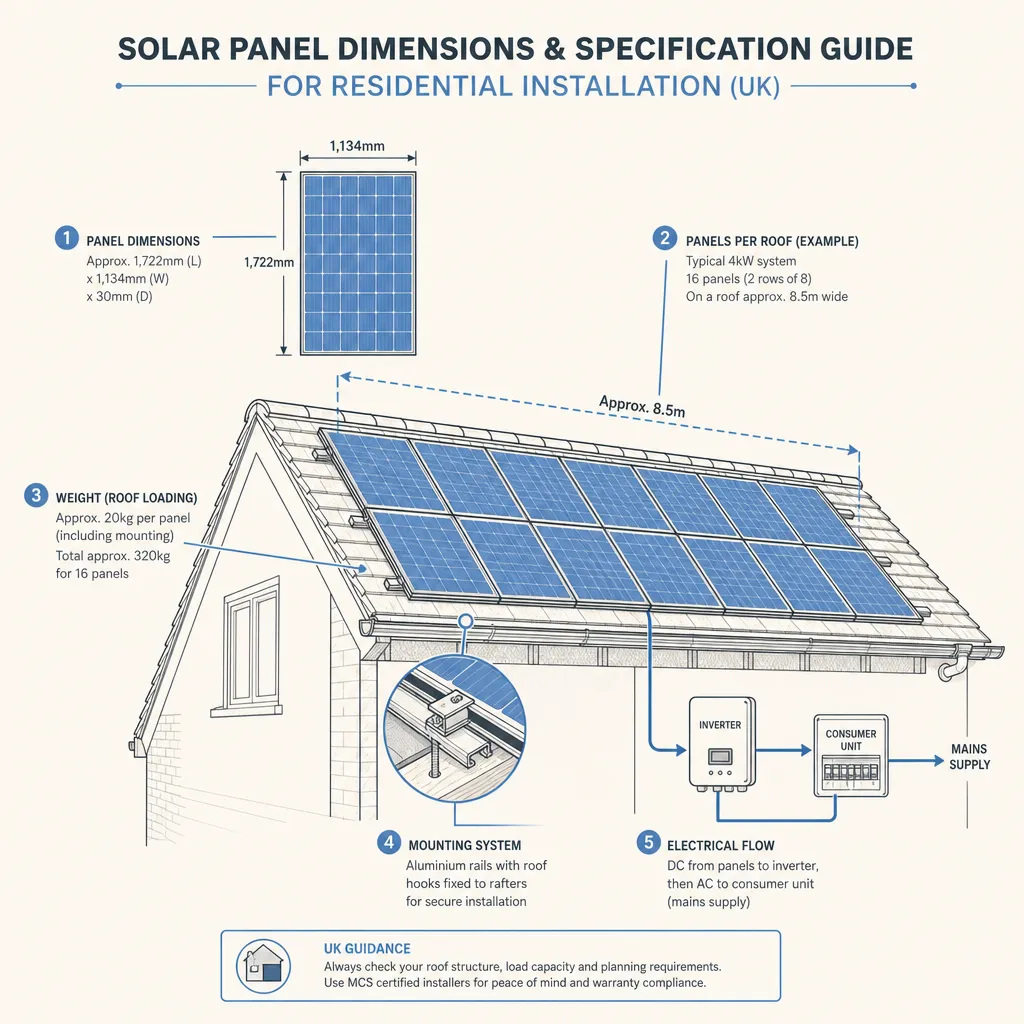
Solar Panel Dimensions and Specification Guide for Residential Installation
A standard residential solar panel measures approximately 1700–1800mm × 1000–1050mm, weighs 18–22 kg, and produces 380–450 W. A typical 4 kWp system requires around 10 panels and 17–18 m² of unshaded roof space. MCS-accredited installation is required for Smart Export Guarantee eligibility. Most installations qualify as permitted development, but listed buildings and conservation areas have specific restrictions.
 Energy & Retrofit
Choosing a Heating System for Your Conservatory
The most practical conservatory heating options are electric panel heaters, underfloor heating (electric or wet), infrared panels, and extending an existing central heating circuit. For a year-round living space, wet underfloor heating or radiators connected to the main system offer the most consistent warmth. For occasional use, electric infrared or panel heaters are simpler and cheaper to install.
 Energy & Retrofit
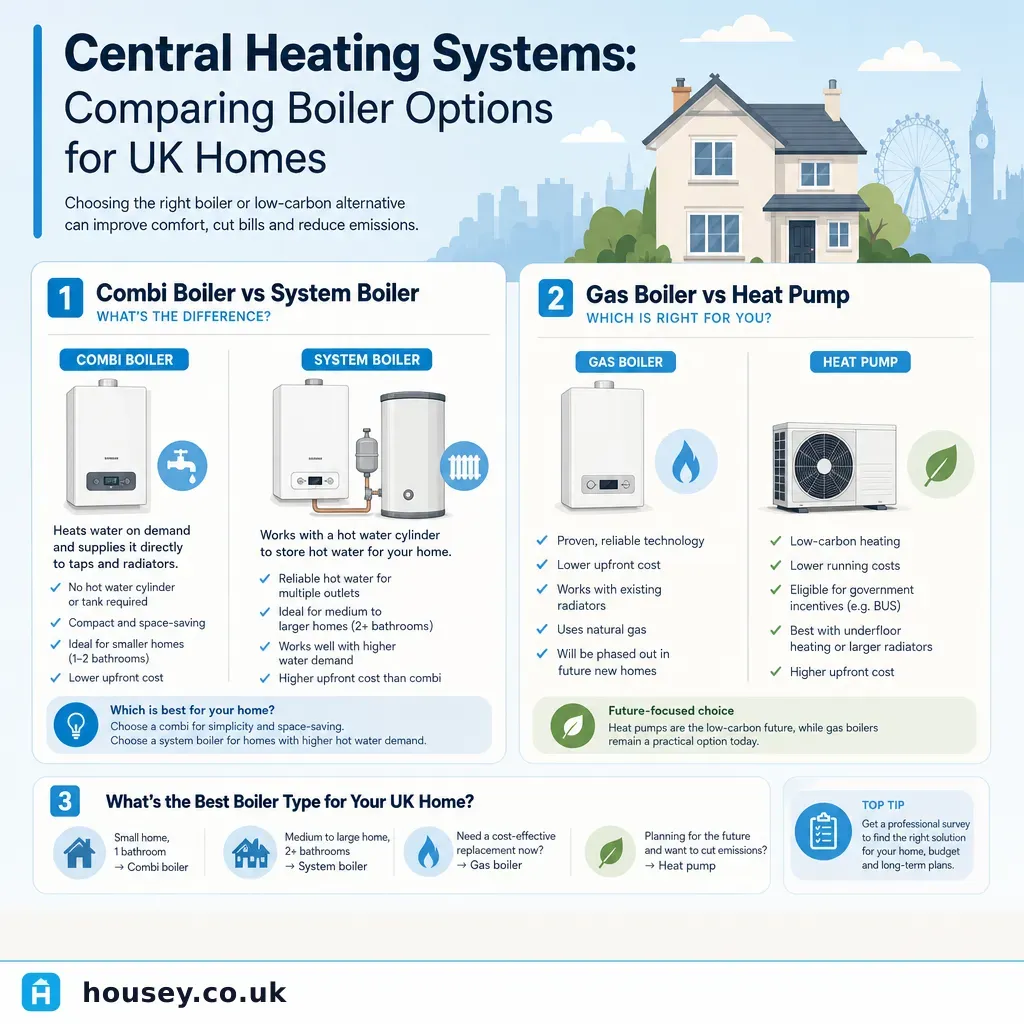
Central Heating Systems: Comparing Boiler Options for UK Homes
UK homes are generally heated by a combi boiler (no cylinder needed), system boiler (needs a hot water cylinder), or regular boiler (needs both a cylinder and cold-water tank). Heat pumps are a growing low-carbon alternative. The right choice depends on household size, hot water demand, and existing pipework. All gas boiler installation must be carried out by a Gas Safe registered engineer.
 Energy & Retrofit
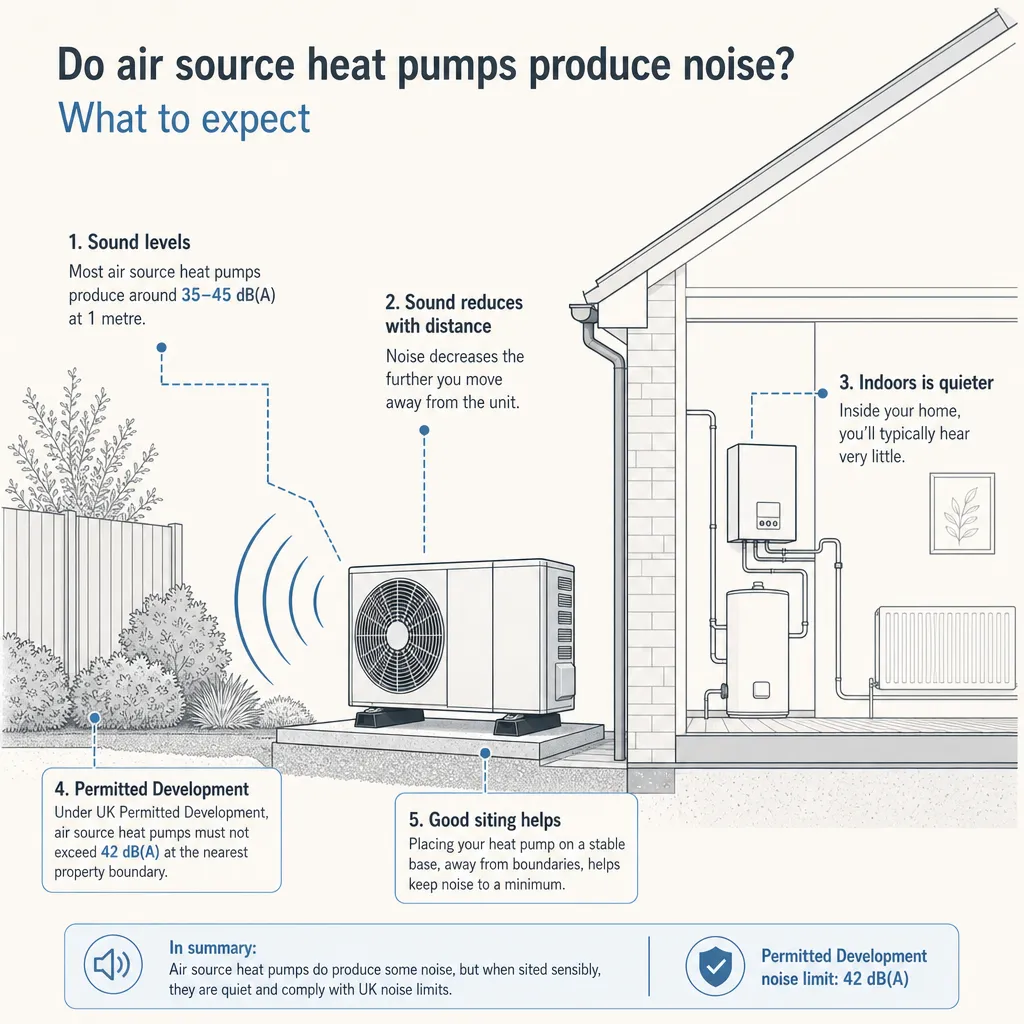
Do air source heat pumps produce noise? What to expect
Air source heat pumps produce a continuous low-level hum, typically 40–55 dB at one metre — similar in volume to a refrigerator or quiet background noise. Permitted development rules in England cap noise at 42 dB(A) measured one metre from any neighbour's window or door. Modern inverter-driven units are significantly quieter than older models.
 Energy & Retrofit
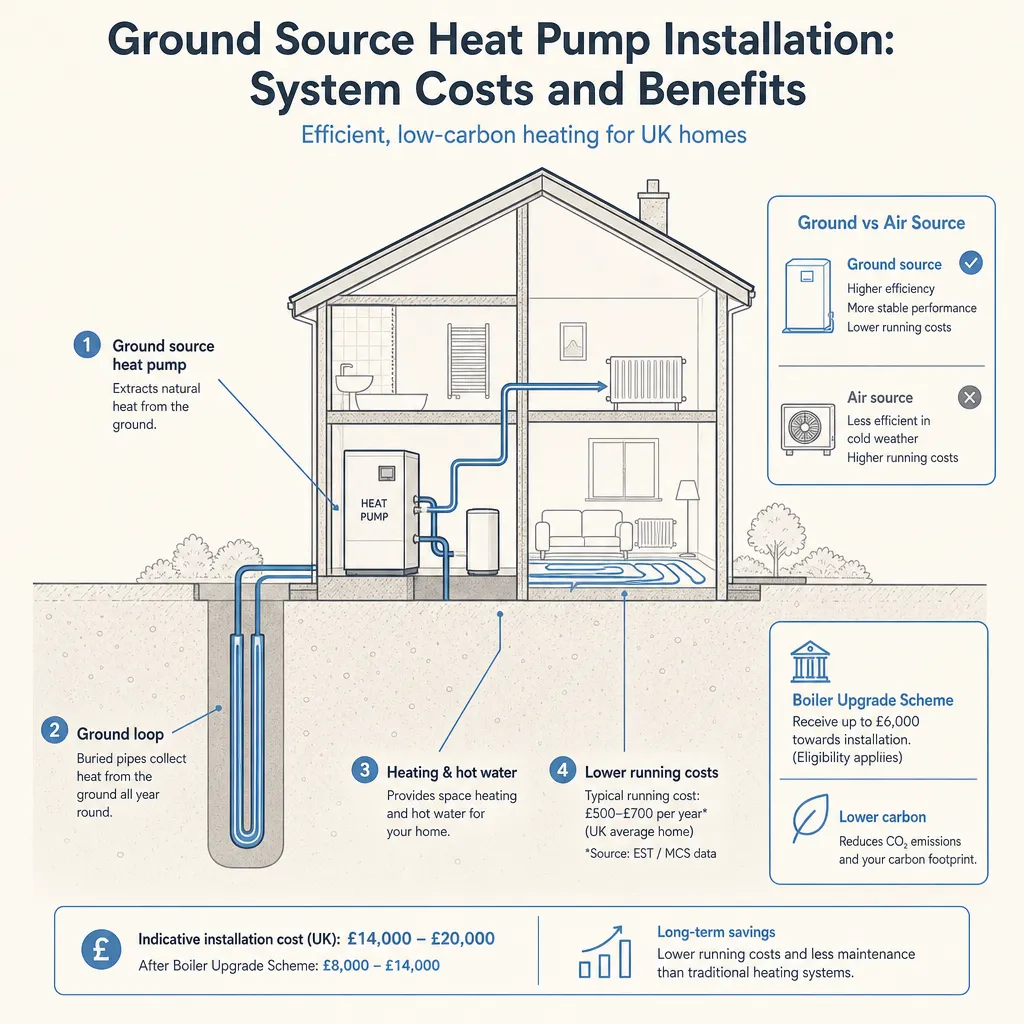
Ground Source Heat Pump Installation: System Costs and Benefits
A ground source heat pump installation costs £20,000–£45,000+ before grants in the UK. The Boiler Upgrade Scheme offers £7,500 toward eligible installations. GSHPs achieve a typical seasonal efficiency (SCOP) of 3–4.5, making them well-suited to off-gas homes with sufficient land for horizontal ground loops or ground suitable for borehole drilling.
 Energy & Retrofit
Government Support and Grants for Solar Panel Installation
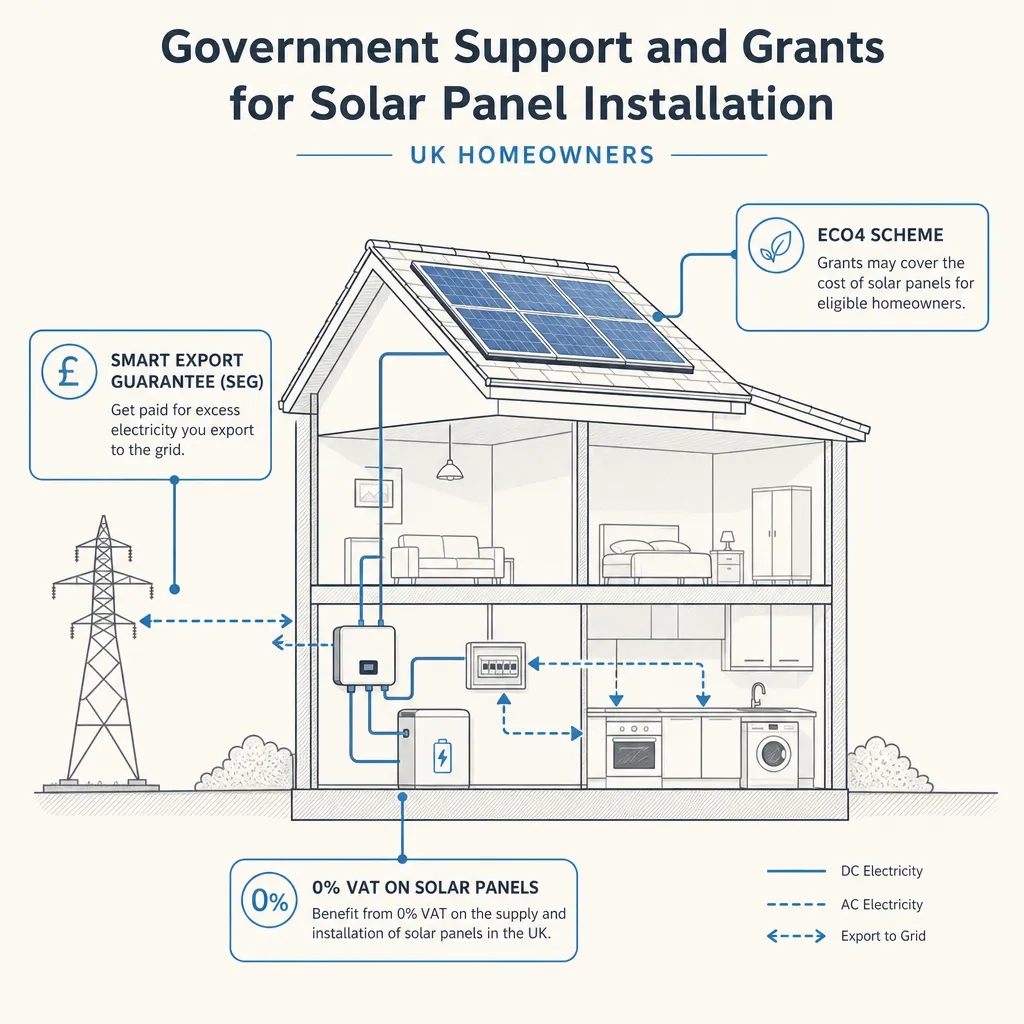
UK homeowners can benefit from 0% VAT on solar panel installation until at least March 2027, the Smart Export Guarantee for export payments, and means-tested grants such as ECO4 and the Home Upgrade Grant for eligible low-income or off-gas households. No single universal free-solar scheme exists, but combining available support can meaningfully reduce upfront costs.
 Energy & Retrofit
Budget for Relocating a Boiler or Heating System
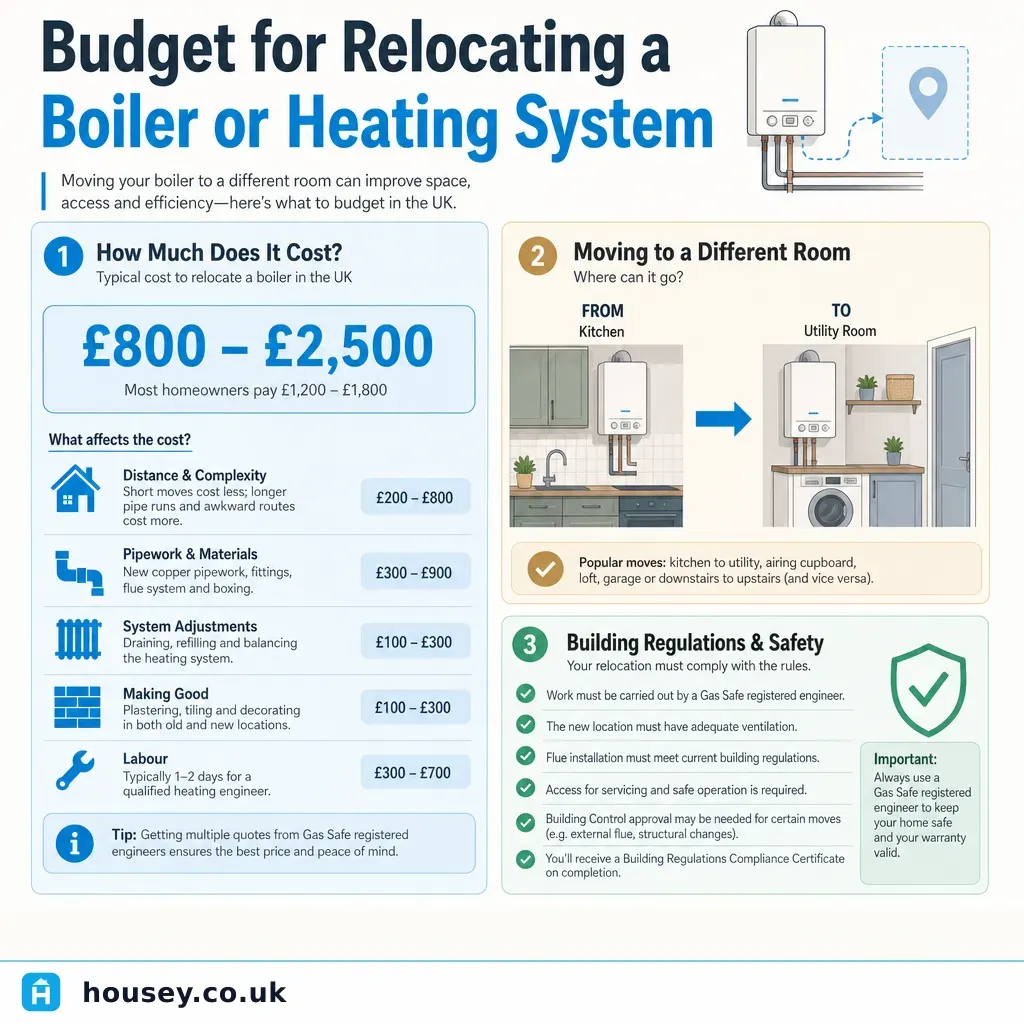
Moving a boiler in the UK typically costs £500–£2,000, though complex relocations cost more. All gas boiler work must be carried out by a Gas Safe registered engineer. Building Regulations notification is required in England and Wales. Get at least three quotes and factor in pipework, flue re-routing, and a system flush.