Knowledge Base
Property advice that actually helps
Researched, UK-specific guides for every stage of homeownership — from buying and surveys to retrofit, planning and major works.
 Energy & Retrofit
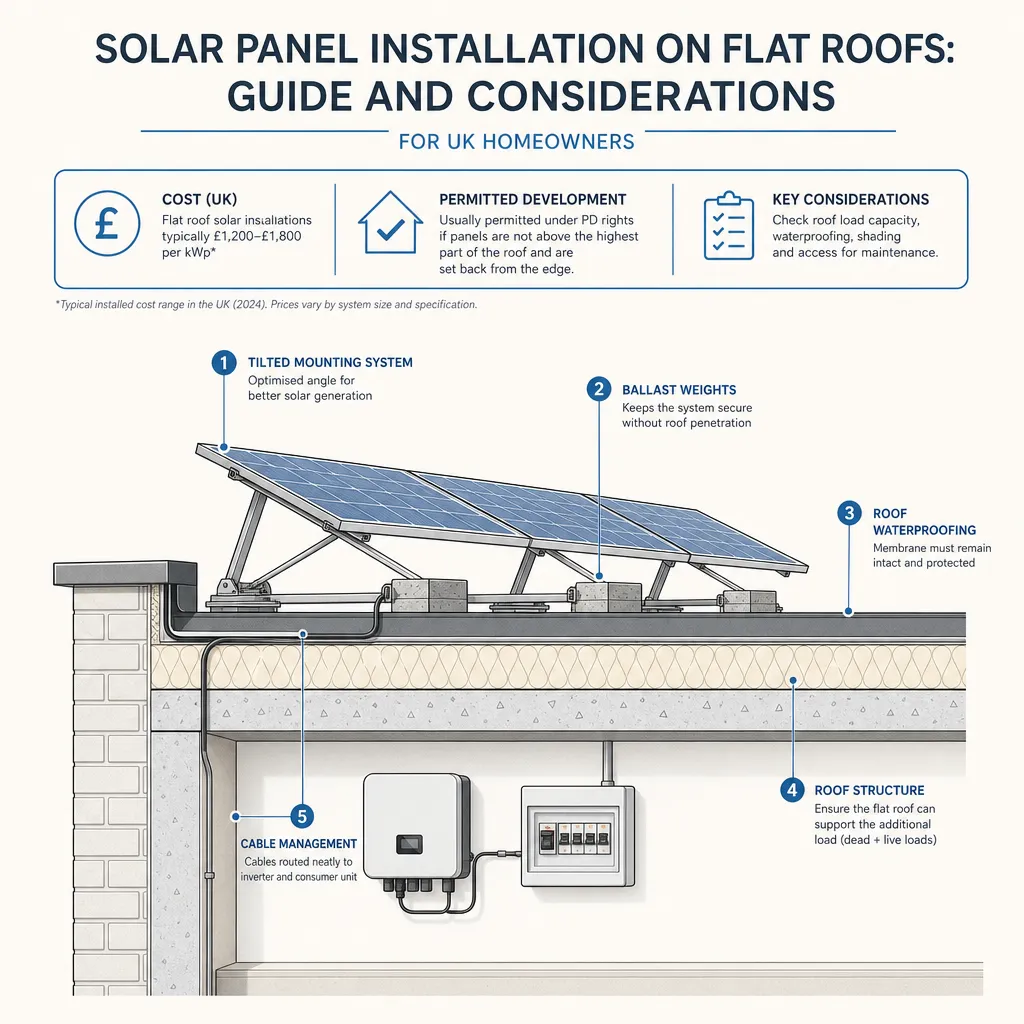
Solar Panel Installation on Flat Roofs: Guide and Considerations
Solar panels can be installed on flat roofs using ballasted or mechanically fixed frames, with the tilt angle optimised for UK latitudes. A structural engineer should assess load capacity before installation, particularly on older roofs. MCS certification is required to qualify for the Smart Export Guarantee. Planning permission is not usually needed but check if your property is listed or in a designated area.
 Energy & Retrofit
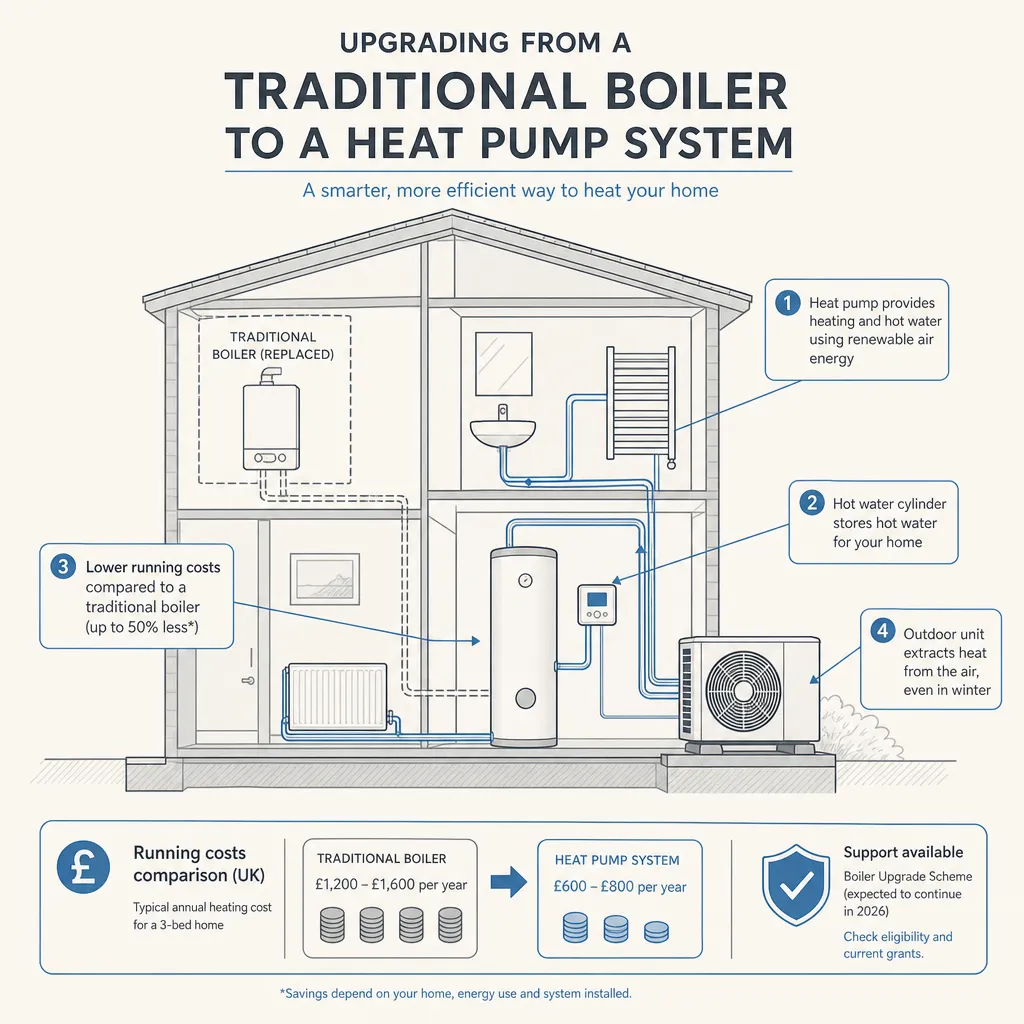
Upgrading from a Traditional Boiler to a Heat Pump System
Replacing a gas boiler with a heat pump is feasible in most UK homes but requires a professional heat loss calculation, compatible emitters, and often some fabric upgrades. The Boiler Upgrade Scheme offers a £7,500 grant for MCS-certified installations. Running costs depend on insulation, heat pump efficiency, and your electricity tariff — get an independent assessment before committing to a contractor.
 Energy & Retrofit
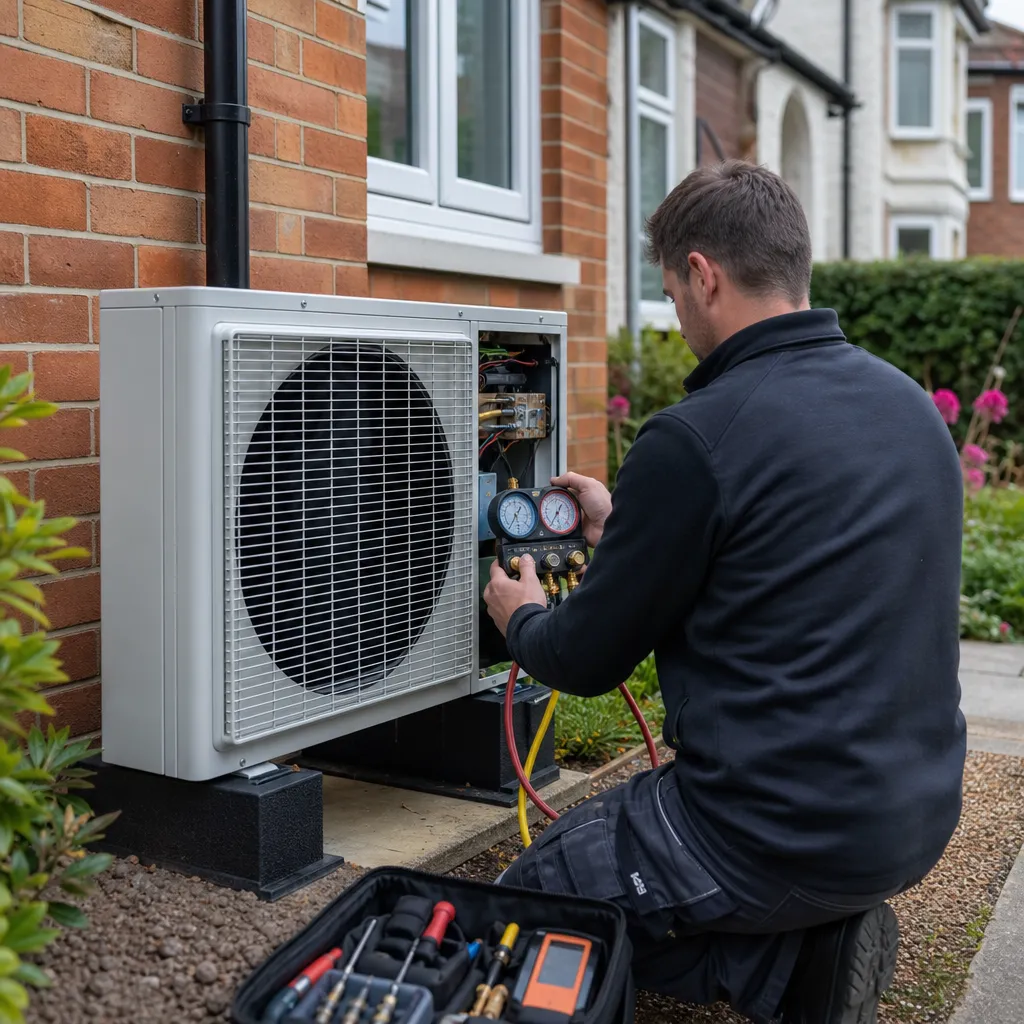
Diagnosing Heat Pump Performance Issues: Why Cooling Fails
Heat pump cooling failure is usually caused by refrigerant loss, a dirty air filter, a blocked outdoor unit, incorrect controller settings, or an undersized system. Some issues are homeowner-serviceable; refrigerant and electrical faults require a qualified F-Gas engineer. A professional heat pump survey can identify the root cause and confirm whether the system is correctly specified.
 Energy & Retrofit
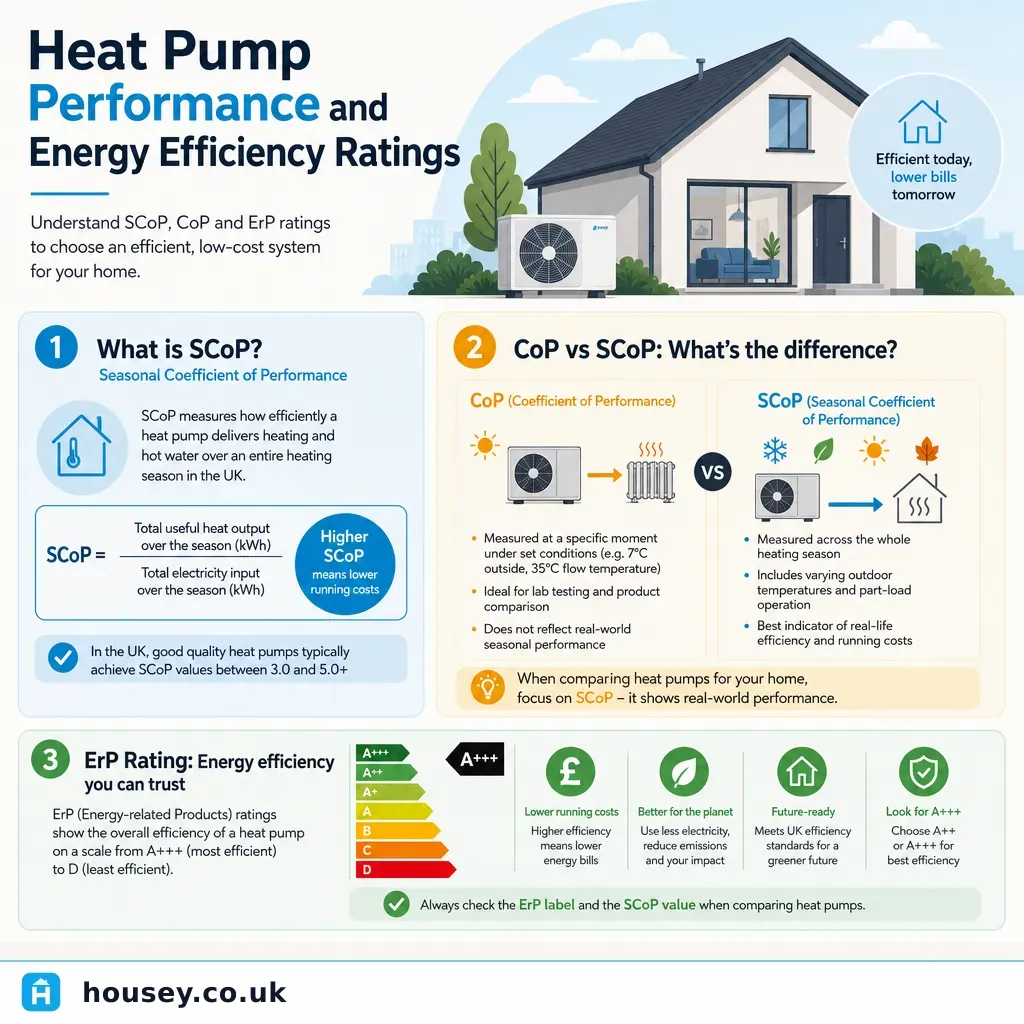
Heat Pump Performance and Energy Efficiency Ratings
Heat pump efficiency is measured by the Seasonal Coefficient of Performance (SCoP) — the annual ratio of heat delivered for every unit of electricity consumed. UK air source heat pumps typically achieve real-world SCoPs of 2.5 to 3.5, while ground source systems reach 3.5 to 4.5. System design, flow temperature, and your home's insulation level all significantly influence the figure you actually achieve.
 Energy & Retrofit
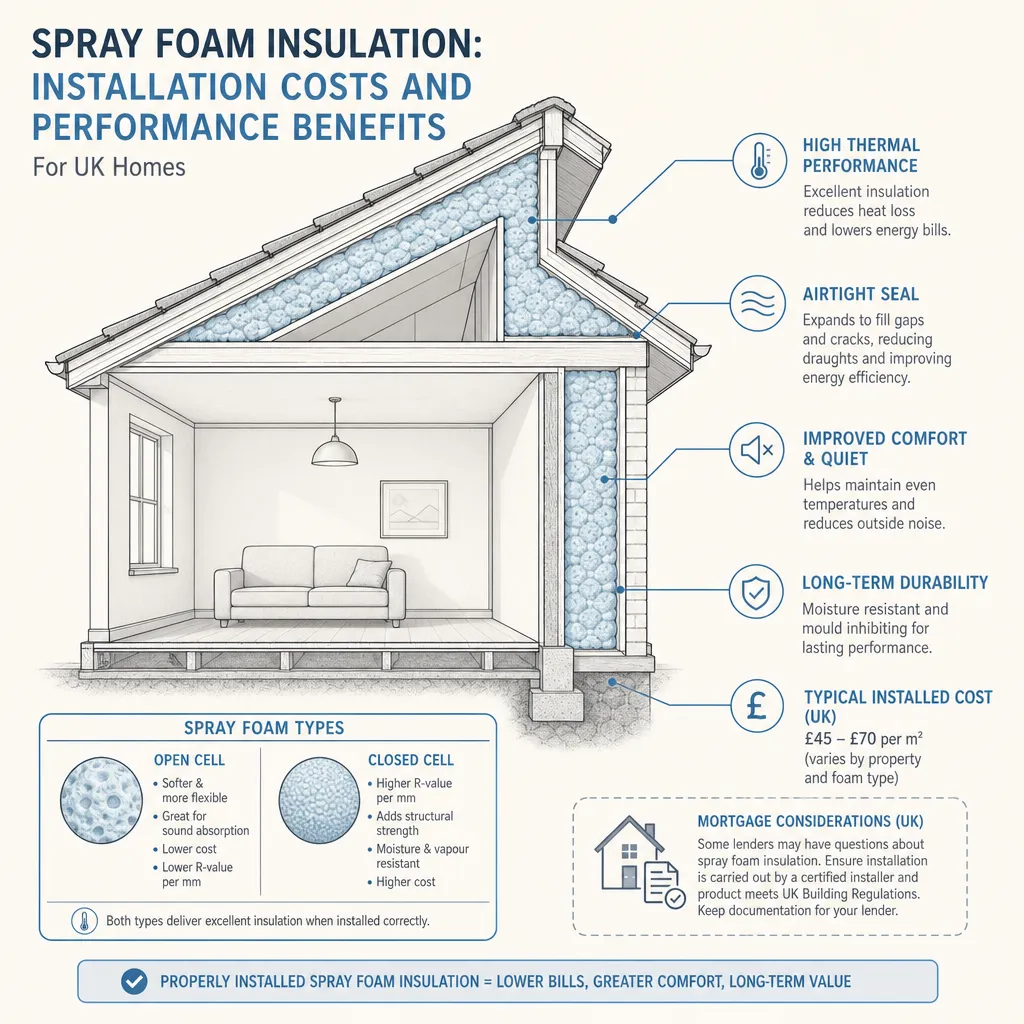
Spray Foam Insulation: Installation Costs and Performance Benefits
Spray foam insulation costs £1,500–£5,000 installed for an average UK home depending on type and area covered. While it can reduce heat loss in roof spaces, spray foam applied to roof rafters is a serious concern for UK mortgage lenders and may require costly removal. Professional assessment under PAS 2035 is strongly recommended before proceeding.
 Energy & Retrofit
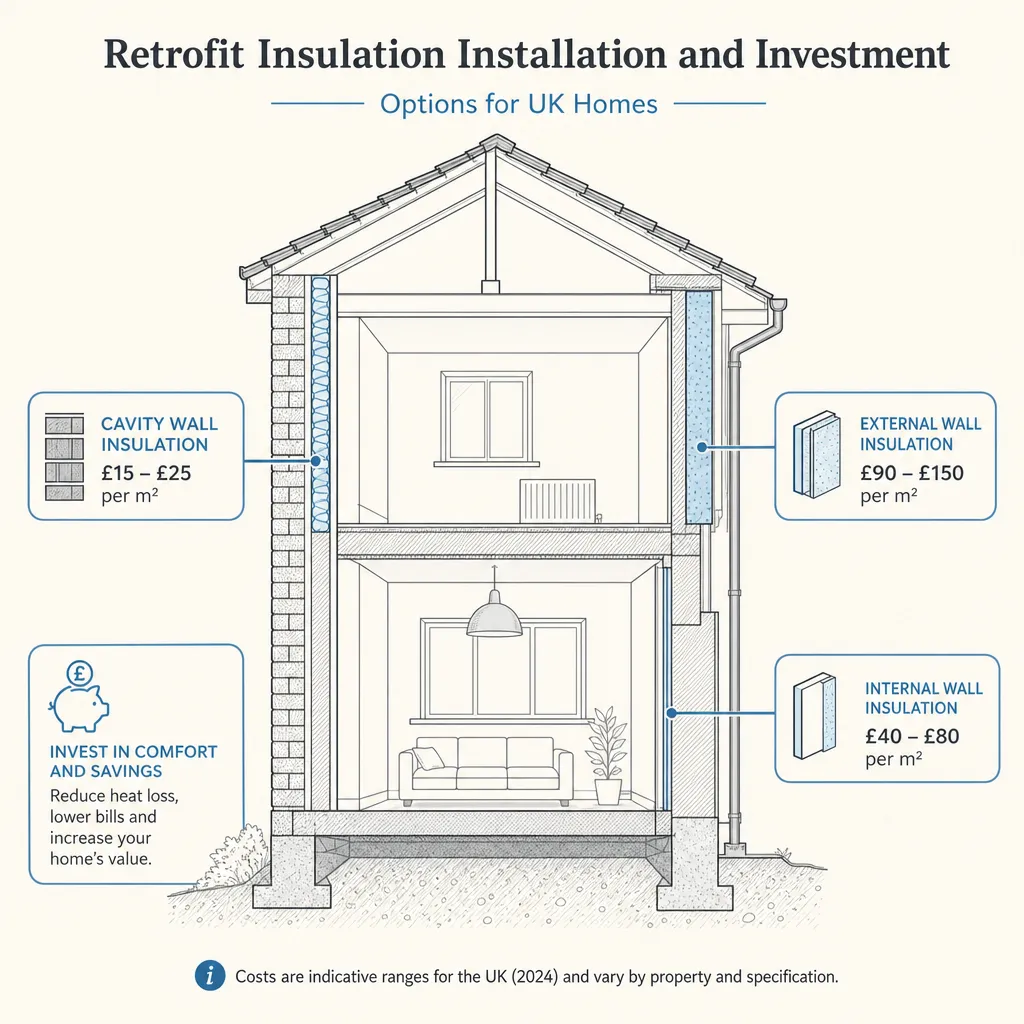
Retrofit Insulation Installation and Investment
Retrofit insulation in the UK covers five main types: loft, cavity wall, external wall, internal wall, and floor insulation. The right choice depends on your property's age, construction, and moisture conditions. Indicative costs range from around £300 for loft insulation to £20,000 or more for solid wall insulation. Grants under ECO4 and the Great British Insulation Scheme may reduce costs for qualifying households.
 Energy & Retrofit
The Rise of Green-Rated Homes: Energy Efficiency, Sustainability, and Long-Term Property Value
Homes with higher EPC ratings typically sell faster and can command a premium of up to 10% over equivalent lower-rated properties. Research by Nationwide Building Society shows EPC B-and-above homes attract stronger mortgage terms and broader buyer demand. Upgrading insulation, heating systems, and glazing are among the most cost-effective routes to improving a home's energy rating and supporting long-term value.
 Energy & Retrofit
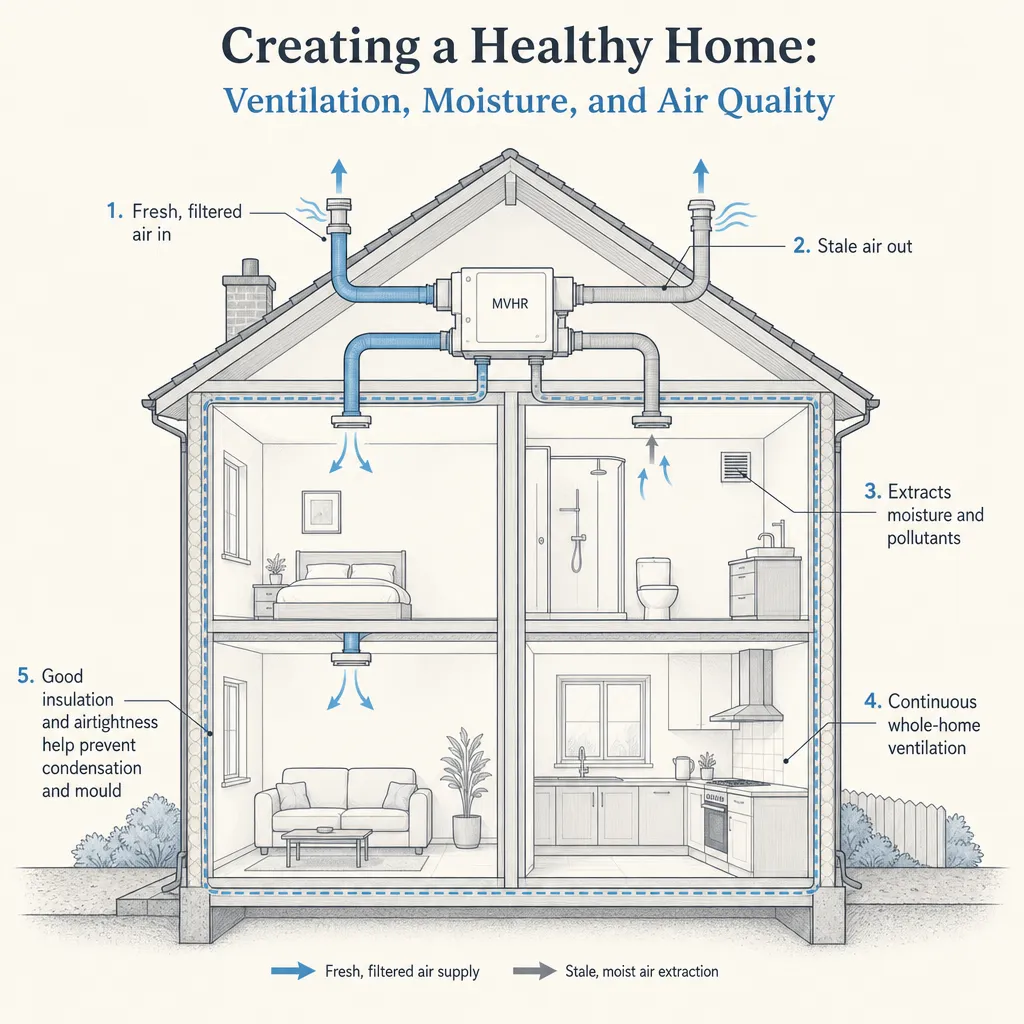
Creating a Healthy Home: Ventilation, Moisture, and Air Quality
Healthy indoor air quality depends on balancing airtightness with adequate ventilation, managing moisture from everyday activities, and removing pollutants at source. In UK homes, the most common causes of poor air quality are inadequate extract ventilation in wet rooms, sealed trickle vents, and condensation mould following insulation works carried out without a prior moisture risk assessment.
 Energy & Retrofit
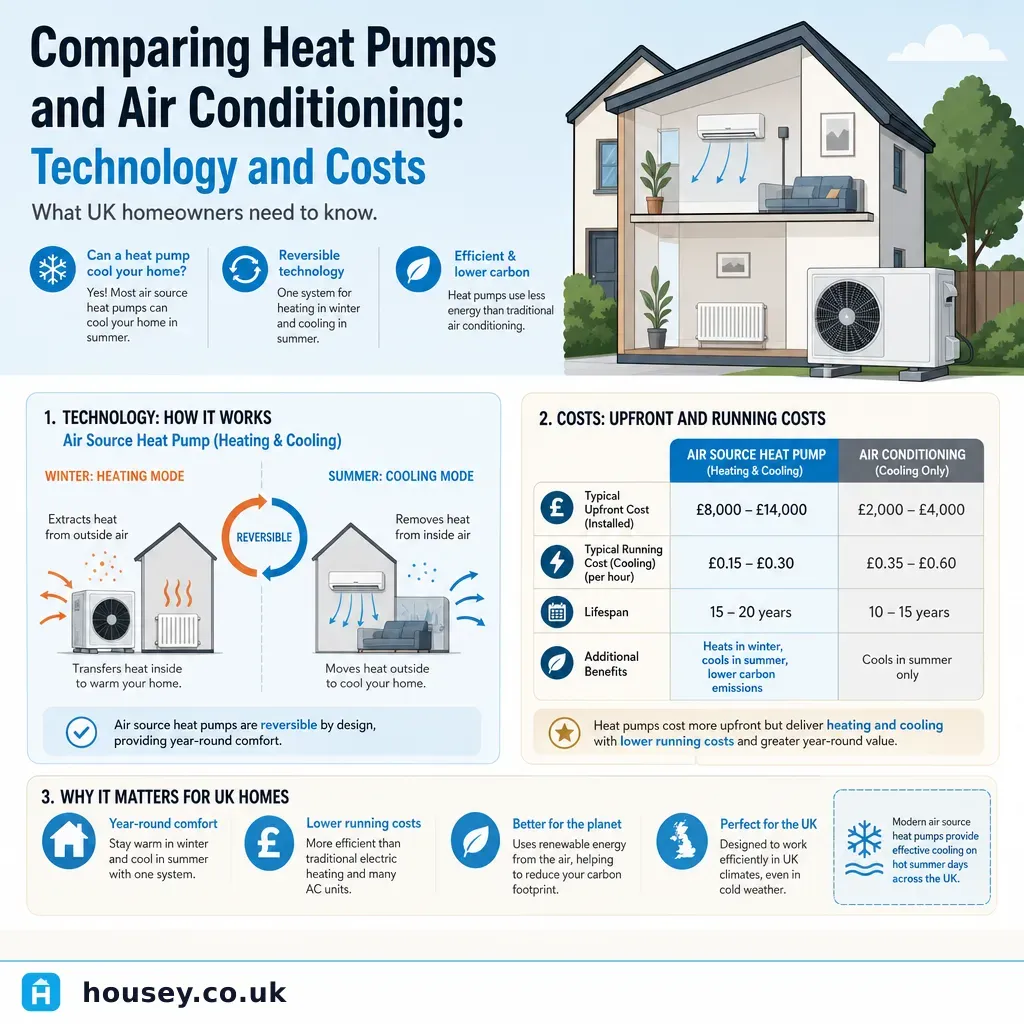
Comparing Heat Pumps and Air Conditioning: Technology and Costs
Heat pumps and air conditioning systems both use refrigeration technology, but a heat pump can run in reverse to provide both heating and cooling, while a conventional air conditioner only cools. In the UK, a reversible air-source heat pump can replace both your boiler and a separate cooling system, though cooling performance and noise rules vary by property type.
 Energy & Retrofit
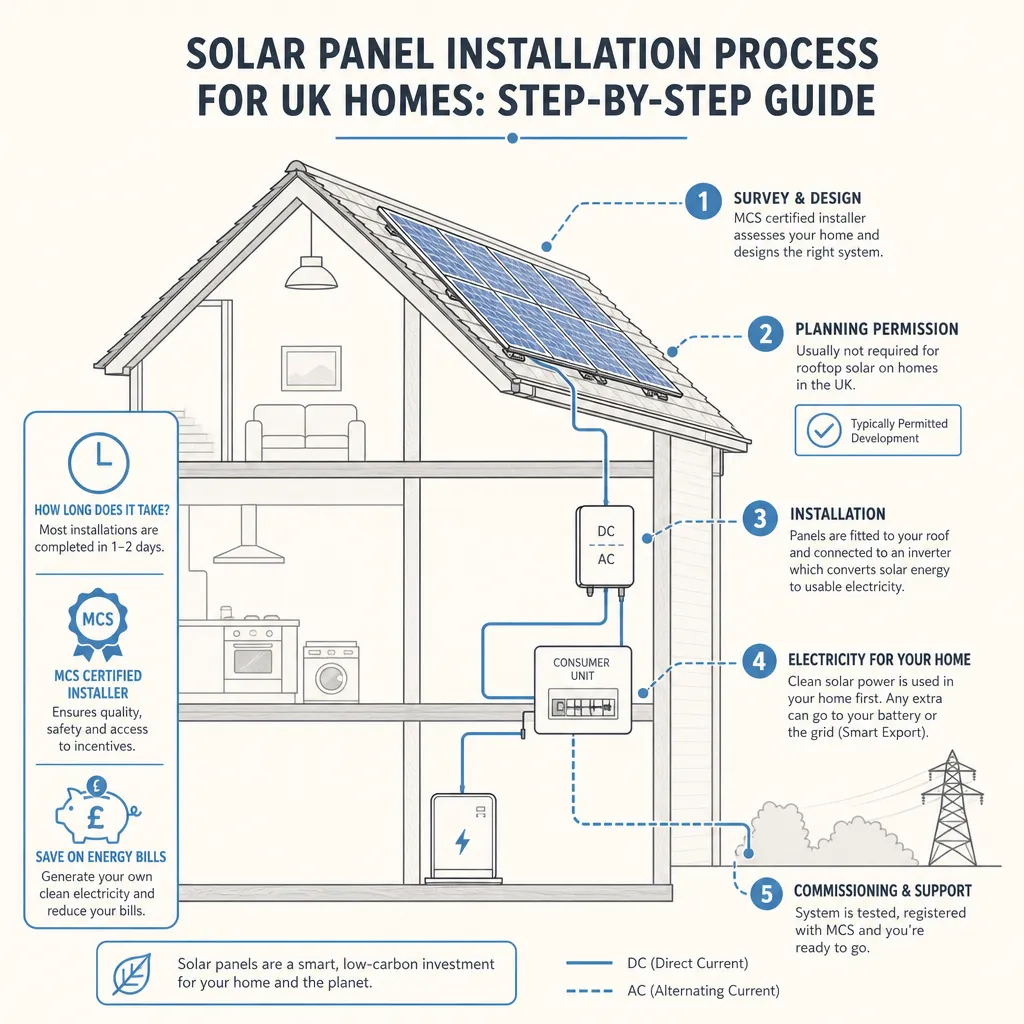
Solar Panel Installation Process for UK Homes: Step-by-Step Guide
Solar panel installation for a UK home usually takes 1–2 working days on-site, with the full process from initial survey to MCS certificate taking 2–6 weeks. The stages cover site survey, system design, planning checks, physical mounting, electrical connection, and commissioning. Using an MCS-certified installer is essential to qualify for the Smart Export Guarantee.
 Energy & Retrofit
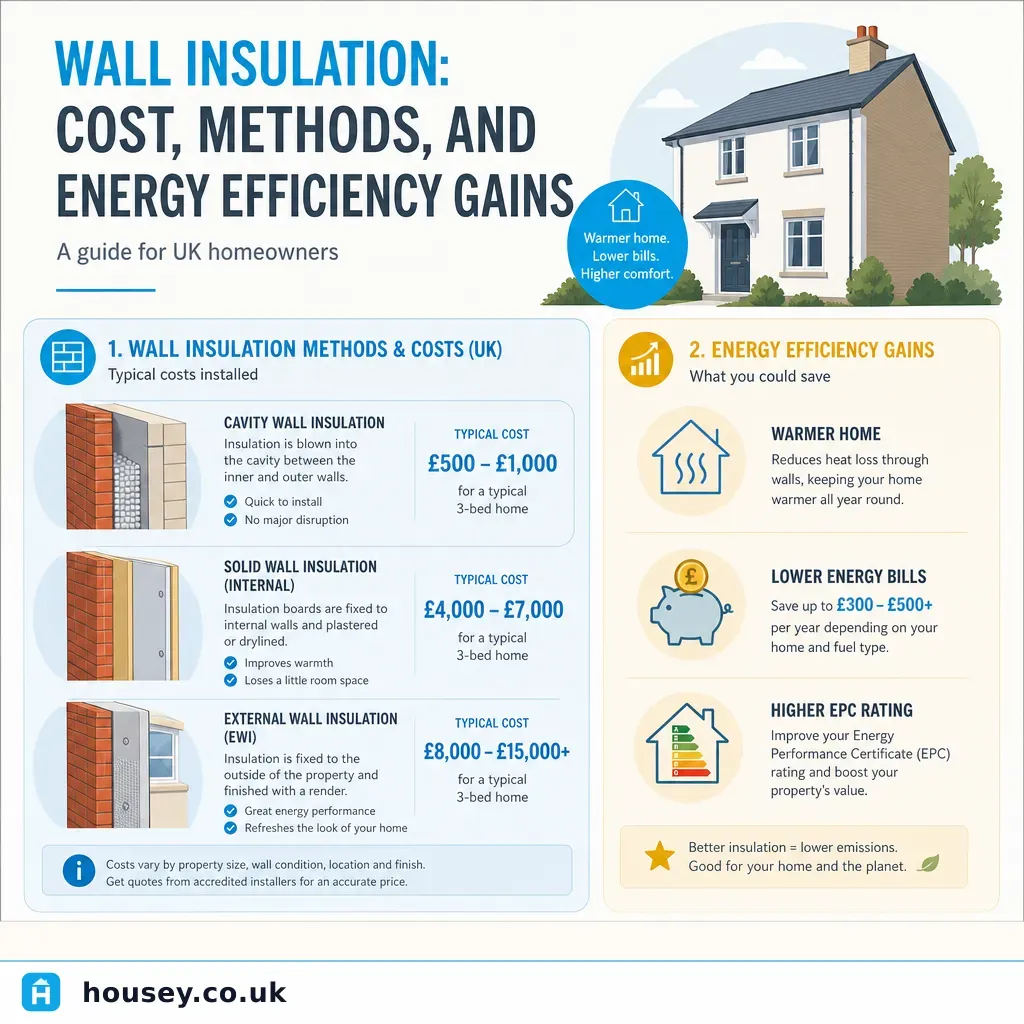
Wall Insulation: Cost, Methods, and Energy Efficiency Gains
Wall insulation in UK homes uses one of three main methods: cavity wall insulation for post-1920 homes with an unfilled cavity, external wall insulation for solid-walled properties, and internal wall insulation where external changes are not permitted. Costs range from around £400 for cavity work to over £20,000 for solid wall systems. ECO4 and the Great British Insulation Scheme may fund eligible households.
 Energy & Retrofit
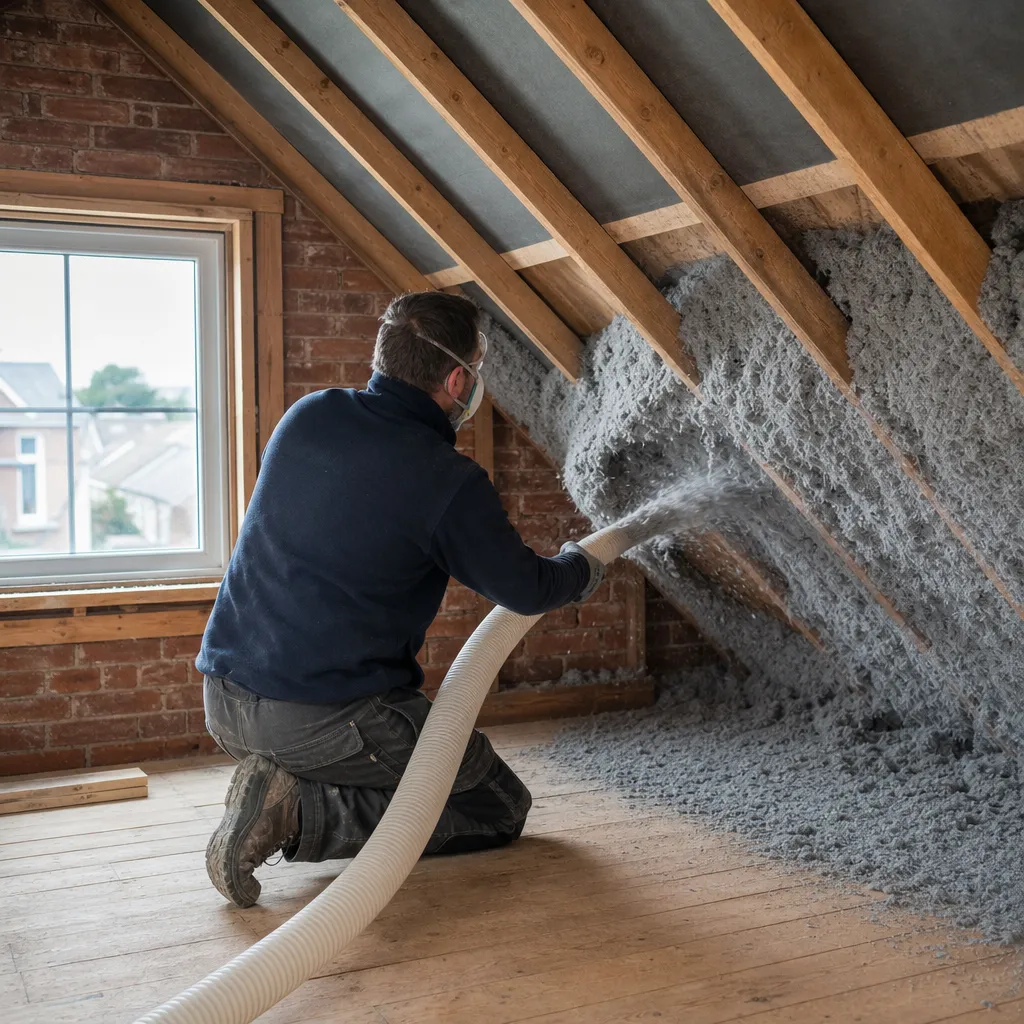
Cellulose Insulation: Advantages and Disadvantages for Your Home
Cellulose insulation is a recycled, low-embodied-carbon option achieving 0.035–0.040 W/mK thermal conductivity, comparable to mineral wool. It works well in loft spaces and timber-frame cavities but requires careful moisture management in UK retrofits. Installers must hold PAS 2030 accreditation and TrustMark registration for ECO4-funded work. Settling allowance and vapour control are both critical to long-term performance.