Knowledge Base
Property advice that actually helps
Researched, UK-specific guides for every stage of homeownership — from buying and surveys to retrofit, planning and major works.
 Surveys & Inspections
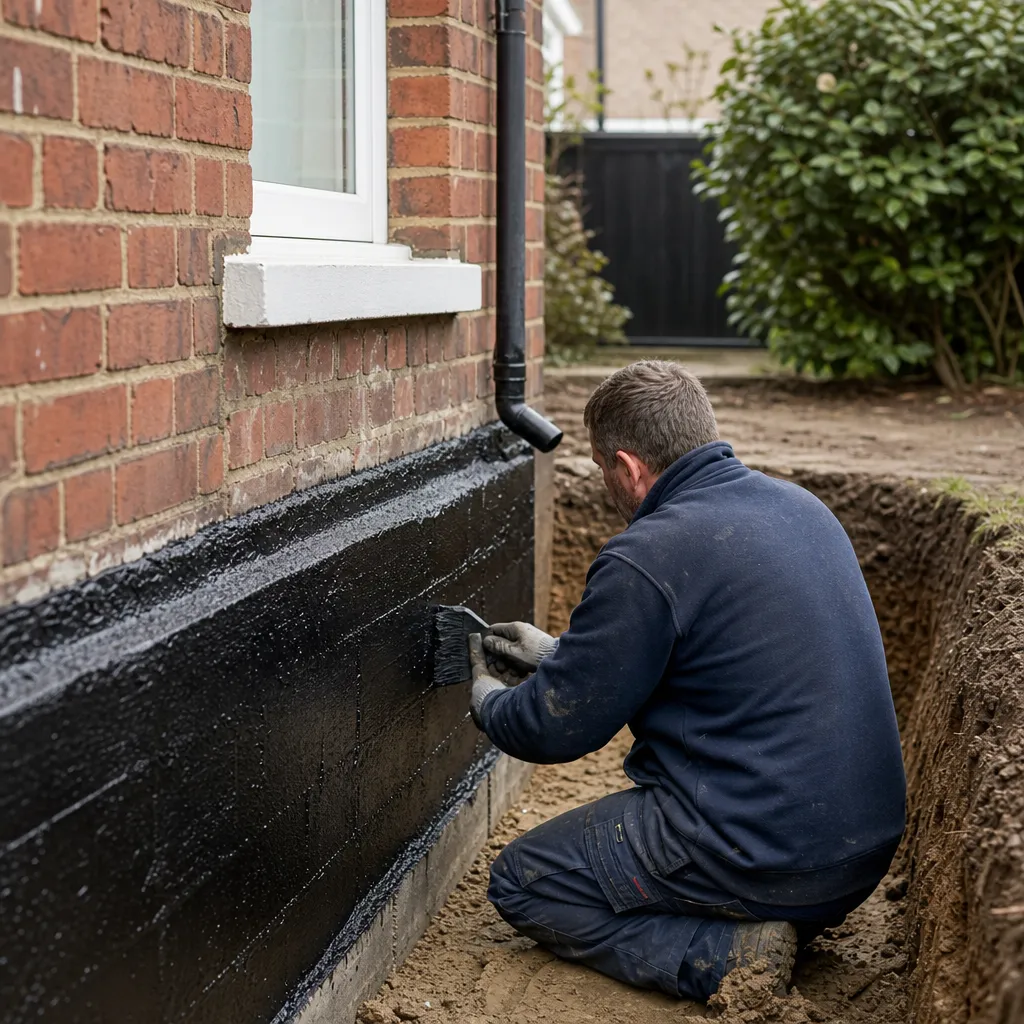
Foundation Waterproofing Fundamentals: Protecting Your Property
Foundation waterproofing prevents groundwater and soil moisture from penetrating below-ground structures. UK practice is guided by BS 8102, which defines three protection types: barrier membranes (Type A), waterproof concrete (Type B), and cavity drainage with a sump pump (Type C). The right system depends on your property's construction, ground conditions, and how the space will be used.
 Surveys & Inspections
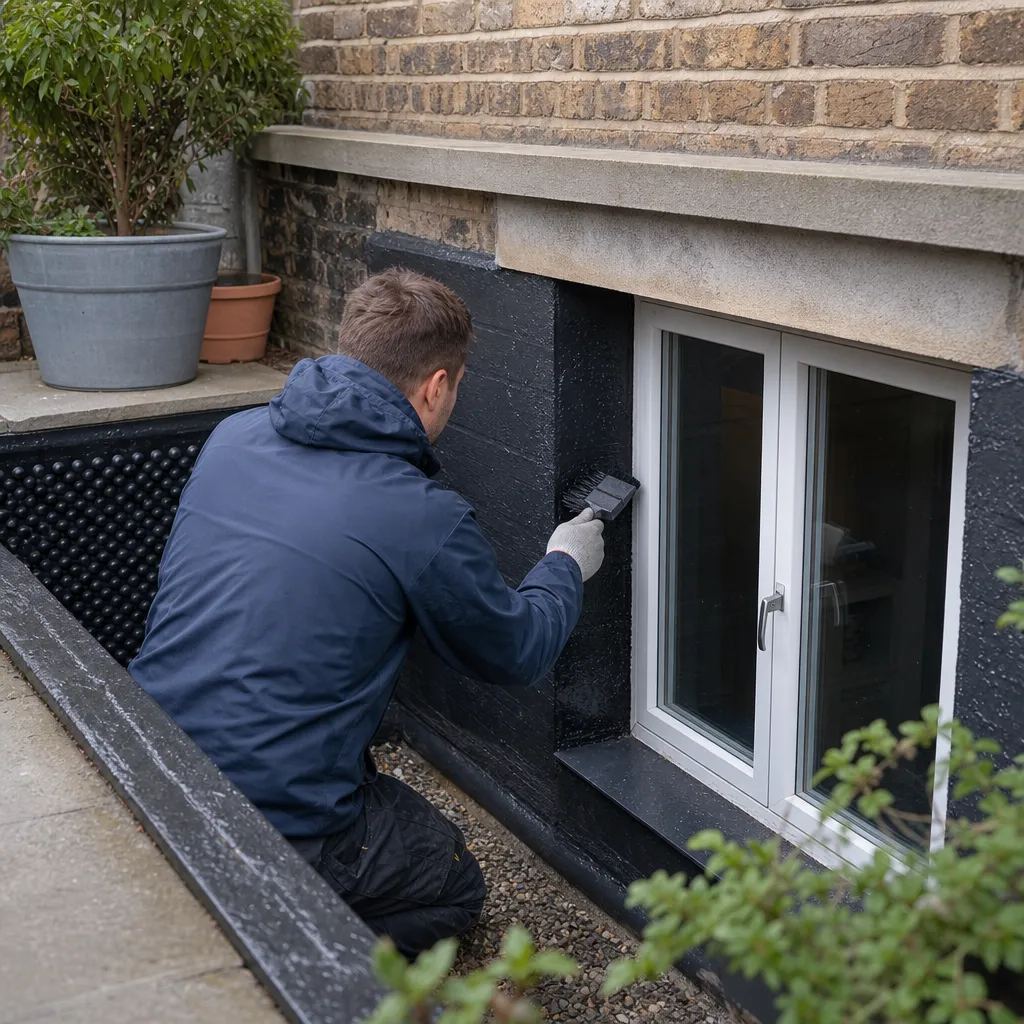
Securing Dry Basements: How to Prevent Moisture Intrusion
Preventing basement moisture starts with identifying the source: penetrating damp, rising damp, and condensation each need different fixes. Check external drainage and gutters first. A specialist survey should determine whether tanking, a cavity drain membrane, or improved ventilation is the right approach — misdiagnosis leads to repeated costly failures.
 Surveys & Inspections
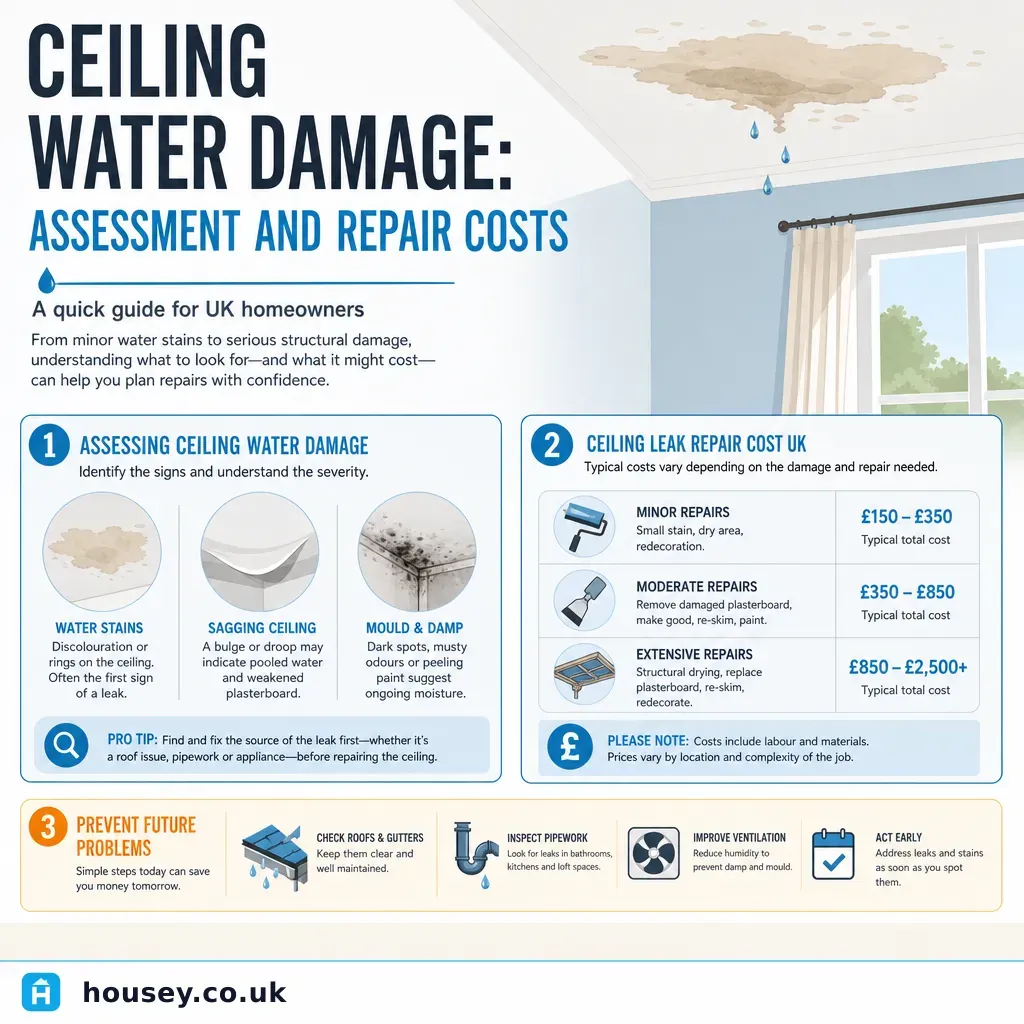
Ceiling Water Damage: Assessment and Repair Costs
Ceiling water damage is assessed by tracing the leak source, measuring moisture content in the ceiling substrate and any exposed timber, and checking for structural softening. Repair costs range from around £150 for a small patch to over £2,500 for a full re-board and joist treatment. Always fix the source before repairing the ceiling.
 Surveys & Inspections
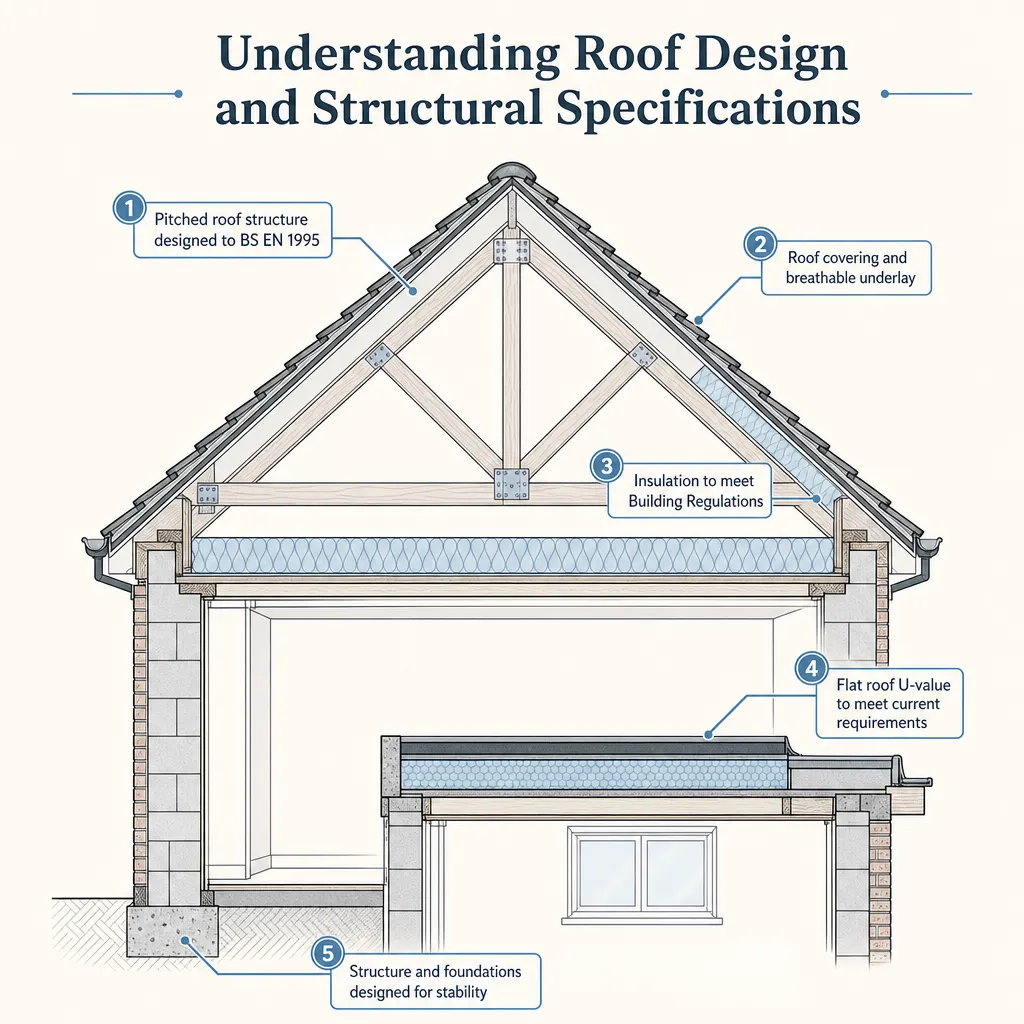
Understanding Roof Design and Structural Specifications
A UK roof's structural specification covers the load-bearing frame, pitch, insulation, and weatherproofing — governed by Building Regulations Approved Documents A and L, plus BS 5534 for slating and tiling. The correct design depends on property type, roof shape, and local exposure zone. Consult a structural engineer or qualified roofer for anything beyond like-for-like tile replacement.
 Surveys & Inspections
Roof Warranties: Understanding Coverage and Limitations
UK roof warranties fall into two main types: a manufacturer's product guarantee covering materials, typically for 10 to 30 years, and a contractor's workmanship guarantee covering installation quality, usually for five to ten years. Insurance-backed guarantees remain valid if the contractor ceases trading and transfer to future owners. Always request both warranty documents in writing at project completion.
 Surveys & Inspections
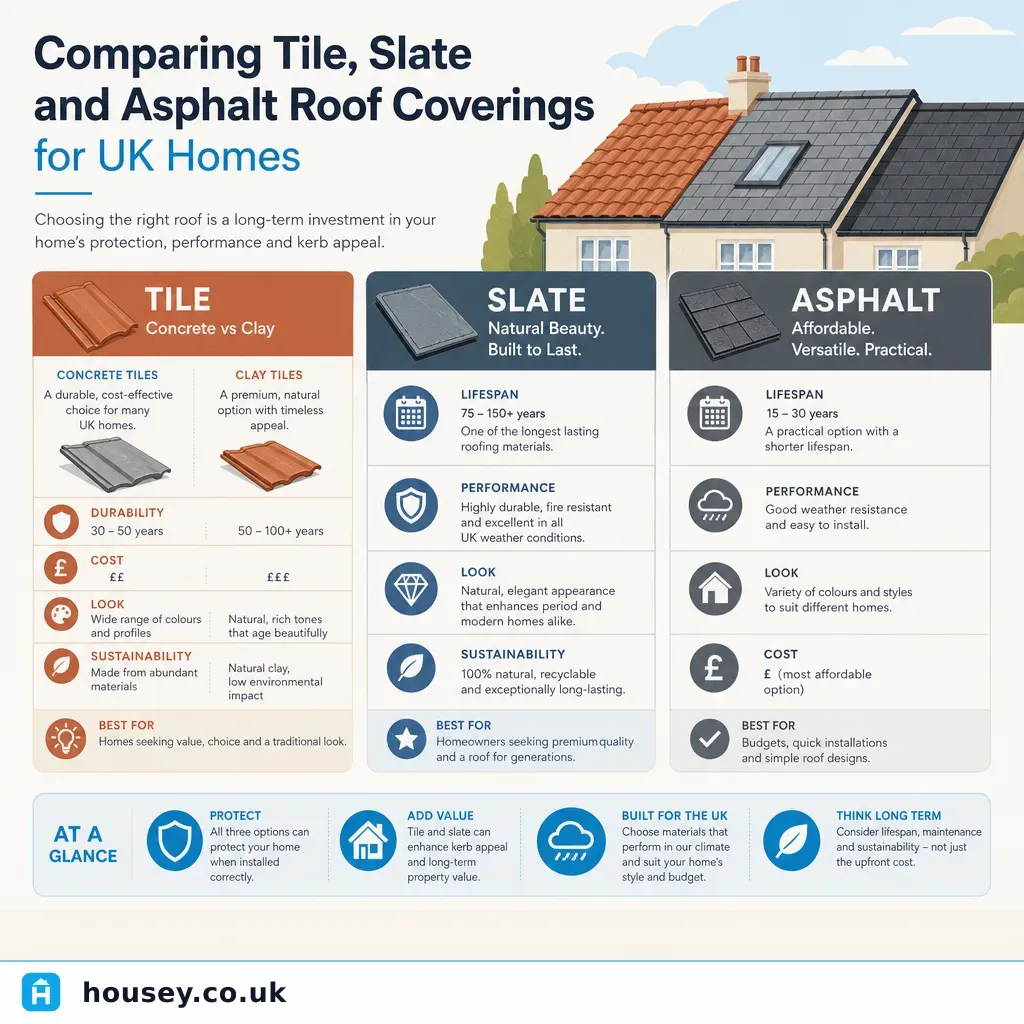
Comparing Tile, Slate and Asphalt Roof Coverings for UK Homes
Clay and concrete tiles suit most standard UK pitched roofs, natural slate is the longest-lasting option and often required on traditional or listed properties, and asphalt shingles are rarely used in the UK. The right choice depends on roof pitch, local planning policy, the existing structure's load capacity, and budget. Confirm minimum pitch requirements with your roofer before finalising any specification.
 Surveys & Inspections
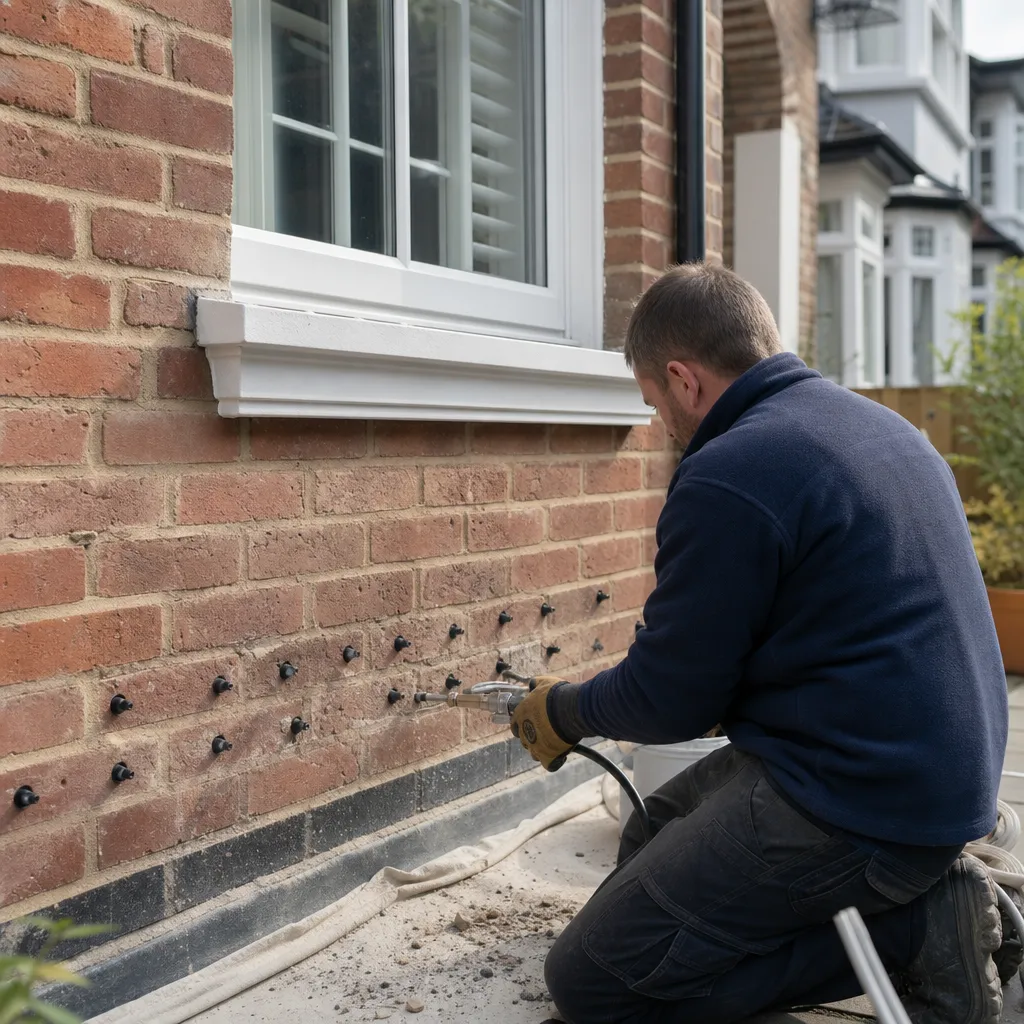
Cavity Wall Damp Proofing: Protecting the Inner Wall Face
Cavity wall damp proofing protects the inner wall face by ensuring cavity trays, physical DPCs, and weep holes are intact and unobstructed. Where cavity wall insulation has been installed, moisture bridging can cause penetrating damp that mimics rising damp. A specialist damp survey is usually the first step before any remedial treatment is specified.
 Surveys & Inspections
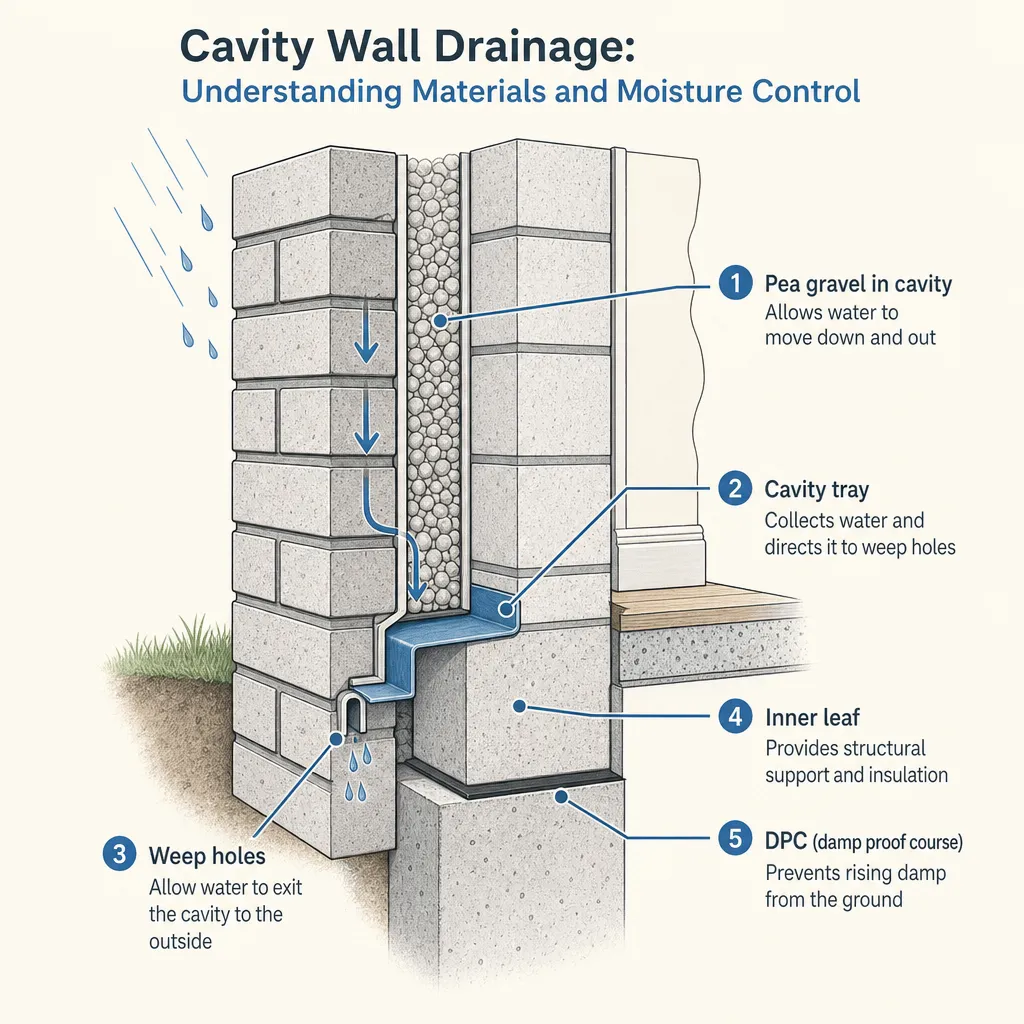
Cavity Wall Drainage: Understanding Materials and Moisture Control
Cavity walls control moisture through a drainage system of weep holes, cavity trays, and DPC at ground level. Water entering the outer leaf runs down the cavity and exits through open perpend joints in the brickwork. Pea gravel, pre-formed trays, and correctly positioned DPC are all part of this system — which can fail if weep holes are blocked or cavity trays are missing above lintels.
 Surveys & Inspections
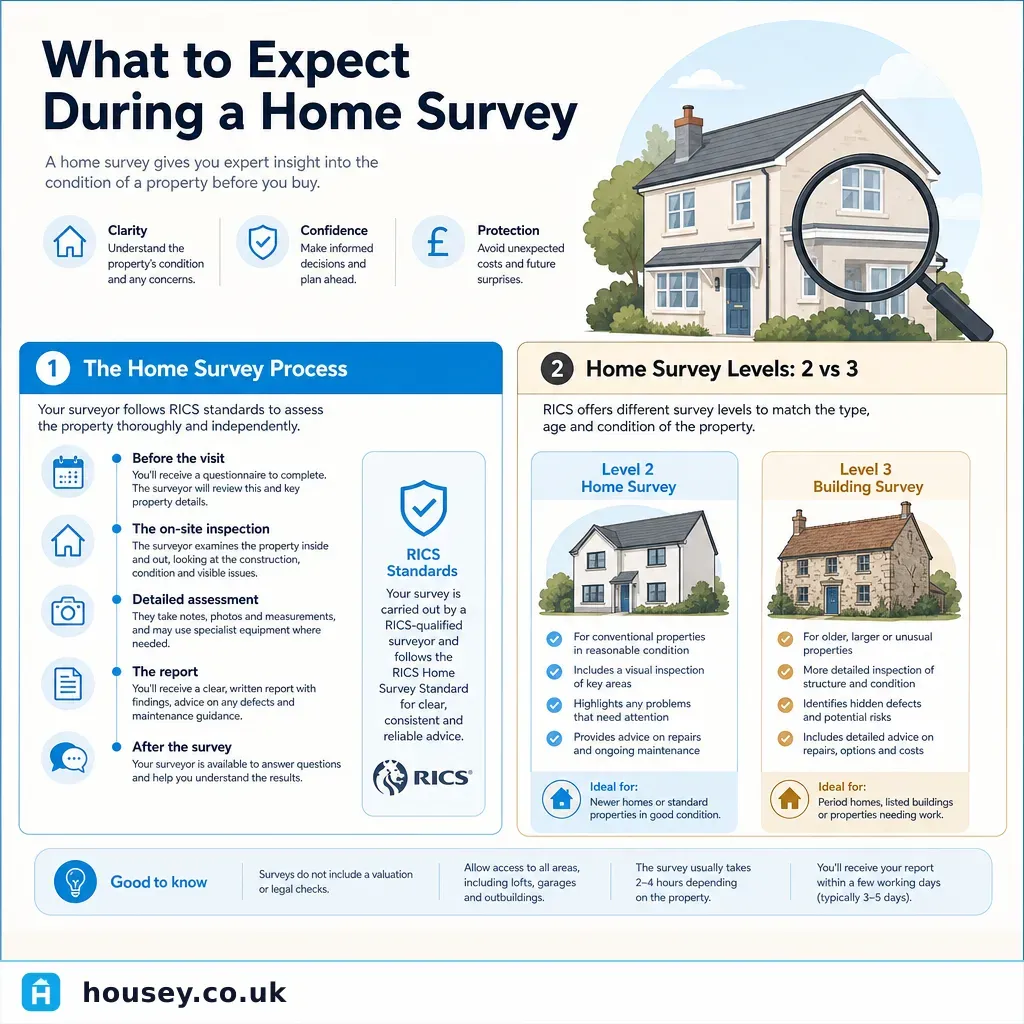
What to Expect During a Home Survey
A home survey is a non-invasive visual inspection by a RICS-qualified surveyor, typically instructed between mortgage offer and exchange. Depending on the level chosen — Level 1, 2, or 3 — it covers the property's visible condition, flags defects with a traffic-light rating, and takes two to eight hours on site. The report is usually issued within three to five working days.
 Surveys & Inspections
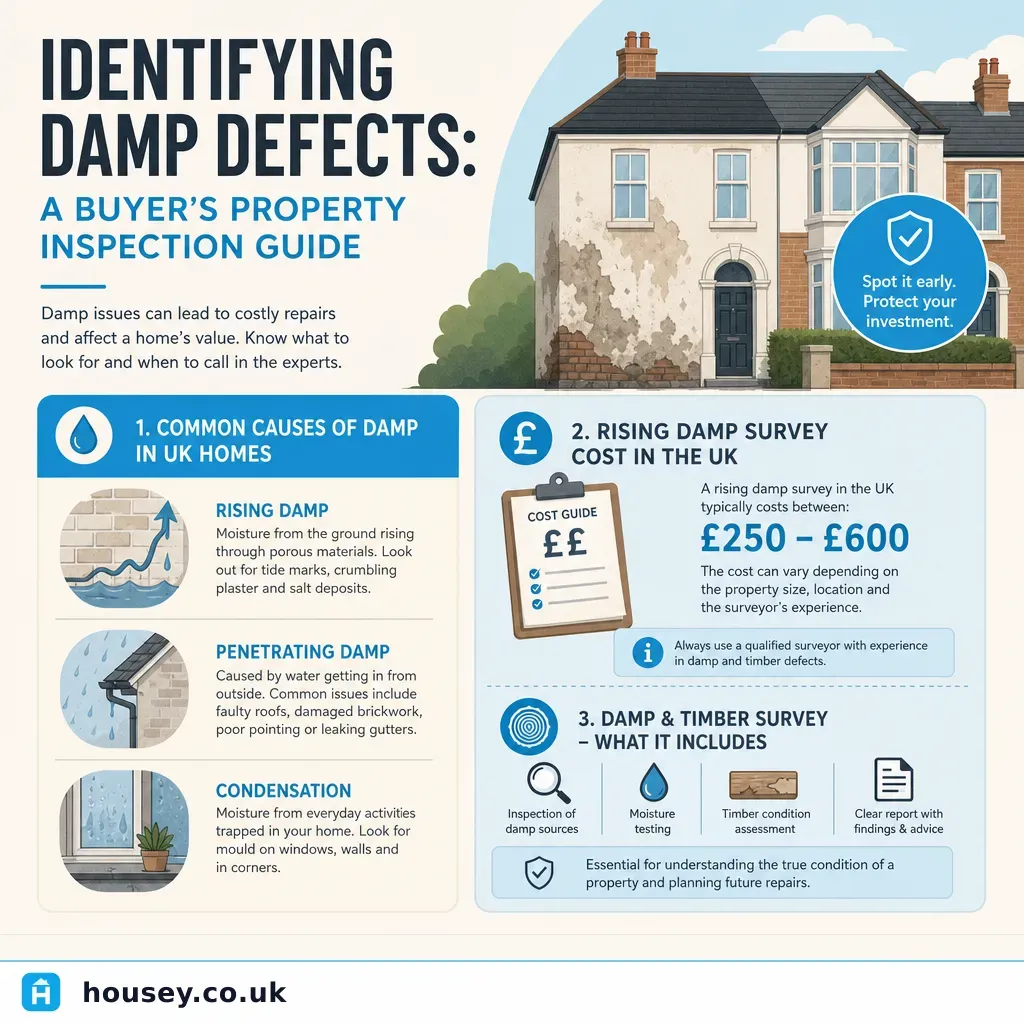
Identifying Damp Defects: A Buyer's Property Inspection Guide
The three main damp types in UK homes are rising damp (groundwater absorbed through porous masonry), penetrating damp (water entering via fabric defects), and condensation (internal moisture on cold surfaces). Each requires a different remediation approach. A RICS-qualified surveyor or PCA-qualified damp specialist can diagnose the cause accurately and specify an appropriate fix.
 Surveys & Inspections
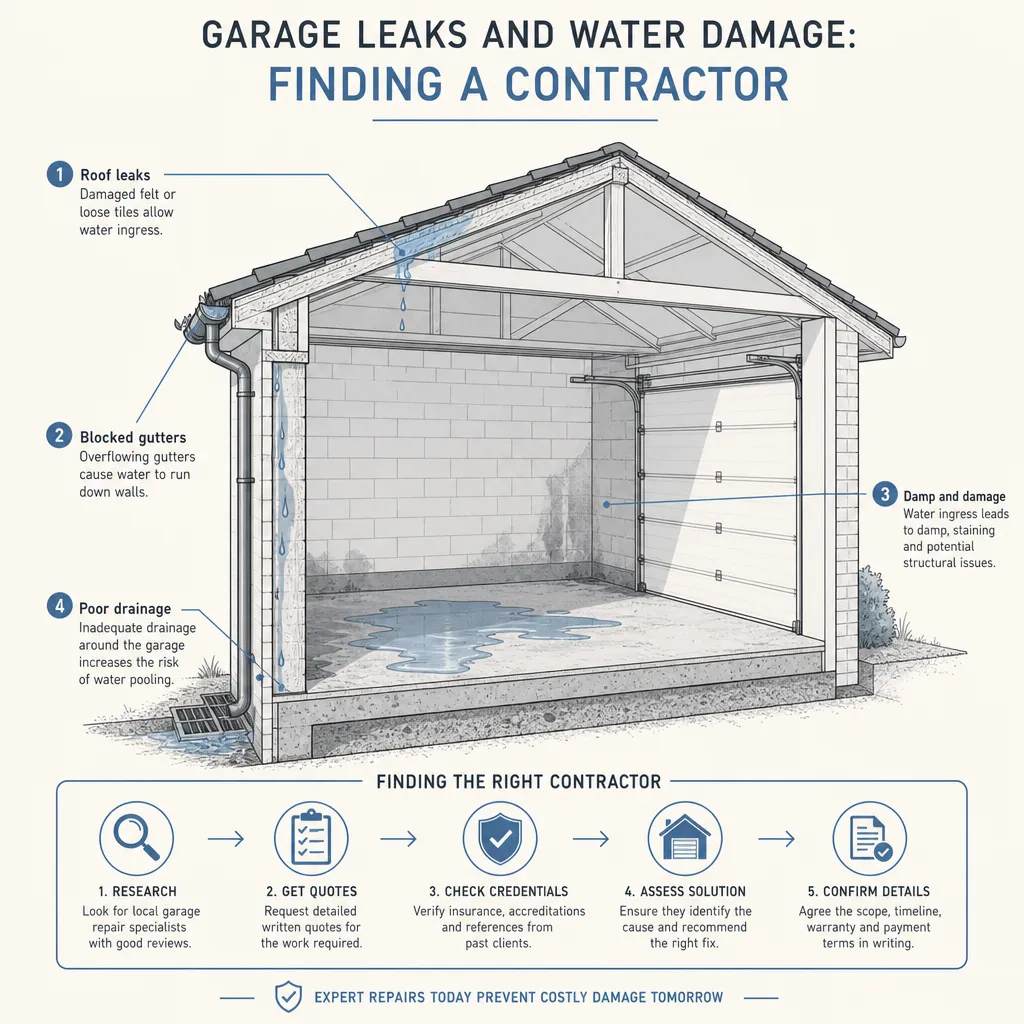
Garage Leaks and Water Damage: Finding a Contractor
Garage leaks and water damage can stem from a failed roof, blocked gutters, rising damp, poor drainage, or cracked walls. Identifying the correct source is essential before instructing a contractor, as different trades handle different causes. A drainage contractor, roofer, or damp surveyor may each be relevant depending on where water is entering and when.
 Surveys & Inspections
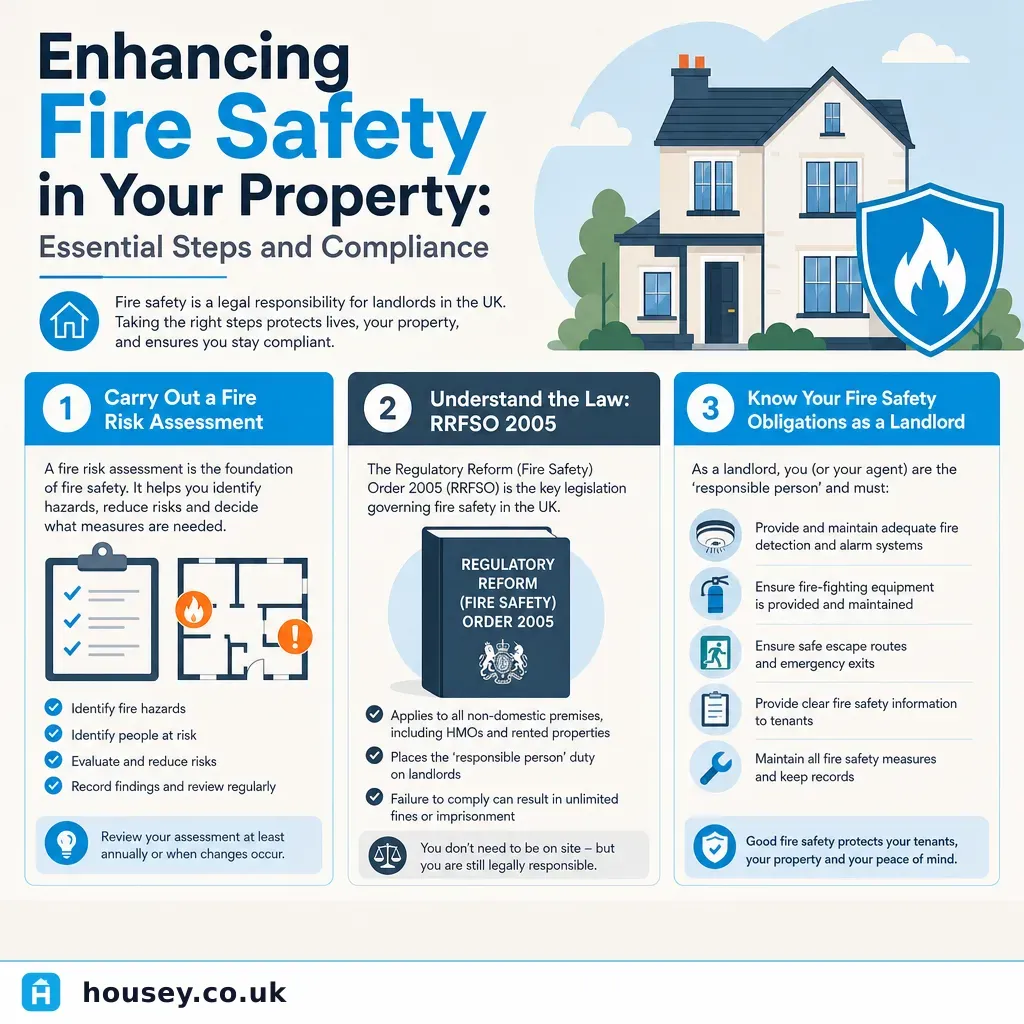
Enhancing Fire Safety in Your Property: Essential Steps and Compliance
Fire safety in UK properties is governed by Building Regulations Approved Document B and, for non-domestic and multi-occupied residential buildings, the Regulatory Reform (Fire Safety) Order 2005. Landlords, responsible persons, and building owners have legal duties to assess fire risk, maintain escape routes, fit smoke alarms, and keep written records. A qualified fire risk assessor should carry out any formal assessment.