Knowledge Base
Property advice that actually helps
Researched, UK-specific guides for every stage of homeownership — from buying and surveys to retrofit, planning and major works.
 Surveys & Inspections
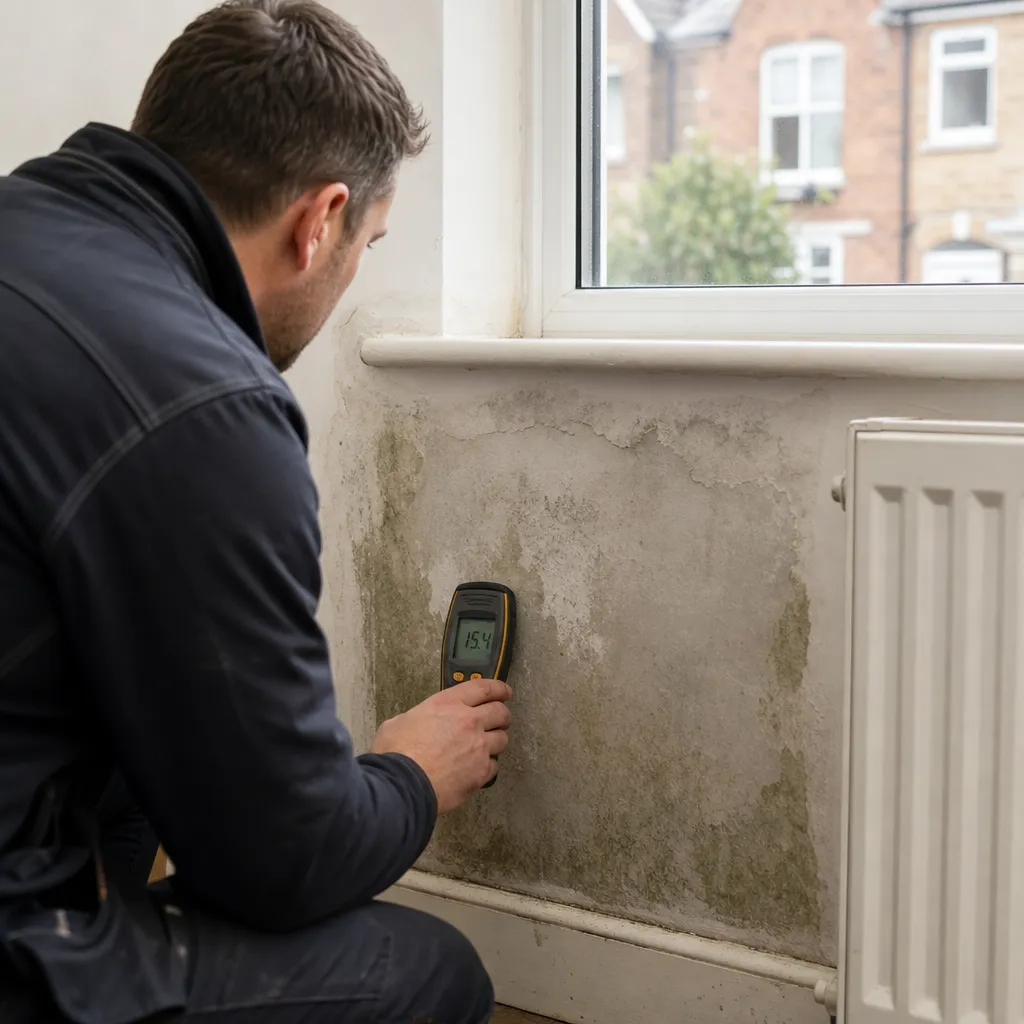
Cold and Damp Walls: Diagnosing Condensation and Moisture Issues
Cold, damp walls in UK homes most commonly result from surface condensation, penetrating damp, or rising damp. Surface condensation — the most common cause — forms when warm humid air meets a cold wall surface and is usually linked to inadequate ventilation. Penetrating damp enters through external defects; rising damp is rarer than commonly assumed and requires professional confirmation before treatment.
 Surveys & Inspections
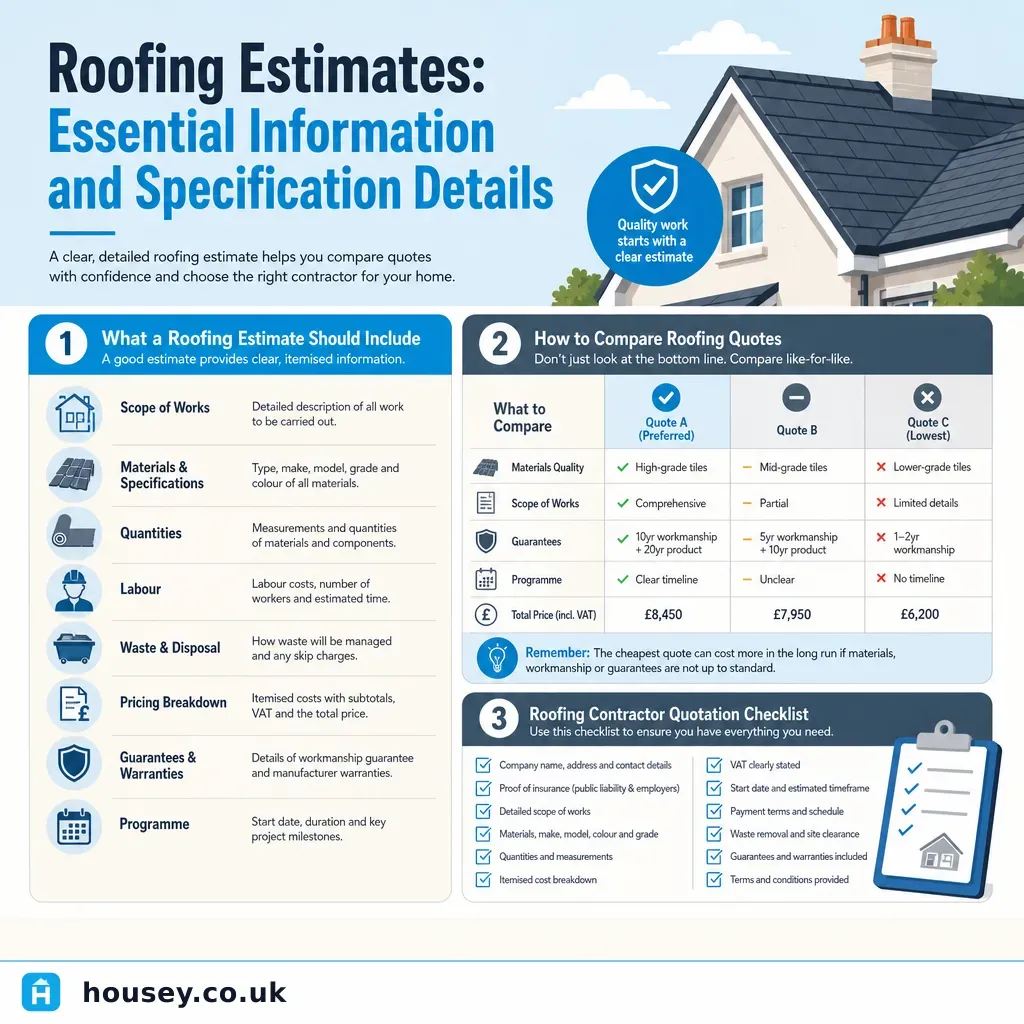
Roofing Estimates: Essential Information and Specification Details
A robust UK roofing estimate should specify materials by manufacturer and product code, reference BS 5534 for pitched roofs or the relevant system standard for flat roofs, state the workmanship and manufacturer warranty terms, itemise scaffolding and waste disposal, and set out a stage payment schedule. Without a written specification you have limited recourse if the work falls short of expectations.
 Surveys & Inspections
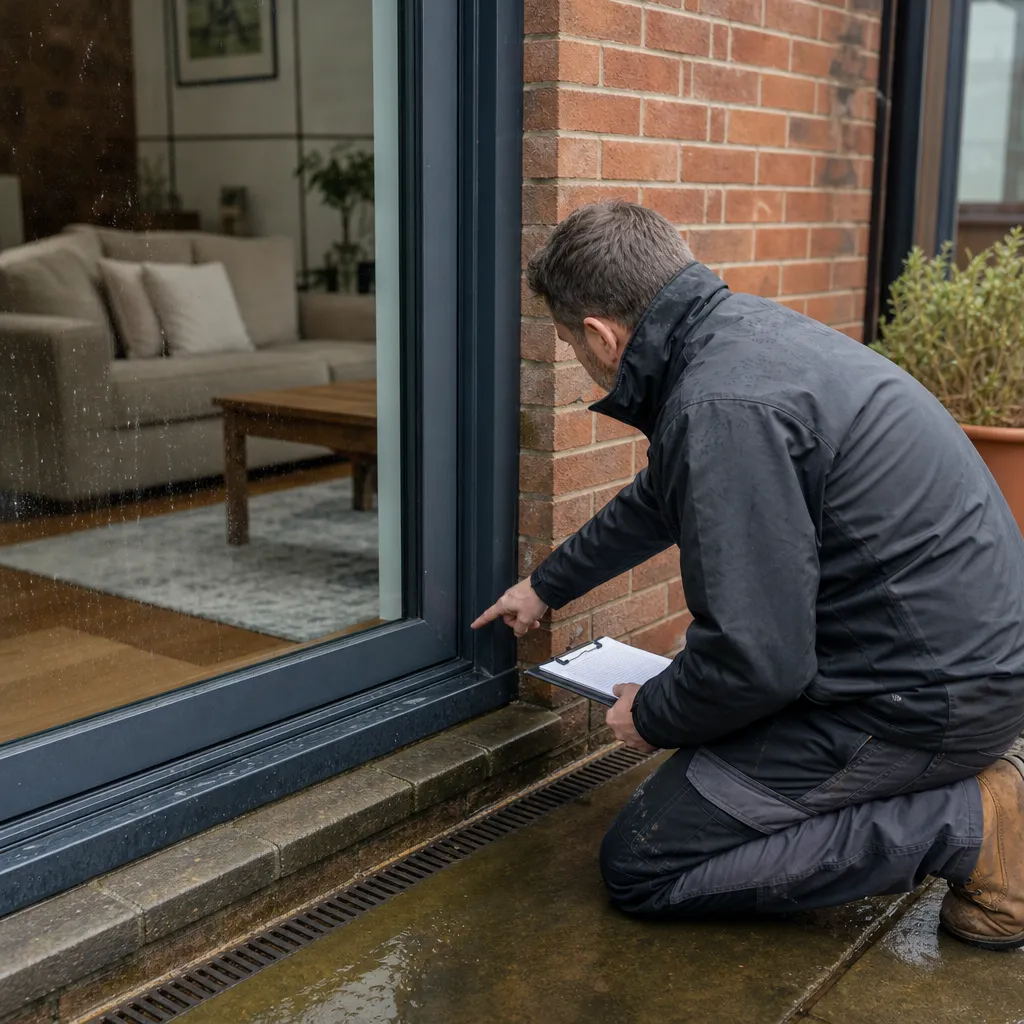
Water Ingress at Patio Doors: Identifying Cause and Prevention
Water ingress at patio doors usually stems from failed threshold seals, damaged compression gaskets, poor original installation, or a blocked drainage channel in the door frame. Identifying the precise source requires checking the threshold, frame perimeter, and surrounding masonry during or immediately after rainfall. Early attention prevents timber rot, damp penetration into floors and walls, and more costly structural repairs.
 Surveys & Inspections
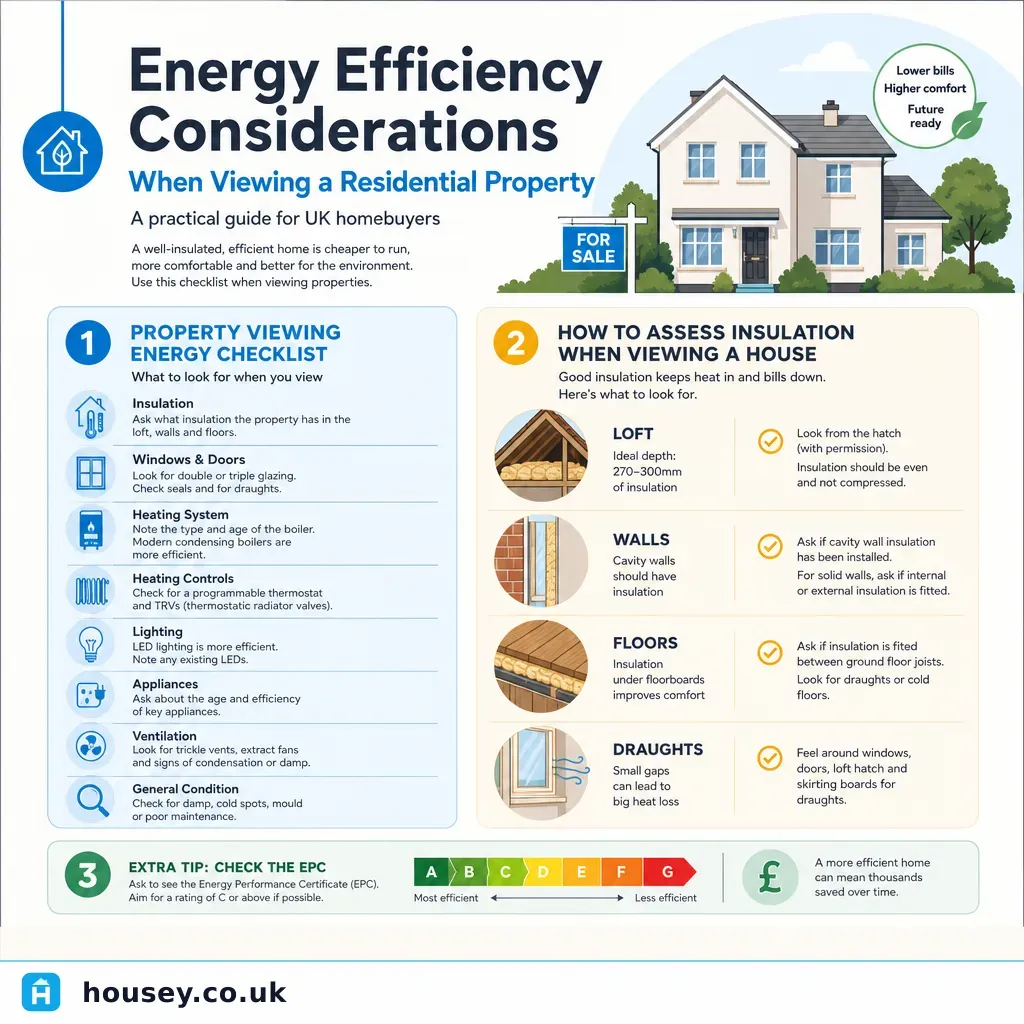
Energy Efficiency Considerations When Viewing a Residential Property
When viewing a residential property, check the EPC rating (aim for band C or above), look for double or triple glazing, assess visible insulation in the loft hatch, check the boiler age and heating controls, and note any signs of damp or cold bridging. These observations help you estimate future running costs before making an offer.
 Surveys & Inspections
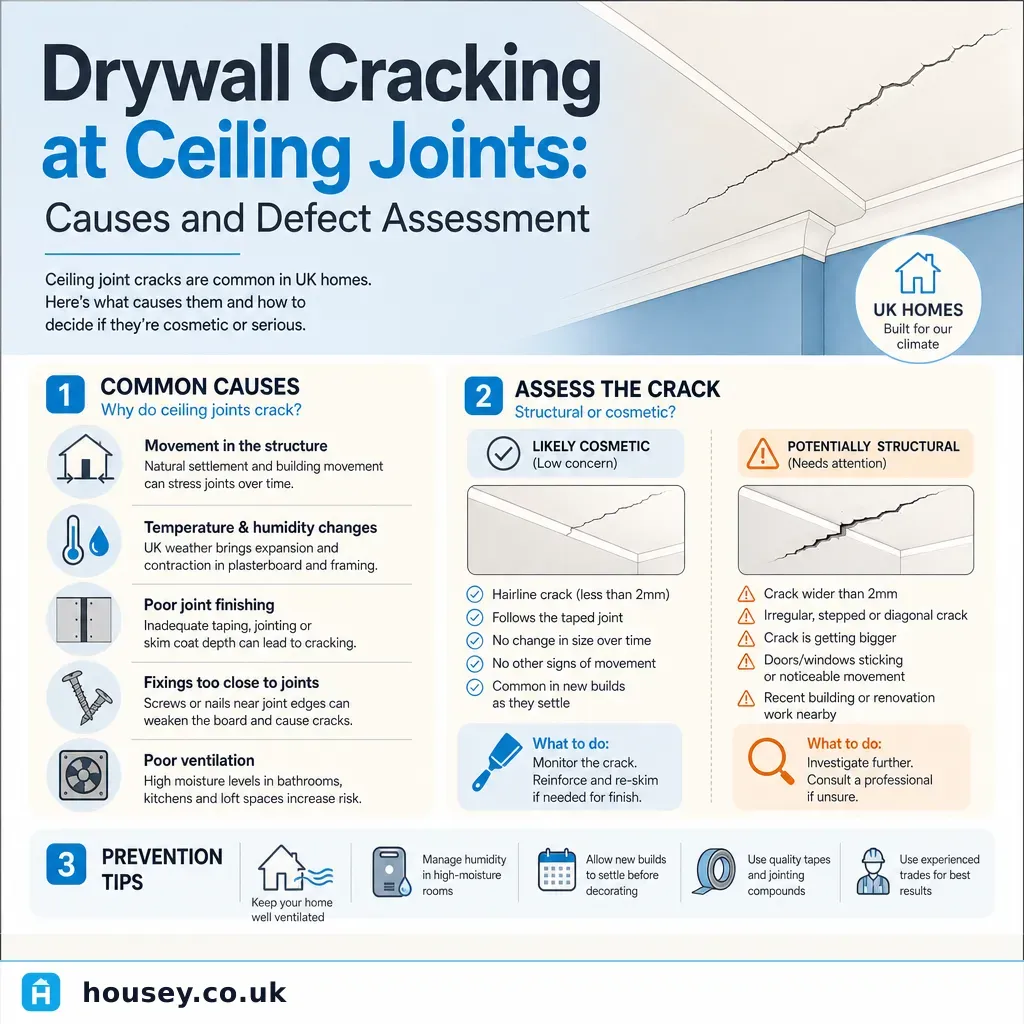
Drywall Cracking at Ceiling Joints: Causes and Defect Assessment
Cracks at drywall ceiling joints are usually caused by thermal movement, seasonal moisture cycling, or tape failure, and most are cosmetic. However, wide, stepped, or multiplying cracks — particularly near load-bearing walls or in properties on clay soils — may indicate structural movement and warrant professional assessment.
 Surveys & Inspections
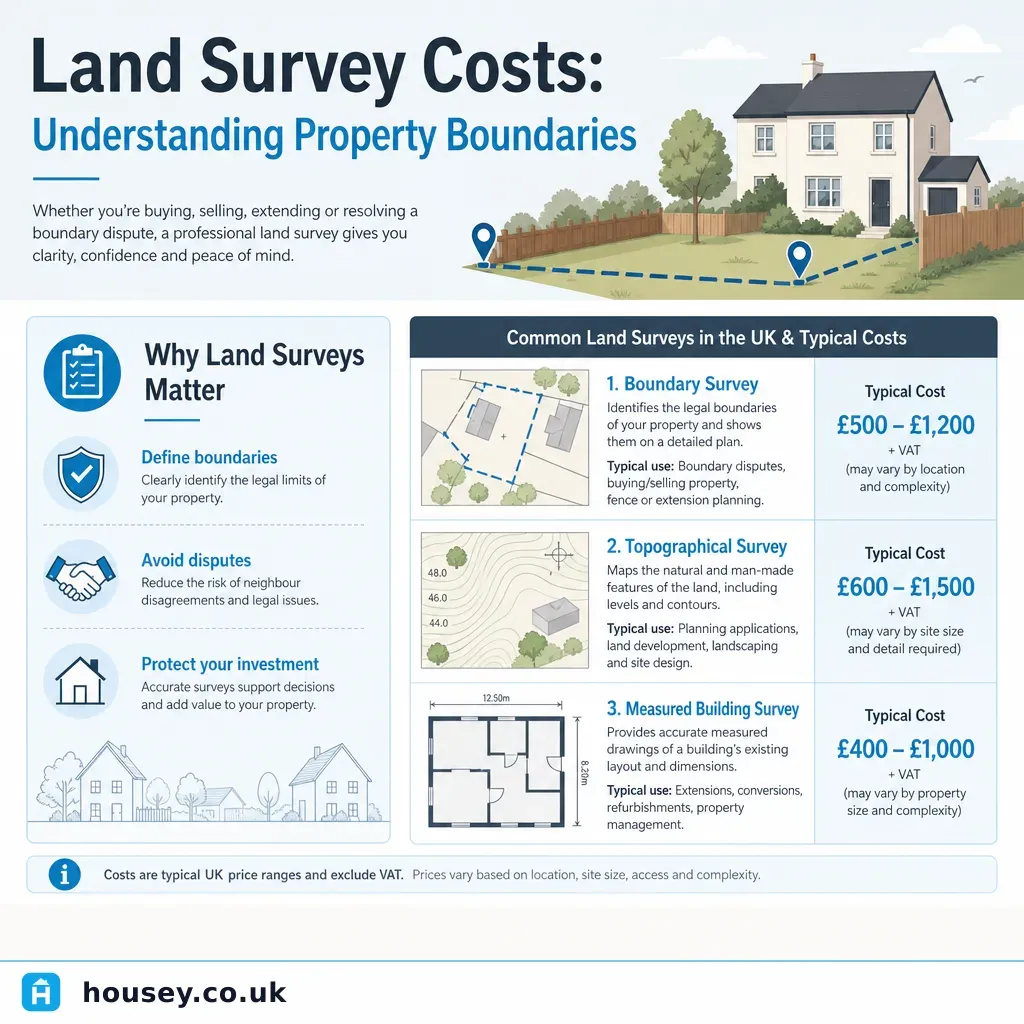
Land Survey Costs: Understanding Property Boundaries
Land survey costs in the UK depend on the type of survey needed: boundary surveys typically cost £500–£2,000, topographical surveys £600–£2,500, and measured building surveys £800–£3,000 for a standard house. Always instruct a RICS-registered land surveyor, and note that HM Land Registry title plans do not show the precise legal boundary — they indicate general position only.
 Surveys & Inspections
Home Surveys and Valuations: Who Pays?
In the UK, the buyer almost always pays for their own home survey. Your mortgage lender commissions a separate valuation for its own protection — not yours. An independent RICS Level 2 or Level 3 survey typically costs £400–£1,500 depending on property size, age, and type. In Scotland, sellers must provide a Home Report before marketing.
 Surveys & Inspections
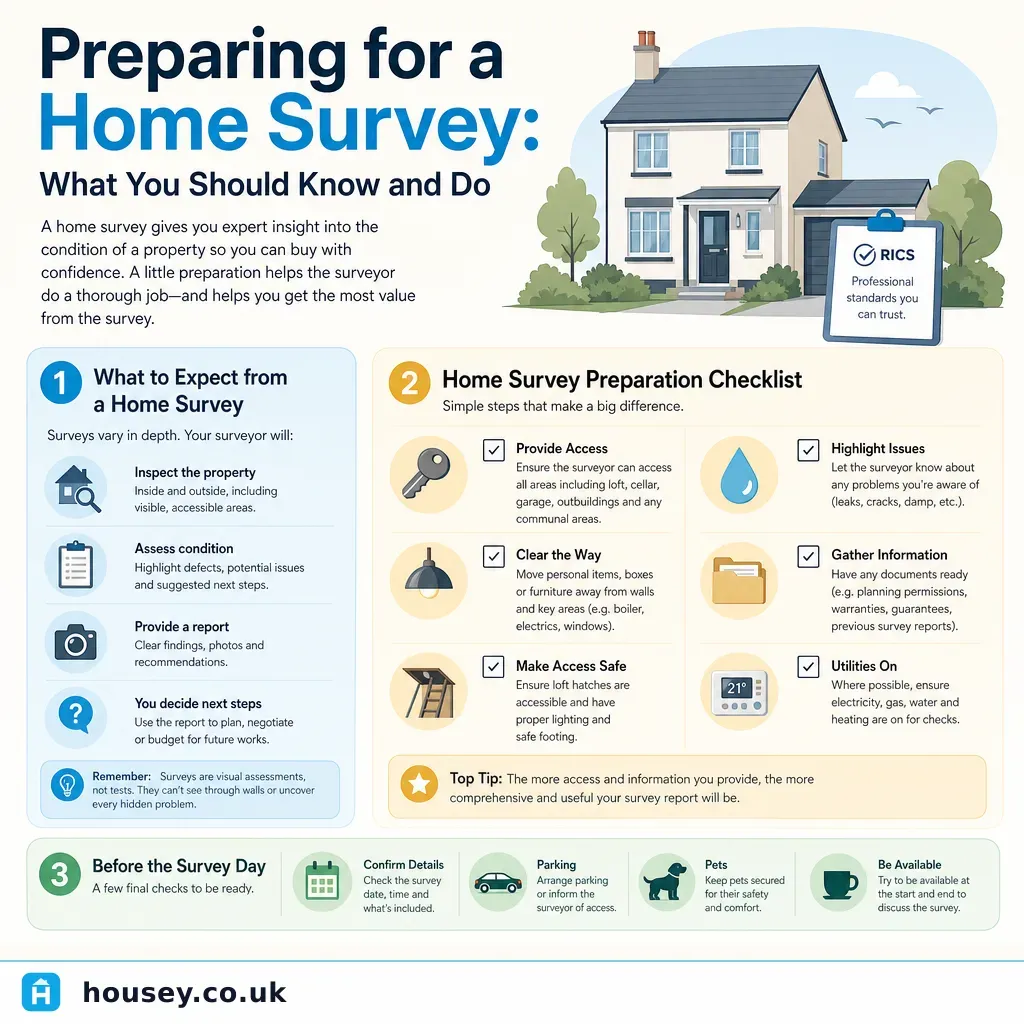
Preparing for a Home Survey: What You Should Know and Do
Preparing for a home survey means giving the surveyor clear access to all parts of the property, gathering relevant documents such as planning permissions and Building Regulations certificates, and knowing in advance which survey level has been instructed. As a buyer, you won't be present during the inspection, but understanding what the surveyor looks for helps you interpret the report and ask the right questions.
 Surveys & Inspections
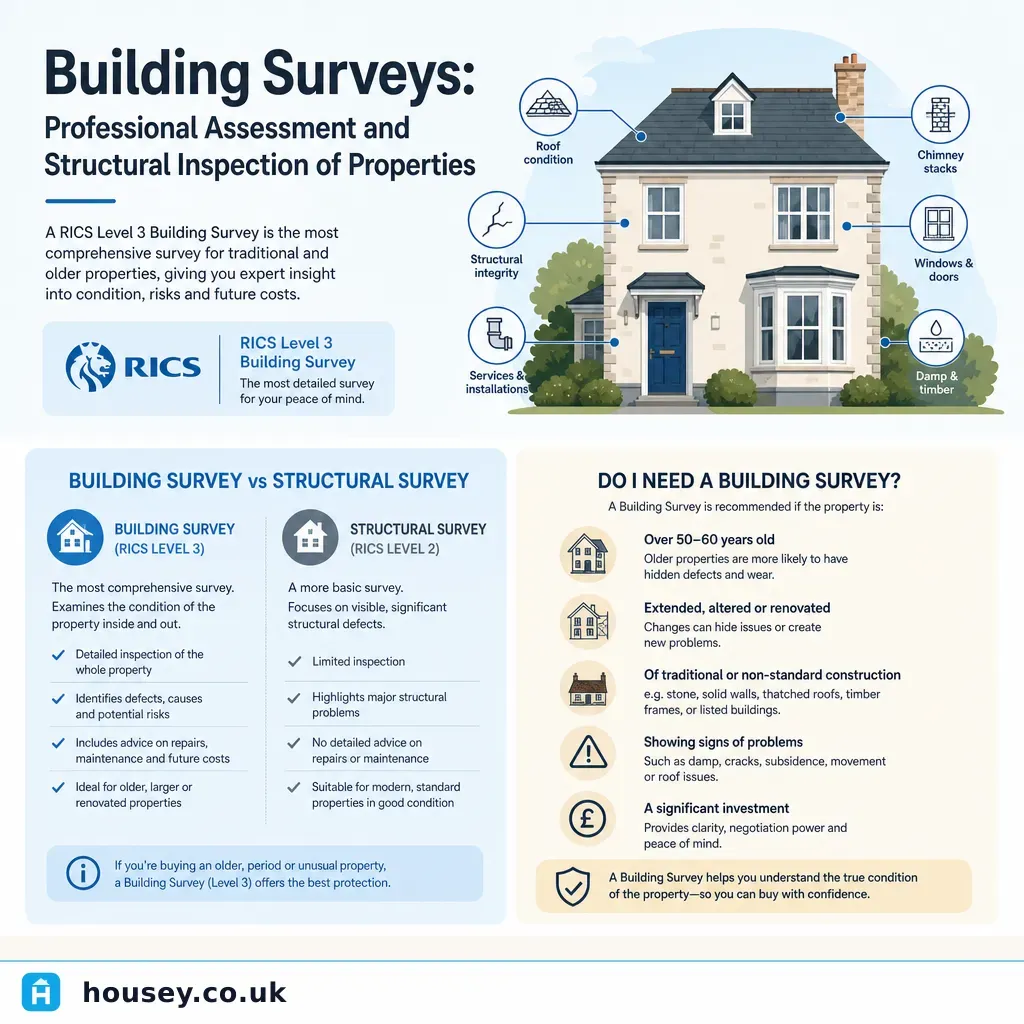
Building Surveys: Professional Assessment and Structural Inspection of Properties
A building survey is a professional condition inspection of a property carried out by a RICS-regulated surveyor. The most thorough option is the RICS Level 3 Building Survey, recommended for older, altered, or visibly defective properties. A structural engineer provides specialist diagnosis for movement and cracking. Mortgage valuations are not a substitute — they protect the lender, not the buyer.
 Surveys & Inspections
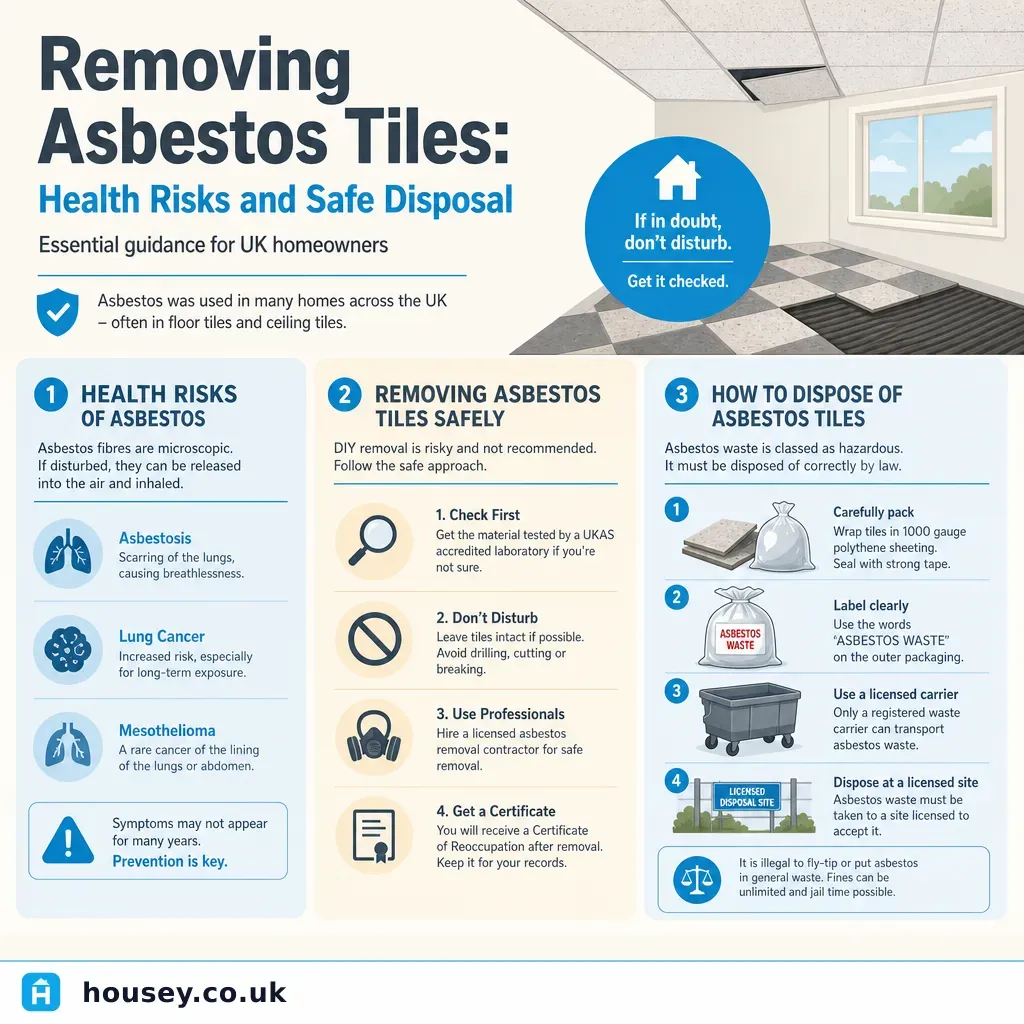
Removing Asbestos Tiles: Health Risks and Safe Disposal
Asbestos tiles in pre-2000 UK properties must not be disturbed without a refurbishment and demolition survey under HSG264. The Control of Asbestos Regulations 2012 governs all asbestos work including tile removal. Damaged or friable tiles require an HSE-licensed contractor. Intact tiles in good condition can often be safely overlaid rather than removed, avoiding fibre release.
 Surveys & Inspections
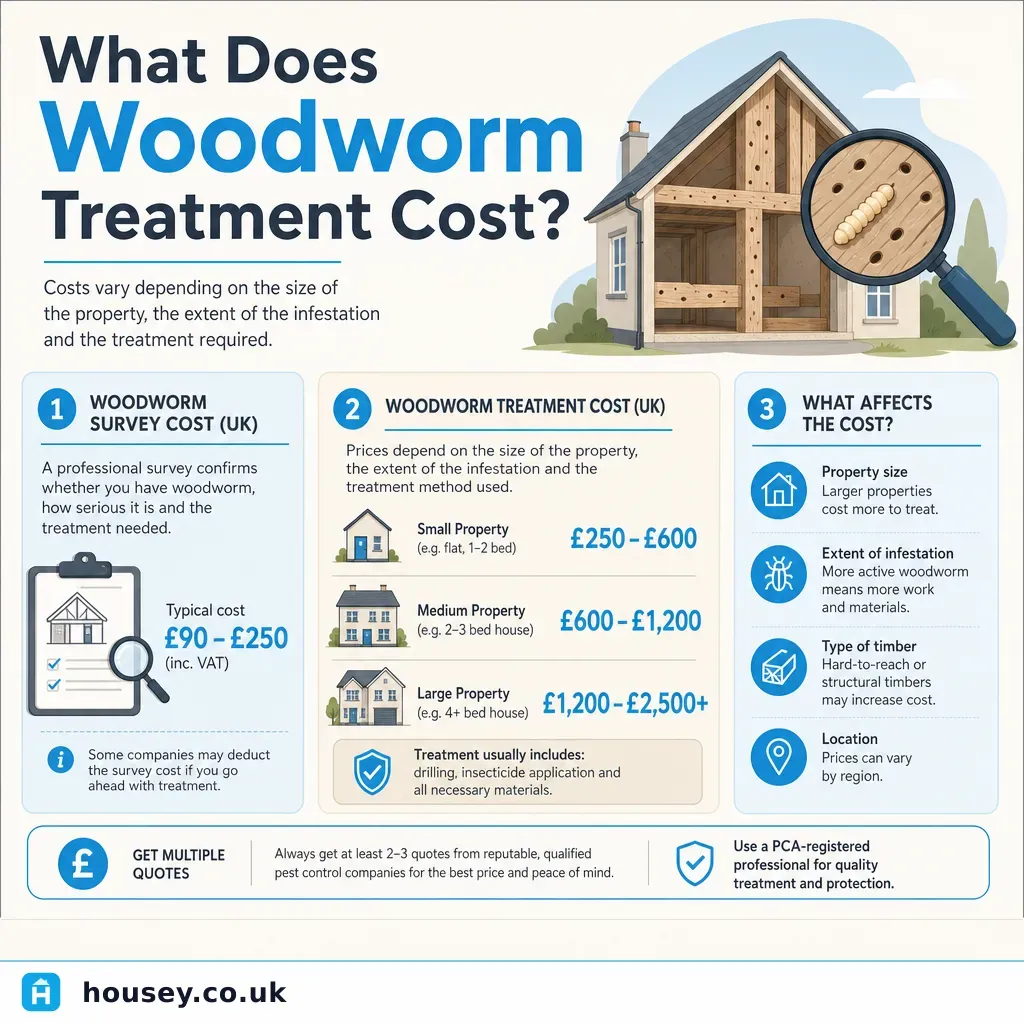
What Does Woodworm Treatment Cost?
Woodworm treatment in the UK typically costs £300–£900 for a standard three-bedroom home, depending on the extent of infestation and timbers affected. A damp and timber survey, usually required before treatment, typically adds £150–£400. Historic flight holes in dry timber may not need treatment at all — a qualified surveyor should confirm activity first.
 Surveys & Inspections
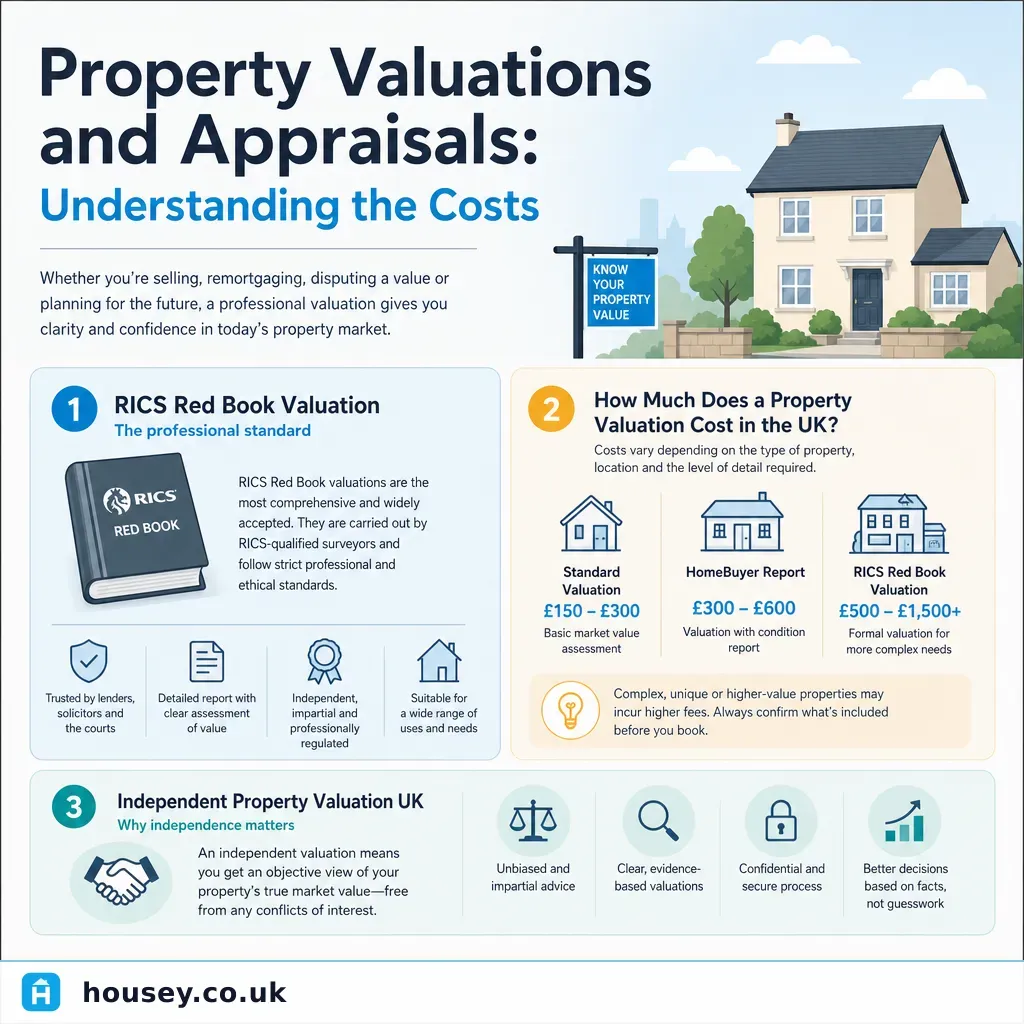
Property Valuations and Appraisals: Understanding the Costs
In the UK, the person with the legal or financial need for a valuation pays for it. Buyers and homeowners pay for RICS Red Book valuations for purchase, probate, or tax purposes. Mortgage lenders instruct and control their own valuations, often at the buyer's expense as a product fee. Indicative fees range from £250 to £900 depending on purpose and property type.