Knowledge Base
Property advice that actually helps
Researched, UK-specific guides for every stage of homeownership — from buying and surveys to retrofit, planning and major works.
 Improvement & Build
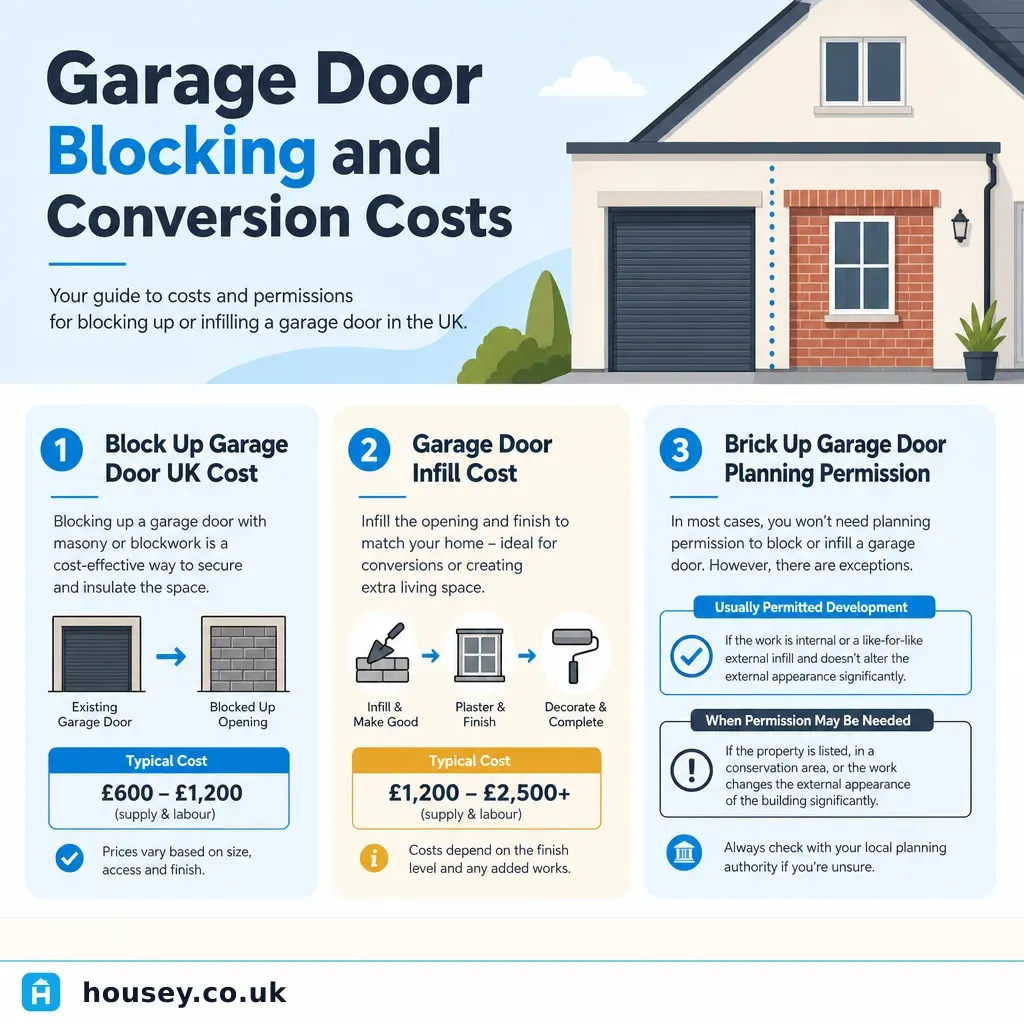
Garage Door Blocking and Conversion Costs
Blocking up a garage door in the UK typically costs £800–£3,000, depending on infill material, opening size, and whether a new window is included. Most projects use brick or blockwork to match the existing wall. Building Regulations approval is usually required for habitable conversions, and planning permission may be needed in conservation areas or for listed buildings.
 Improvement & Build
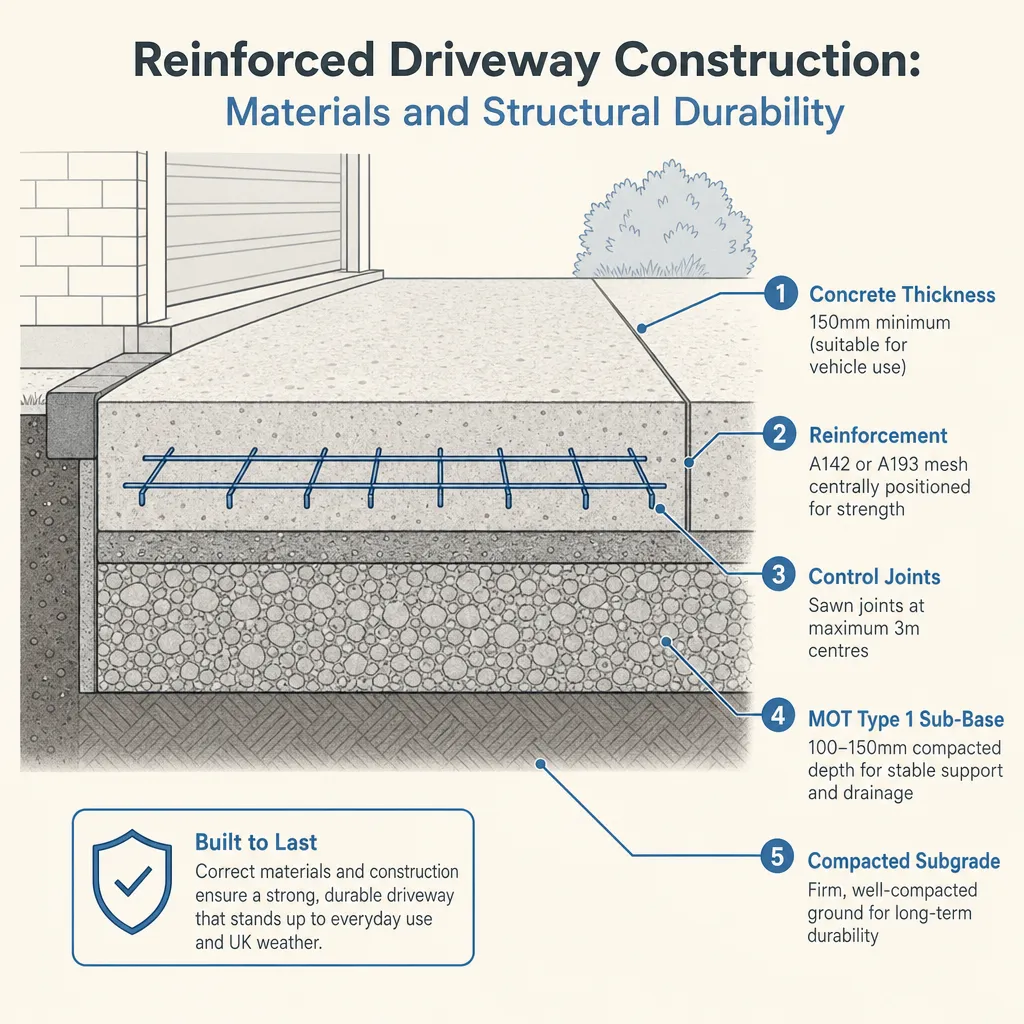
Reinforced Driveway Construction: Materials and Structural Durability
A domestic concrete driveway should be at least 100 mm thick — 150 mm where vans or heavier vehicles use it — on a compacted 100–150 mm MOT Type 1 sub-base, with A142 or A193 steel fabric mesh placed at mid-depth and expansion joints every 3–4 m. Correct sub-base preparation is the single most important factor in long-term durability.
 Improvement & Build
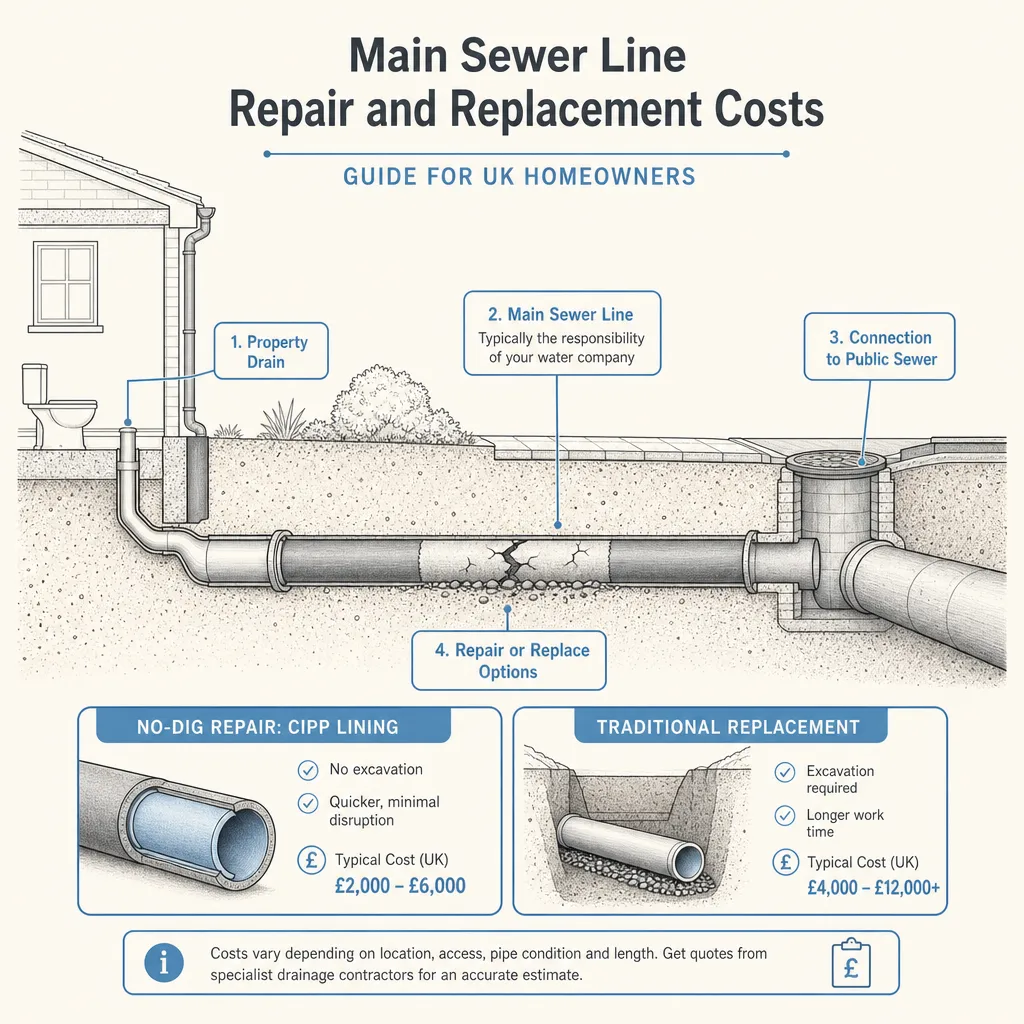
Main Sewer Line Repair and Replacement Costs
Main sewer line repair in the UK costs roughly £500–£2,500 for no-dig methods such as patch lining or full CIPP lining, and £3,000–£10,000 or more for open-cut excavation and pipe replacement. A CCTV drain survey, costing £150–£400, is normally the essential first step. Responsibility for the repair can lie with the homeowner or the water company depending on where the fault is located.
 Buying & Moving
Conveyancing: Why Professional Legal Services Matter in Property Transactions
Conveyancing is the legal process of transferring property ownership in England and Wales, carried out by an SRA-regulated solicitor or CLC-regulated licensed conveyancer. It covers title searches, legal enquiries, contract exchange, and HM Land Registry registration. Without proper conveyancing, buyers risk purchasing a property with hidden legal defects, undisclosed restrictions, unpaid charges, or disputed ownership.
 Energy & Retrofit
Smart Home Technology That Saves Energy: A Practical Approach To Reducing Bills
Smart home technology can reduce household energy bills by automating heating, lighting, and appliances to run only when needed. Smart thermostats, occupancy sensors, and energy monitors are among the most cost-effective options, typically cutting heating costs by 10–30%. Most devices pay back their cost within one to three years, depending on your current tariff and existing controls.
 Improvement & Build
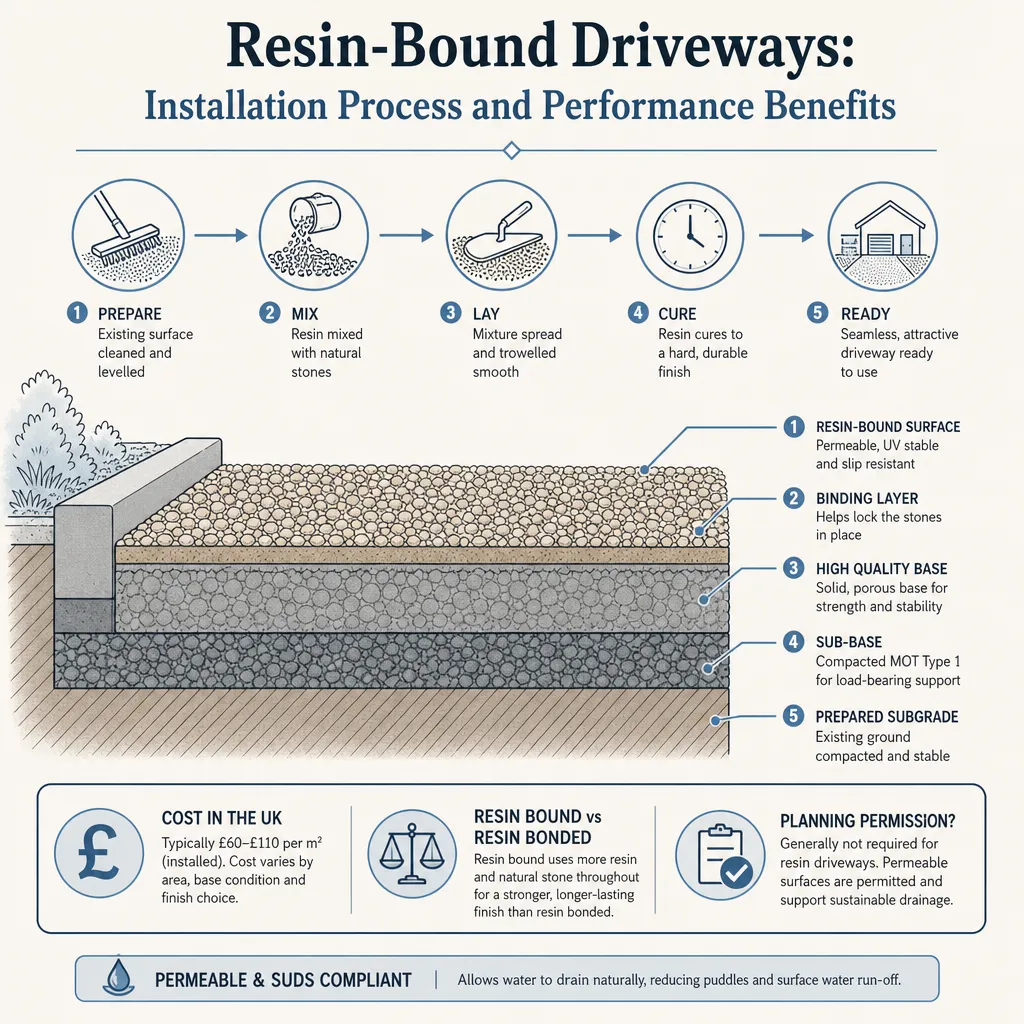
Resin-Bound Driveways: Installation Process and Performance Benefits
Resin-bound surfacing mixes natural aggregate with UV-stable polyurethane resin to create a smooth, porous driveway that drains water through its surface layer. Because it is porous, it satisfies the sustainable drainage requirement for front driveways in England, so planning permission is not usually needed. A sound base is the most critical factor in long-term performance — a failing substrate must be reconstructed before resin is applied.
 Surveys & Inspections
Fire Damage Restoration: Assessing and Reinstating Structures
Fire damage restoration starts with a structural engineer assessing which elements can be repaired and which must be replaced. Timber, steel, masonry, and concrete each respond differently to heat and require different assessment methods. Reinstatement must meet current Building Regulations, and building control notification is usually required. For buildings constructed before 2000, an asbestos survey is needed before demolition work starts.
 Improvement & Build
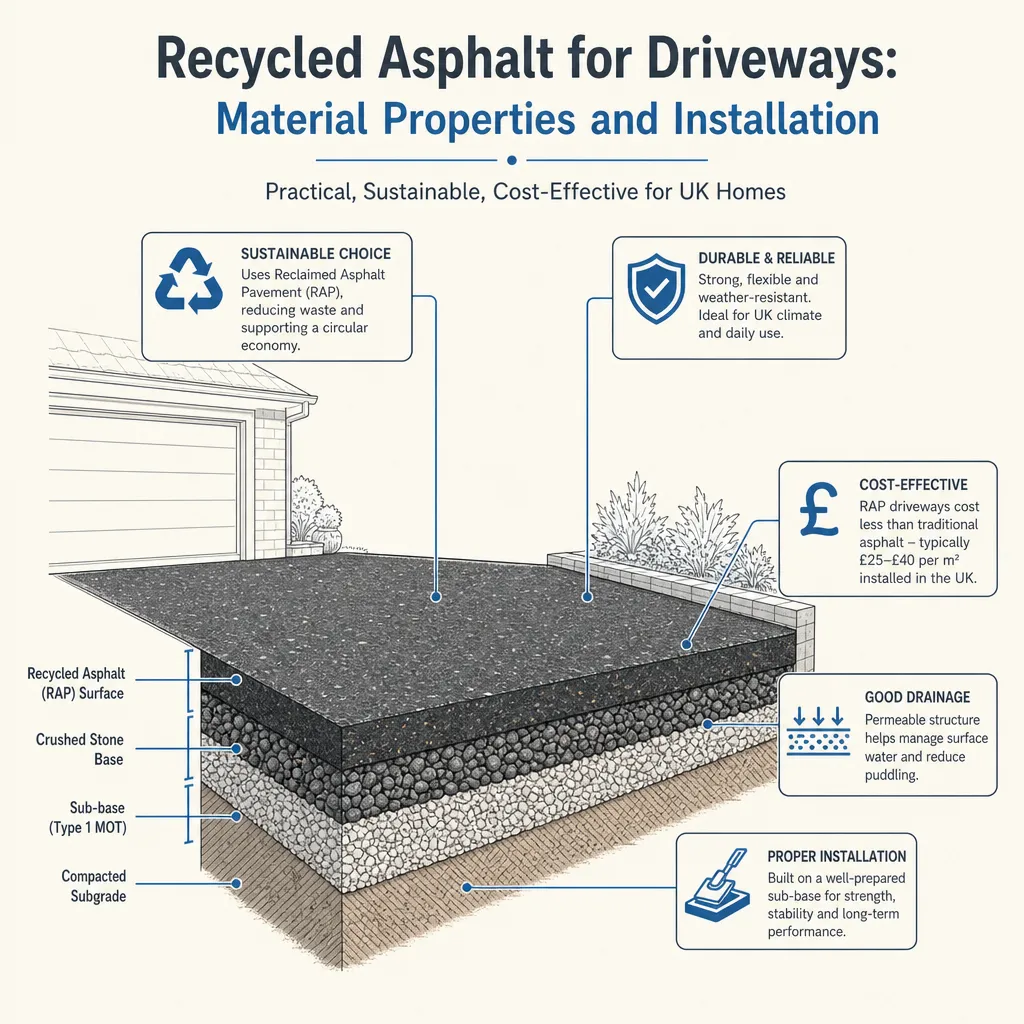
Recycled Asphalt for Driveways: Material Properties and Installation
Recycled asphalt (RAP) uses reclaimed road material and costs less than virgin asphalt, making it a budget-friendly option for UK driveways. However, it performs less consistently in cold and wet conditions. The same drainage planning rules apply — any impermeable driveway over 5m² fronting a highway in England needs a drainage solution or planning permission.
 Improvement & Build
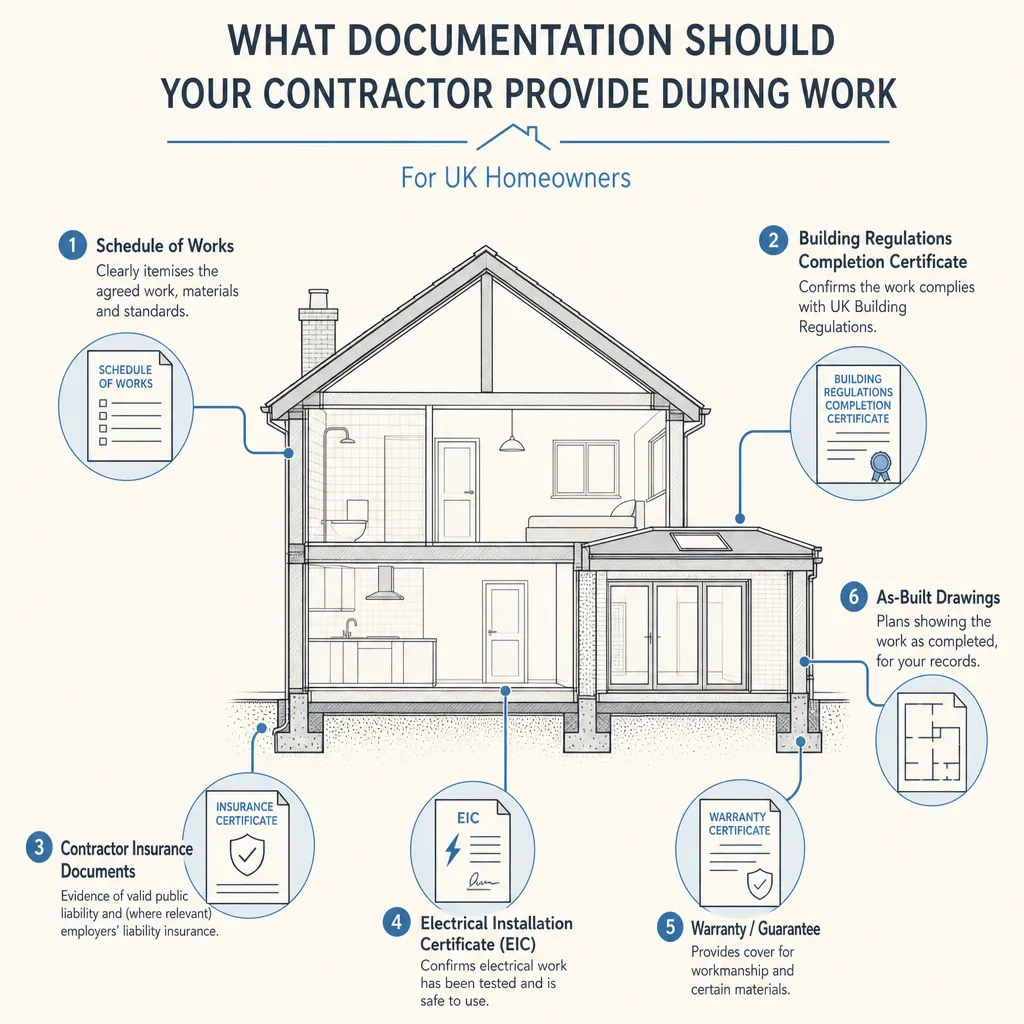
What Documentation Should Your Contractor Provide During Work
During building work, your contractor should provide a signed written contract, public liability insurance certificate, and copies of any building control application. At completion, expect a building regulations completion certificate, Gas Safe or electrical certificates, FENSA certificate where relevant, and a defects liability notice. Keep all documents securely — they are essential evidence when selling or making insurance claims.
 Improvement & Build
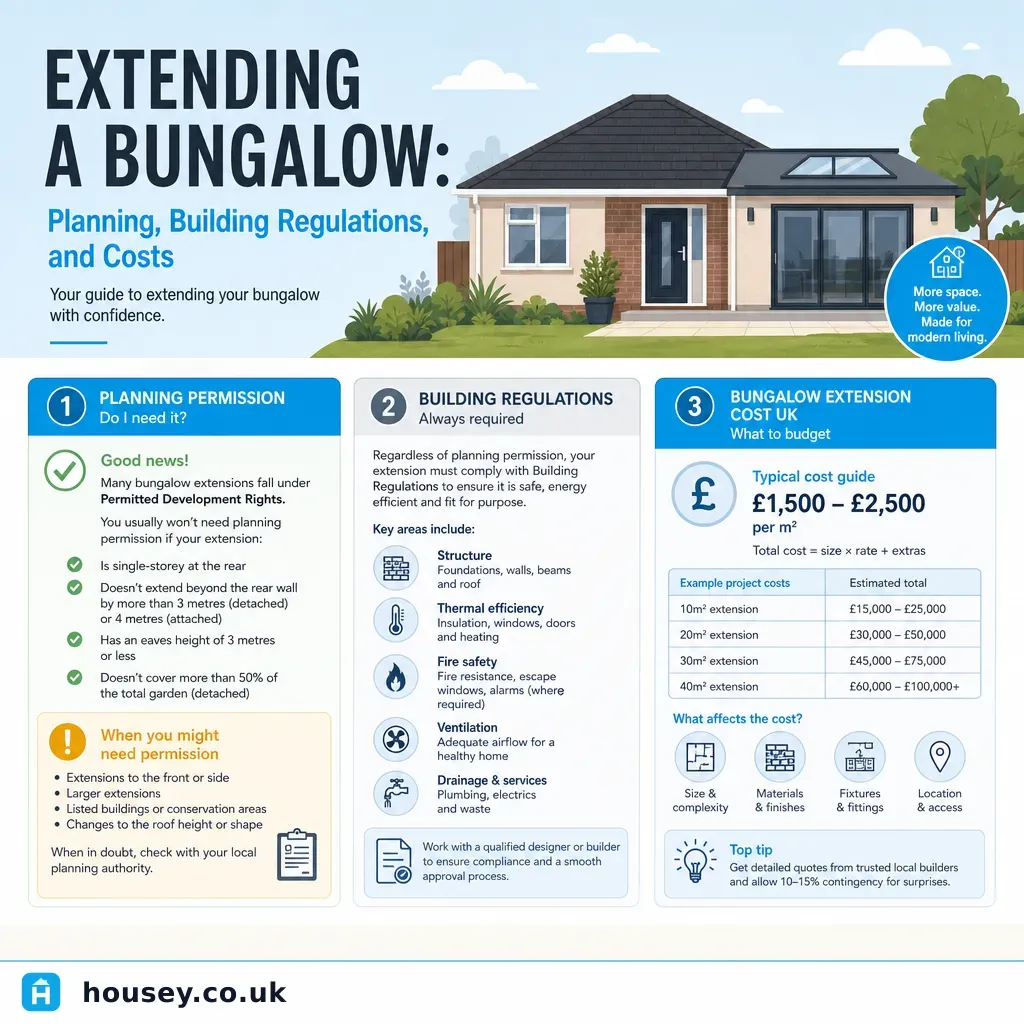
Extending a Bungalow: Planning, Building Regulations, and Costs
Most single-storey bungalow extensions fall under permitted development and do not require a planning application, provided they meet size and boundary limits. All extensions need building regulations approval regardless of planning status. Expect to budget roughly £1,500–£2,500 per square metre for a typical UK extension. A structural engineer and building control body are needed for any extension.
 Planning & Pre-Build
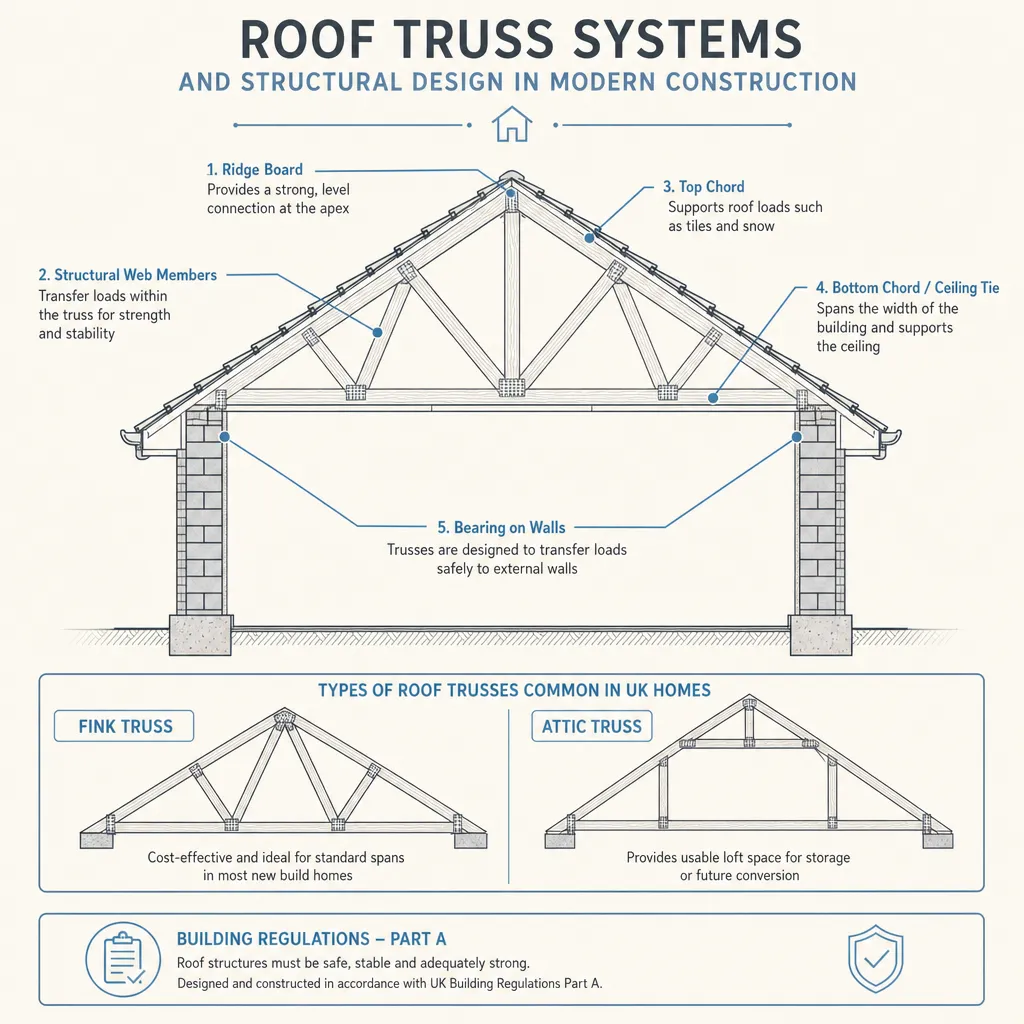
Roof Truss Systems and Structural Design in Modern Construction
Roof trusses are factory-engineered frames that carry roof loads to load-bearing walls. Common types include fink, attic, mono-pitch, and hip trusses. They must be designed to BS EN 1995 (Eurocode 5) and installed with correct bracing under Building Regulations Part A. Any structural alteration to roof trusses — including for loft conversions — requires input from a structural engineer.
 Improvement & Build
Seasonal Home Improvement: Planning and Executing Projects Throughout the Year
UK home improvement projects deliver best results when timed to suit the season. External works such as roofing, extensions, and loft conversions are best scheduled for spring and summer when weather is drier. Interior projects, planning applications, and contractor bookings suit autumn and winter. Booking 3–6 months ahead of your preferred start date is typically recommended for major works.