Knowledge Base
Property advice that actually helps
Researched, UK-specific guides for every stage of homeownership — from buying and surveys to retrofit, planning and major works.
 Planning & Pre-Build
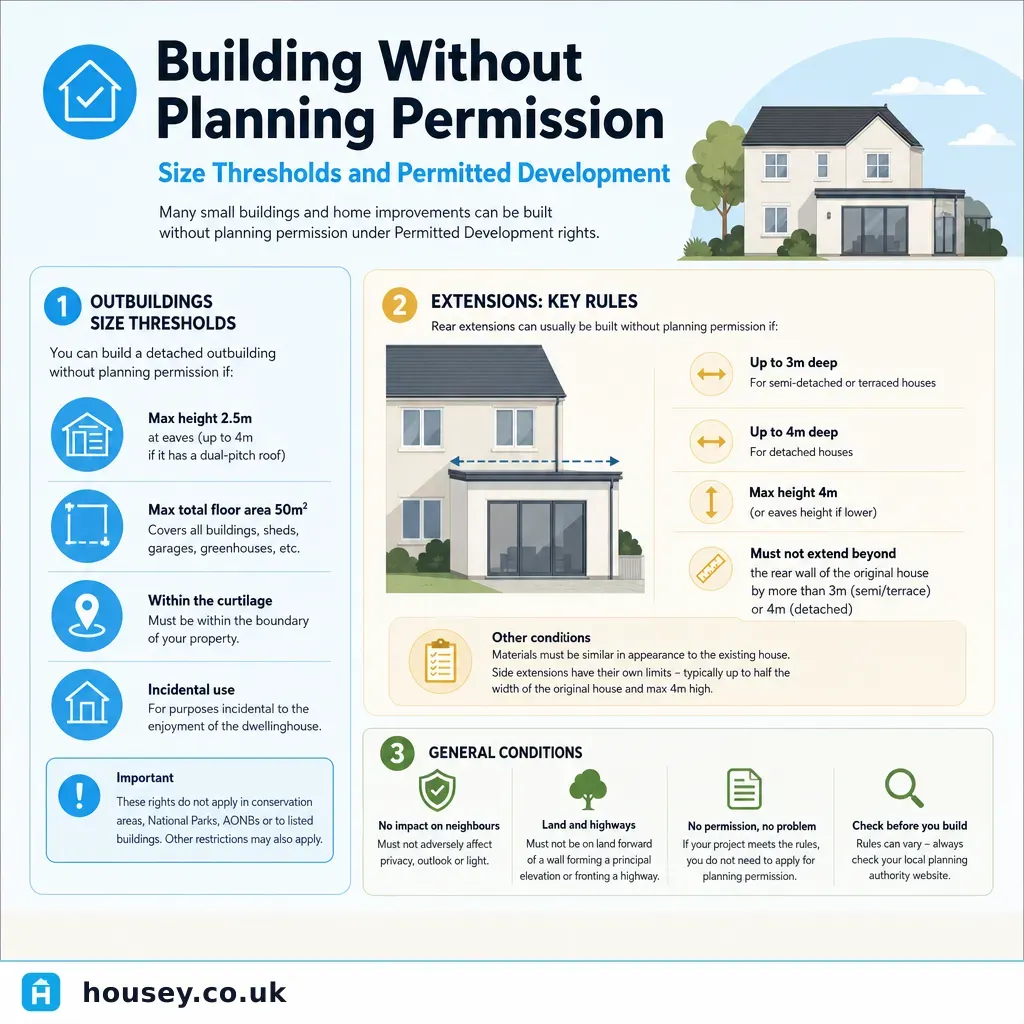
Building Without Planning Permission: Size Thresholds and Permitted Development
In England, most house extensions, loft conversions, and outbuildings can go ahead without planning permission under permitted development rights, provided size thresholds are met. Key limits include single-storey rear extensions up to 4m deep (detached) or 3m (other houses), loft conversions up to 50 cubic metres, and outbuildings covering no more than 50% of the garden. Flats and listed buildings are excluded.
 Energy & Retrofit
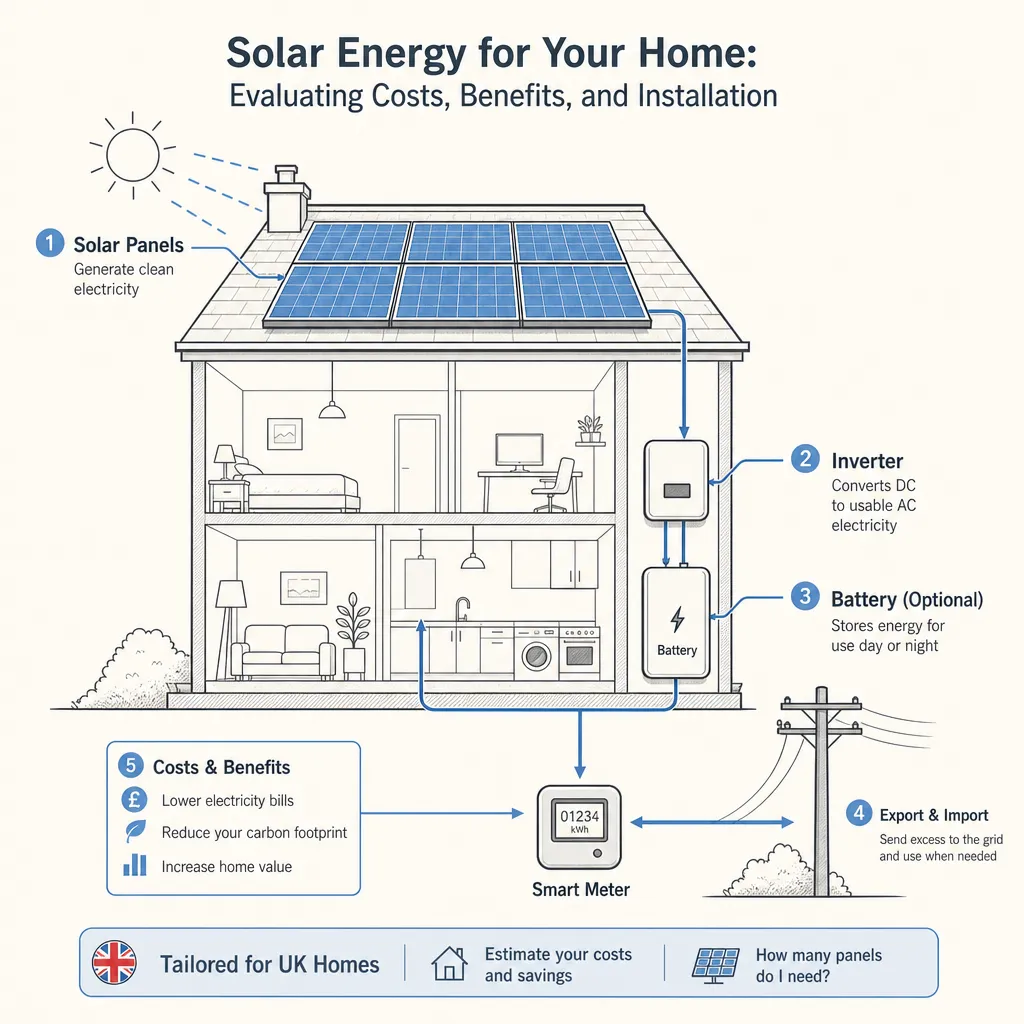
Solar Energy for Your Home: Evaluating Costs, Benefits, and Installation
A typical UK home solar PV system of 3–4 kWp costs approximately £5,000–£8,000 fully installed and can generate 2,600–3,800 kWh per year, covering 40–60% of average household electricity use. Financial returns depend on roof orientation, shading, tariff rates, and whether battery storage is added.
 Improvement & Build
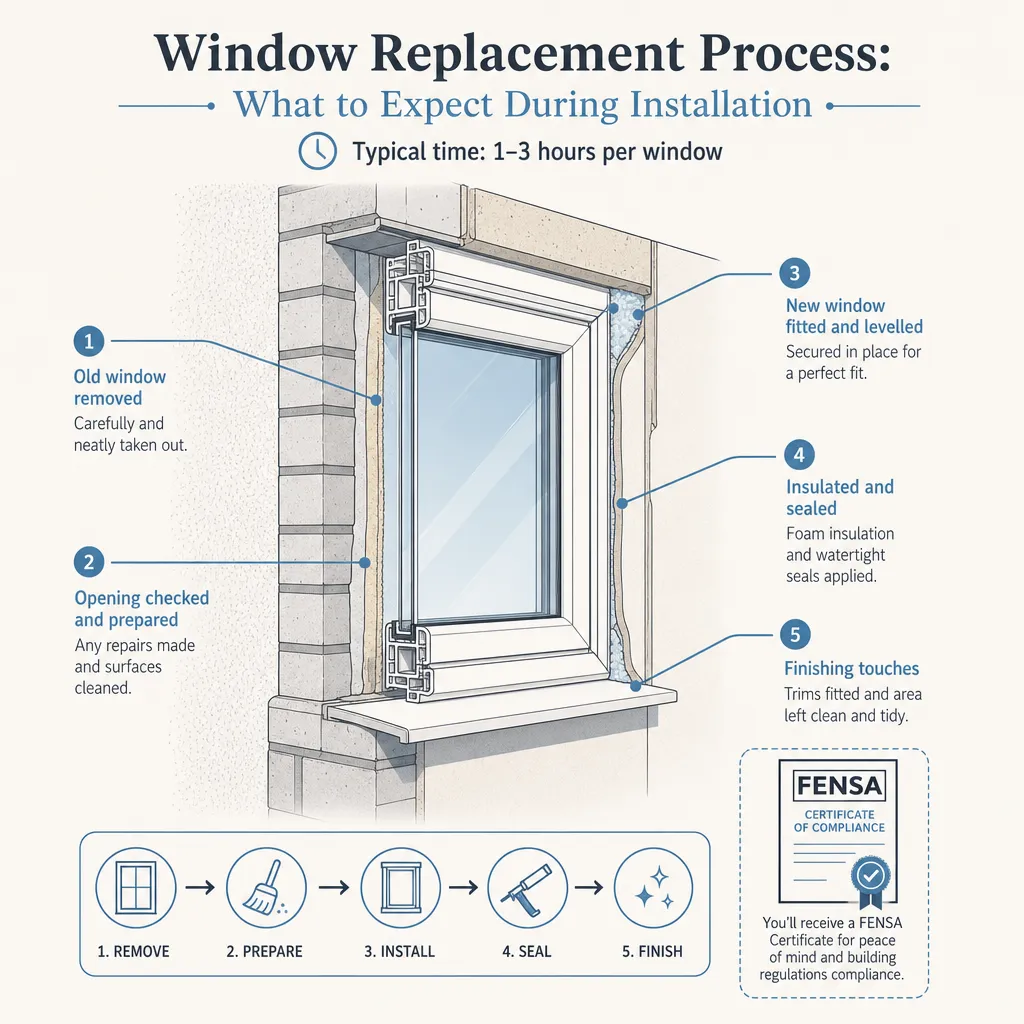
Window Replacement Process: What to Expect During Installation
Replacing windows in a UK home typically takes one to two days for a standard house. Installers remove existing frames, prepare the opening, fit new frames and glazing, seal and weatherproof, and provide a FENSA or CERTASS certificate on completion. Most households can remain in the property throughout, though rooms will be temporarily draughty and noisy while individual windows are replaced.
 Energy & Retrofit
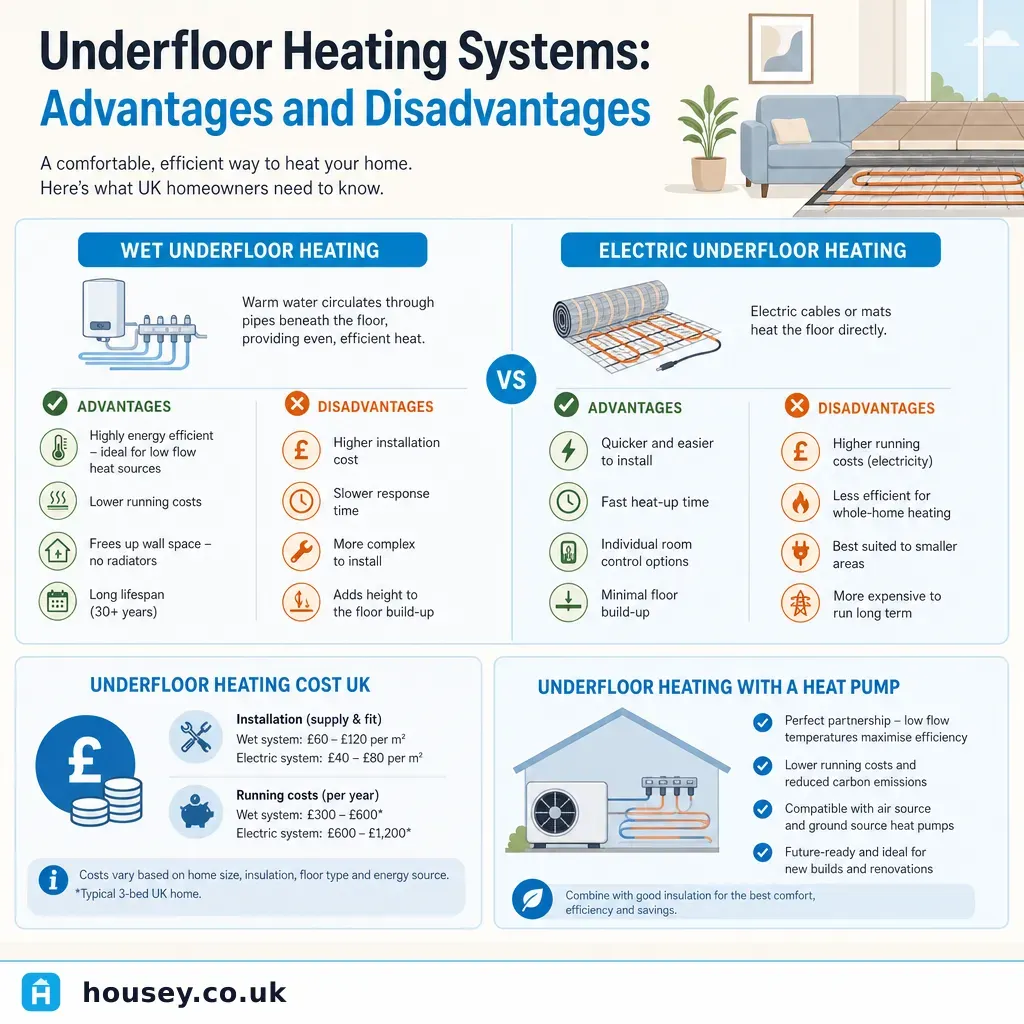
Underfloor Heating Systems: Advantages and Disadvantages
Wet underfloor heating distributes warmth evenly at lower surface temperatures than radiators, making it well-suited to heat pumps. Electric systems suit smaller areas and are easier to retrofit but cost more to run. Running costs, floor build-up, compatible floor finishes, and slow response times all affect whether UFH suits your home.
 Surveys & Inspections
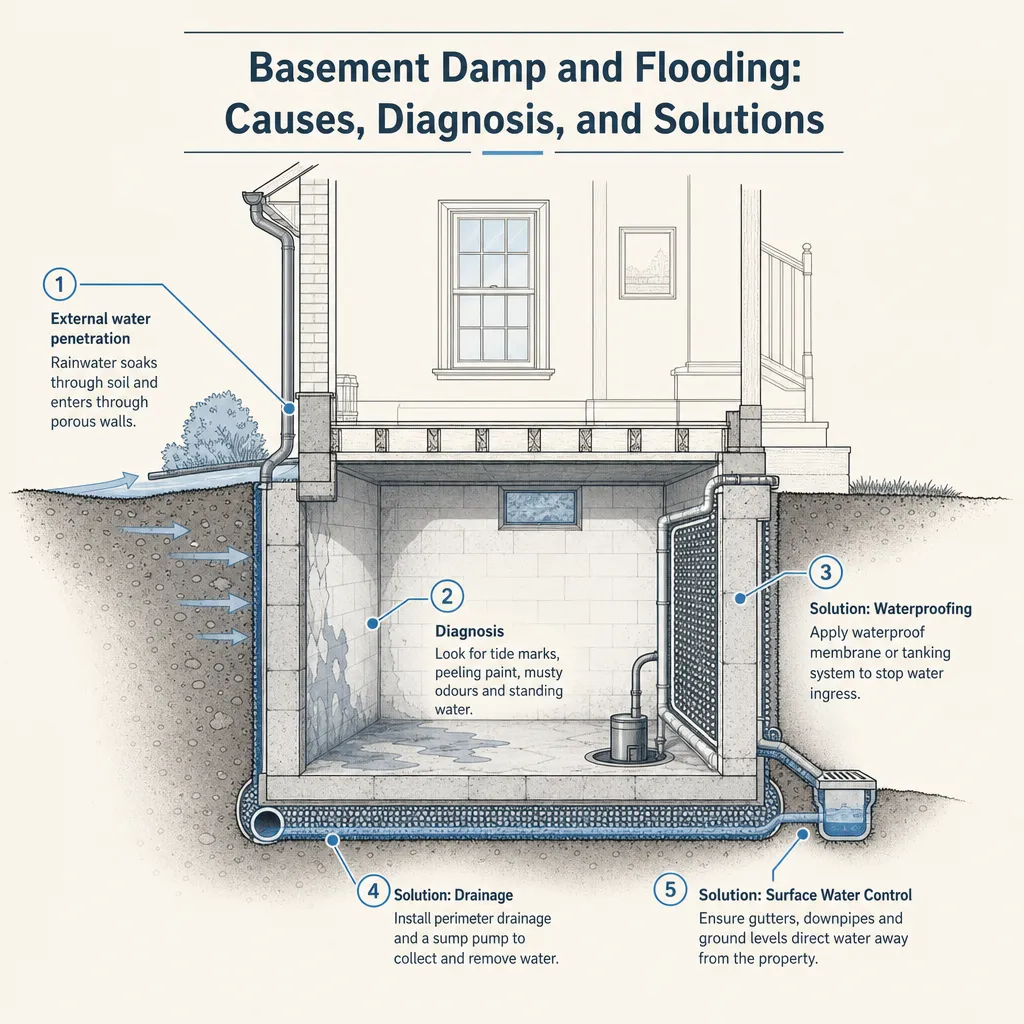
Basement Damp and Flooding: Causes, Diagnosis, and Solutions
Basement dampness and flooding in UK homes typically stems from one of three sources: groundwater under hydrostatic pressure, surface water from drainage failure, and condensation on cold masonry surfaces. Each requires a different remediation approach, so correct diagnosis by a qualified specialist — usually before any waterproofing is installed — is essential to avoid costly treatment failures.
 Improvement & Build
Garden Supply and Landscaping Distribution: UK Market Trends for Homeowners
The UK garden and landscaping supply market has expanded significantly, with more specialist distributors, online suppliers, and trade merchants now serving both professional landscapers and homeowners. Understanding how materials are sourced — from quarried stone and timber to plants and drainage products — helps homeowners work more effectively with their landscaper, ask better questions, and set realistic cost expectations for garden projects.
 Improvement & Build
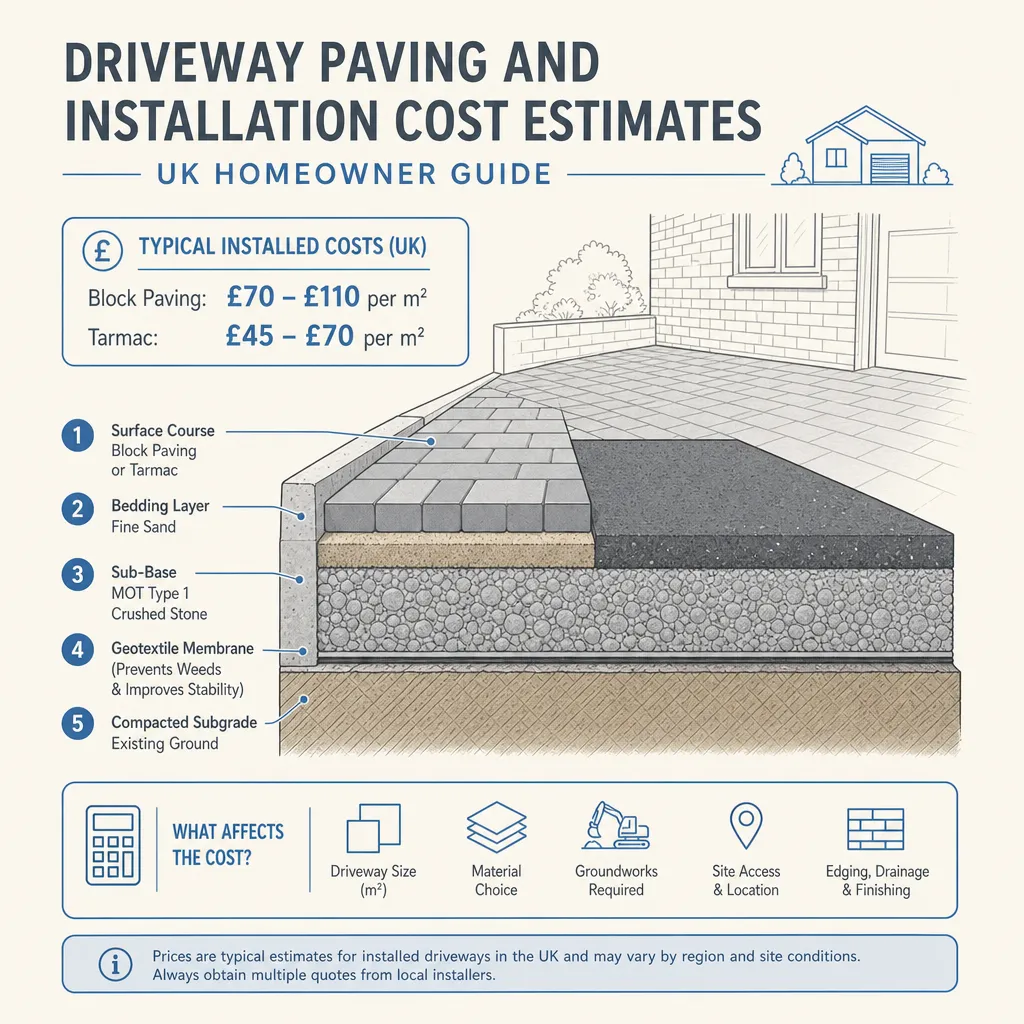
Driveway Paving and Installation Cost Estimates
Installing a new driveway in the UK typically costs £25–£120 per square metre depending on material. A standard 40m² driveway ranges from around £800 for gravel to £5,000 or more for block paving. Costs vary with site preparation, drainage requirements, and material choice. Planning permission may be needed for non-permeable surfaces in front gardens.
 Surveys & Inspections
Wind Mitigation Inspection: How to Protect Your UK Home from Storm Damage
The UK has no formal wind mitigation inspection scheme, but a RICS Level 3 survey or specialist roof inspection assesses the same storm resilience factors. Most residential wind damage stems from mortar failure at ridge tiles, lifting flashings, and worn tile fixings — all identifiable through professional inspection and addressed through targeted maintenance before each storm season.
 Planning & Pre-Build
Gable Roof Styles and Structural Considerations in UK Architecture
Gable roofs — two sloping planes meeting at a central ridge with triangular end walls — are the most common roof form in UK residential architecture. They are simpler and cheaper to build than hip roofs but more susceptible to wind loading at the gable ends. Pitch typically ranges from 35° to 45°, and structural requirements are governed by Building Regulations Approved Document A.
 Improvement & Build
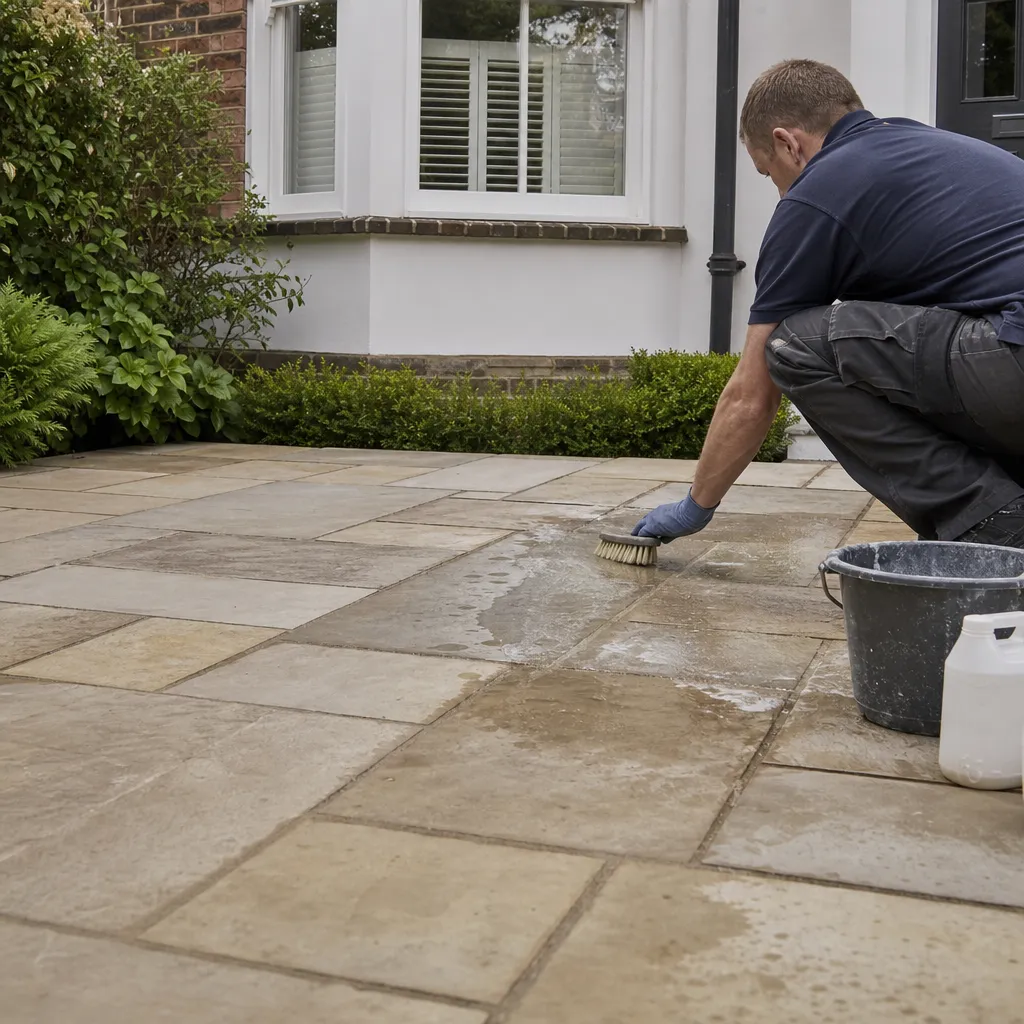
Removing Stains from Indian Sandstone Paving: Cleaning Methods and Products
Most stains on Indian sandstone respond to a pH-neutral or mildly alkaline cleaner formulated for natural stone. Use a dedicated biocide for algae, an alkaline degreaser for oil, and a stone-safe rust remover for iron staining. Avoid bleach, vinegar, and acid-based products, which permanently damage sandstone. Seal the surface after cleaning to reduce future staining.
 Improvement & Build
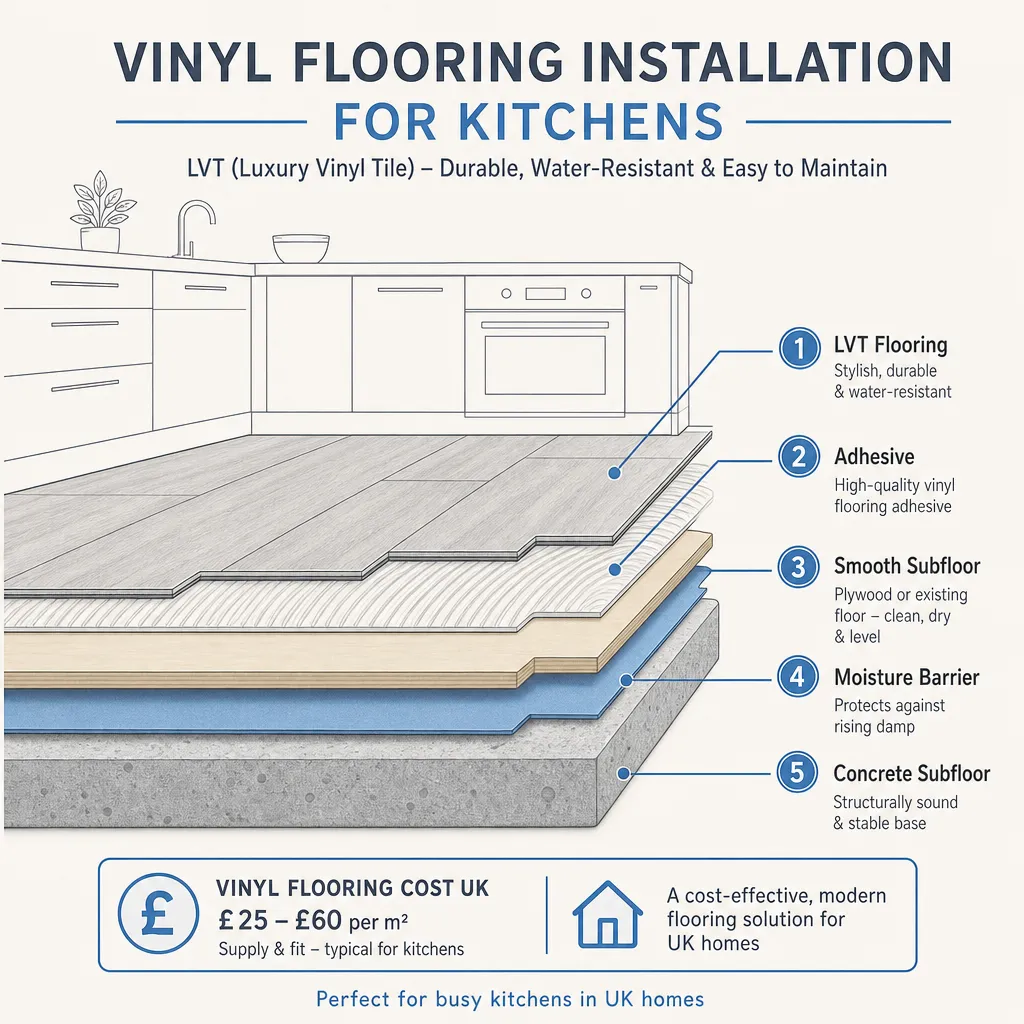
Vinyl Flooring Installation for Kitchens
Luxury vinyl tile (LVT) and sheet vinyl are the most popular choices for UK kitchen floors, offering waterproof performance and competitive costs. Professional installation typically costs £20–50 per square metre fully fitted, depending on product choice and subfloor condition. Most kitchens can be completed in one to two days.
 Improvement & Build
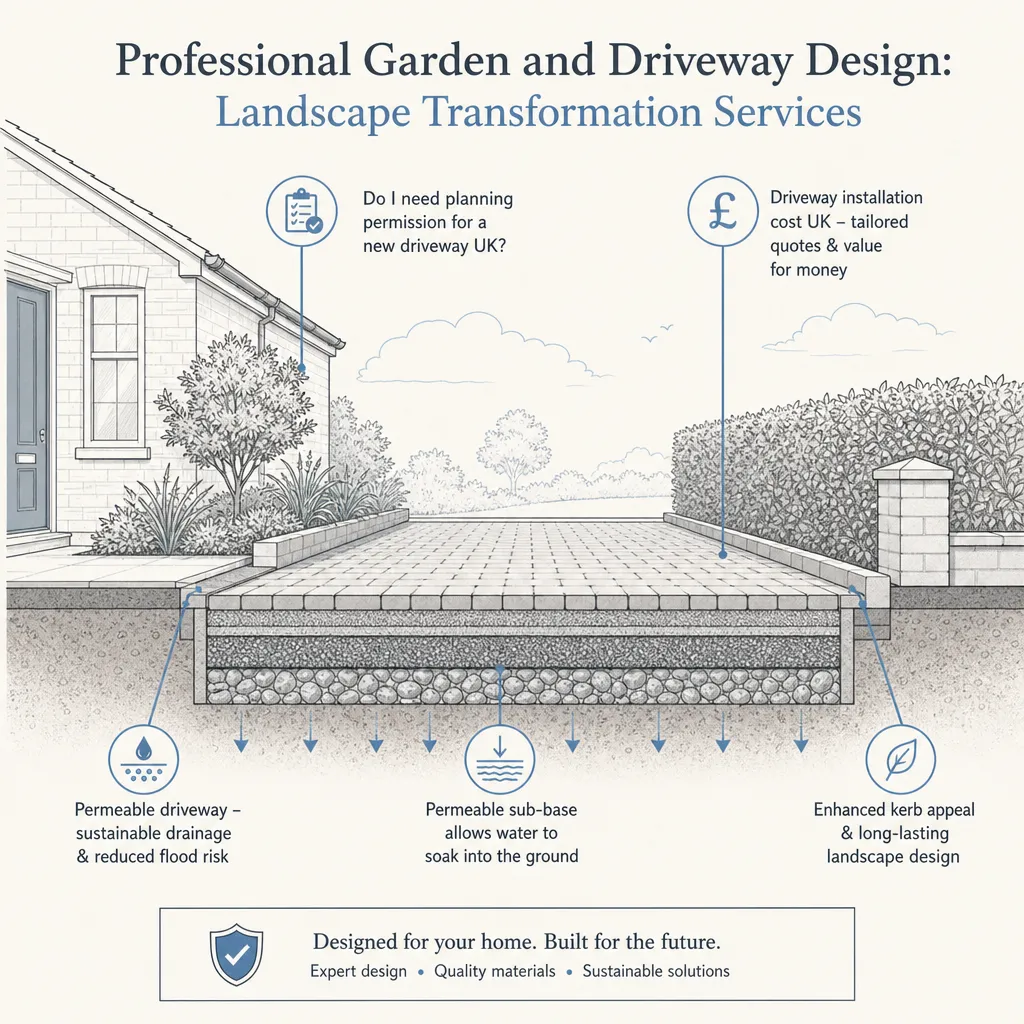
Professional Garden and Driveway Design: Landscape Transformation Services
Garden and driveway design combines hard landscaping — paving, block paving, gravel, resin — with planting and layout to improve kerb appeal and functionality. Driveways over 5m² in non-permeable materials need householder planning permission in England, and dropped kerbs always require highway authority approval. A professional landscaper or garden designer can manage both the design and the regulatory requirements.