Knowledge Base
Property advice that actually helps
Researched, UK-specific guides for every stage of homeownership — from buying and surveys to retrofit, planning and major works.
 Buying & Moving
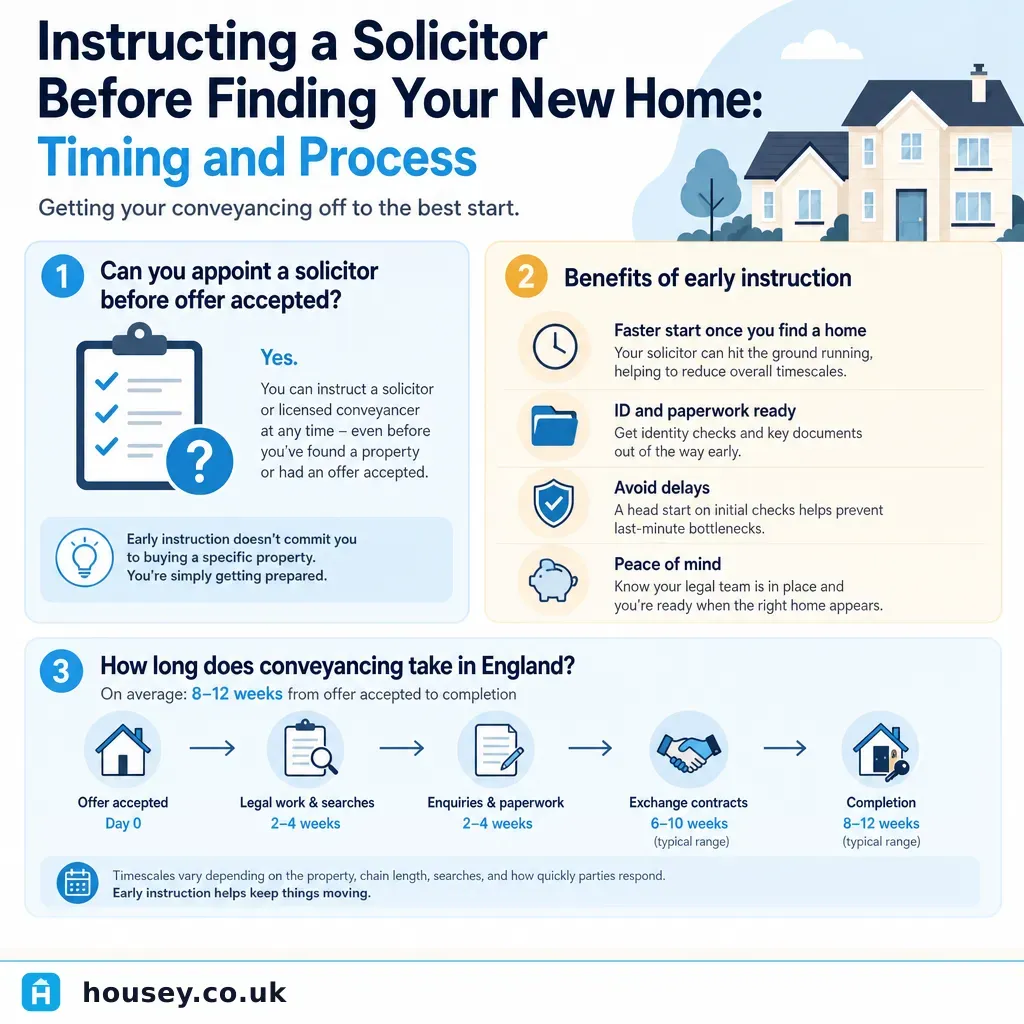
Instructing a Solicitor Before Finding Your New Home: Timing and Process
You can instruct a solicitor or licensed conveyancer before you find a property. Most firms will complete anti-money laundering identity checks and initial onboarding in advance, saving one to two weeks at the start of a transaction. Early instruction is especially useful in competitive markets or for buyers with complex funding arrangements who want to be ready to move quickly once an offer is accepted.
 Improvement & Build
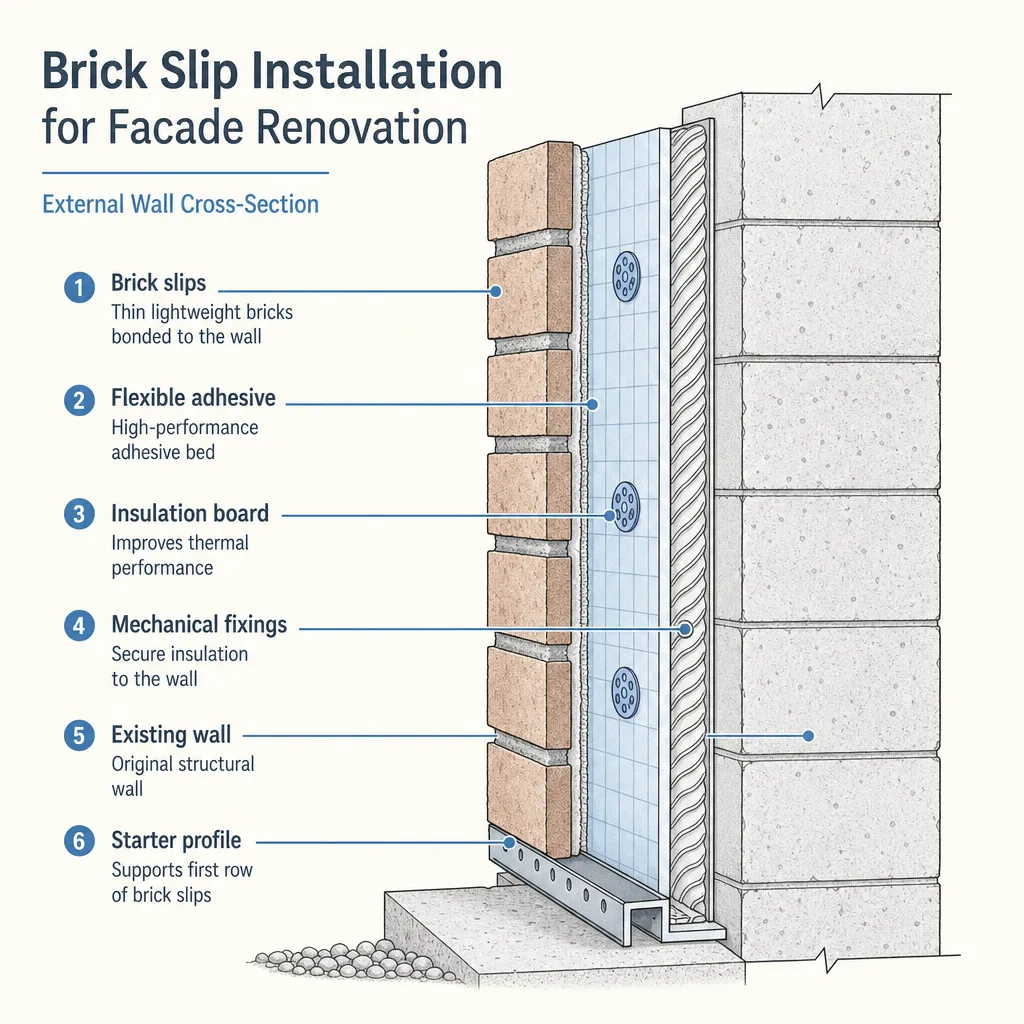
Brick Slip Installation for Facade Renovation
Brick slips are thin sections of real or reconstituted clay brick, typically 20–25 mm thick, bonded or mechanically fixed to a prepared substrate. They can refresh an external facade without structural changes. Key success factors are correct substrate preparation, external-grade adhesive, and checking planning rules — especially in conservation areas or for listed buildings.
 Planning & Pre-Build
Global Building Material Trade: Understanding International Timber Supply Dynamics
The UK imports around 80% of its structural timber from Scandinavia and the Baltic states, making domestic project budgets sensitive to global events including geopolitical disruptions, currency movements, and extreme weather. Understanding what drives timber supply and pricing helps you choose the right contract terms, plan contingency, and avoid being surprised by mid-project cost increases.
 Planning & Pre-Build
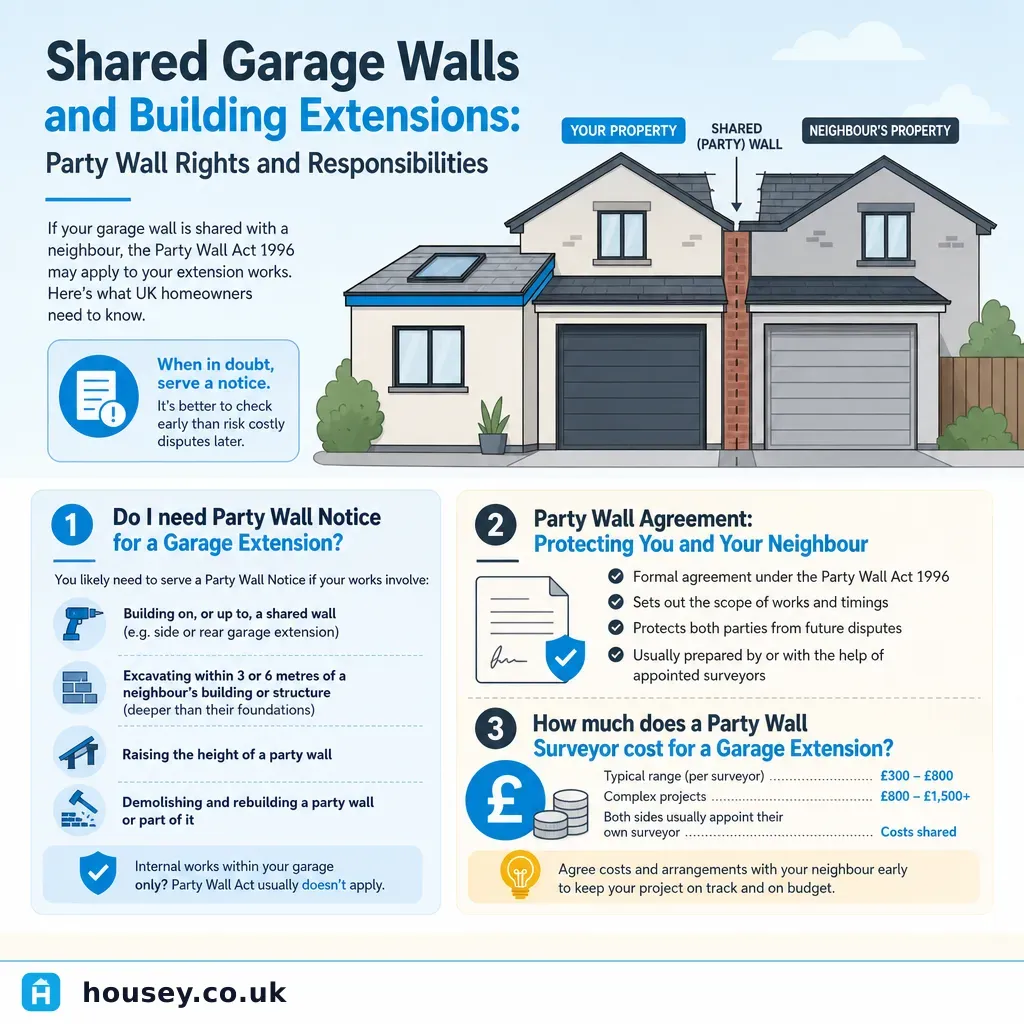
Shared Garage Walls and Building Extensions: Party Wall Rights and Responsibilities
A shared garage wall often qualifies as a party wall under the Party Wall etc. Act 1996, requiring written notice to your neighbour at least two months before work starts. Your neighbour has 14 days to consent or dissent. If they dissent or do not respond, a party wall award must be agreed and signed before work can begin.
 Energy & Retrofit
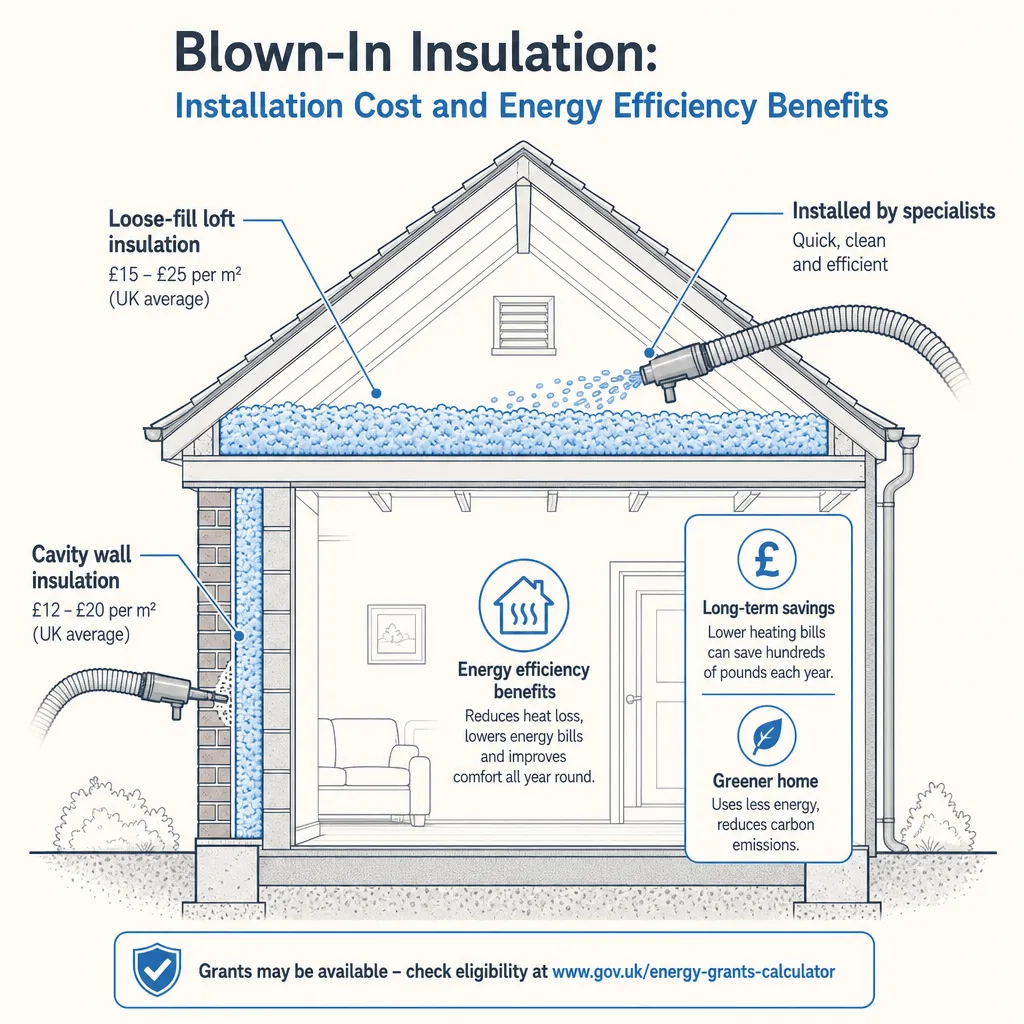
Blown-In Insulation: Installation Cost and Energy Efficiency Benefits
Blown-in insulation uses a machine to pump loose mineral wool, cellulose, or EPS beads into lofts or cavity walls — effective in irregular spaces where roll insulation is impractical. Loft blown insulation typically costs £300–£700 for a three-bedroom semi; cavity wall insulation costs £400–£1,200. Eligible households may receive fully funded installation through ECO4.
 Planning & Pre-Build
Building Resilience: How Construction Practices Are Adapting to Climate Challenges
UK construction is adapting to climate change through updated Building Regulations. Part O sets overheating limits for new homes, CIRIA guidance governs flood-resilient design, and the Future Homes Standard will cut carbon by 75–80%. For homeowners planning extensions or self-builds, these changes affect glazing choices, drainage design, and material selection from the earliest design stage.
 Planning & Pre-Build
Installing Fire-Resistant Doors: Building Regulations and Contractors
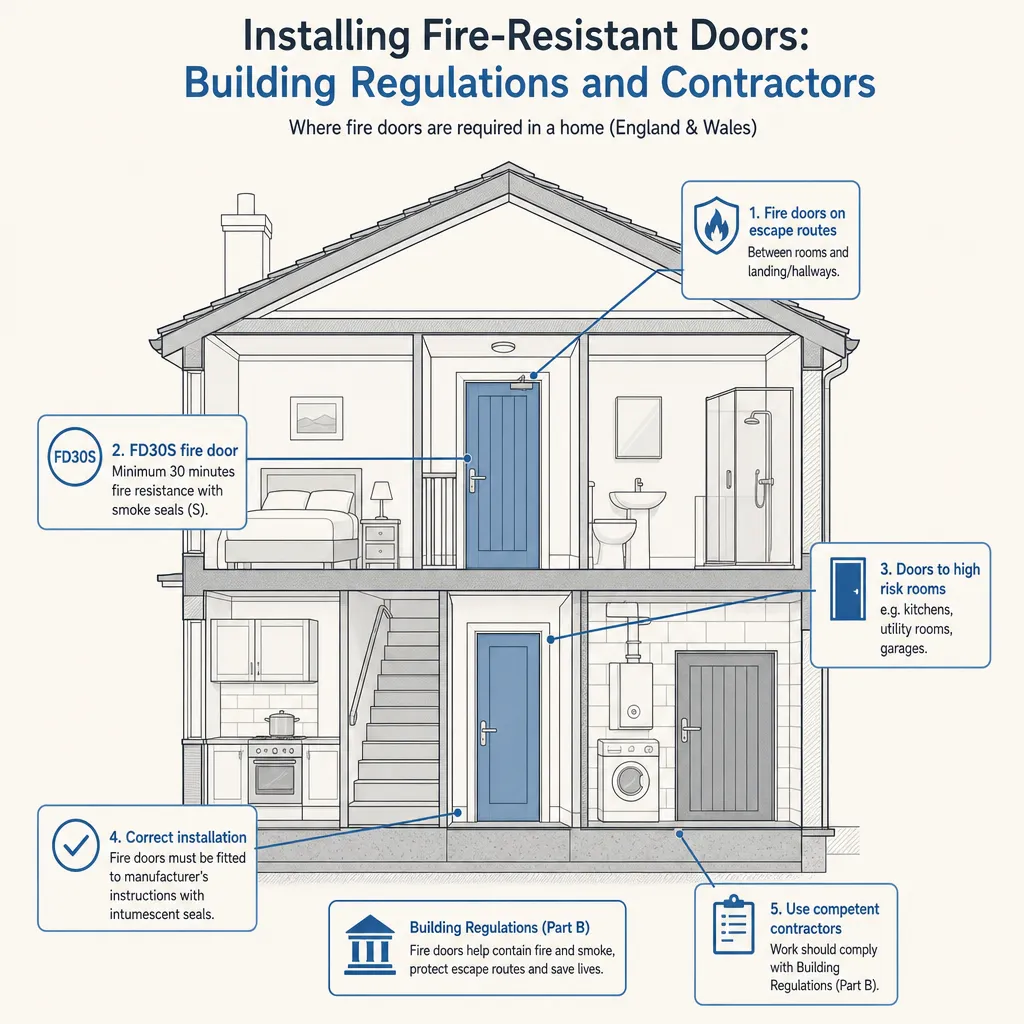
Fire doors are required by Building Regulations in specific locations — including integral garages, properties of three or more storeys, loft conversions, and HMOs. They must be third-party certificated to BS 476-22 or BS EN 1634-1, installed with the correct frame, intumescent seals, and self-closing device. Only use a contractor who can provide a completion certificate and installation record for building control purposes.
 Planning & Pre-Build
Converting a Barn Into a Residential Property: Planning and Costs
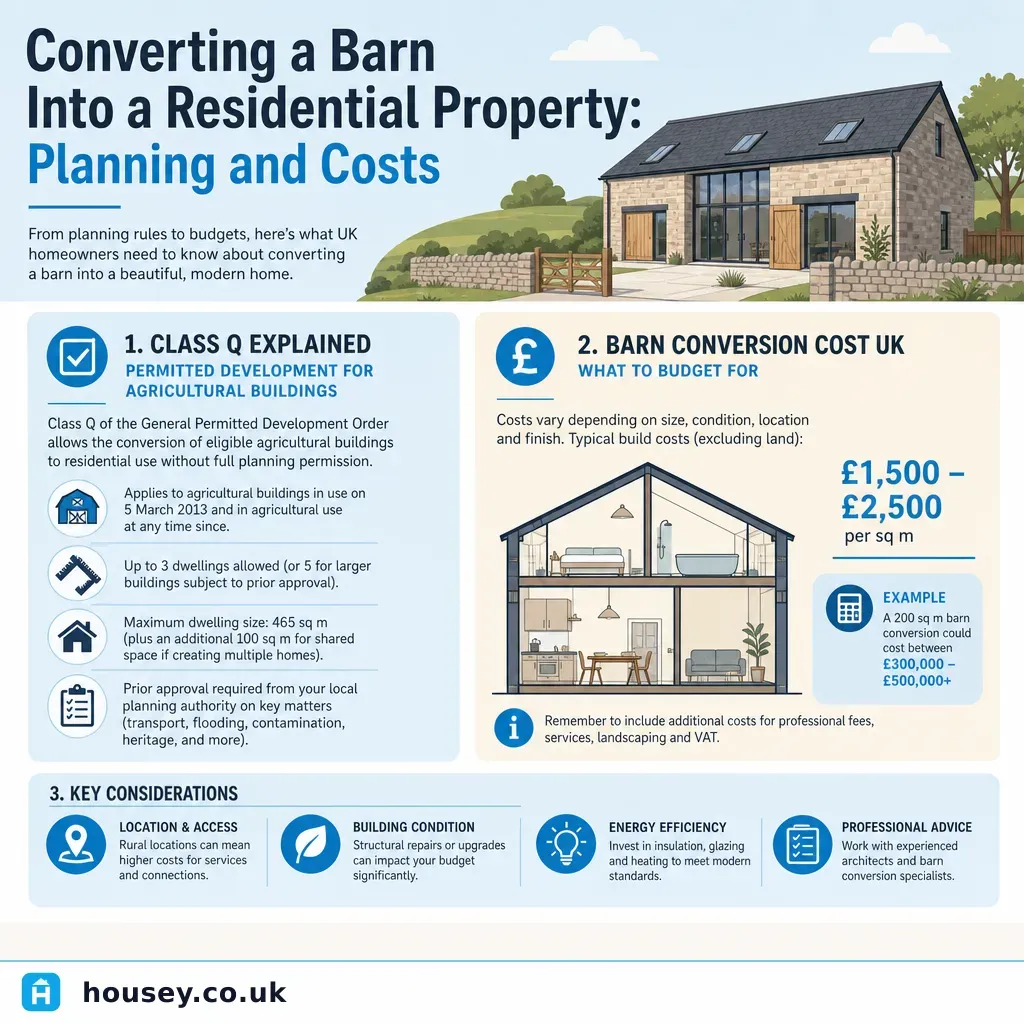
Barn conversions in England may qualify for Class Q permitted development, which allows a change of use to residential without full planning permission — though prior approval from the local planning authority is always required. The barn must have been in lawful agricultural use on 20 March 2013. Wales and Scotland require full planning permission. Building regulations approval and a structural assessment are always needed.
 Improvement & Build
UPVC Door Repair and Service Costs
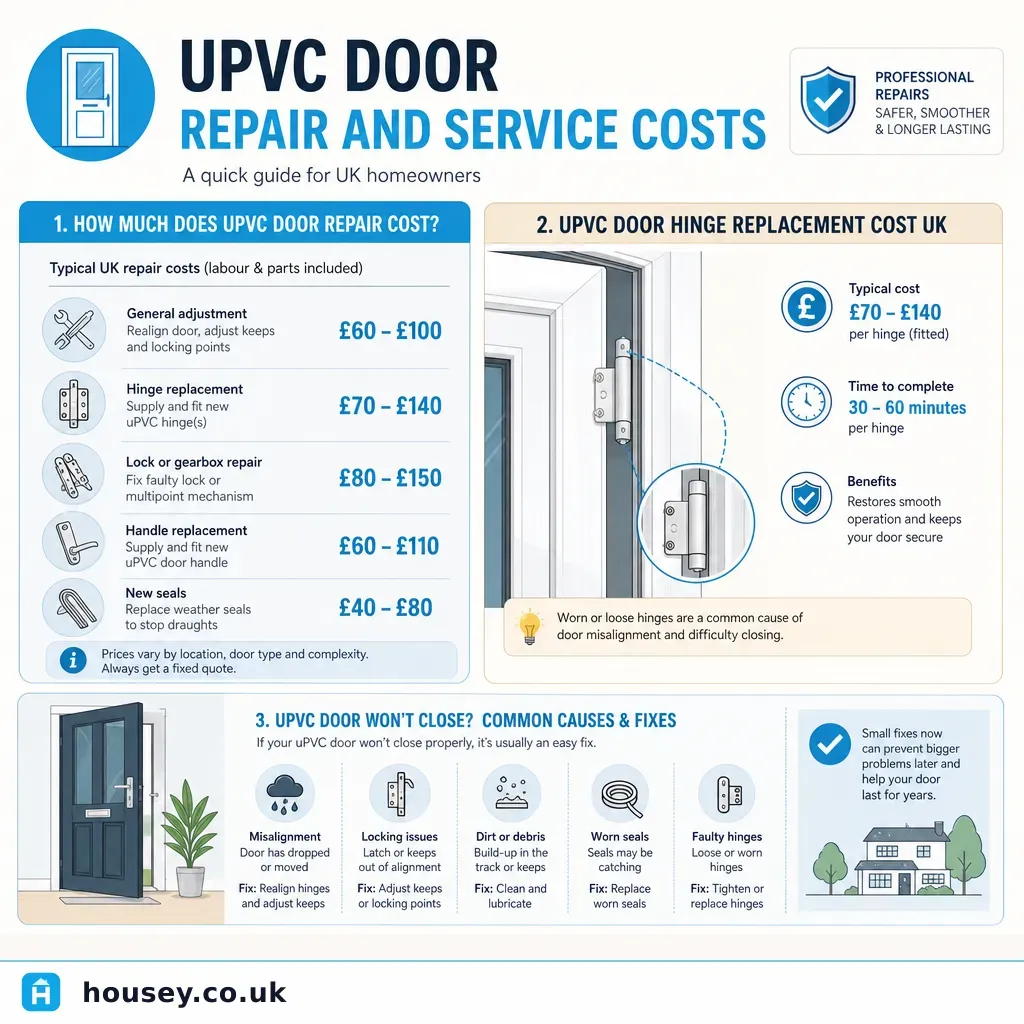
UPVC door repairs in the UK typically cost £50–£300 depending on the fault. Minor adjustments such as hinge realignment or lubrication cost £50–£80, while mechanism replacements or glass unit work can reach £150–£300. A qualified window and door specialist or locksmith can usually diagnose and fix most faults in a single visit.
 Energy & Retrofit
Improving Home Comfort Through Professional Energy Audits and Assessment
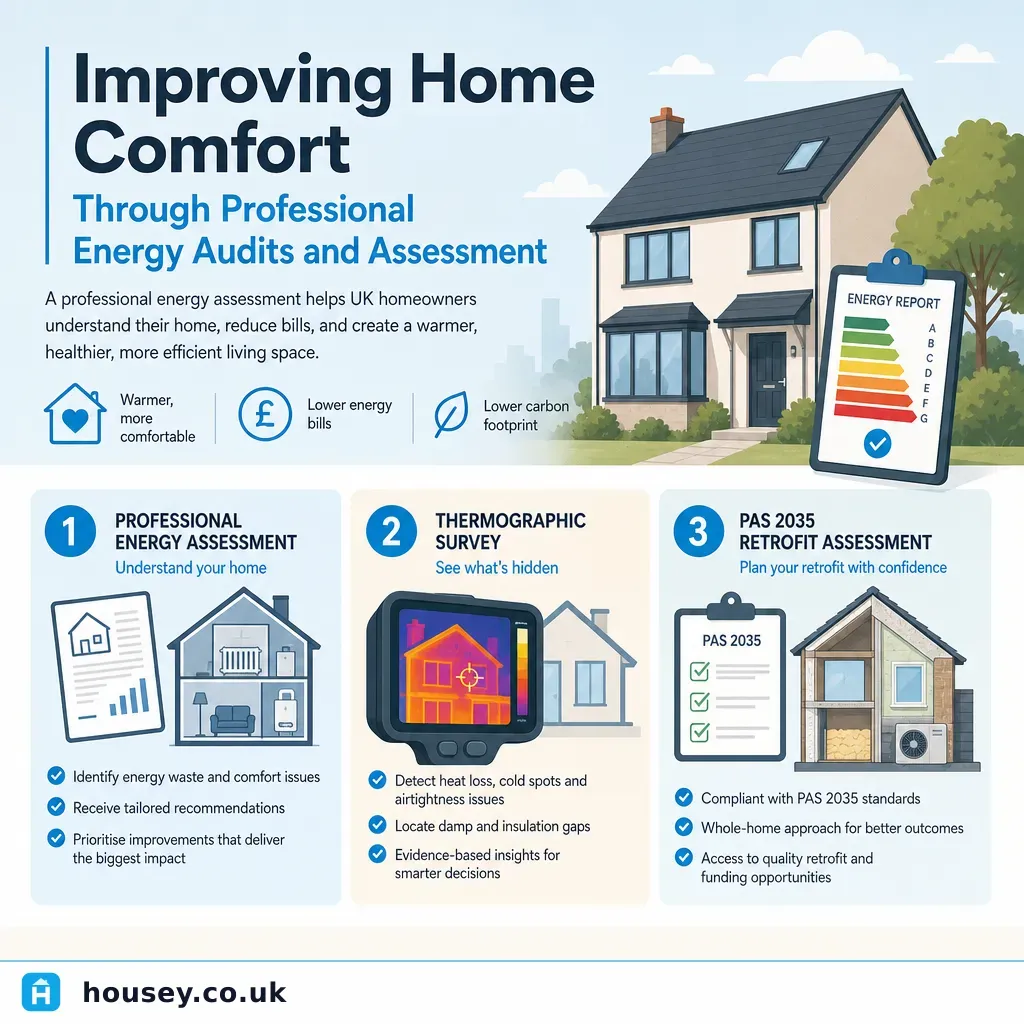
A professional home energy audit assesses your property's actual thermal performance — insulation, heating, ventilation, air leakage, and moisture — and produces a prioritised action plan. Unlike an EPC, which uses calculated assumptions, an audit measures real performance to help you spend on the right improvements in the right order.
 Planning & Pre-Build
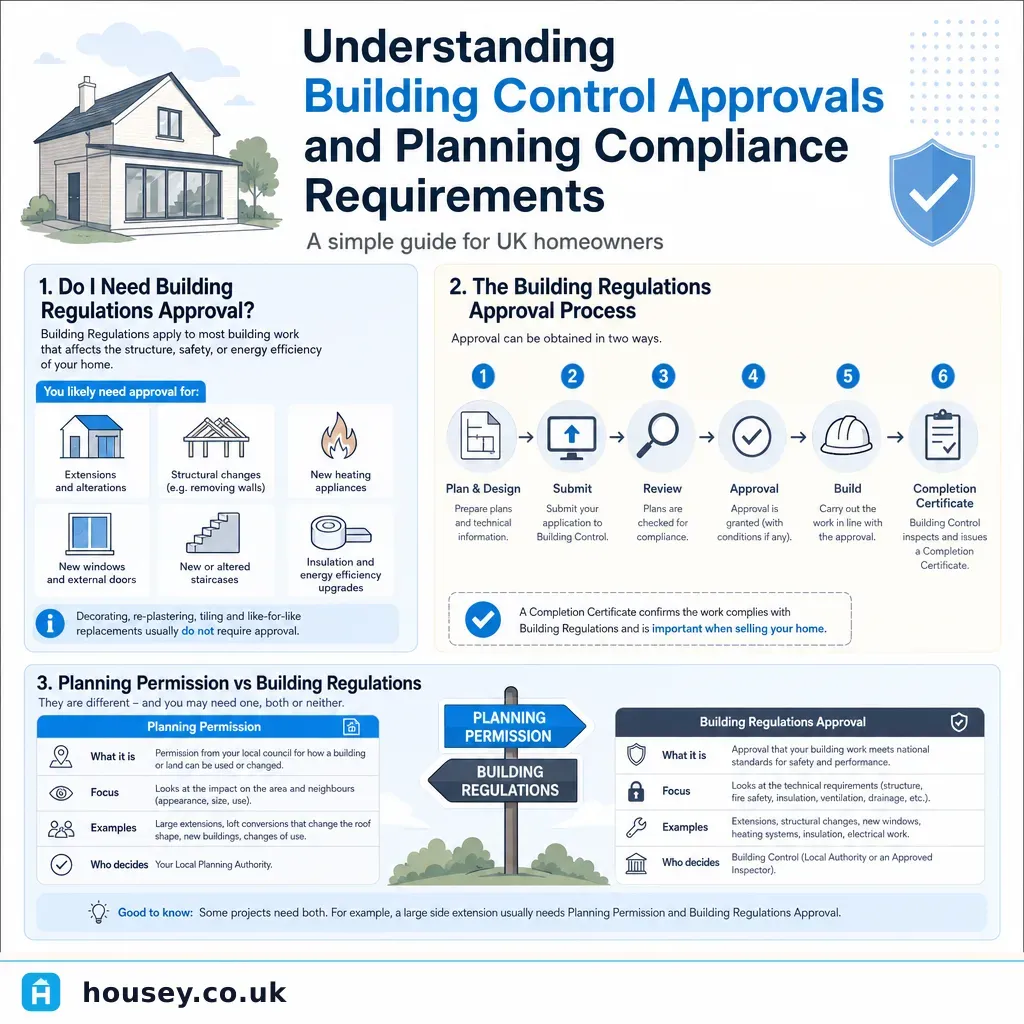
Understanding Building Control Approvals and Planning Compliance Requirements
Planning permission and building regulations are separate consents. Planning controls land use and appearance; building regulations cover structural safety, fire, and energy efficiency. Most structural or conversion works need building regulations approval regardless of whether planning permission is required. Permitted development may remove the need for planning consent, but building regulations still apply.
 Surveys & Inspections
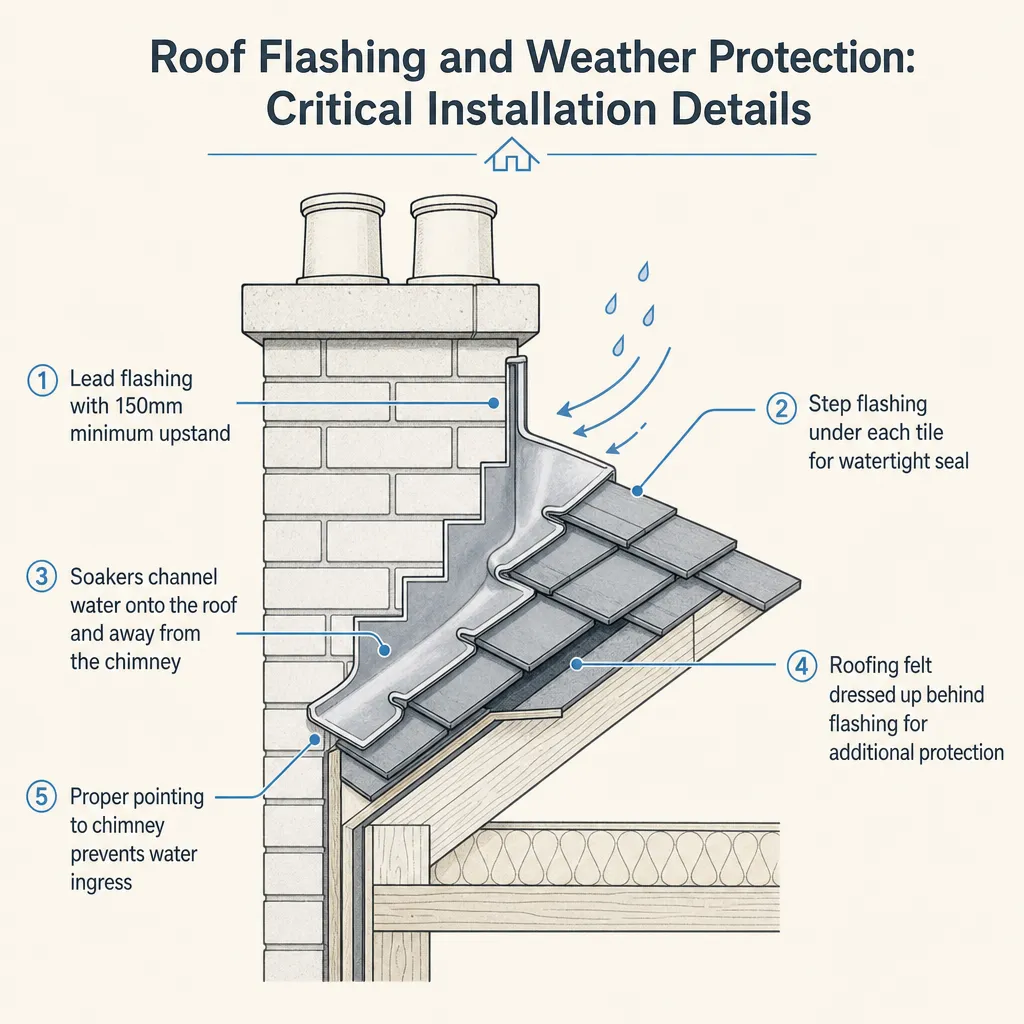
Roof Flashing and Weather Protection: Critical Installation Details
Roof flashing is waterproof material — usually lead or a metal alternative — installed at junctions between roof surfaces and vertical elements such as chimneys, dormers, and abutments. Lead to BS EN 12588 is the UK benchmark and can last 60–100 years when correctly detailed. Flashing failure is one of the most common defects identified in UK building surveys.