Knowledge Base
Property advice that actually helps
Researched, UK-specific guides for every stage of homeownership — from buying and surveys to retrofit, planning and major works.
 Improvement & Build
Garden and Landscape Services for Your Property
Garden designers and landscapers both improve outdoor spaces but offer different services. A garden designer creates plans, planting schemes, and design concepts; a landscaper carries out physical construction. Most homeowners use both. Your choice depends on project scope, budget, and how much creative direction you want. Checking professional memberships — SGD, BALI, or Landscape Institute — helps identify qualified practitioners.
 Buying & Moving
What to Look for When Viewing New Build Properties
Before completing on a new build, check every door, window, socket, and tap in person and look for cracks, damp patches, and missing fittings. Most new builds contain snags — defects ranging from cosmetic to regulatory. Booking a professional snagging survey before legal completion gives you a formal report to submit to the developer.
 General property advice
What to Budget for Painting Interior and Exterior Doors
Professional decorators in the UK typically charge £30–£80 per interior door (both sides, frame, and architrave) and £80–£250 for an exterior door, depending on door type, condition, and location. Preparation — sanding, filling, and priming — is the main cost driver. For a three-bedroom home, expect to pay £400–£1,200 in total including materials. Indicative UK costs, last reviewed 2026-05-06.
 Buying & Moving
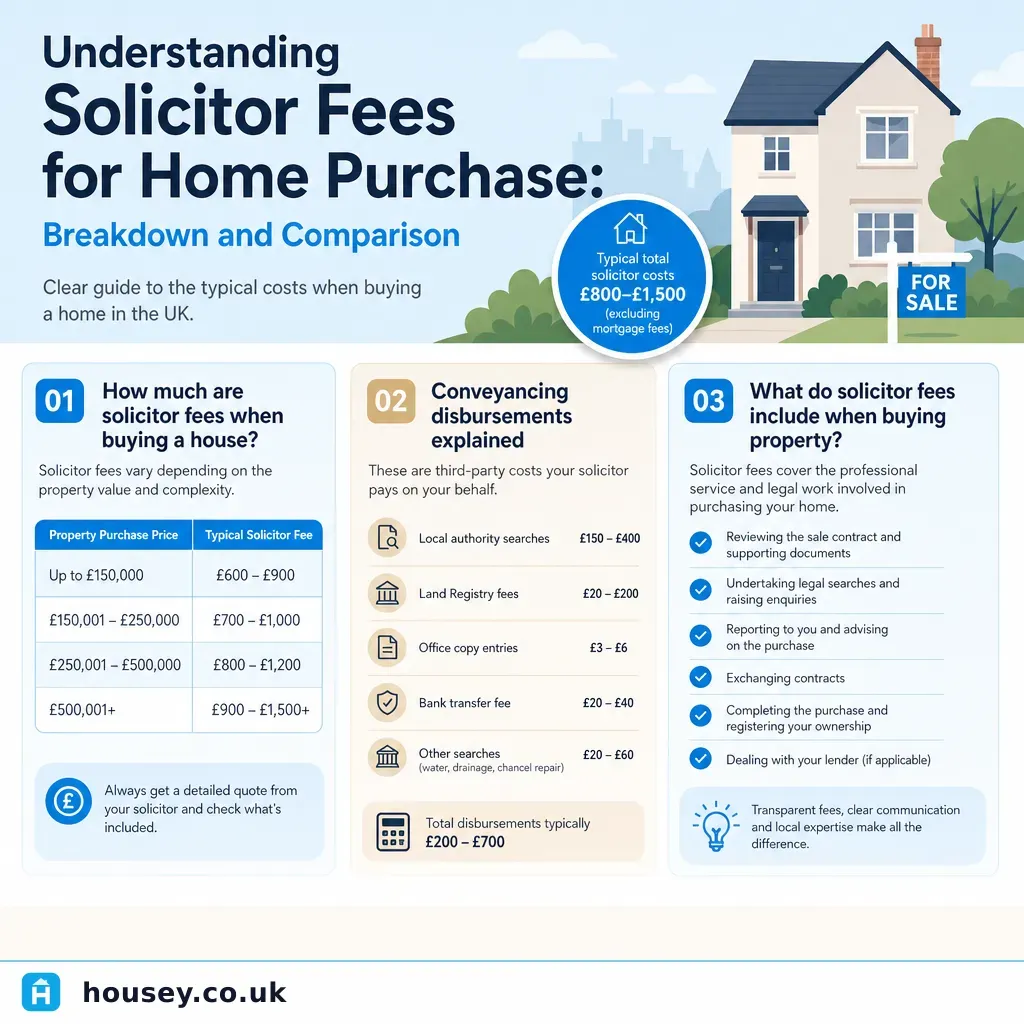
Understanding Solicitor Fees for Home Purchase: Breakdown and Comparison
Solicitor fees for buying a house in England and Wales have two parts: the professional legal fee, typically £850–£1,500 plus VAT for a standard freehold purchase, and disbursements — third-party costs such as search fees, Land Registry registration, and an electronic transfer charge. Stamp Duty Land Tax is a separate tax liability payable to HMRC, not a legal fee, and is listed separately on your completion statement.
 Energy & Retrofit
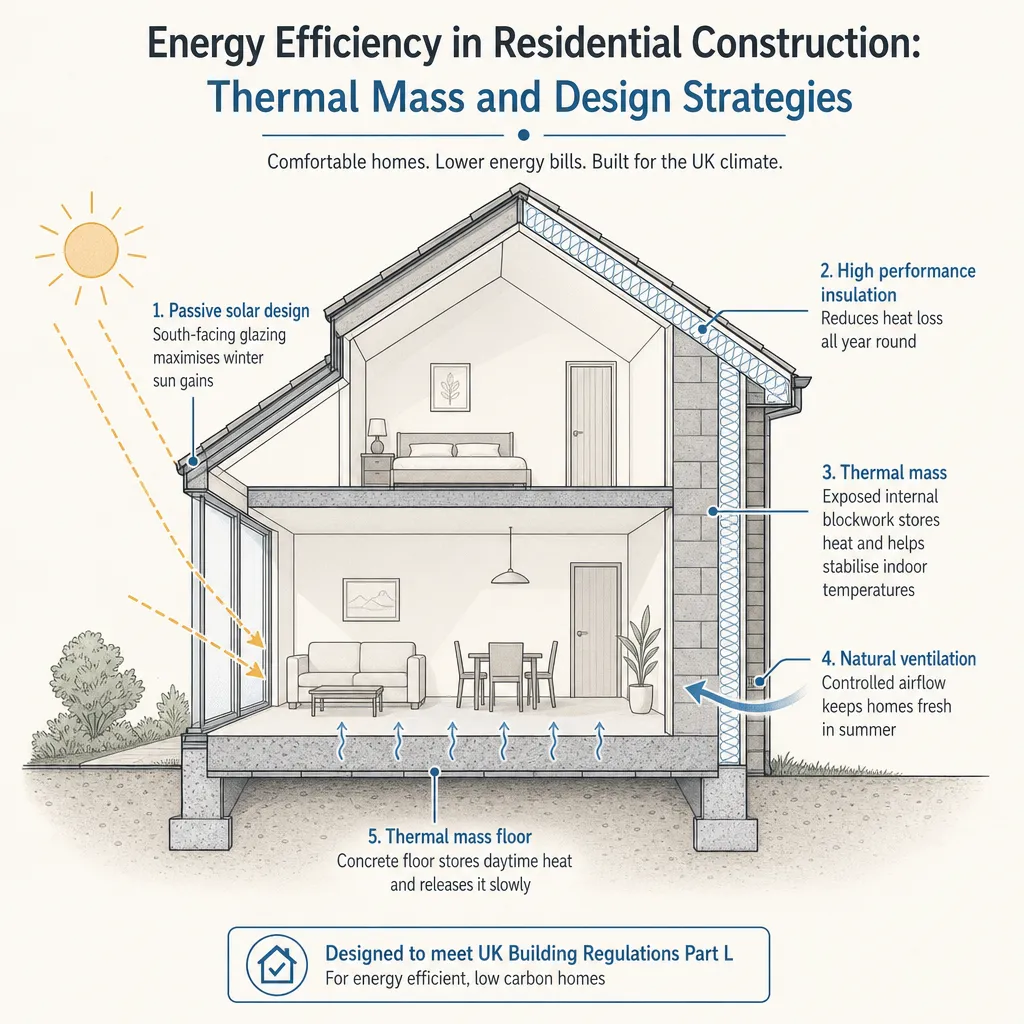
Energy Efficiency in Residential Construction: Thermal Mass and Design Strategies
Thermal mass — the capacity of dense materials such as concrete, brick, and screed to absorb and slowly release heat — reduces temperature swings and can lower heating demand when correctly combined with insulation and controlled ventilation. In UK homes, it works best when the building is well insulated, south-facing to admit winter sun, and ventilated to flush summer heat, all within a fabric-first approach to Building Regulations Part L.
 Planning & Pre-Build
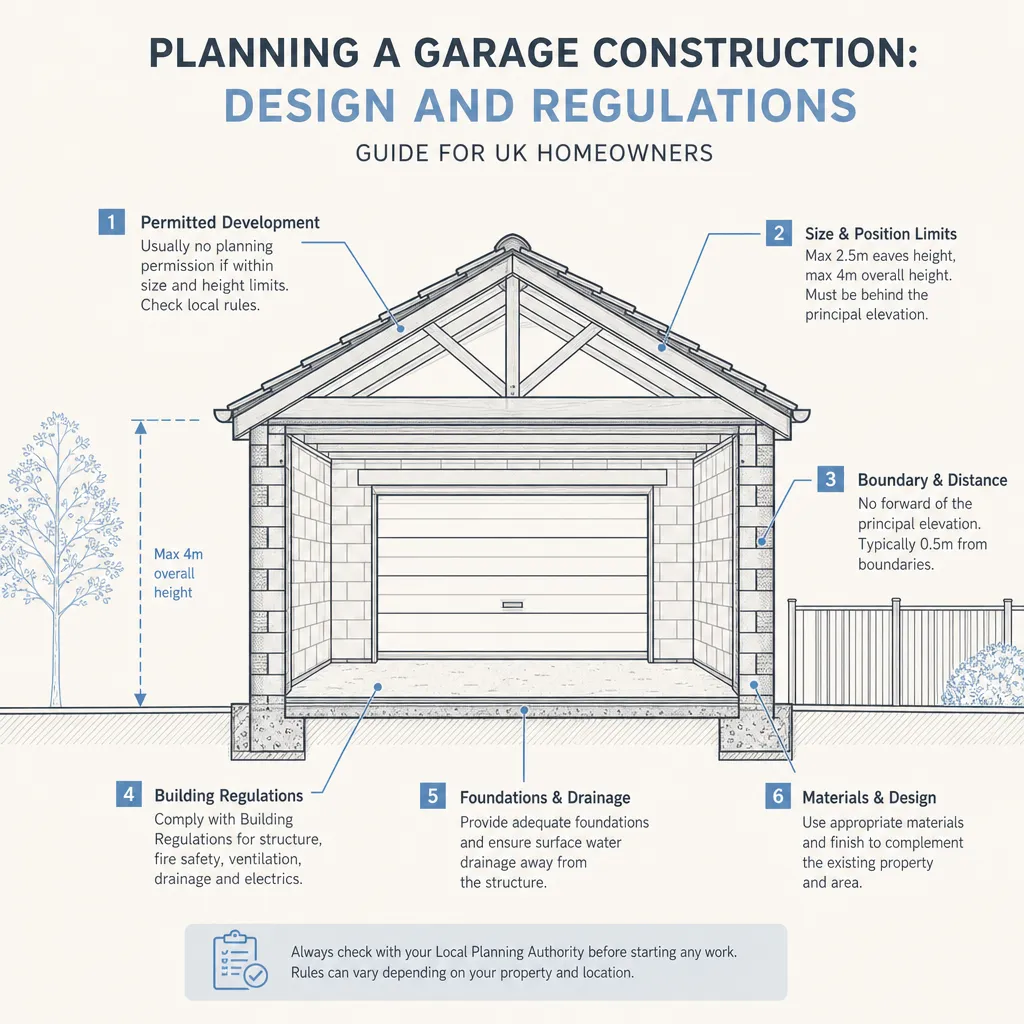
Planning A Garage Construction: Design And Regulations
Most detached single-storey garages in England qualify for permitted development, meaning no planning permission is required, provided they meet height, size, and siting rules. Building Regulations approval is needed for garages over 30m² or any garage attached to the house. Rules vary by location and property type — always check with your Local Planning Authority before starting.
 Buying & Moving
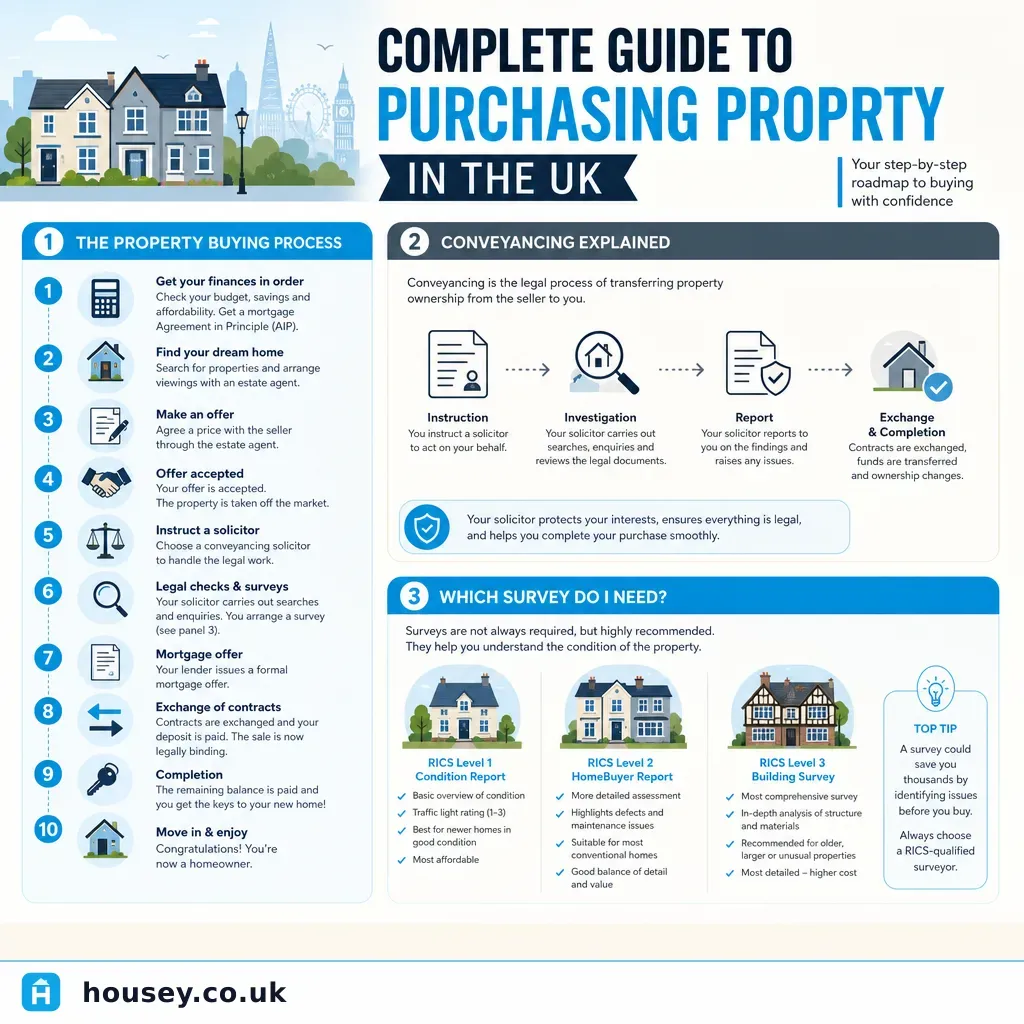
Complete Guide to Purchasing Property in the UK
Buying property in England and Wales typically takes 12 to 16 weeks from offer acceptance to completion. The process involves instructing a conveyancer, commissioning an independent survey, applying for a mortgage, and exchanging contracts before completion. Contracts are not legally binding until exchange, and a lender's valuation does not protect the buyer — always commission your own RICS survey.
 Improvement & Build
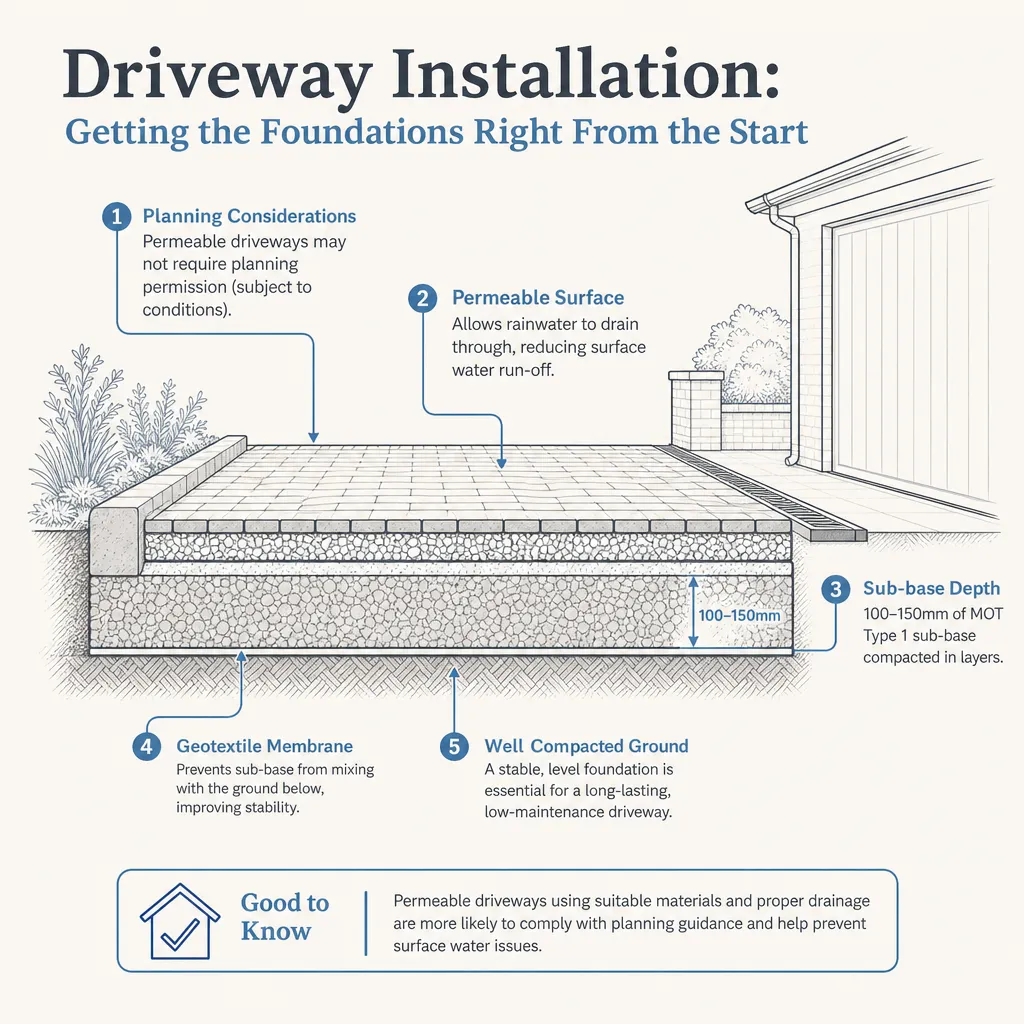
Driveway Installation: Getting the Foundations Right From the Start
A long-lasting driveway depends more on sub-base depth and drainage design than on the surface material chosen. In England, impermeable driveways over 5 m² discharging to highway drains require planning permission; permeable surfaces such as gravel, resin-bound, and permeable block paving generally do not. A compacted Type 1 MOT sub-base of at least 100 mm is standard for most domestic installations.
 Improvement & Build
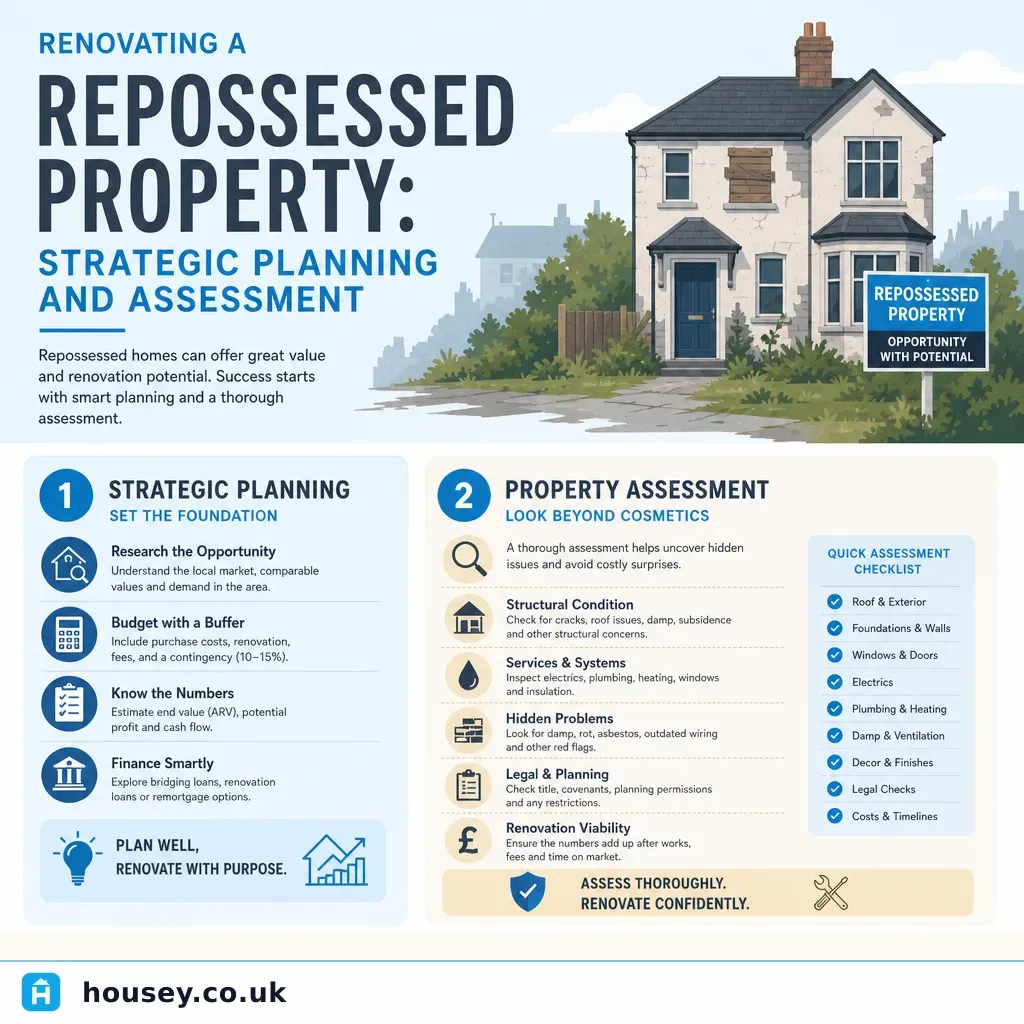
Renovating a Repossessed Property: Strategic Planning and Assessment
Repossessed properties are sold by the lender with no obligation to provide seller disclosure or property information forms. A RICS Level 3 Building Survey is essential before exchange, usually supplemented by specialist reports for asbestos, gas, and electrical safety. Check planning and building control history for unapproved alterations, apply a 20–30% cost contingency, and use a conveyancer with distressed-property experience.
 Improvement & Build
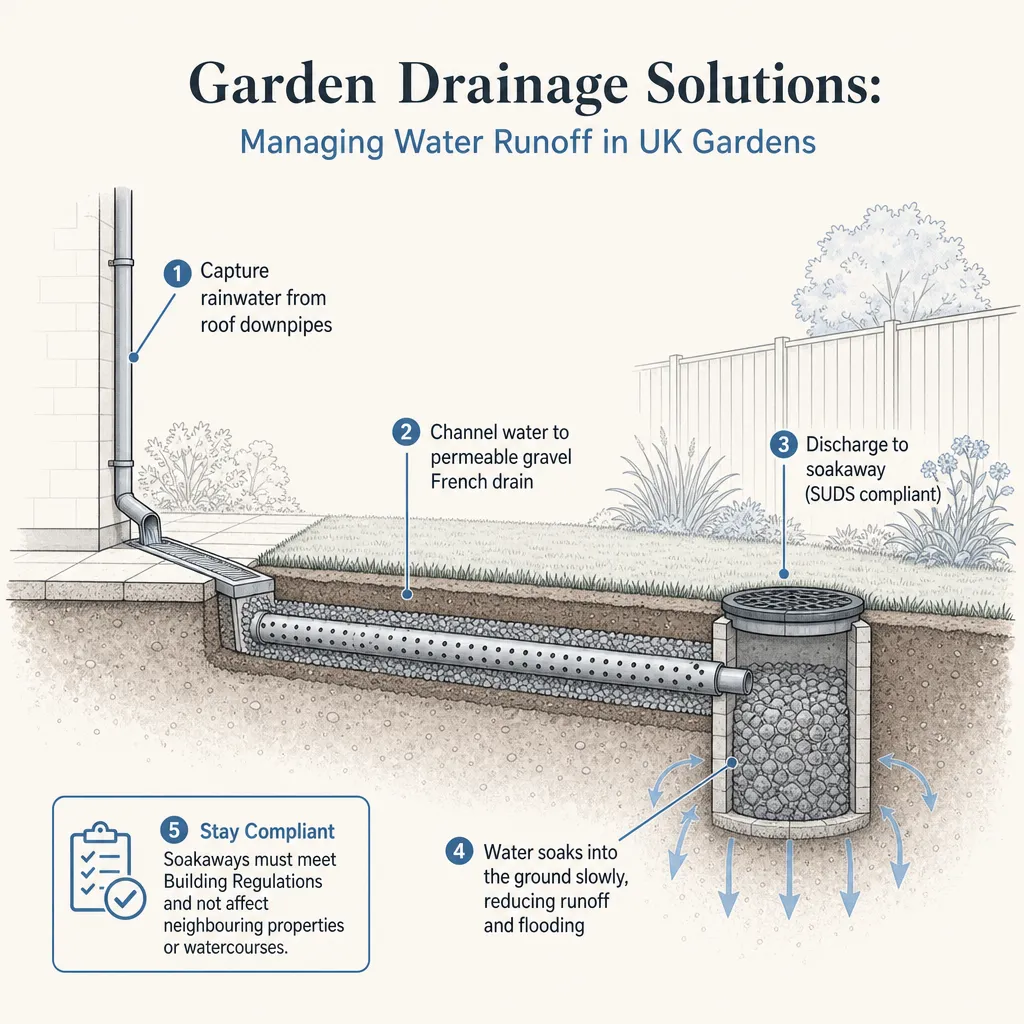
Garden Drainage Solutions: Managing Water Runoff in UK Gardens
Poor garden drainage in the UK is usually caused by clay soil, surface compaction, or too much hard-standing. Common solutions include French drains, soakaways, surface channel drains, and sump pumps. The right choice depends on soil type, site gradient, and proximity to buildings. Connecting drainage to a public sewer requires prior water authority approval.
 Improvement & Build
Preserving Period Features: When to Repair vs Replace Historic Windows
For most pre-1919 timber windows in listed buildings or conservation areas, repair and draught-proofing — often combined with secondary glazing — is both more appropriate and more likely to gain consent than full replacement. Replacing windows in a listed building without Listed Building Consent is a criminal offence. Always confirm your planning obligations with the local planning authority before any works begin.
 Improvement & Build
Creating a Pocket Garden: Design Ideas for Small Spaces
A pocket garden — typically under 15 sq m — benefits most from a single clear purpose, vertical planting structures, light-coloured materials, and a diagonal layout to make the space feel larger. Prioritise year-round structure with evergreen plants and a consistent boundary treatment. Planning permission is not usually required, but check if your property is listed or in a conservation area.