Knowledge Base
Property advice that actually helps
Researched, UK-specific guides for every stage of homeownership — from buying and surveys to retrofit, planning and major works.
 Improvement & Build
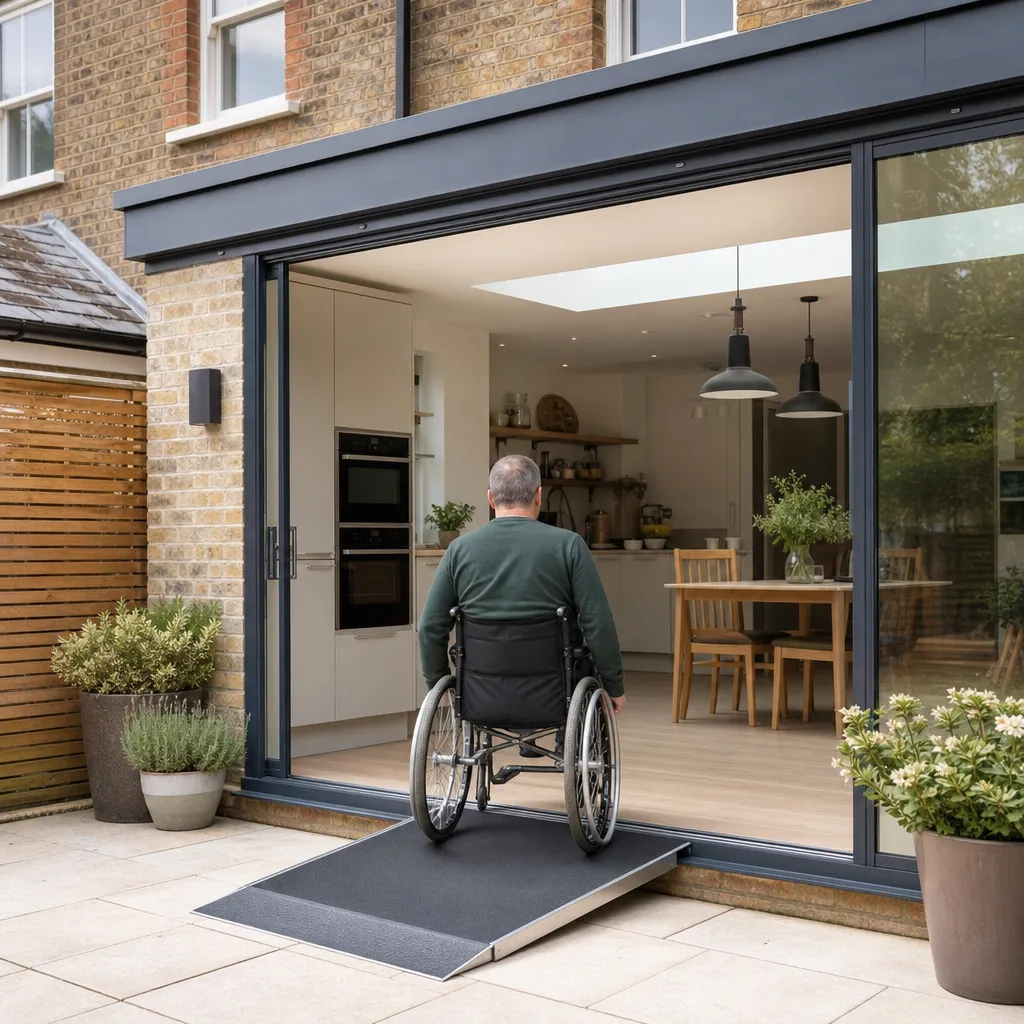
Accessible Home Renovation: Combining Style With Inclusive Design
Accessible home renovation incorporates level thresholds, wider doorways, lever handles, and wet rooms into quality design from the outset. UK standards are set by Approved Document M and BS 8300:2018. Homeowners may qualify for a Disabled Facilities Grant of up to £30,000 in England. Most internal adaptations do not require planning permission.
 Planning & Pre-Build
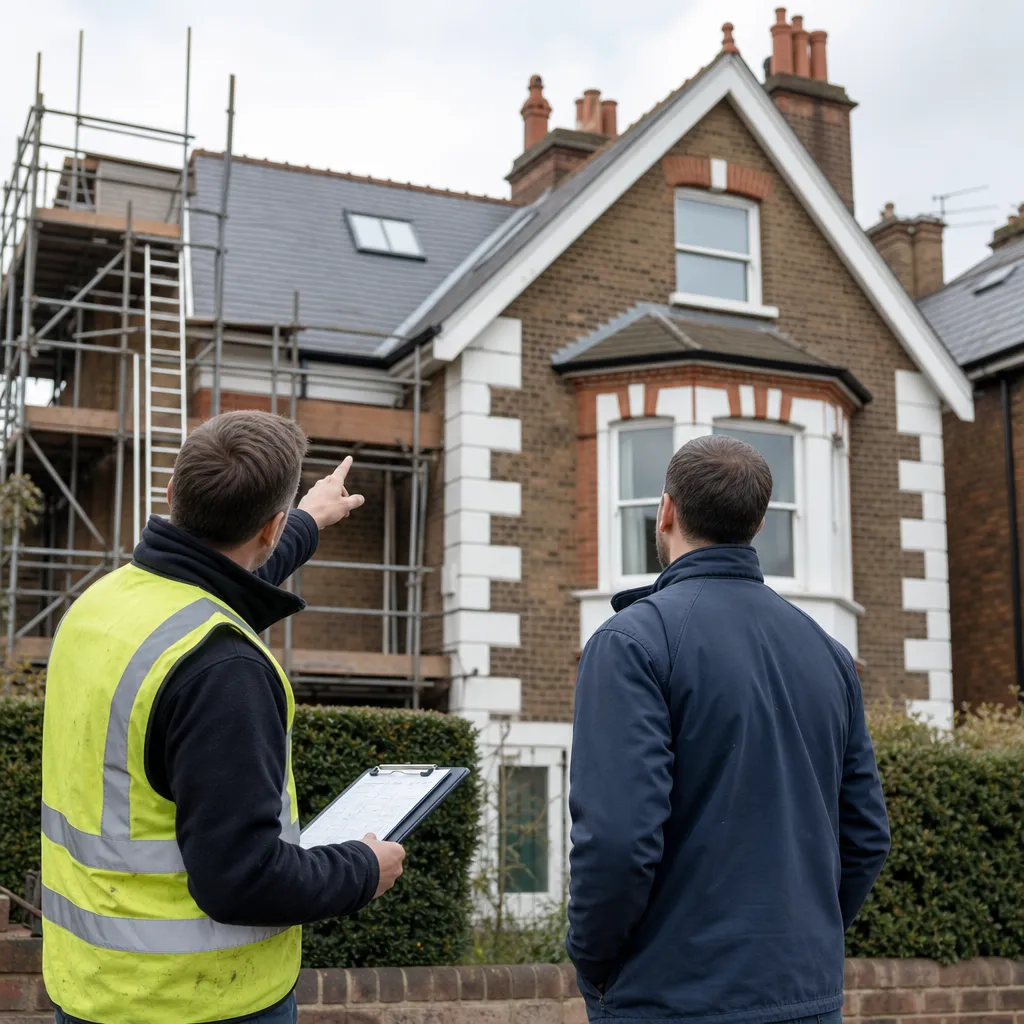
When to Engage a Builder Versus a Roofing Specialist: Role Definition and Expertise
For work focused on the roof covering — tiles, slates, felt, gutters, flashings — a specialist roofing contractor is usually the right choice. A general builder is more appropriate when roof work is part of a wider project such as an extension or loft conversion. If structural roof timbers are involved, a structural engineer should also be consulted before work begins.
 Surveys & Inspections
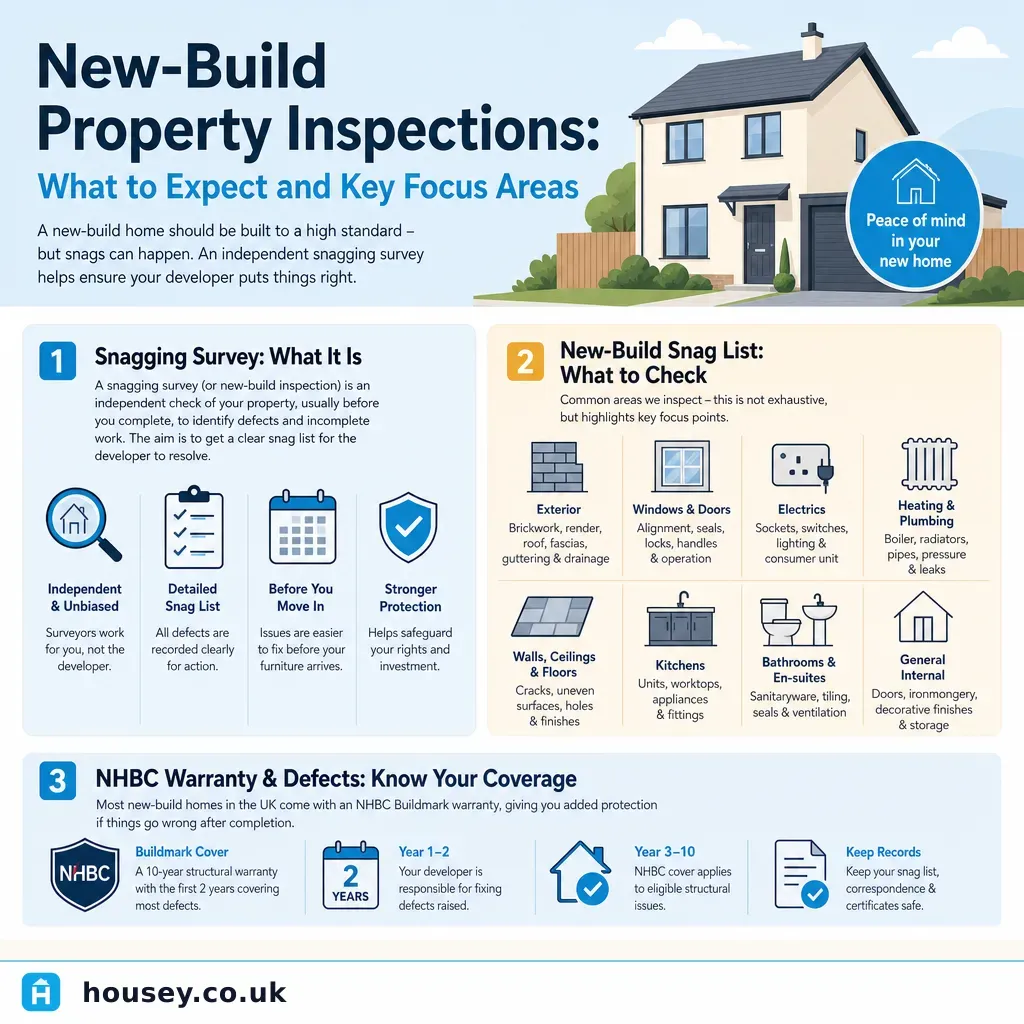
New-Build Property Inspections: What to Expect and Key Focus Areas
A new-build property inspection, or snagging survey, identifies construction defects before or after you take ownership. An independent inspector checks cosmetic and technical items against the builder's specification and Building Regulations requirements. Arranging an inspection before legal completion gives you the strongest leverage to have defects resolved under your NHBC Buildmark or equivalent warranty.
 Planning & Pre-Build
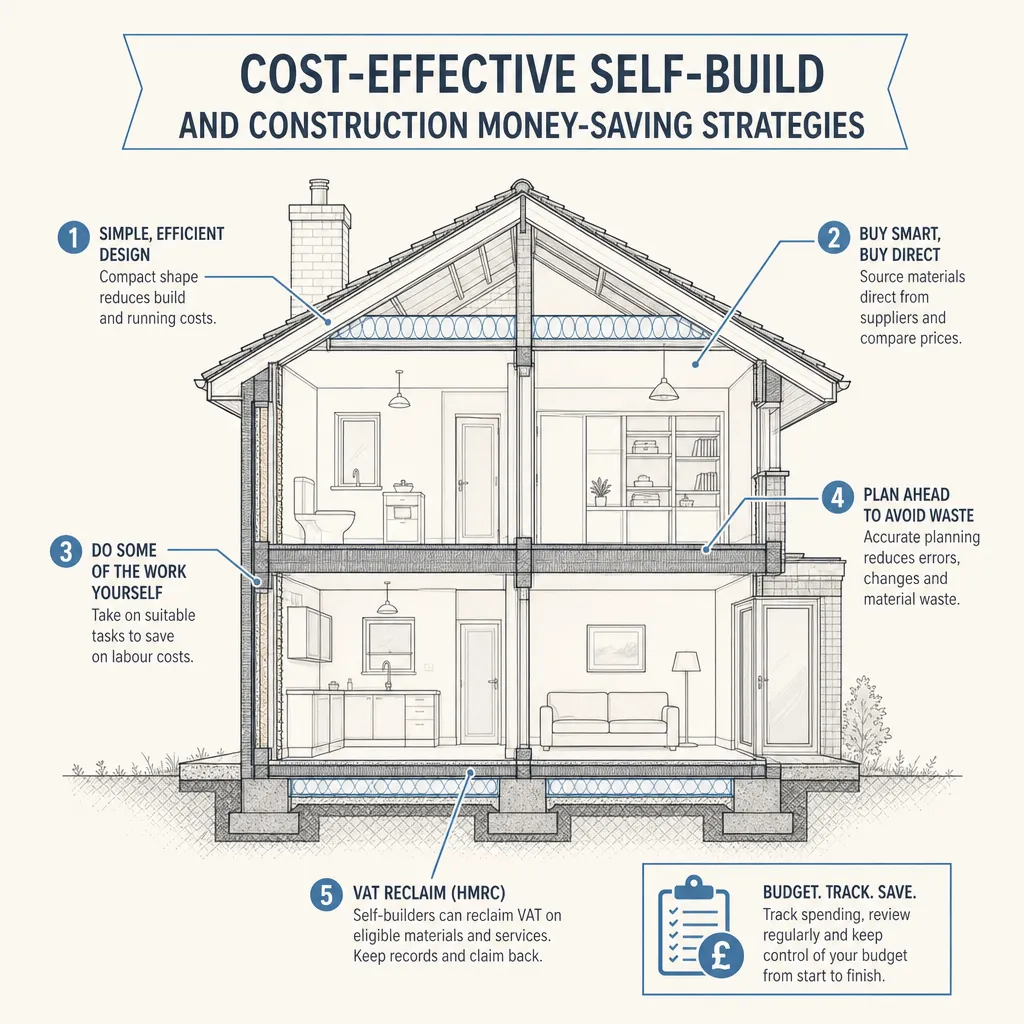
Cost-Effective Self-Build and Construction Money-Saving Strategies
The biggest self-build savings come from fixing the design early, selecting the right procurement route, and reclaiming VAT through HMRC's VAT431NB scheme. Comparing structural systems — timber frame against masonry — and choosing to self-manage subcontractors where practical can also reduce costs. Avoiding mid-build design changes, which typically cost two to three times more than equivalent pre-build decisions, is equally important.
 General property advice
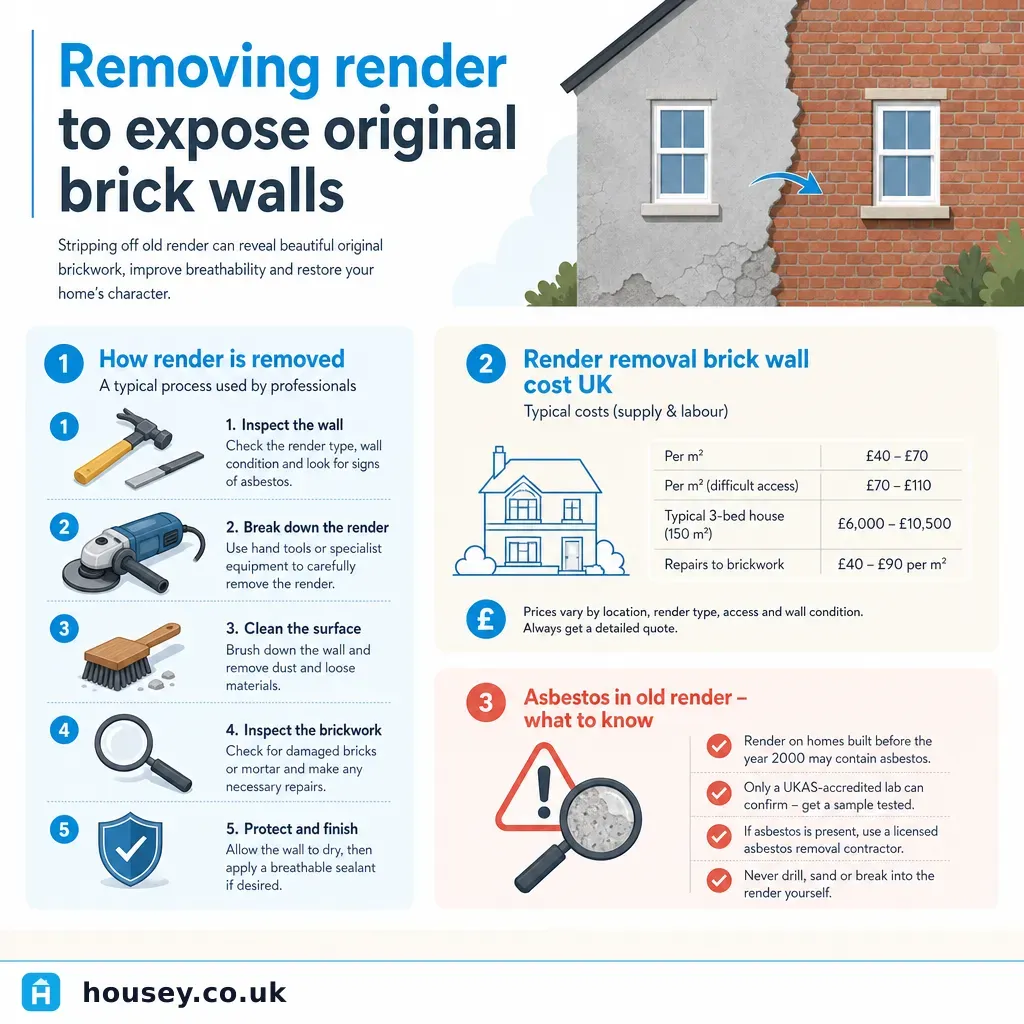
Removing render to expose original brick walls
Removing render to expose original brick walls involves first testing pre-2000 renders for asbestos, then assessing brick condition before using hand tools or mechanical methods for removal, followed by repointing with an appropriate mortar. Indicative costs are £30–£80 per m² for removal and £20–£60 per m² for repointing in the UK. Always test older renders before disturbing them.
 Improvement & Build
What is the cost of installing window screens?
Window screen installation in the UK costs roughly £15–£60 for DIY magnetic mesh panels and £80–£450 per window for professionally fitted hinged, sliding, or retractable screens. The right type depends on your window style, how often you open it, and whether you want the screen to retract when not in use. Fly screens do not require planning permission in most cases.
 Improvement & Build
Tree Topping: Why It's Harmful and Better Alternatives for Tree Care
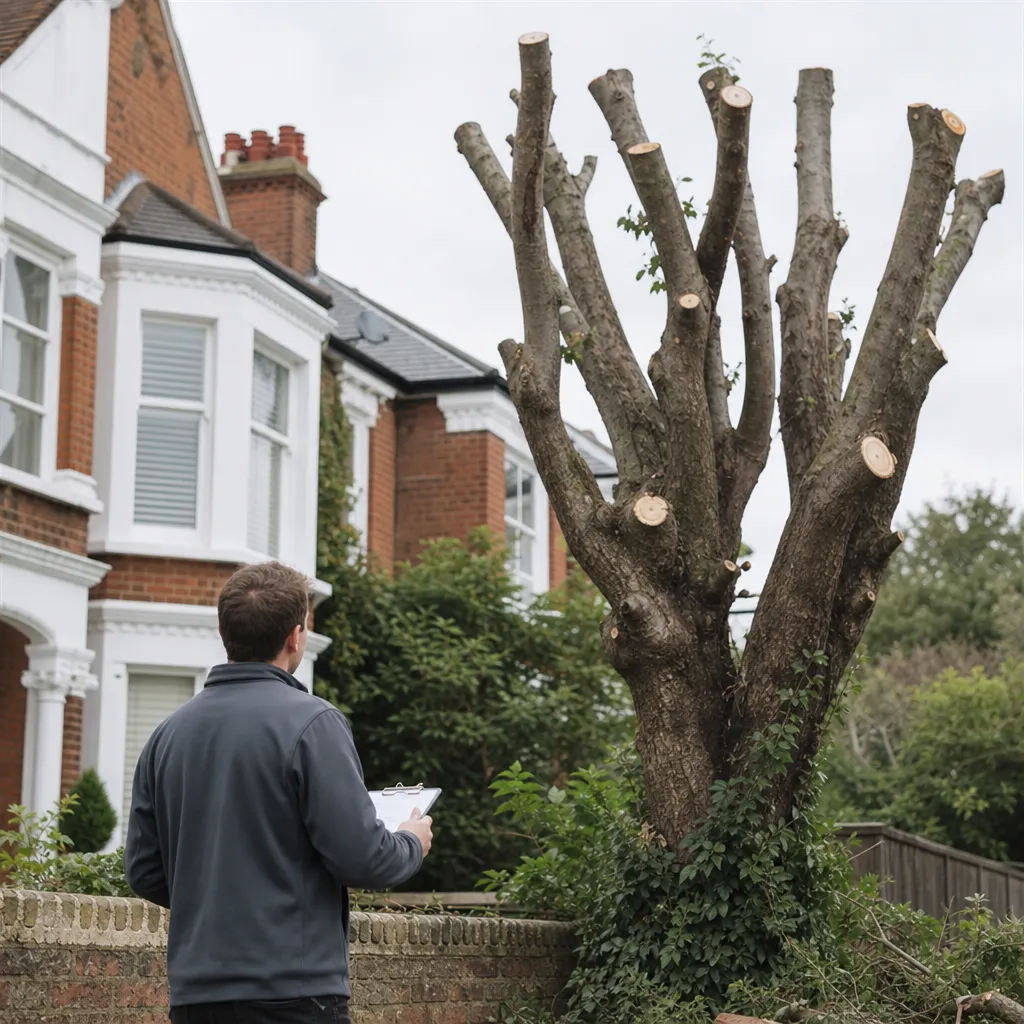
Tree topping — removing large sections of a tree's crown through indiscriminate cuts — causes serious structural weakness, fungal decay, and vigorous but poorly attached regrowth. UK arborists operating under BS 3998:2010 reject it as unacceptable practice. Alternatives including crown reduction, crown thinning, and managed pollarding achieve size management goals without long-term damage.
 Improvement & Build
Home Improvement Tips: What Works and What to Avoid
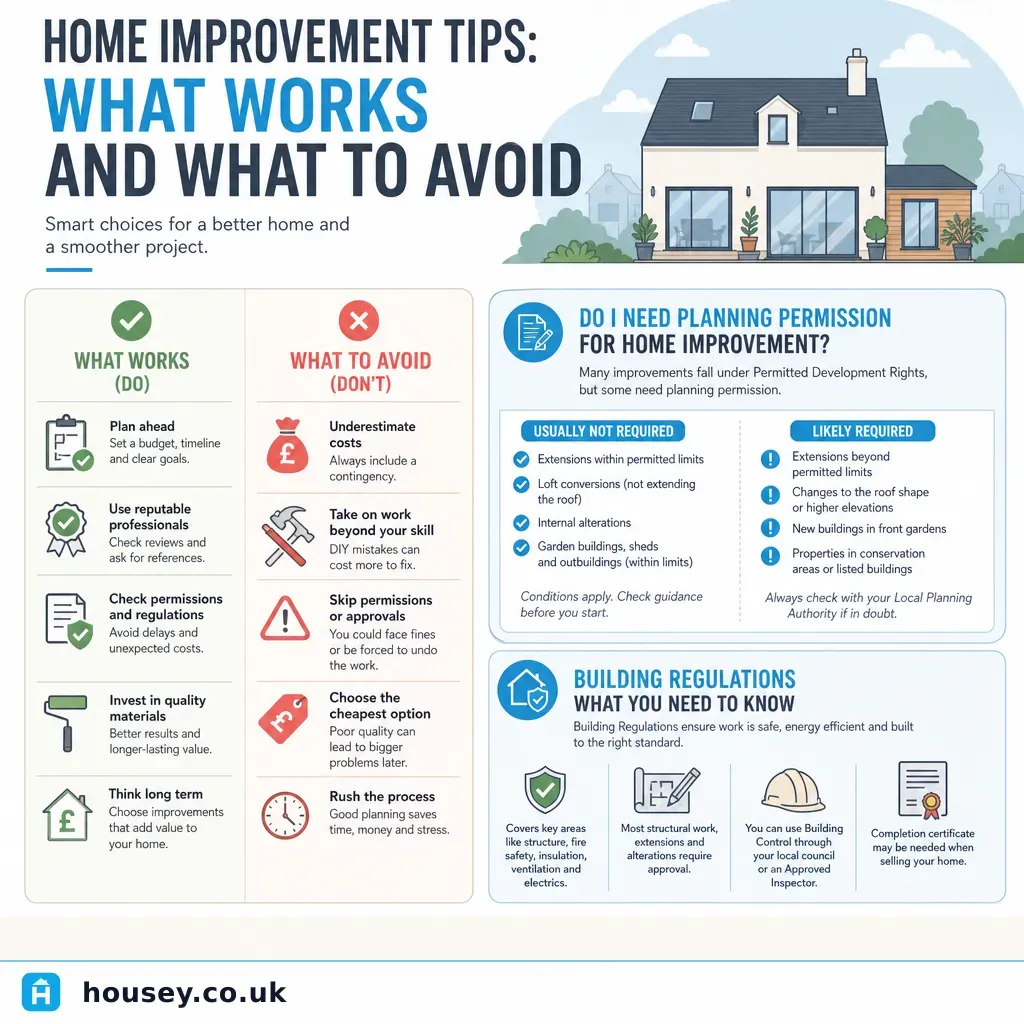
Successful home improvement in the UK depends on knowing which projects need planning permission, which need building regulations approval, and how to choose reliable contractors. Common pitfalls include skipping building control notification, removing load-bearing walls without a structural engineer, and paying too much upfront. A written contract and itemised quotes reduce most avoidable mistakes.
 Planning & Pre-Build
Structural Engineers For Load-Bearing Wall Assessment
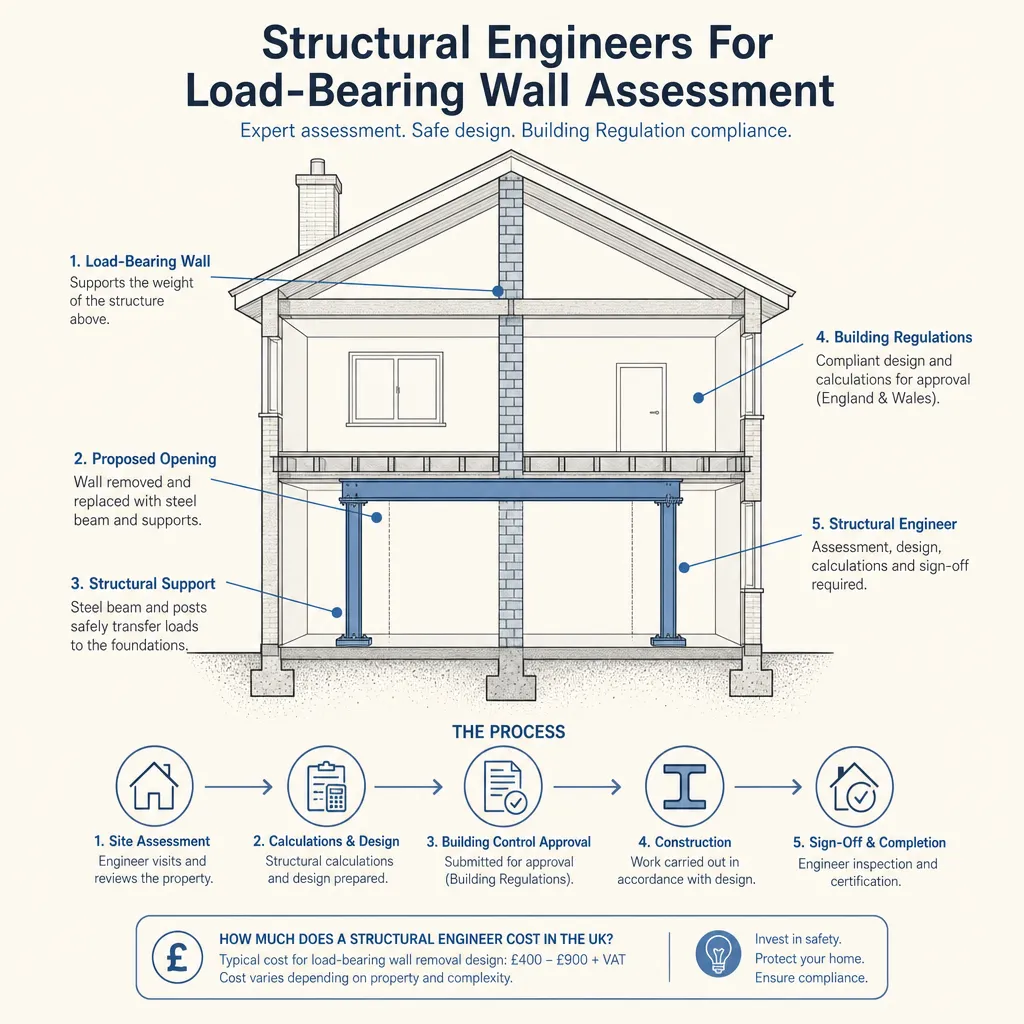
A structural engineer assesses whether a wall is load-bearing, designs the replacement beam or support required, and produces drawings for Building Regulations approval. In England and Wales, building control sign-off is mandatory before structural work starts. Engaging a chartered engineer — typically costing £300–£900 for a residential assessment — protects you legally and ensures the work is safe.
 Improvement & Build
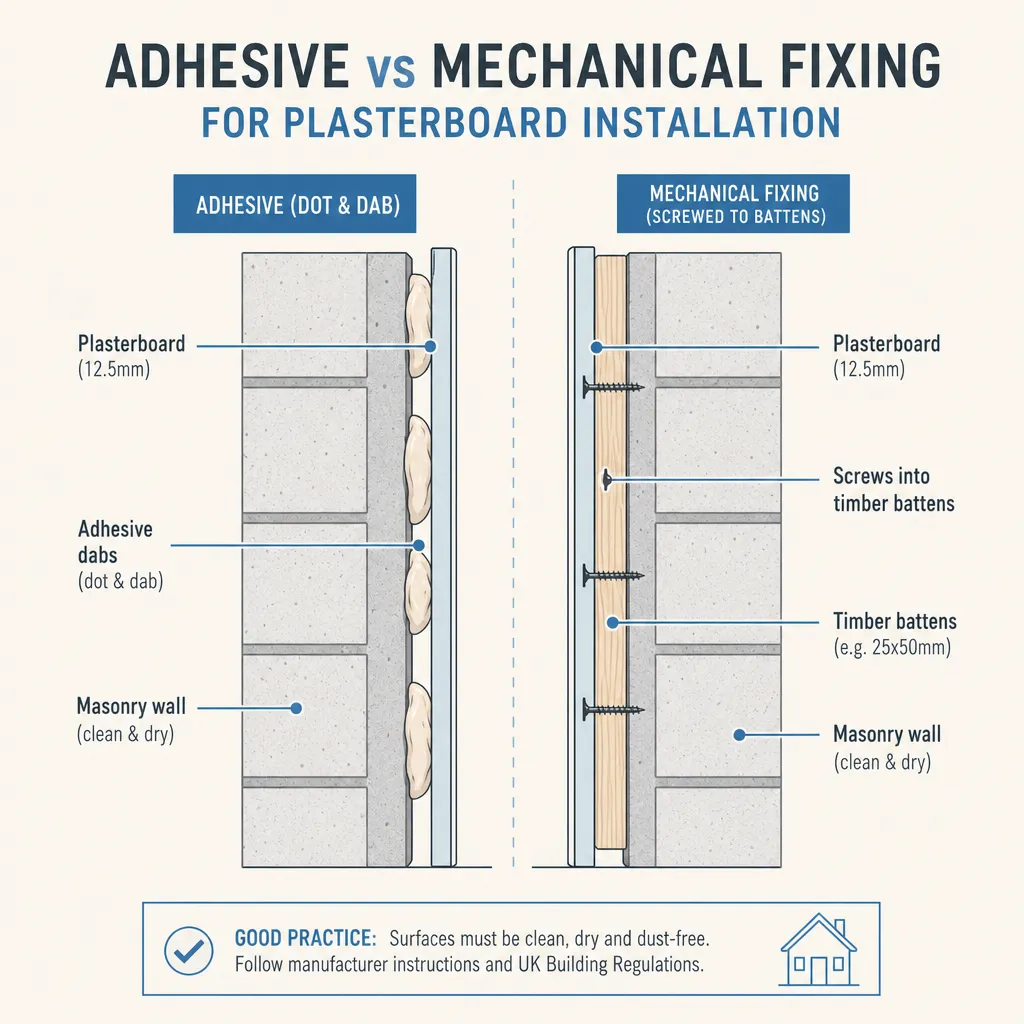
Adhesive vs Mechanical Fixing for Plasterboard Installation
Dot-and-dab adhesive is faster and suits most internal masonry walls, but creates a void behind the board that can affect fire resistance and acoustic performance. Mechanical fixing with screws to timber or metal studwork gives direct contact and is required for ceilings, fire-rated partitions, and wet areas. The right choice depends on substrate type, location, and Building Regulations requirements.
 Buying & Moving
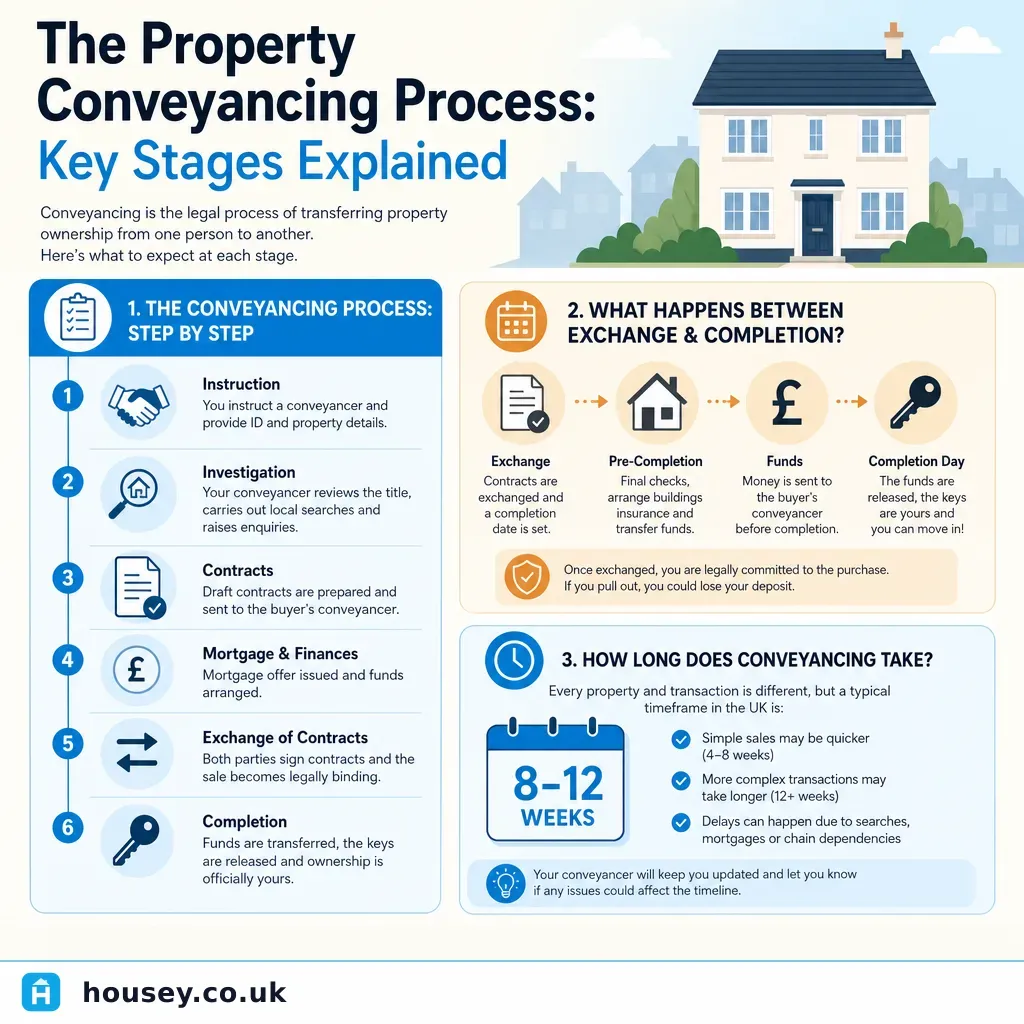
The Property Conveyancing Process: Key Stages Explained
The conveyancing process in England and Wales runs from instruction through to registration at HM Land Registry, typically in five stages: instruction, pre-contract searches and enquiries, exchange of contracts, completion, and post-completion. Exchange legally commits both parties; completion transfers ownership. The full process usually takes 8–16 weeks for a straightforward transaction, though chains and leasehold titles can extend this.
 Improvement & Build
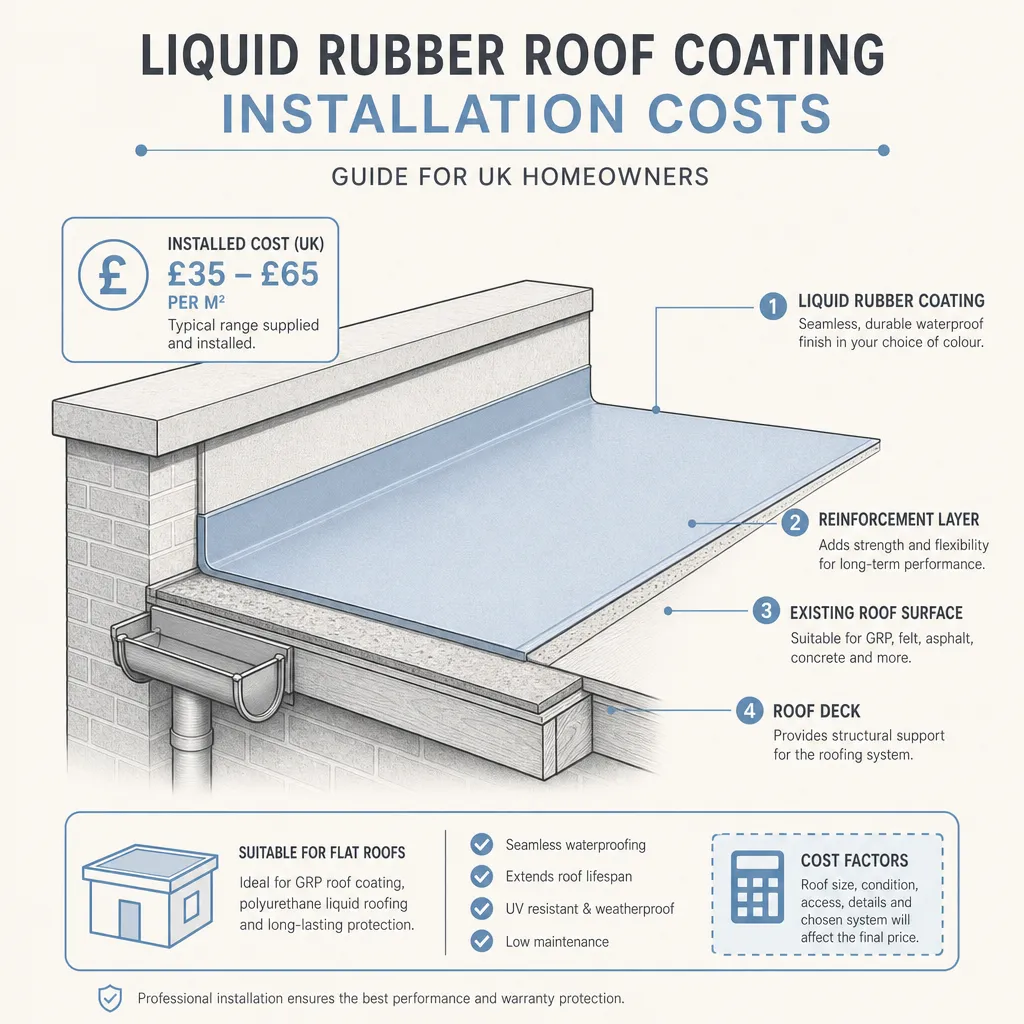
Liquid Rubber Roof Coating Installation Costs
Professional liquid rubber roof coating in the UK typically costs £50 to £120 per m² installed, depending on system type, roof condition, and location. A small flat roof around 20 m² might cost £900 to £2,400; a larger 50 m² roof can reach £6,000. Always get at least three quotes from qualified, accredited roofers before committing.