Knowledge Base
Property advice that actually helps
Researched, UK-specific guides for every stage of homeownership — from buying and surveys to retrofit, planning and major works.
 Improvement & Build
Hiring a Tree Surgery Specialist: Key Questions and Expectations
Before hiring a tree surgeon, check they hold NPTC (Lantra Awards) chainsaw certificates — CS30 and CS31 as a minimum — carry at least £5 million public liability insurance, and are listed in the Arboricultural Association's directory of approved contractors. Always confirm whether your tree has a Tree Preservation Order before commissioning any work, and get a written specification upfront.
 Energy & Retrofit
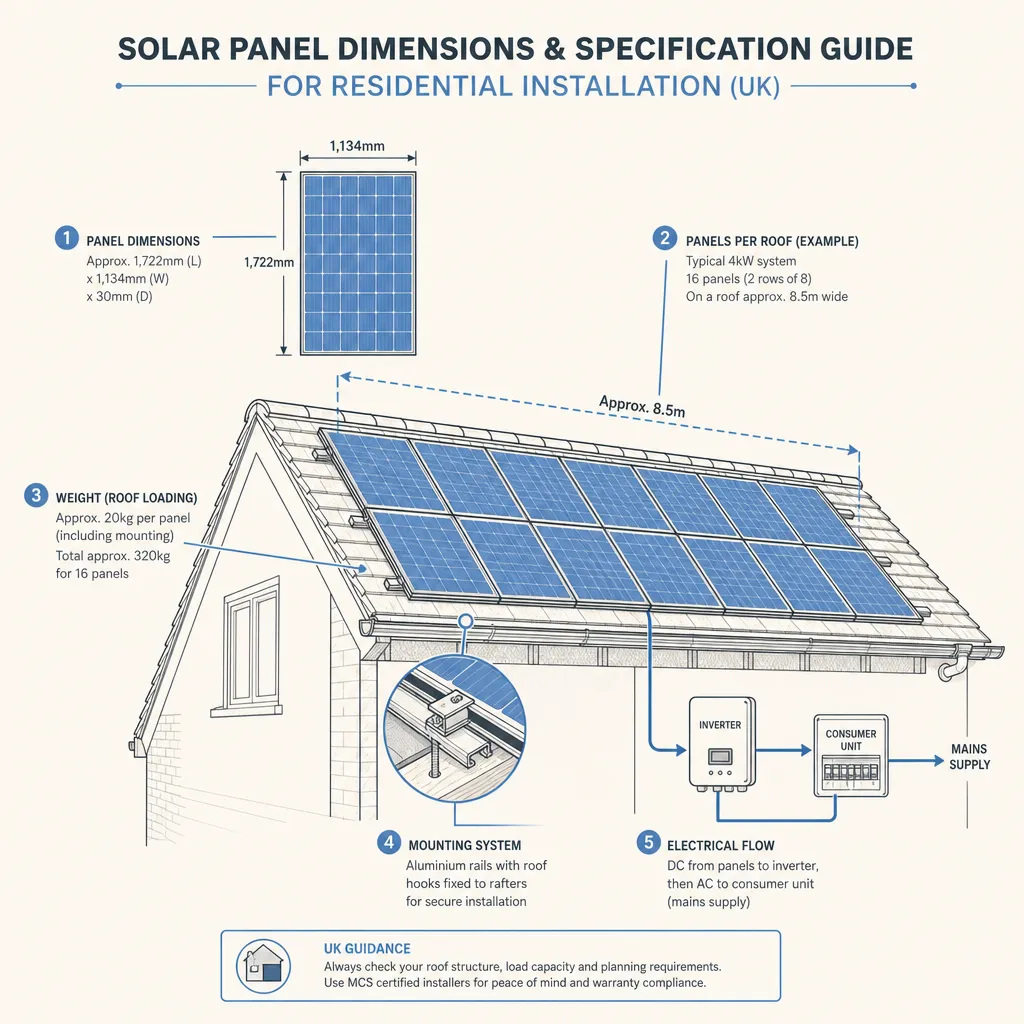
Solar Panel Dimensions and Specification Guide for Residential Installation
A standard residential solar panel measures approximately 1700–1800mm × 1000–1050mm, weighs 18–22 kg, and produces 380–450 W. A typical 4 kWp system requires around 10 panels and 17–18 m² of unshaded roof space. MCS-accredited installation is required for Smart Export Guarantee eligibility. Most installations qualify as permitted development, but listed buildings and conservation areas have specific restrictions.
 Planning & Pre-Build
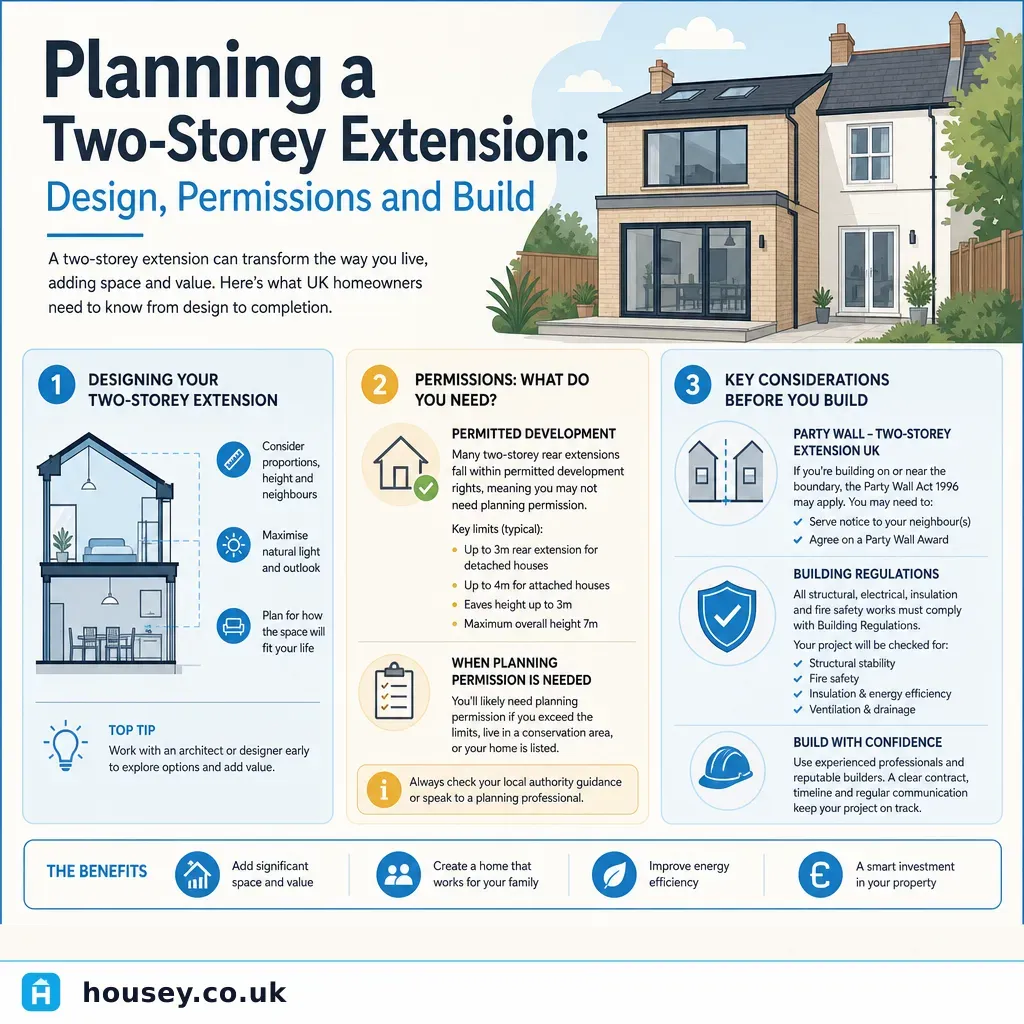
Planning a Two-Storey Extension: Design, Permissions and Build
A two-storey extension usually requires full planning permission, though a rear extension may fall within Permitted Development if it projects no more than 3 metres. Building Regulations approval is always required. Where the extension affects a shared or boundary wall, Party Wall etc. Act 1996 notices must be served at least two months before work begins. Professional design, structural engineering, and party wall advice are essential before any work starts.
 Improvement & Build
Understanding Roofing Service Demand Across the UK Market
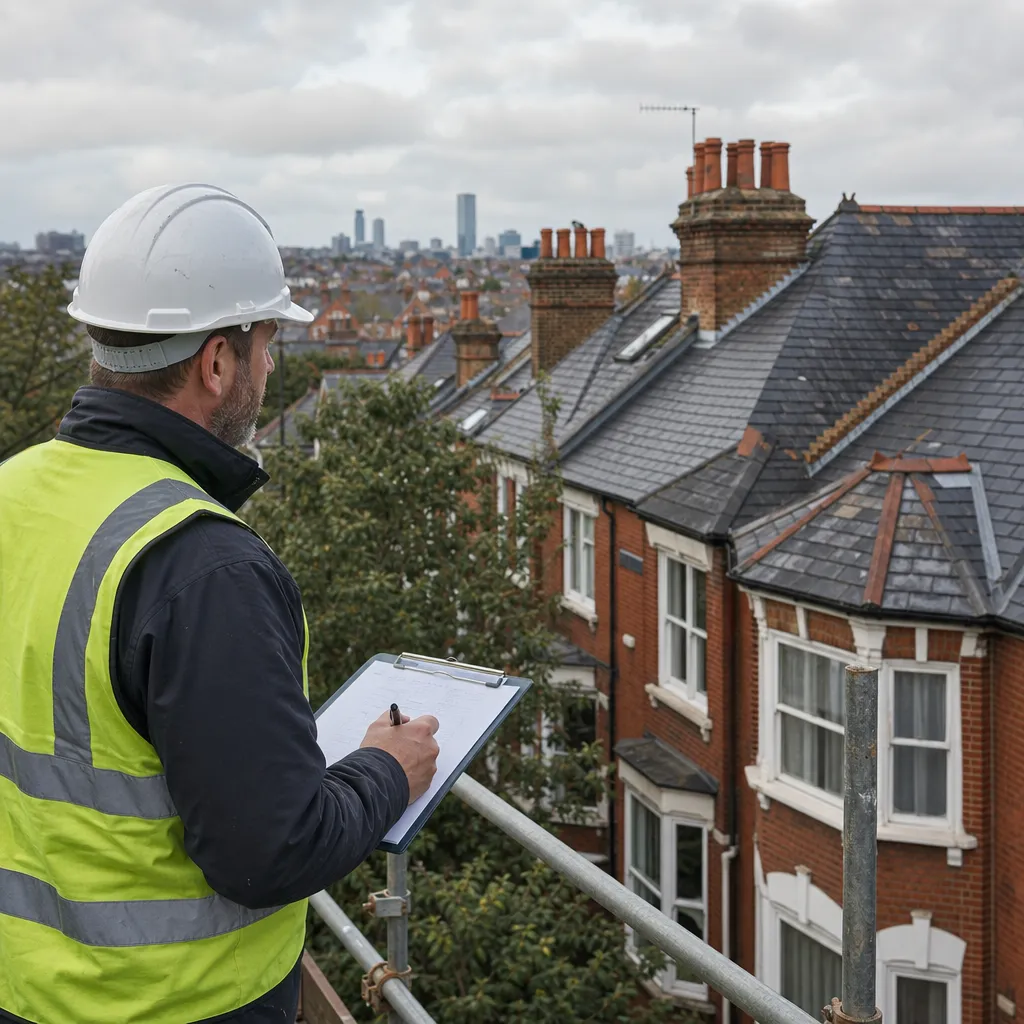
UK roofing demand peaks in late summer and following storm events, often stretching contractor availability by several weeks. The ageing housing stock, Building Regulations Part L obligations on insulation, and energy retrofit schemes sustain year-round pressure on roofing services. For planned work, booking 4–8 weeks ahead during peak periods is prudent; use an NFRC-member or TrustMark-registered contractor.
 Improvement & Build
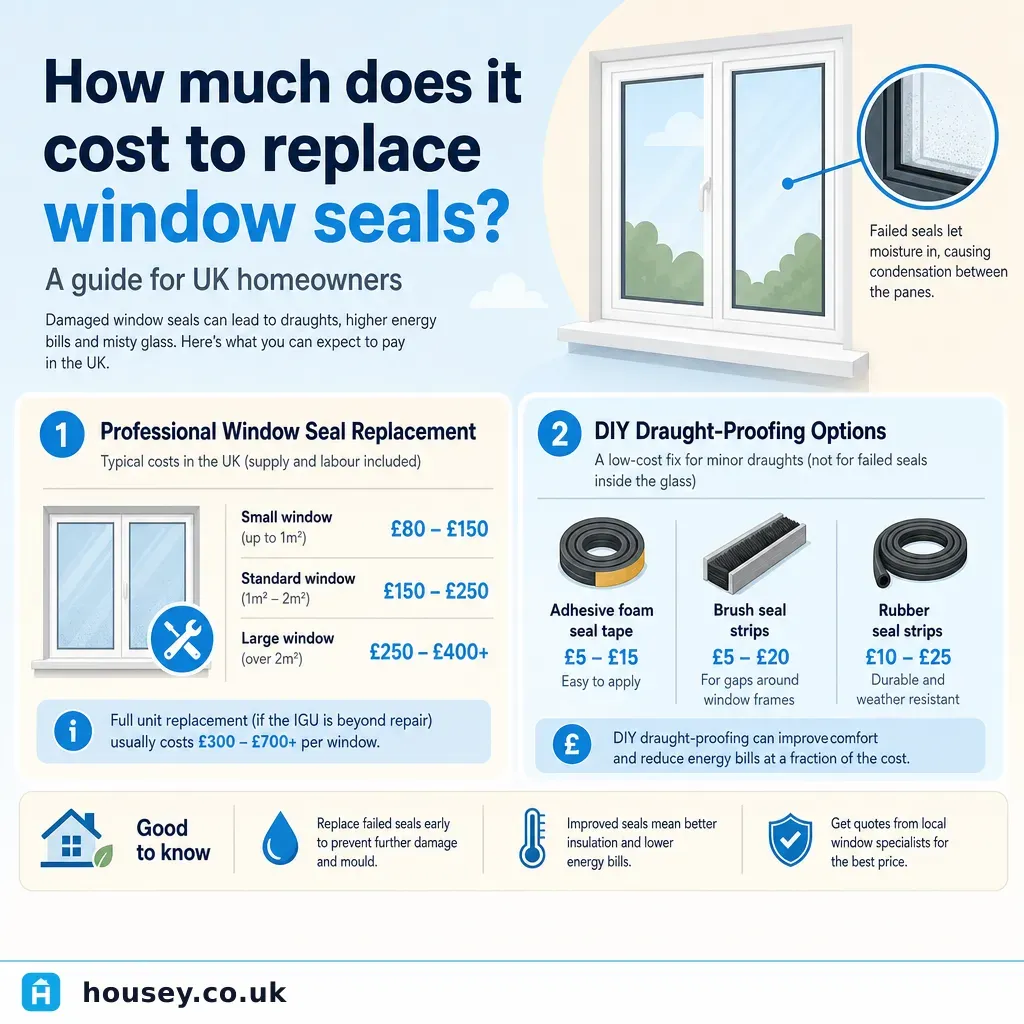
How much does it cost to replace window seals?
Replacing window seals in the UK costs between £40 and £350 per window depending on the repair type. Draught-proofing strip replacement is cheapest and often DIY-suitable. A failed double-glazed sealed unit — where condensation forms between the panes — requires professional replacement of the glass unit. Silicone perimeter resealing is a simple, low-cost job most householders can tackle themselves.
 Surveys & Inspections
Identifying sources of unpleasant odours in residential properties
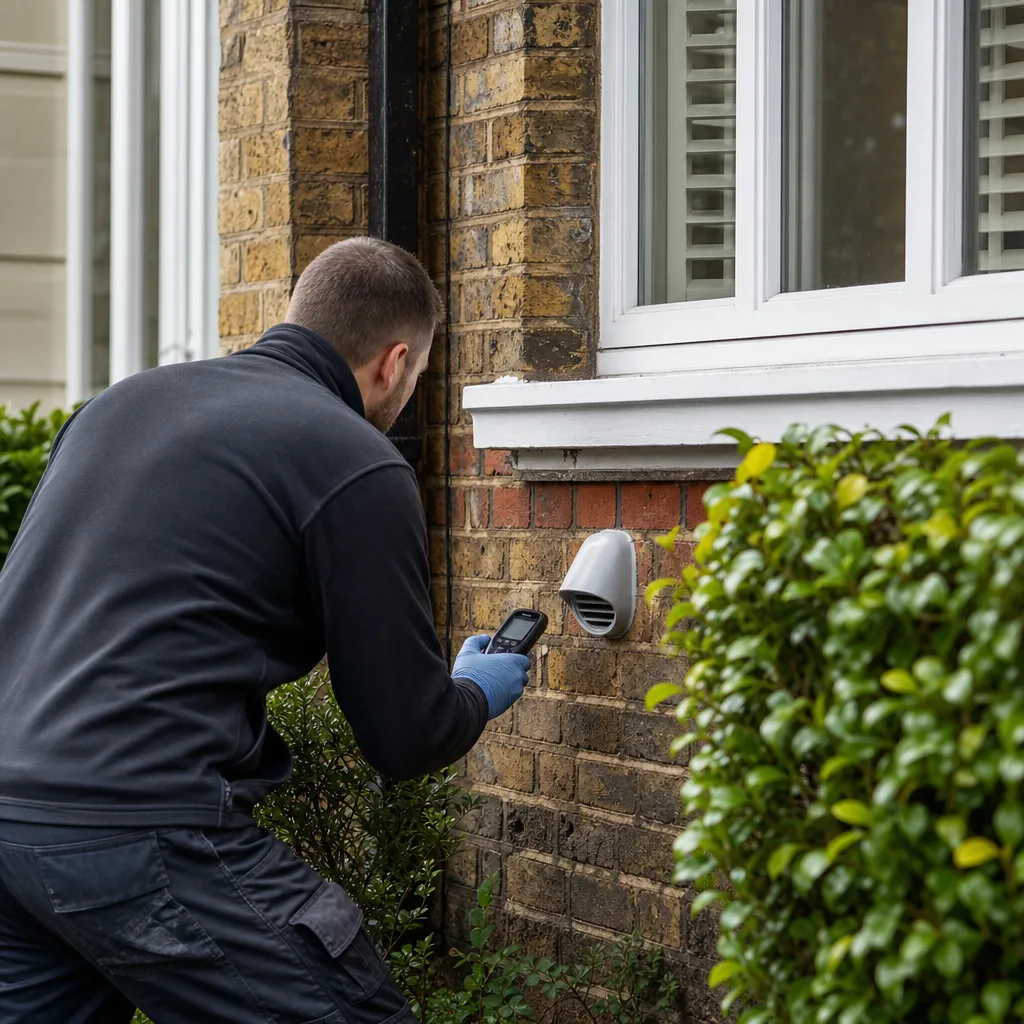
Unpleasant smells in a UK home range from dried drain traps — easily fixed — to a gas leak, which requires immediate evacuation and calling 0800 111 999. Identifying the smell type guides whether you need a drainage surveyor, damp specialist, electrician, or Gas Safe engineer. Persistent smells with no obvious cause warrant professional inspection rather than masking.
 Buying & Moving
How to Sell Your House Fast in the UK
To sell your home quickly in the UK, price it accurately from day one using a professional valuation, maximise kerb appeal, instruct a conveyancer before you list, and choose an estate agent with a strong local track record. Overpricing and slow legal preparation are the two main causes of stalled sales.
 Buying & Moving
First-time home buyer guide: essential property services and purchasing checklist
Buying your first home in the UK typically takes 12–16 weeks from offer acceptance to completion. You will need a solicitor for conveyancing, a RICS survey on the property's condition, and an EPC check. Budget for Stamp Duty if applicable, survey fees, legal costs, and mortgage arrangement fees before exchanging contracts.
 Improvement & Build
Choosing Replacement Windows: Types, Materials and Performance Standards
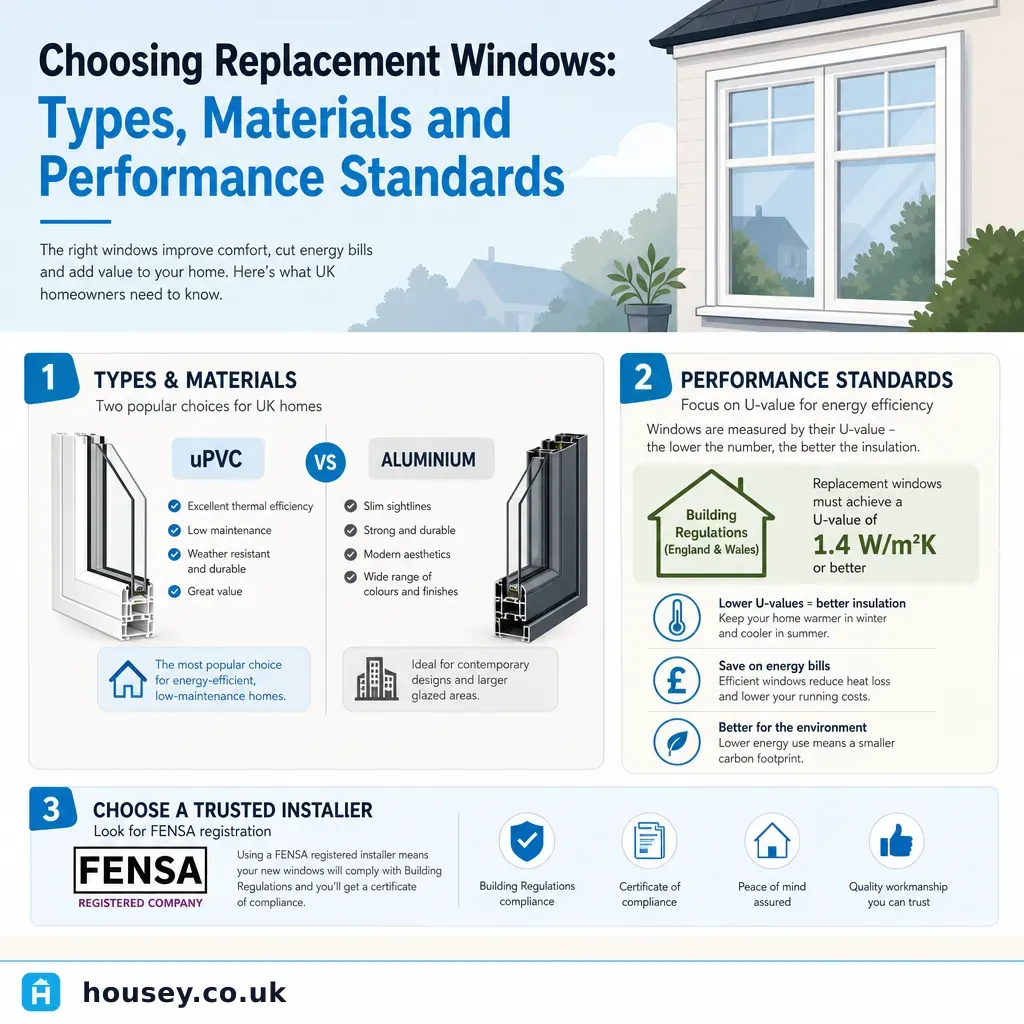
Replacement windows in the UK must meet a whole-window U-value of 1.6 W/m²K or better under Building Regulations Part L. FENSA or CERTASS-registered installers can self-certify compliance without a separate building control application. Frame choices — uPVC, timber, aluminium, and composite — carry different performance, maintenance, and planning implications, especially in conservation areas and listed buildings.
 Improvement & Build
Finding and Evaluating Properties With Renovation Potential
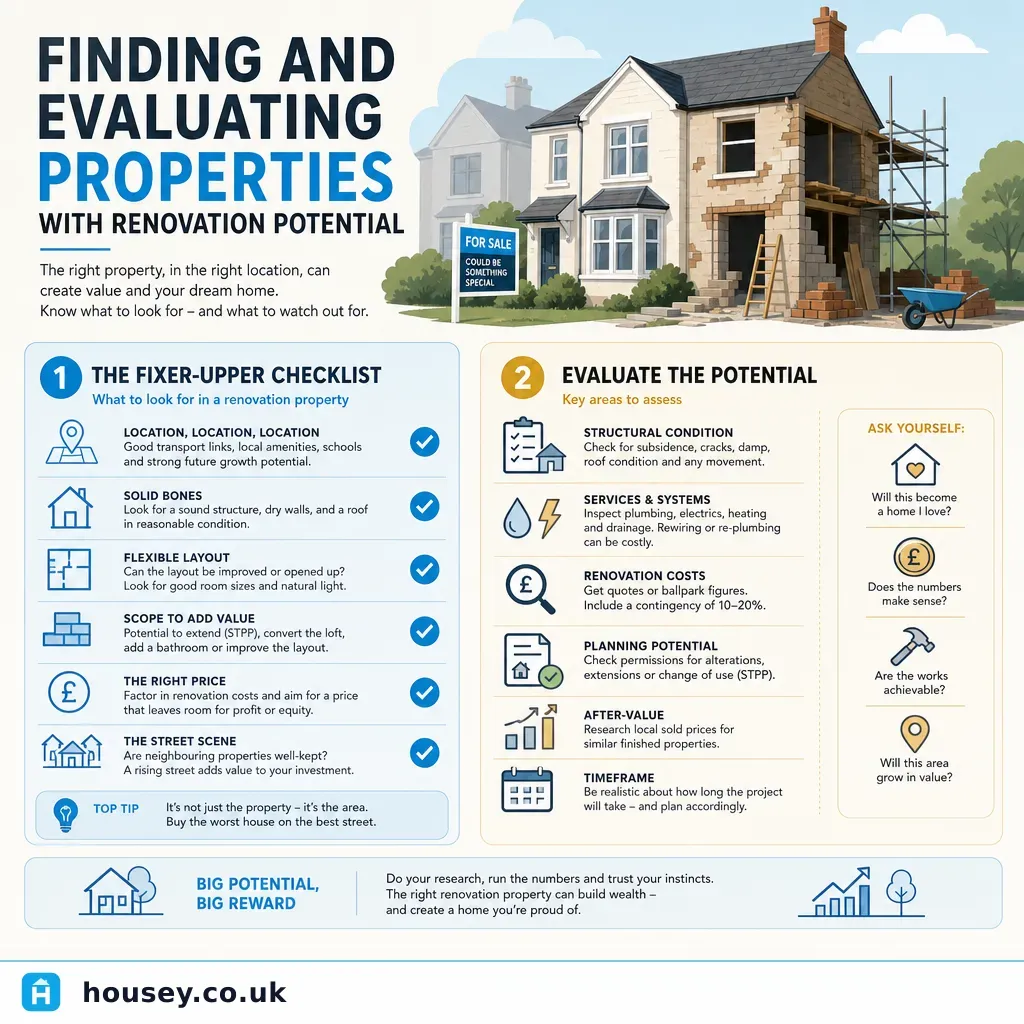
A property has renovation potential when purchase price plus realistic improvement costs leaves a meaningful margin below comparable improved values nearby. At viewing, assess structural condition, services, planning scope, and environmental risks such as asbestos or Japanese knotweed. Always commission a RICS Level 3 Building Survey before exchange — hidden defects are common in fixer-upper properties.
 Surveys & Inspections
Asbestos Pipe Insulation: Recognition and Safe Management
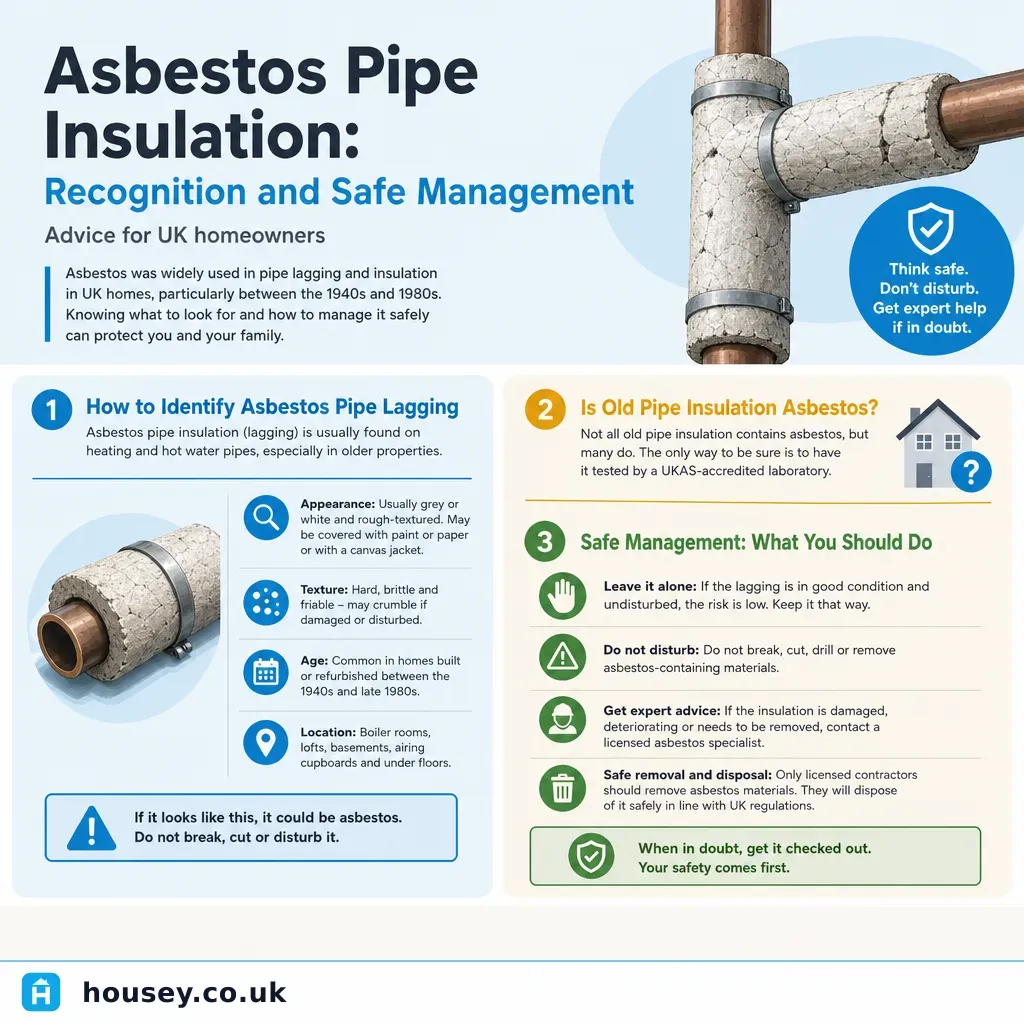
Asbestos pipe insulation, commonly called pipe lagging, was widely used in UK homes until the late 1990s to wrap boiler flues, heating pipes, and hot-water cylinders. It becomes most hazardous when damaged or disturbed. If you suspect pipe lagging in your property contains asbestos, do not touch it—contact a licensed asbestos professional to assess and manage it safely.
 Surveys & Inspections
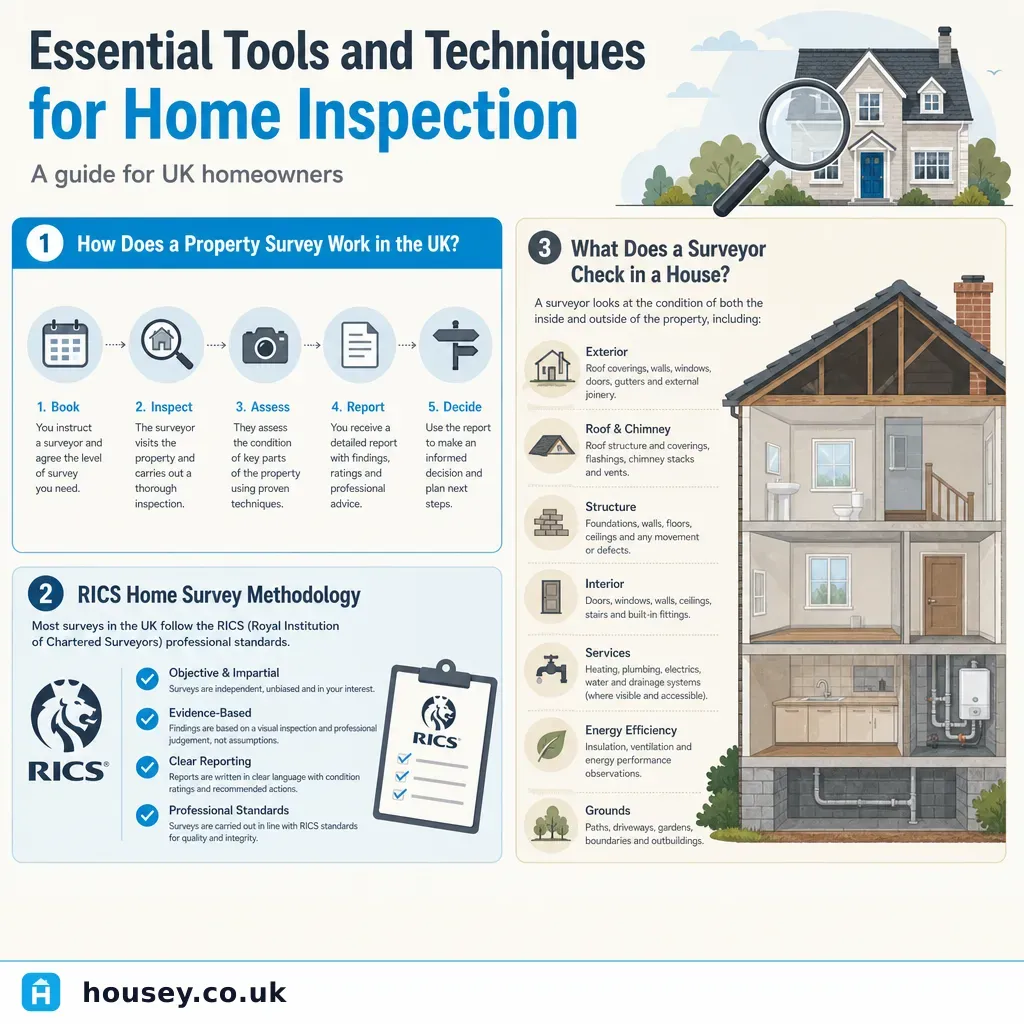
Essential Tools and Techniques for Home Inspection
UK property surveys are visual, non-invasive inspections carried out by chartered surveyors using equipment such as moisture meters, damp probes, binoculars, and torches. More detailed Level 3 surveys may also include roof space and subfloor inspection. Specialist tools like thermal imaging cameras and drain cameras are not part of a standard survey but can be commissioned separately when a concern is identified.