Knowledge Base
Property advice that actually helps
Researched, UK-specific guides for every stage of homeownership — from buying and surveys to retrofit, planning and major works.
 Improvement & Build
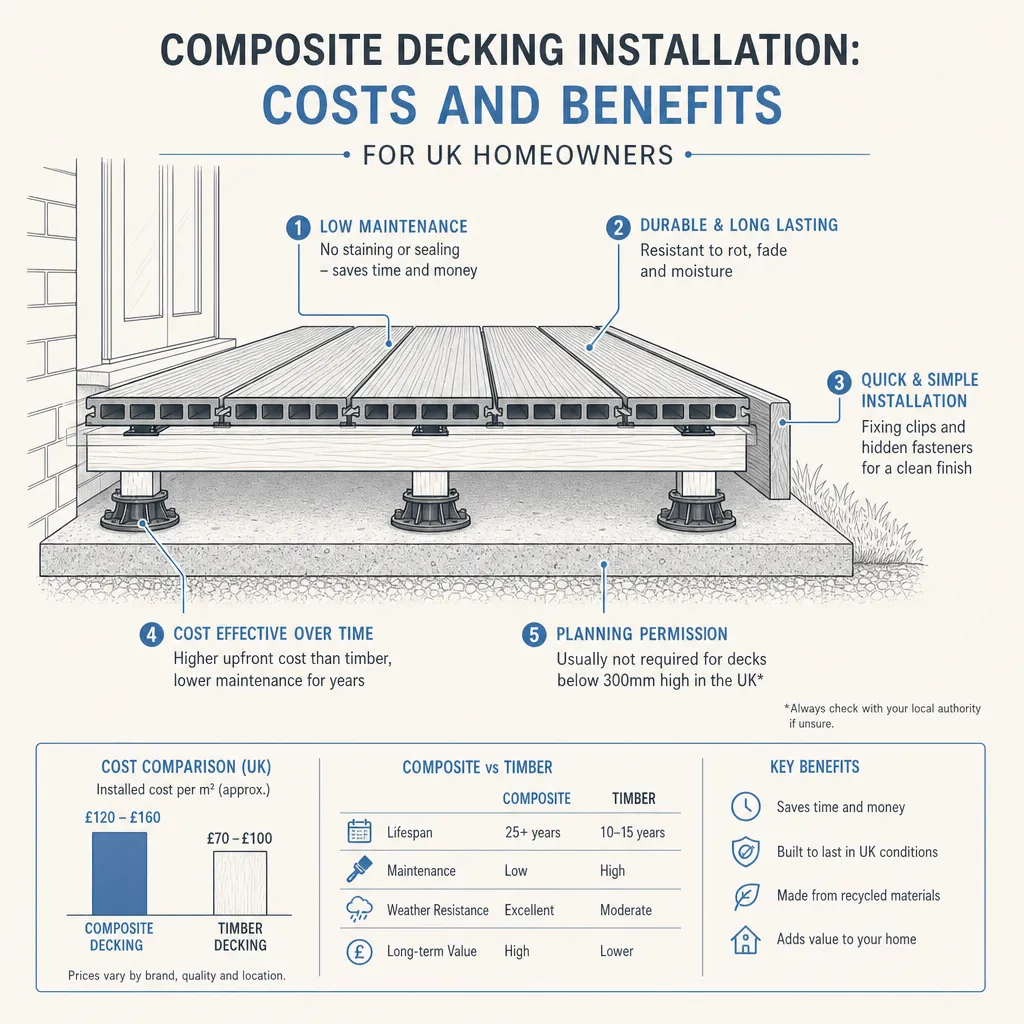
Composite Decking Installation: Costs and Benefits
Composite decking installation in the UK typically costs £100–£200 per square metre for supply and fit, depending on product grade and site complexity. Unlike timber, composite boards require minimal annual maintenance and resist rot and splinters. Ground-level decks under 30 cm high usually fall within permitted development rights in England.
 Improvement & Build
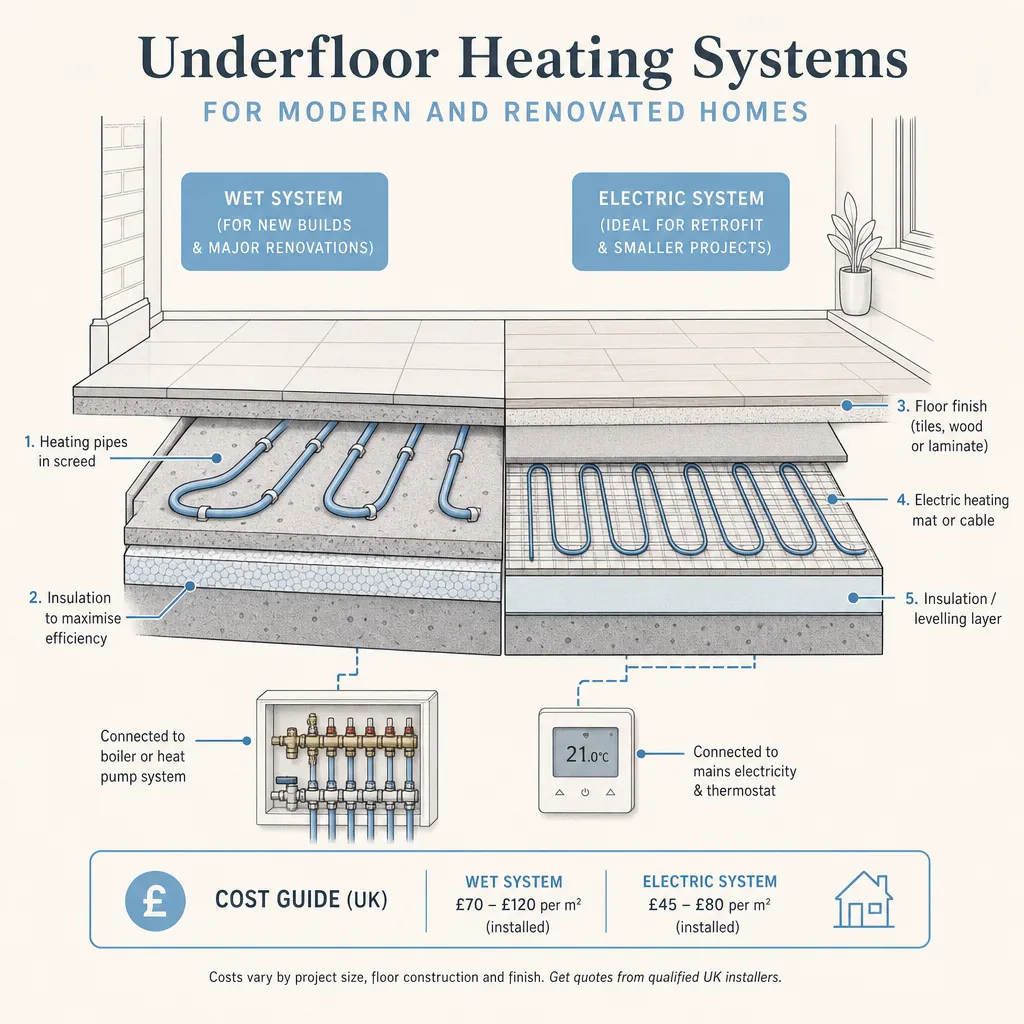
Underfloor Heating Systems for Modern and Renovated Homes
Underfloor heating is available in two main forms for UK homes: electric mats or cables, and wet (hydronic) pipe systems. Electric systems are simpler to retrofit but more expensive to run; wet systems suit whole-house installations and pair well with heat pumps. Choice depends on floor construction, insulation, heat source, and budget.
 Planning & Pre-Build
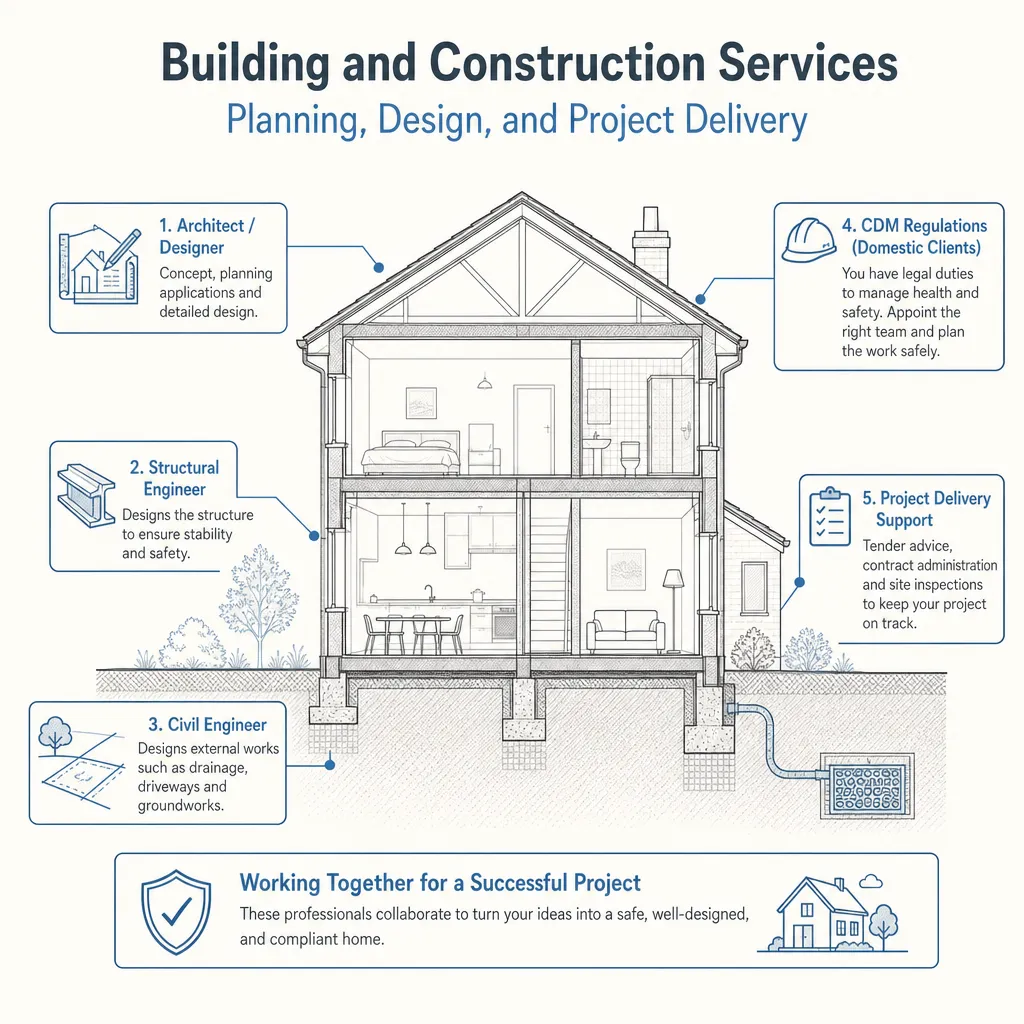
Building and Construction Services: Planning, Design, and Project Delivery
Construction projects in the UK typically involve architects, structural engineers, civil engineers, project managers, and quantity surveyors — each with a distinct role at different stages. Understanding which professionals to appoint, in which order, and under which procurement route is key to delivering a project on time, within budget, and compliant with building regulations and CDM 2015.
 Improvement & Build
Growing Cut Flowers In Your Garden
A well-planned cut flower garden uses succession planting every two to three weeks to keep stems coming from May through October. Hardy annuals such as sweet peas, cornflowers, and cosmos suit UK conditions well. Cut stems early morning, condition overnight in cool water, and harvest regularly to encourage continued flowering.
 Energy & Retrofit
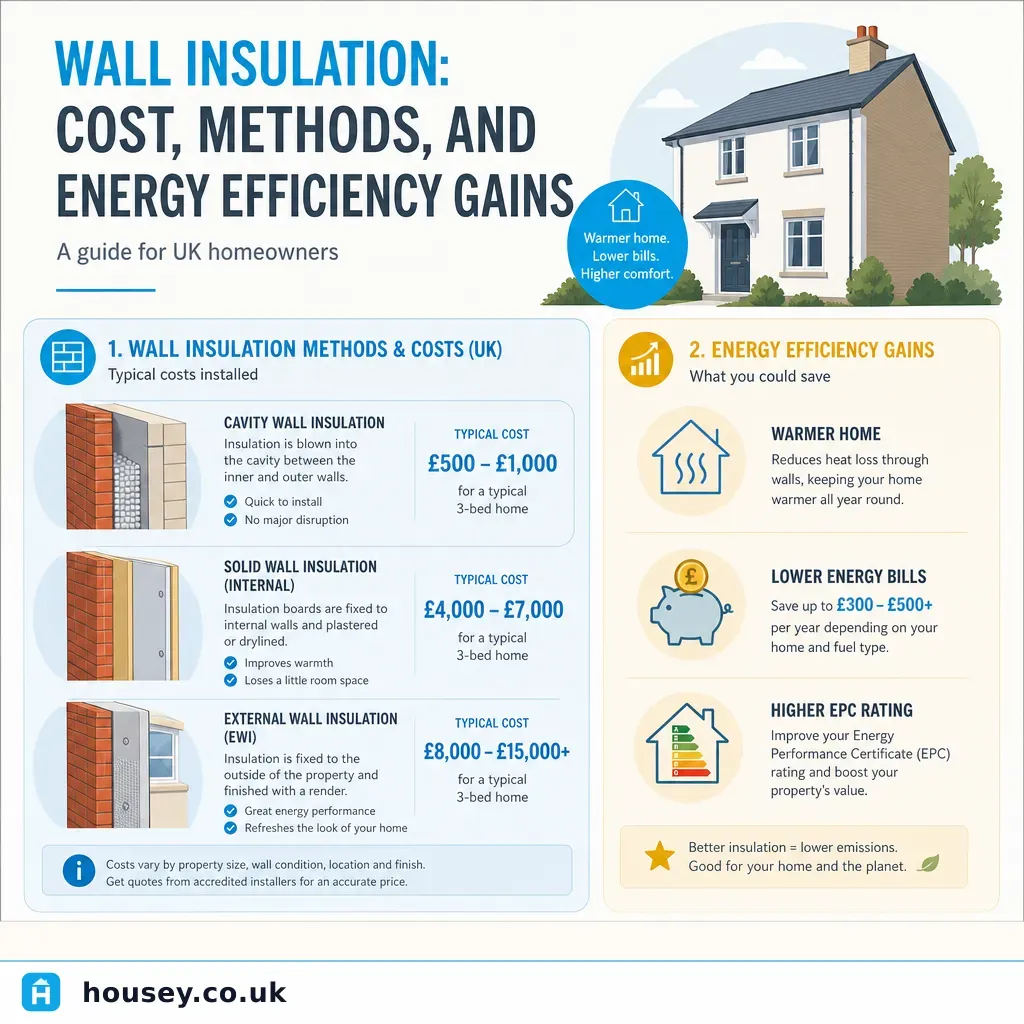
Wall Insulation: Cost, Methods, and Energy Efficiency Gains
Wall insulation in UK homes uses one of three main methods: cavity wall insulation for post-1920 homes with an unfilled cavity, external wall insulation for solid-walled properties, and internal wall insulation where external changes are not permitted. Costs range from around £400 for cavity work to over £20,000 for solid wall systems. ECO4 and the Great British Insulation Scheme may fund eligible households.
 Surveys & Inspections
Repairing Slate Roof Tiles: Methods and Materials
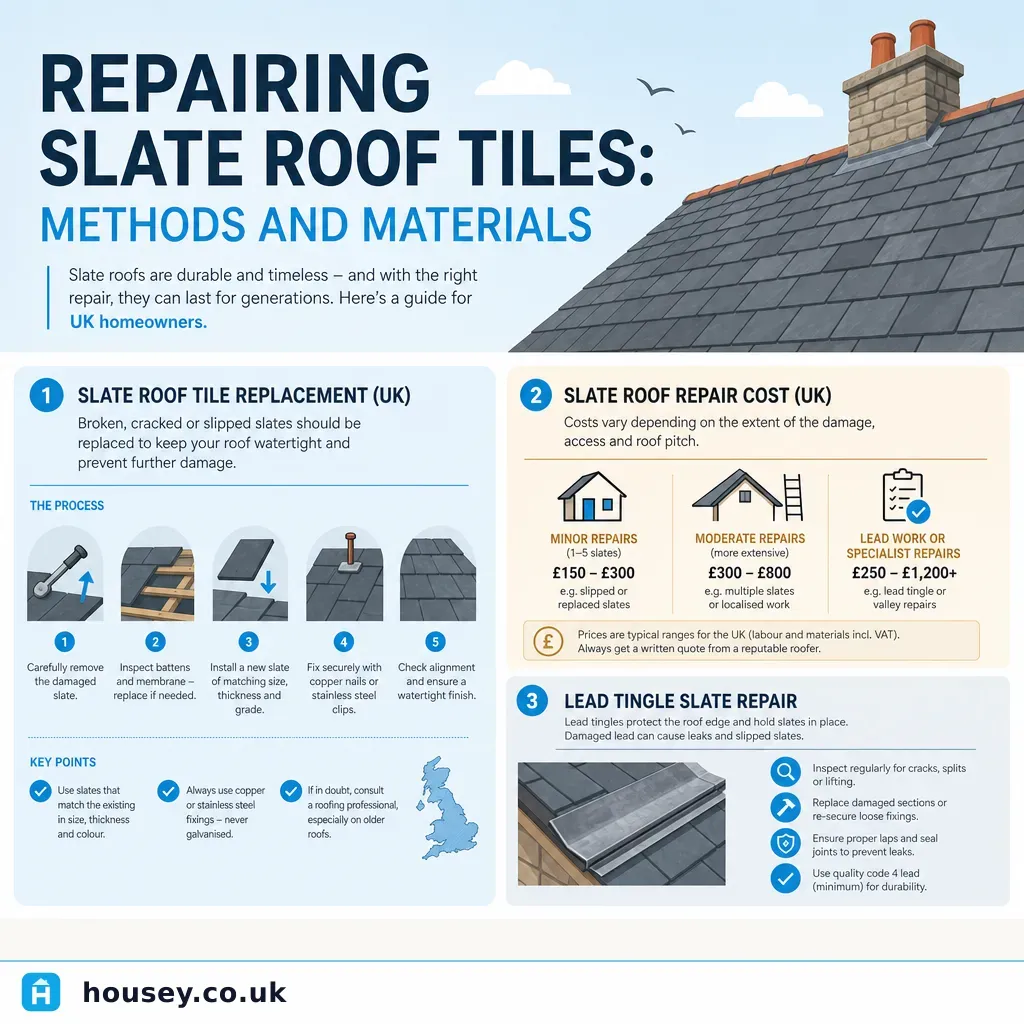
Slipped or cracked slate tiles are usually repaired using a lead tingle or hook-and-nail method. On Victorian and Edwardian properties, single tile replacements are common, but when more than 25 to 30 per cent of slates are failing, a full re-slate is often more cost-effective. Always use a qualified roofer — slate repair requires working at height.
 Buying & Moving
Selling Property During Divorce: Legal and Practical Guidance
The family home cannot normally be sold by one spouse without the other's agreement once matrimonial home rights are registered. The family court has wide discretion under the Matrimonial Causes Act 1973 to order sale, transfer, or deferred occupation. Any agreed property division must be formalised in a Consent Order to be legally binding. Instruct a qualified family solicitor before taking any steps to sell or transfer.
 Buying & Moving
House Moving Timeline: How Long Does A UK Property Transfer Really Take?
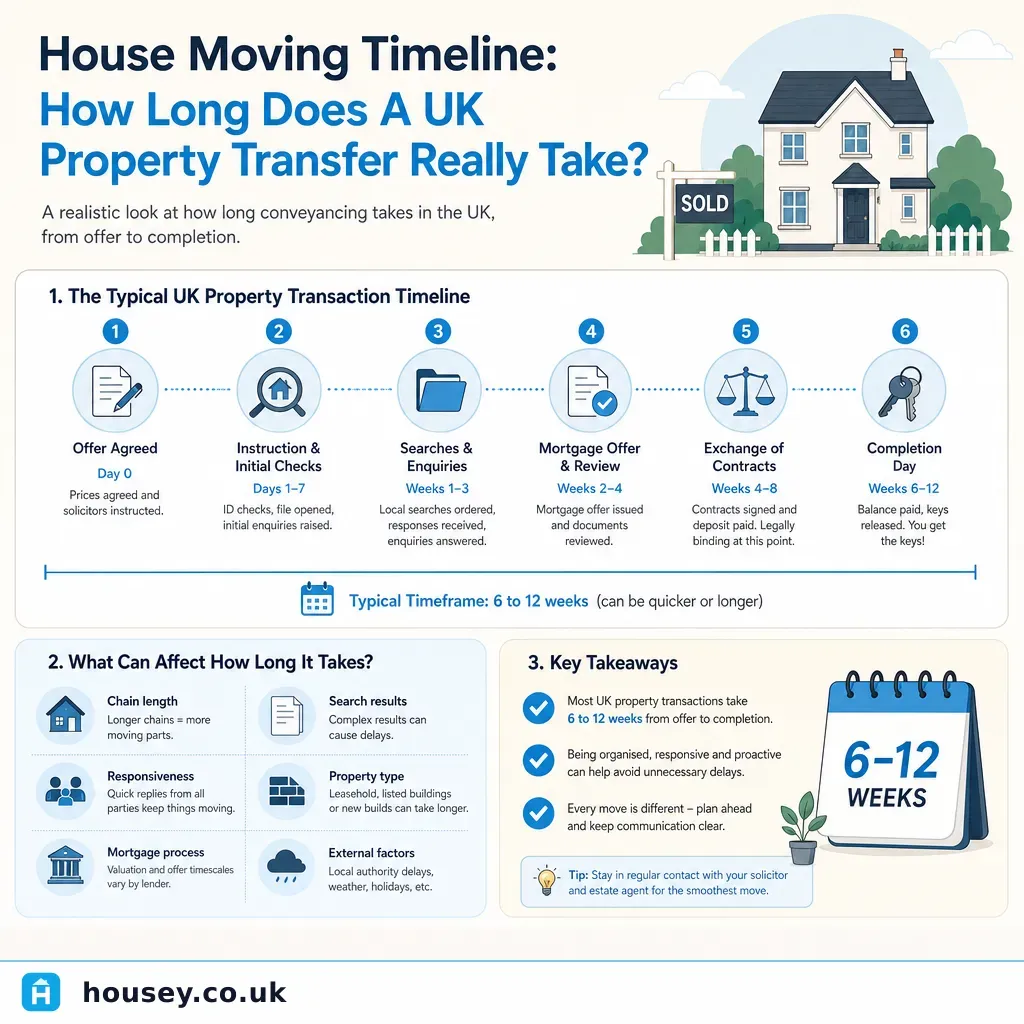
A UK property transfer typically takes 12–16 weeks from offer acceptance to completion, though chains, mortgage requirements, and survey findings can extend this considerably. The physical removal and moving day logistics take one to two days for most households, but should only be booked once exchange of contracts has occurred and a legally binding completion date is confirmed.
 Improvement & Build
Sealing Brick Walls: Protective Benefits and Application Considerations
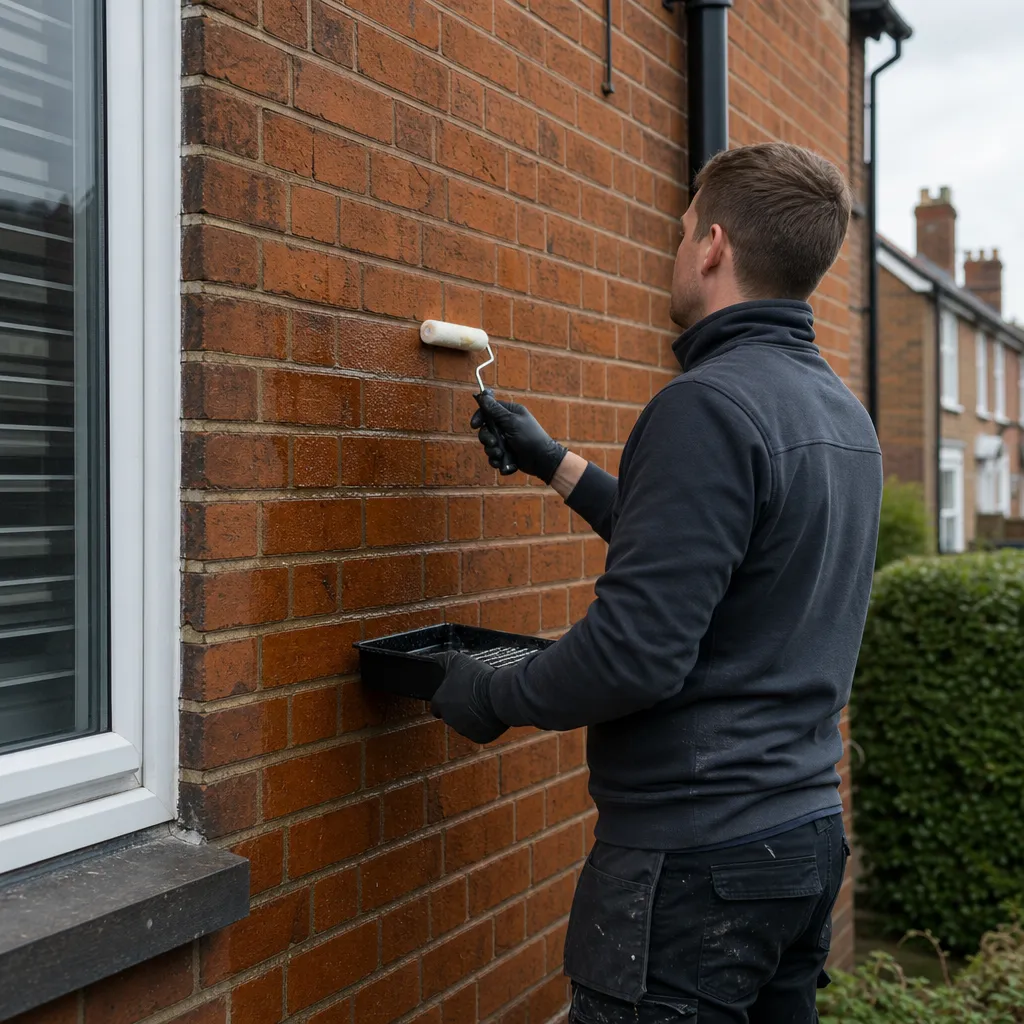
Sealing brick walls with a breathable silane-siloxane cream can reduce water ingress on exposed, sound brickwork. However, sealing is rarely appropriate for pre-1920 solid-wall properties, listed buildings, or walls showing active dampness — it can trap moisture and cause more damage than it prevents. Always identify the source of damp before applying any sealant, and consult a conservation specialist if the building is listed.
 Buying & Moving
Unique Property Features That Add Character and Value
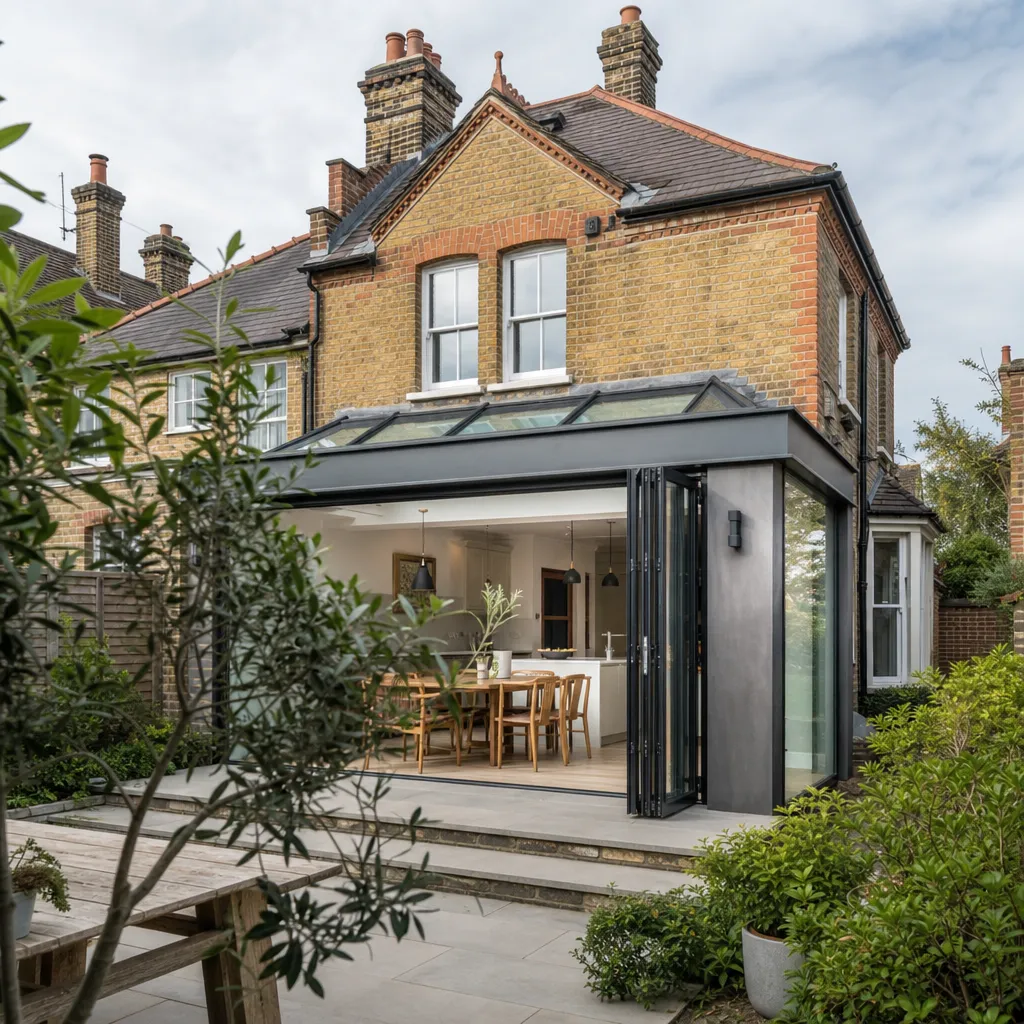
Original period features — fireplaces, exposed beams, sash windows, and ornate plasterwork — can add genuine value in the right UK market, but only if they are in good condition and correctly protected legally. Listed building status, conservation area designation, and the local buyer profile all affect how a distinctive feature is perceived by valuers, surveyors, and potential purchasers.
 Energy & Retrofit
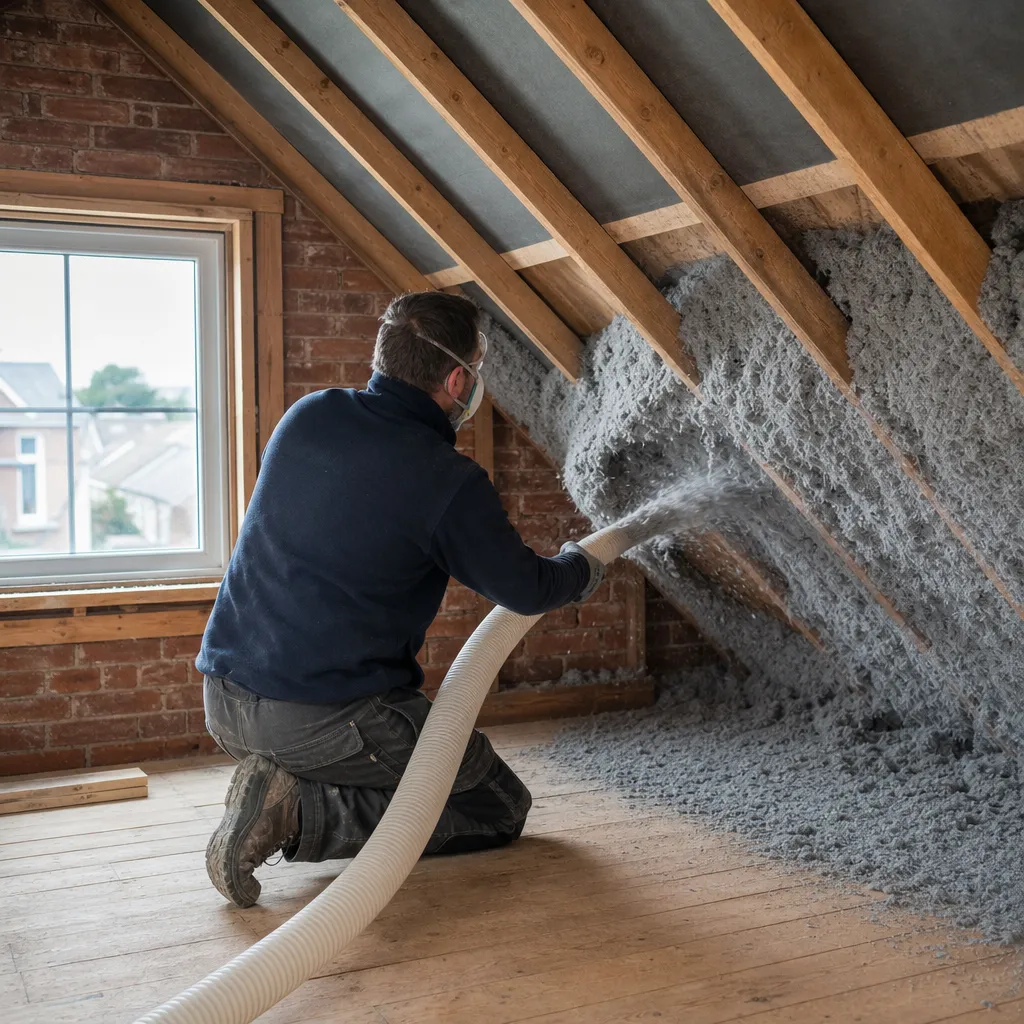
Cellulose Insulation: Advantages and Disadvantages for Your Home
Cellulose insulation is a recycled, low-embodied-carbon option achieving 0.035–0.040 W/mK thermal conductivity, comparable to mineral wool. It works well in loft spaces and timber-frame cavities but requires careful moisture management in UK retrofits. Installers must hold PAS 2030 accreditation and TrustMark registration for ECO4-funded work. Settling allowance and vapour control are both critical to long-term performance.
 Buying & Moving
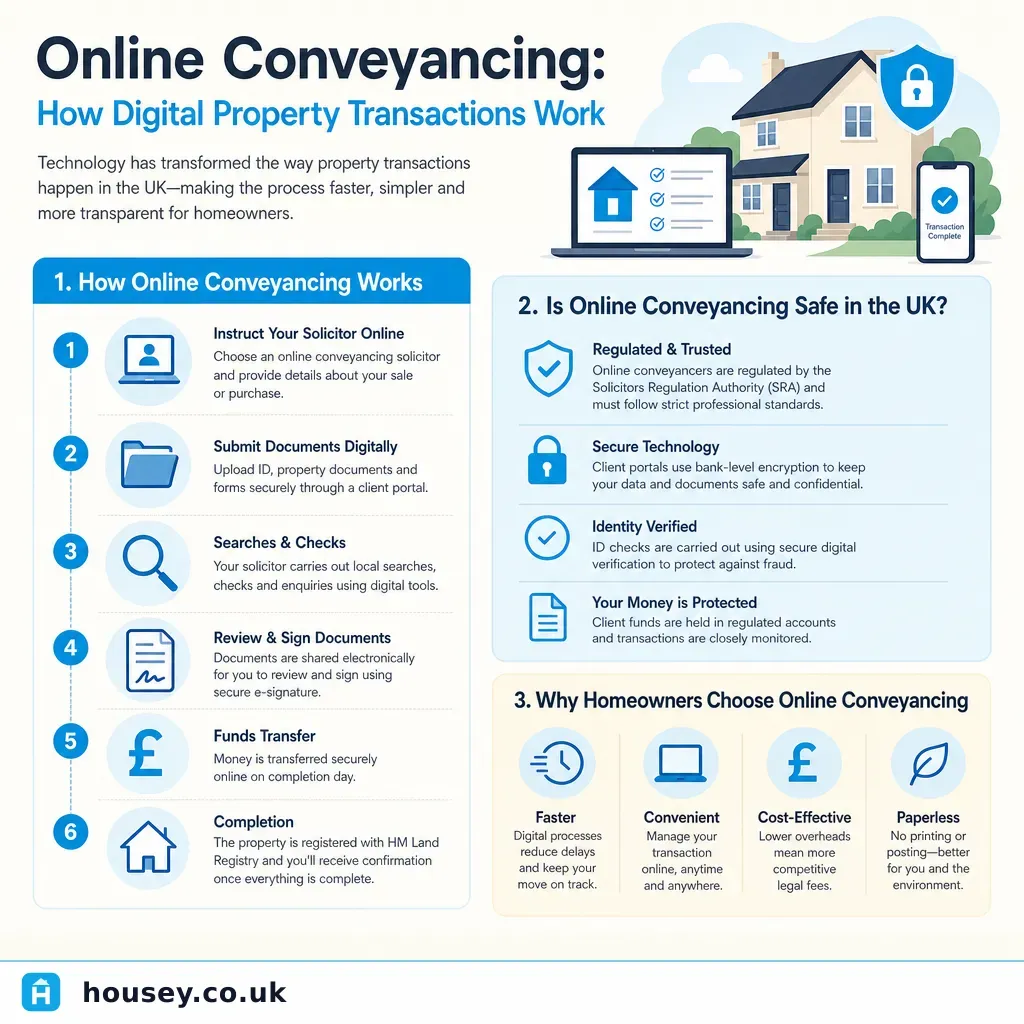
Online Conveyancing: How Digital Property Transactions Work
Online conveyancing handles the legal transfer of a UK property using digital tools — email, e-signatures, online portals, and remote ID verification. A licensed solicitor or conveyancer still manages the process; the legal steps are unchanged. Most standard freehold transactions can be handled fully online, though leasehold or complex cases may need more traditional involvement.