Knowledge Base
Property advice that actually helps
Researched, UK-specific guides for every stage of homeownership — from buying and surveys to retrofit, planning and major works.
 Energy & Retrofit
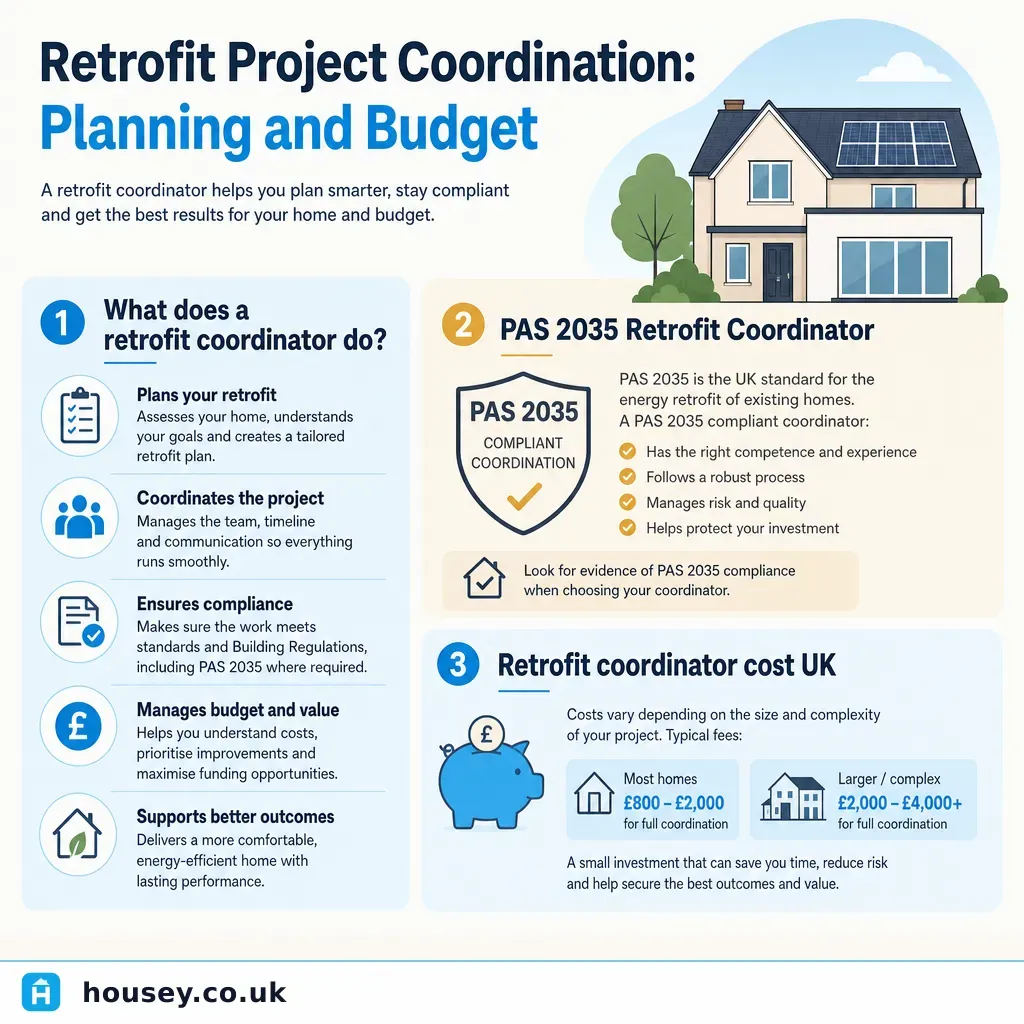
Retrofit Project Coordination: Planning and Budget
A Retrofit Coordinator is a TrustMark-registered professional who develops a Medium Term Improvement Plan for your home and oversees delivery of energy improvement works under PAS 2035. They ensure measures are installed in the correct sequence to avoid moisture and ventilation problems. Coordination fees typically range from £500 to £2,500 depending on the scope and complexity of the project.
 Improvement & Build
Composite Doors vs Traditional Wood Doors: A Comparison Guide
Composite doors offer lower maintenance, better thermal performance, and longer lifespan than traditional timber doors, making them the practical choice for most UK homeowners. Solid wood doors retain unmatched natural character and can be repaired and repainted indefinitely, but require regular upkeep. Your choice depends on your property type, maintenance appetite, and aesthetic preferences.
 Improvement & Build
Building in the UK: A Contractor's Perspective on Modern Construction Challenges
UK construction projects in 2026 are shaped by a skilled labour shortage, volatile material costs, and tightened Building Regulations including updated Part L requirements. Homeowners should expect longer lead times from reputable contractors, budget a 10–15% contingency, and ensure building control sign-off is obtained — missing it creates problems when you sell or remortgage.
 Improvement & Build
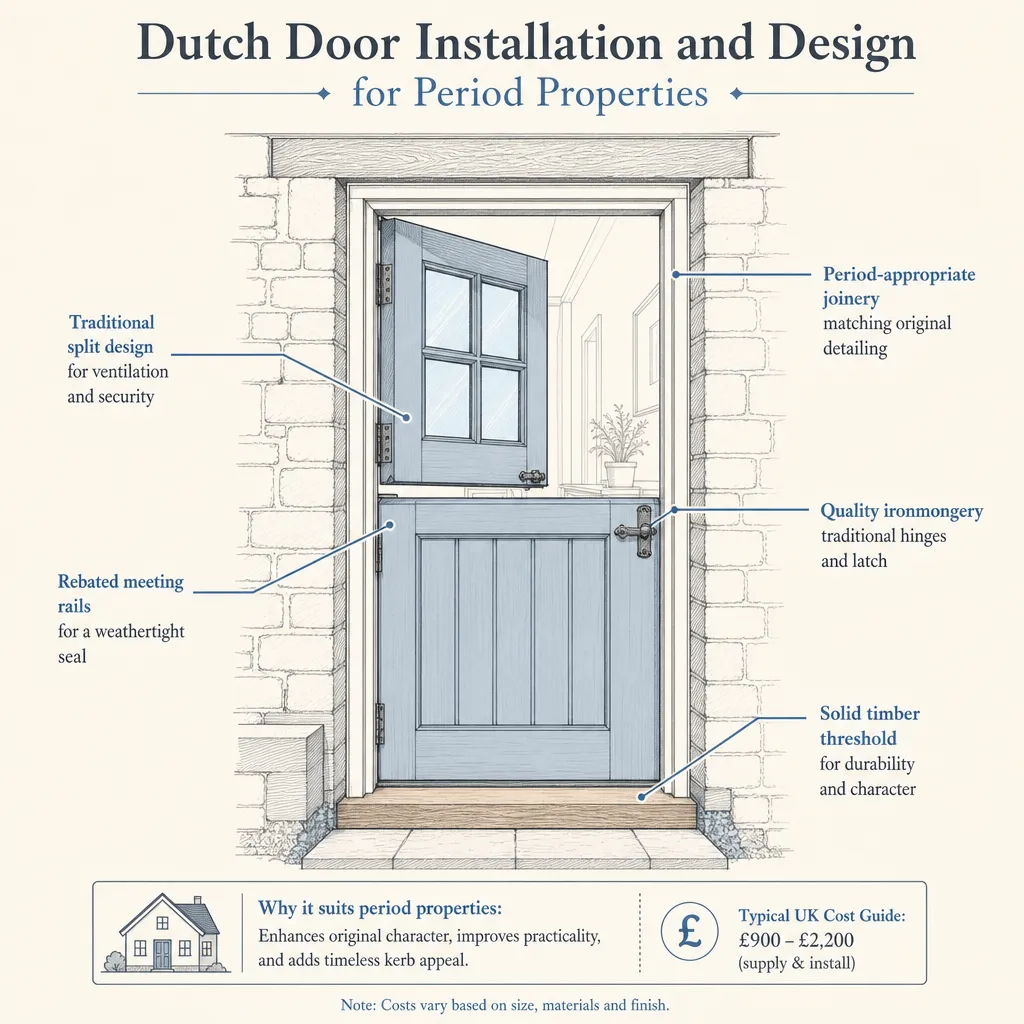
Dutch Door Installation and Design for Period Properties
A dutch door — also called a stable door — divides horizontally so the top and bottom halves open independently. For period properties, solid timber is the most appropriate material. Installation requires building regulations compliance under Parts L and Q, and listed buildings or conservation-area properties also need formal consent before any external door is replaced.
 Planning & Pre-Build
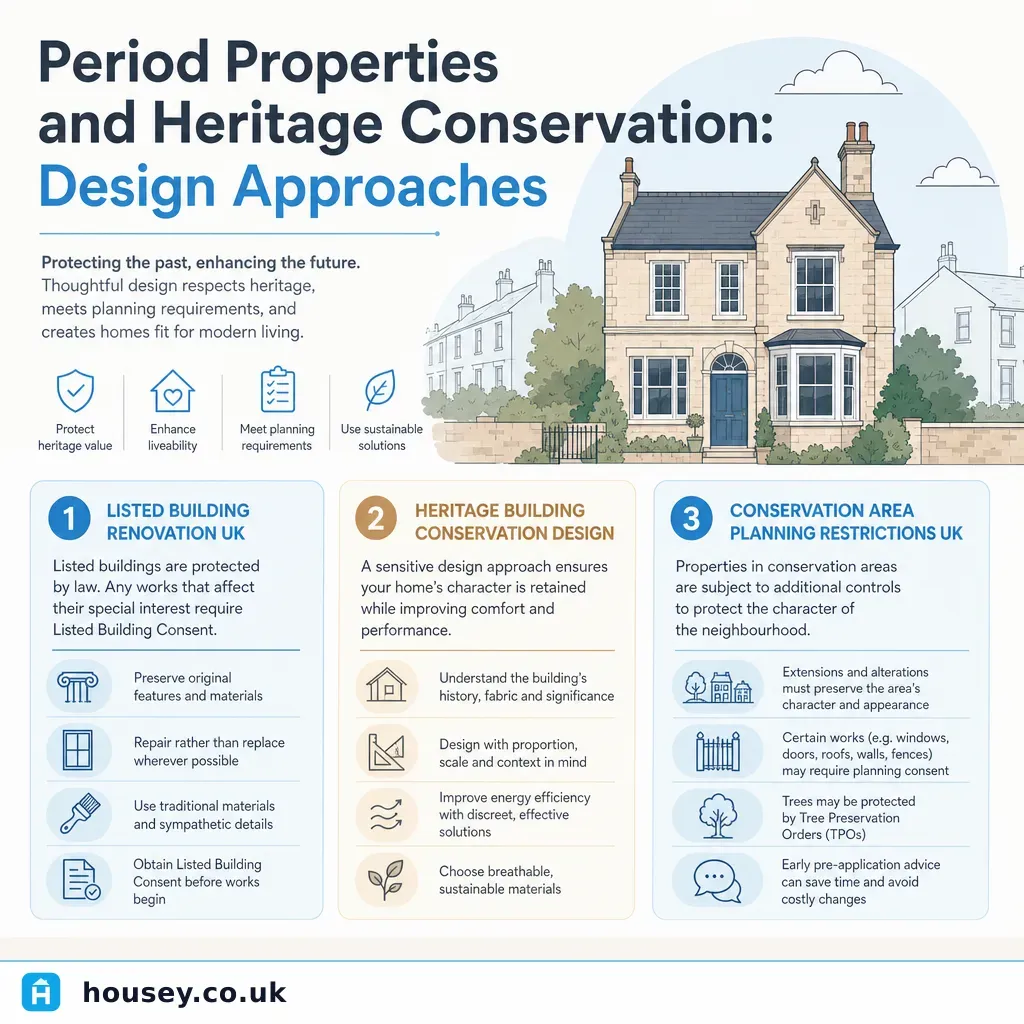
Period Properties and Heritage Conservation: Design Approaches
Renovating a period or listed property in the UK requires listed building consent for most alterations — including internal works — and compliance with conservation area restrictions where applicable. Sympathetic design uses traditional materials, repairs rather than replaces original fabric, and keeps new additions subservient in scale. Consult a heritage consultant or conservation-accredited professional before planning any works.
 Improvement & Build
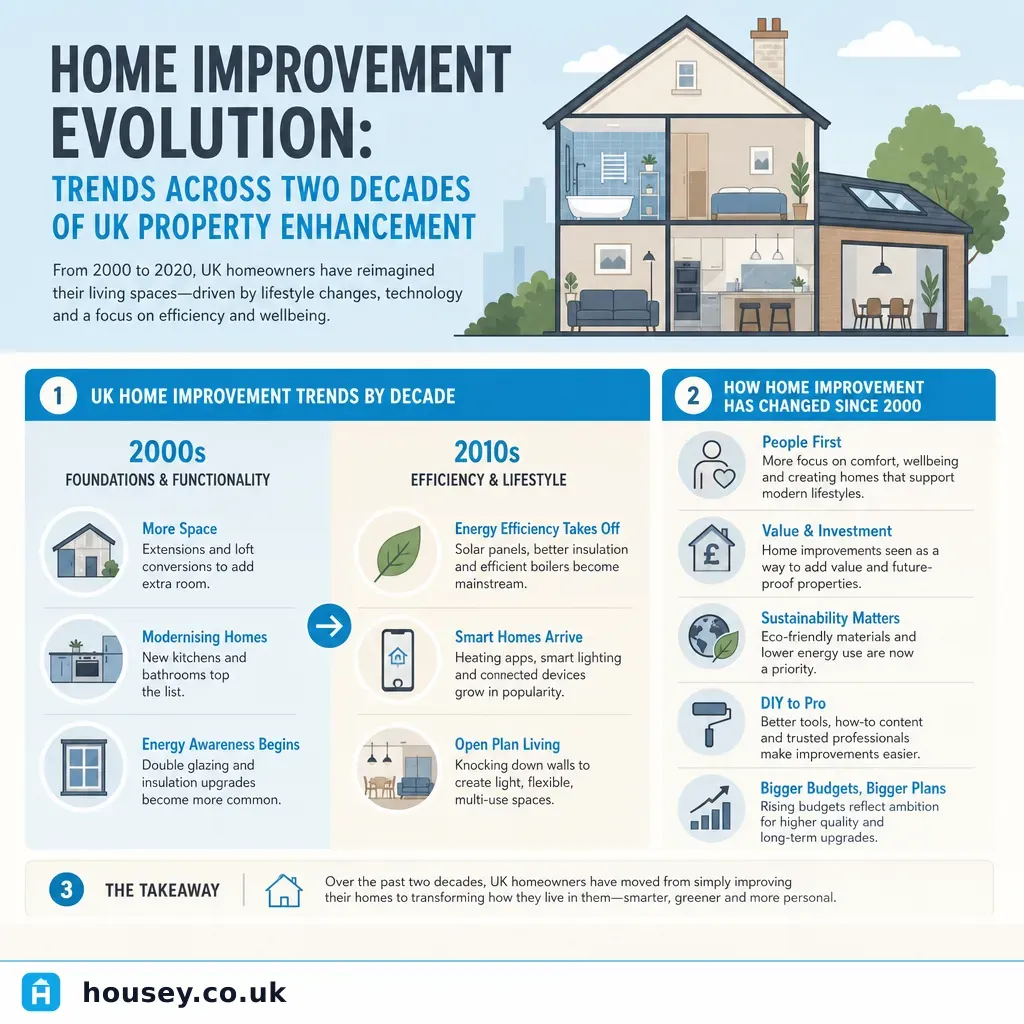
Home Improvement Evolution: Trends Across Two Decades of UK Property Enhancement
UK home improvement has shifted dramatically since the early 2000s. Property equity financed a boom in extensions and conservatories before the 2008 crash; the recession redirected spending towards essential repairs; expanded permitted development rights in 2013 drove loft conversions and rear extensions; COVID triggered a surge in home offices and outdoor spaces; and post-2022 energy prices have made retrofit the dominant investment priority.
 Buying & Moving
Virtual Staging and 3D Visualisation for Property Marketing
Virtual staging uses CGI to digitally furnish empty property photographs, typically costing £30–£150 per image — far less than physical home staging. It is legal in the UK provided images are clearly disclosed as digitally altered. 3D visualisation serves a different purpose, primarily marketing off-plan properties before construction begins.
 Improvement & Build
Awning Installation for Homes and Patios
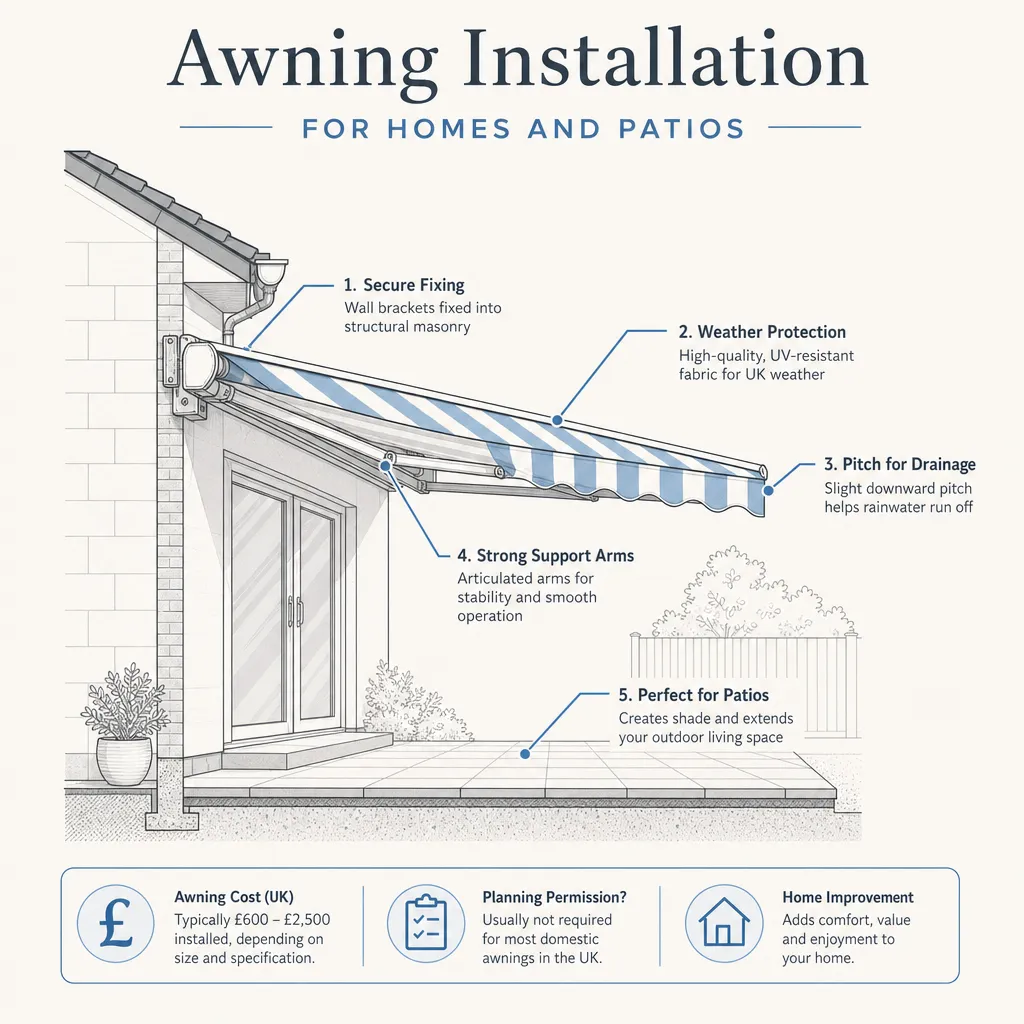
Awning installation for a standard patio typically costs £500–£3,000 depending on size, type, and whether the unit is motorised. Most domestic awnings do not need planning permission, though listed buildings and conservation areas are exceptions. Professional wall-fixing is recommended to ensure safe anchoring into masonry or structural timber.
 Surveys & Inspections
Understanding rental property valuation: what to expect when agents assess your home
A rental valuation from a lettings agent is an informal market appraisal estimating the rent your property could achieve, based on comparable local lets and your property's condition, size, and features. It differs from a formal RICS valuation, which is required for mortgage applications. Getting two or three appraisals from different agents helps calibrate the result.
 Improvement & Build
Decorative Paver Options for Residential Outdoor Spaces
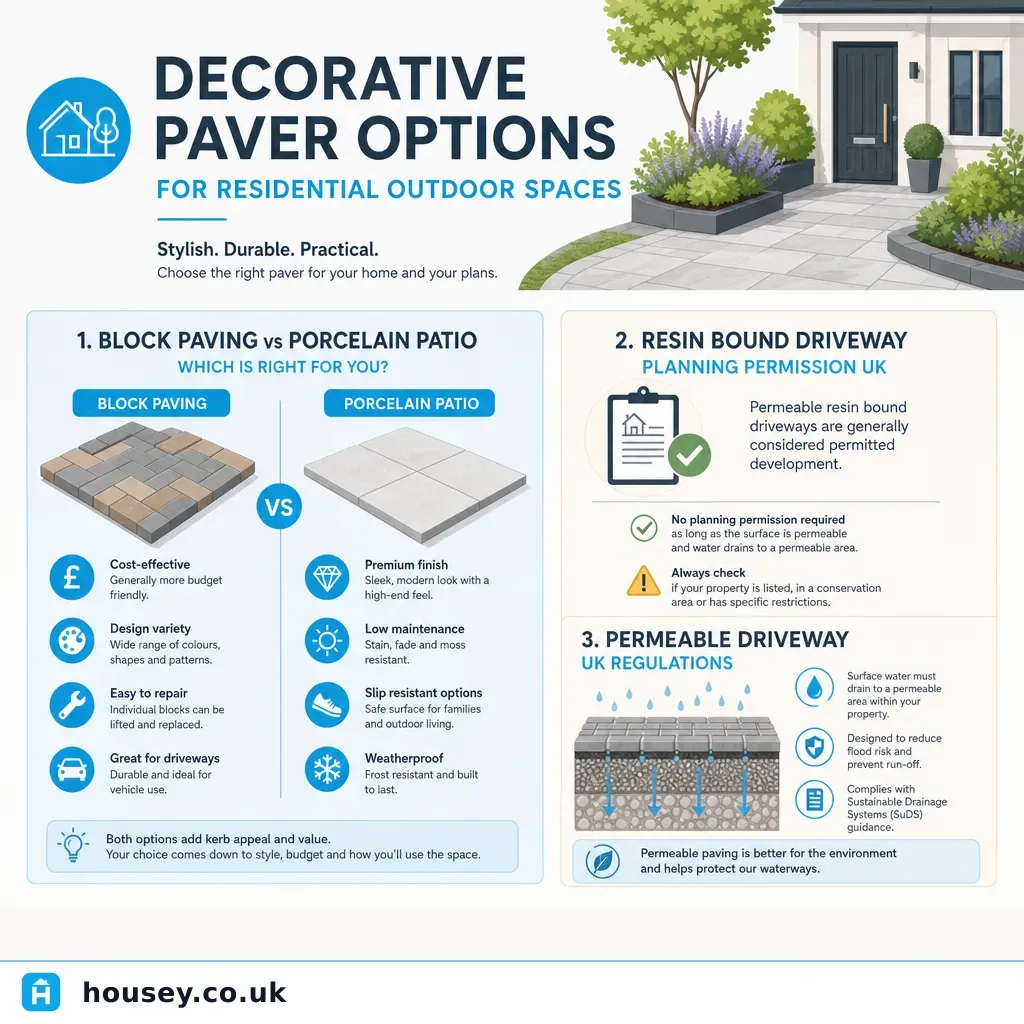
UK homeowners can choose from block paving, natural stone, porcelain, resin-bound aggregate, and concrete pavers for driveways and patios. The right option depends on budget, drainage requirements, and aesthetic preference. Front driveways over 5 square metres generally require permeable surfacing or householder planning permission under permitted development rules introduced in 2008.
 Buying & Moving
Safeguarding Your New Property Investment
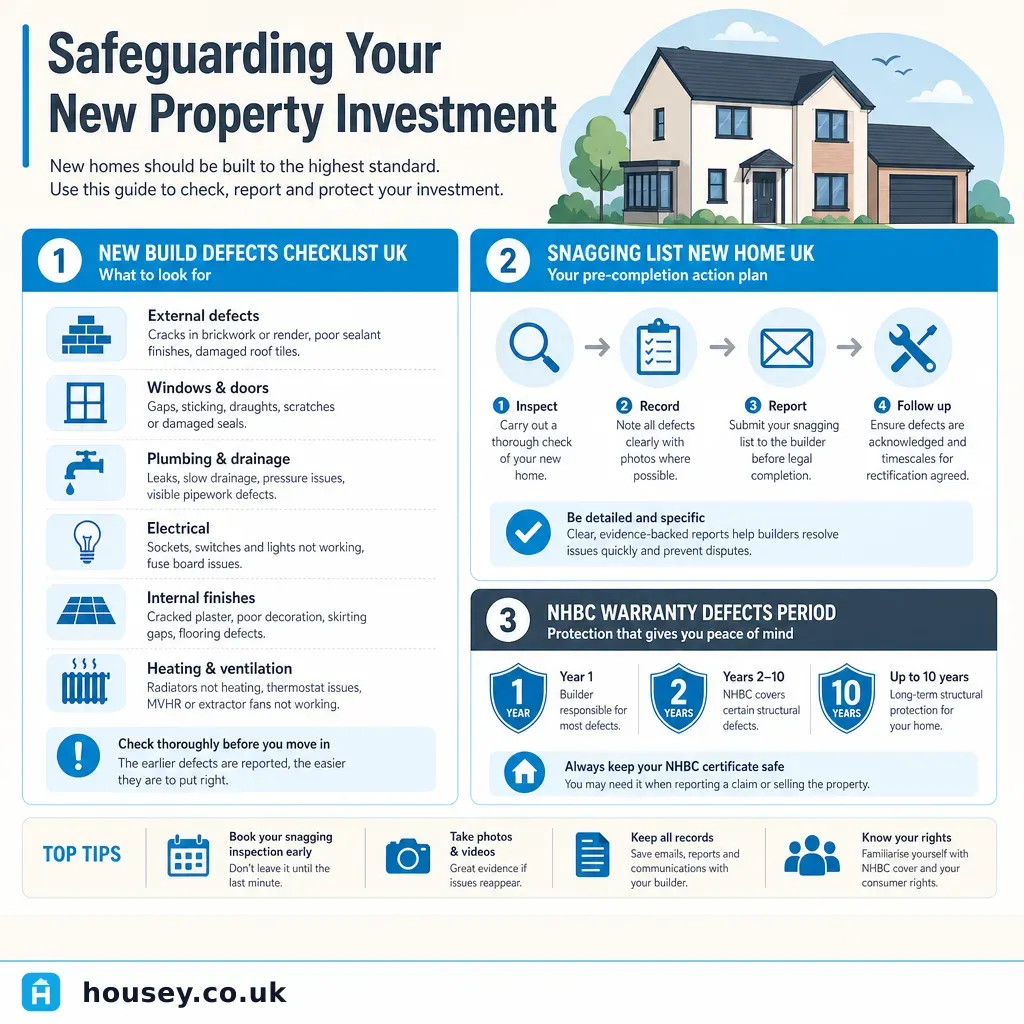
A new-build snagging inspection identifies cosmetic and minor construction defects before or shortly after legal completion. Instructing an independent inspector before you move in gives you a formal defect list to submit to the developer under your 2-year NHBC Buildmark warranty, helping you resolve issues at no cost and avoid expensive repairs later.
 Energy & Retrofit
Door Weather Stripping: Improving Insulation and Energy Efficiency
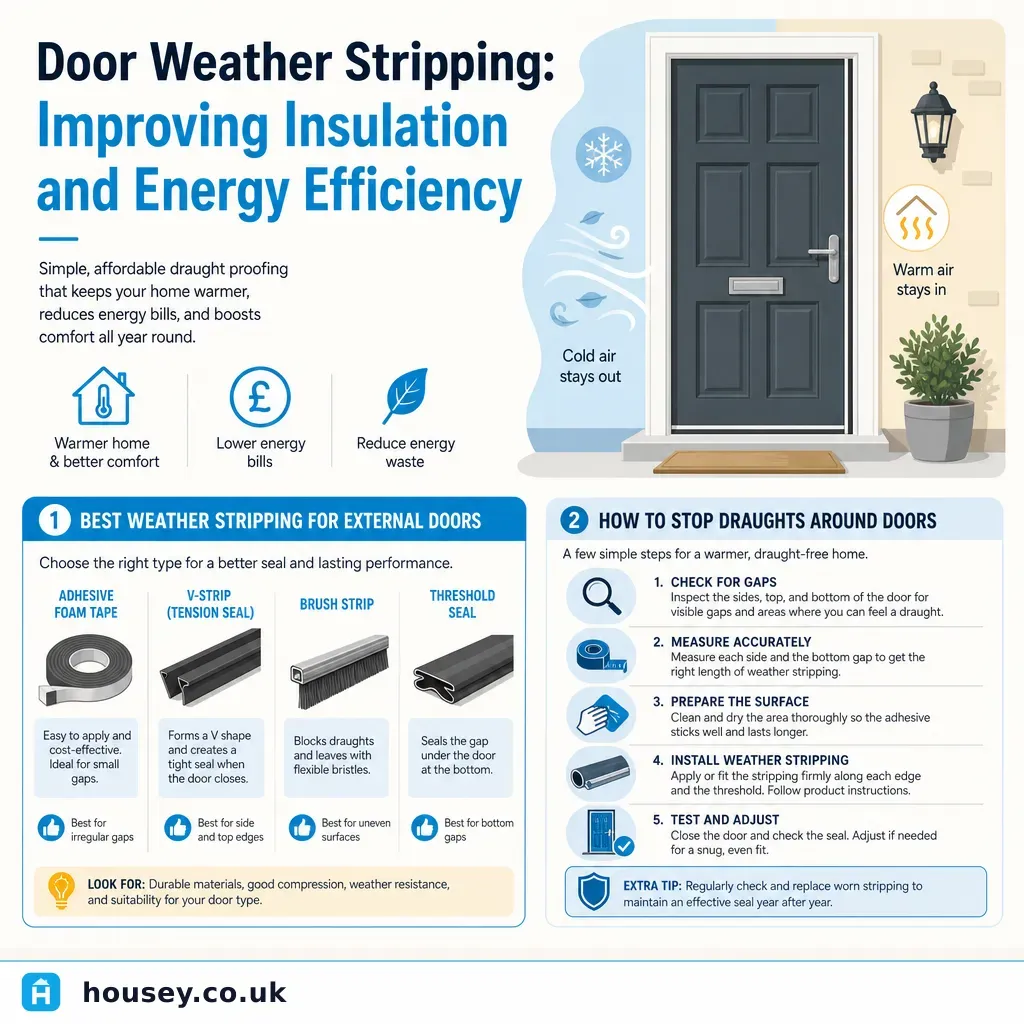
Draught-proofing external doors with well-fitted weather stripping — compression strips at the sides, a threshold seal at the base, and a double-brush letter plate — reduces heat loss and can save around £45 per year in a typical UK semi-detached home, according to the Energy Saving Trust. Choose the seal type to suit the gap width and whether the frame is square.