Knowledge Base
Property advice that actually helps
Researched, UK-specific guides for every stage of homeownership — from buying and surveys to retrofit, planning and major works.
 Improvement & Build
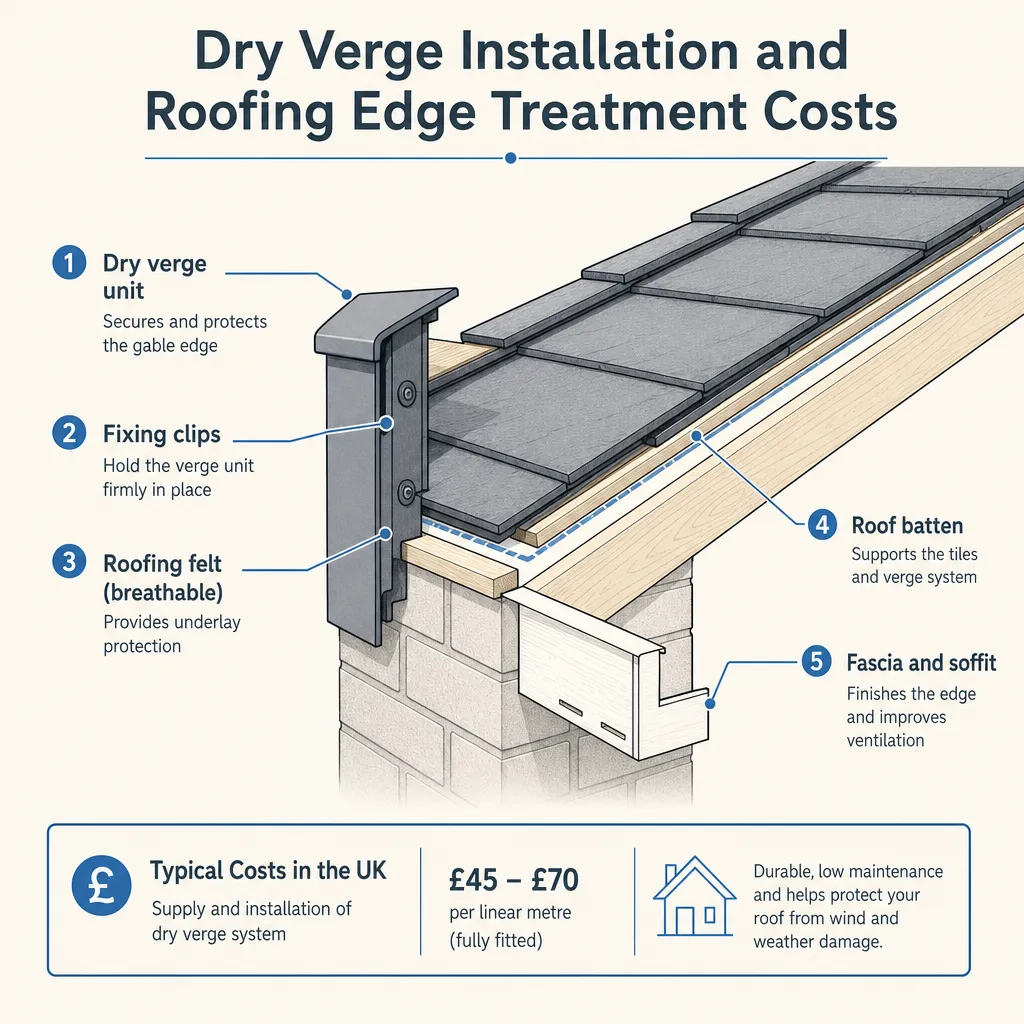
Dry Verge Installation and Roofing Edge Treatment Costs
A dry verge system replaces mortar bedding along the gable edge of a pitched roof with interlocking uPVC or aluminium units. UK installation typically costs £300–£800 for a standard semi-detached property, lasts 20–40 years, and requires no re-pointing. Dry verge systems comply with BS 5534 and should be fitted by a qualified roofer.
 Planning & Pre-Build
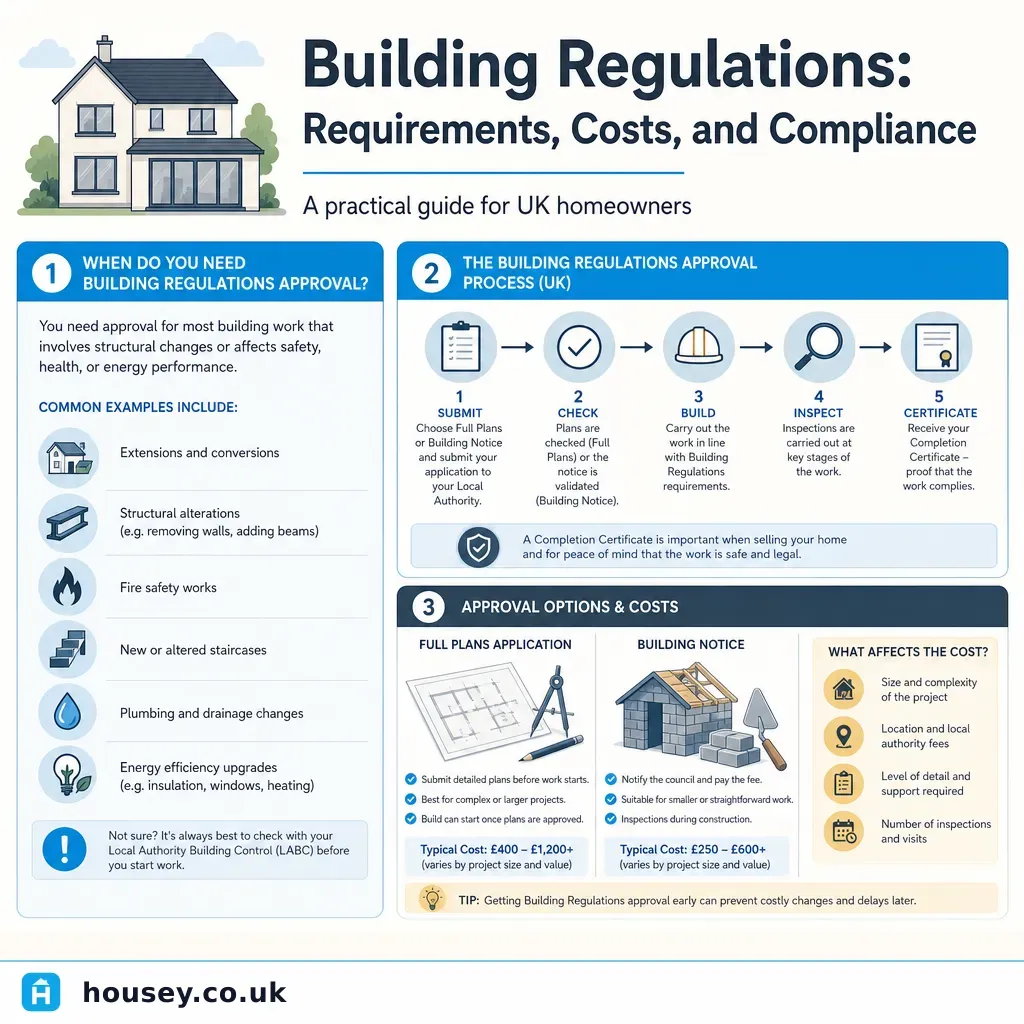
Building Regulations: Requirements, Costs, and Compliance
Building regulations set minimum standards for how construction work is carried out in the UK, covering structural stability, fire safety, energy efficiency, and ventilation. They apply to most building and conversion work, including extensions, loft conversions, and structural alterations. Approval is obtained through a local authority building control body or a Registered Building Control Approver before work begins.
 Improvement & Build
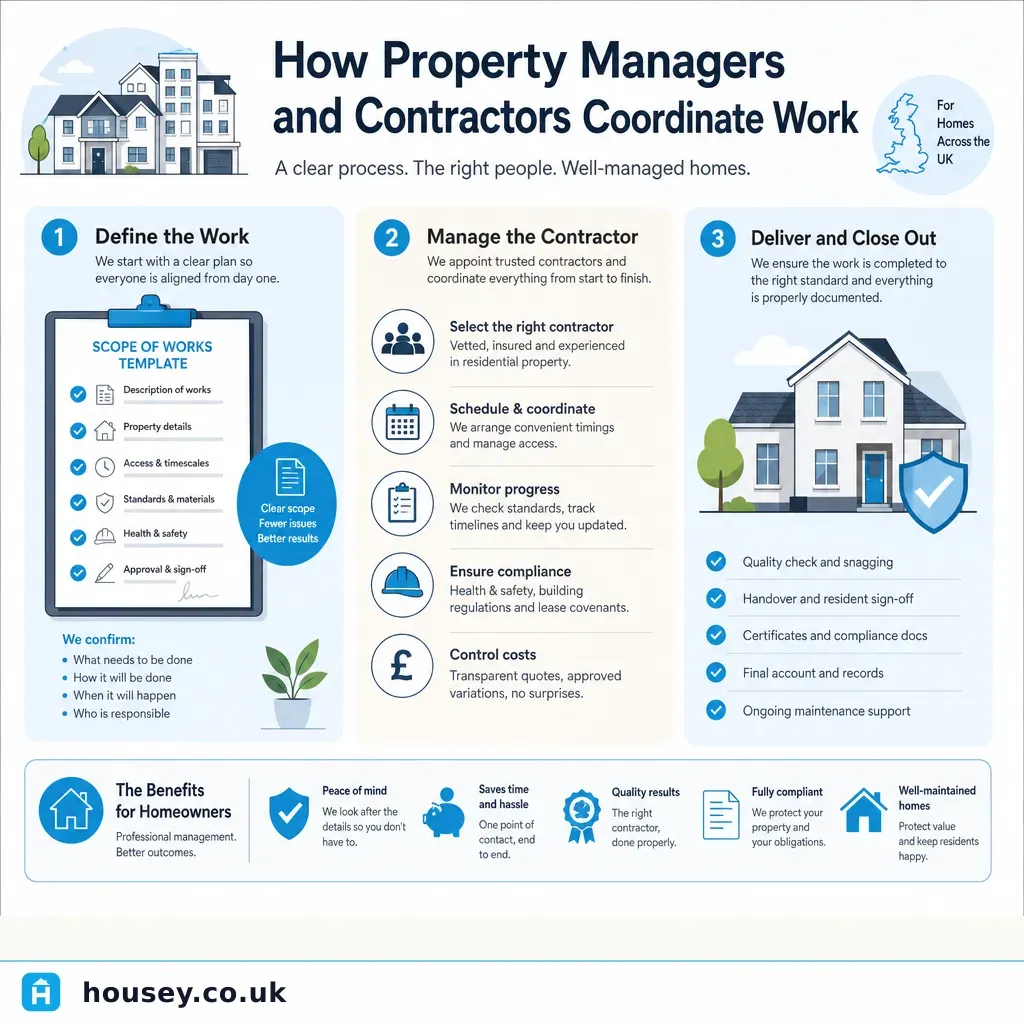
How Property Managers and Contractors Coordinate Work
Property managers coordinate contractors by scoping work clearly, selecting vetted and insured tradespeople, managing schedules and site access, checking progress against the brief, and handling sign-off and payment. Written agreements, staged payments, and regular communication between all parties help prevent delays and disputes on residential projects.
 Improvement & Build
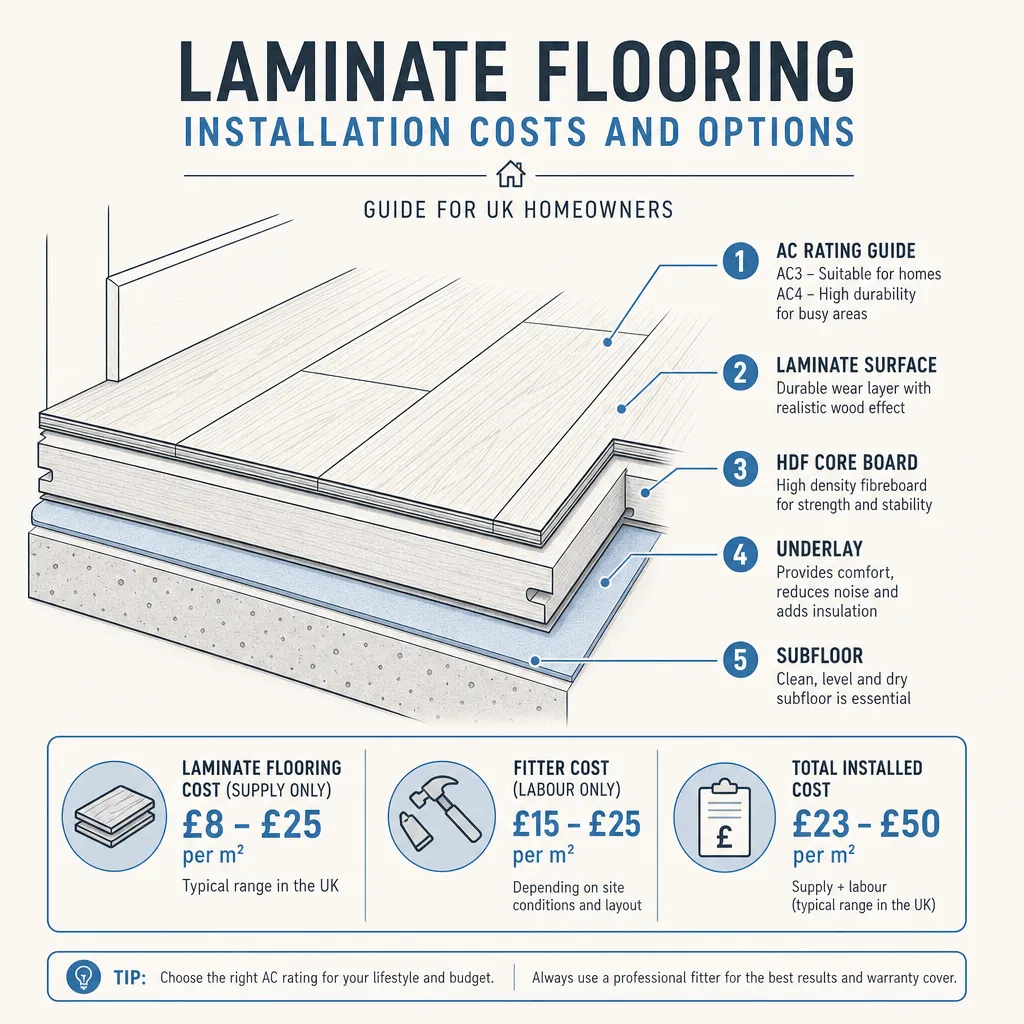
Laminate Flooring Installation Costs and Options
Laminate flooring typically costs £20–55 per square metre fully installed in the UK, including materials, underlay, and professional fitting. Prices depend on AC rating, board thickness, subfloor condition, and region. Most rooms can be completed in a single day by a professional fitter, with minimal disruption to the household.
 Improvement & Build
Retractable Door Latches: Function and Purpose Explained
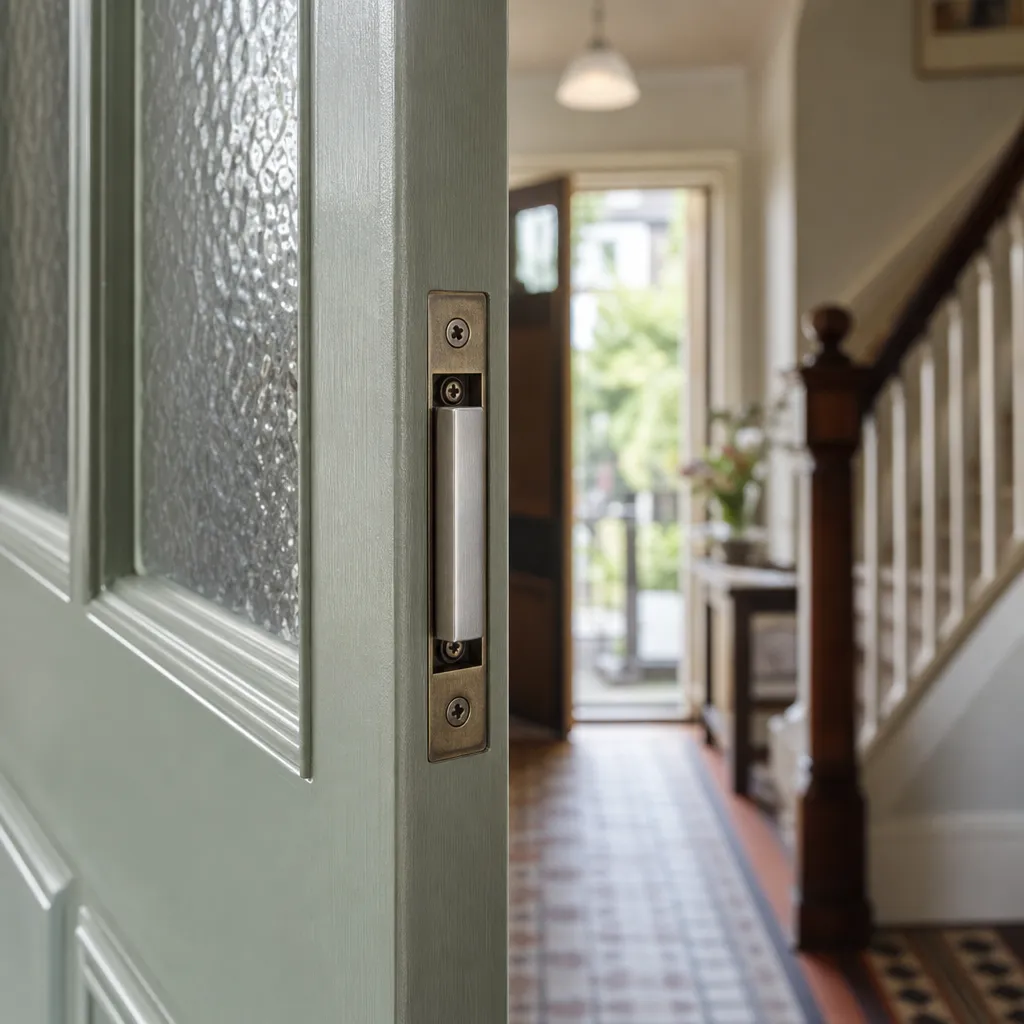
A retractable door latch uses a spring-loaded bolt that is pushed inward by the angled face of the striker plate as the door closes, then springs forward into the keep to hold the door shut. Operating the handle rotates the spindle to retract the bolt. Main types are tubular spring latches, deadlatches, and roller catches, each suited to different doors and security levels.
 Buying & Moving
Selling Your Home Faster: Strategies for a Quicker Sale
To sell your home faster in the UK, price it accurately from the outset, invest in professional photography, and present the property without clutter or visible defects. Instruct a conveyancing solicitor before offer acceptance to shorten the legal stage, and prepare key documents — including building regulations certificates and title deeds — before listing.
 Improvement & Build
Basement Excavation and Floor Lowering Costs
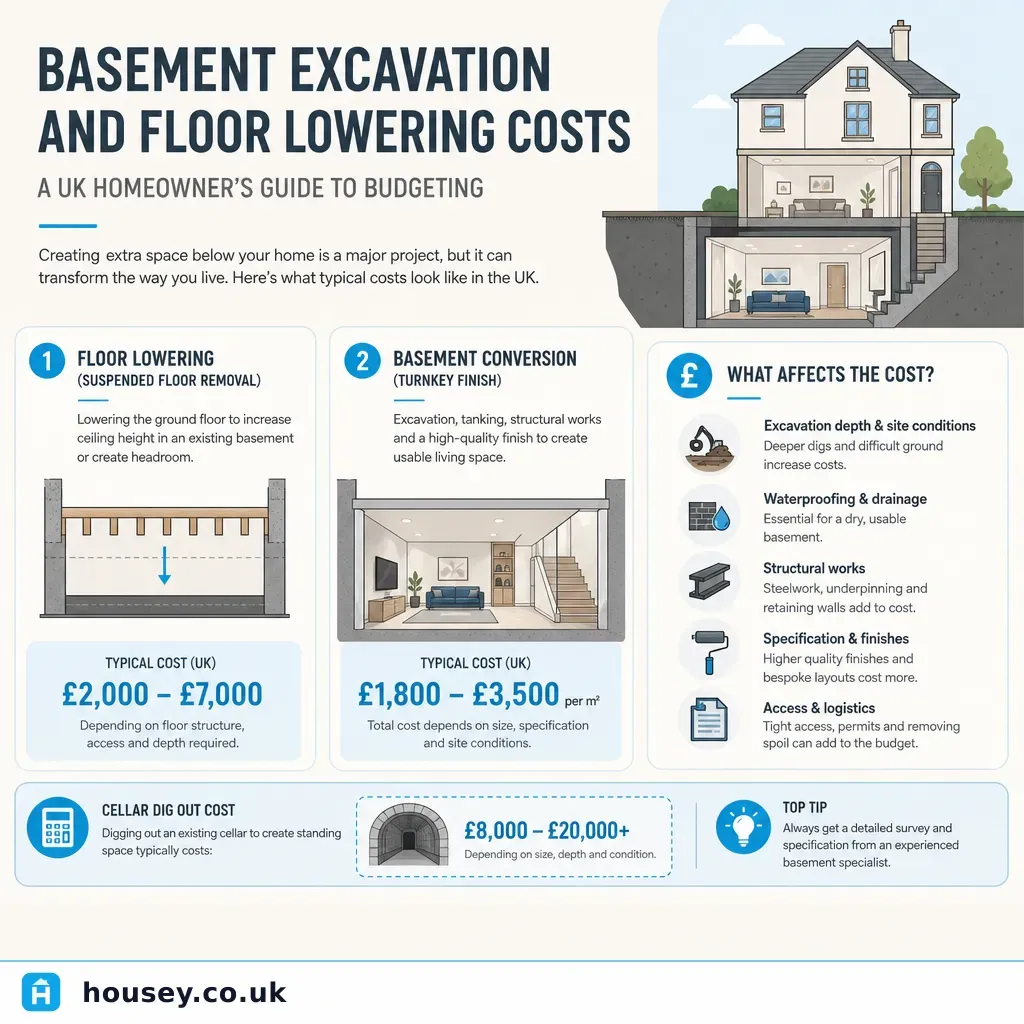
Basement excavation and floor lowering are complex structural operations. Lowering an existing cellar floor typically costs £10,000–£30,000; creating a new basement from scratch costs £30,000–£80,000+, not including internal fit-out. Both require a structural engineer and building regulations approval. Planning permission is usually needed for new excavation, and ground conditions are the biggest cost variable.
 Improvement & Build
Home Extensions and Additions: Planning Your Project
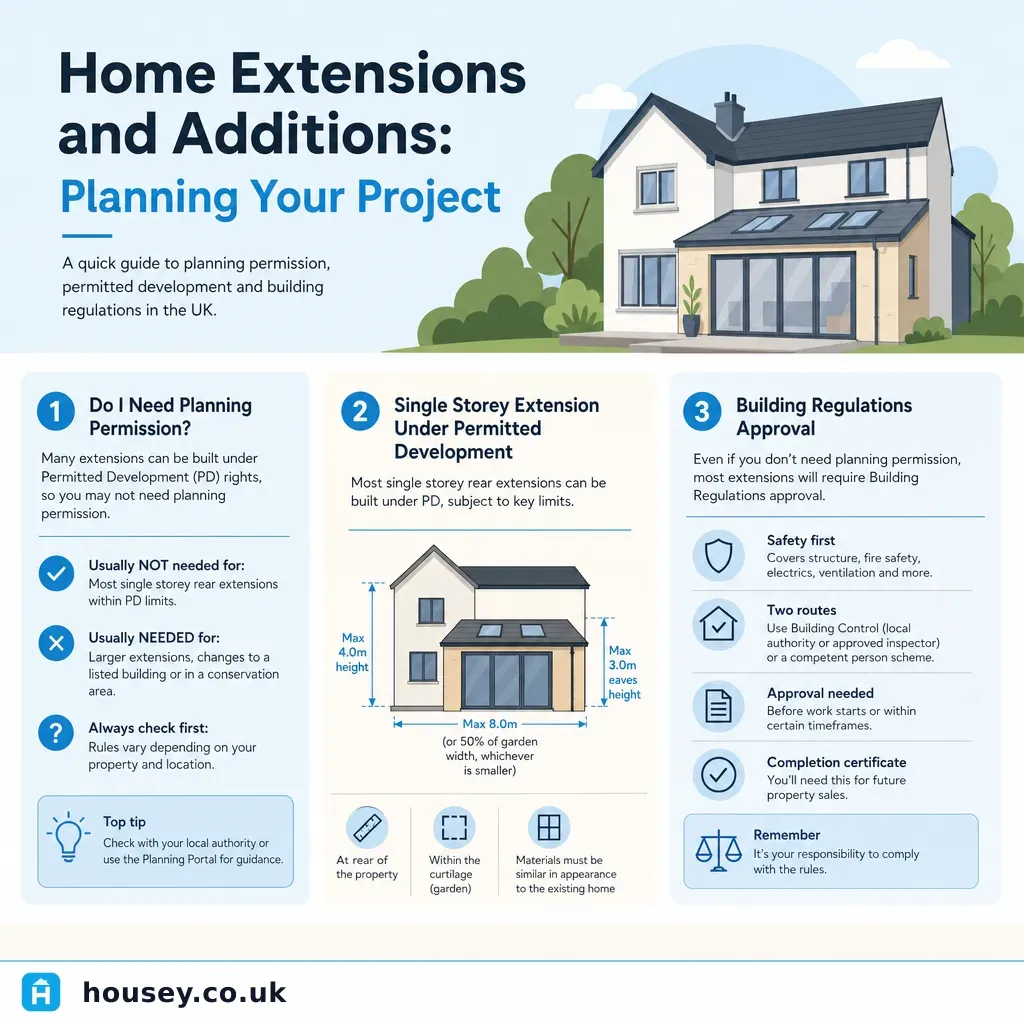
Most single-storey rear extensions can be built under permitted development without a full planning application, provided they stay within depth limits of 4 m for detached or 3 m for semi-detached and terraced properties. All extensions require Building Regulations approval covering structure, thermal performance, fire safety, drainage, and ventilation. Party wall notices may also be required before work starts.
 Improvement & Build
Roof Repair: Damage Assessment and Costs
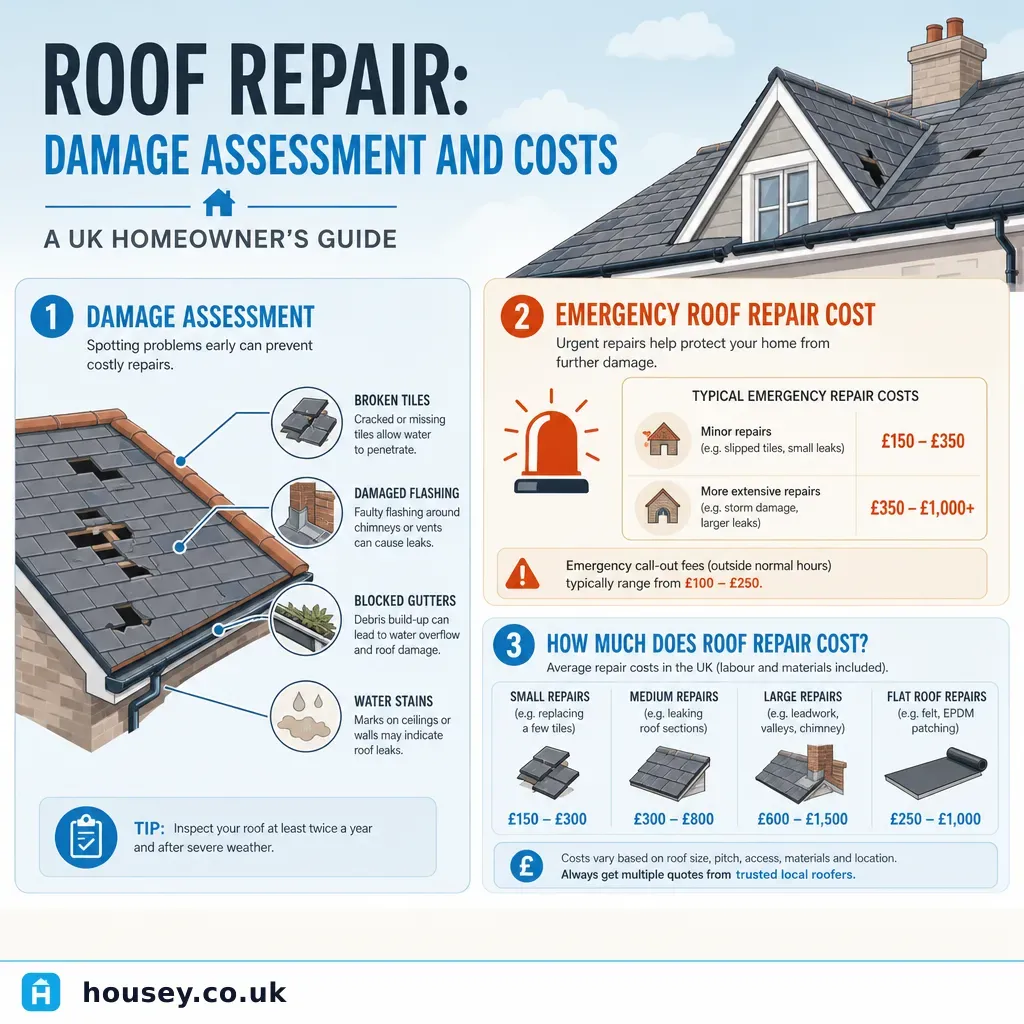
Most roof repairs — replacing slipped tiles, re-bedding ridge tiles, or patching flashing — are straightforward maintenance jobs that do not require planning permission. Costs typically range from £150 to £2,000 depending on repair type, access difficulty, and whether scaffolding is needed. If the roof is near end of life or structurally suspect, an independent survey before committing to repair work is worthwhile.
 Energy & Retrofit
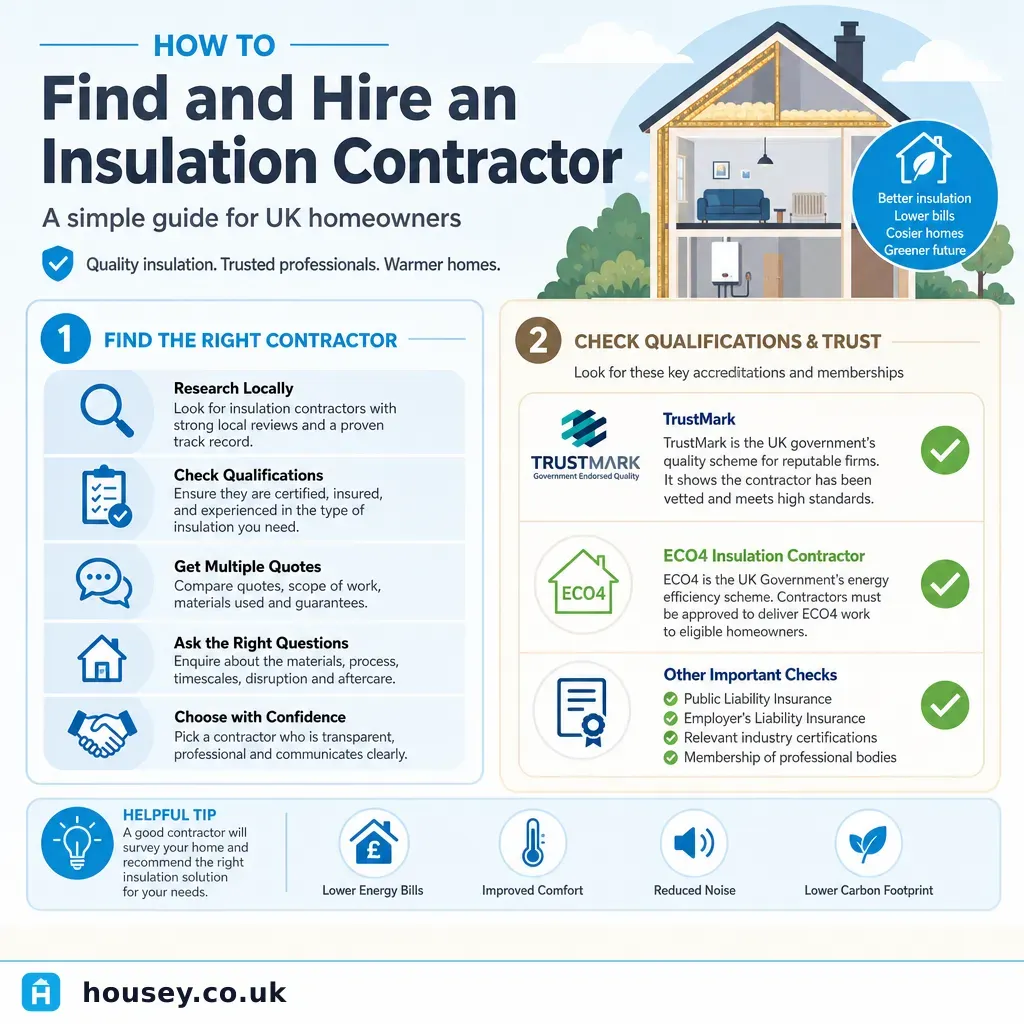
How to Find and Hire an Insulation Contractor
Look for contractors registered with TrustMark, the government-endorsed quality scheme for energy efficiency retrofit work. For cavity wall insulation, CIGA membership and the 25-year guarantee are important quality markers. For funded schemes such as ECO4 or the Great British Insulation Scheme, contractors must hold TrustMark and comply with the PAS 2030 installation standard.
 Planning & Pre-Build
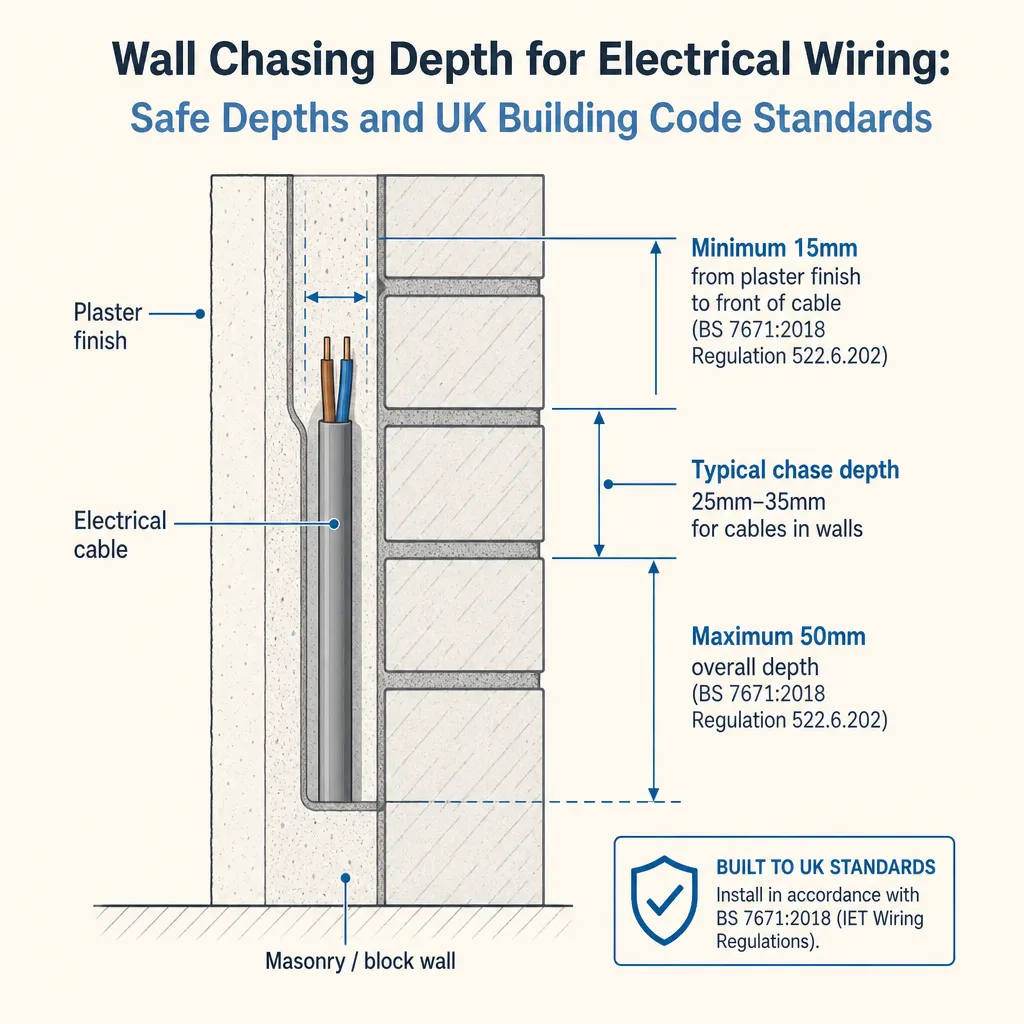
Wall Chasing Depth for Electrical Wiring: Safe Depths and UK Building Code Standards
Cables chased into walls must be within BS 7671 safe zones — within 150 mm of a ceiling, floor, or corner junction — or enclosed in rigid conduit for mechanical protection. A typical chase depth in masonry is 25–40 mm. Most new circuits also require notification under Building Regulations Part P and a completion certificate from a registered electrician.
 Energy & Retrofit
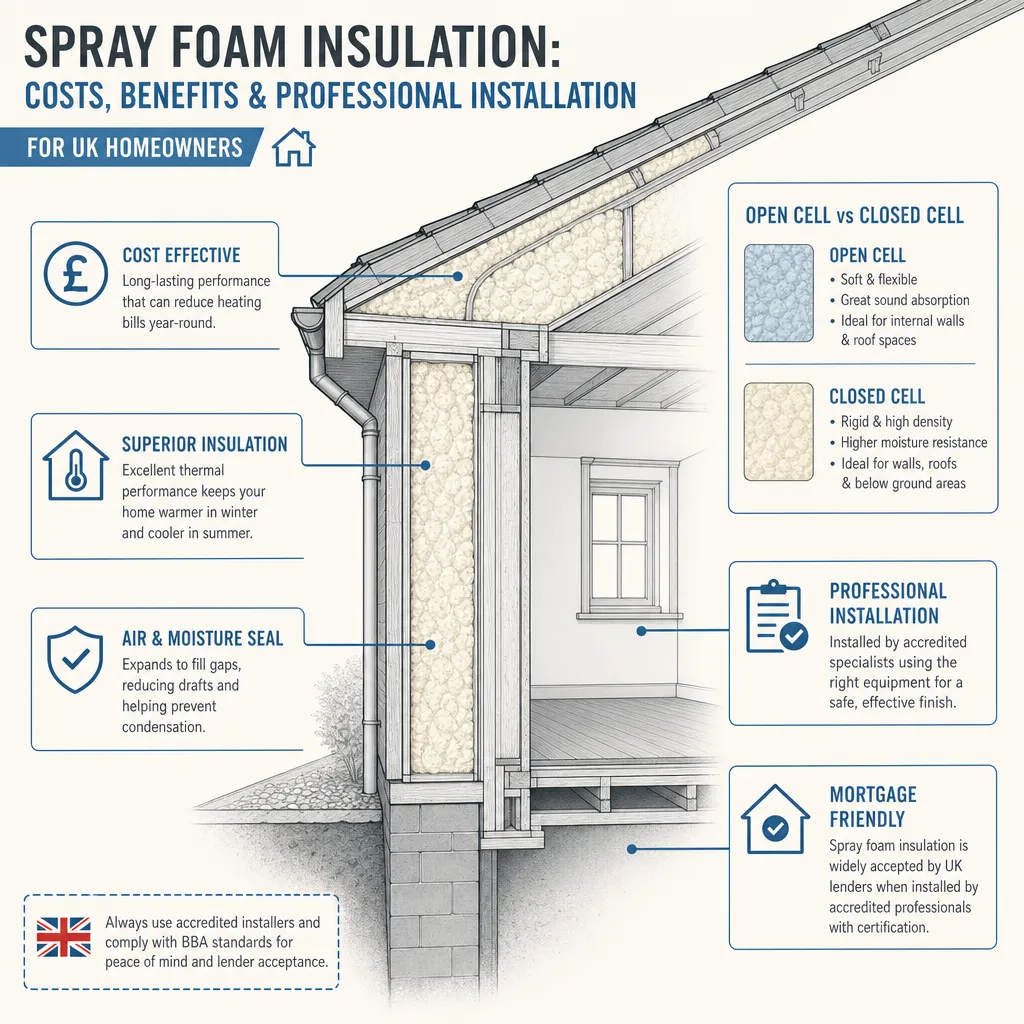
Spray foam insulation: costs, benefits and professional installation
Spray foam insulation costs between £15 and £60 per square metre installed in the UK, depending on whether open-cell or closed-cell foam is used. Closed-cell foam delivers higher thermal performance but carries a greater risk of trapping moisture. UK homeowners should also be aware that spray foam in a roof space can affect mortgage eligibility — professional assessment is essential before installation.