Knowledge Base
Property advice that actually helps
Researched, UK-specific guides for every stage of homeownership — from buying and surveys to retrofit, planning and major works.
 Improvement & Build
Why incorrect roof repairs lead to masonry water damage
Poorly executed roof repairs — including failed flashing, incorrect mortar on chimney stacks, and unrestored weathering details — allow water to track behind masonry, causing damp patches, spalling, and timber decay, often months after the original work. Always identify and fix the root cause before treating masonry symptoms, using a qualified roofer or damp assessor.
 Surveys & Inspections
Is Your Home Built with Defective Drywall? What to Know
Contaminated Chinese drywall — as seen in US homes built 2001 to 2009 — is not a documented widespread problem in UK properties, where plasterboard is manufactured primarily to European standards. The main UK concerns are incorrect specification of fire-rated plasterboard and poor installation in loft, garage, or flat conversions. A RICS Level 3 survey or specialist inspection is the appropriate next step if you have concerns.
 Planning & Pre-Build
Building Climate-Resilient Homes: Design and Energy Strategies
A climate-resilient UK home handles hotter summers, wetter winters, and rising energy costs through high-performance insulation, overheating mitigation, flood-resilient construction, low-carbon heating, and good water management. Working with an architect or energy consultant at design stage is the most cost-effective way to future-proof a property, since fabric and drainage decisions are far cheaper to get right on the drawing board than to correct later.
 Planning & Pre-Build
What Does a Structural Engineer Do and When You Need One
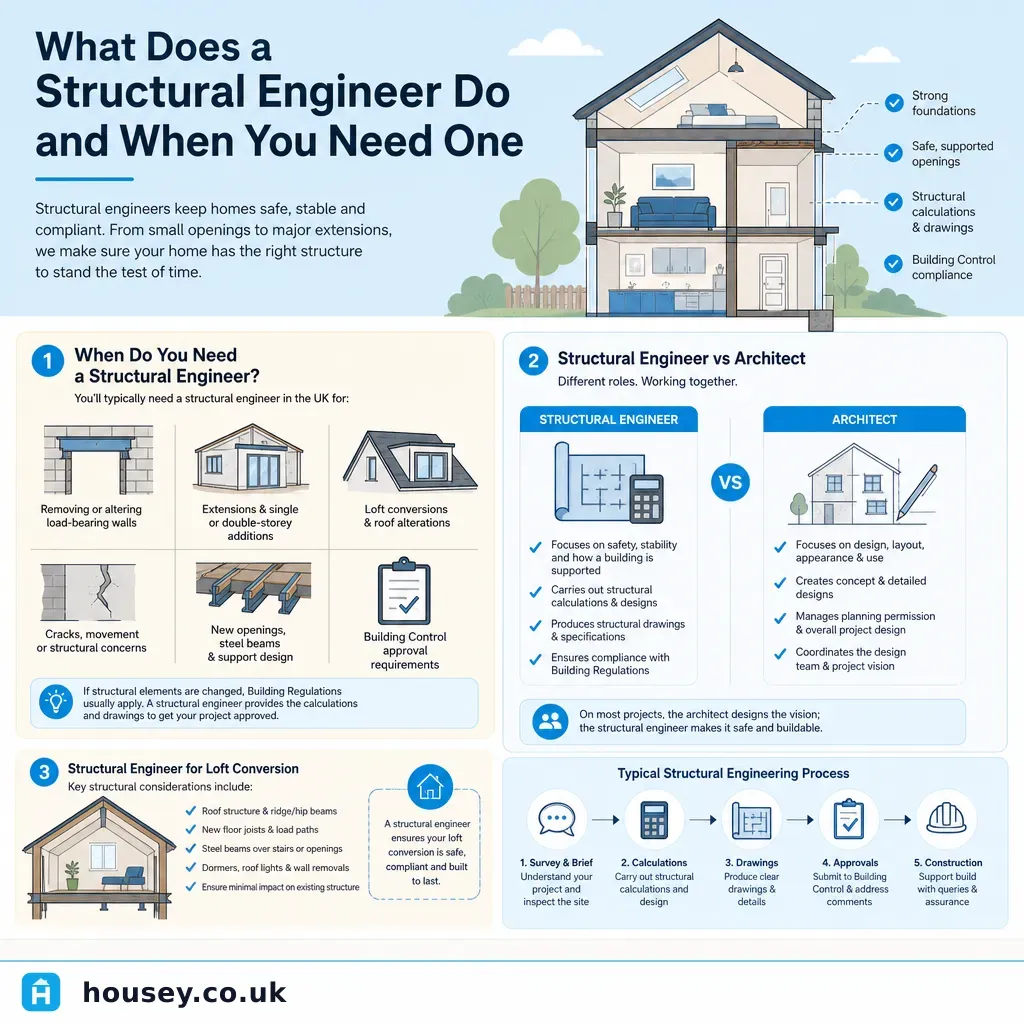
A structural engineer analyses and designs the load-bearing elements of a building — foundations, beams, columns, walls, and floors. In the UK, you typically need one when removing a load-bearing wall, converting a loft, building an extension, or when a surveyor flags structural movement that requires engineering assessment. They also produce structural calculations for building control sign-off.
 Improvement & Build
Tree Removal Cost Estimator
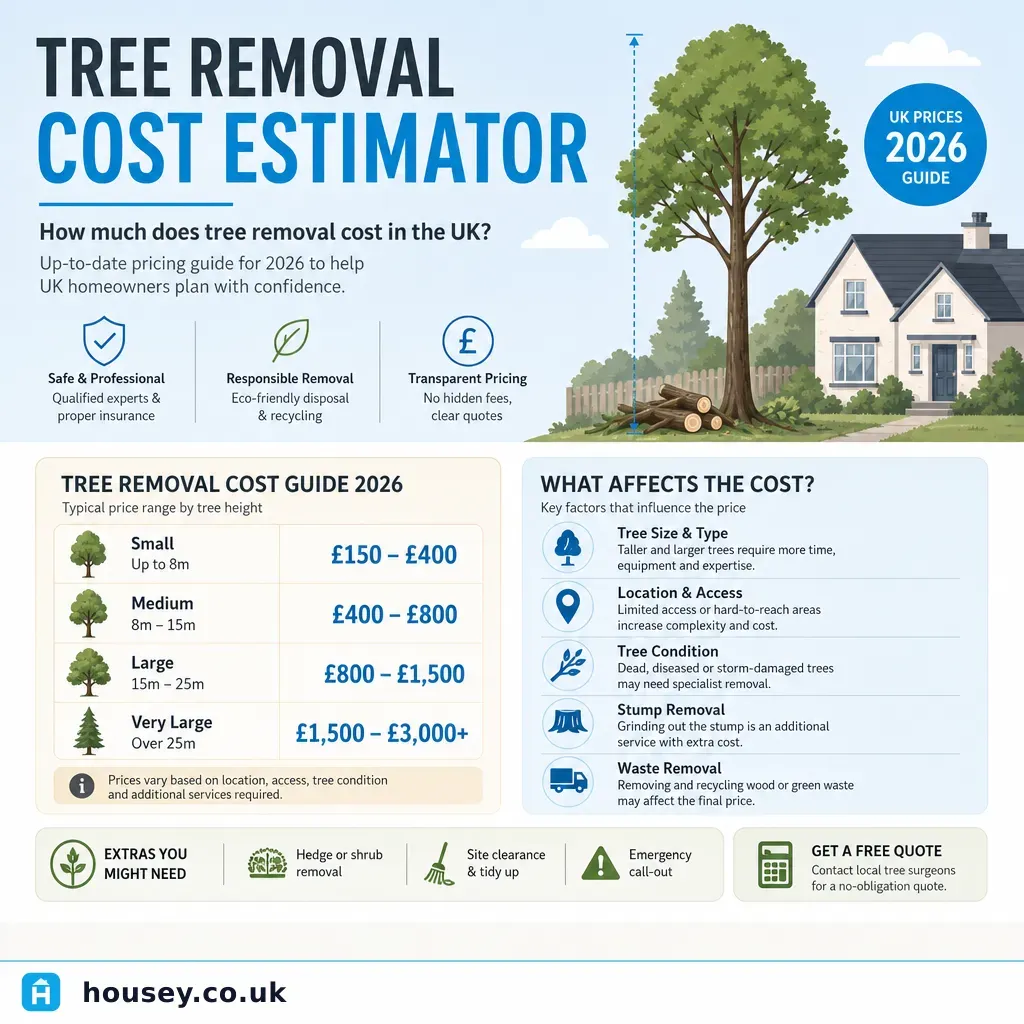
Tree removal in the UK costs roughly £150 to £5,000 or more, depending on the tree's height, species, access conditions, and whether stump removal is needed. A small tree under 5 metres may cost £150–£400; a large mature tree can cost £2,000 or more. Stump grinding is usually priced separately at £60–£200 per stump.
 Energy & Retrofit
EV Charger Installation Costs and Setup Fees
A home EV charger typically costs £700–£1,200 installed in the UK, including unit and labour. All new domestic chargepoints must be smart chargers under the EV (Smart Charge Points) Regulations 2021, fitted by an OZEV-authorised installer. Costs vary by cable run length and consumer unit condition. Eligible renters and flat owners may claim up to £350 via the EVHS grant.
 Planning & Pre-Build
Understanding Planning Permission: Requirements and Process
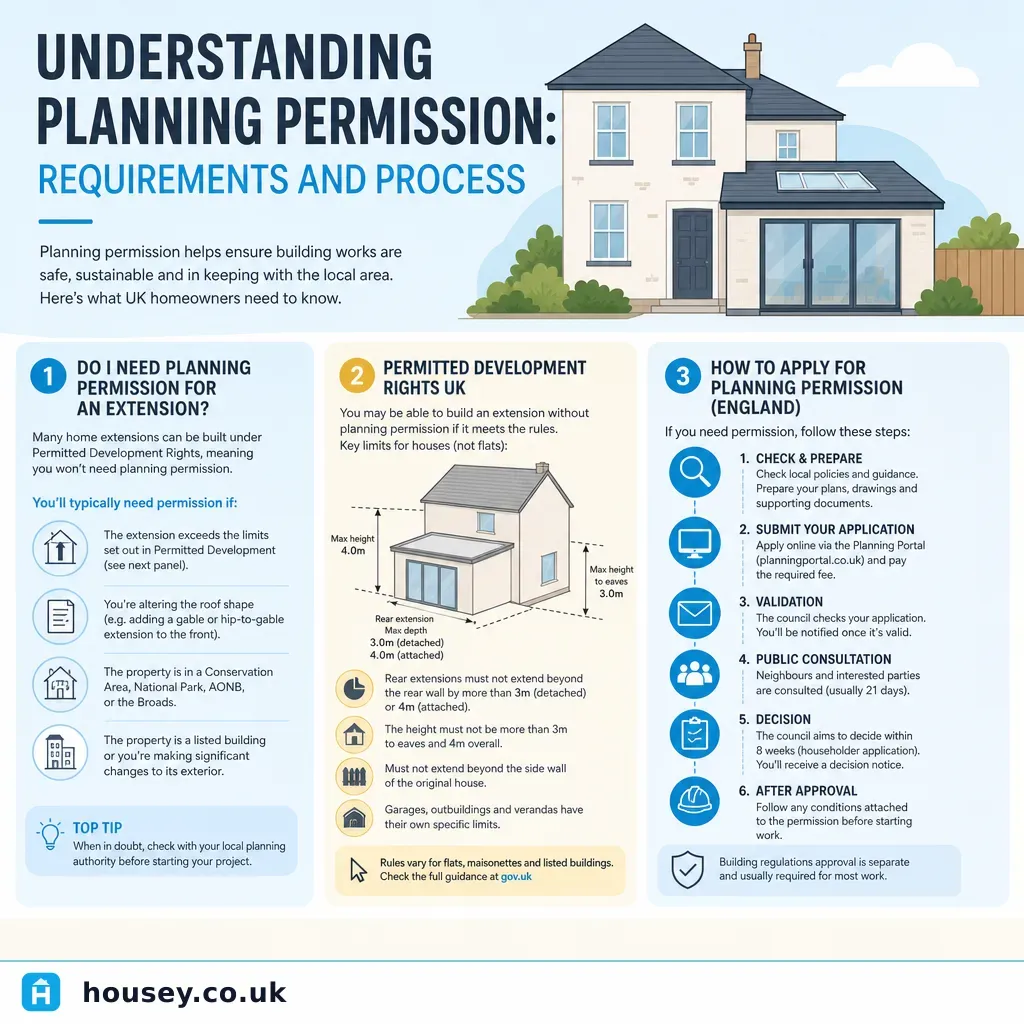
Planning permission is required for most new buildings, significant extensions, and material changes of use in England and Wales. Many household projects fall under Permitted Development rights and do not need a formal application. Minor householder applications go to your local planning authority and are typically decided within eight weeks of submission.
 Planning & Pre-Build
Planning and Building Regulations for Church and Chapel Conversions
Converting a church or chapel to residential use requires planning permission for change of use from Class F1 to Class C3, and listed building consent if the building is listed. Building regulations covering structure, fire, thermal performance, and ventilation also apply. Most projects need pre-application discussions, a heritage impact assessment, and a multi-disciplinary professional team.
 Improvement & Build
Rising Material Costs and Impact on UK Home Improvement Projects
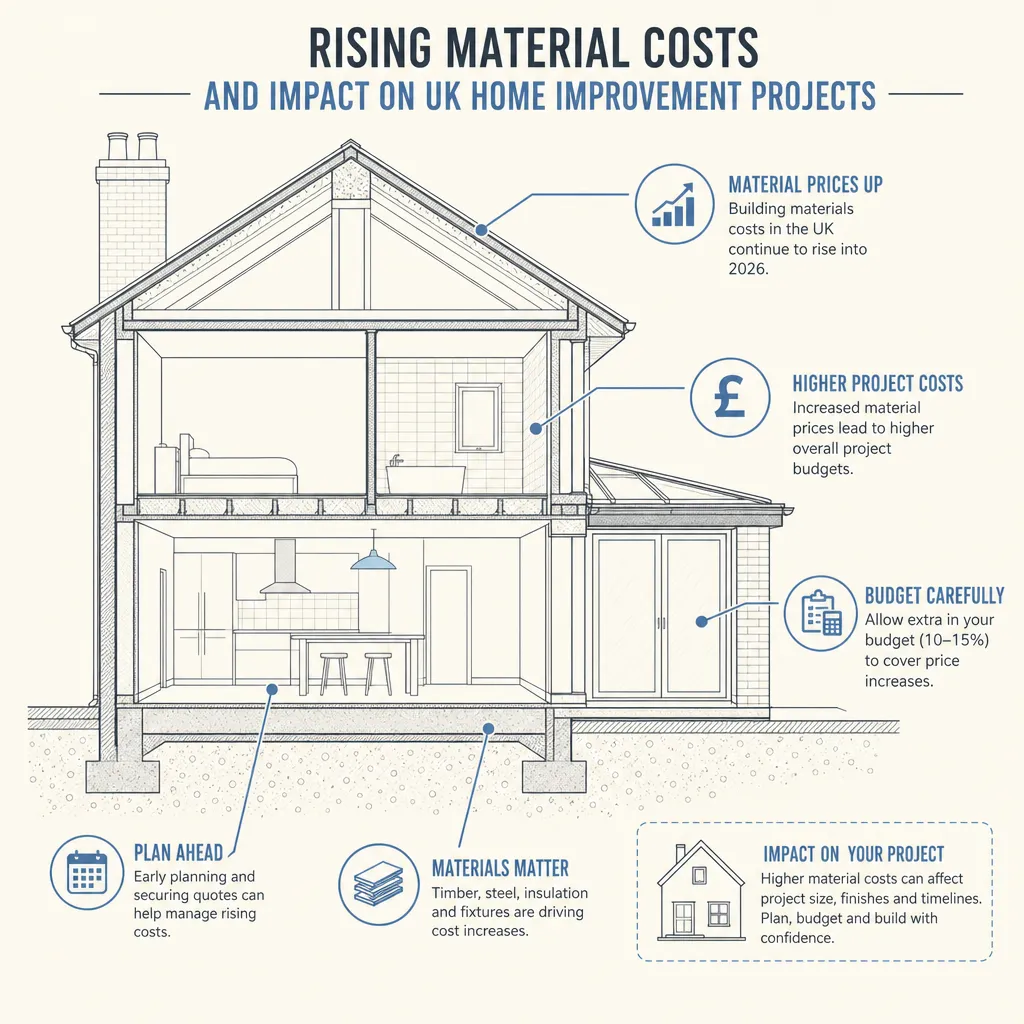
UK construction material prices remain above pre-2020 levels despite some easing from peak inflation. Labour costs have risen persistently and have not reversed. Homeowners should build a 10–15% contingency into project budgets, seek fresh quotes rather than relying on older estimates, and consider a quantity surveyor for projects over £50,000 to manage cost uncertainty through the build.
 Planning & Pre-Build
Treatment and Eradication of Japanese Knotweed Infestation
Japanese knotweed can be managed through herbicide programmes, excavation, or containment, depending on site conditions, timescale, and proximity to watercourses or structures. Most residential properties use a glyphosate-based programme lasting three to five growing seasons, often supported by a management plan with an insurance-backed guarantee required by mortgage lenders. A qualified PCA-member specialist should assess and manage any confirmed infestation.
 Improvement & Build
Watering Large Trees: Techniques and Frequency for Establishment
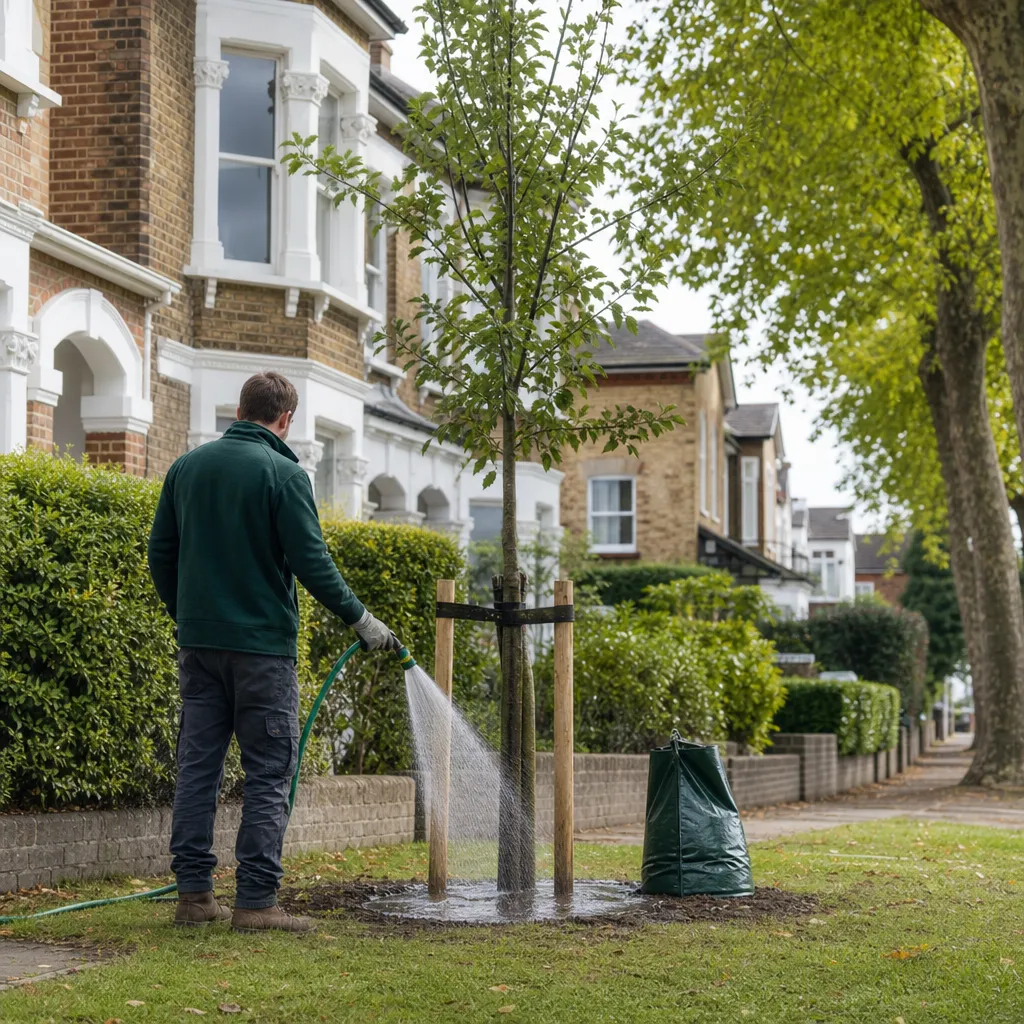
Newly planted large trees typically need 50–90 litres of water per week during the growing season for the first two to three years. Deep, slow watering directly at the root zone is more effective than light surface irrigation. In dry spells, water every three to seven days depending on soil type, tree species, and weather conditions.
 Improvement & Build
Removing a Garage: Effects on Home Value and Feasibility
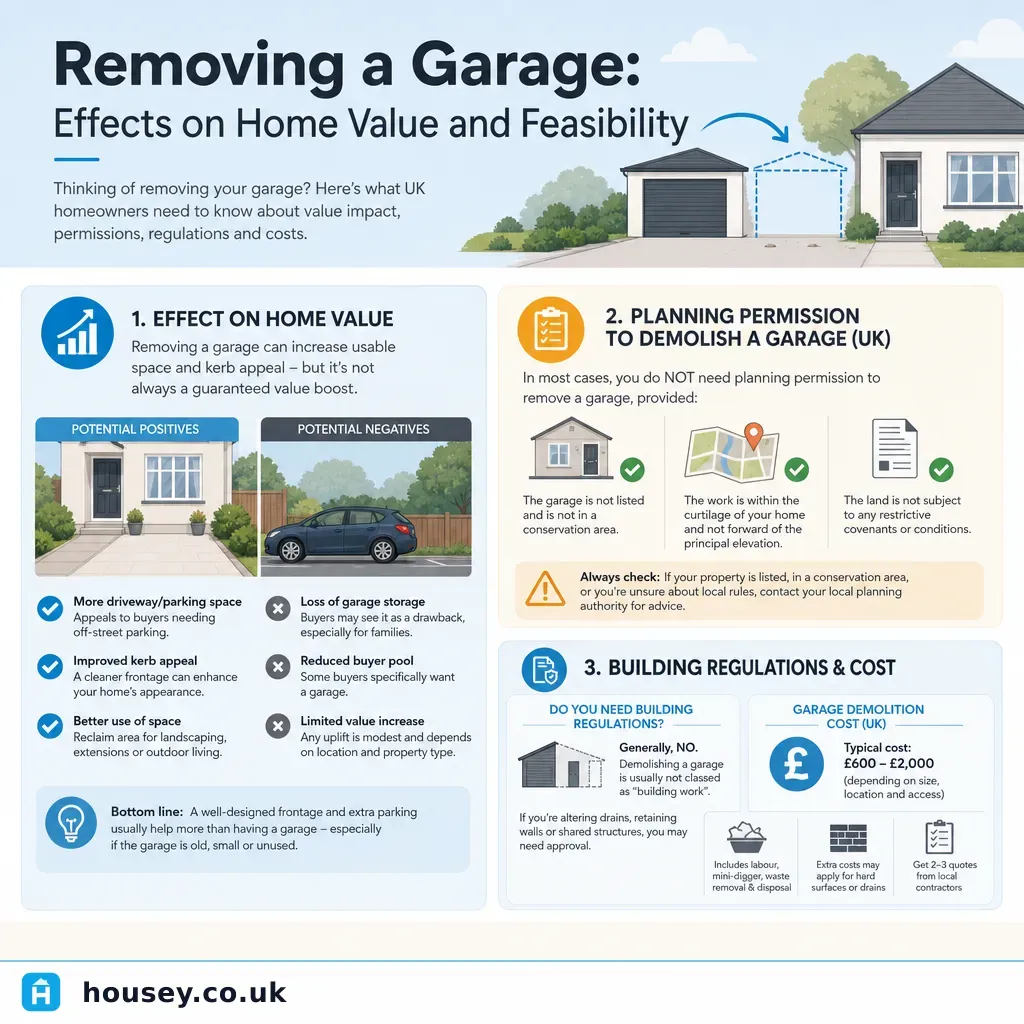
Demolishing a garage in England may require prior notification to the local planning authority, and structural or building regulations assessments are often needed if the garage is attached to or integral with the house. The effect on property value depends largely on local parking conditions — in dense urban areas, losing off-street parking can reduce value materially.