Knowledge Base
Property advice that actually helps
Researched, UK-specific guides for every stage of homeownership — from buying and surveys to retrofit, planning and major works.
 Improvement & Build
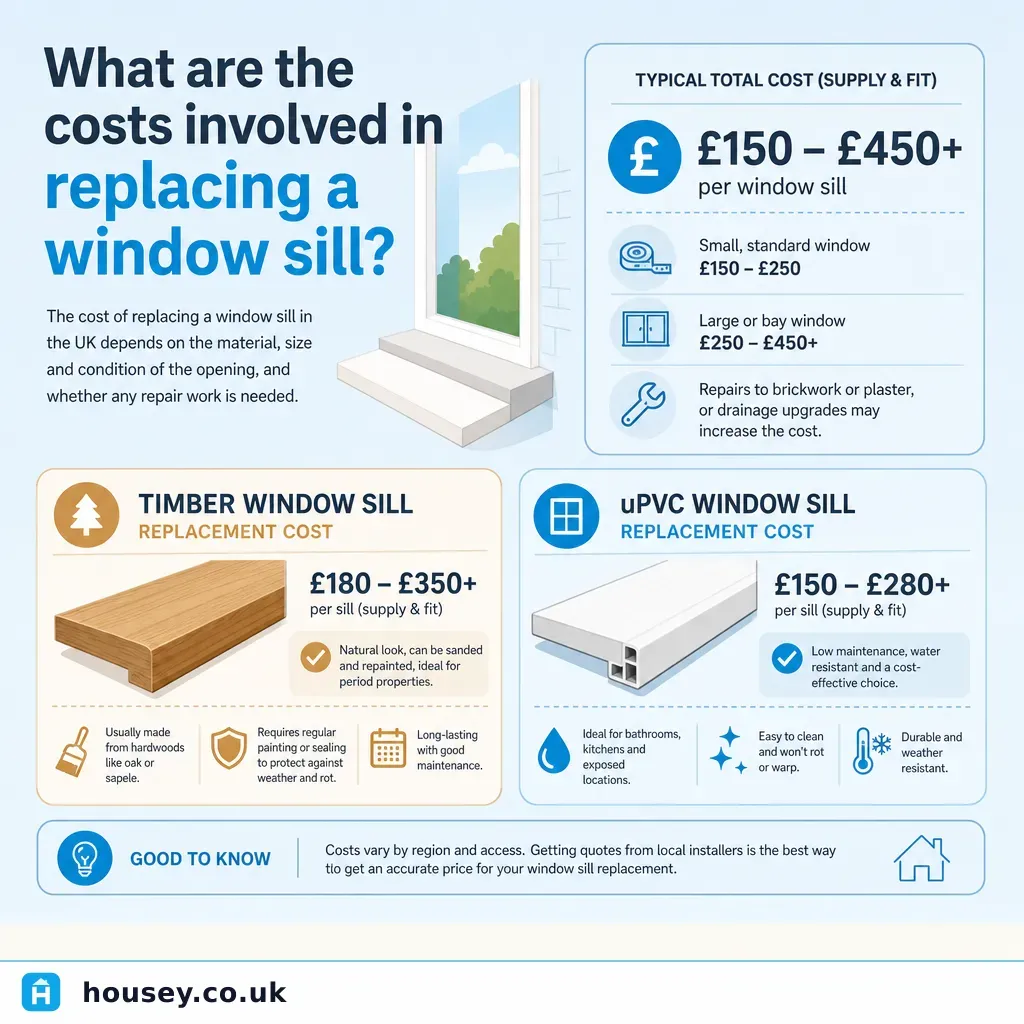
What are the costs involved in replacing a window sill?
Window sill replacement in the UK typically costs £100–£350 per window, depending on material, sill length, and access. Timber is the most common option and usually takes half a day to fit. uPVC, stone, and composite alternatives need less upkeep but may not suit listed or conservation area properties.
 Energy & Retrofit
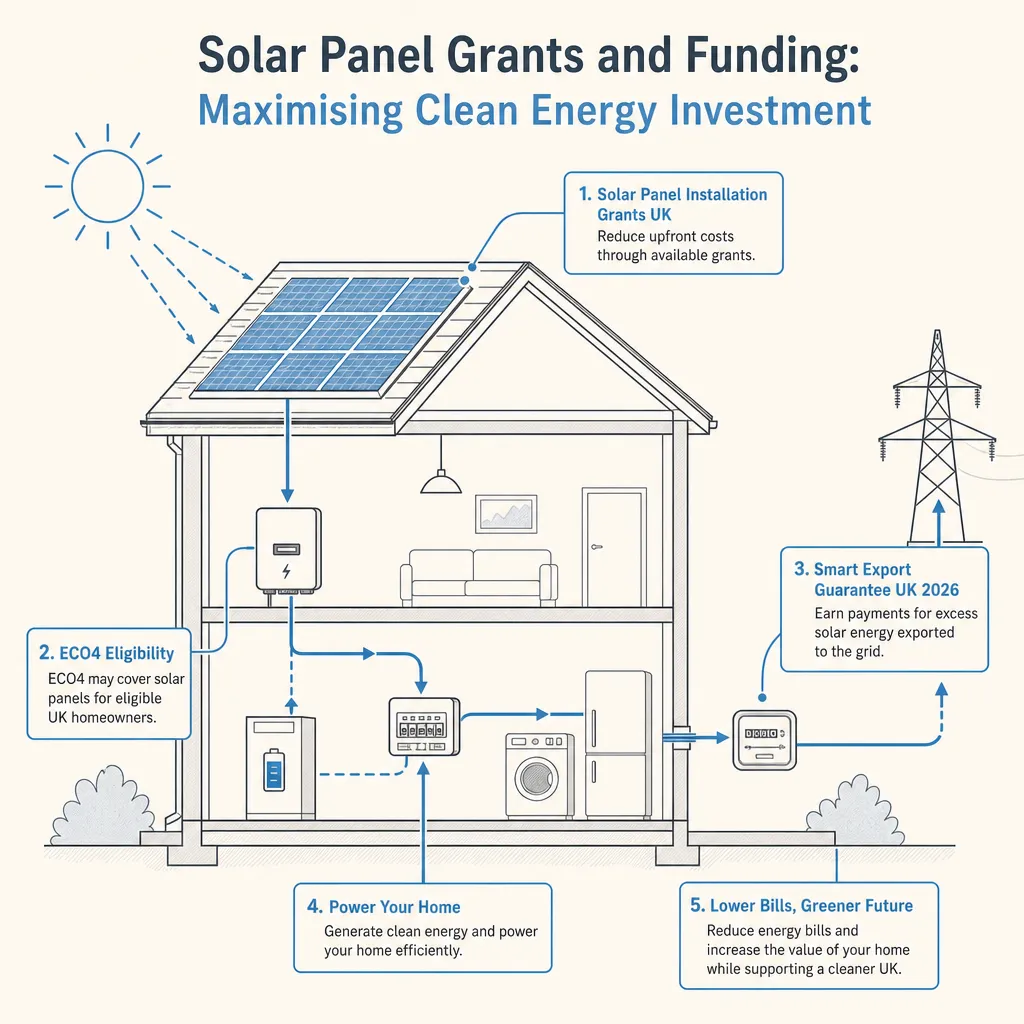
Solar Panel Grants and Funding: Maximising Clean Energy Investment
Several UK solar funding schemes are currently open: the Smart Export Guarantee pays homeowners for surplus electricity exported to the grid, ECO4 can fund free or subsidised panels for eligible low-income households, and 0% VAT on installation applies until at least March 2027. MCS accreditation of your installer is required for most schemes.
 Planning & Pre-Build
Surveying and converting vicarages and period clergy residences
Former vicarages are often listed buildings subject to full planning and Listed Building Consent rules once sold privately. A RICS Level 3 Building Survey is the minimum recommended purchase survey; measured building surveys are needed before planning applications. Heritage and planning advice should be sought before making an offer or instructing any works.
 Surveys & Inspections
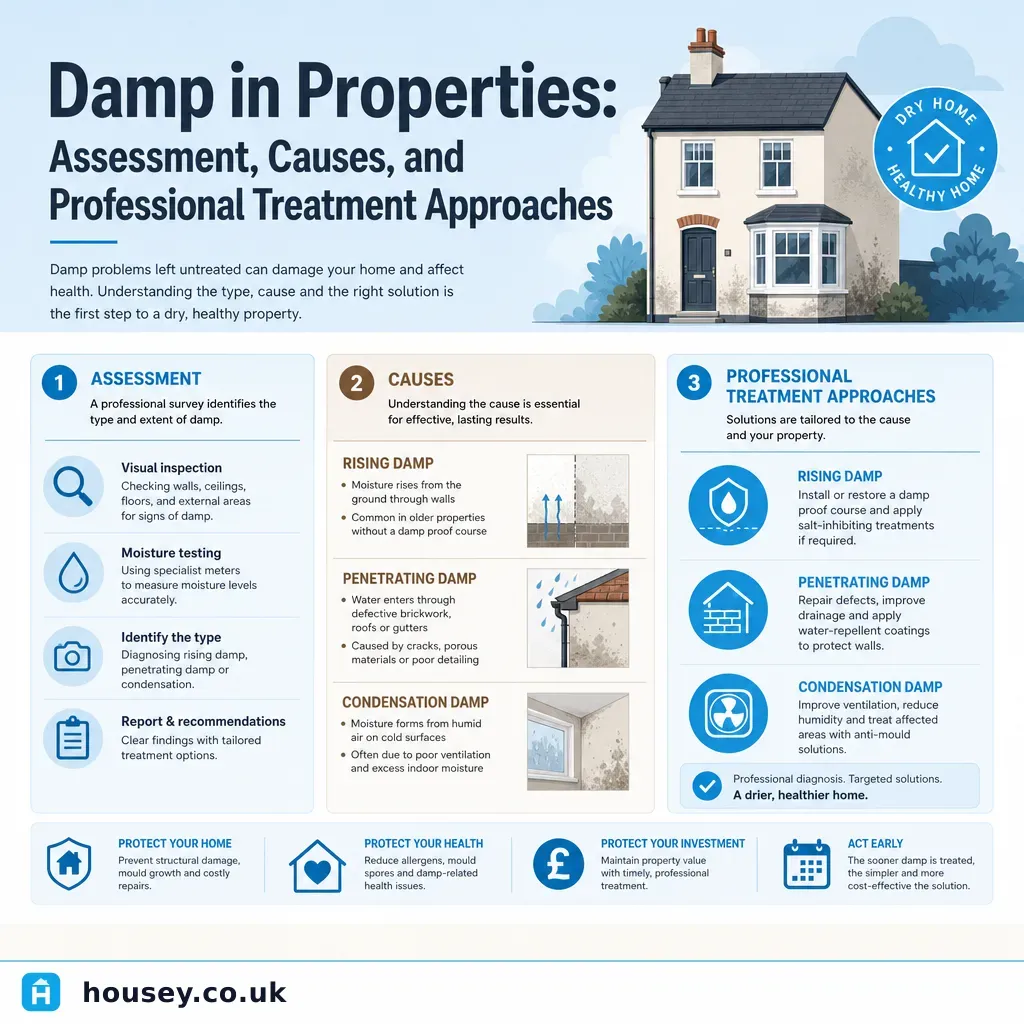
Damp in Properties: Assessment, Causes, and Professional Treatment Approaches
Damp in UK homes falls into three main categories: rising damp, penetrating damp, and condensation. Each has different causes, evidence patterns, and treatments. An independent damp and timber survey by a PCA-qualified specialist is the most reliable way to identify which type you have before agreeing to any treatment programme.
 Improvement & Build
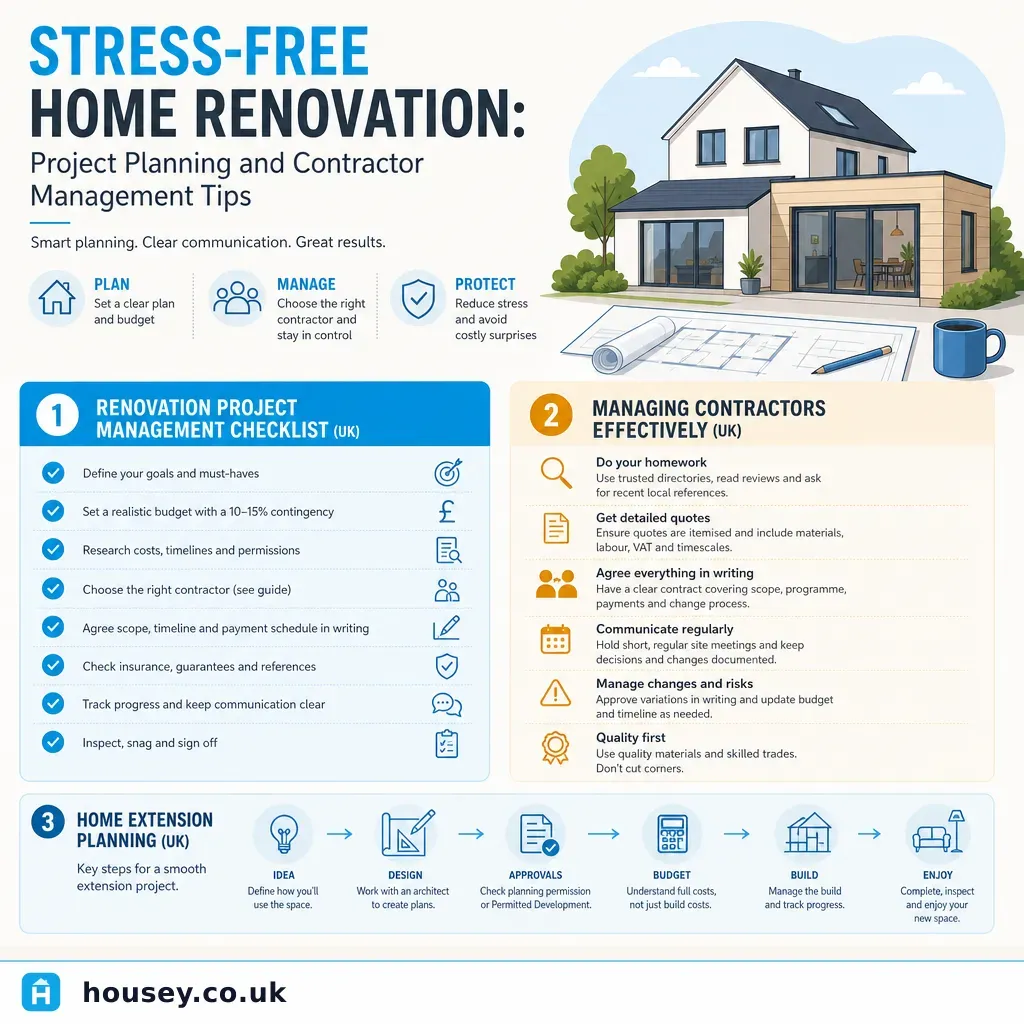
Stress-Free Home Renovation: Project Planning and Contractor Management Tips
The home renovations that stay on budget and on time share one characteristic: clear upfront planning. That means finalising the design before appointing a contractor, getting at least three itemised quotes against the same specification, agreeing a written contract with stage payments, and understanding which works need planning permission or Building Regulations approval before a single brick is moved.
 Buying & Moving
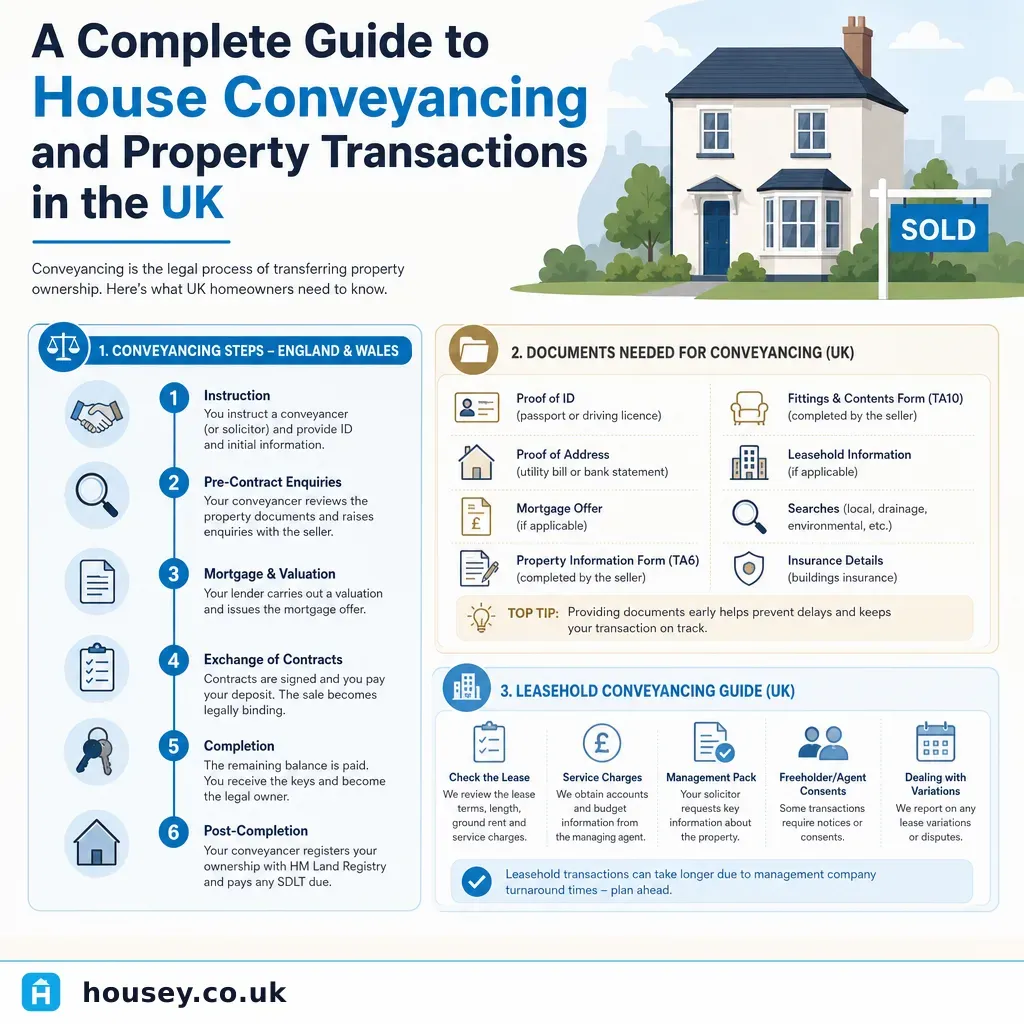
A Complete Guide to House Conveyancing and Property Transactions in the UK
House conveyancing in England and Wales follows four phases: instruction, pre-exchange work including searches and enquiries taking 8–14 weeks, exchange of contracts which makes the deal legally binding, and completion. Sellers should prepare title documents, TA6 and TA10 forms, and building certificates before listing. Buyers need ID, mortgage offer details, and source of funds evidence. Leasehold transactions typically take 4–8 weeks longer than freehold.
 Improvement & Build
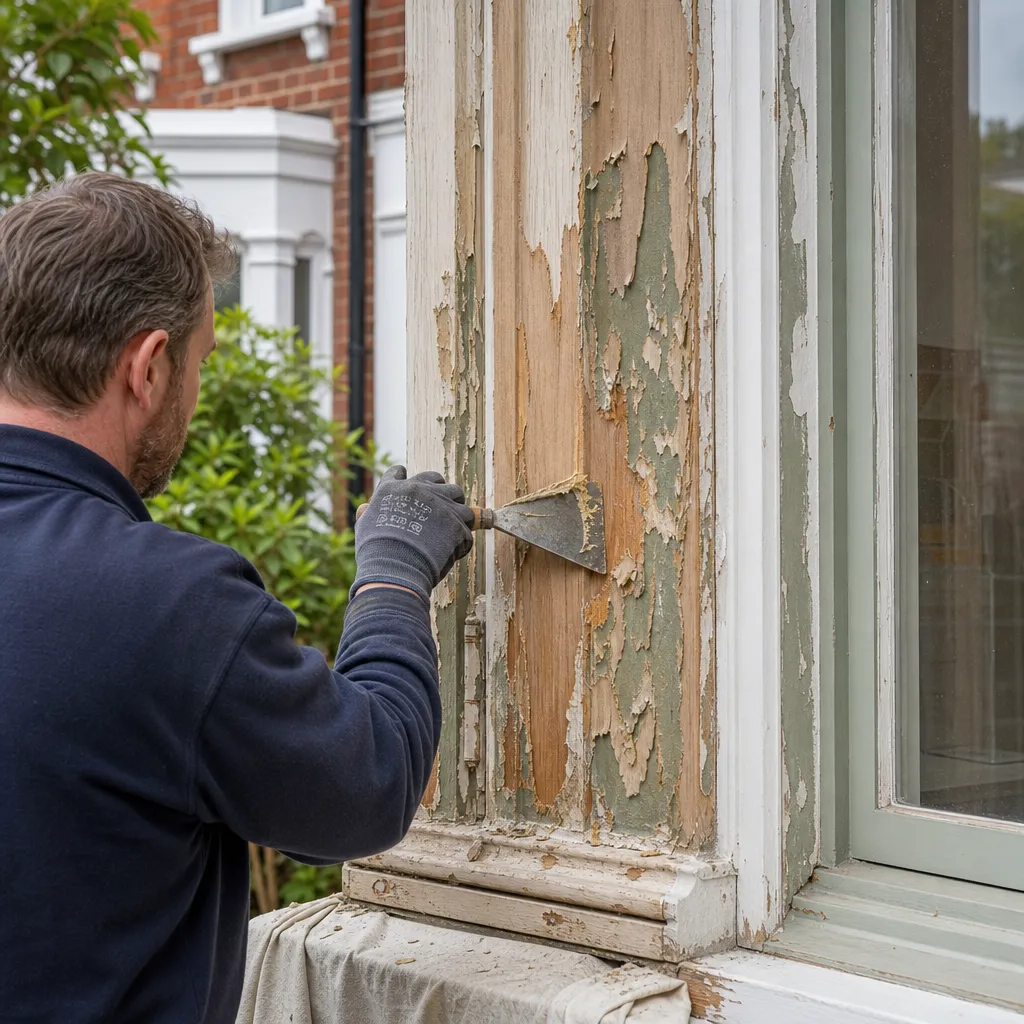
Preparing Wooden Surfaces: Paint Removal Techniques
The right paint removal method depends on the wood profile and paint type. Chemical strippers suit intricate mouldings and indoor work; heat guns work well on flat sections in well-ventilated spaces; mechanical sanding covers large flat areas such as floors. Always test for lead paint in homes built before 1960 before starting any stripping work.
 Energy & Retrofit
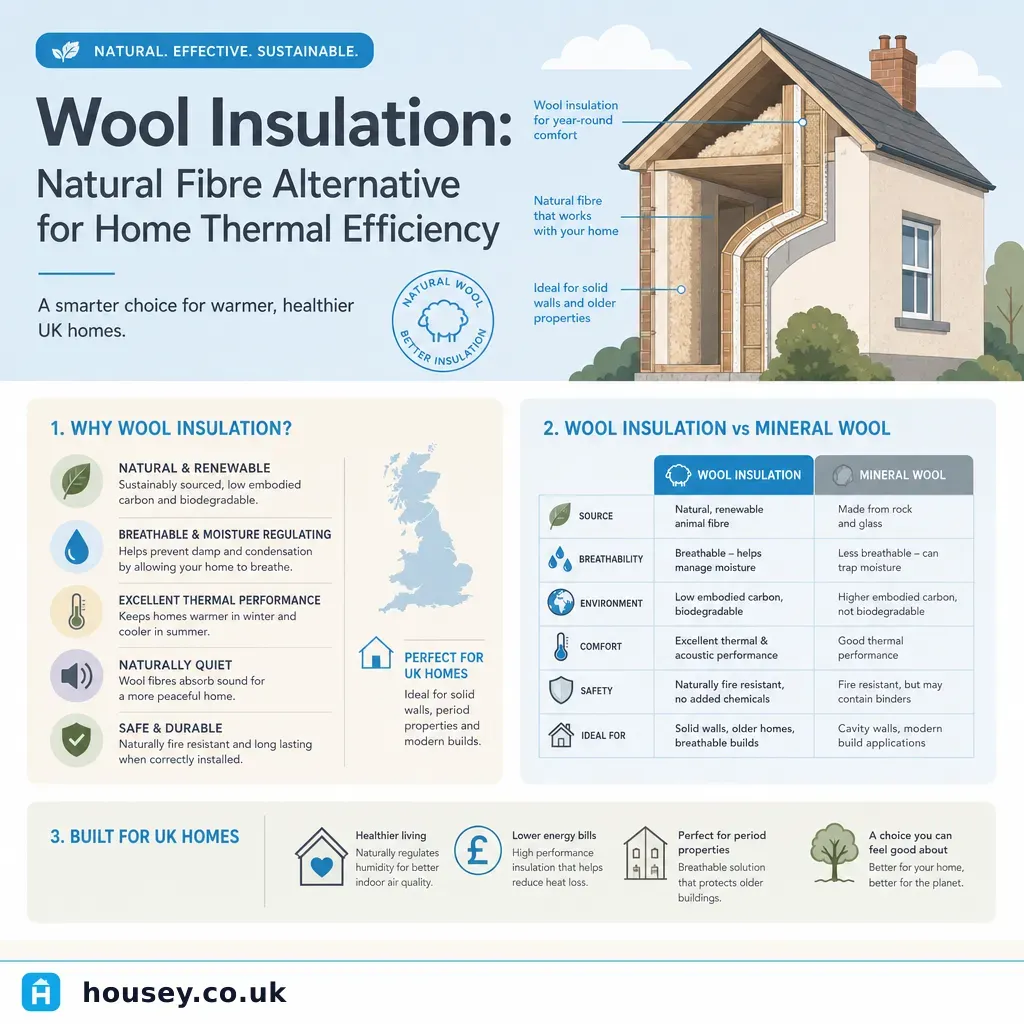
Wool Insulation: Natural Fibre Alternative for Home Thermal Efficiency
Sheep wool insulation achieves a thermal conductivity of 0.035–0.040 W/mK — comparable to mineral wool — and is particularly suited to pre-1919 solid-wall UK properties because it is vapour-permeable, allowing moisture to pass through the wall fabric rather than becoming trapped. It typically costs more than mineral wool but performs well in timber-frame, loft, and breathable wall assemblies.
 Improvement & Build
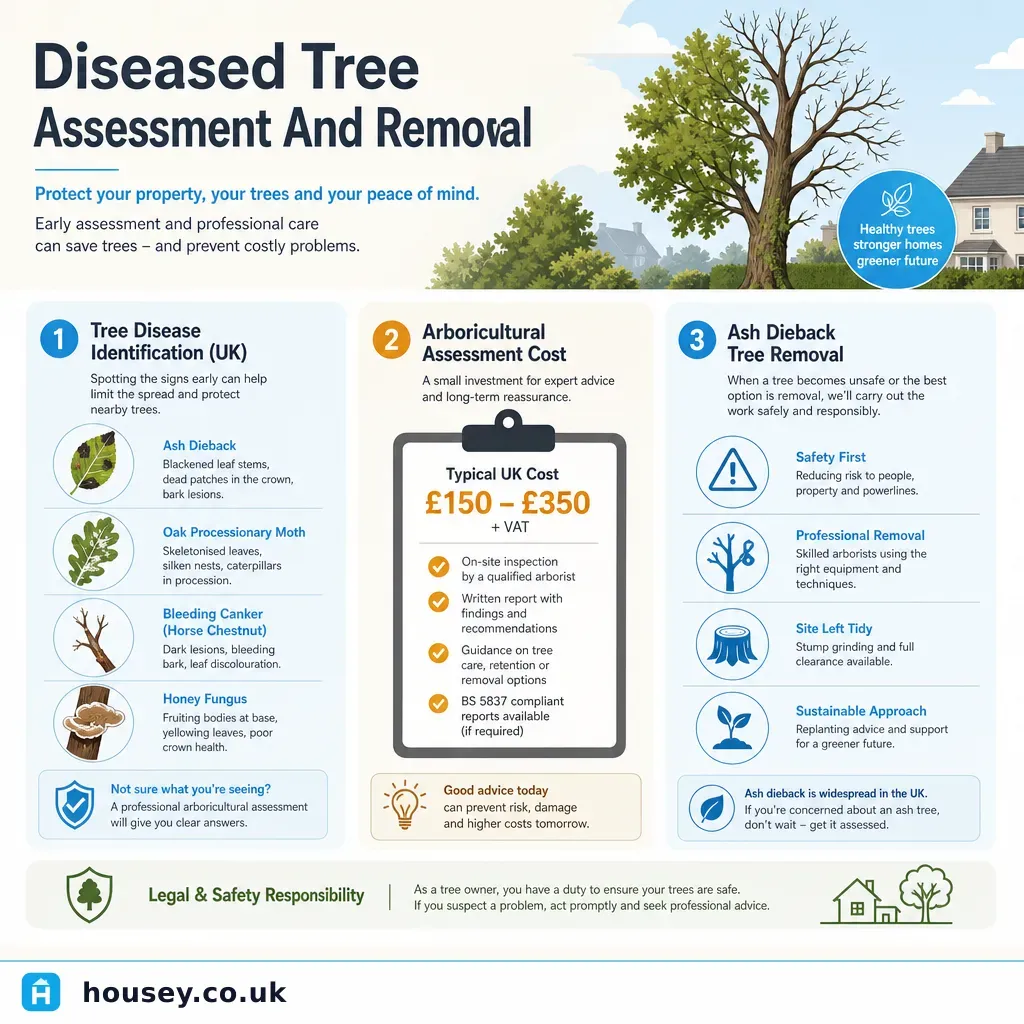
Diseased Tree Assessment And Removal
A diseased or structurally compromised tree can pose a serious safety risk, but not every unhealthy-looking specimen needs to come down. A professional arboricultural assessment — carried out by an Arboricultural Association registered consultant or contractor — identifies the cause of decline, rates the risk, and recommends the appropriate action from monitoring to full removal. It also confirms whether a Tree Preservation Order applies before any work begins.
 Energy & Retrofit
Solar Battery Storage Systems: Investment and Returns
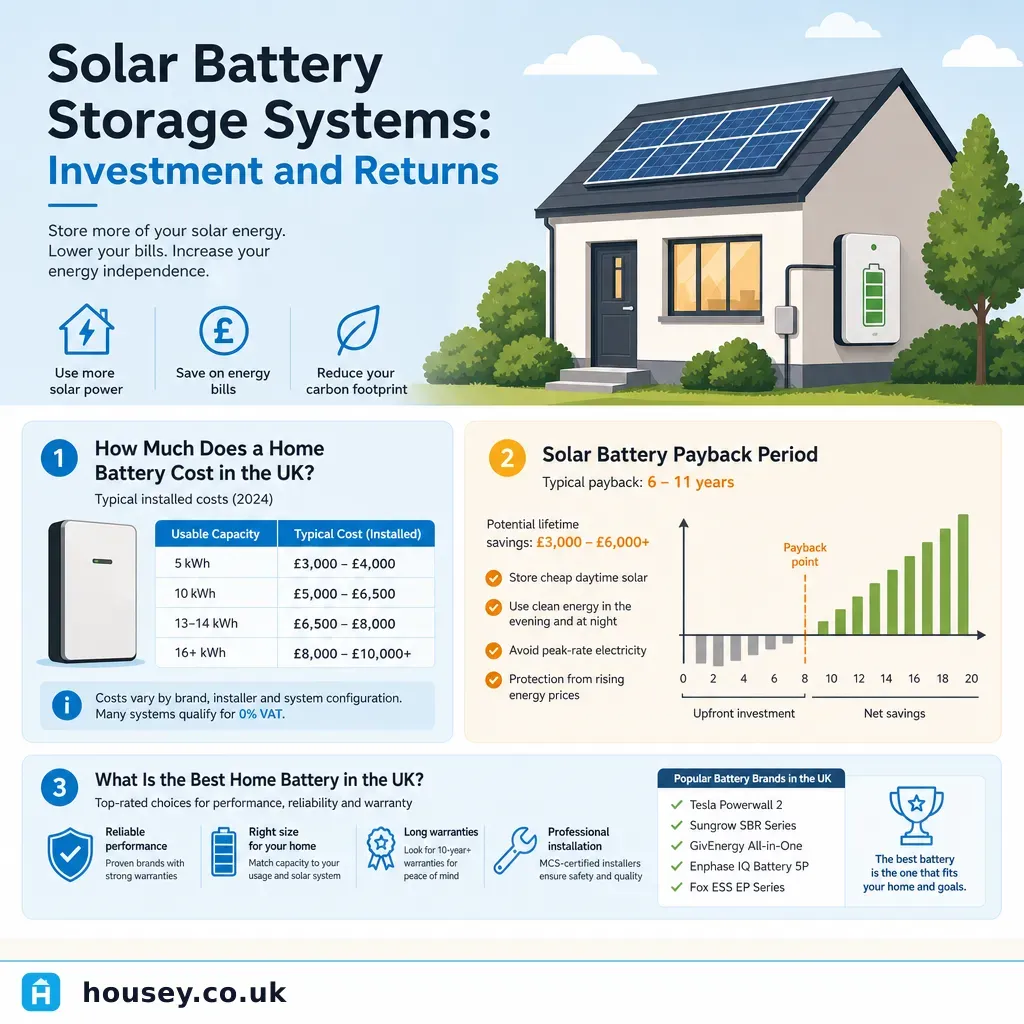
A home battery storage system stores surplus solar energy for use in the evening, reducing grid electricity imports. Lithium iron phosphate batteries with 5–10 kWh capacity suit most UK homes. Payback periods typically run 8–14 years. MCS-certified installation is required for grid connection and incentive eligibility. Returns depend heavily on your electricity tariff and export rate.
 Improvement & Build
Water Mains Pipe Replacement and Installation Costs
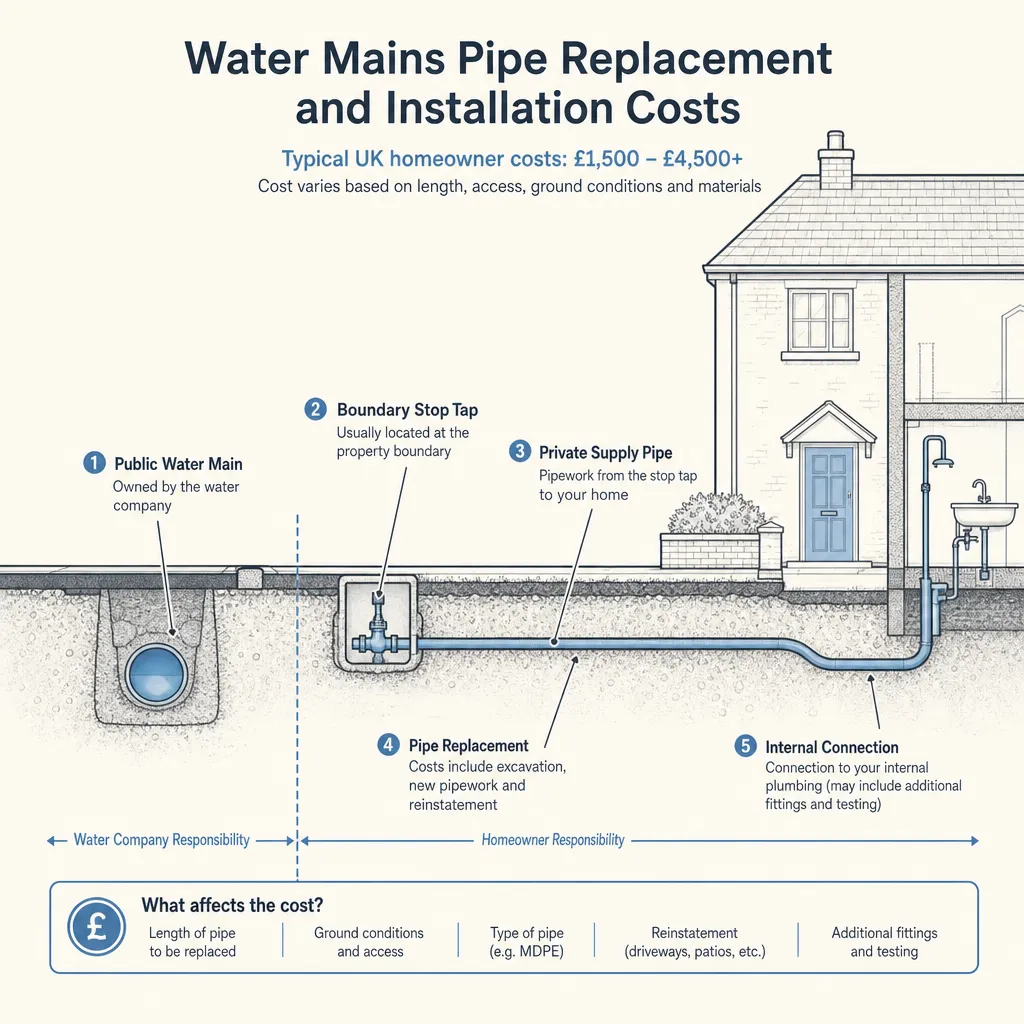
Replacing the supply pipe from the boundary stopcock to your home typically costs £1,500–£3,500 in the UK, depending on pipe length, ground conditions, and whether any hard surfacing must be excavated. Most UK water companies offer lead pipe replacement schemes and may cover part or all of the cost if lead pipework is confirmed.
 Improvement & Build
Planning a Flat-Roof Extension: What Costs to Budget
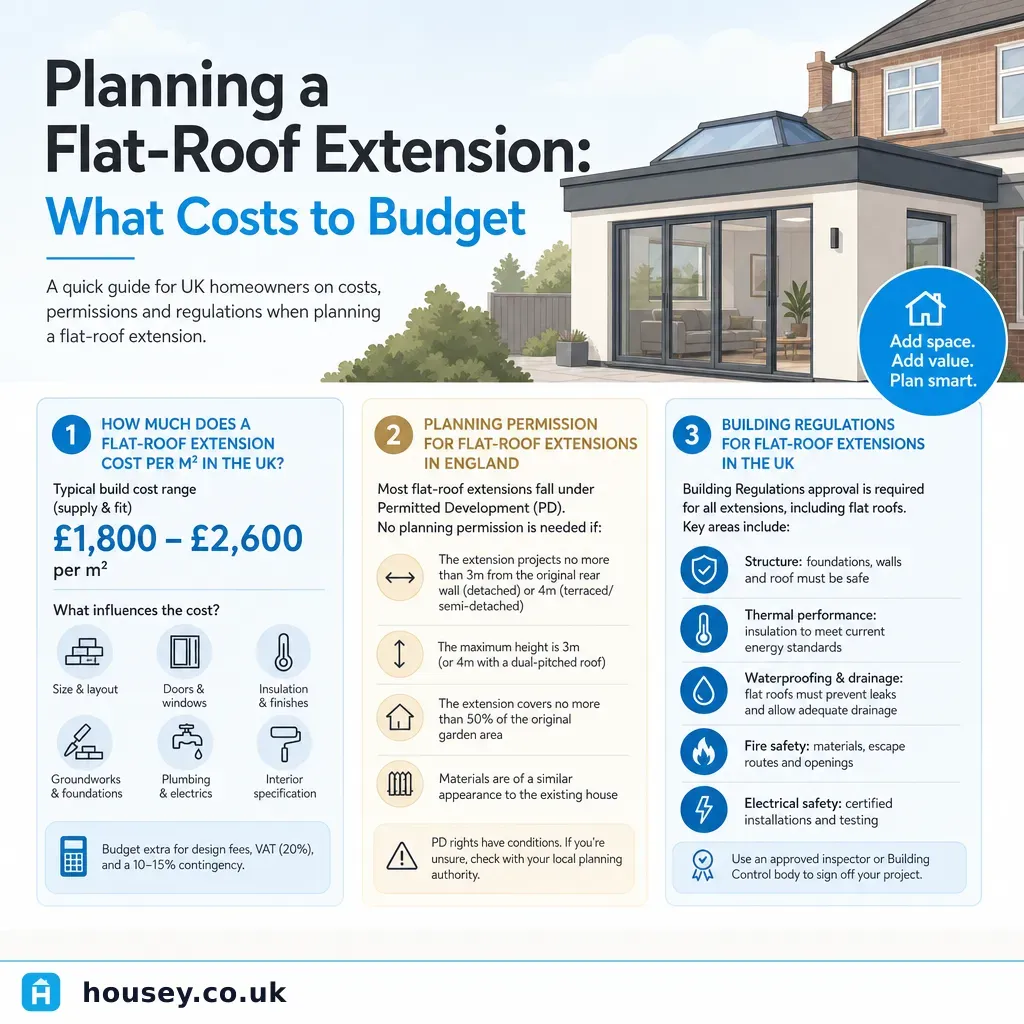
A flat-roof single-storey extension typically costs £1,500–£3,000 per m² in the UK, depending on size, specification, location, and roof membrane choice. You also need to budget for structural engineering, building regulations approval, and potentially planning permission. Total project costs for a 20–30 m² extension commonly range from £35,000 to £75,000 or more in London.