Knowledge Base
Property advice that actually helps
Researched, UK-specific guides for every stage of homeownership — from buying and surveys to retrofit, planning and major works.
 Planning & Pre-Build
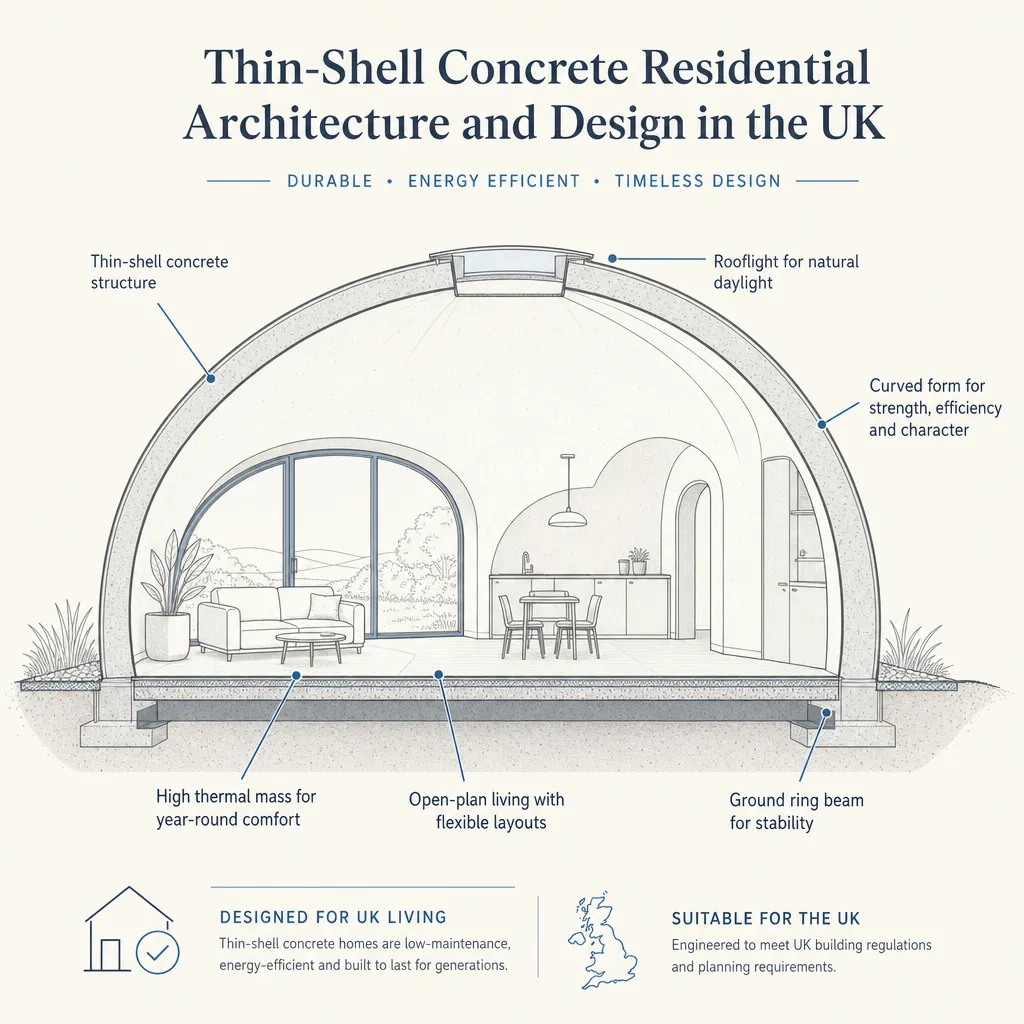
Thin-Shell Concrete Residential Architecture and Design in the UK
Thin-shell concrete construction uses curved or folded concrete forms — including domes, vaults, and hyperbolic paraboloids — to achieve structural efficiency through shape rather than mass. In UK residential projects, these structures require specialist architectural and structural engineering input from the outset, and will almost always require full planning permission, with pre-application discussions strongly advisable.
 Planning & Pre-Build
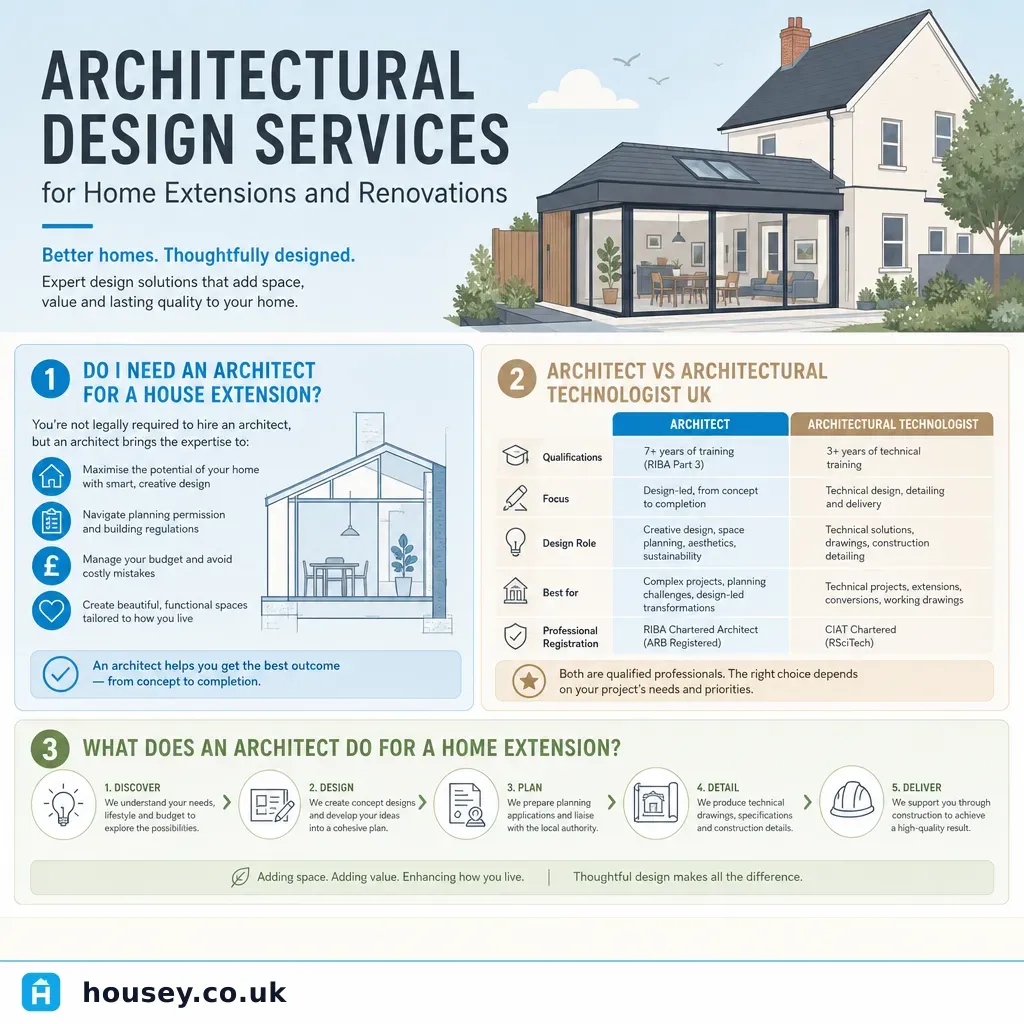
Architectural Design Services for Home Extensions and Renovations
Architectural design services for UK extensions and renovations span initial feasibility, planning drawings, building regulations packages, and site monitoring. The right professional depends on your project's complexity: a chartered architect suits sensitive or complex work, while an architectural technologist handles most standard extensions competently and at lower cost.
 Planning & Pre-Build
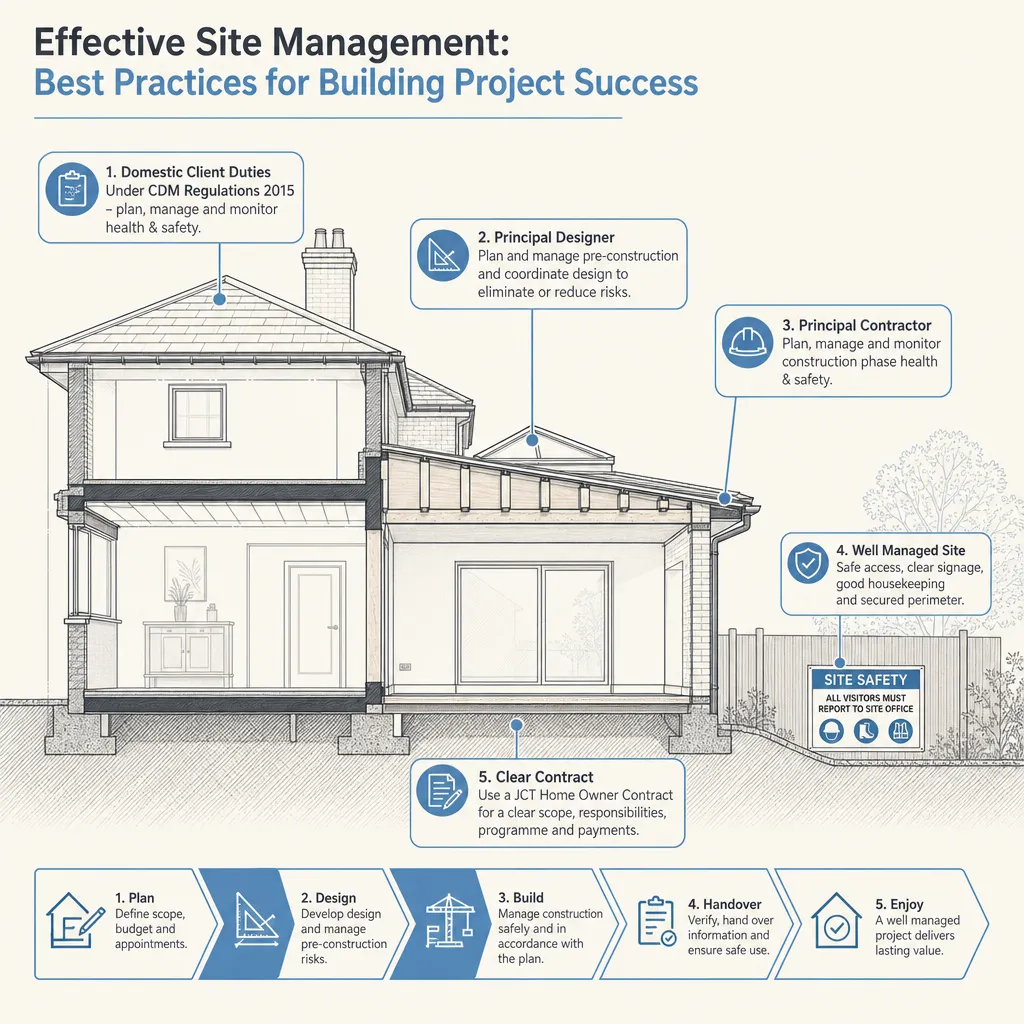
Effective Site Management: Best Practices for Building Project Success
Effective site management on a UK building project requires a clear programme, written contracts, CDM Regulations compliance, and proactive coordination between the principal contractor and all trades. For projects involving more than one contractor, a Principal Designer and Principal Contractor must be formally appointed. Regular building control inspections at key hold points and a 10–15% contingency budget are central to project success.
 Surveys & Inspections
Property Valuation Survey: Understanding Market Worth and Cost Assessment
A property valuation survey establishes a property's market value at a specific date. Mortgage valuations are produced for lenders, not buyers. Formal RICS Red Book valuations are required for probate, capital gains tax, matrimonial settlements and lease extension calculations. Automated online estimates are not accepted for legal or HMRC purposes.
 Planning & Pre-Build
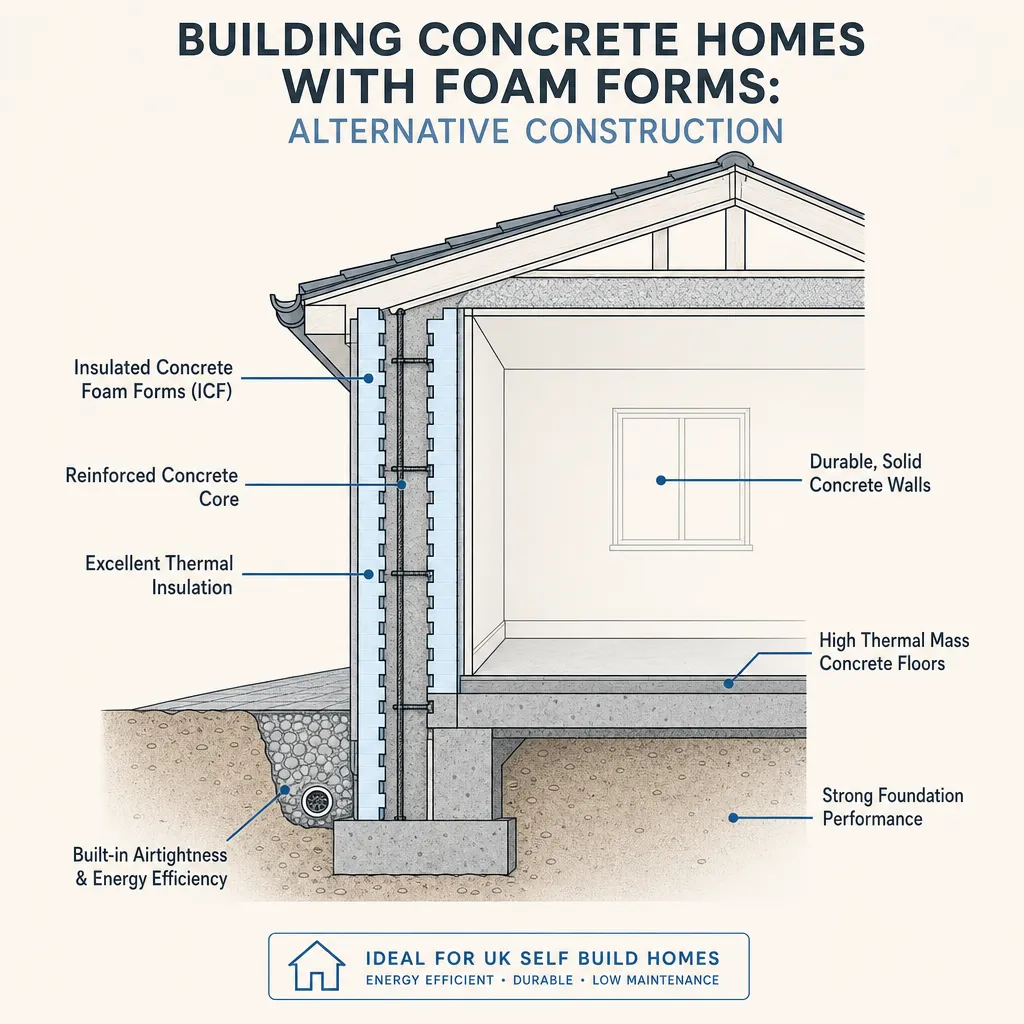
Building Concrete Homes with Foam Forms: Alternative Construction
Insulated concrete formwork (ICF) uses lightweight EPS foam blocks as permanent shuttering filled with reinforced concrete to form walls. The foam stays in place as insulation on both wall faces. ICF homes can achieve U-values well below Part L minimums. Building regulations approval, a chartered structural engineer, and a BBA-certified ICF system are required for any UK new build or extension.
 Improvement & Build
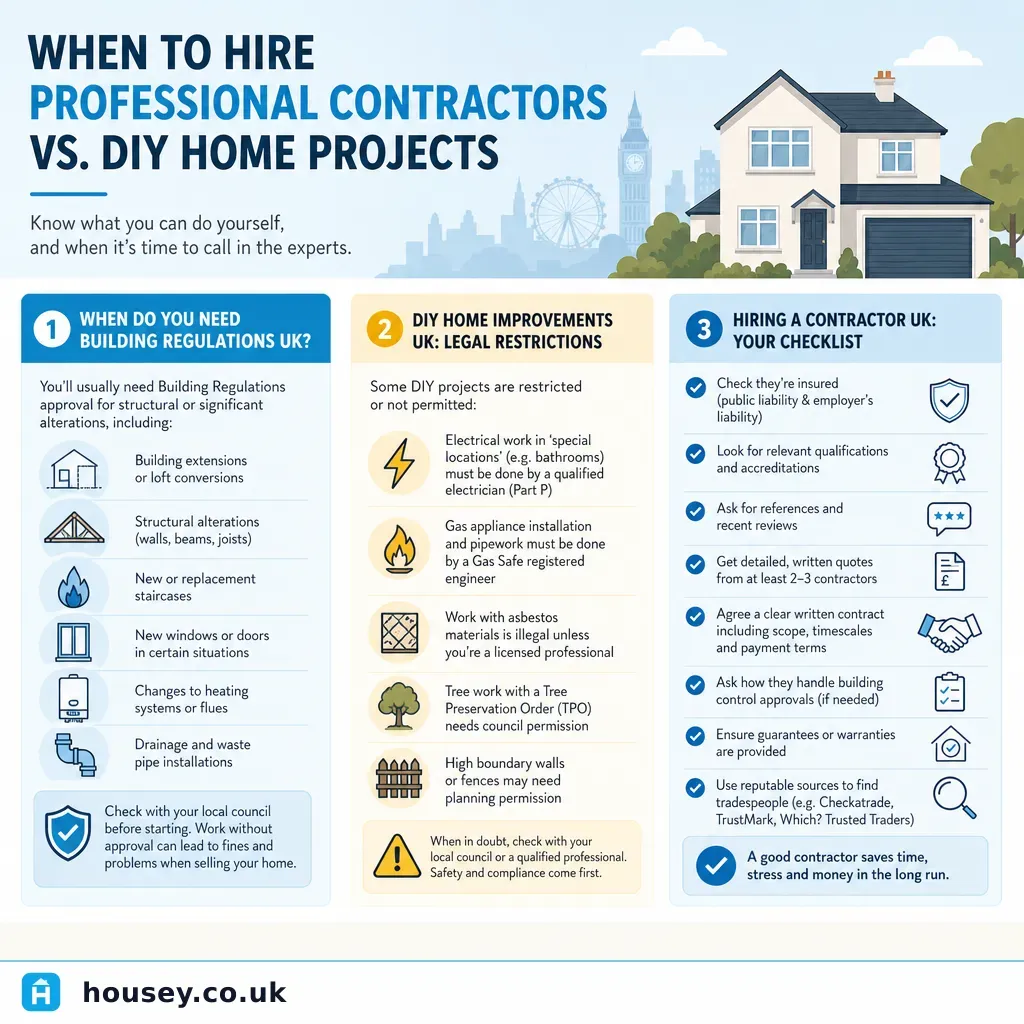
When to Hire Professional Contractors vs. DIY Home Projects
Some home improvement work — including gas fitting, consumer-unit electrical work, structural alterations, and asbestos removal — is legally restricted to qualified professionals in the UK. For other projects, the right choice depends on your skill level, the regulatory requirements, and the true total cost, including the risk of remediation if DIY work goes wrong.
 Improvement & Build
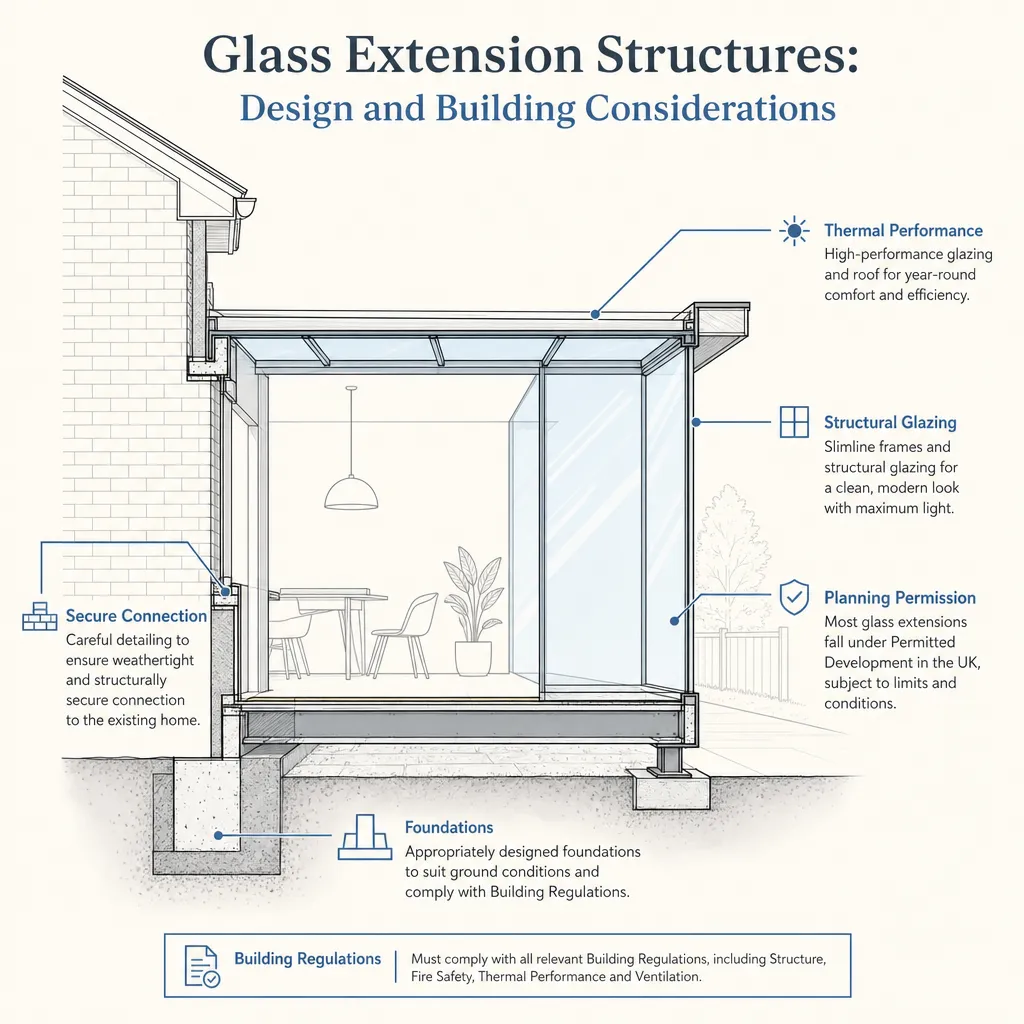
Glass Extension Structures: Design and Building Considerations
A glass extension uses structural glazing for walls, roof, or both to create a light-filled space connected to the garden. Most single-storey rear glass extensions on UK houses qualify as permitted development, but listed buildings and conservation areas usually require full planning permission. All glazed extensions intended as habitable rooms must meet Building Regulations, including minimum glazing U-values, structural engineering sign-off, and safety glass requirements.
 Improvement & Build
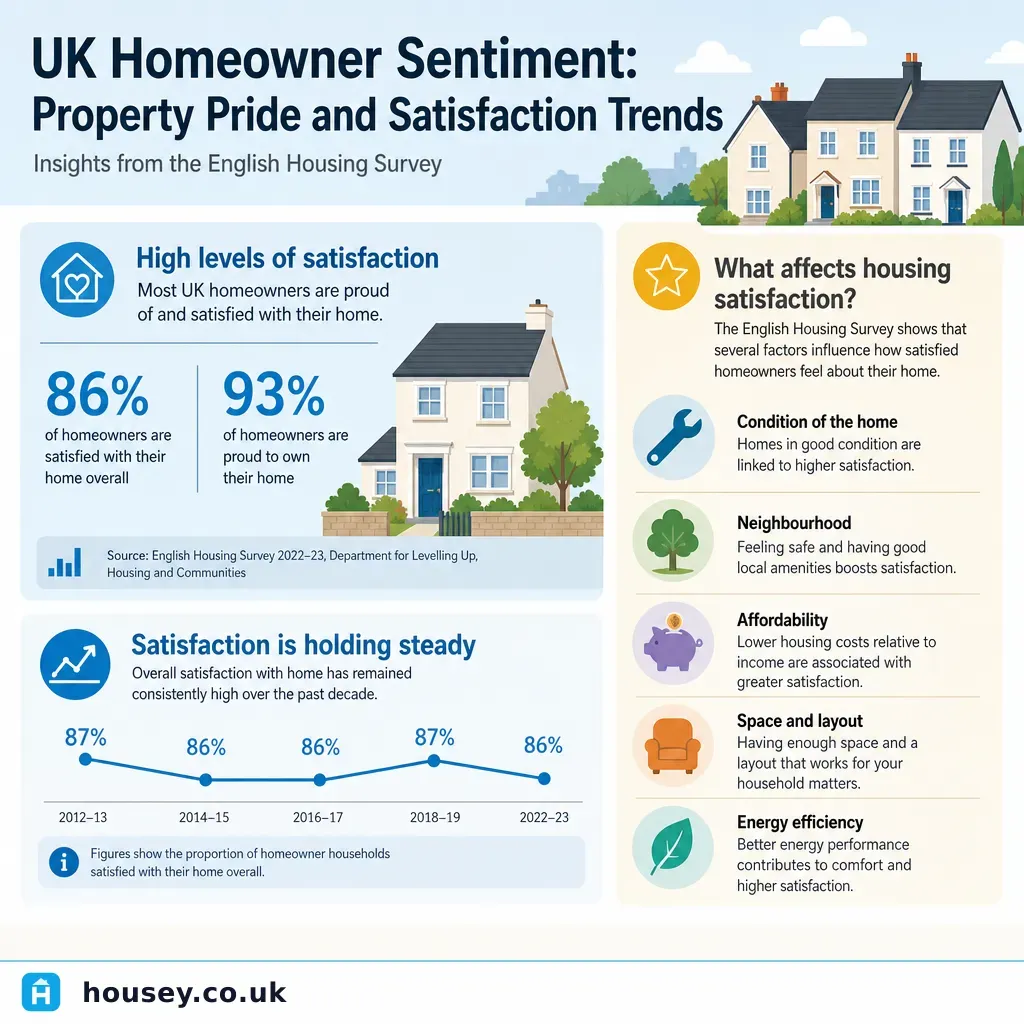
UK Homeowner Sentiment: Property Pride and Satisfaction Trends
UK homeowners generally report higher satisfaction with their housing than renters, according to the English Housing Survey. Key drivers include property condition, outdoor space, and neighbourhood quality. Satisfaction declines when maintenance is deferred or energy costs rise sharply. Understanding these trends can help homeowners prioritise improvements that genuinely affect quality of life.
 Planning & Pre-Build
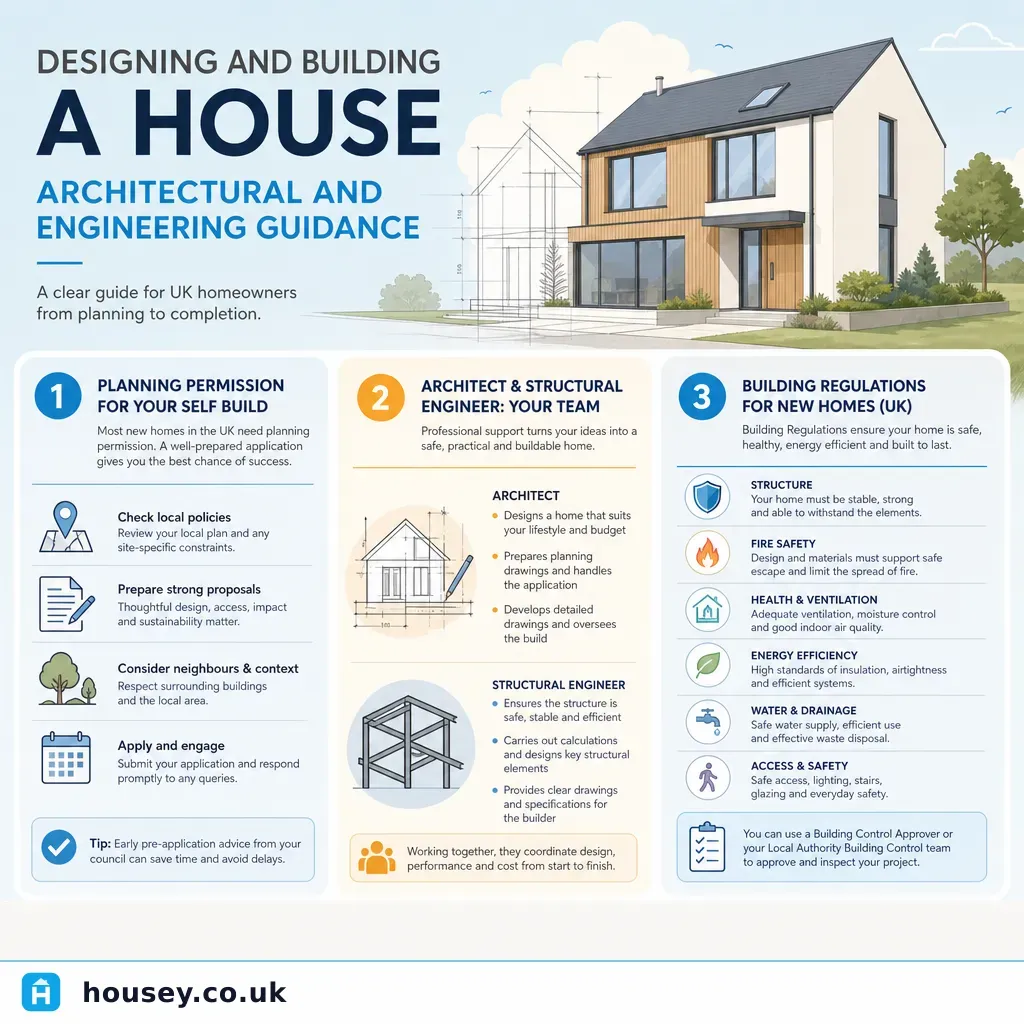
Designing and Building a House: Architectural and Engineering Guidance
Building a new house in the UK requires separate planning permission and Building Regulations approval, a professional team typically including an ARB-registered architect, a structural engineer, and often a civil or geotechnical engineer. A topographic survey and ground investigation should precede detailed structural design. The process typically spans 12 to 24 months from initial design to a building control completion certificate.
 Energy & Retrofit
Extractor Fan Installation and Ventilation Costs
Installing a standard bathroom extractor fan in the UK typically costs £150–350 supply and fit, including Part P electrical compliance. Bathrooms require at least 15 l/s extract capacity under Approved Document F. Persistent condensation often warrants a full ventilation assessment rather than a simple fan replacement.
 Improvement & Build
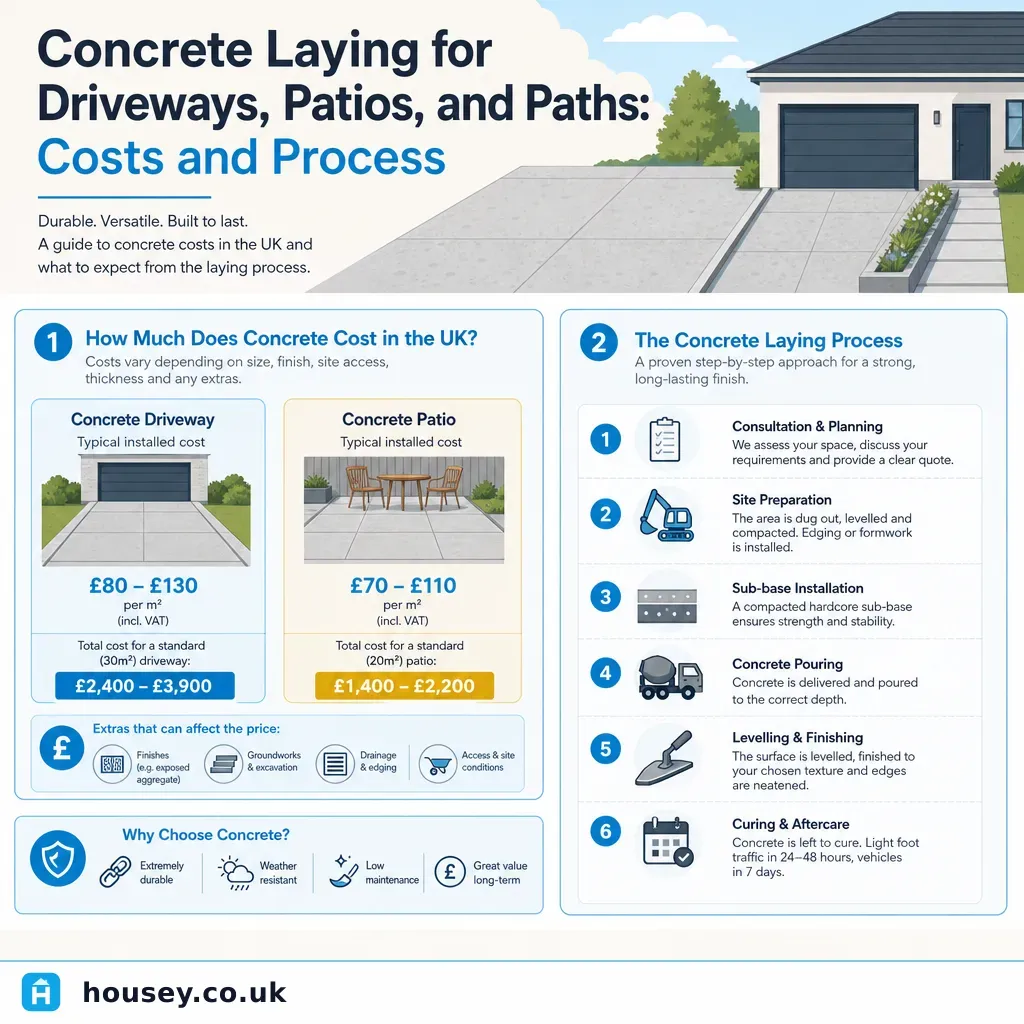
Concrete Laying for Driveways, Patios, and Paths: Costs and Process
Concrete laying for a UK driveway typically costs £65–£110 per square metre, including sub-base, reinforcement, formwork, and finishing. Patios and paths are broadly similar. The process covers excavation, sub-base compaction, formwork, pouring, and curing — usually one to three days for a residential project. Impermeable driveways over 5m² may need planning permission unless drainage is managed on site.
 Planning & Pre-Build
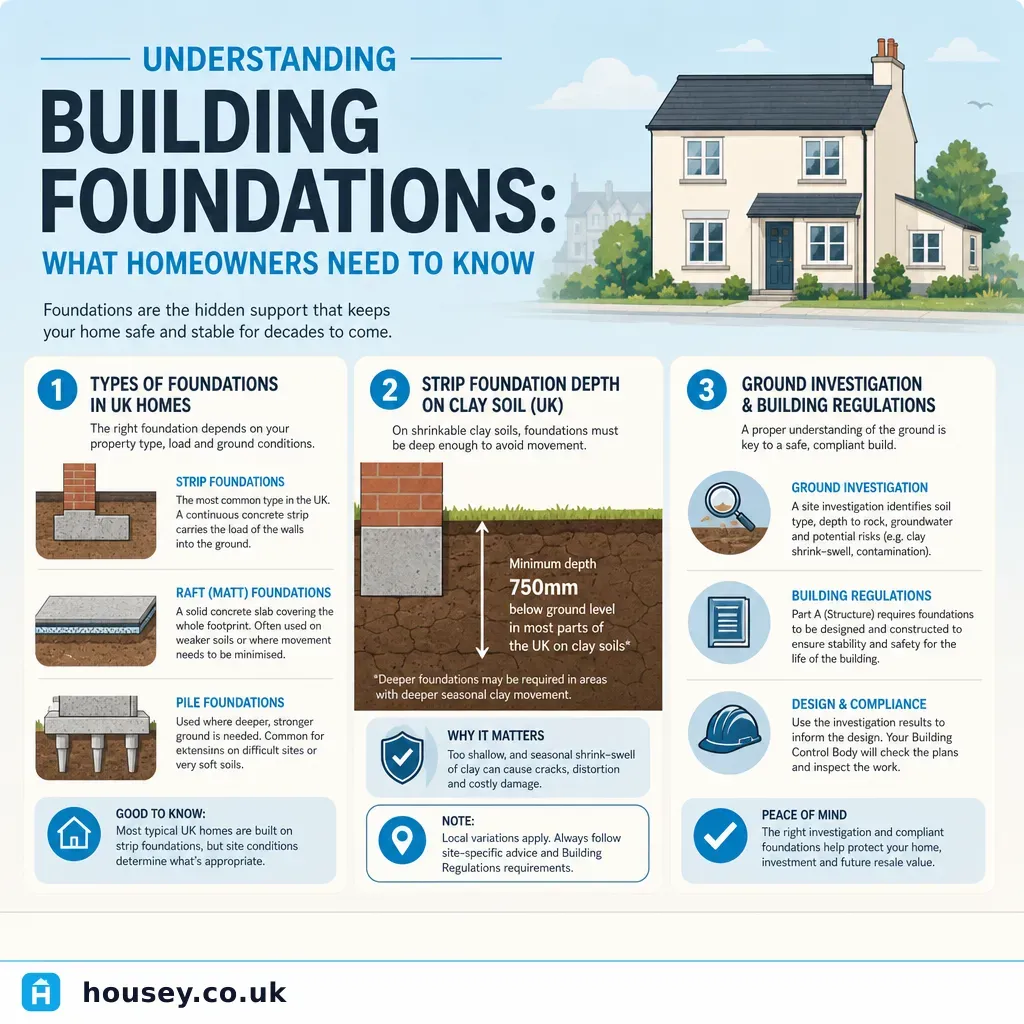
Understanding building foundations: what homeowners need to know
Building foundations transfer a structure's load safely to the ground beneath it. In the UK, the most common type is a strip foundation — a continuous concrete strip under load-bearing walls, typically at least 1 metre deep in clay soils. Foundation design must comply with Approved Document A and receive Building Control approval. Complex or high-risk sites usually require a geotechnical ground investigation first.