Knowledge Base
Property advice that actually helps
Researched, UK-specific guides for every stage of homeownership — from buying and surveys to retrofit, planning and major works.
 Surveys & Inspections
Why Insurance Valuations Matter: What Insurers Assess in Property Inspections
An insurance valuation establishes the reinstatement cost of your property — what it would cost to demolish and rebuild it — not its market value. Insurers and specialist surveyors inspect construction, materials, size, and features to calculate the correct sum insured. Getting this figure right prevents underinsurance, which can significantly reduce any future claim payout under the average clause.
 Energy & Retrofit
Rainwater Harvesting Systems: Installation Costs and Benefits
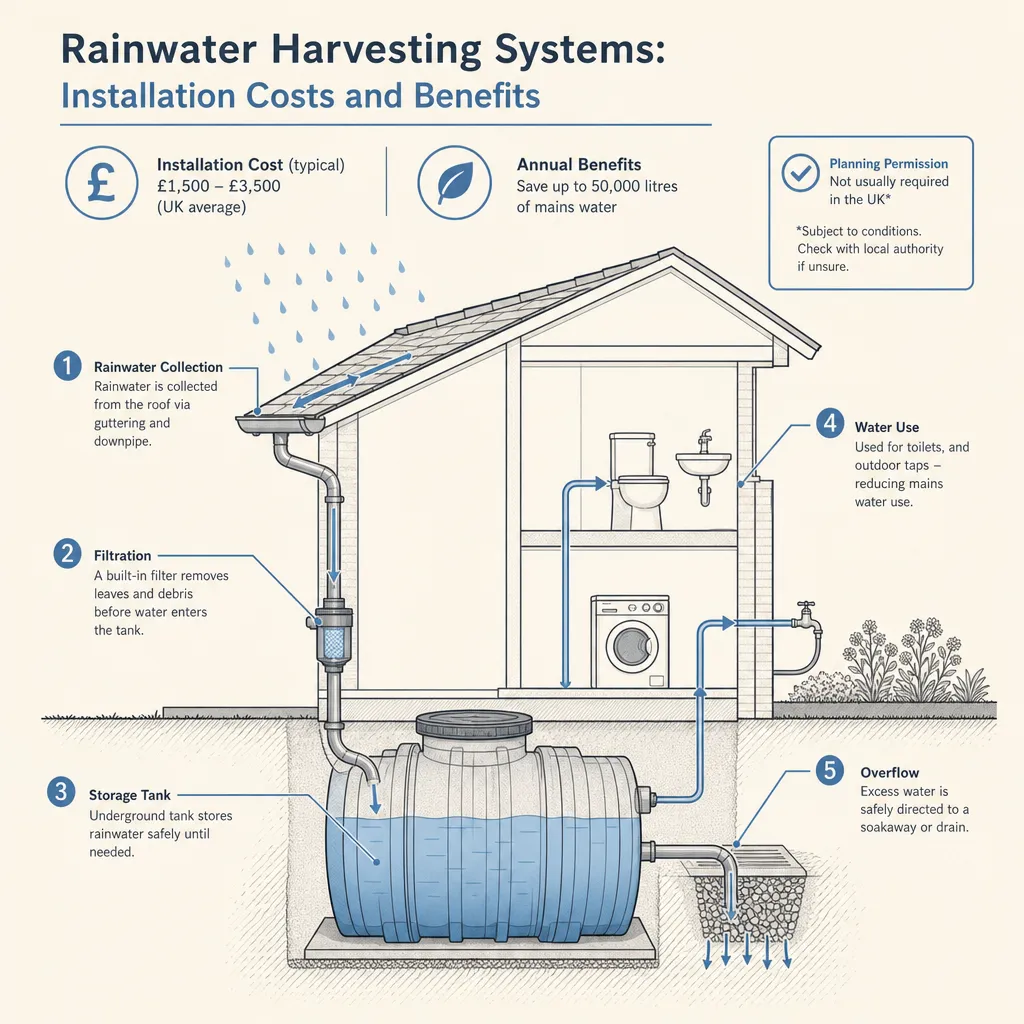
A domestic rainwater harvesting system costs £200–£600 for a simple above-ground butt or £2,500–£7,000 fully installed for an underground tank. Systems supply toilet flushing, garden irrigation, and laundry. Any system connected to mains water must comply with WRAS backflow prevention standards, and payback on bill savings alone typically runs to 25–40 years for metered households.
 Improvement & Build
Repointing Masonry: Duration and Labour Estimates for Wall Area
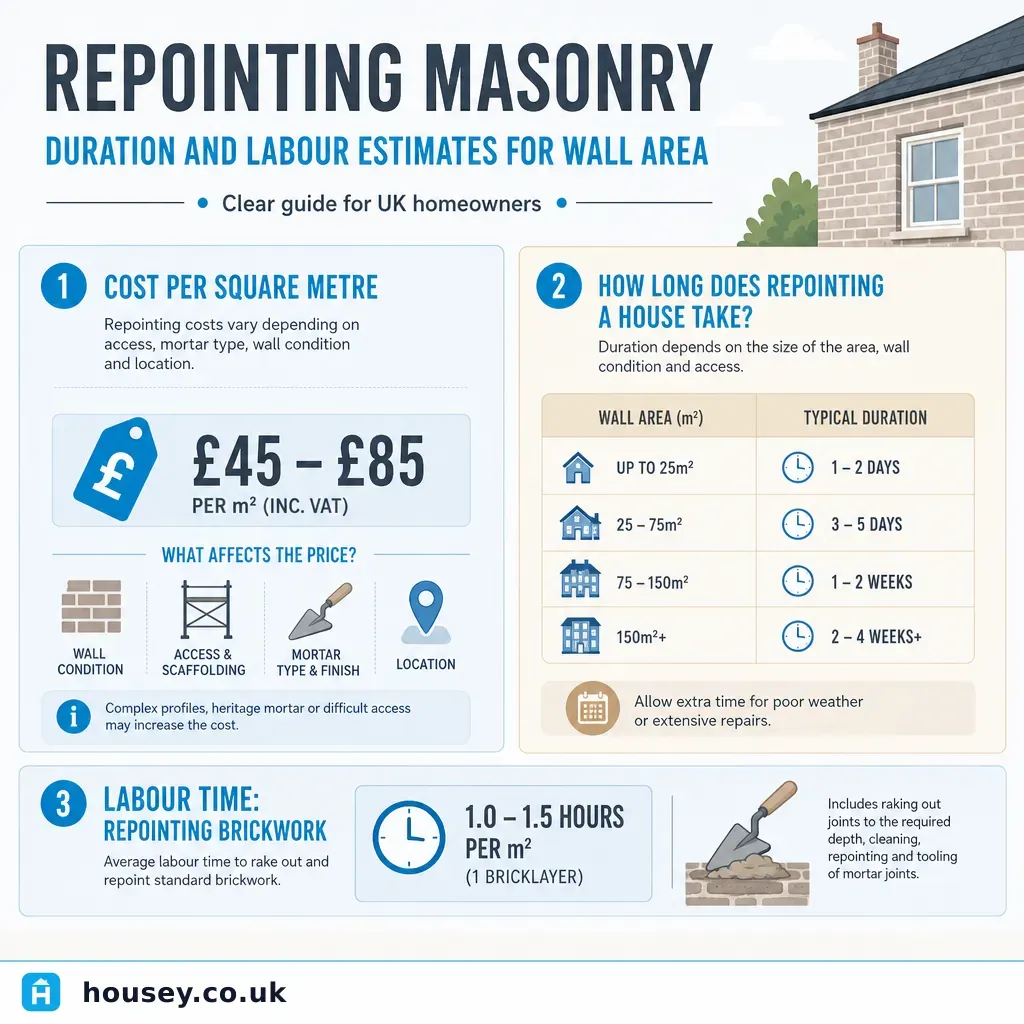
A skilled bricklayer typically repoints 3–5 m² per hour when raking out and refilling joints by hand. For a standard semi-detached house with around 80–100 m² of external brickwork, allow 8–12 working days of labour. Output varies with joint condition, mortar type, access requirements, and whether scaffold is needed.
 Buying & Moving
Rubbish Removal and House Clearance Costs
House clearance in the UK typically costs £150–£400 for a single room and £500–£1,500 for a full three-bedroom property, depending on volume, access, and hazardous items. Most companies price by van load or property size. Always verify that your carrier holds a current Environment Agency waste carrier licence before agreeing a price.
 Improvement & Build
Installing Dry Verge Caps: Mortar Removal and Installation Process
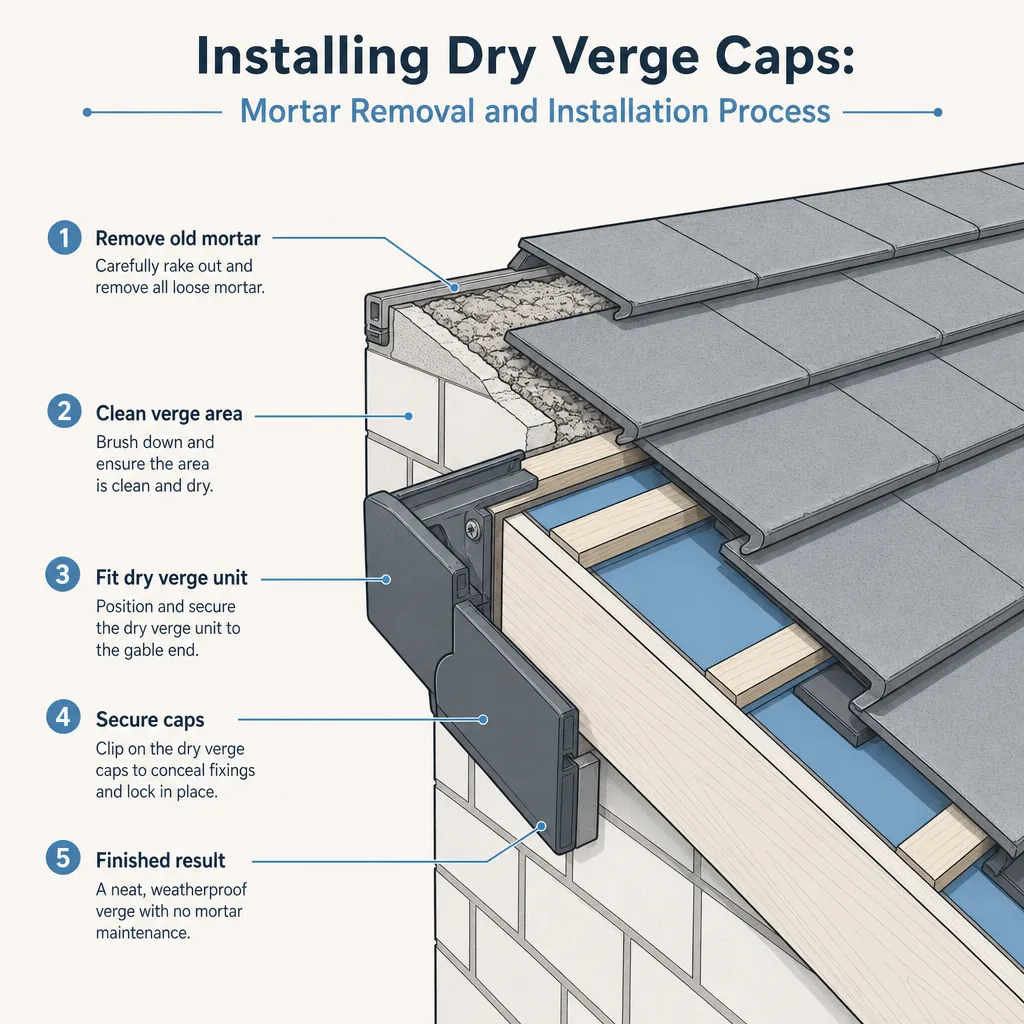
Installing dry verge caps on a UK roof involves removing all existing mortar from the gable verge, inspecting and repairing the underlay, then clipping interlocking uPVC or aluminium caps from eaves to ridge. All mortar must be fully removed before caps are fitted — leaving residue beneath prevents correct seating and reduces wind uplift resistance.
 Improvement & Build
Planning a Bathroom Refurbishment: Design, Services, and Professional Installation
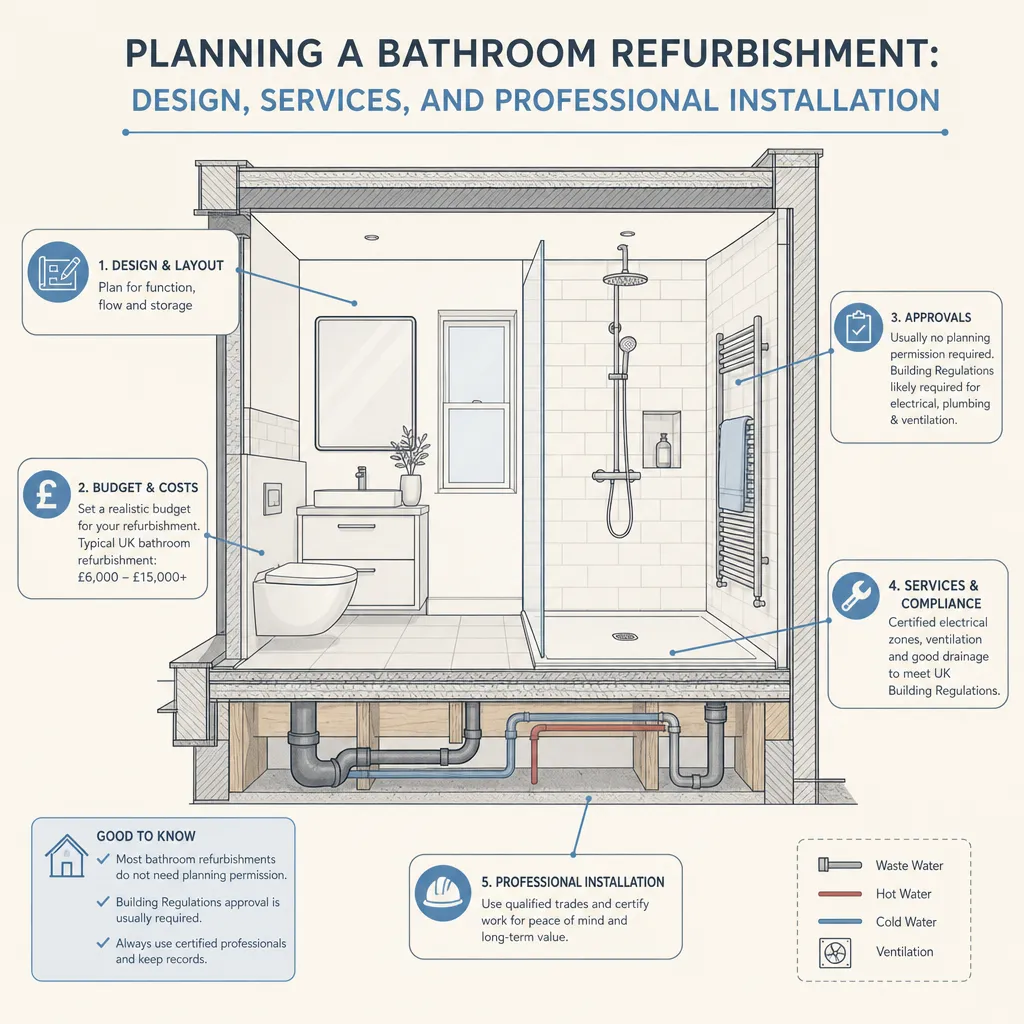
A bathroom refurbishment in the UK typically involves at least three trades — plumber, electrician, and tiler — and costs £4,000–£12,000 for a full project. Electrical work in wet zones must comply with Building Regulations Part P. Waterproofing behind tiles is the most commonly overlooked element and the most frequent cause of hidden water damage after a bathroom renovation.
 Improvement & Build
Creating a New Garden Design for Your Property
Creating a new garden design involves assessing your space, setting a realistic budget, deciding on hard and soft landscaping, and choosing a planting scheme suited to your soil and aspect. Smaller projects can be self-managed, but a professional garden designer or landscaper adds real value for complex, sloping, or drainage-sensitive sites.
 Improvement & Build
Shed Roof Replacement and Repair Options
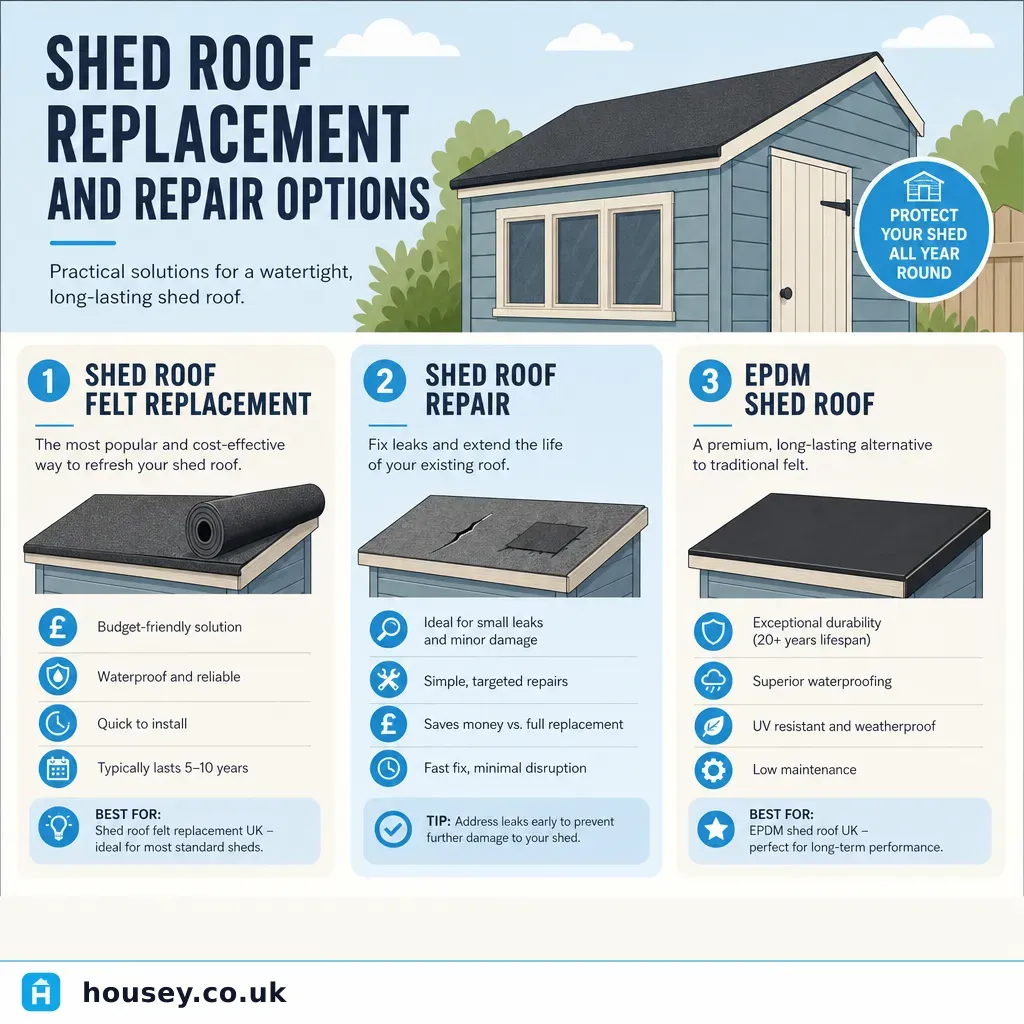
Shed roofs in the UK are most commonly covered with mineral felt (lasting 5–15 years), EPDM rubber membrane (20–30 years), or corrugated bitumen sheets. Most repairs and replacements are permitted development and need no planning permission. Choose EPDM for a flat or low-pitch roof needing a long-term solution, or Grade 5F felt as a cost-effective upgrade over standard shed felt.
 Improvement & Build
Porcelain Countertop Installation: Costs and Considerations
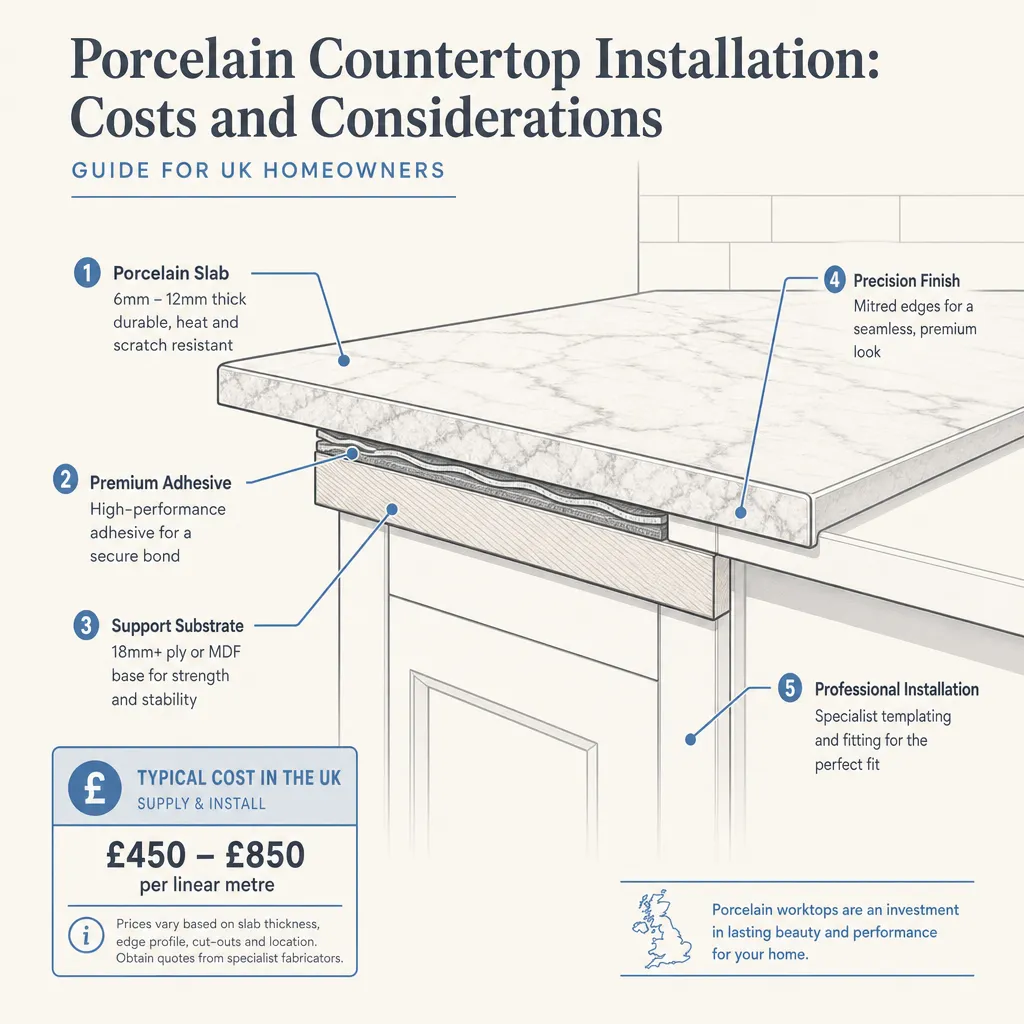
Porcelain worktop slabs are non-porous, heat-resistant, and require no sealing. Professional installation in the UK typically costs £300–£1,200+ per linear metre depending on slab grade, kitchen layout, edge profiles, and region. All cutting must be done off-site by a specialist fabricator — attempting on-site angle grinding risks shattering the slab irreversibly.
 Improvement & Build
Understanding Construction Timelines for New Build Homes
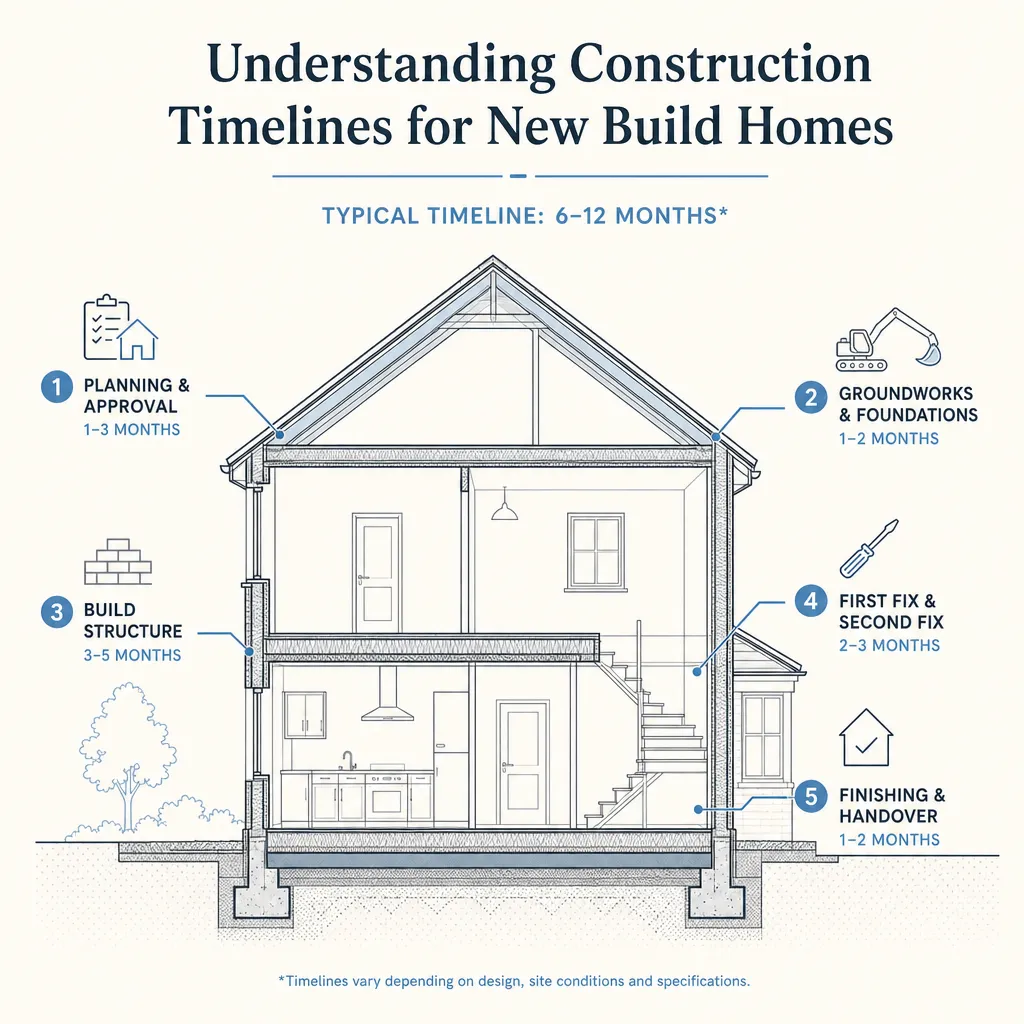
Building a new home in the UK typically takes 12–24 months from planning approval to practical completion, though smaller projects can complete in 6–12 months. The timeline depends on your chosen build route, the size and complexity of the design, site conditions, and how quickly decisions are made. Contingency of 10–15% on time and budget is advisable for most self-build or new-build projects.
 Improvement & Build
Loft Boarding: Insulation, Installation, and Storage Options
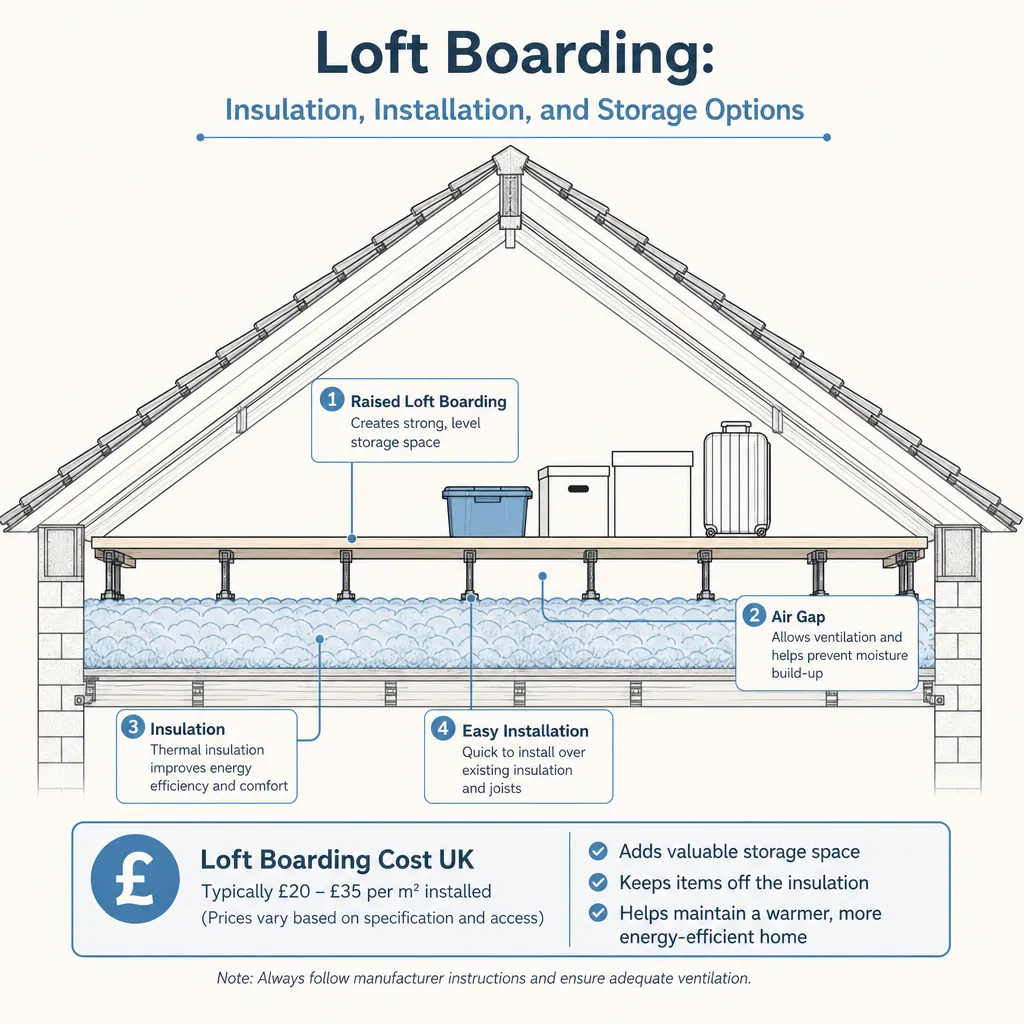
Loft boarding creates accessible storage without a full conversion, but boards must be raised above existing insulation using loft legs to avoid compressing it and reducing thermal performance. Standard ceiling joists may also need checking before loading. Most loft boarding projects do not need planning permission, but structural changes and habitable-room conversions always require Building Regulations approval.
 Improvement & Build
Understanding Annual Property Maintenance Budgets and Running Costs
UK homeowners typically budget 1–3% of their property's purchase price each year for maintenance and repairs, with older properties at the higher end. Actual costs depend on property age, construction type, and the condition of key elements such as the roof, boiler, and windows. A seasonal checklist and a dedicated maintenance reserve fund help spread costs and avoid expensive reactive repairs.