Knowledge Base
Property advice that actually helps
Researched, UK-specific guides for every stage of homeownership — from buying and surveys to retrofit, planning and major works.
 Improvement & Build
Building a New Garage: Planning, Design and Building Regulations
Most new detached garages in England qualify as permitted development and do not need planning permission, provided they stay within size, height, and coverage limits and are not within 5m of the dwelling. Garages up to 15m² generally do not need building regulations approval. Larger garages, those near boundaries, or any with habitable use require building control notification. Always check with your local planning authority before starting work.
 Planning & Pre-Build
Wall Tie Replacement Costs for Semi-Detached Properties
Wall tie replacement in a UK semi-detached house typically costs £2,500–7,000 for a full two-elevation repair, plus £200–450 for a borescope survey. Costs vary by the number of failed ties, scaffold requirements, and whether the party wall is involved. A structural survey or specialist inspection should always precede any repair specification.
 Buying & Moving
Moving to Harrogate: Location Guide and Property Information
Harrogate is a North Yorkshire spa town approximately 21 miles from Leeds, with direct rail links to Leeds (30–45 mins) and York. Property prices are consistently above the national average, with strong demand for Victorian and Edwardian homes. The town is regularly rated among the best places to live in the UK for families, professionals, and retirees seeking quality of life within commuting distance of Leeds.
 Energy & Retrofit
Heat Pump Water Heater Systems: Installation and Running Costs
A heat pump water heater extracts heat from surrounding air to warm your domestic hot water cylinder, achieving a Coefficient of Performance of 2.5 to 4.0. Installed costs typically range from £1,500 to £4,500. They suit homes with adequate space and an existing heating system, but sizing and grant eligibility should be confirmed with an MCS-accredited installer.
 Improvement & Build
Maintaining window tracks: cleaning and care tips
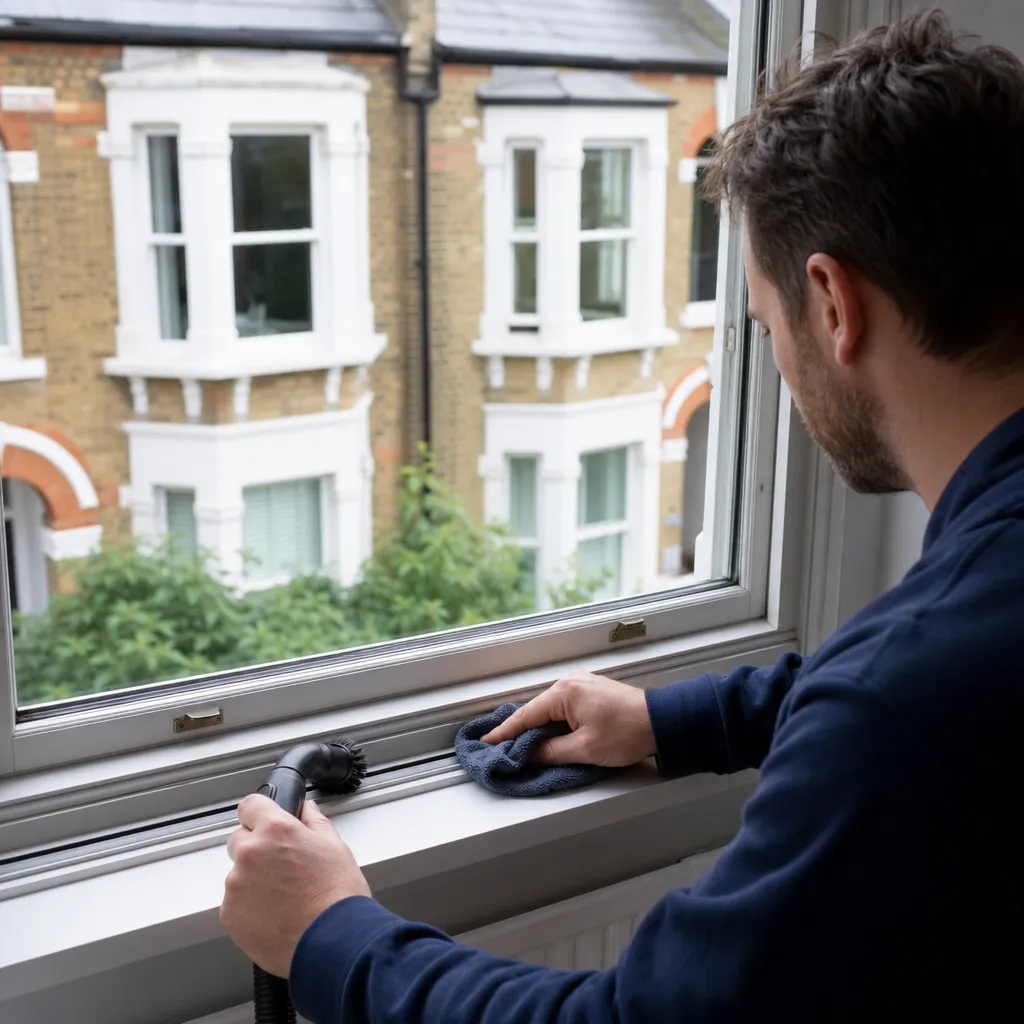
Window tracks should be cleaned at least once a year using a soft brush, warm soapy water, and a silicone-based lubricant — not WD-40, which degrades rubber seals. Clear weep holes to prevent water backing up inside the frame. Inspect rubber seals annually and replace if cracked or split. If stiffness persists after lubrication, the frame or balance mechanism may need professional attention rather than more force.
 Surveys & Inspections
Asbestos Floor Tile Removal: Safety, Costs, and Professional Options
Asbestos floor tiles — common in UK homes built between the 1950s and late 1980s — must not be disturbed without a professional assessment. A refurbishment asbestos survey should confirm whether tiles and adhesive contain asbestos before any removal work. Licensed or trained contractors carry out removal under the Control of Asbestos Regulations 2012; indicative removal costs range from £800 to £3,000 or more.
 Surveys & Inspections
Engaging a Land Surveyor: Questions to Clarify Scope and Deliverables
When engaging a land surveyor, clarify exactly which type of survey you need — topographical, boundary, or measured building — before agreeing a fee. Confirm the accuracy standard, coordinate system, and file formats you will receive, and ensure the surveyor holds relevant professional membership such as RICS or CICES. A clear written scope of works before fieldwork begins prevents disputes over deliverables.
 Improvement & Build
Driveway Sealers: Protection, Maintenance, and Longevity
Driveway sealers fall into two main categories: penetrating types absorbed into the substrate that leave no surface film, and film-forming types that coat and protect the surface. The right choice depends on your driveway material. Most residential surfaces benefit from resealing every three to seven years, applied in dry conditions above 10°C after thorough surface cleaning and preparation.
 Improvement & Build
Fixing Foundation Leaks: Water Infiltration at Floor-to-Wall Junctions
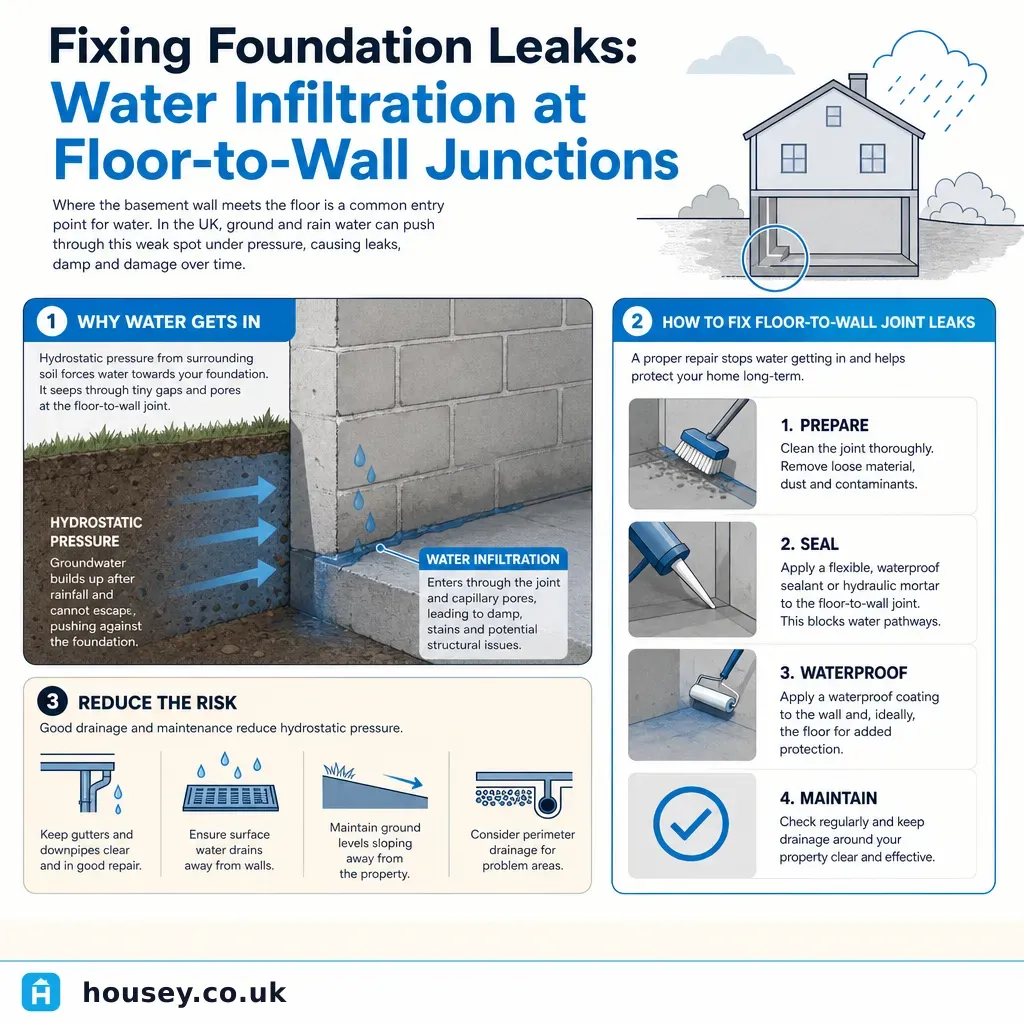
Water at the floor-to-wall junction in a UK basement is usually driven by hydrostatic pressure acting on the joint between the floor slab and foundation wall. Effective repair depends on water pressure and construction type, and typically involves cavity drain channels, injection grouting, or external drainage to relieve pressure. A qualified waterproofing specialist should specify the correct approach.
 Improvement & Build
Tree Removal and Sustainable Uses for Timber
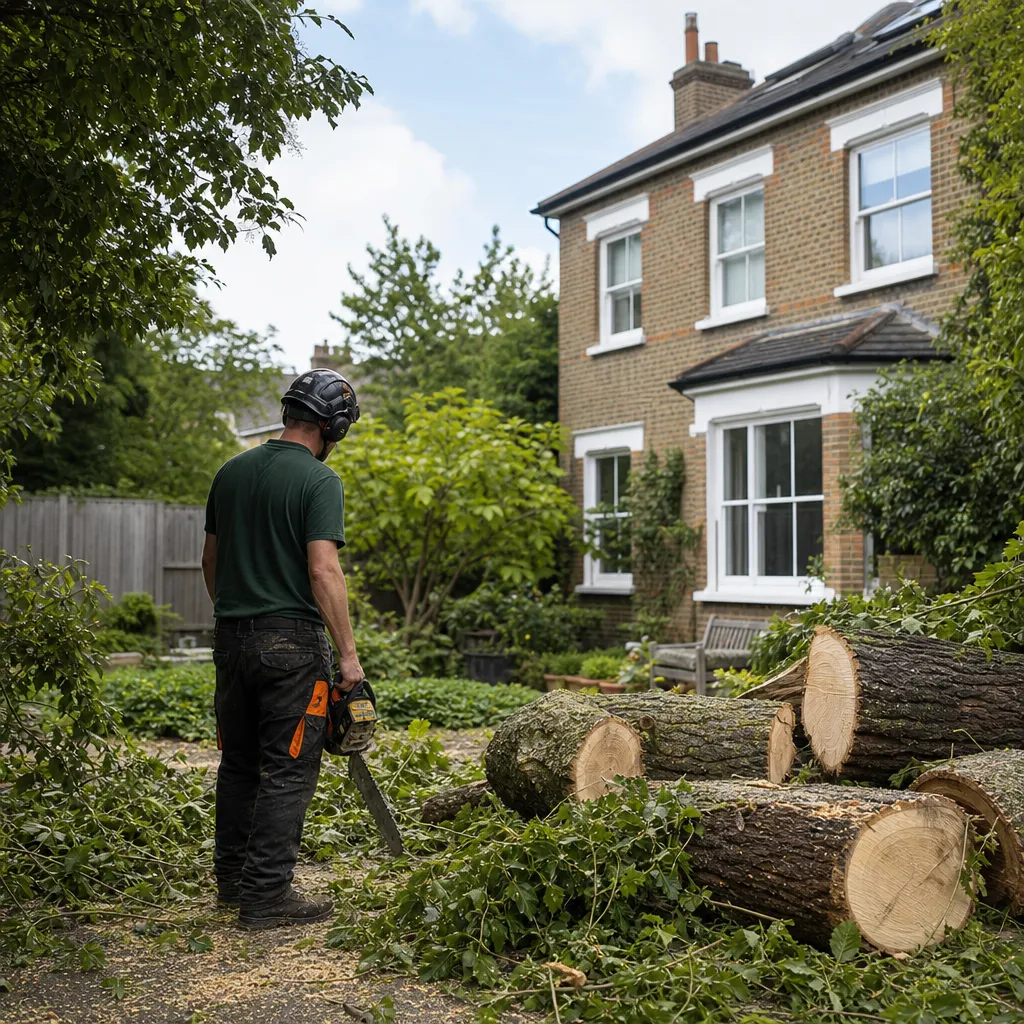
When a tree is felled, the timber can be reused as firewood (after 12–24 months' seasoning), woodchip mulch, or sawn planks. Larger sections suit portable sawmilling; smaller branches can be chipped on site. Check for disease-related movement restrictions before moving logs off your property, and always use a qualified arborist for the felling itself.
 Improvement & Build
Repointing Brick and Mortar: Scaffolding Requirements and Safety Standards
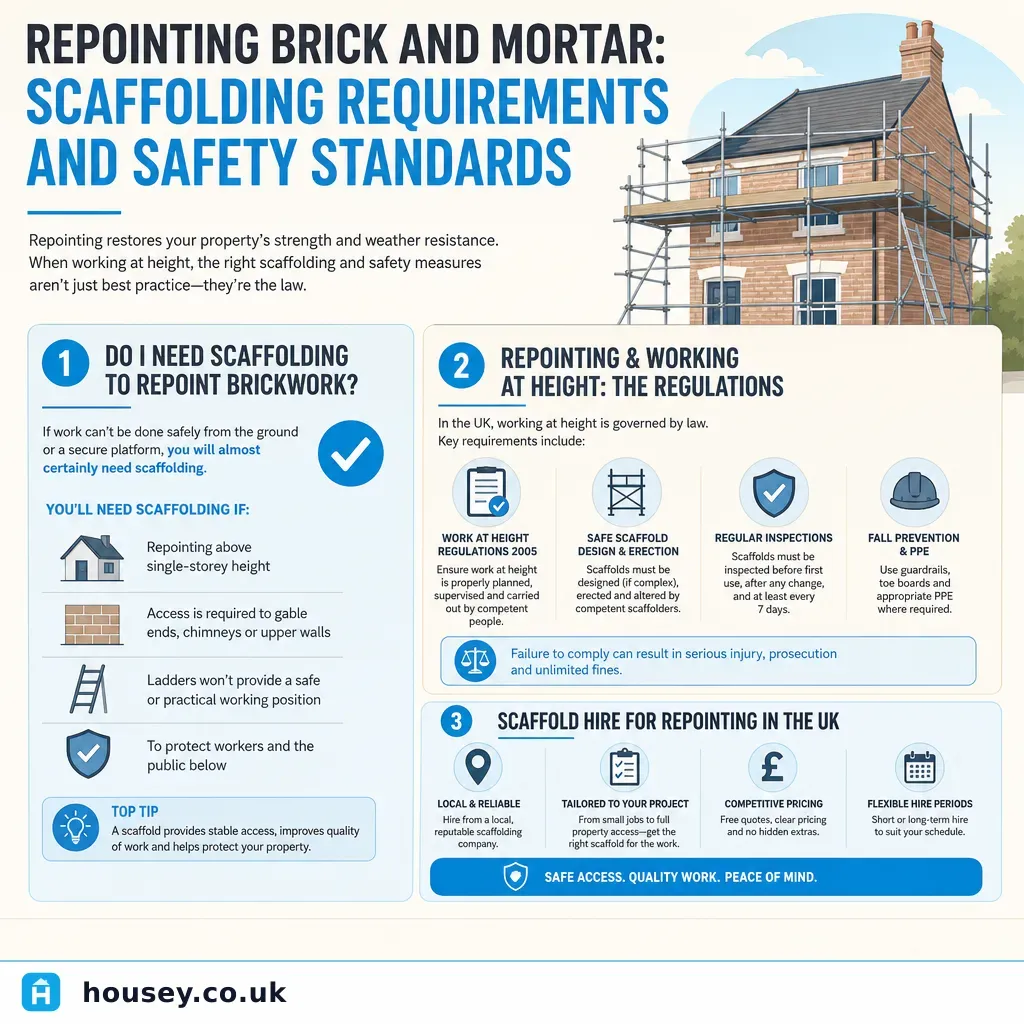
Most repointing on two-storey or gable elevations requires full scaffolding under the Work at Height Regulations 2005. Scaffolding must be designed, erected, and inspected every seven days by a competent contractor. Mobile aluminium towers suit lower-level localised repairs. Using a ladder as the primary means of access for sustained repointing is not compliant with UK law.
 Surveys & Inspections
Property Survey Costs: What Buyers Need to Budget
A RICS Level 1 survey typically costs £300–£500, a Level 2 Home Survey £400–£900, and a Level 3 Building Survey £600–£1,500 or more. Costs depend on property size, age, and location. Always obtain at least three quotes and confirm what the fee covers before instructing a surveyor.