Knowledge Base
Property advice that actually helps
Researched, UK-specific guides for every stage of homeownership — from buying and surveys to retrofit, planning and major works.
 Surveys & Inspections
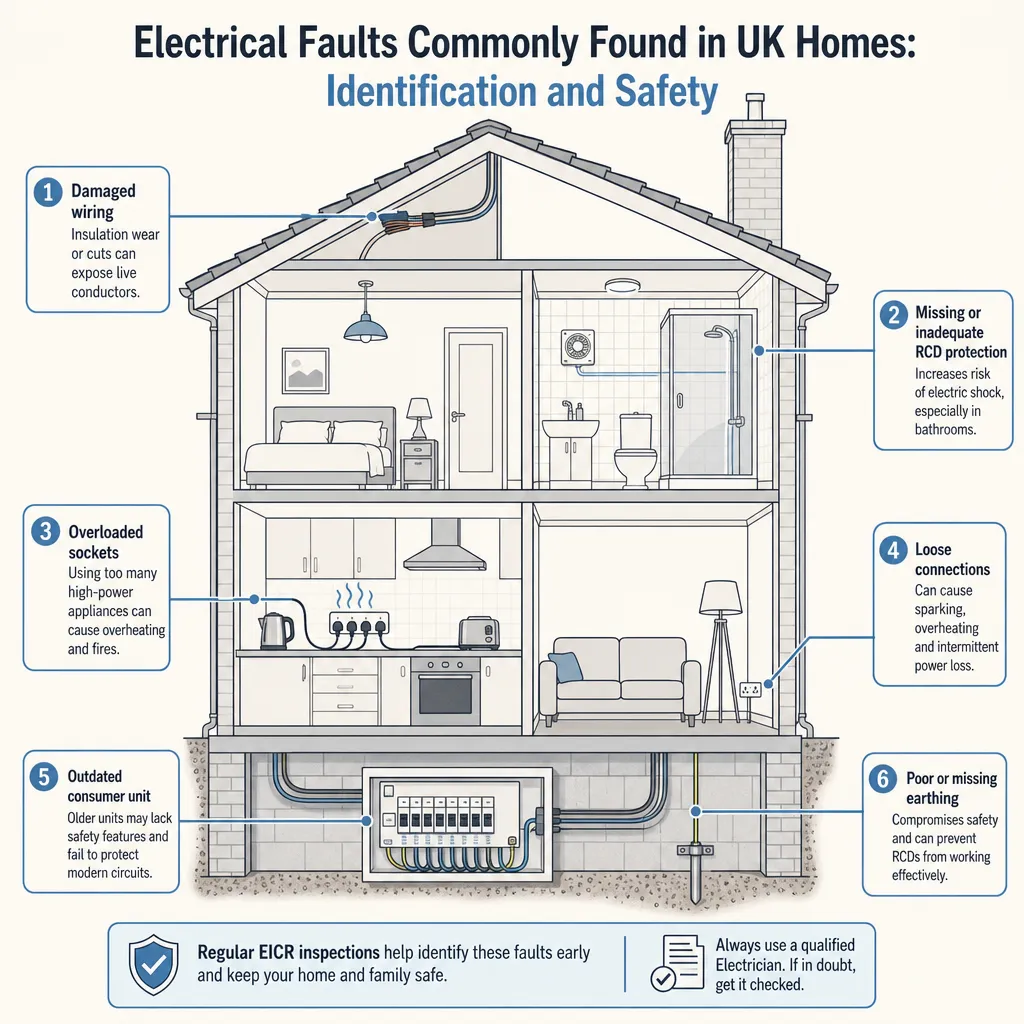
Electrical Faults Commonly Found in UK Homes: Identification and Safety
Common electrical faults in UK homes include deteriorating wiring, overloaded circuits, faulty consumer units without RCD protection, loose socket connections, and unapproved DIY alterations. An Electrical Installation Condition Report (EICR) carried out by a registered electrician is the most reliable way to identify and prioritise these faults safely before they cause injury or fire.
 Improvement & Build
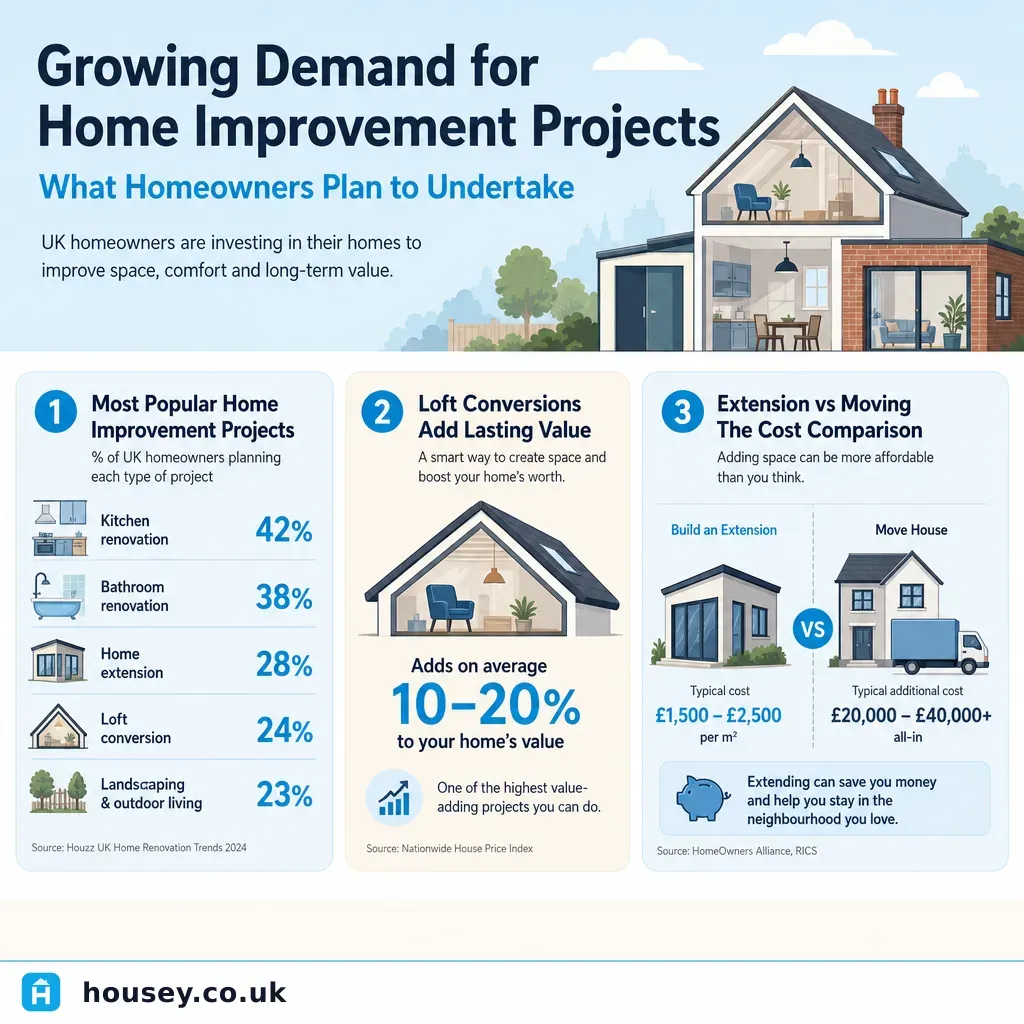
Growing Demand for Home Improvement Projects: What Homeowners Plan to Undertake
UK homeowners are increasingly choosing to improve rather than move, driven by high stamp duty costs, limited housing supply, and demand for home-office space. Loft conversions, rear extensions, and kitchen renovations top the list. Projects that deliver best value are those planned in detail — with budget, planning position, and contractor selection all considered before work begins.
 Improvement & Build
Estimate for Merging Two Properties into a Single Residence
Merging two properties into one typically costs £30,000–£120,000 or more, depending on property type, structural complexity, and professional fees. Planning permission is almost always required in England and Wales. You will also need structural engineering, building-regulations approval, and likely a party wall award under the Party Wall etc. Act 1996.
 Improvement & Build
Casement Windows: Style, Performance and Installation Guide
Casement windows are hinged on one side and open outward, making them the most widely fitted window type in UK homes. Available in timber, uPVC, and aluminium frames, replacement casements must meet Building Regulations Part L thermal performance requirements. Installations in England must be carried out by a FENSA- or CERTASS-registered installer, or separately notified to local authority building control.
 Improvement & Build
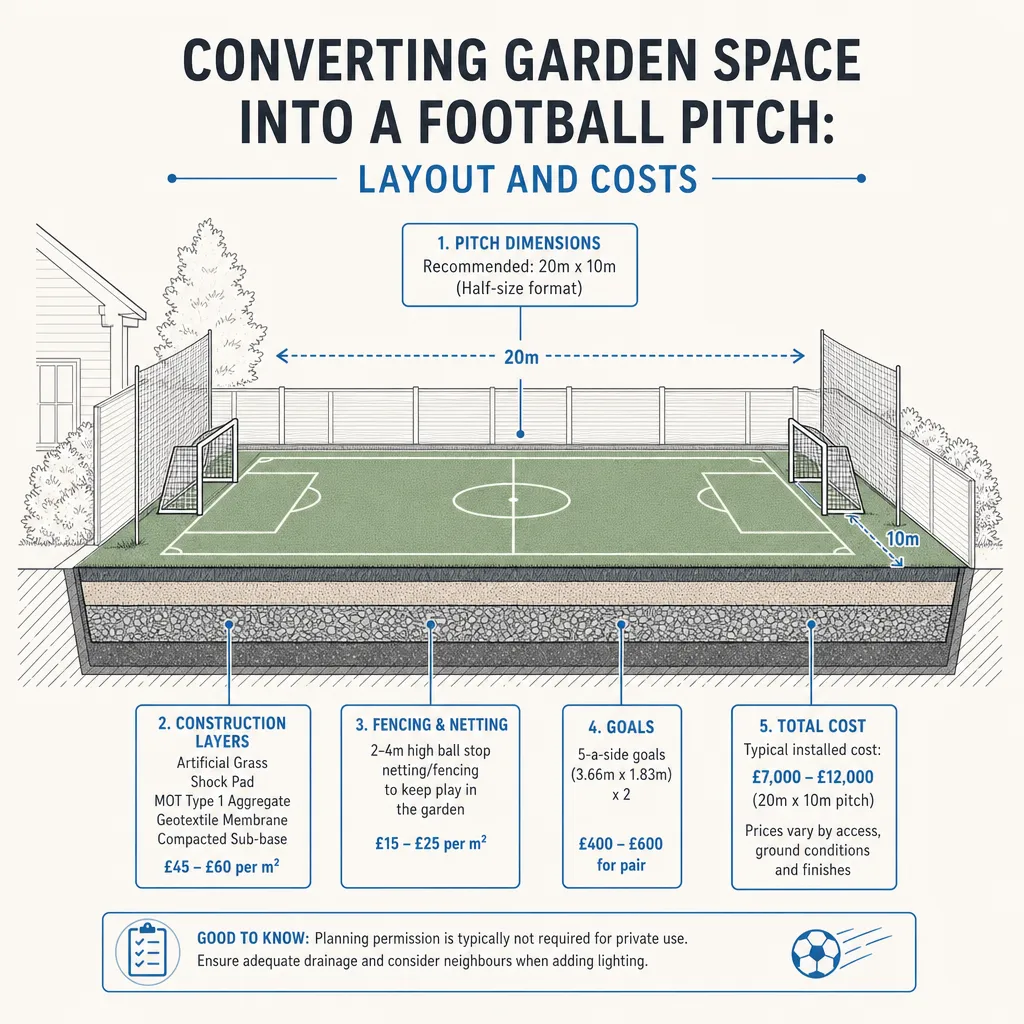
Converting Garden Space into a Football Pitch: Layout and Costs
Converting a garden into a football pitch is feasible for many UK homeowners with enough space. A 5-a-side pitch needs roughly 25m × 16m. Artificial 3G turf on a compacted sub-base is the most practical surface. Costs typically range from £8,000 to £40,000+ depending on size, surfacing, and drainage. Planning permission is rarely needed for the pitch itself, but perimeter fencing often triggers an application.
 Energy & Retrofit
Sustainable Building Materials for Home Projects and Retrofits
Sustainable building materials for UK homes range from low-embodied-carbon insulation — wood fibre, sheep's wool, hemp — to FSC-certified structural timber and reclaimed stone or brick. The right choice depends on your building's construction, moisture dynamics, and the retrofit standard you are working to. For older UK homes with solid walls, professional moisture risk assessment is essential before specifying any insulation product.
 Improvement & Build
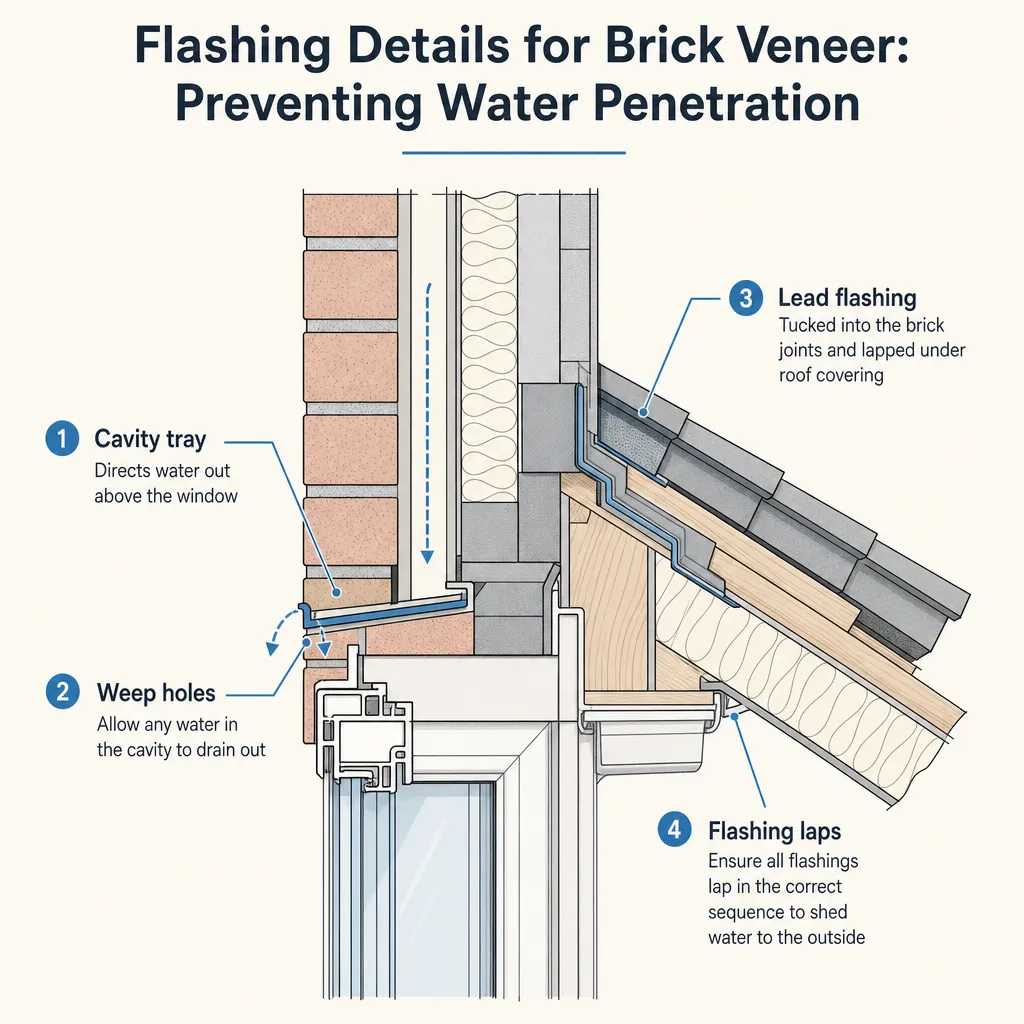
Flashing Details for Brick Veneer: Preventing Water Penetration
Brick veneer facades are designed to allow water into the cavity and drain it away through cavity trays and weep holes before it reaches the inner leaf. Flashings at roof junctions and above lintels are the critical details. Missing or poorly formed cavity trays above window and door openings are the most common cause of localised damp above openings in UK brick veneer homes.
 Improvement & Build
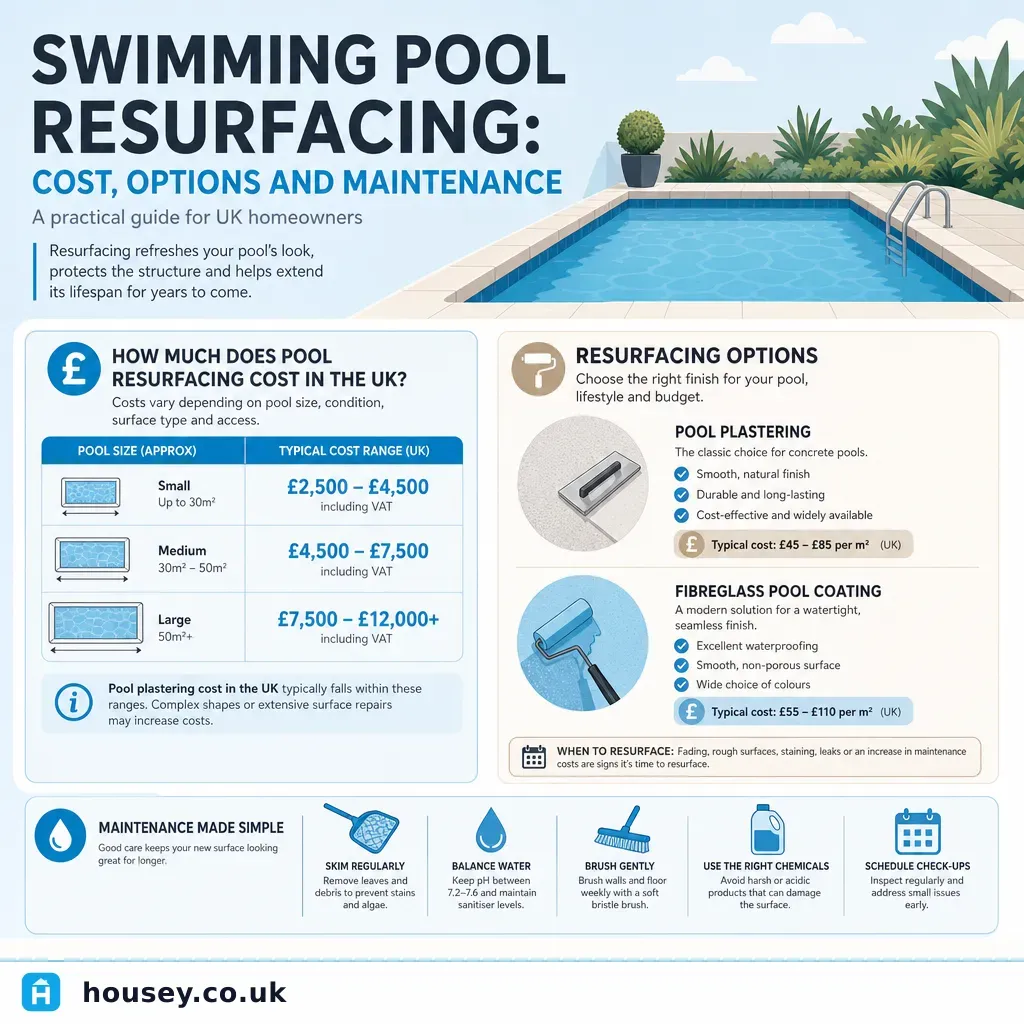
Swimming Pool Resurfacing: Cost, Options and Maintenance
Swimming pool resurfacing in the UK typically costs £3,000–£25,000+, depending on pool size, material, and condition. Most plaster finishes last 10–15 years. Signs you need resurfacing include surface cracking, persistent staining, and rough or chalky texture. Always drain the pool fully and repair structural cracks before applying any new surface material.
 Improvement & Build
Choosing the Right Patio Doors for Your Home
The right patio doors depend on your opening width, available swing space, home style, and budget. French doors suit narrower openings under 2 m; sliding doors work well where swing space is limited; bifold doors open up wider spans of 2.4 m or more. Material choice between uPVC, aluminium, and timber affects cost, maintenance, and thermal performance.
 Planning & Pre-Build
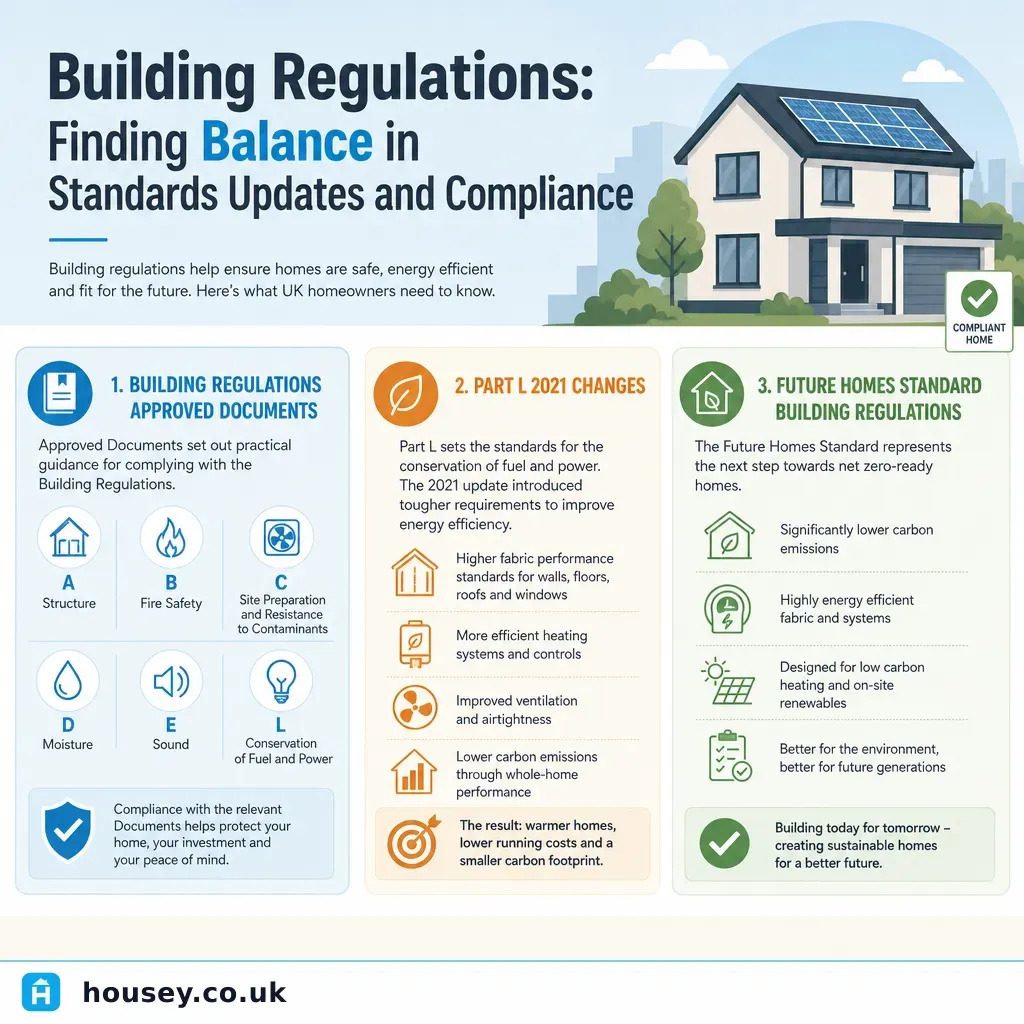
Building Regulations: Finding Balance in Standards Updates and Compliance
Building regulations in England and Wales set minimum standards for construction, covering structure, fire safety, energy efficiency, and ventilation. Updated in 2021 and through the Building Safety Act 2022, they require approval — via local authority building control, a registered approver, or a Competent Person Scheme — before most notifiable building work begins.
 Improvement & Build
Modern Concrete Demolition Techniques and Methods
Concrete demolition in the UK uses methods including hydraulic breaking, diamond wire sawing, hydrodemolition, and hydraulic bursting. The right method depends on structure size, access, proximity to neighbouring buildings, and vibration sensitivity. All demolition projects must comply with CDM 2015, and a pre-demolition asbestos survey is legally required before work begins on any structure where asbestos is reasonably likely.
 General property advice
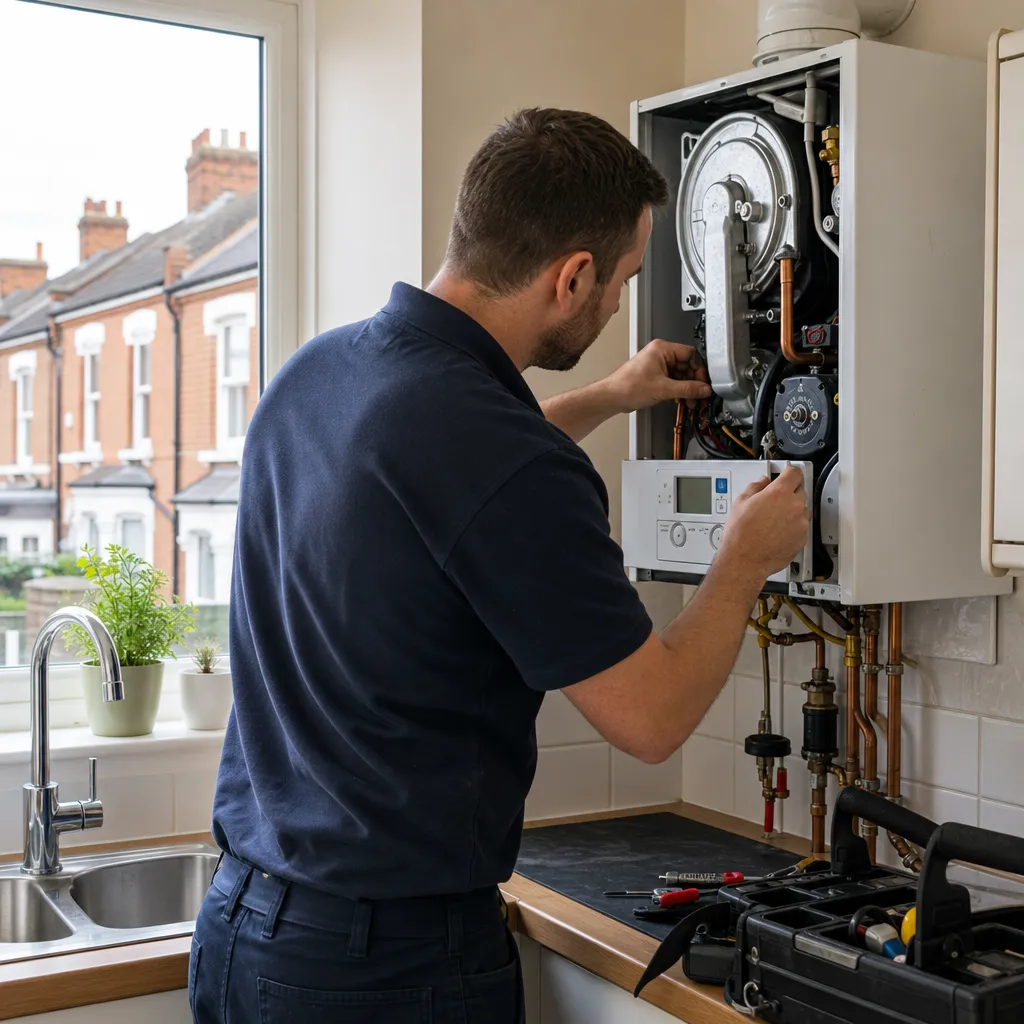
Combi boiler not producing hot water: troubleshooting guide
The most common causes of a combi boiler not producing hot water are low system pressure (below 1 bar), a stuck diverter valve, or a frozen condensate pipe. Check the pressure gauge first and repressurise if needed. All gas-side repairs must be carried out by a Gas Safe registered engineer — do not attempt them yourself.