Knowledge Base
Property advice that actually helps
Researched, UK-specific guides for every stage of homeownership — from buying and surveys to retrofit, planning and major works.
 Improvement & Build
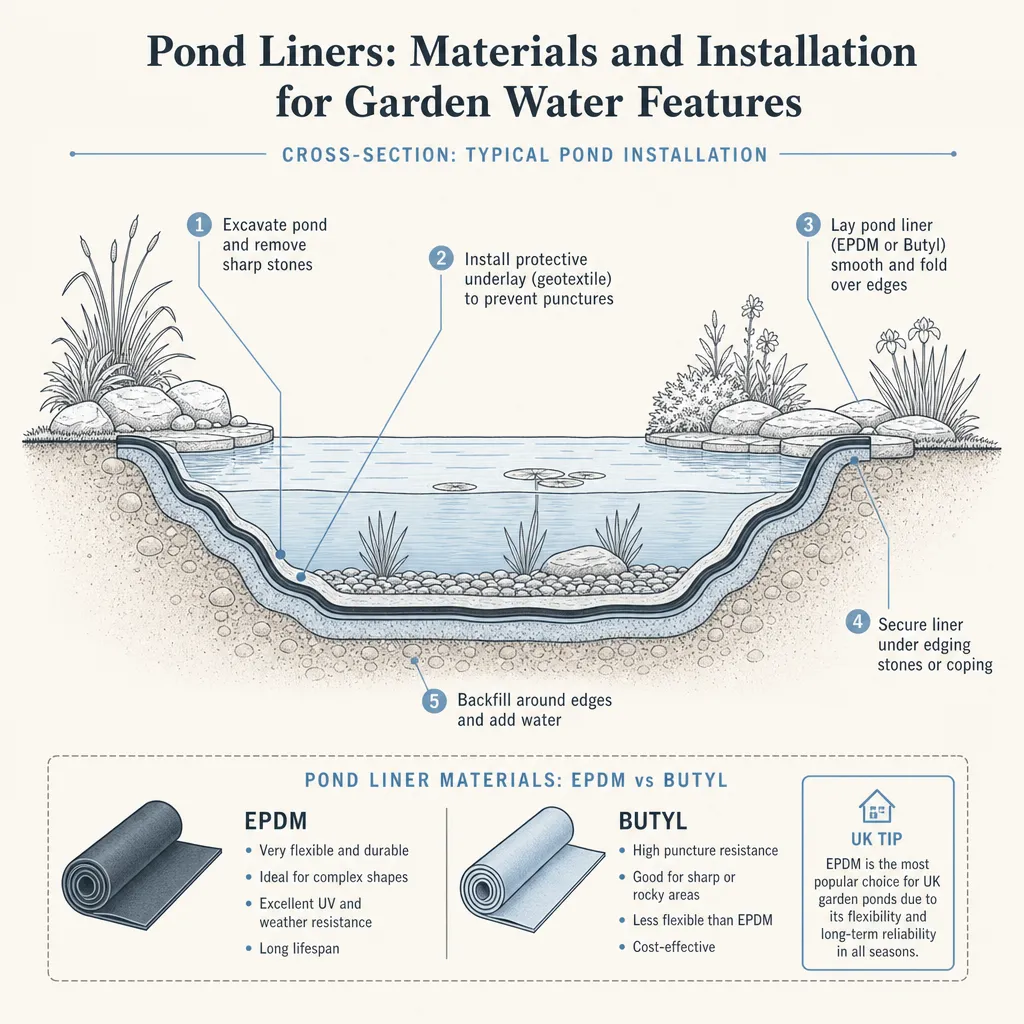
Pond Liners: Materials and Installation for Garden Water Features
Garden pond liners come in four main types: EPDM rubber, butyl rubber, PVC, and preformed fibreglass. EPDM and butyl offer the best longevity at 20–50 years, while PVC suits smaller budgets but may need replacing after 10–15 years. Choose based on pond size, budget, and whether you need flexibility for irregular shapes or planting shelves.
 Improvement & Build
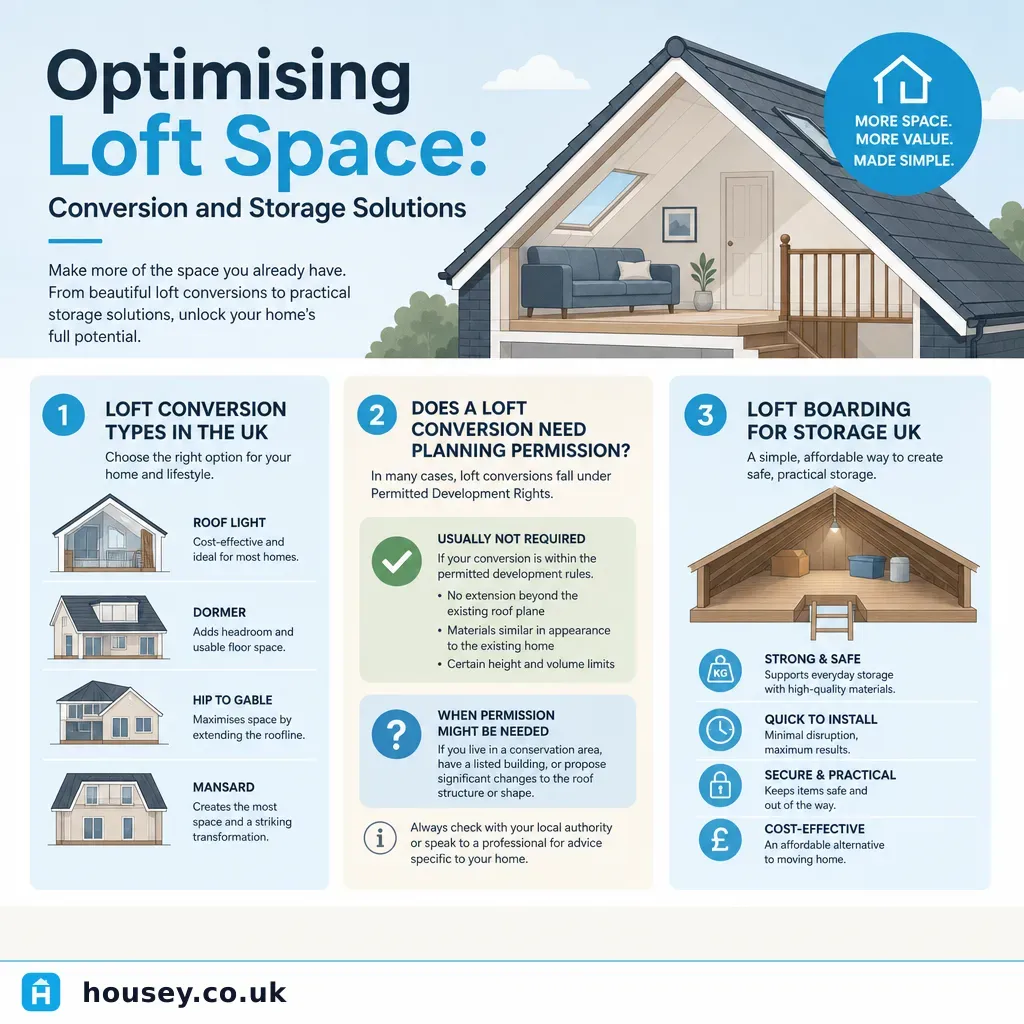
Optimising Loft Space: Conversion and Storage Solutions
Whether you convert your loft into a habitable room or optimise it for storage depends on available headroom, budget, and your goals. Most UK loft conversions fall under Permitted Development rights, but all habitable conversions require building control approval covering structure, fire safety, insulation, and staircase design.
 Surveys & Inspections
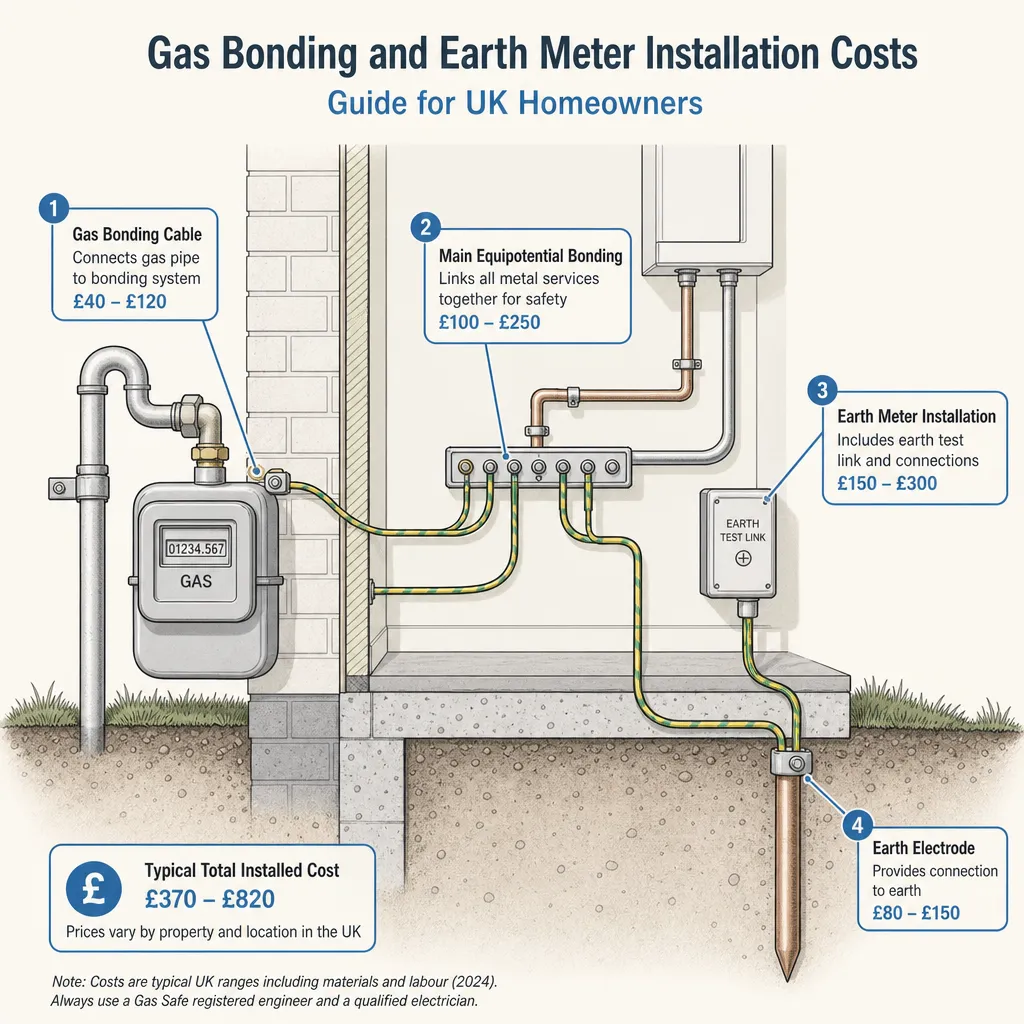
Gas Bonding and Earth Meter Installation Costs
Main gas bonding connects your gas pipework to the electrical earthing terminal, preventing dangerous voltage differences. Required under BS 7671, it costs around £150–£400 for a standard run. An EICR will flag missing bonding as a code-C2 or C1 observation, requiring prompt remediation by a registered electrician.
 Improvement & Build
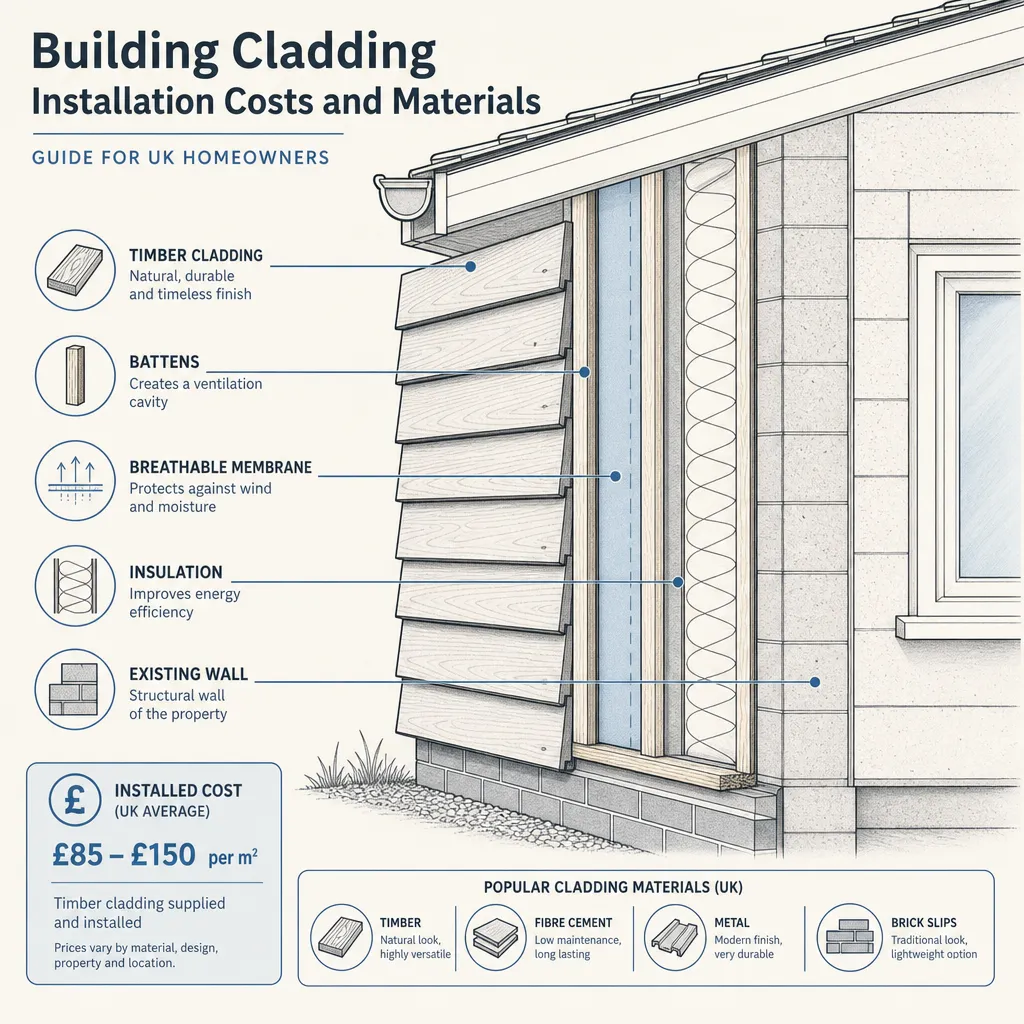
Building Cladding Installation Costs and Materials
External cladding in the UK typically costs £40–£200 per m² installed, depending on material choice, wall preparation, and scaffold requirements. Common options include timber, composite, uPVC, fibre cement, and brick slips. Most residential installations require building regulations compliance, and planning permission may be needed in conservation areas or for listed buildings.
 Energy & Retrofit
Radiant Barriers for Home Insulation: Effectiveness and Cost Analysis
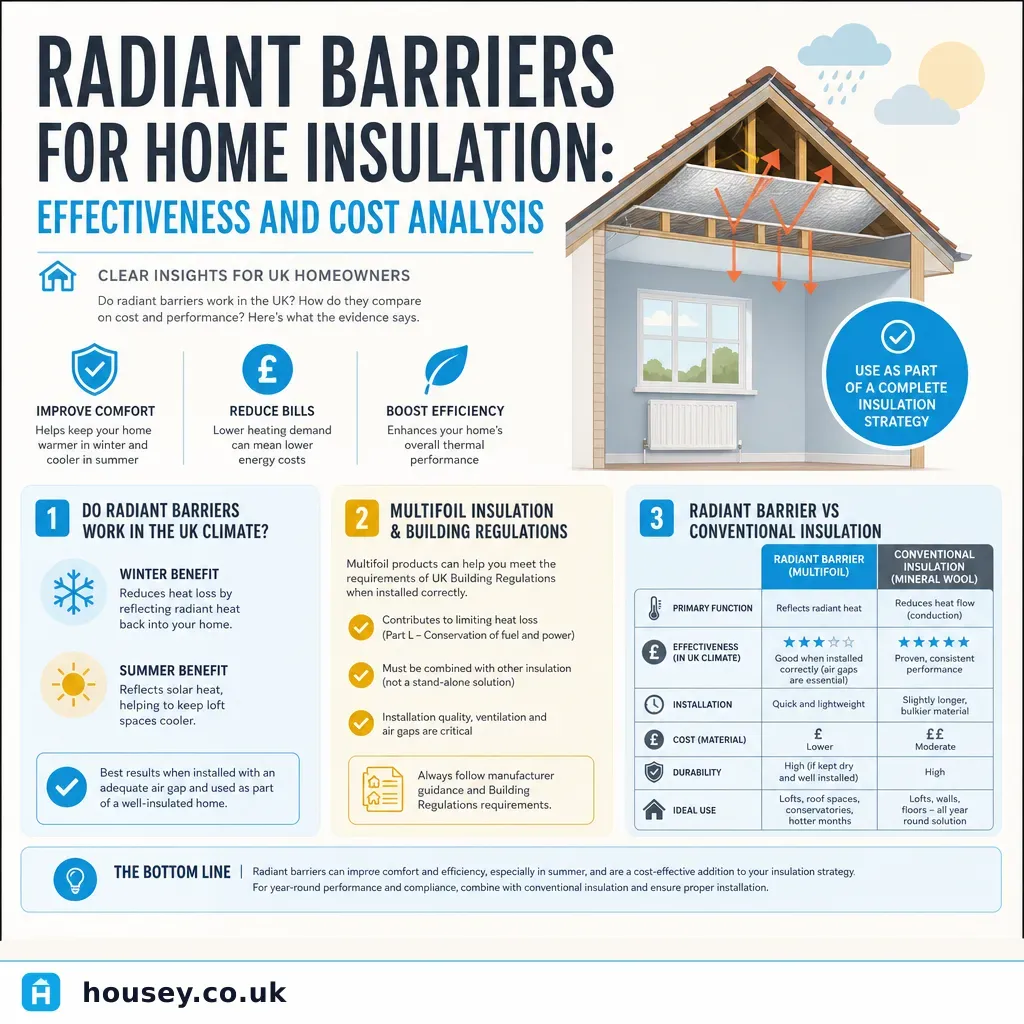
Radiant barriers reflect infrared heat rather than resisting conducted heat loss. In the UK's heating-dominated climate, they work best as a supplement to conventional insulation, not a replacement. Products must hold a BBA Agrément Certificate to support Building Regulations Part L compliance. Standalone U-value claims should always be independently verified.
 Surveys & Inspections
Identifying Damp and Timber Damage: When to Call a Surveyor
Damp and timber damage often appear together — damp conditions attract wood-boring insects and fungal decay. Warning signs include tide marks on walls, soft timber that probes easily, visible fungal growth, and small round exit holes in structural timbers. A PCA CSRT-qualified surveyor can diagnose the underlying cause and recommend appropriate remediation.
 Planning & Pre-Build
Prefabricated vs. Modular Home Construction: Methods Explained
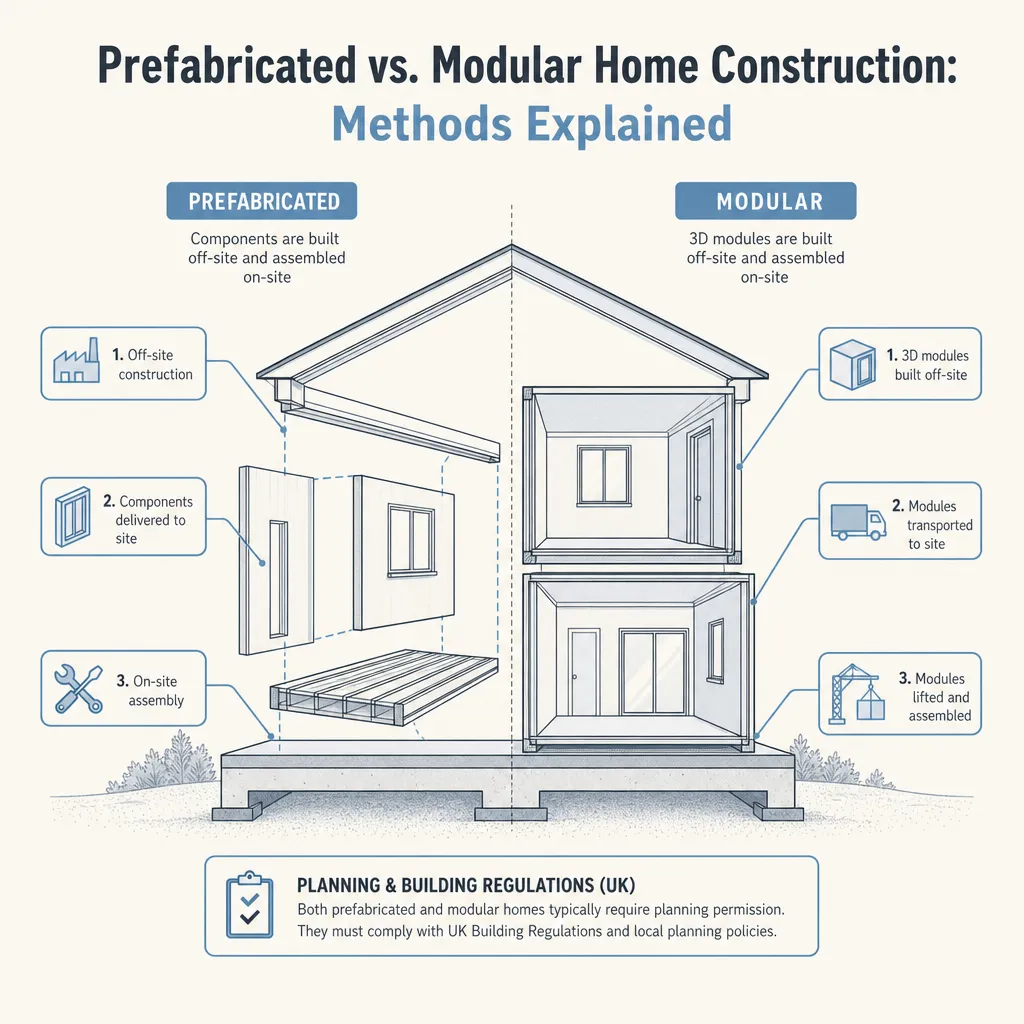
Prefabricated construction covers any home built partly or fully off-site, while modular construction is a specific type where factory-built volumetric units are craned into position. Both fall under Modern Methods of Construction, can achieve building regulations approval, and typically build faster than traditional methods — but they differ in design flexibility, mortgage availability, and site requirements.
 Planning & Pre-Build
Understanding Building Material Price Stability: Economic Factors and Supply Dynamics
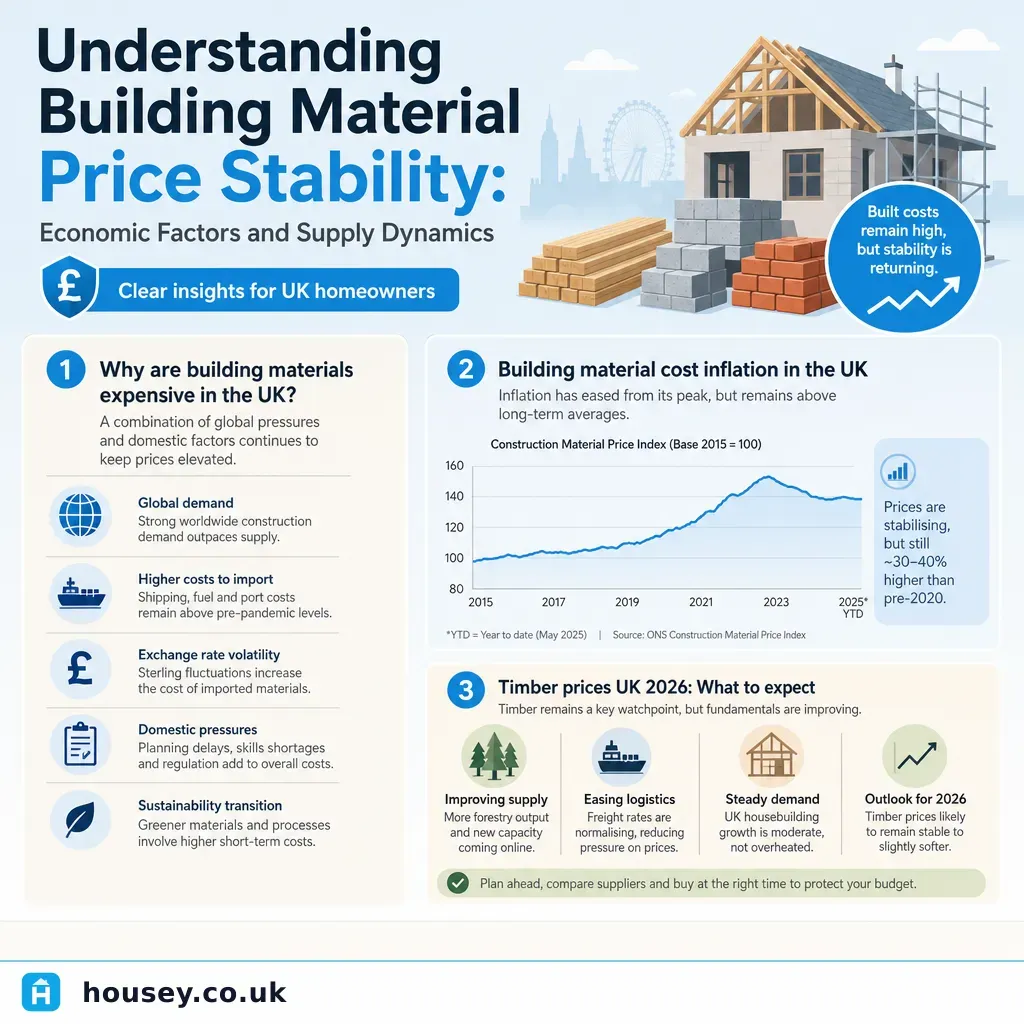
Building material prices in the UK are shaped by global commodity markets, energy costs, exchange rates, and domestic construction demand. Prices rose sharply in 2021–2022 but have since stabilised, though many materials remain above pre-pandemic levels. Understanding the right contract structure — fixed-price or cost-plus — is key to managing price risk on any building project.
 Improvement & Build
Herringbone Wood Flooring: Installation Methods and Costs
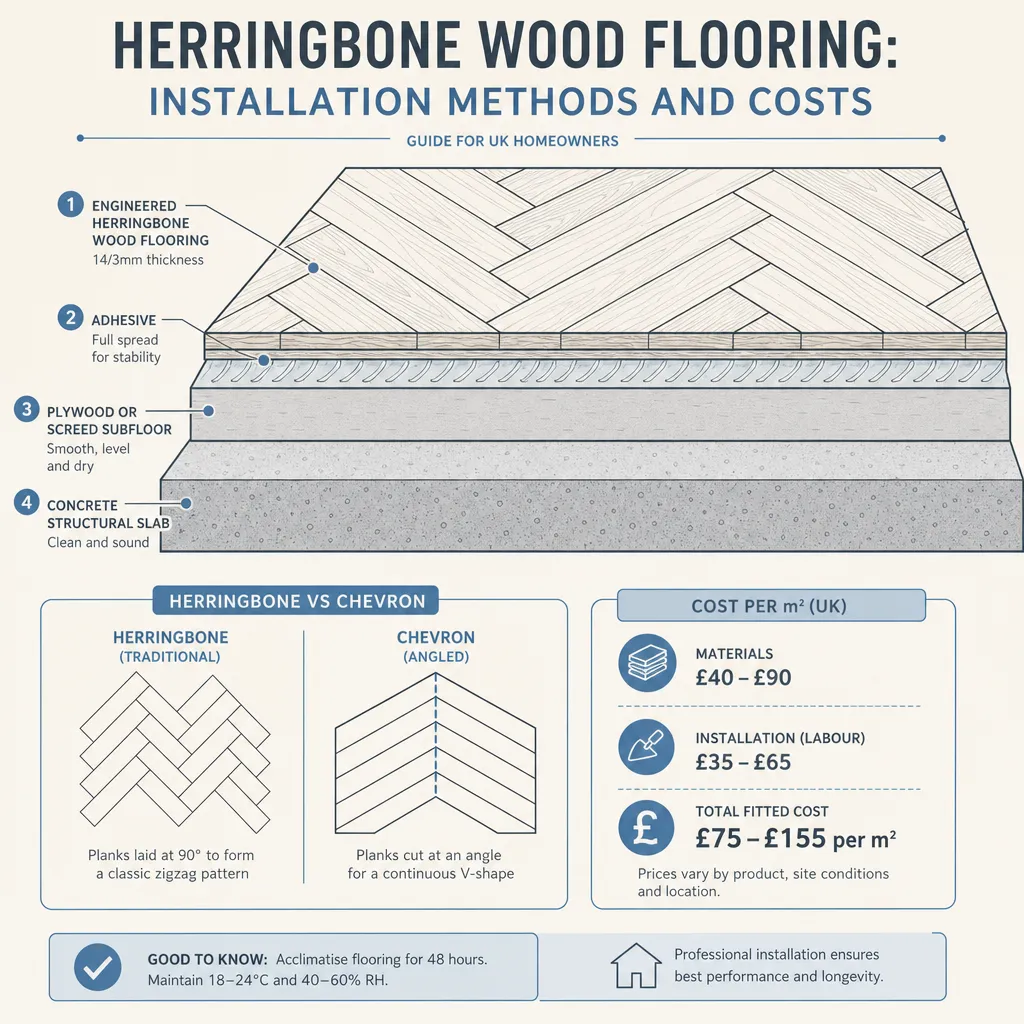
Herringbone wood flooring typically costs £60–£140 per square metre installed in UK homes, using engineered boards for most projects. Subfloor preparation to BS 8201 level tolerances is essential before any boards are laid. Allow 48–72 hours for acclimatisation and budget 10–15% extra material for the angled cuts at room edges.
 Improvement & Build
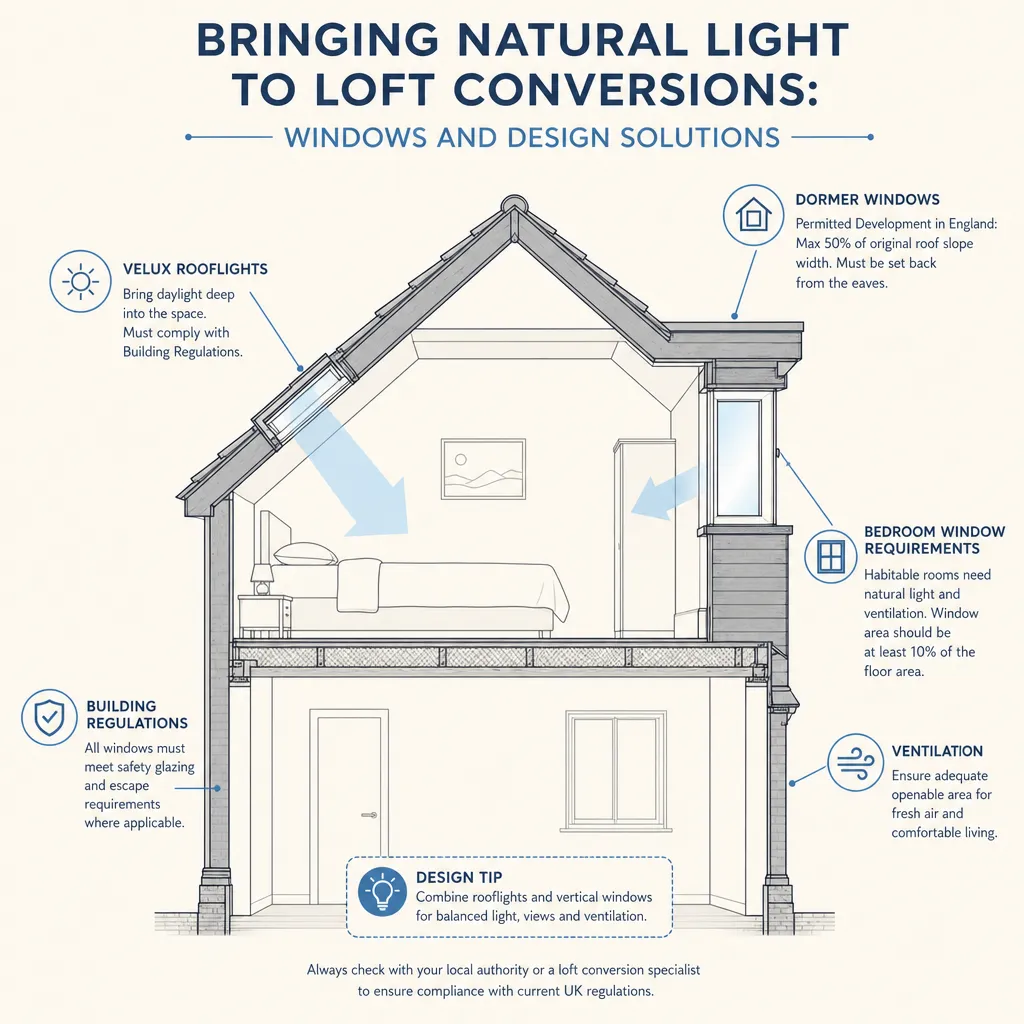
Bringing Natural Light to Loft Conversions: Windows and Design Solutions
Natural light in a loft conversion is usually achieved through roof lights, dormer windows, or gable-end glazing. Roof lights often fall within permitted development if they do not protrude more than 150 mm above the roof plane. Dormers may be permitted development on rear elevations, but those on listed buildings or in conservation areas generally need planning permission. Building Regulations require openable windows of at least 1/20th of the floor area for habitable rooms.
 General property advice
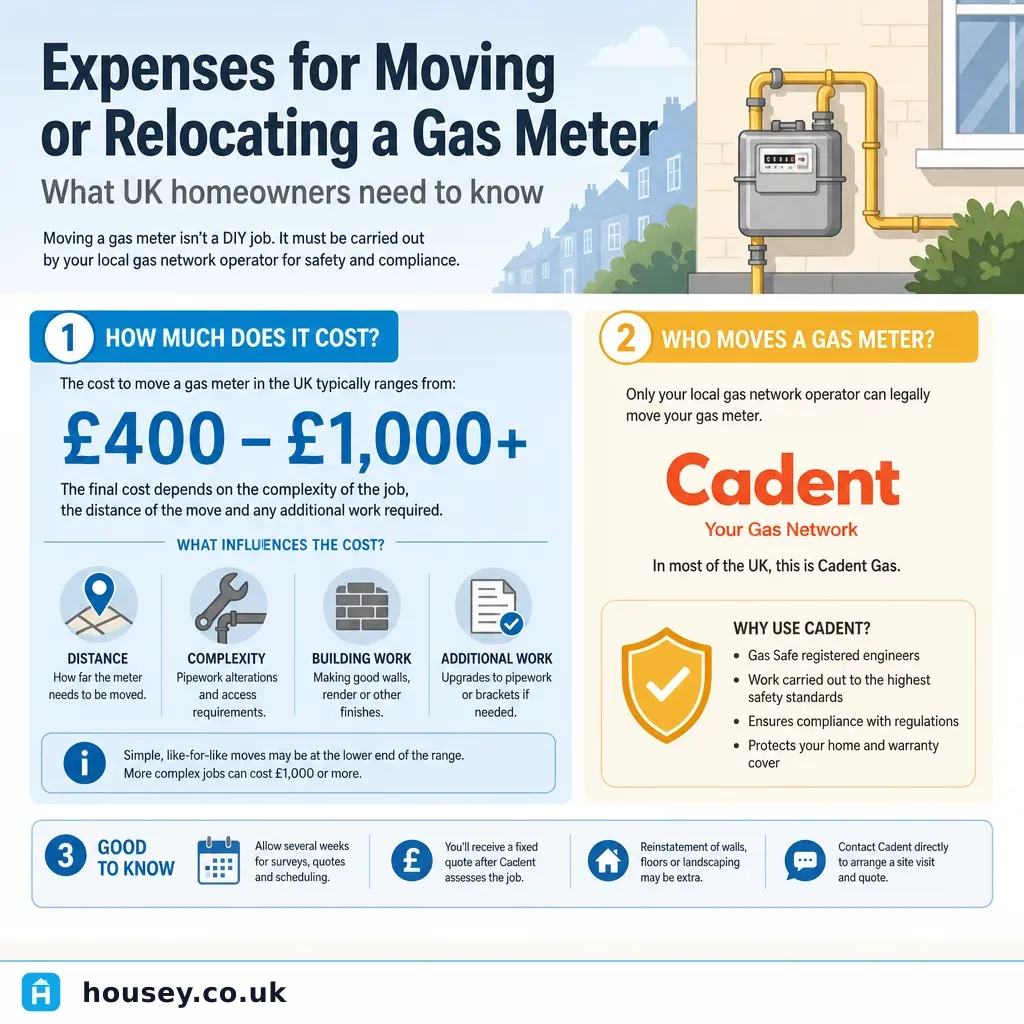
Expenses for Moving or Relocating a Gas Meter
Relocating a gas meter in the UK must be arranged through your regional gas distribution network operator, not a private engineer. Simple domestic moves typically cost £500–£1,500; complex relocations can exceed £3,000. Contact your gas supplier to start the process — they will coordinate with the network operator on your behalf.
 Improvement & Build
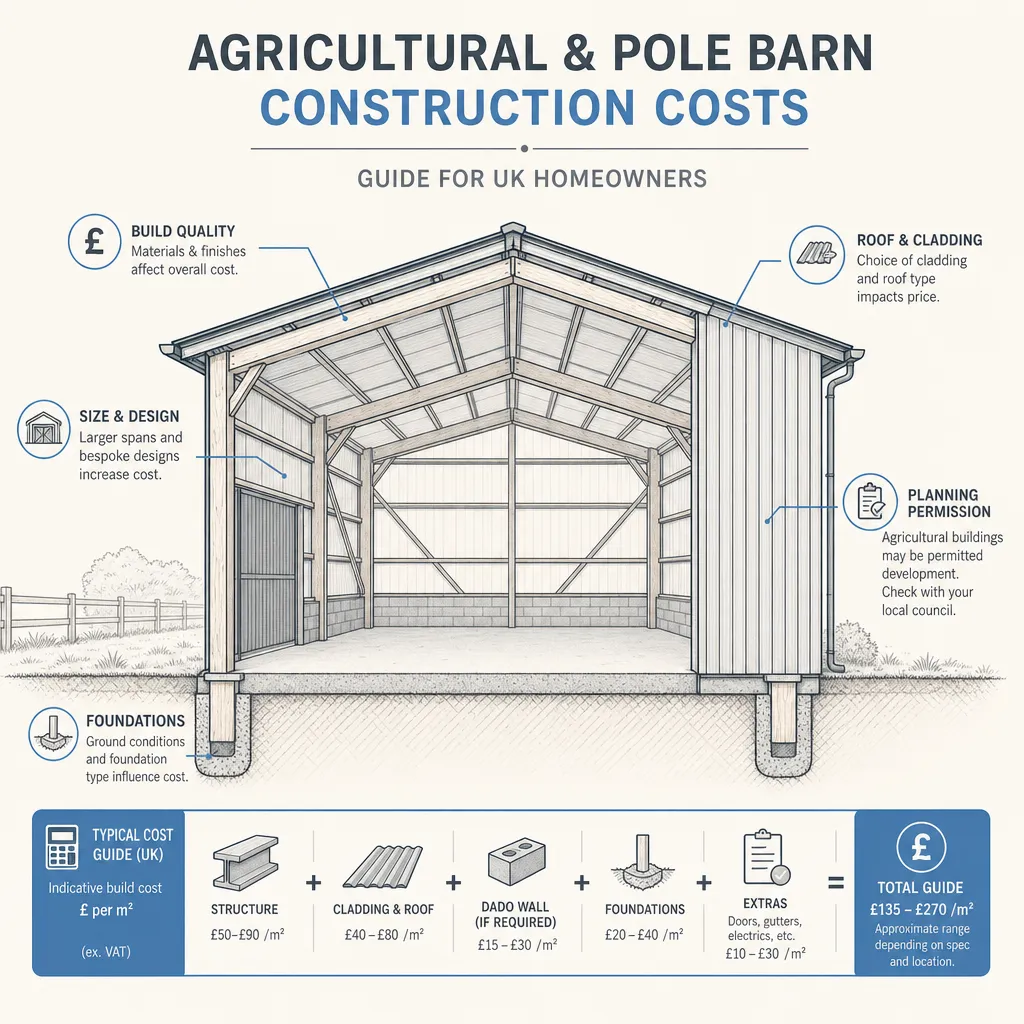
Agricultural and Pole Barn Construction Costs
Pole barn and agricultural building costs in the UK vary widely by size, frame type, cladding, and groundwork. A basic timber pole-frame structure typically costs £40–£80 per m², while a clad steel portal-frame building ranges from £100–£180+ per m². Planning rules depend on farm size, footprint, height, and location.