Knowledge Base
Property advice that actually helps
Researched, UK-specific guides for every stage of homeownership — from buying and surveys to retrofit, planning and major works.
 Improvement & Build
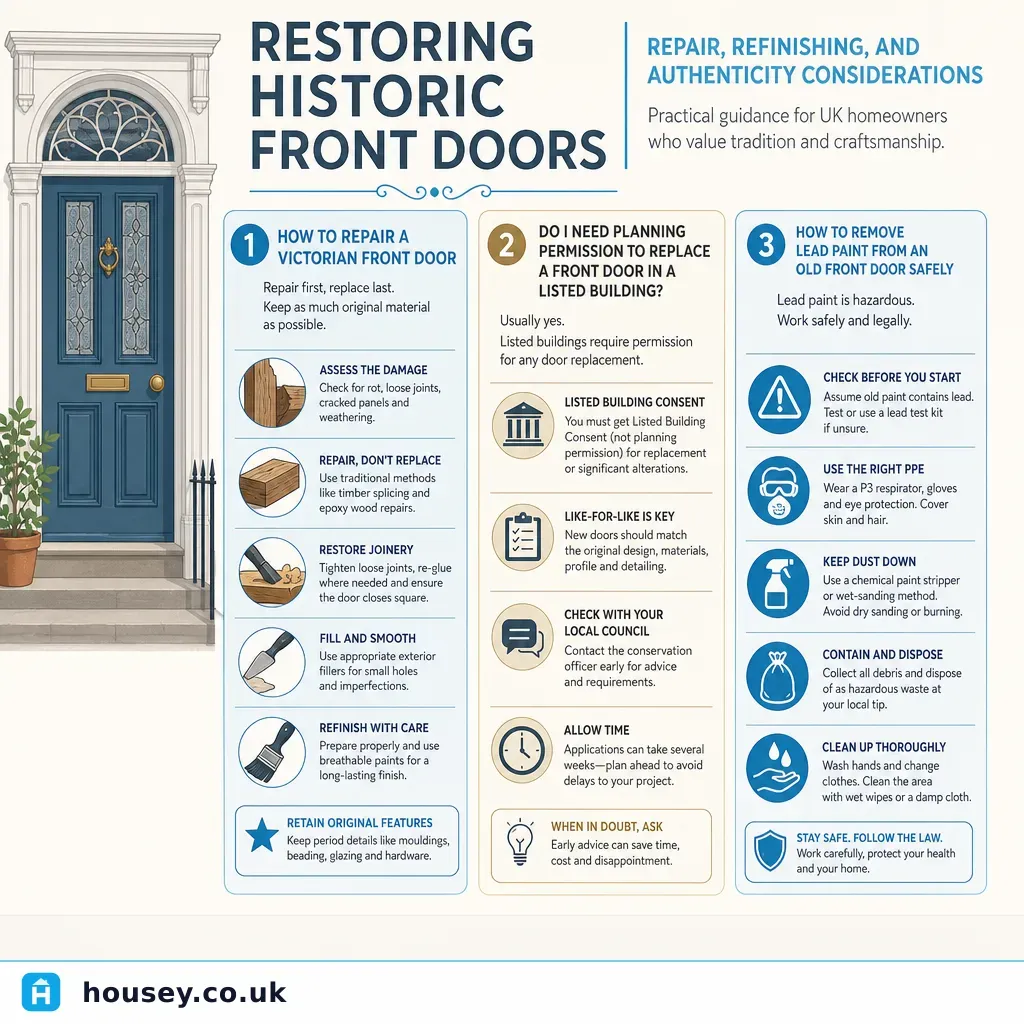
Restoring Historic Front Doors: Repair, Refinishing, and Authenticity Considerations
Historic front doors in good structural condition are almost always worth repairing rather than replacing. Assess for rot, use like-for-like softwood for splice repairs, and strip paint carefully — pre-1960s doors may contain lead. Listed buildings and conservation area properties may need consent before any alteration. Draught-proofing strips and threshold seals can substantially improve thermal performance without affecting appearance.
 Improvement & Build
Installing Replacement Windows in Your Home
Replacing windows in the UK requires compliance with Building Regulations Part L — a minimum centre-pane U-value of 1.2 W/m²K or a Band C energy rating. The simplest route is using a FENSA or CERTASS-registered installer who self-certifies compliance. Properties in conservation areas or listed buildings may need planning permission or listed building consent before any replacement work begins.
 Energy & Retrofit
Solar Panel Orientation: Optimising Direction and Placement for UK Properties
In the UK, solar panels generate the most electricity when facing true south at a pitch of 30–40 degrees. East- or west-facing roofs typically produce around 15–20% less than a south-facing array but remain financially viable for many households. Flat roofs can accommodate south-tilted frames, and north-facing slopes are generally not recommended as a primary array location.
 Improvement & Build
Professional Tree Removal: Safety, Regulations, and When You Need a Specialist
Professional tree removal in the UK often requires checking for Tree Preservation Orders or conservation area protections before any work begins. Felling larger trees involves significant safety risks from working at height and falling timber. A qualified arborist should always carry out or supervise the work, and local planning authority consent may be needed before felling proceeds.
 Planning & Pre-Build
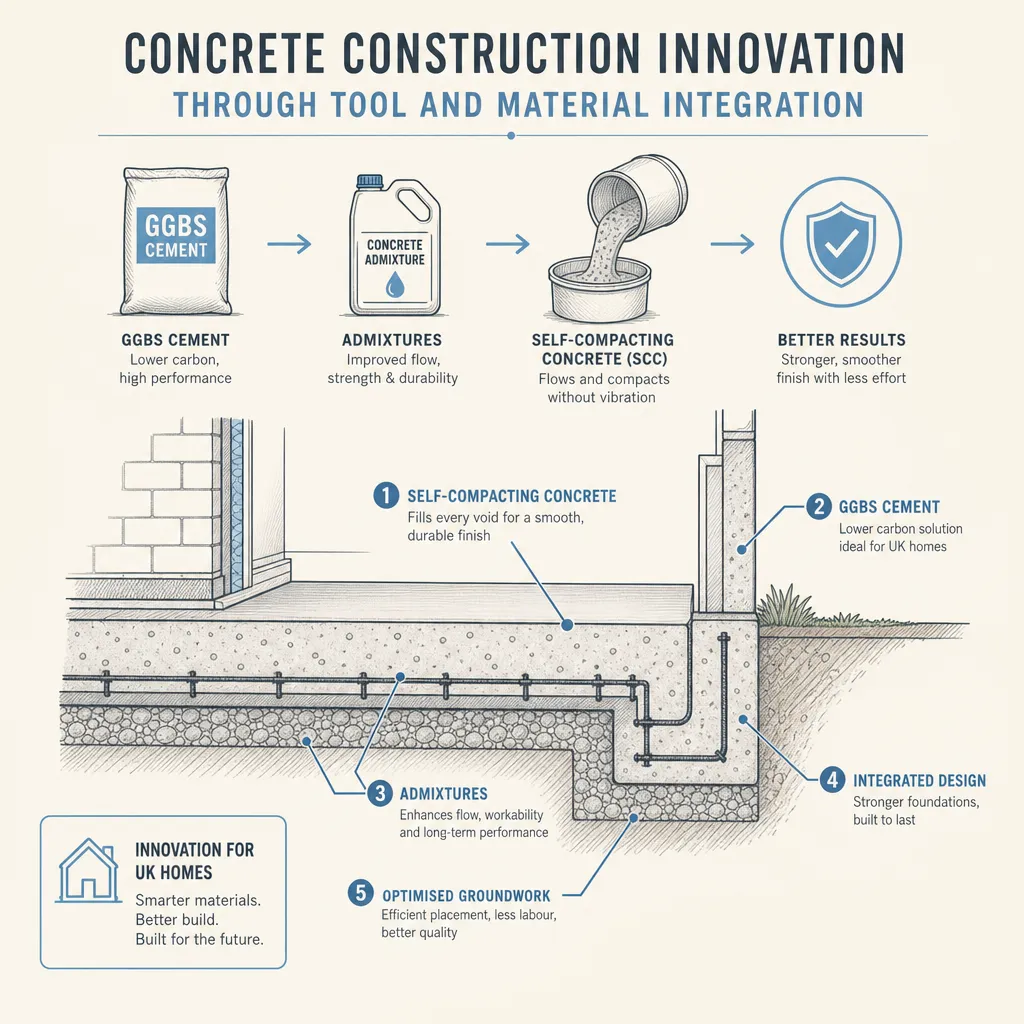
Concrete Construction Innovation Through Tool and Material Integration
Modern concrete mixes — self-compacting, fibre-reinforced, and low-carbon GGBS blends — require specific placement equipment and admixtures to perform correctly. Matching slump class to pump specification, understanding admixture effects on workability and curing, and using building control-compliant structural design are the key factors that determine whether a UK concrete project succeeds or fails.
 Improvement & Build
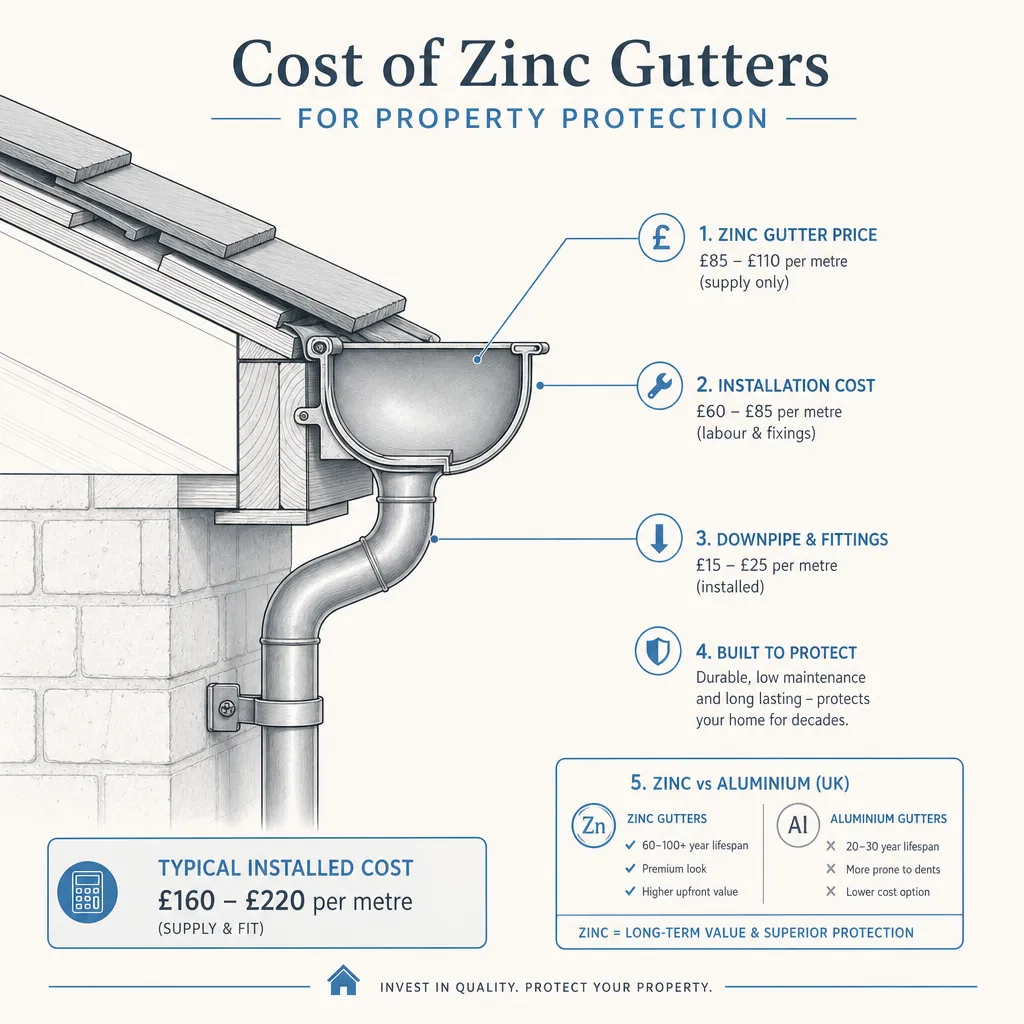
Cost of Zinc Gutters for Property Protection
Zinc gutters cost around £60–£120 per metre installed in the UK, depending on profile complexity, property type, and scaffolding requirements. They last 50–100 years and self-patinate to resist corrosion, making them a strong long-term choice despite a higher upfront cost than uPVC or aluminium. Specialist installation is essential.
 Buying & Moving
Specialist Piano Moving and Handling Services for High-Value Items
Specialist piano and high-value item moving requires crews with appropriate equipment, training, and insurance that most standard removal firms don't carry. Before booking, confirm the mover has experience with your specific item type, carries all-risks transit insurance covering the full replacement value, and will provide condition reports before and after the move.
 Surveys & Inspections
RICS Home Survey Cost Guide for Property Buyers
A RICS Level 2 Home Survey typically costs £400–£700 in the UK, while a Level 3 Building Survey ranges from £600 to £1,500 or more. A Level 1 Condition Report starts at around £250. Prices vary by property size, age, location, and surveyor. Always confirm whether VAT is included and what the report covers before booking.
 Energy & Retrofit
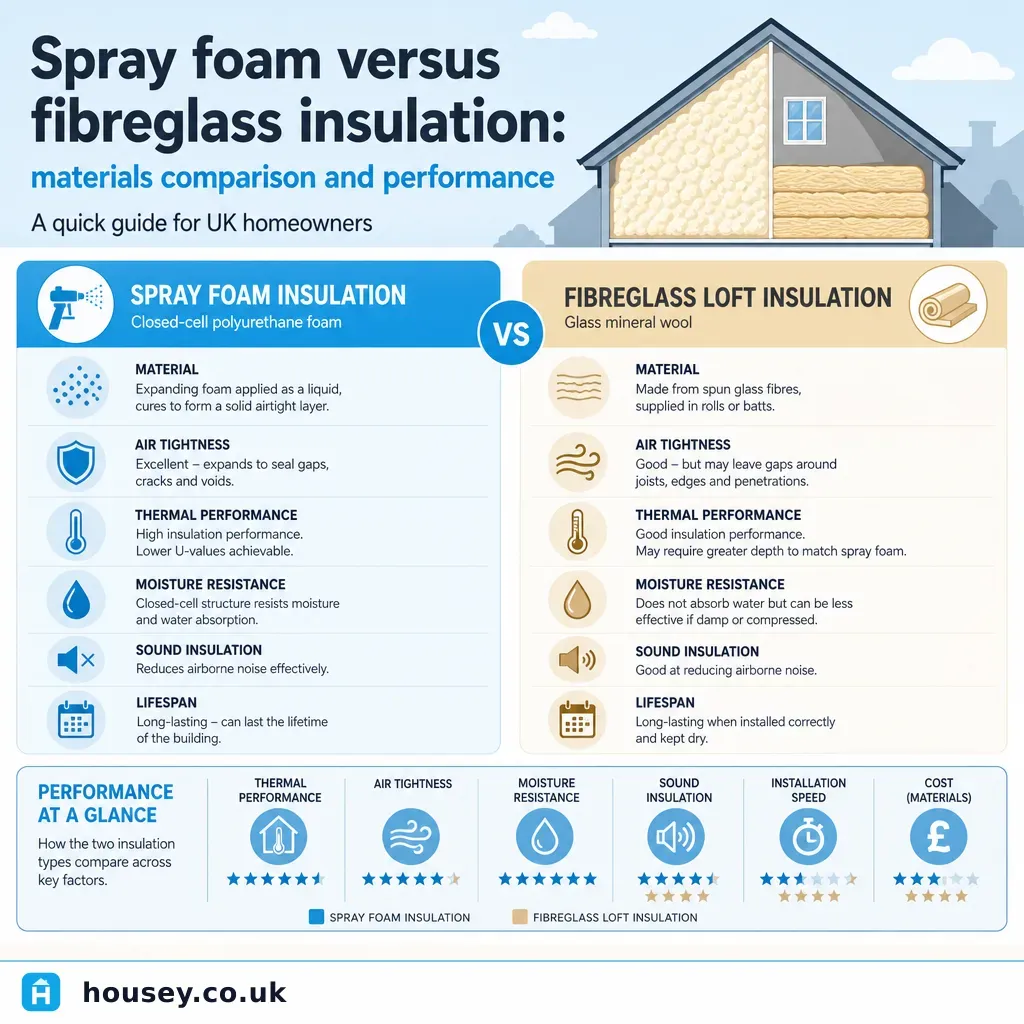
Spray foam versus fibreglass insulation: materials comparison and performance
Spray foam insulation offers higher thermal performance per centimetre than fibreglass, but in UK homes it carries significant mortgage and resale risks when applied to roof timbers. Fibreglass rolls remain the most widely used and cost-effective loft insulation option. The right choice depends on your property type, planned application, and whether you may sell or remortgage within the next decade.
 Improvement & Build
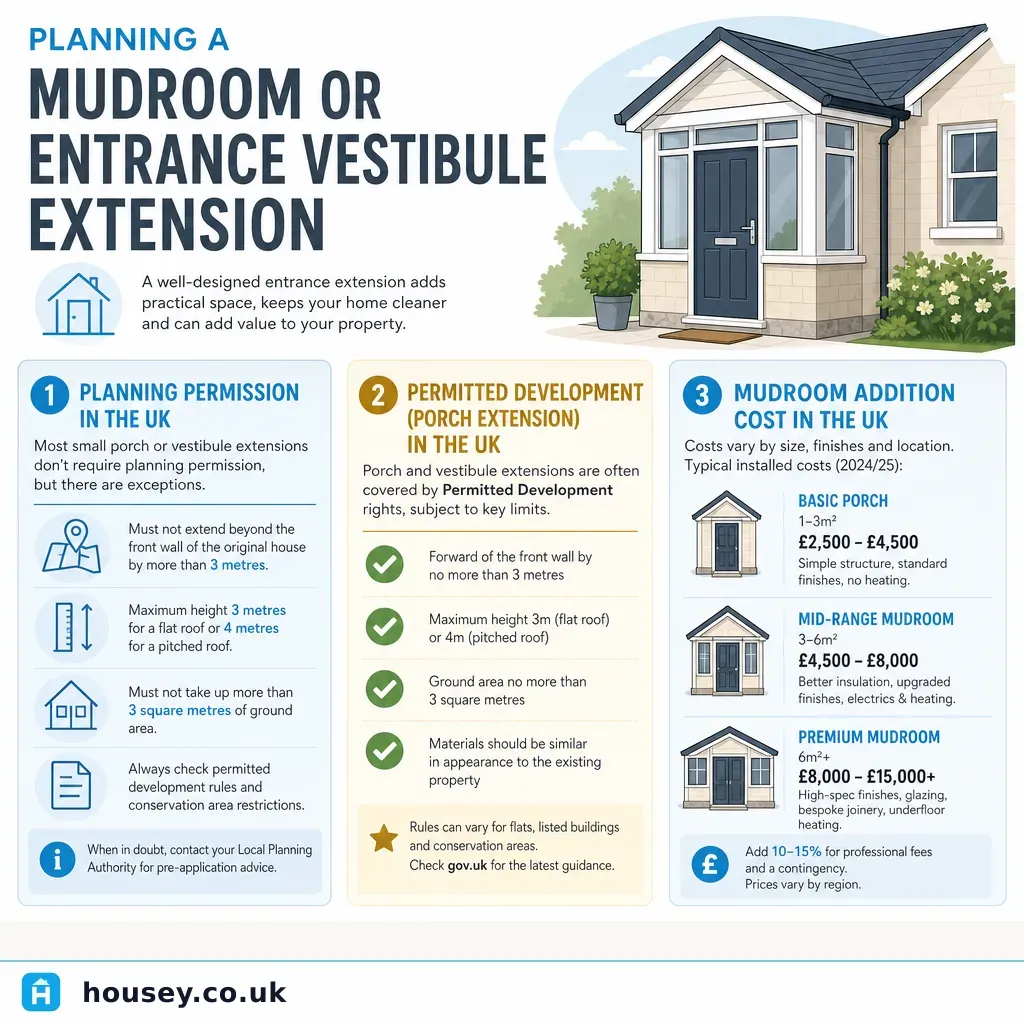
Planning a Mudroom or Entrance Vestibule Extension
A mudroom or entrance vestibule extension often qualifies as permitted development in England if it is no more than 3 m², no taller than 3 m, and more than 2 m from a highway boundary. Building regulations apply regardless of planning status. Listed buildings, conservation areas, and properties with Article 4 Directions will need a formal planning application.
 Buying & Moving
London Property Market Conditions And Buyer Advisory For Investors
London's property market varies enormously by borough, tenure, and property type. Buyers and investors should obtain an independent RICS survey before committing, commission a valuation separate from any mortgage valuation, and take specialist legal advice on leasehold terms, service charges, and ground rent before exchange. Market conditions change quickly and differ substantially from national statistics.
 Energy & Retrofit
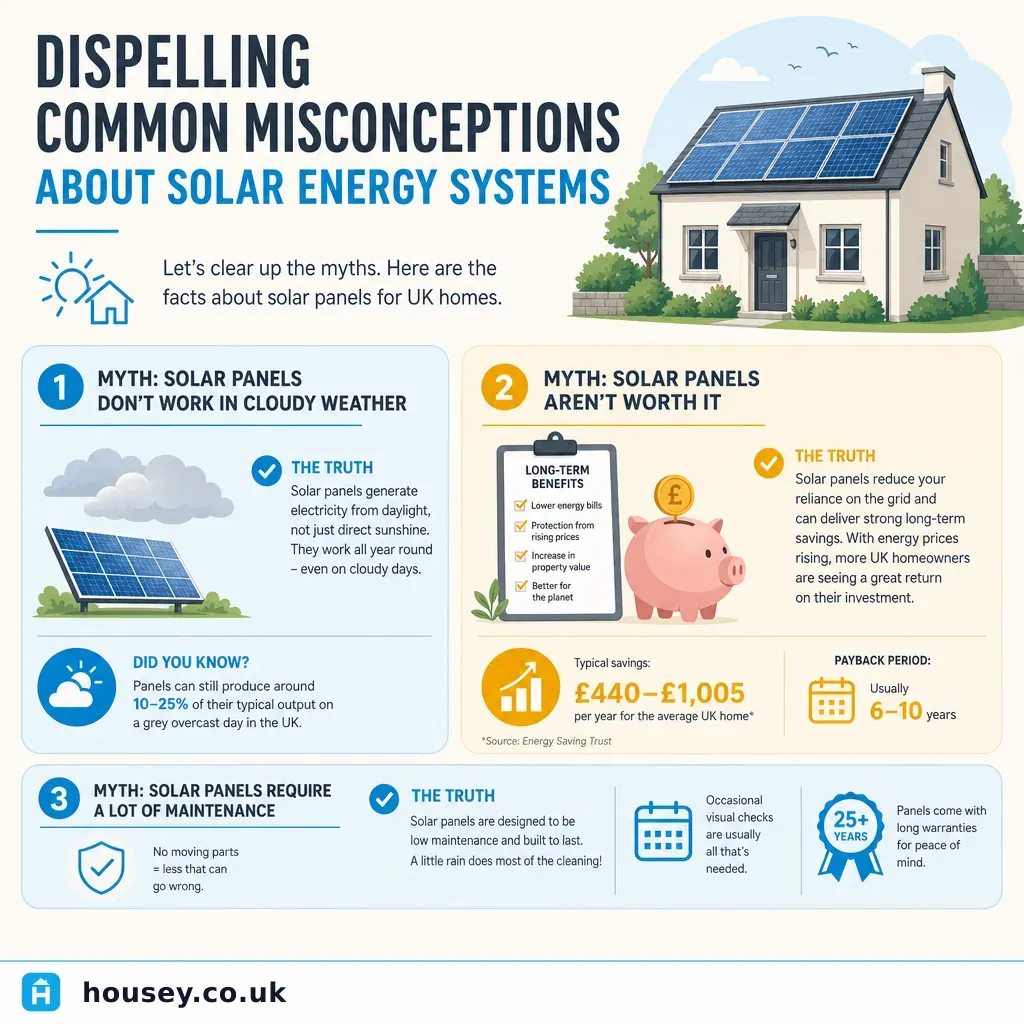
Dispelling Common Misconceptions About Solar Energy Systems
Most common solar panel myths — that panels don't work in cloudy UK weather, take decades to pay back, or cause net environmental harm — are not supported by evidence. UK solar panels generate electricity on overcast days, typically pay back in 6–10 years, and produce net-zero-carbon electricity for most of their 25–30 year lifespan.