Knowledge Base
Property advice that actually helps
Researched, UK-specific guides for every stage of homeownership — from buying and surveys to retrofit, planning and major works.
 Improvement & Build
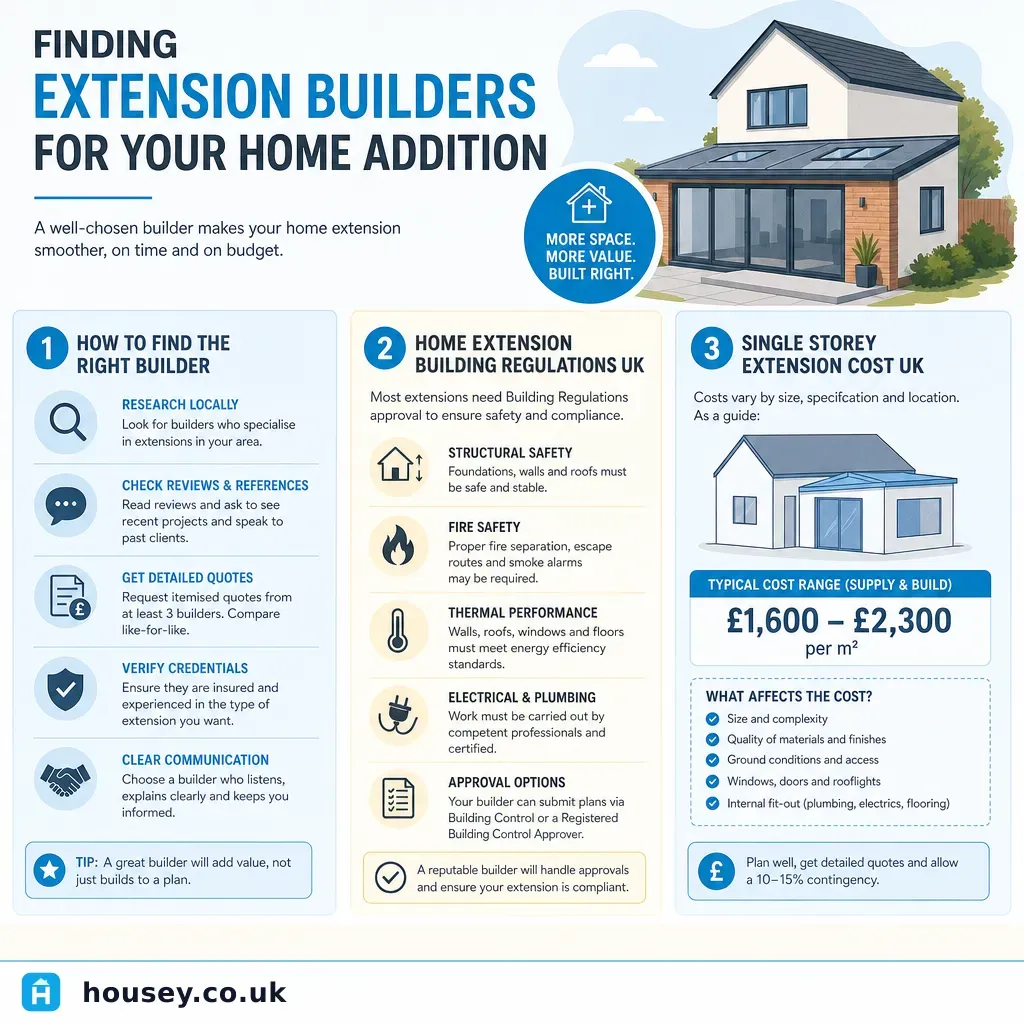
Finding Extension Builders For Your Home Addition
Finding the right extension builder means checking public liability insurance, FMB or TrustMark membership, recent references, and getting quotes on a full written specification. Building Regulations approval is required for all extensions regardless of planning status. Compare at least three quotes and confirm the builder will obtain a completion certificate.
 Buying & Moving
Property Information Questionnaires: What You Need to Complete for Sale
When selling a home in England and Wales, you must complete the TA6 Property Information Form and TA10 Fixtures, Fittings and Contents form before contracts can be exchanged. Leasehold sellers also complete a TA7. Your answers carry legal weight — inaccurate responses can give a buyer grounds for a misrepresentation claim under the Misrepresentation Act 1967.
 Energy & Retrofit
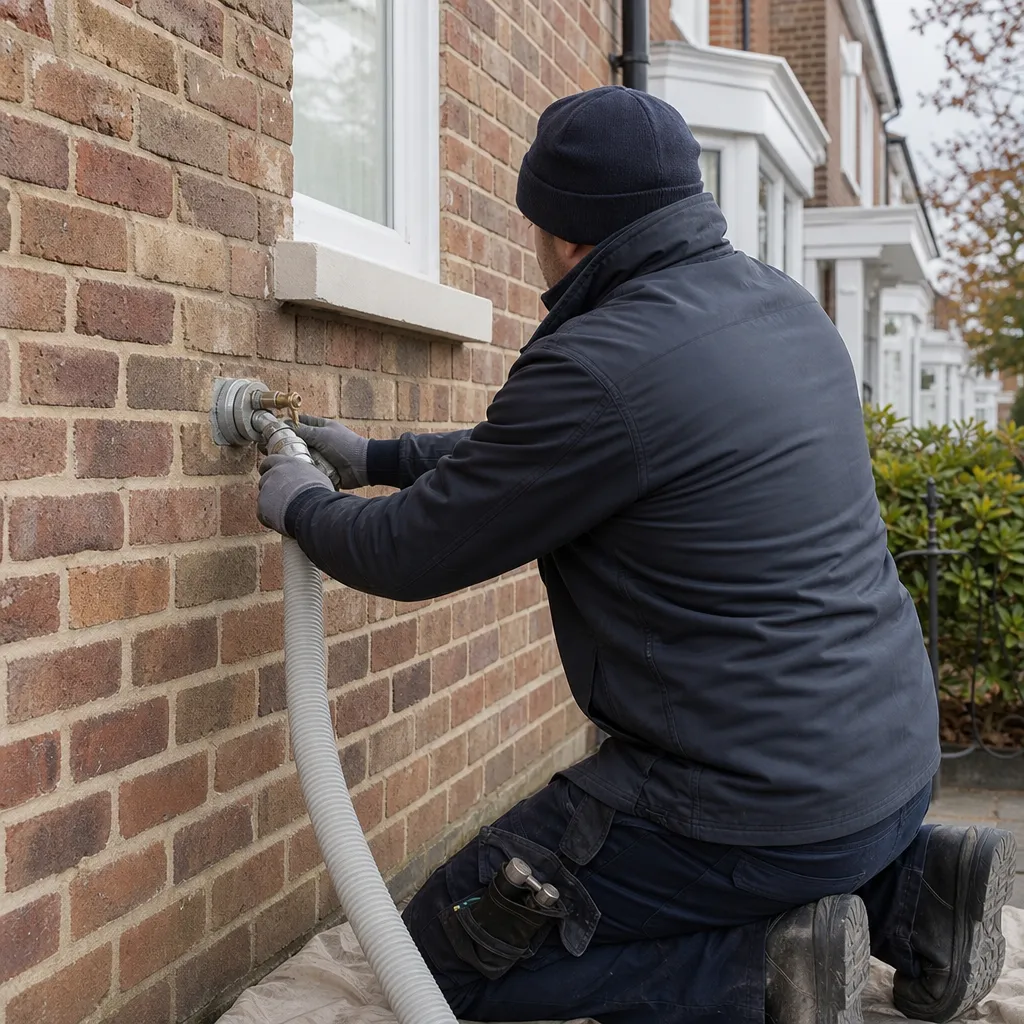
Cavity Wall Insulation: Benefits, Types and Considerations
Cavity wall insulation fills the gap between a property's inner and outer masonry leaves with material such as mineral wool, EPS beads, or injected foam, reducing heat loss through walls by up to 35% and improving EPC ratings. Suitability depends on cavity width (typically at least 50 mm), wall condition, and the property's exposure to wind-driven rain — an assessment is needed before installation.
 Improvement & Build
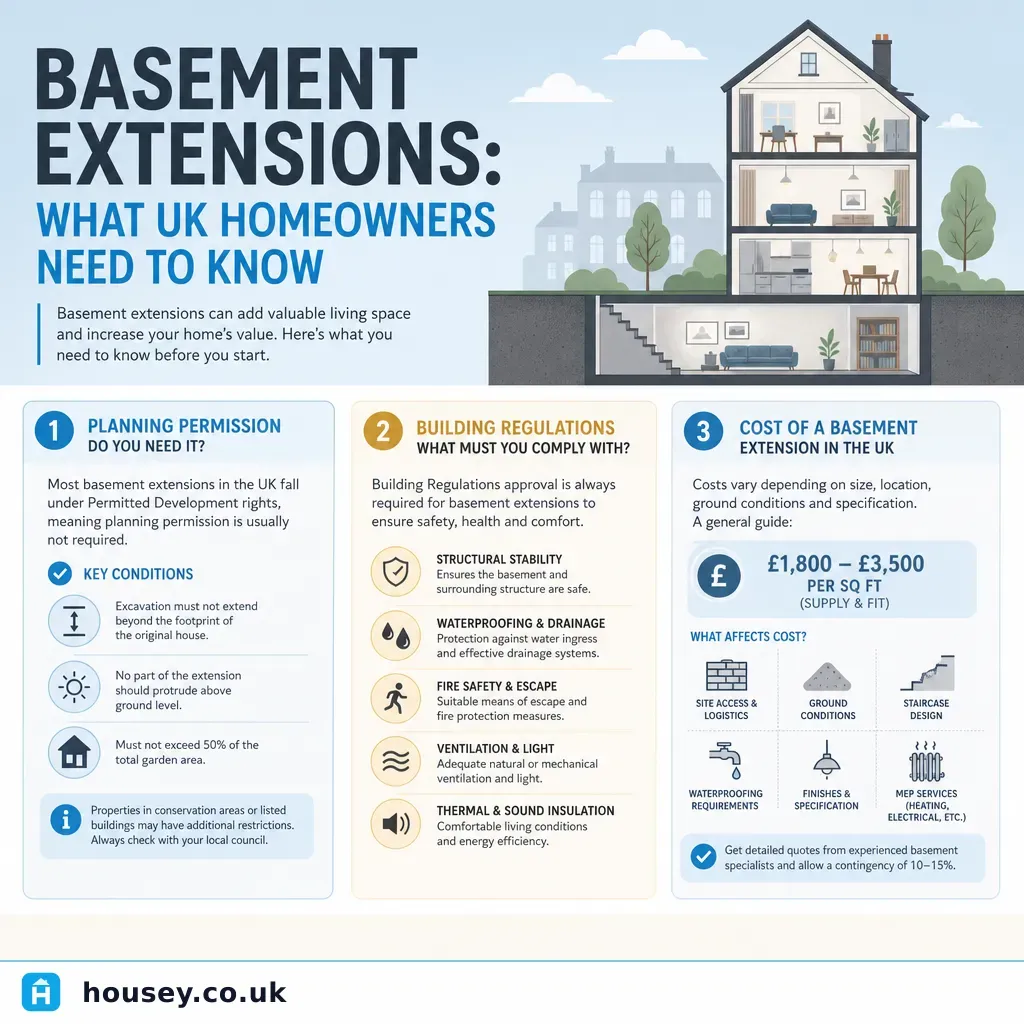
Basement Extensions: What UK Homeowners Need to Know
Most basement extensions in the UK require full planning permission and Building Regulations approval under Parts A, C, F, H, and L. The Party Wall etc. Act 1996 applies where excavation is close to neighbouring foundations. Specialist structural engineers and waterproofing contractors are essential. Costs typically range from £2,000–£3,500 per square metre.
 Improvement & Build
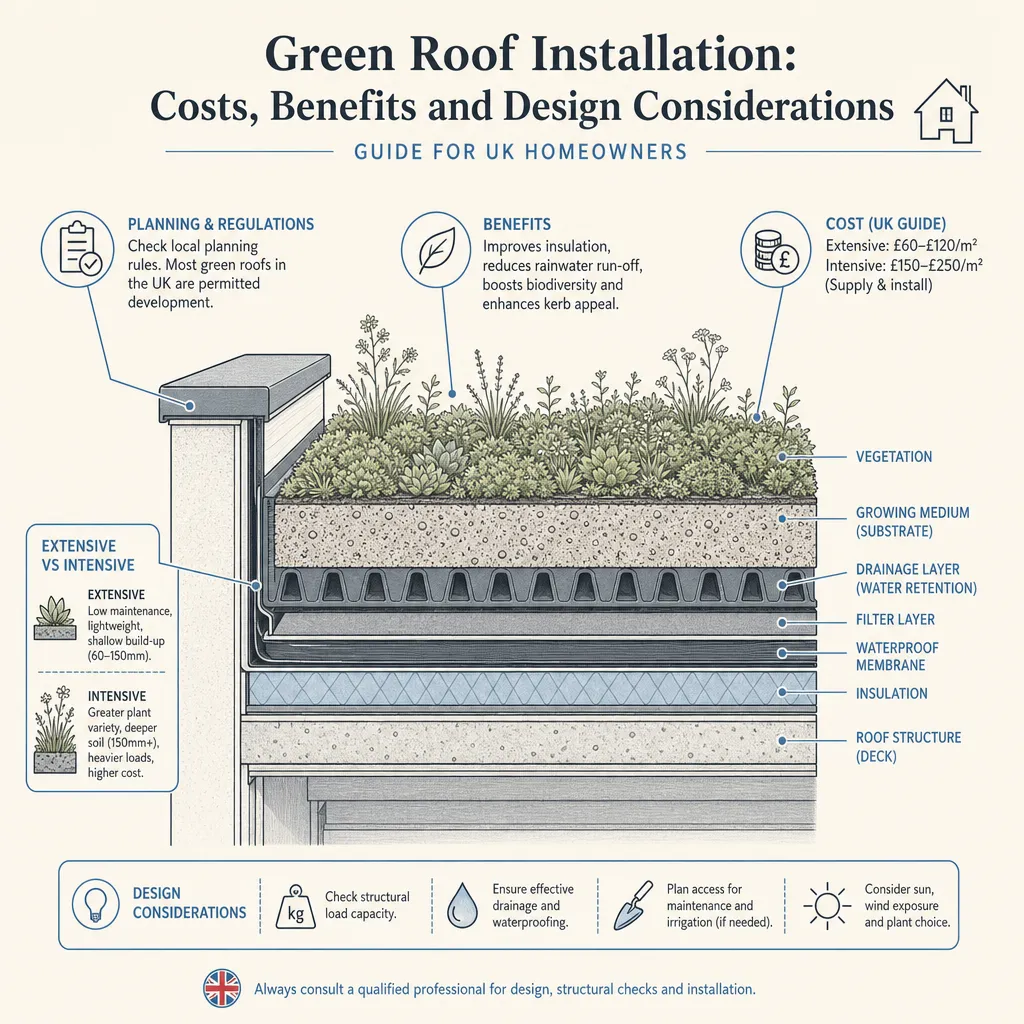
Green Roof Installation: Costs, Benefits and Design Considerations
A green roof costs roughly £50–£150 per m² installed for a shallow extensive system, or £100–£500+ per m² for a deeper intensive planted roof. You will need a structural engineer to confirm your roof can bear the additional load before work starts. Planning permission may be required in conservation areas or on listed buildings, and building regulations will usually apply.
 Planning & Pre-Build
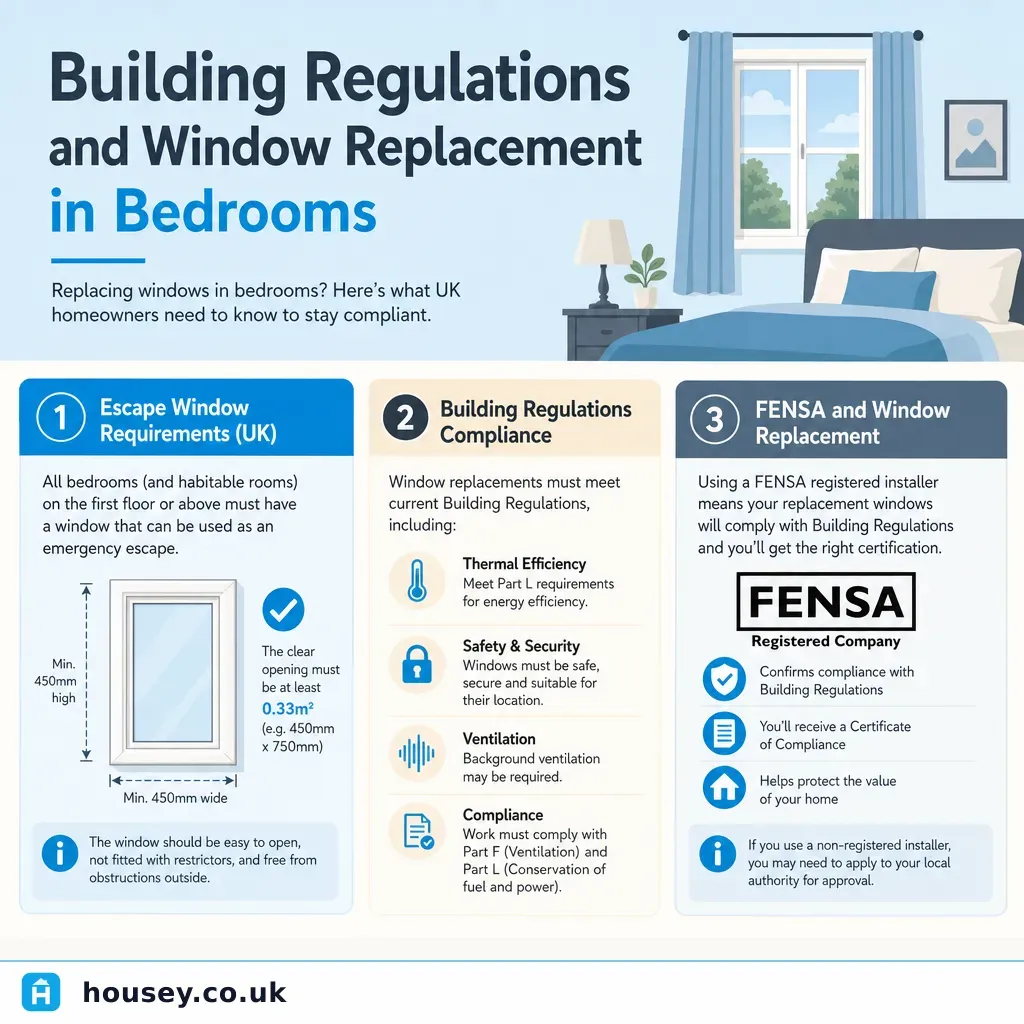
Building Regulations and Window Replacement in Bedrooms
Most bedroom window replacements in England trigger building regulations under Part L (energy) and Part B (fire escape). A FENSA- or CERTASS-registered installer can self-certify and notify the local authority on your behalf. Escape windows must achieve a minimum 0.33 m² unobstructed opening, with no dimension below 450 mm and a sill no higher than 1,100 mm from the floor.
 Improvement & Build
Home Pride Index 2023: UK Homeowner Sentiment and Property Investment
In 2023, UK homeowners faced the dual challenge of the highest interest rates since the 2008 financial crisis and the first annual house price falls in over a decade. Renovation activity became more strategic and selective: energy efficiency remained a top priority, the Boiler Upgrade Scheme grant rose to £7,500, but larger discretionary projects were scaled back as mortgage costs rose and household budgets tightened.
 Planning & Pre-Build
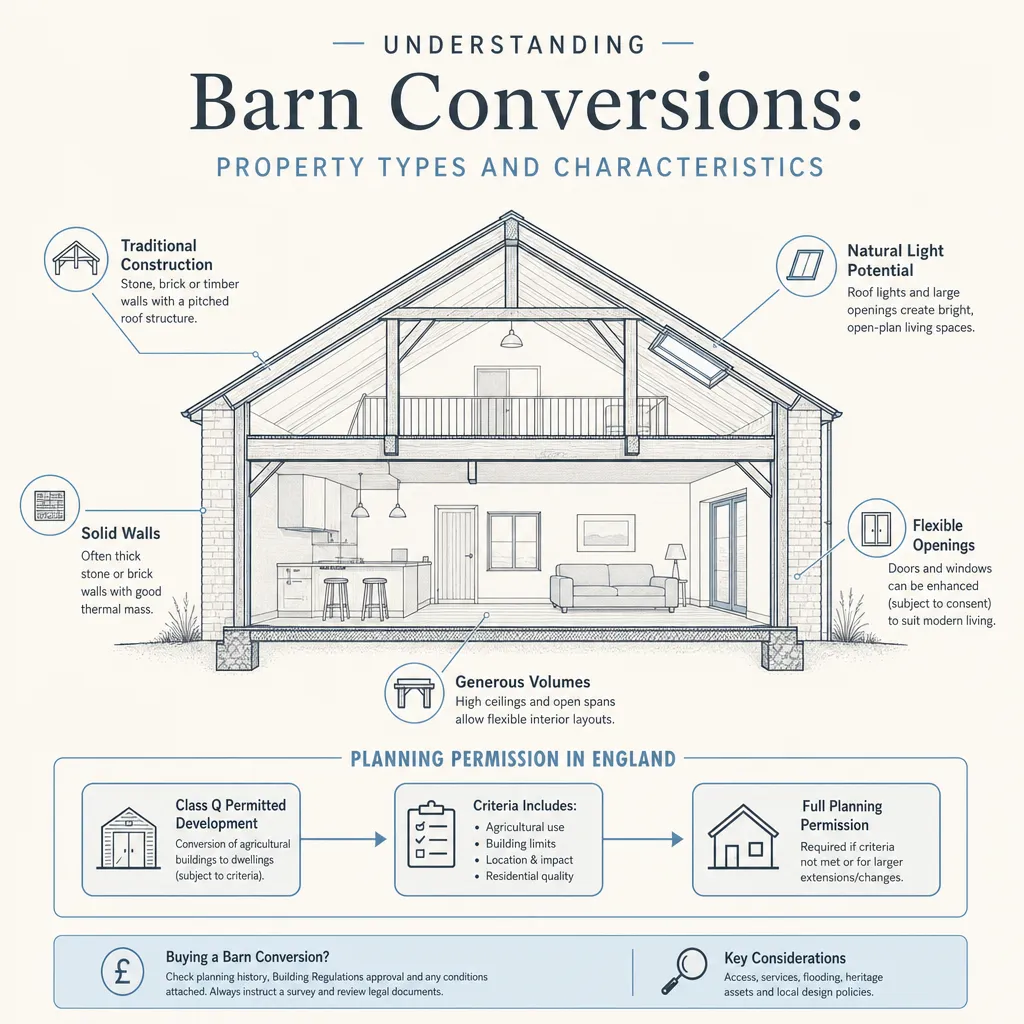
Understanding Barn Conversions: Property Types and Characteristics
A barn conversion is an agricultural building — typically a former threshing barn, cattle shed, or granary — converted into residential use. In England, this most often requires either full planning permission or a prior approval application under Class Q permitted development rights. Each conversion is unique: construction type, insulation strategy, planning history, and tenure all vary significantly and affect value and mortgageability.
 Surveys & Inspections
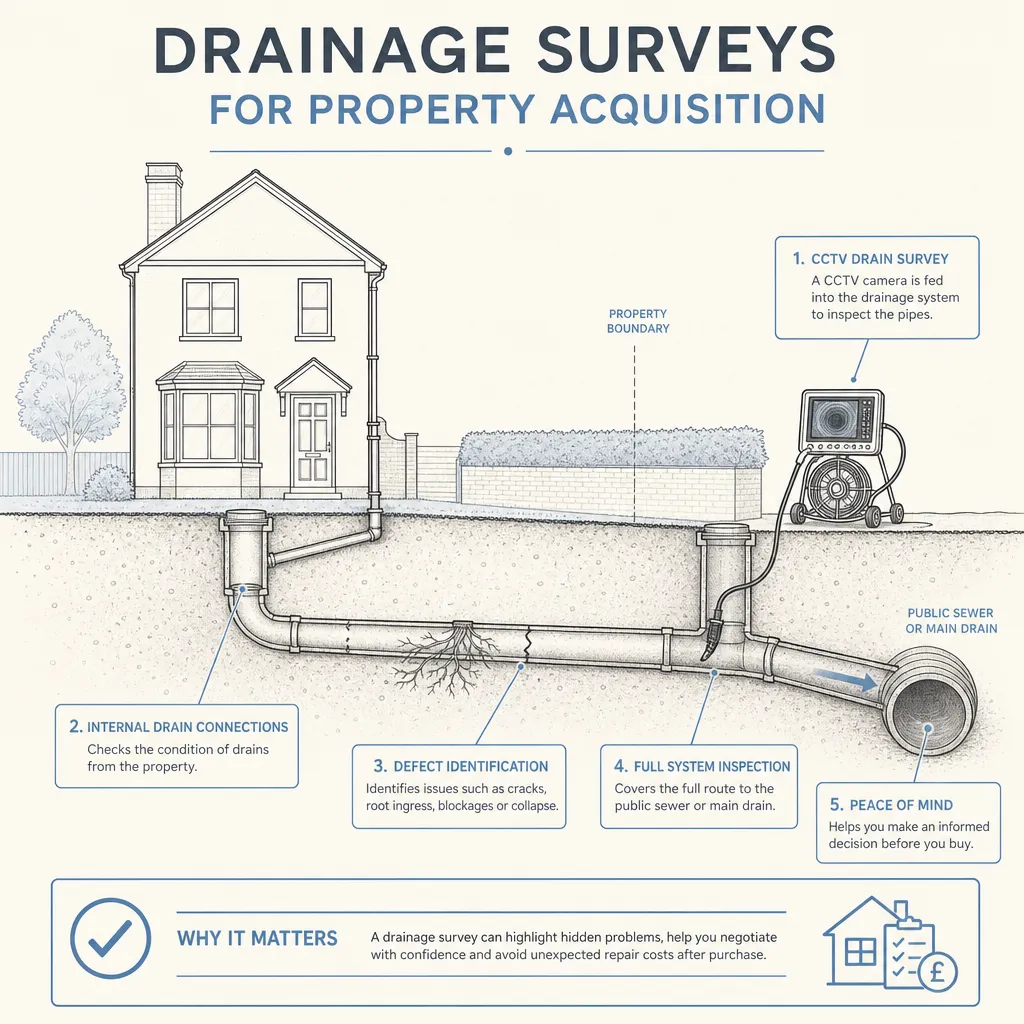
Drainage Surveys for Property Acquisition
A drainage survey — typically a CCTV camera inspection of underground drain runs — helps identify blockages, collapsed sections, root ingress, and misconnections that would not be visible in a standard property survey. Commissioning one before exchange gives buyers leverage to negotiate repairs or request that the seller resolves defects before completion.
 Improvement & Build
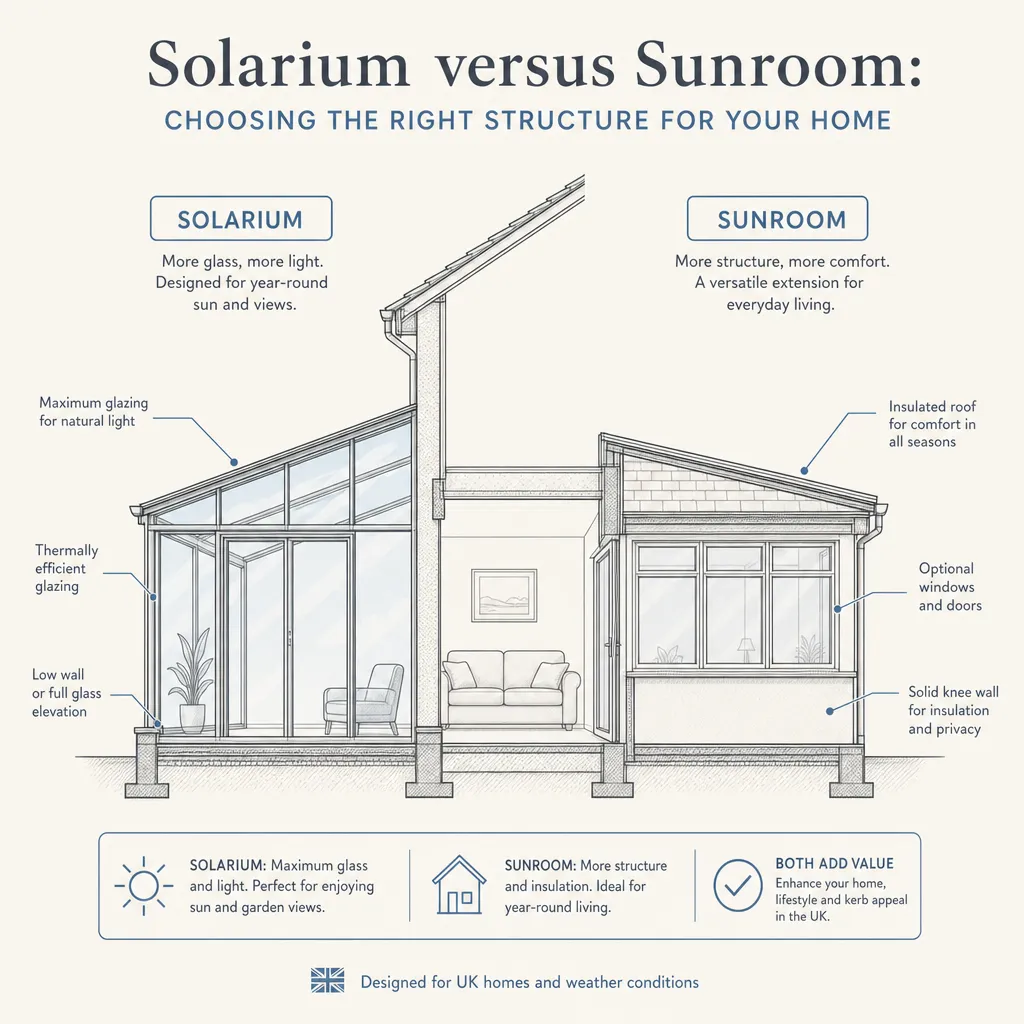
Solarium versus sunroom: choosing the right structure for your home
A solarium is a predominantly glazed structure designed for light and solar connection, best suited to seasonal use. A sunroom has solid insulated walls with glazed upper sections, can meet Building Regulations habitable room standards, and counts as floor area at valuation. The right choice depends on intended year-round use, budget, and whether formal habitable status matters to you.
 Improvement & Build
Cost-Saving Strategies for House Building Projects
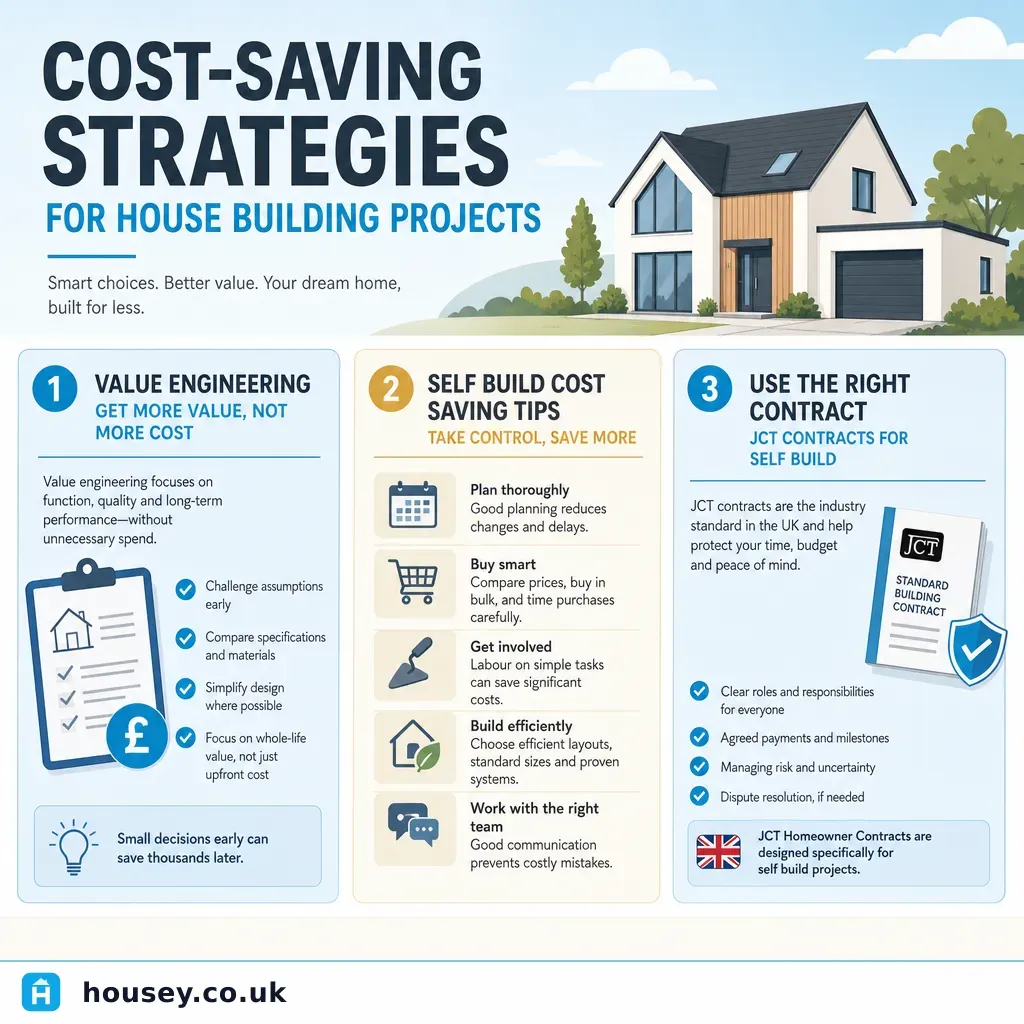
Reducing house building costs requires a complete design before tendering, value engineering at design stage, competitive tendering with at least three contractors, a fixed-price JCT contract, and a 10–15% contingency. The biggest savings come from simplifying the structure, standardising specifications, and minimising variations once construction begins — not from negotiating after a builder is appointed.
 Improvement & Build
When a contractor isn't delivering: what to do
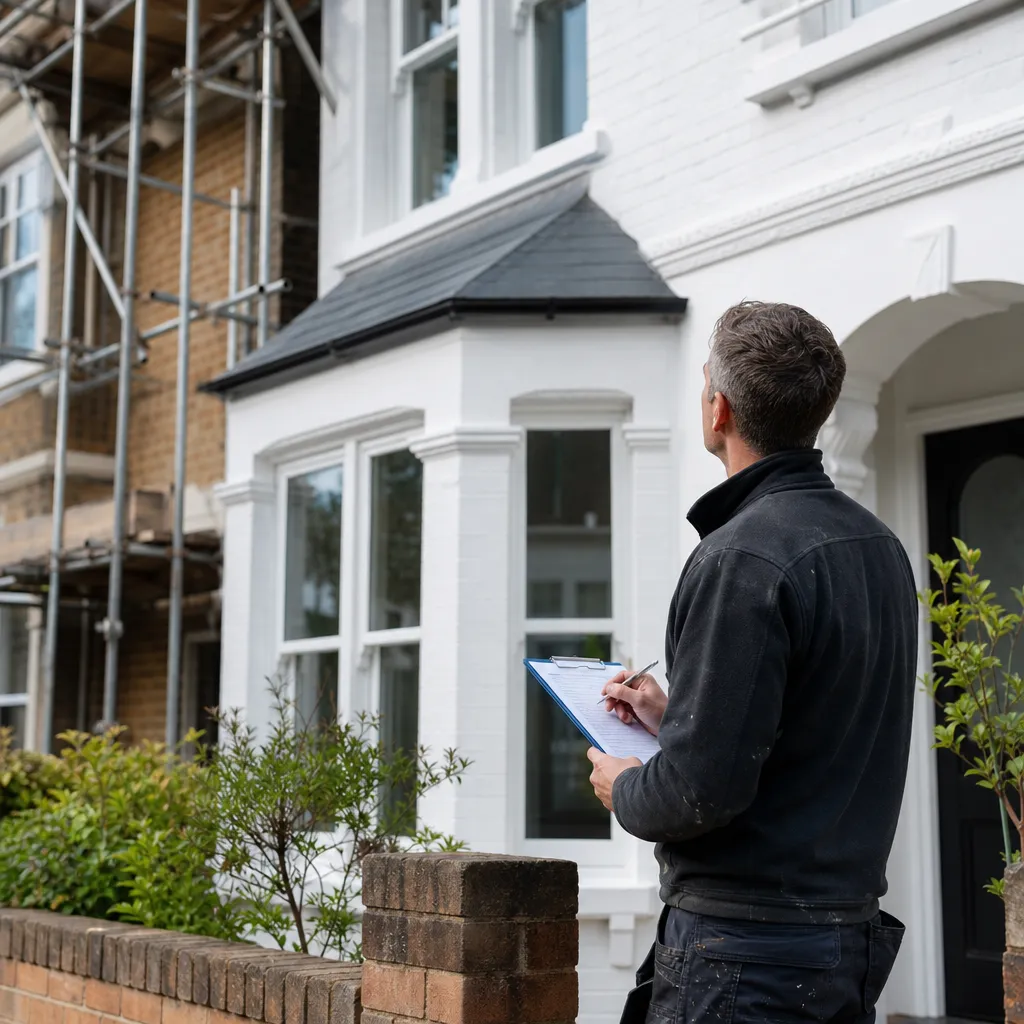
If a contractor is not delivering, start by documenting the issue in writing and setting a reasonable deadline for a response. Under the Consumer Rights Act 2015, services must be carried out with reasonable care and skill. If direct contact fails, check whether the contractor belongs to a trade association with its own complaints scheme before escalating to small claims court.