Knowledge Base
Property advice that actually helps
Researched, UK-specific guides for every stage of homeownership — from buying and surveys to retrofit, planning and major works.
 Improvement & Build
Preparing Your Trees for Spring: Seasonal Care and Maintenance Tips
Spring is the best time to assess trees after winter dormancy. Most broadleaf pruning should be done between January and March, before nesting season begins in March. Watch for deadwood, fungal brackets, or crown dieback. Any tree with a Tree Preservation Order requires local planning authority consent before works start.
 Improvement & Build
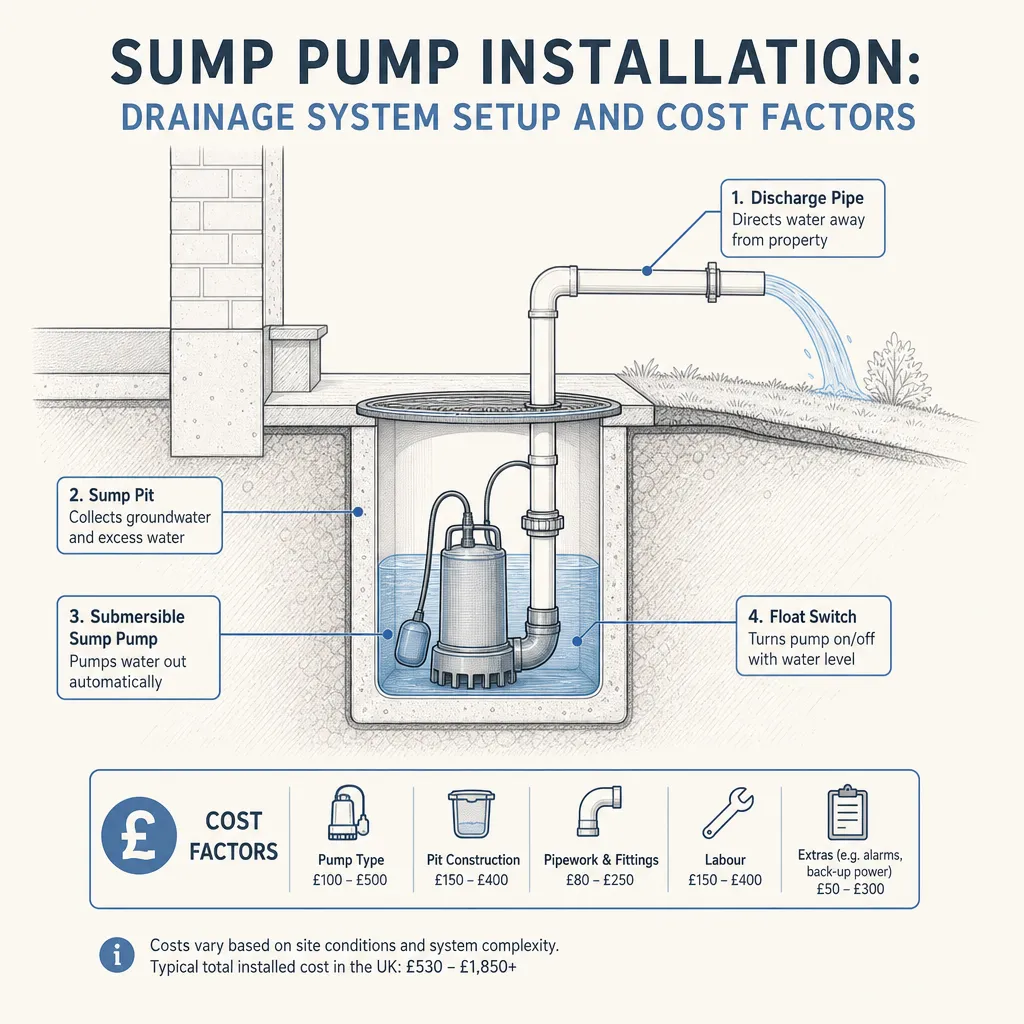
Sump Pump Installation: Drainage System Setup and Cost Factors
Sump pump installation in the UK typically costs £800–£2,500 for a submersible pump in a new or existing pit, including excavation, liner, discharge pipework, and connection to a suitable outlet. Costs depend on ground conditions, access, pit depth, pump specification, and whether the installation forms part of a basement conversion or a standalone waterproofing system.
 Buying & Moving
Preparing Your Home for Sale: Professional Staging Strategies
Effective home staging focuses on decluttering, depersonalising, and presenting each room to show its proportions and light at their best. In the UK market, professional photography, neutral decor, and a thorough clean consistently attract more viewings and stronger offers. Most high-impact staging actions cost little beyond time; professional staging services are most valuable for vacant or higher-value properties.
 Surveys & Inspections
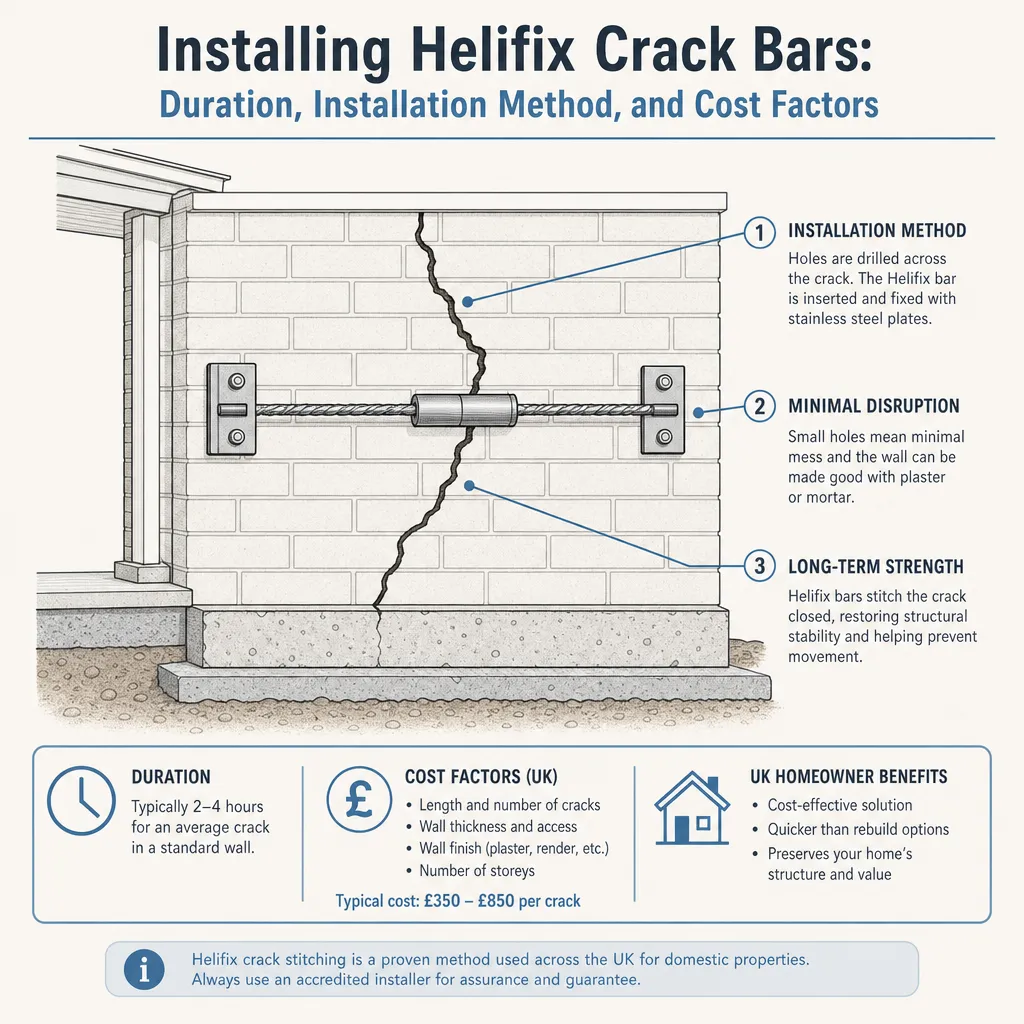
Installing Helifix Crack Bars: Duration, Installation Method, and Cost Factors
Helifix crack bar stitching on a standard domestic property typically takes one to three days, depending on the number of cracks and access requirements. UK costs generally range from around £800 to £3,500 for residential work, subject to scope and the structural engineer's specification. Installation must always be preceded by a professional structural assessment to identify the underlying cause of cracking.
 Planning & Pre-Build
Fire Safety Barriers in Lofts and Roof Spaces: Compliance and Responsibility
Fire safety barriers in loft and roof spaces are required under Approved Document B of the Building Regulations to prevent fire and smoke spreading through concealed cavities. Key requirements include cavity barriers at party wall junctions, 30-minute fire-resisting floors in loft conversions, and a protected escape route. Missing or incorrect barriers should always be assessed by a qualified professional.
 Improvement & Build
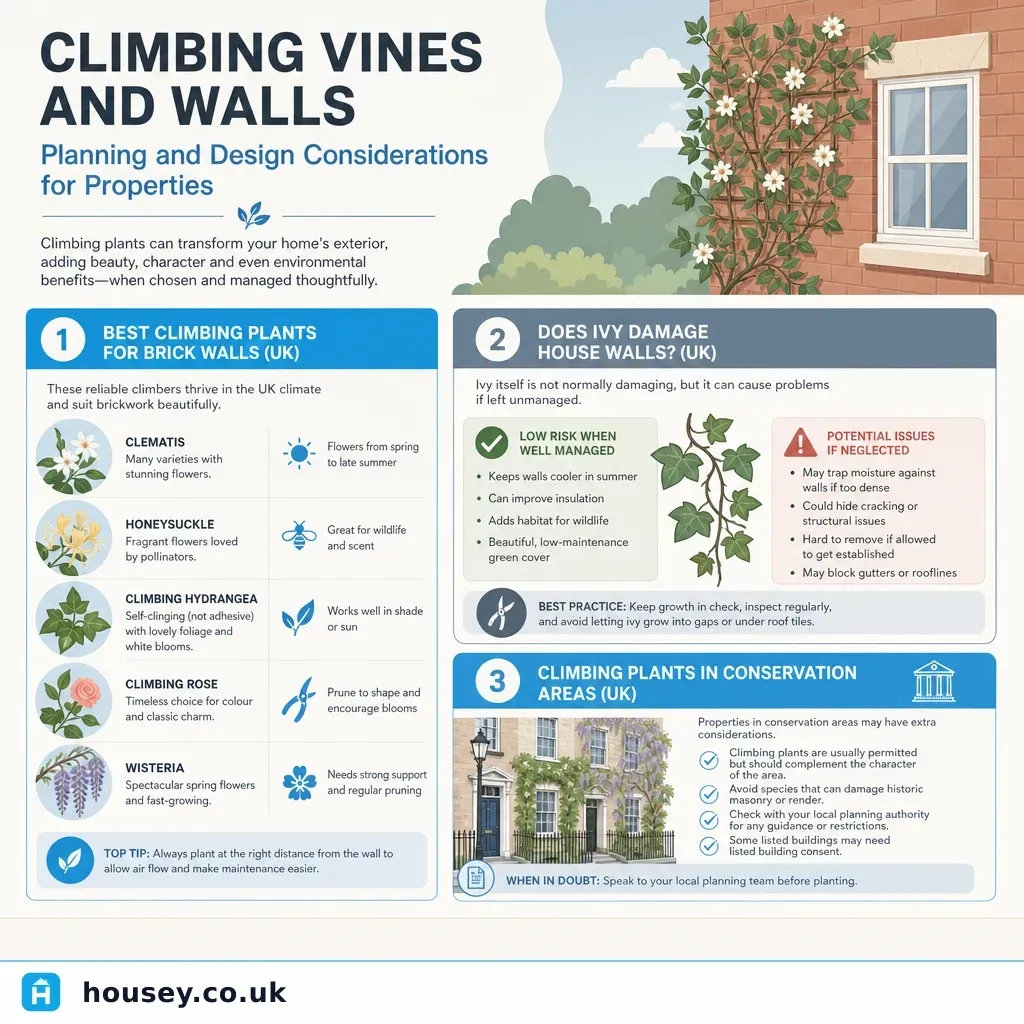
Climbing Vines and Walls: Planning and Design Considerations for Properties
Climbing plants can enhance a property but choice of species, wall condition, and maintenance all affect whether damage occurs. Self-clinging plants like ivy can loosen mortar on older brickwork; supported climbers such as clematis or roses are generally safer. Always check planning rules before fixing supports to walls in conservation areas or on listed buildings.
 Improvement & Build
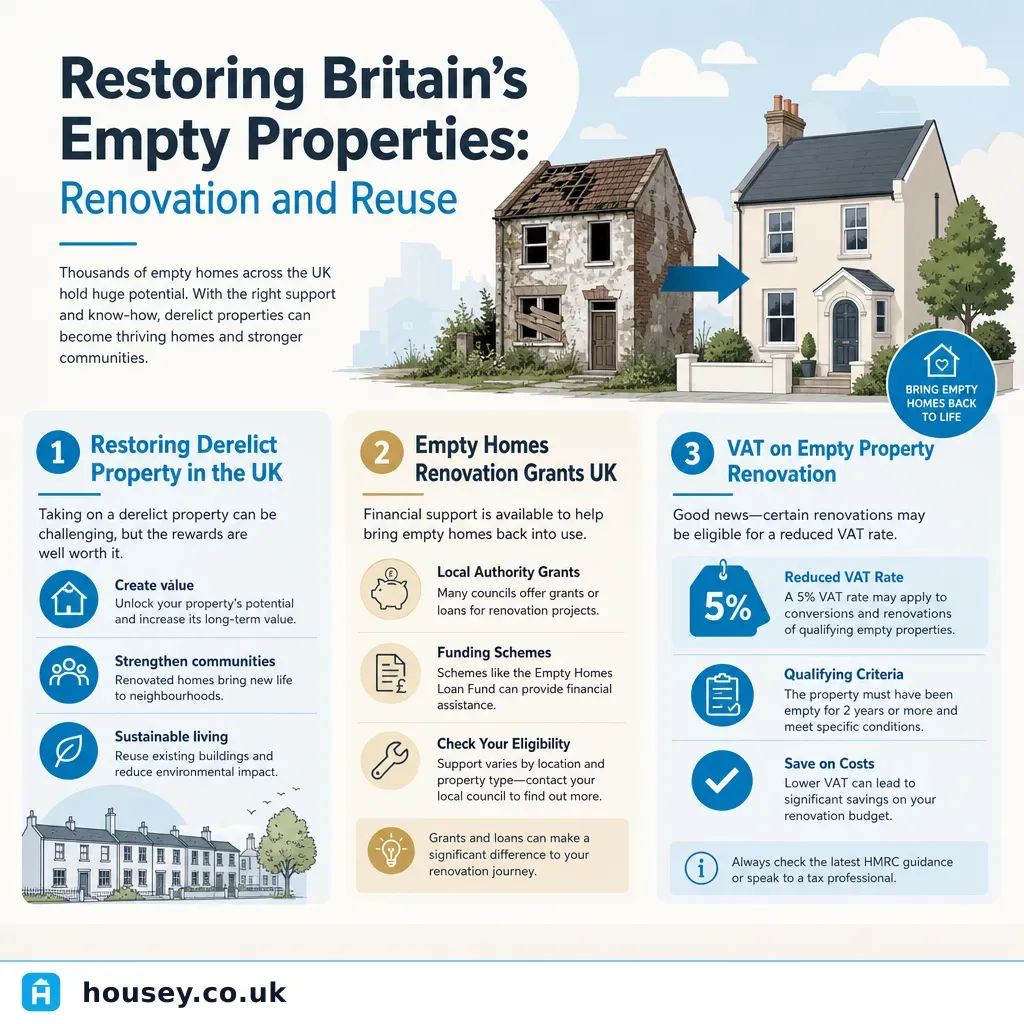
Restoring Britain's Empty Properties: Renovation and Reuse
Renovating an empty UK property requires a structural condition survey, building regulations approval, and a full programme of work covering roof, damp, services, and finishes. Costs range widely — from around £30,000 for a lightly neglected home to over £150,000 for a severely derelict property. VAT at 5% may apply, and council grants are sometimes available.
 Energy & Retrofit
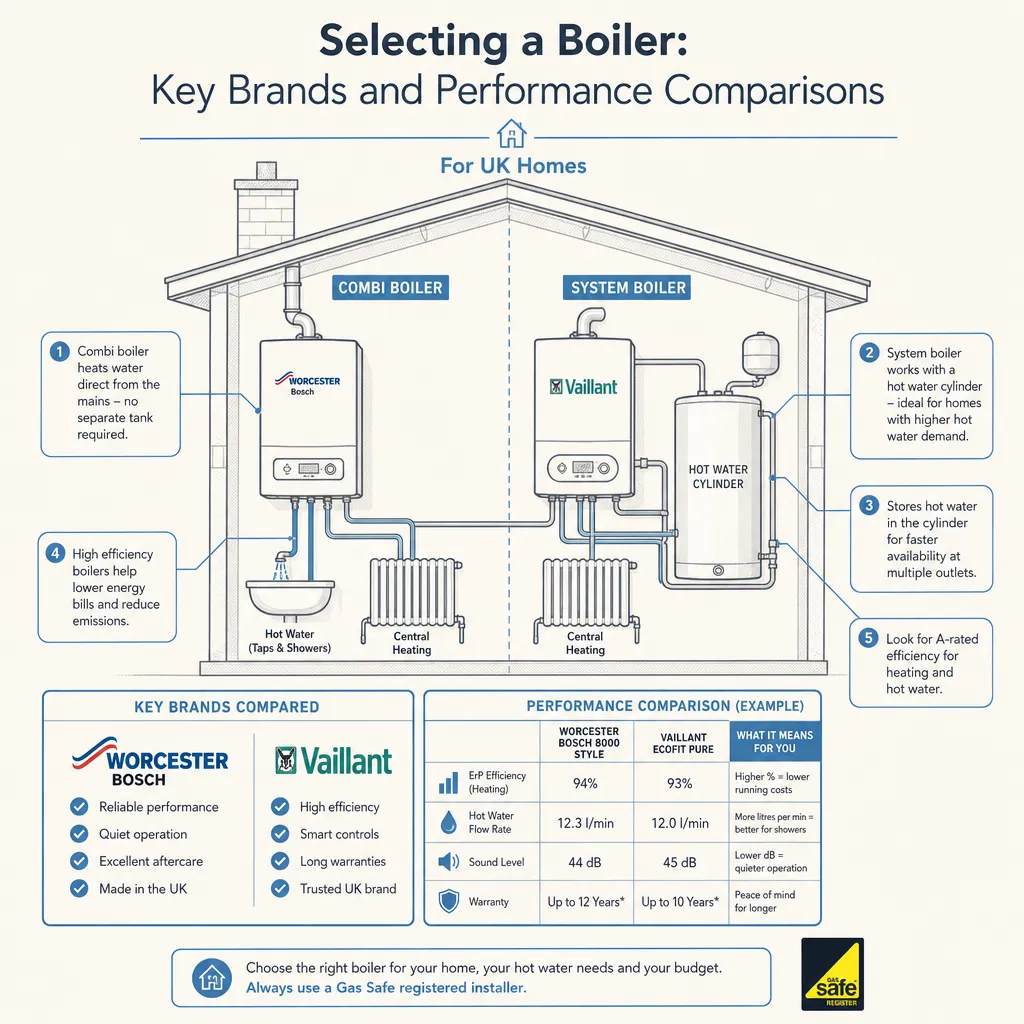
Selecting a Boiler: Key Brands and Performance Comparisons
Most UK homes are heated by a combi, system, or heat-only boiler. The right type depends on your property size, hot-water demand, and existing pipework. Among commonly fitted brands, Worcester Bosch, Vaillant, and Viessmann are frequently rated highest for reliability, though correct sizing and installation by a Gas Safe registered engineer matter at least as much as brand choice.
 Improvement & Build
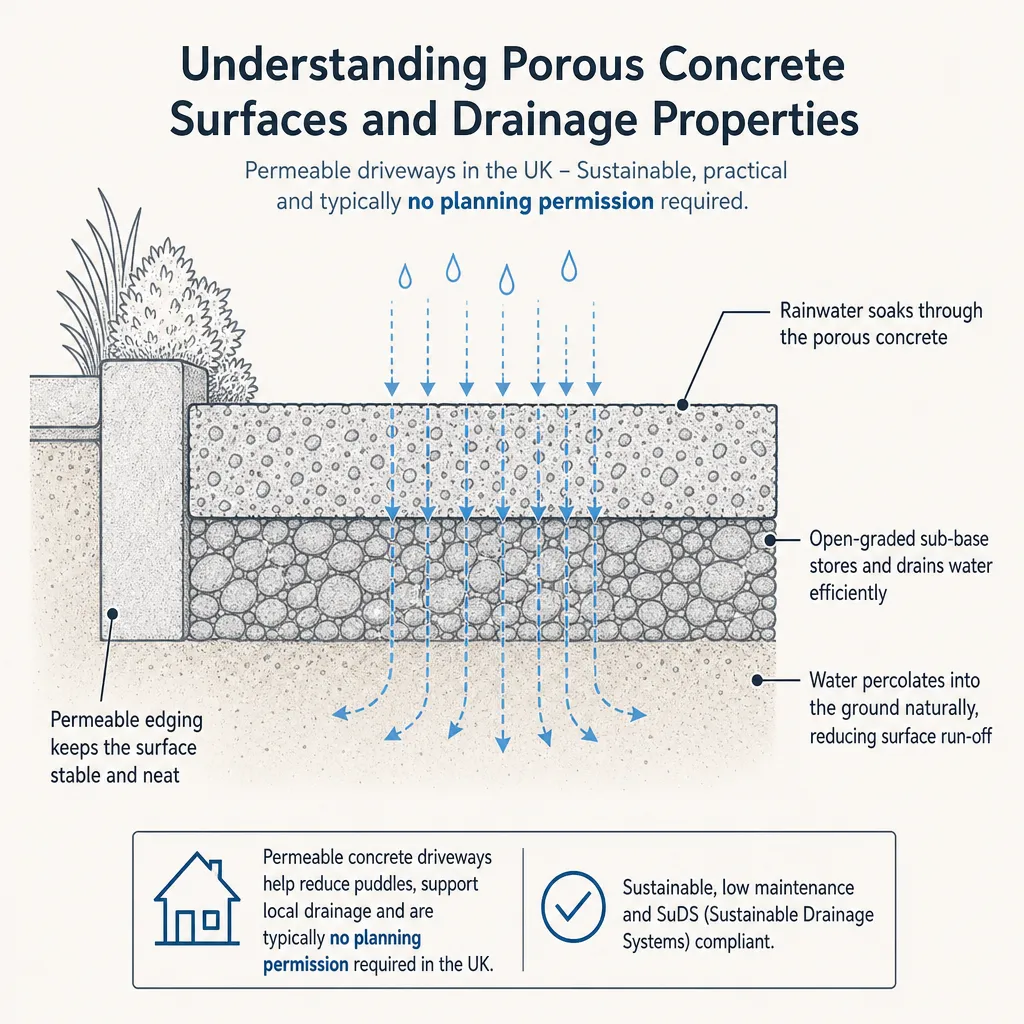
Understanding Porous Concrete Surfaces and Drainage Properties
Porous concrete — also called pervious or no-fines concrete — achieves permeability by omitting fine aggregate, leaving interconnected voids that rainwater passes through freely. It qualifies as a SuDS-compliant surface, meaning front garden driveways over 5 square metres can generally be laid without planning permission in England. The sub-base beneath must also be permeable for the system to drain correctly.
 Improvement & Build
Custom Concrete Homes: Design, Building, and Considerations
Custom concrete homes in the UK are typically built using insulated concrete formwork (ICF), precast panels, or in-situ poured concrete. ICF is the most popular choice for self-builders, offering high thermal mass and wall U-values below 0.22 W/m²K. All concrete home designs require full structural engineering input, building regulations approval, and planning permission in most circumstances.
 Energy & Retrofit
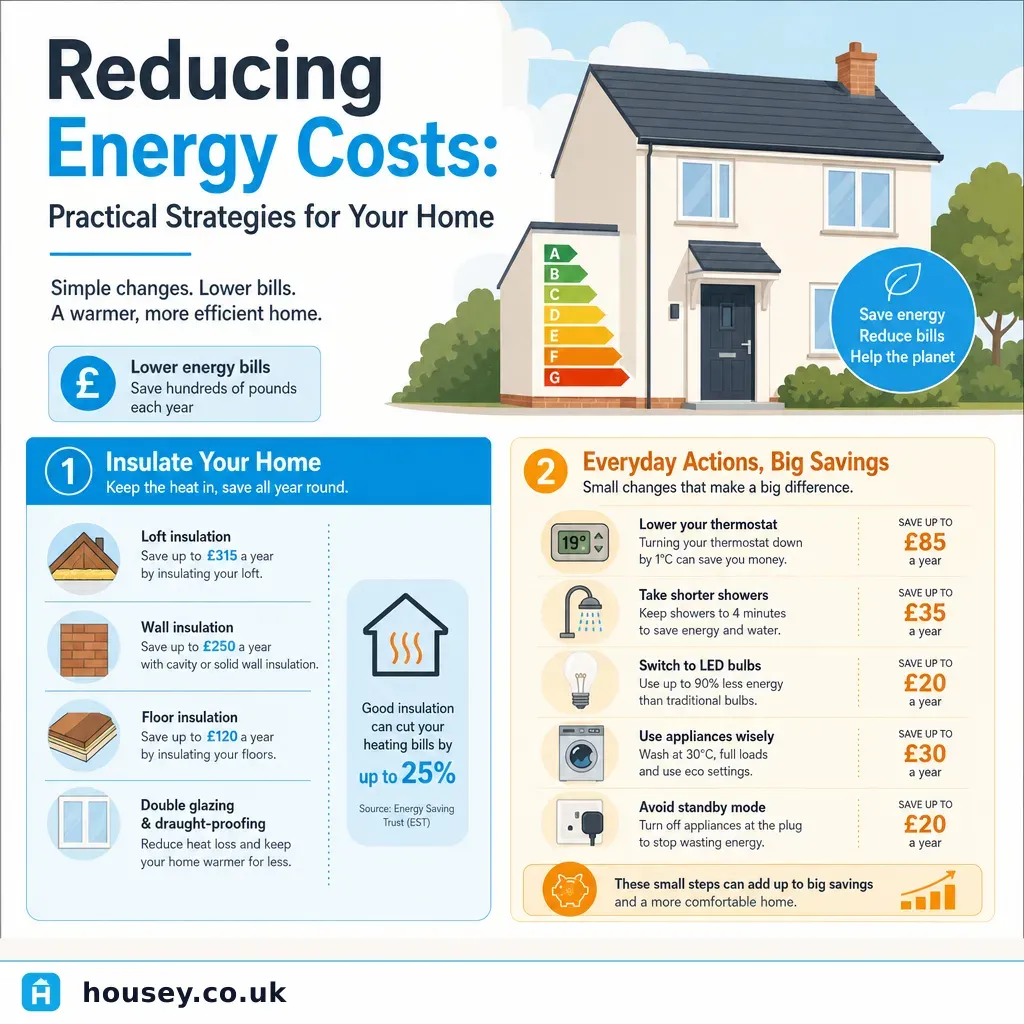
Reducing Energy Costs: Practical Strategies for Your Home
Reducing home energy costs starts with low-cost measures such as draught-proofing, LED lighting, and smart thermostat controls, before moving to higher-impact work like loft or cavity wall insulation. Check your EPC for personalised recommendations, and look up ECO4 and Great British Insulation Scheme eligibility on GOV.UK — funded upgrades may be available for your household.
 Improvement & Build
Wood burning stove versus fireplace: which heating option to choose
A wood burning stove is significantly more efficient than an open fireplace — typically 70–80% efficient compared with 15–30% for an open fire — and produces fewer emissions. Open fireplaces suit those who prioritise aesthetics and already have a working chimney. Your choice depends on heat output needs, budget, regulatory requirements, and whether you live in a Smoke Control Area.