Knowledge Base
Property advice that actually helps
Researched, UK-specific guides for every stage of homeownership — from buying and surveys to retrofit, planning and major works.
 Planning & Pre-Build
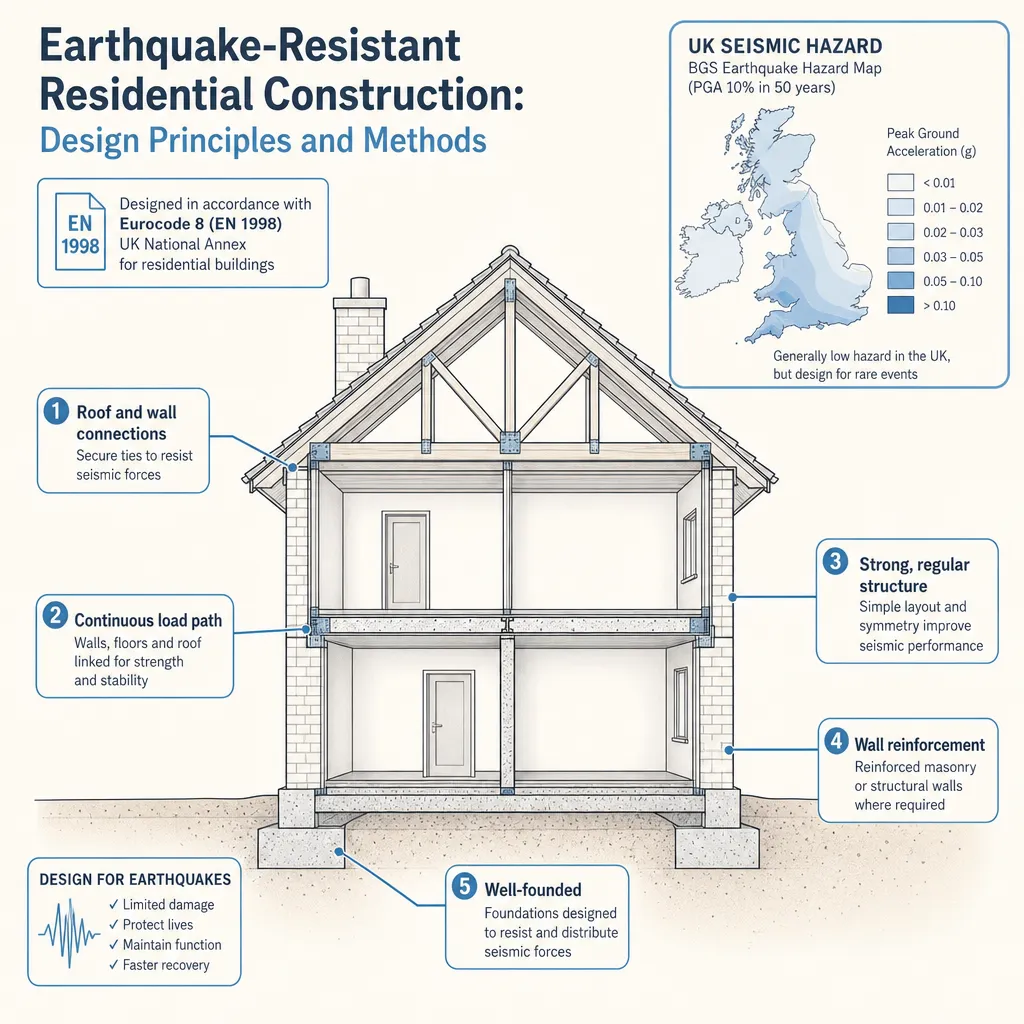
Earthquake-Resistant Residential Construction: Design Principles and Methods
The UK is a low-seismic-hazard country, and for most residential buildings, Building Regulations Part A structural requirements provide adequate resilience without specific seismic design. Eurocode 8 (BS EN 1998-1) is adopted in the UK but the National Annex sets very low design values that trigger a no-seismic-design zone across most of Britain for standard residential construction.
 Improvement & Build
Enhancing Kerb Appeal: Architectural Design Choices That Add Character and Value
Improving kerb appeal in the UK starts with windows, doors, and boundary treatments matched to your property's era and planning context. Conservation area restrictions, FENSA certification requirements for window replacements, and permeable paving rules all apply. The highest-impact, lowest-risk changes are typically a well-chosen front door, appropriate windows, and simple front-garden landscaping.
 Surveys & Inspections
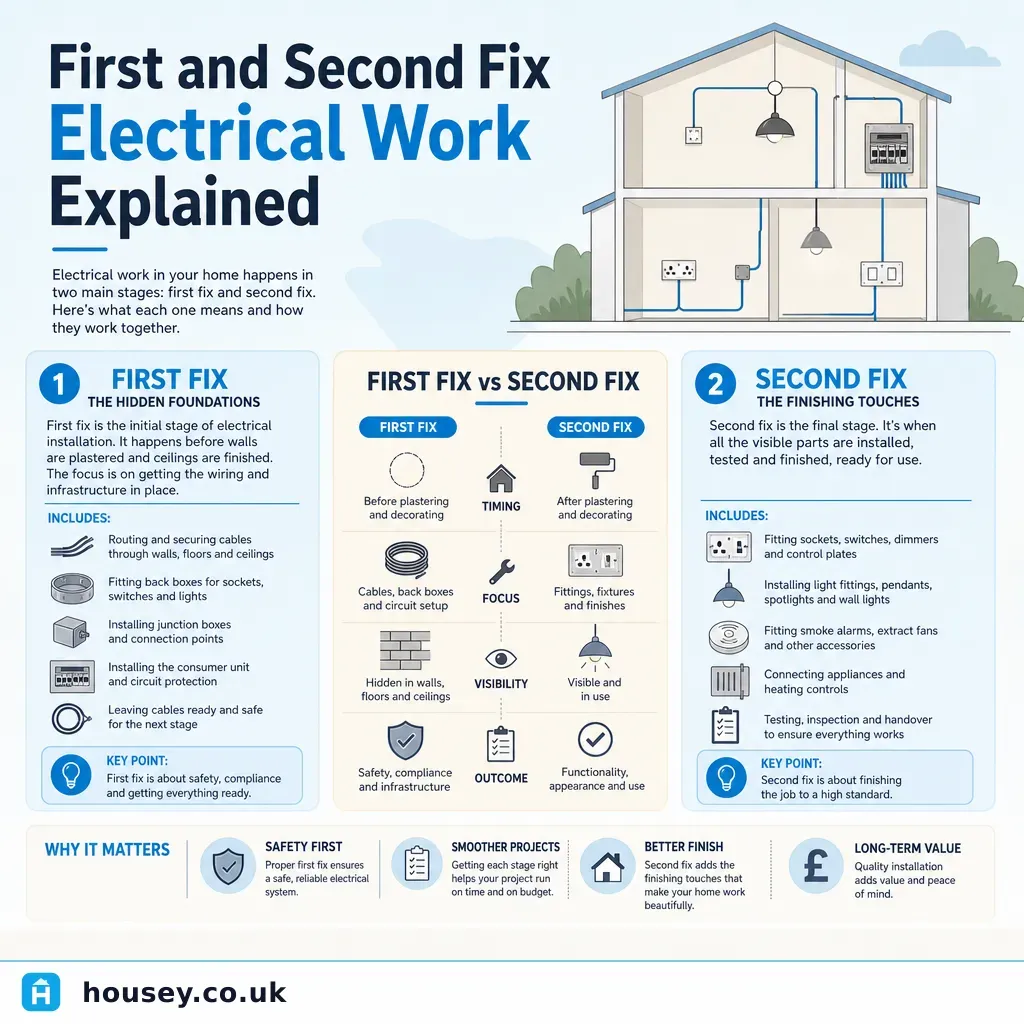
First and Second Fix Electrical Work Explained
First fix electrical work covers hidden infrastructure — cables, back boxes, and conduit — installed before plastering. Second fix adds the visible elements: sockets, switches, light fittings, and the consumer unit, fitted after decoration. Both stages must be carried out by a qualified electrician and notified under Part P of the Building Regulations in England and Wales.
 Surveys & Inspections
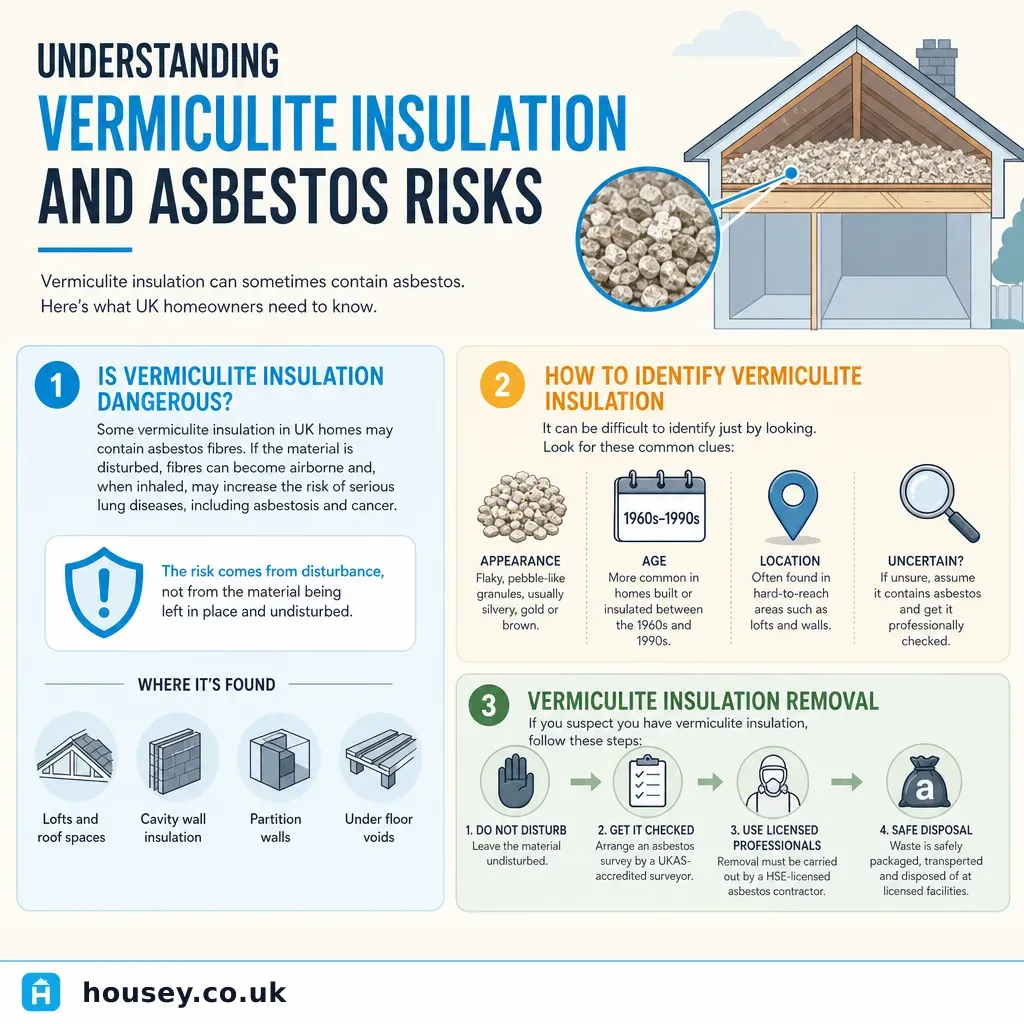
Understanding Vermiculite Insulation and Asbestos Risks
Vermiculite insulation is a lightweight granular mineral used in UK loft and cavity wall insulation from the 1960s to late 1980s. The HSE advises treating all pre-1990 vermiculite as potentially containing asbestos, as global supplies were contaminated with tremolite asbestos from the Libby mine in Montana. Do not disturb or remove it without first arranging a professional survey.
 Buying & Moving
Essential Services and Support for Moving to London Neighbourhoods
Moving to London requires coordinating conveyancing, surveys, and removal logistics within tight timeframes. Book a removal firm 4–8 weeks ahead — demand is high in inner London boroughs. Completion day logistics, parking suspensions, and the Congestion Charge or ULEZ all need planning specific to London's dense urban environment. Most London flats are leasehold, adding complexity to conveyancing.
 Improvement & Build
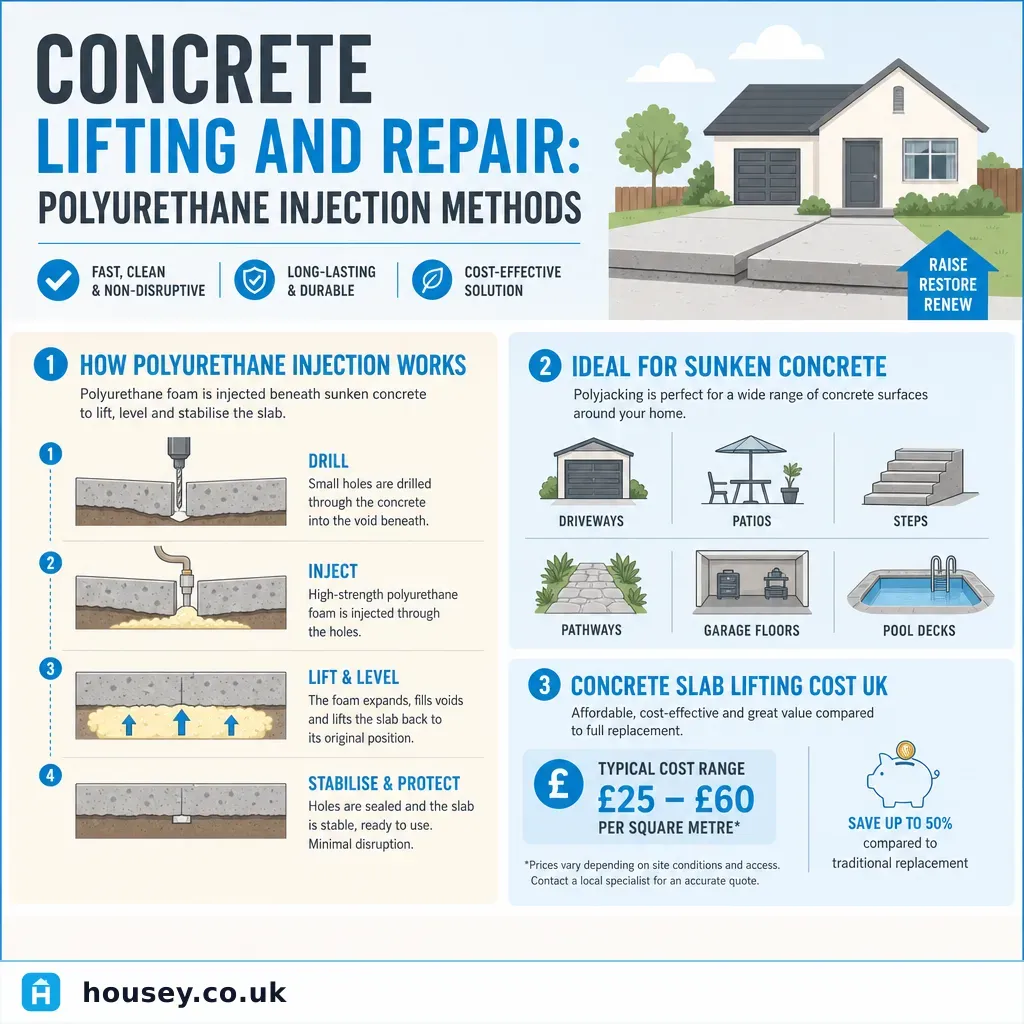
Concrete Lifting and Repair: Polyurethane Injection Methods
Polyurethane injection (polyjacking) lifts sunken concrete slabs by injecting expanding foam beneath them through small drilled holes. It is faster, less disruptive, and usually cheaper than full slab replacement. The foam cures within minutes, making the surface usable the same day. It works best where the underlying soil is stable and the slab is structurally sound.
 Improvement & Build
Common Home Repair Mistakes: Prevention and Solutions
The most frequent home repair mistakes in the UK include starting notifiable work without building regulations approval, engaging contractors without a written contract, misdiagnosing damp in solid-wall properties, and disturbing materials that may contain asbestos without a prior survey. Most errors are preventable by checking permissions early, using registered tradespeople, and agreeing the full scope of work in writing before anything begins.
 Energy & Retrofit
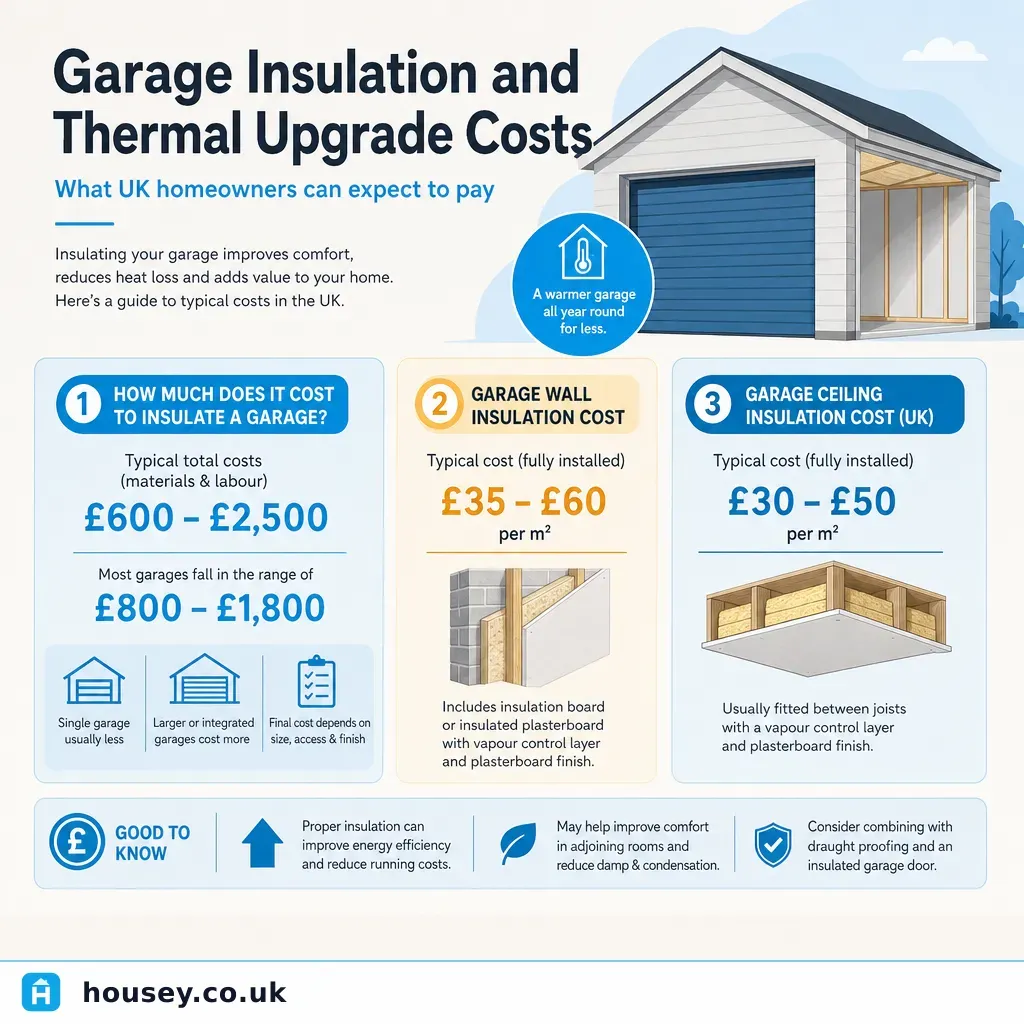
Garage Insulation and Thermal Upgrade Costs
Insulating a garage in the UK typically costs £600–£1,800 for walls, £400–£900 for the ceiling, and £800–£2,500 for a new insulated door. Priorities depend on whether a heated room sits above or beside the garage. Work funded by ECO4 or the Great British Insulation Scheme must follow PAS 2035.
 Planning & Pre-Build
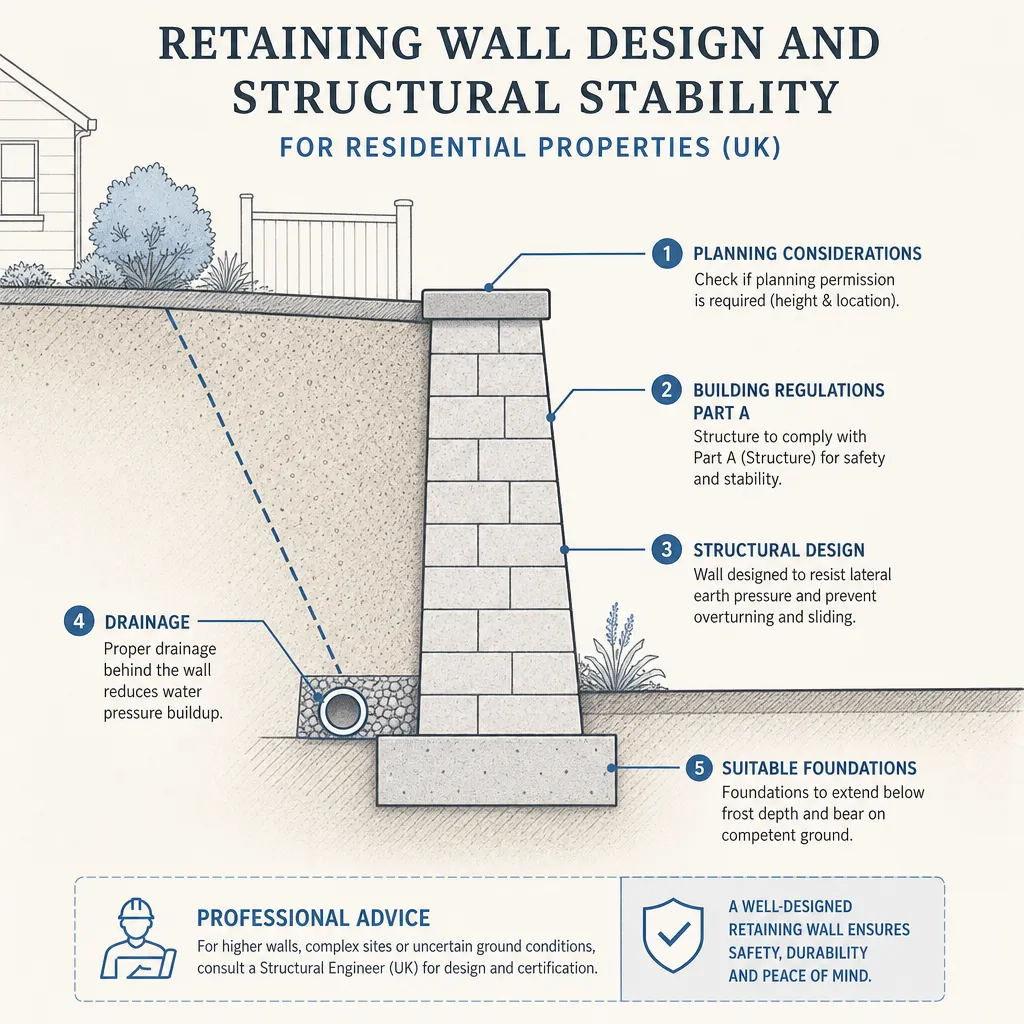
Retaining Wall Design and Structural Stability for Residential Properties
Retaining walls over around 1 m in height usually need structural engineer assessment; walls over 2 m almost always require a formal structural design and building control approval. Planning permission is required for walls exceeding 2 m, or 1 m adjacent to a highway. Good drainage behind the wall is as critical as the structure itself.
 Improvement & Build
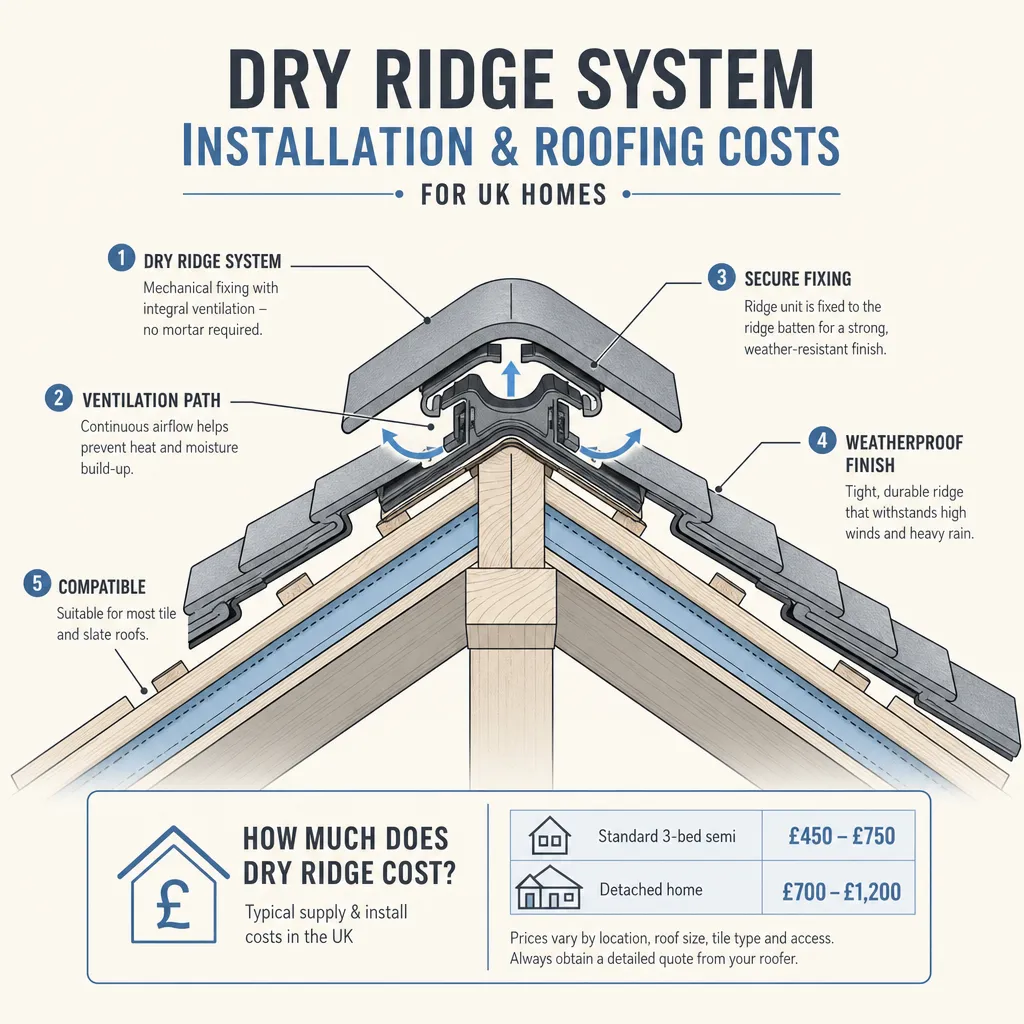
Dry Ridge System Installation and Roofing Costs
A dry ridge system replaces mortar-bedded ridge tiles with mechanically fixed, ventilated tiles that comply with BS 5534. For a typical semi-detached house, installation costs £600–£1,500 for the ridge work plus £300–£1,000 for scaffolding. Dry ridge lasts significantly longer than mortar, accommodates thermal movement, and is the required approach for new and re-roofing work under current British Standards.
 Improvement & Build
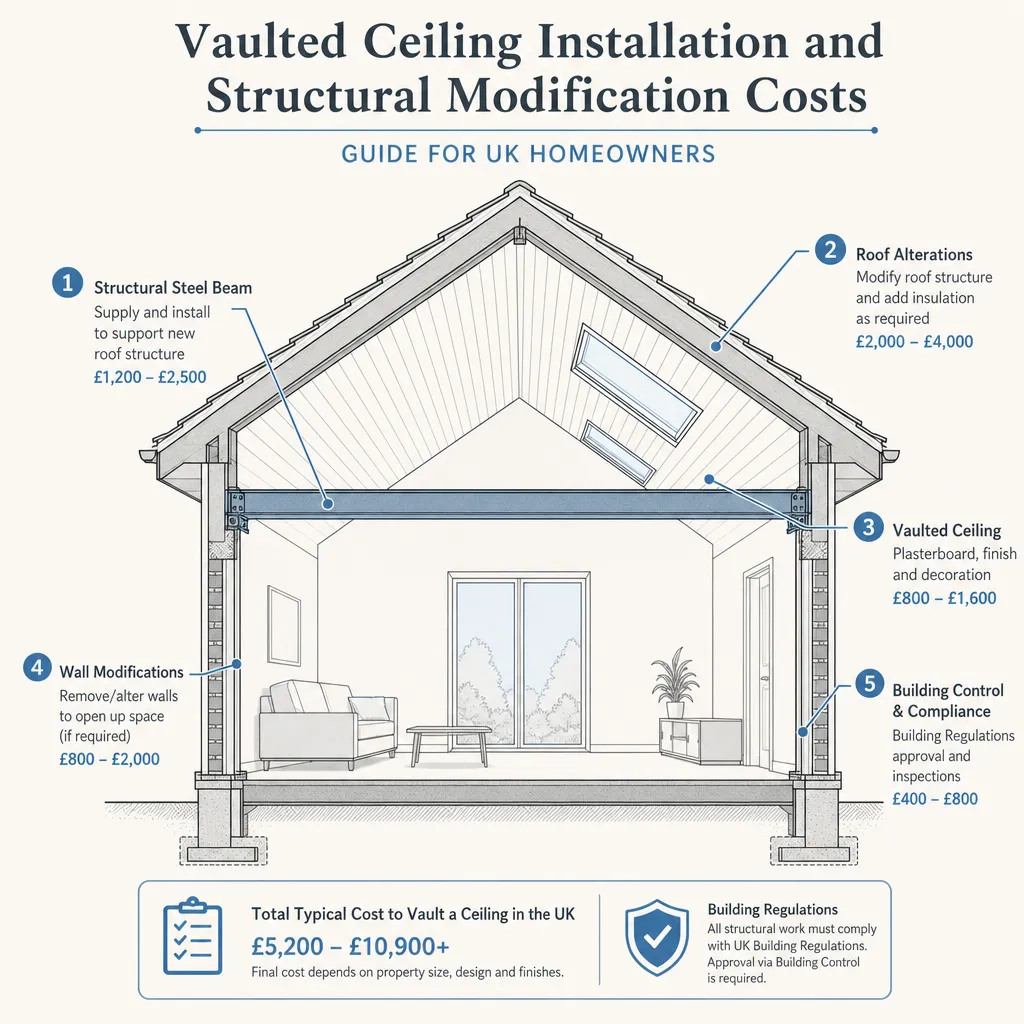
Vaulted Ceiling Installation and Structural Modification Costs
Creating a vaulted ceiling in the UK usually involves removing ceiling joists or modifying the roof structure, installing a structural ridge beam, and upgrading insulation — work that always requires a structural engineer's calculations and building regulations approval under Part A. Costs typically range from £8,000 to £25,000+ for a standard room, depending on span, roof construction type, and finish, with truss-rafter roofs costing significantly more.
 Energy & Retrofit
Heat Pump Coil Freezing: Causes and Troubleshooting Steps
Light frost on an air source heat pump's outdoor coil is normal in cold UK winters and clears automatically during a defrost cycle. A coil that remains solidly iced for more than two hours, displays error codes, or repeatedly fails to defrost indicates a fault — commonly low refrigerant charge, restricted airflow, or a defrost system failure — requiring an MCS-certified engineer.