Knowledge Base
Property advice that actually helps
Researched, UK-specific guides for every stage of homeownership — from buying and surveys to retrofit, planning and major works.
 Improvement & Build
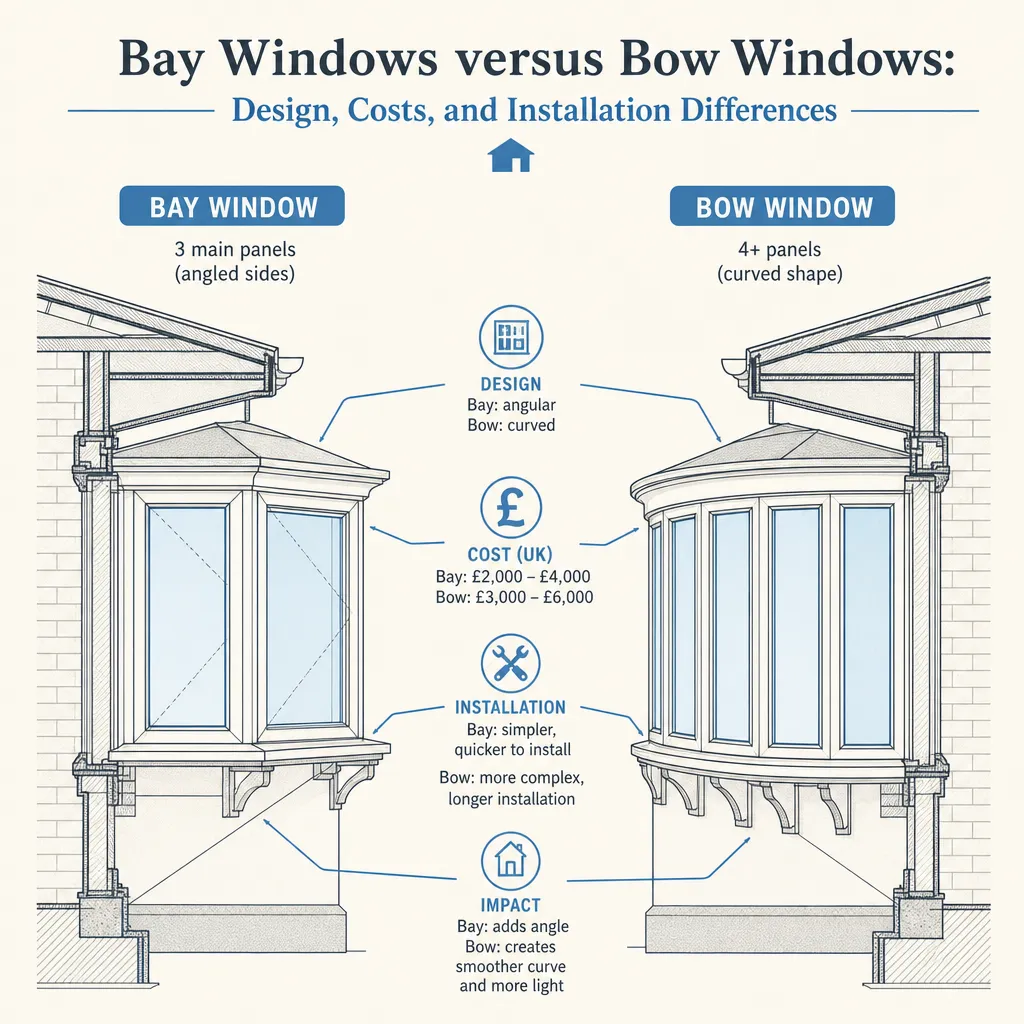
Bay Windows versus Bow Windows: Design, Costs, and Installation Differences
Bay windows project outward at angles — usually three panels at 90° or 135° — creating more floor space inside. Bow windows curve gently outward using four or more equal-width panels. Bay windows are common in Victorian and Edwardian homes; bow windows appear more in modern or cottage-style properties. UK installation costs typically range from £1,500 to £5,000 per unit, depending on size and glazing choice.
 Planning & Pre-Build
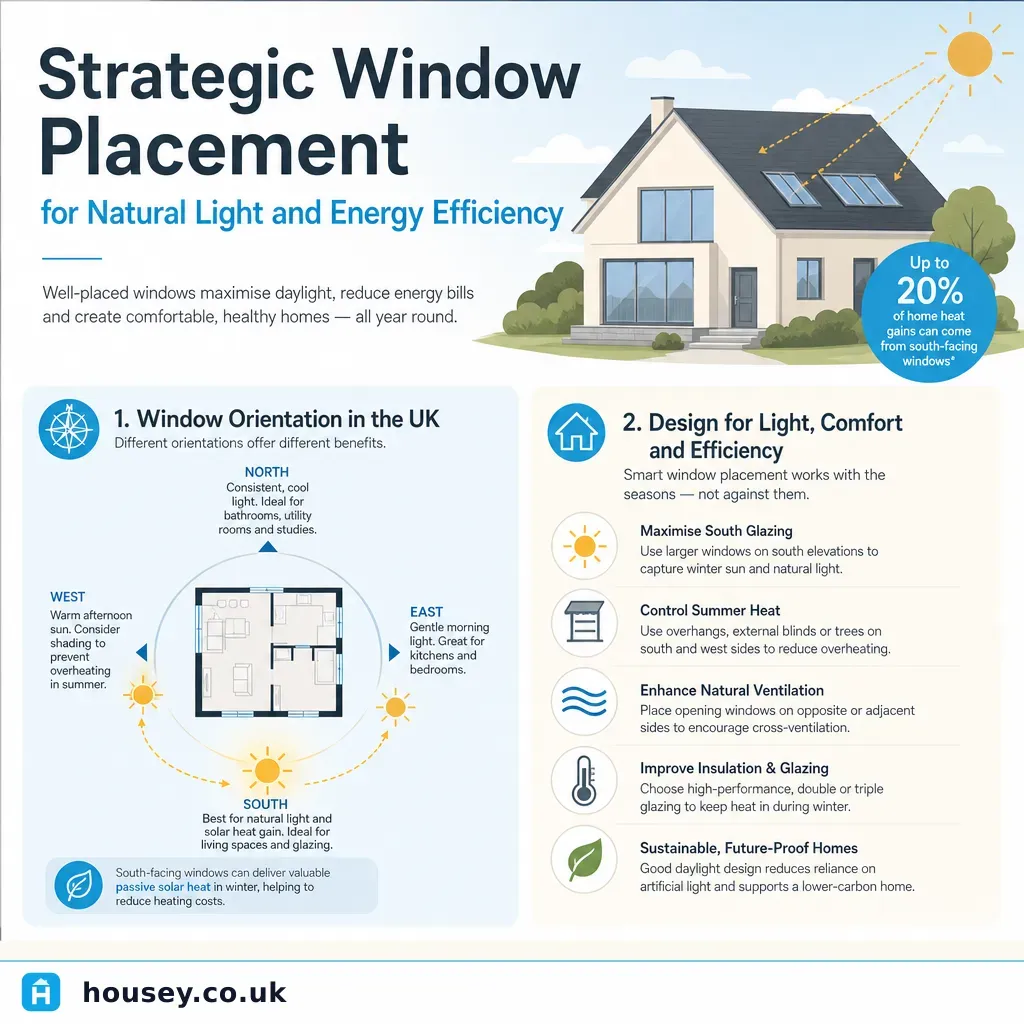
Strategic Window Placement for Natural Light and Energy Efficiency
In the UK, south-facing windows capture the most winter solar gain, while north-facing glazing provides consistent, glare-free daylight. Rooflights deliver roughly twice the useful light of an equivalent vertical window. Design for around 25–30% south-facing glazing with external shading to manage summer overheating, and always confirm planning requirements before fixing window positions on any elevation.
 Improvement & Build
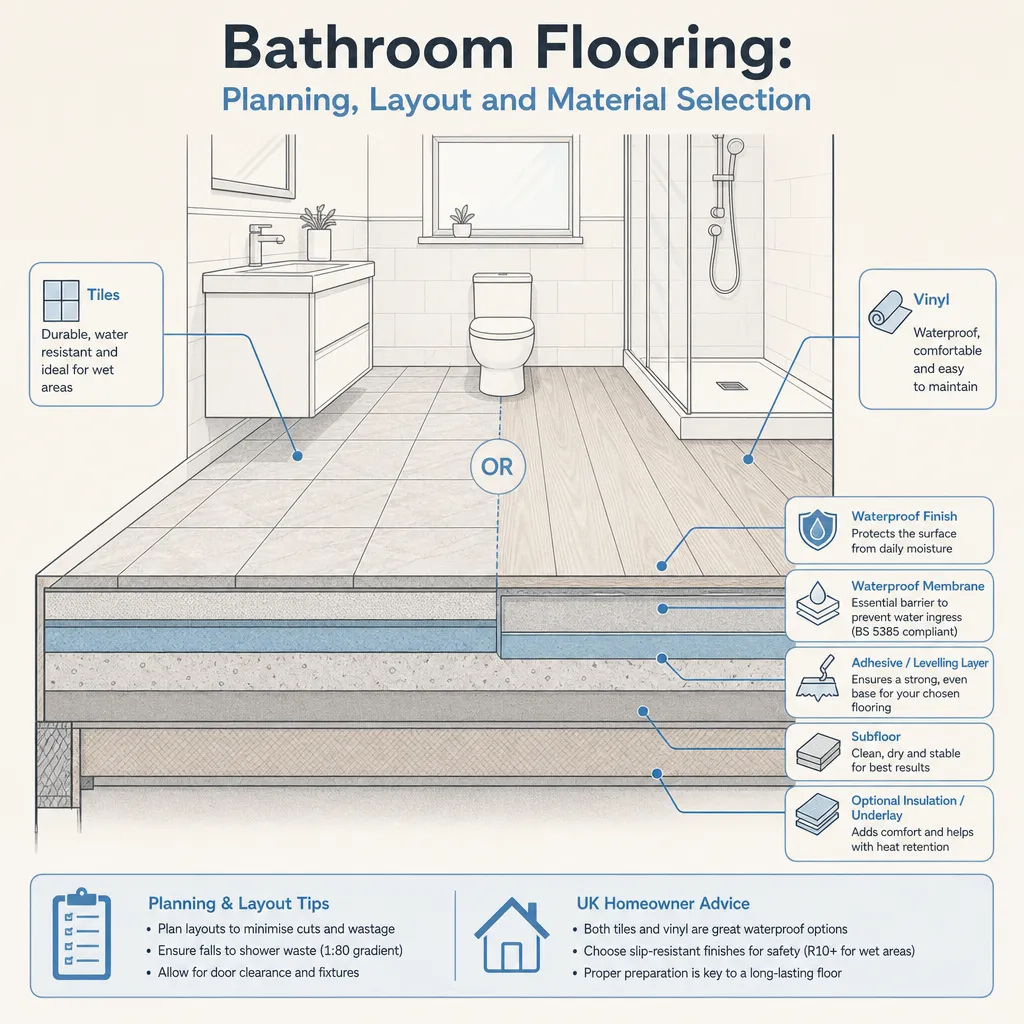
Bathroom Flooring: Planning, Layout and Material Selection
Bathroom flooring must balance water resistance, slip resistance, durability, and comfort underfoot. Porcelain and ceramic tiles are the most popular UK choices for longevity and water resistance; luxury vinyl tile offers a warmer, quieter alternative. The right material depends on your subfloor condition, budget, underfloor heating plans, and whether you are tiling over an existing floor or starting from scratch.
 Improvement & Build
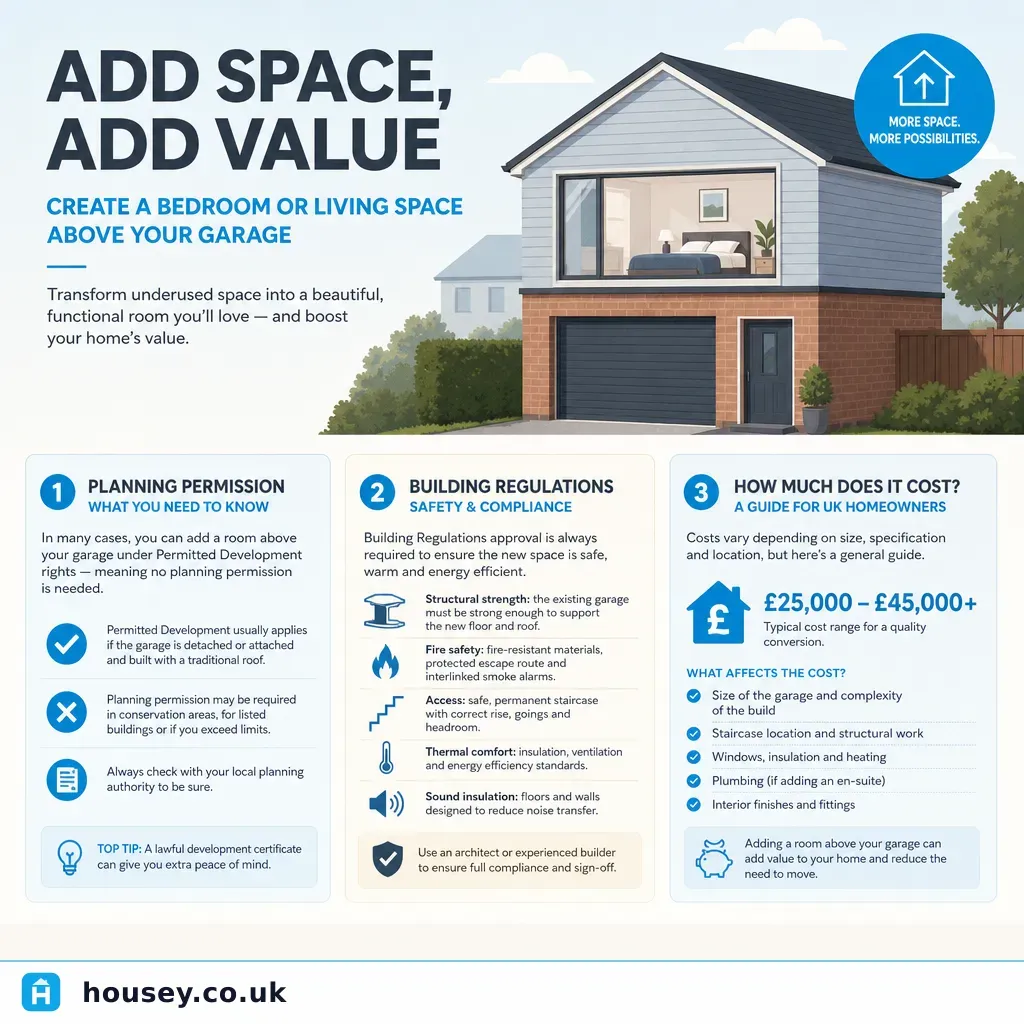
Adding a bedroom or living space above an existing garage
Adding habitable space above an existing garage almost always requires planning permission and Building Regulations approval in the UK. A structural engineer must assess whether existing walls and foundations can carry the extra load. Expect total costs of £35,000–£90,000 or more depending on structural complexity, size, and specification. Professional input is essential before any design work is commissioned.
 Energy & Retrofit
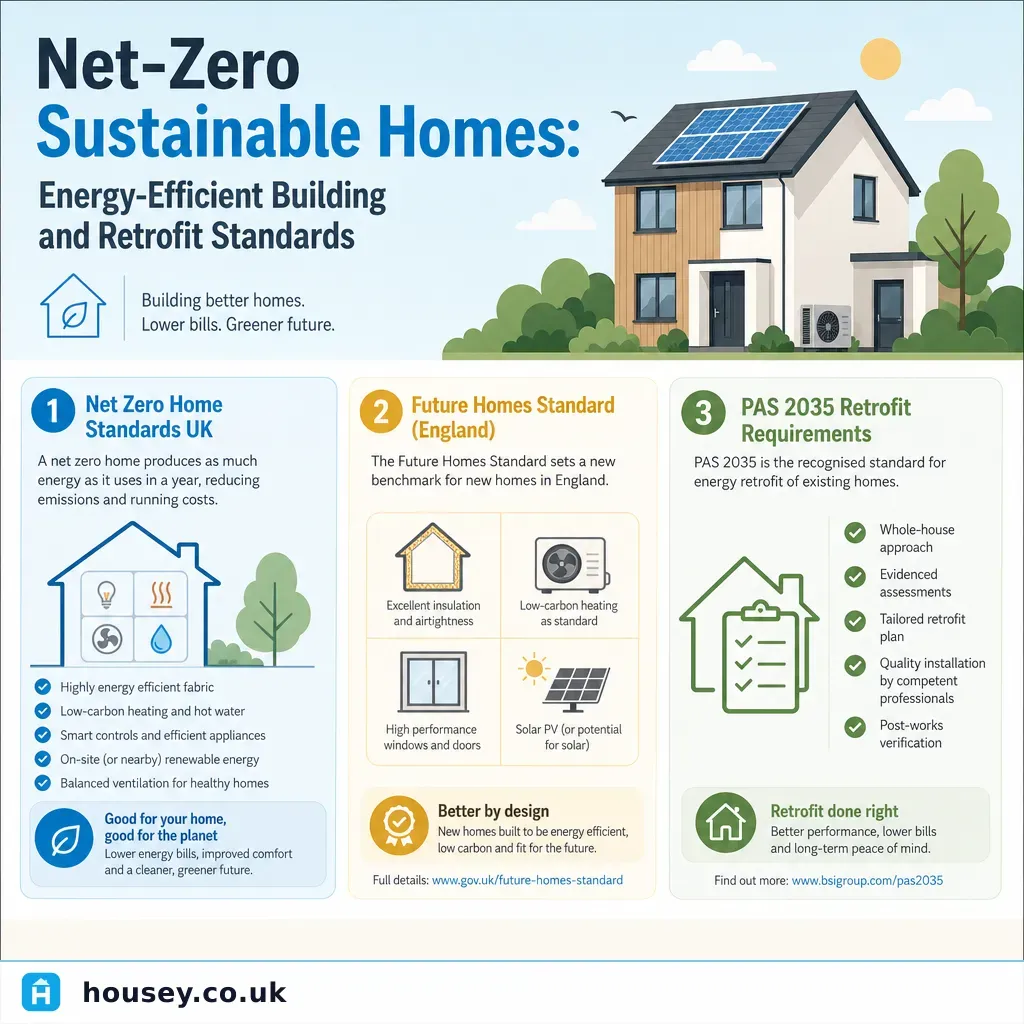
Net-Zero Sustainable Homes: Energy-Efficient Building and Retrofit Standards
Net-zero homes in the UK combine very high fabric performance, low-carbon heating — usually a heat pump — and on-site renewable generation. New builds must meet the Future Homes Standard; existing homes are improved through whole-house retrofit governed by PAS 2035. The right approach depends heavily on your property's age, construction, and current energy performance.
 Energy & Retrofit
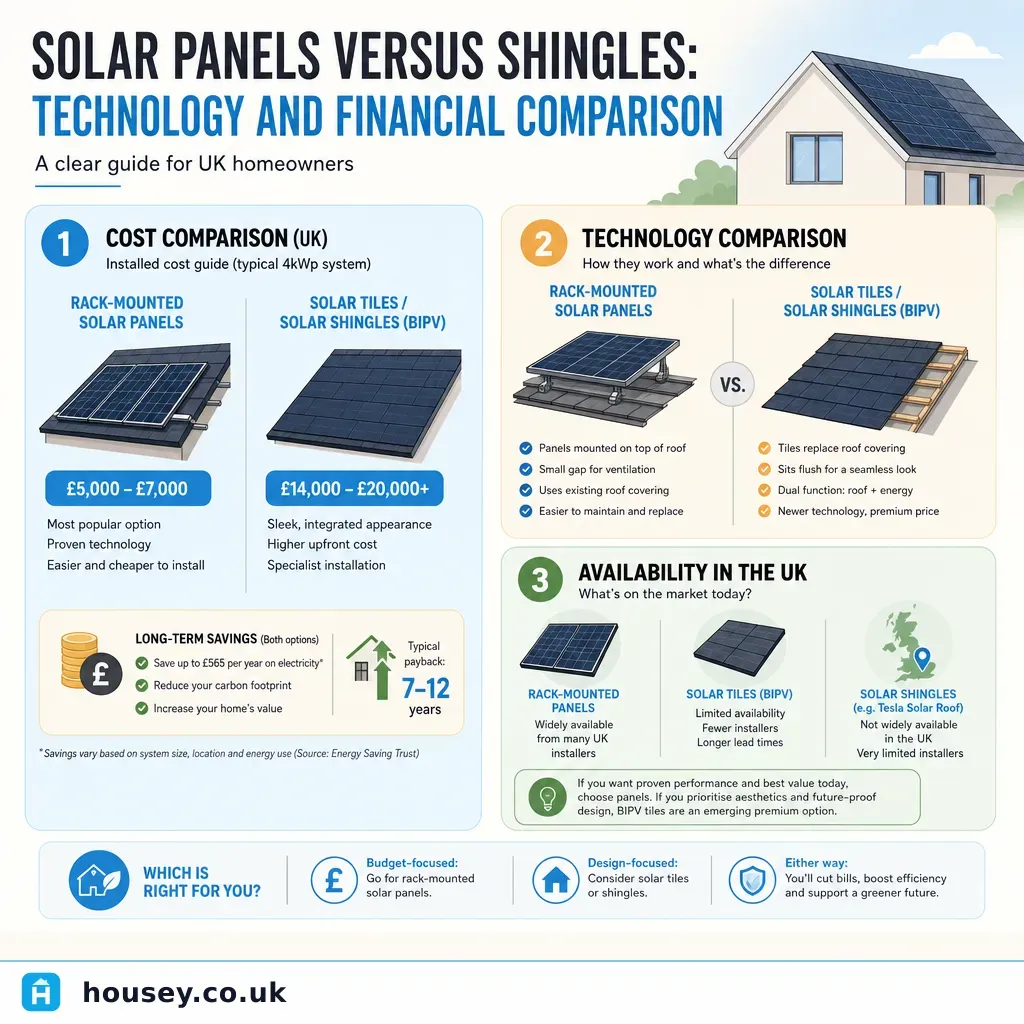
Solar Panels Versus Shingles: Technology and Financial Comparison
Rack-mounted solar panels cost less and generate more electricity per square metre than solar shingles, making them the practical choice for most UK homes where the existing roof is in good condition. Solar shingles become more financially competitive when a full roof replacement is already planned, or where design integration and aesthetics are a priority.
 Improvement & Build
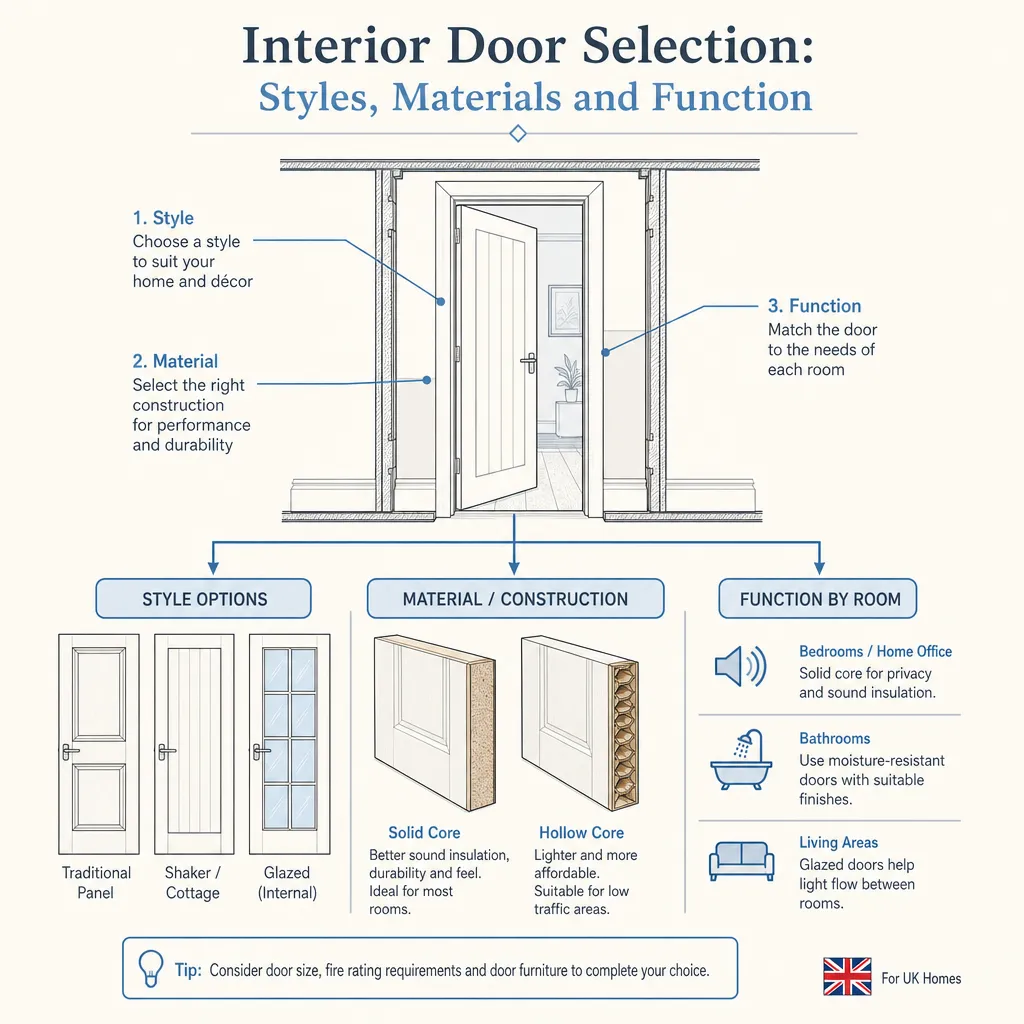
Interior Door Selection: Styles, Materials and Function
Interior doors in UK homes come in solid core, hollow core, and glazed varieties, with styles from flush and panelled to bifold and pocket. The right choice depends on room function, fire door requirements, and noise control needs. Solid core doors offer better sound insulation; hollow core suits lower-traffic spaces on a tighter budget.
 Improvement & Build
Complete Bathroom Renovation: Design and Installation
A complete bathroom renovation in the UK involves strip-out, first-fix plumbing and electrics, waterproofing, tiling, sanitaryware installation, and second-fix trades. Electrical work in bathrooms must comply with Part P of the Building Regulations; all plumbing must meet the Water Supply (Water Fittings) Regulations 1999. Most standard bathroom refurbishments take five to ten working days to complete.
 Energy & Retrofit
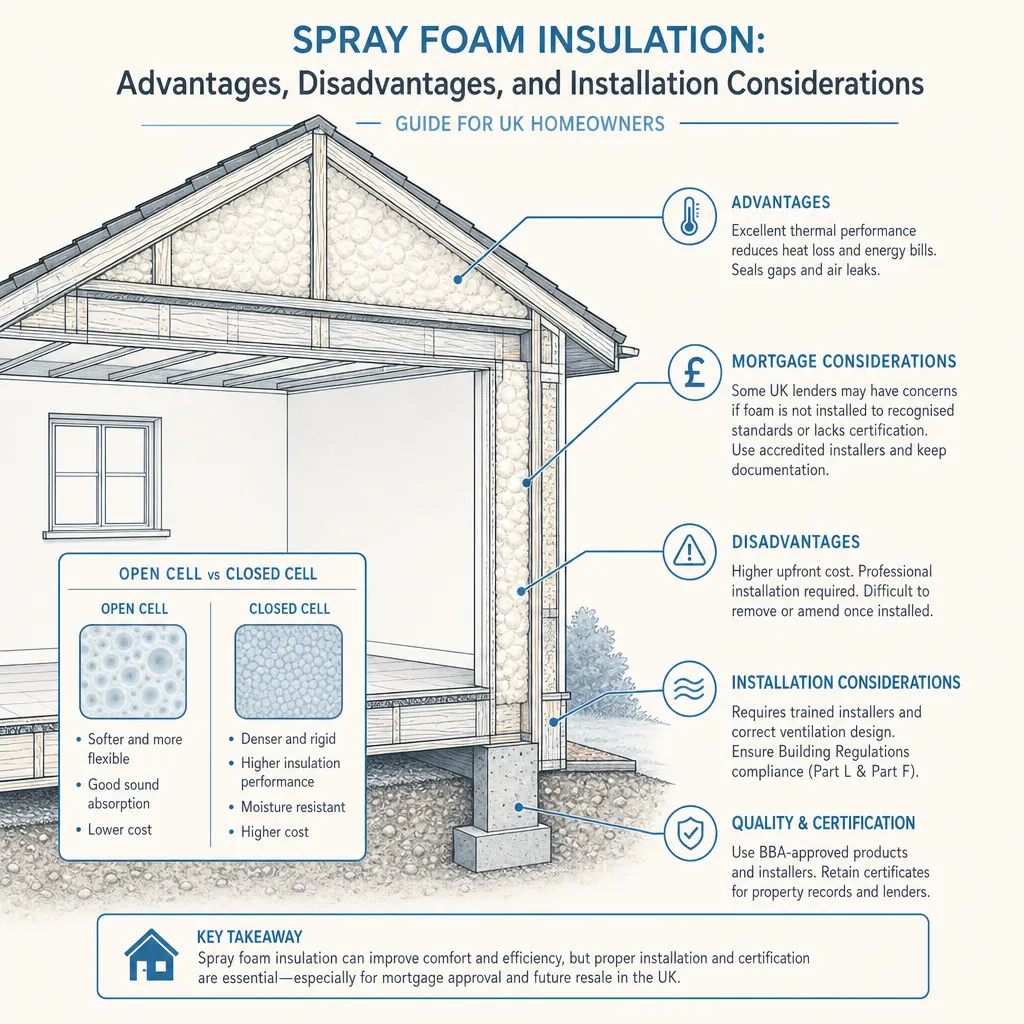
Spray Foam Insulation: Advantages, Disadvantages, and Installation Considerations
Spray foam insulation delivers excellent thermal performance and air sealing but carries significant risks in UK homes, particularly when applied to roof timbers — it can trap moisture, cause structural damage, and make properties harder to mortgage or sell. Professional assessment and an accredited installer are essential before choosing spray foam.
 Improvement & Build
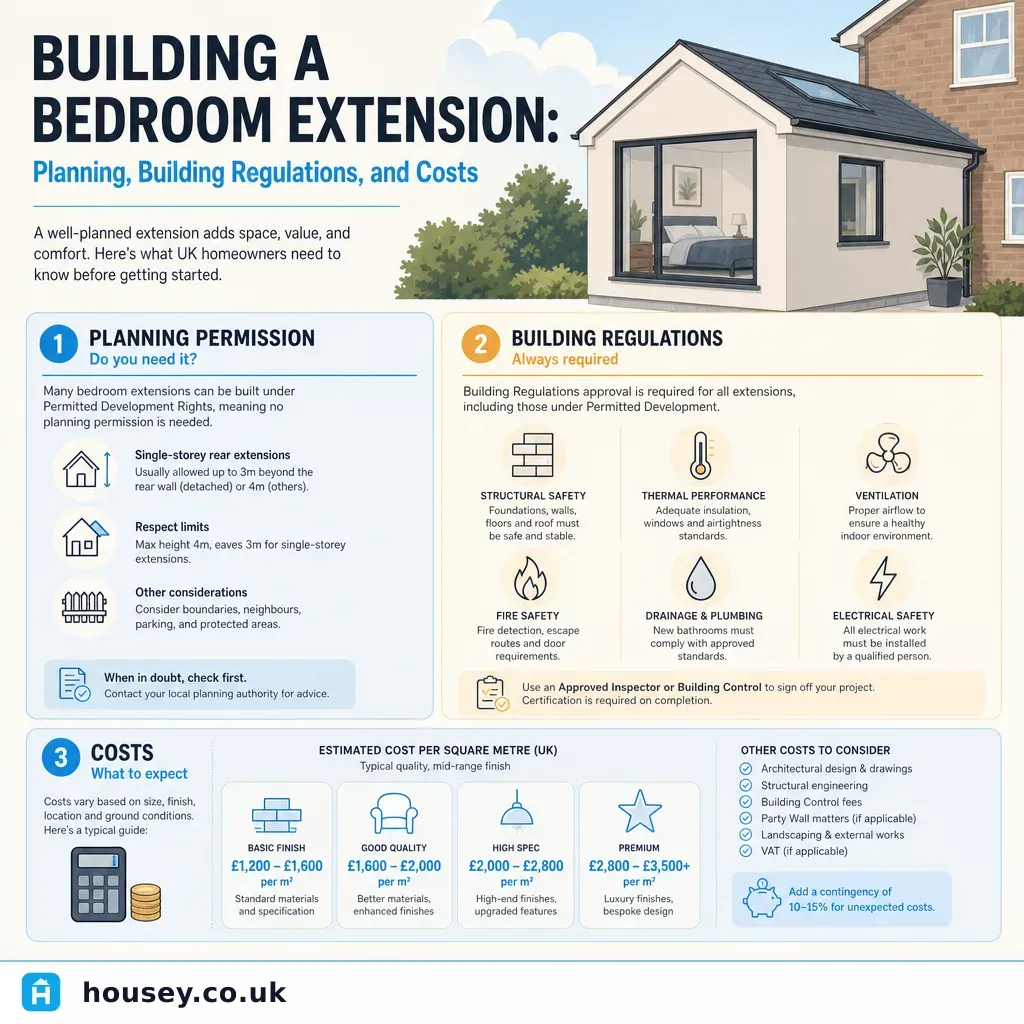
Building a Bedroom Extension: Planning, Building Regulations, and Costs
A bedroom extension requires either permitted development approval or full planning permission, plus building regulations sign-off in all cases. Single-storey rear extensions up to 4 m (detached) or 3 m (semi/terrace) often fall under permitted development. Costs typically range from £1,500 to £2,500 per square metre. A qualified designer and structural engineer are usually needed before work begins.
 Surveys & Inspections
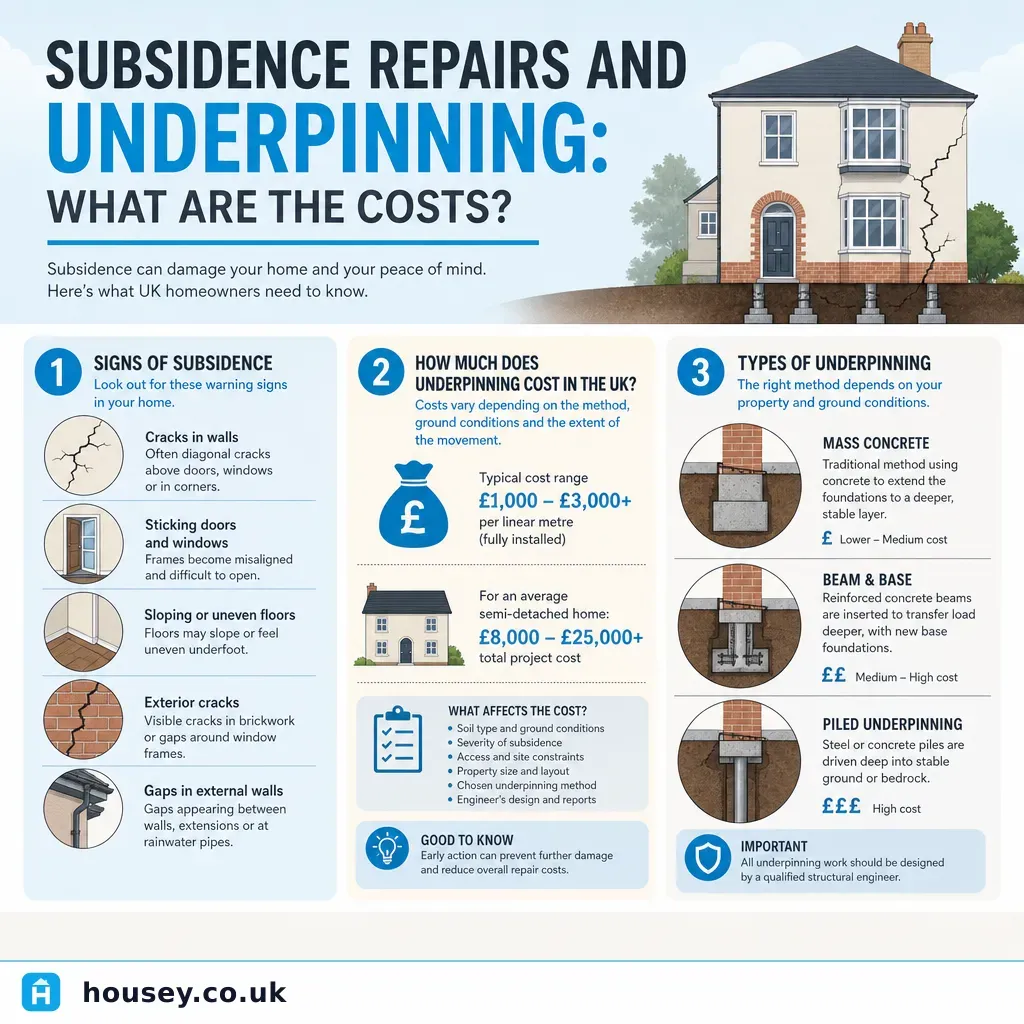
Subsidence Repairs and Underpinning: What Are the Costs?
Underpinning costs in the UK typically range from £1,000 to £3,000 per linear metre, with whole-house projects often totalling £10,000–£50,000 depending on method, property size, and ground conditions. A structural engineer should assess suspected subsidence first — underpinning is not always the right solution, and cheaper remedies may be appropriate in some cases.
 General property advice
Rental Market Trends: Garden Space Demand Among Tenants
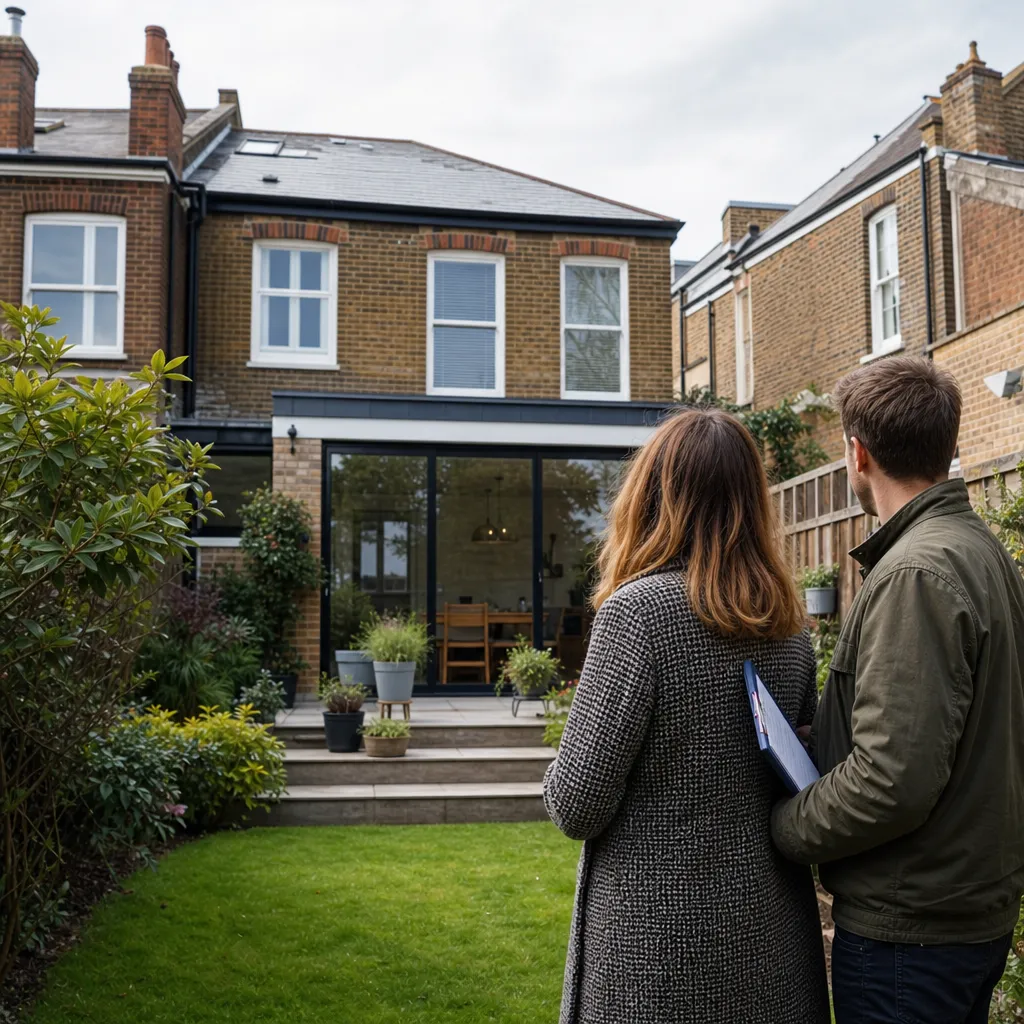
Demand for rental properties with garden access has grown markedly since 2020, with families, remote workers, and pet owners rating outdoor space among their top priorities. Private gardens typically command a rental premium over comparable properties without one, and demand is especially strong in suburban and commuter-belt markets across the UK.