Knowledge Base
Property advice that actually helps
Researched, UK-specific guides for every stage of homeownership — from buying and surveys to retrofit, planning and major works.
 Improvement & Build
How to plan a kitchen extension project
Planning a kitchen extension means checking whether permitted development or planning permission applies, appointing an architect for drawings, obtaining Building Regulations approval, and commissioning a structural engineer for any wall removals. A single-storey rear extension in England typically takes 6–12 months from brief to completion and costs £1,800–£3,500 per m² to build.
 Improvement & Build
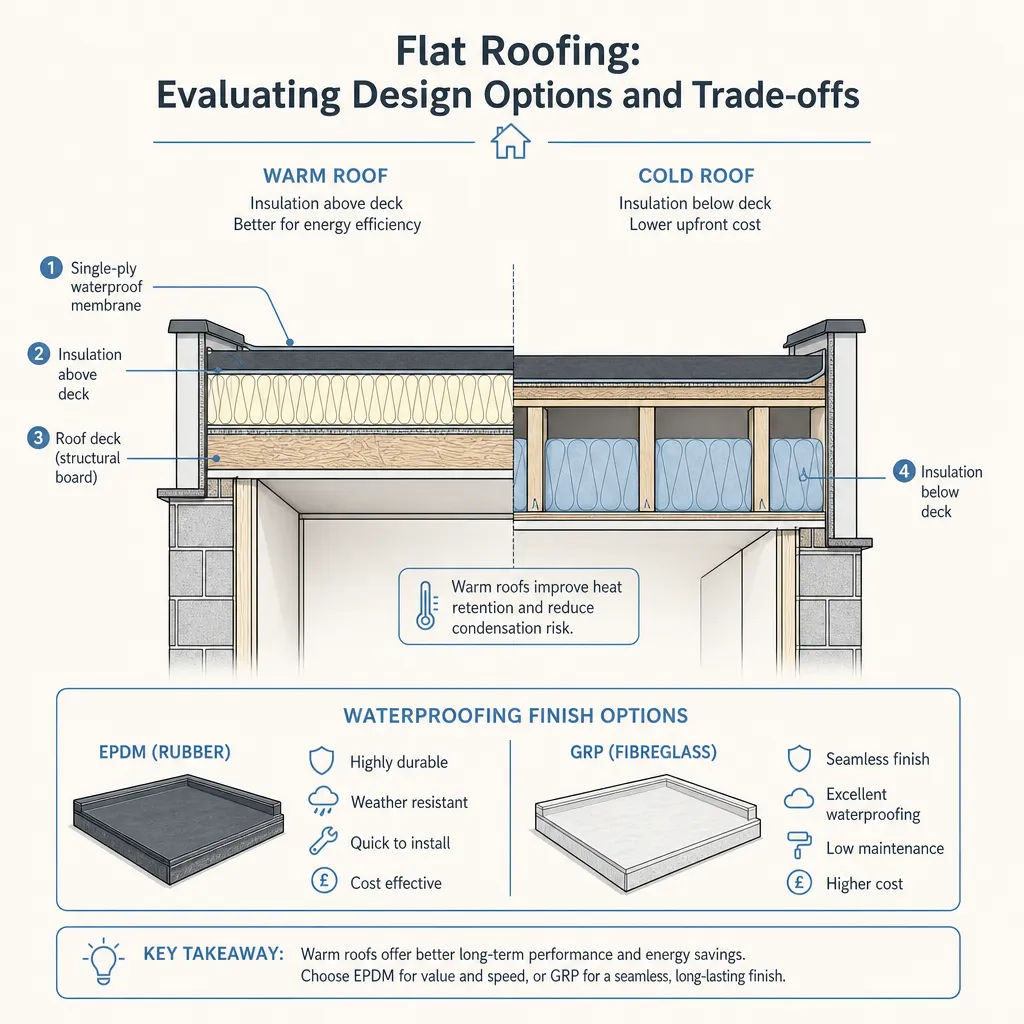
Flat Roofing: Evaluating Design Options and Trade-offs
Flat roofs are typically built as warm deck, cold deck, or inverted systems, each with different insulation placement and moisture risk. Common membranes include EPDM rubber, GRP fibreglass, and modified bitumen felt. The right choice depends on your roof area, budget, load-bearing capacity, and whether you want a usable surface. Always specify adequate drainage falls — a minimum 1:80 is standard in UK practice.
 Buying & Moving
Government-backed property schemes: support programmes for first-time home buyers
UK first-time buyers can access several government-backed programmes including the Lifetime ISA (25% bonus on savings up to £4,000 per year), Shared Ownership (part-buy, part-rent), and the First Homes scheme (discounts of 30–50% on new builds). Eligibility rules vary — check GOV.UK for current requirements before applying.
 Improvement & Build
Choosing the Right Windows for Kitchen Spaces: Materials and Styles
Kitchen windows must meet Building Regulations Part L, achieving at least Window Energy Rating Band C. Frame material depends on the property: uPVC suits most post-war homes, while timber or slim aluminium is often required in listed buildings and conservation areas. Use a FENSA-registered installer for self-certification, and confirm that trickle ventilators meet Part F ventilation requirements for rooms with cooking facilities.
 Surveys & Inspections
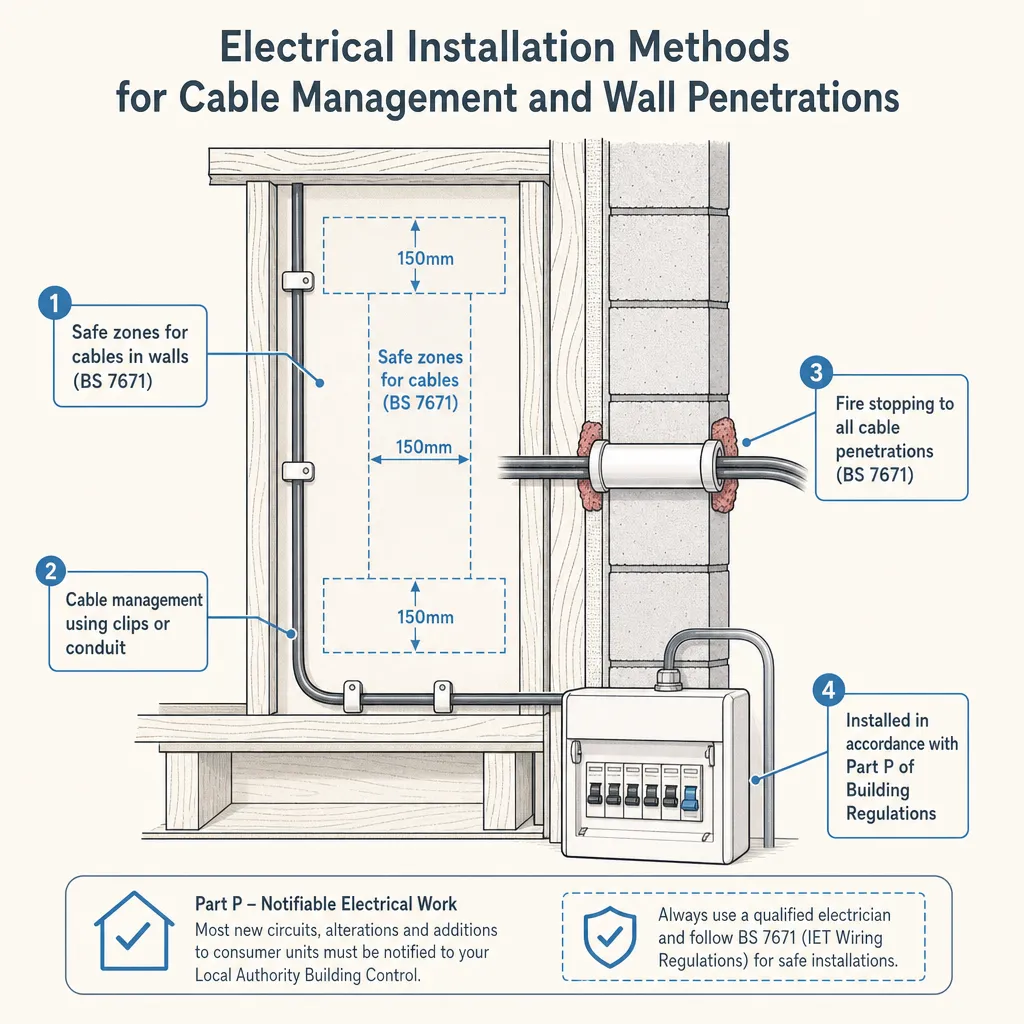
Electrical installation methods for cable management and wall penetrations
Cables concealed in walls must follow safe-zone routes or be protected by earthed metallic conduit under BS 7671 Regulation 522.6.6. Penetrations through fire-compartment boundaries require intumescent fire-stopping under Approved Document B. All notifiable electrical work — including new circuits, consumer unit replacements, and work in bathrooms and kitchens — must be carried out by a Part P registered electrician or notified to Building Control.
 Energy & Retrofit
Home Ventilation Solutions and Air Quality Management
The right home ventilation solution depends on how airtight and well-insulated your property is. Extract fans and trickle vents suit older, leakier homes; MVHR is better suited to airtight, well-insulated properties. If condensation or mould has worsened after insulation work, a ventilation assessment under PAS 2035 should be your starting point.
 Improvement & Build
How to Strip Silicone Sealant from Windows and Doors
Strip old silicone sealant by scoring along the edges with a utility knife, applying a chemical softener if the sealant is aged or hard, then peeling away the bulk and cleaning residue with isopropyl alcohol. Always remove all old sealant before applying new — fresh silicone will not bond reliably over aged product.
 Improvement & Build
Storm Door Installation: Costs, Options and Weather Protection
Storm door installation in the UK involves fitting a secondary exterior door — typically in aluminium, UPVC, or timber — to create a sealed air buffer, reduce heat loss, and protect the main door from weather. Indicative supply-and-fit costs range from around £400 to £1,500 or more depending on material, glazing, and frame complexity. Permitted development usually applies, but listed buildings and conservation areas need checking first.
 Improvement & Build
Concrete Patio Repair and Renovation: Options and Costs
Concrete patio repair options range from crack filling (for hairline cracks under 5 mm) through resurfacing overlays (viable only on structurally sound, well-draining slabs) to full removal and replacement. The right choice depends on diagnosing the root cause — surface cracking, sub-base failure, or drainage problems — before committing to surface treatment. UK indicative costs: £5–£20/m² for crack repairs; £80–£150/m² for full replacement.
 Planning & Pre-Build
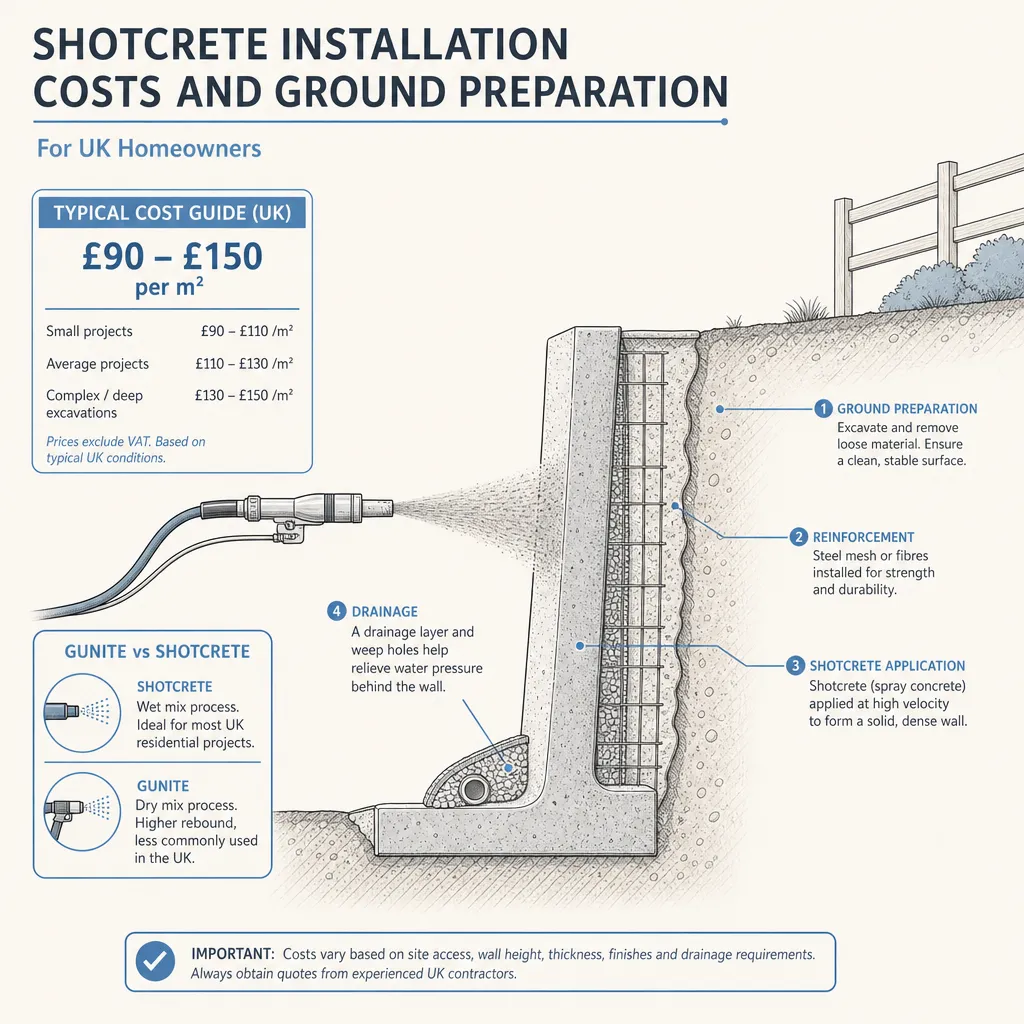
Shotcrete Installation Costs and Ground Preparation
Shotcrete (spray concrete) in the UK costs roughly £80–£200 per m² to supply and apply, depending on mix strength, layer thickness, access, and reinforcement. Ground preparation — clearing the substrate, grading, and fixing steel reinforcement — is a separate cost that typically adds 20–40% to the application price and must meet the structural engineer's specification before spraying begins.
 Planning & Pre-Build
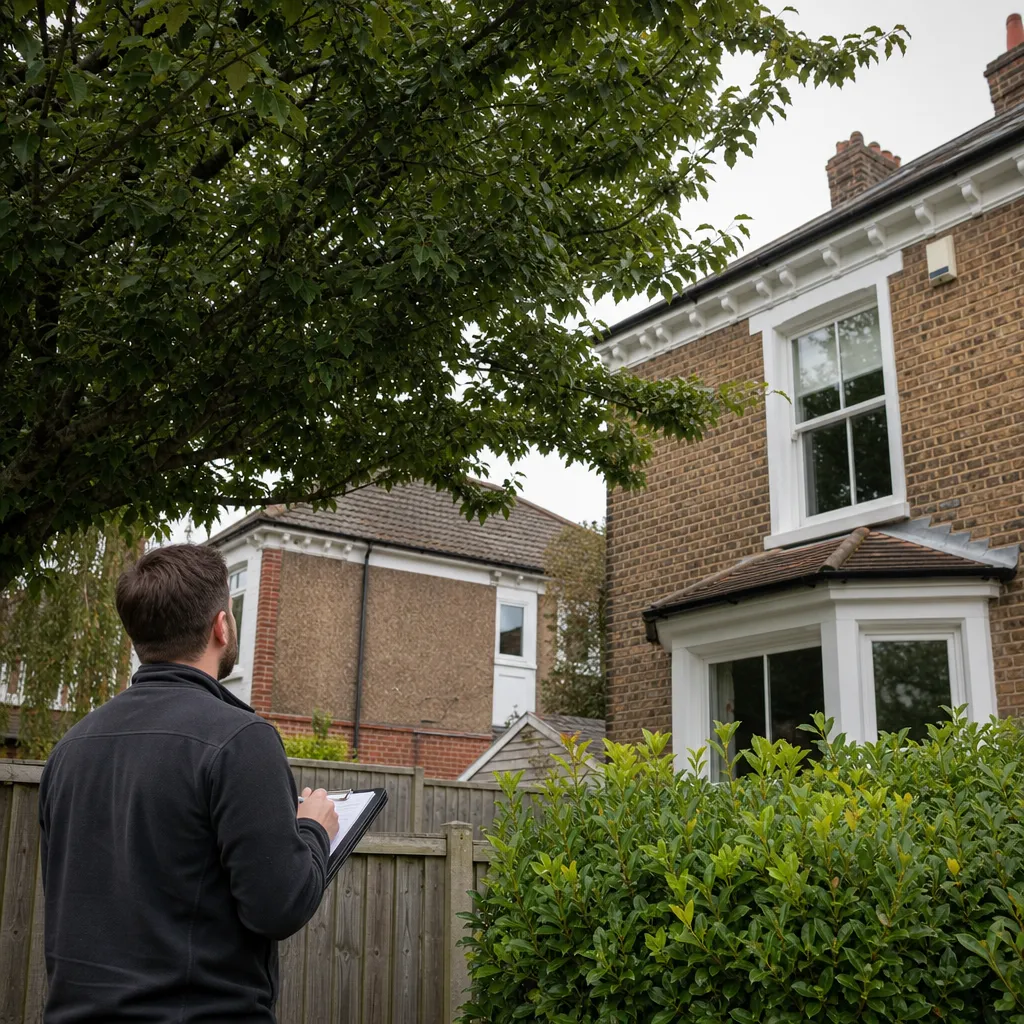
Managing Overhanging Trees: Legal Rights, Responsibilities and Remedies
In the UK, a tree belongs to whoever owns the land in which it is rooted. You can cut back branches and roots that cross your boundary to the boundary line, but must offer cuttings to the tree owner. Trees with a Tree Preservation Order or in a conservation area require council permission before any pruning — even by the tree's own owner. Take professional advice before acting.
 Surveys & Inspections
Structural Assessment of Failing Masonry Foundation Walls
Failing masonry foundation walls — showing bulging, progressive cracking, or outward movement — require assessment by a chartered structural engineer or RICS Level 3 surveyor. Causes include mortar decay, lateral earth pressure, wall-tie corrosion, and sub-floor moisture. Assessment type depends on severity: a RICS Level 3 survey is the appropriate starting point; targeted structural engineering input follows where defects are confirmed or complex.