Knowledge Base
Property advice that actually helps
Researched, UK-specific guides for every stage of homeownership — from buying and surveys to retrofit, planning and major works.
 Surveys & Inspections
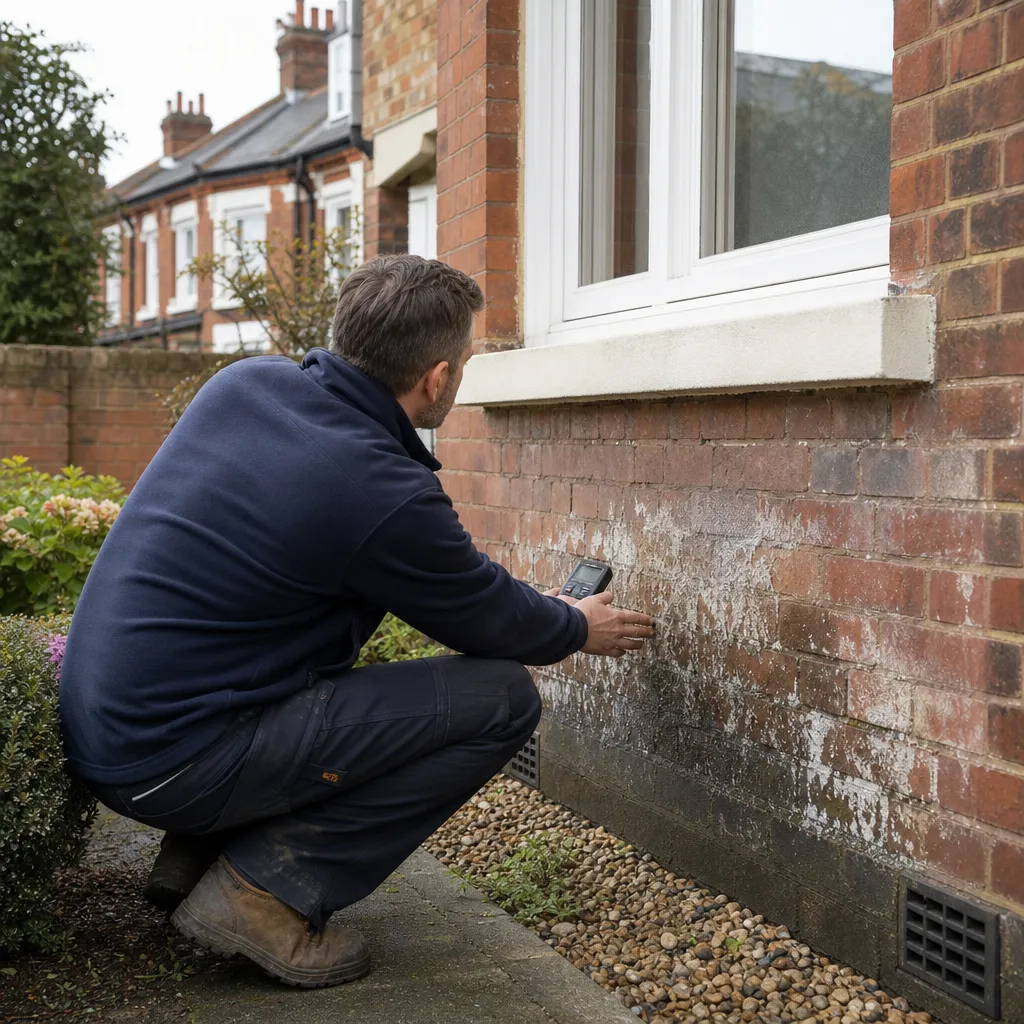
Treatment and Prevention of Damp Problems in Homes
Damp in UK homes usually falls into three categories: rising damp (moisture drawn up through walls), penetrating damp (water entering through building defects), and condensation — the most common cause, particularly in post-war housing. Correctly identifying the type before treatment is essential; misdiagnosis leads to costly and ineffective remediation. A qualified surveyor should assess persistent or extensive damp before any work begins.
 Improvement & Build
Understanding Property Service Costs: Price Guides for UK Home Improvements
UK home improvement costs vary significantly by region, property type, and specification, making published price guides a starting point rather than a firm budget. Getting three comparable, itemised quotes from accredited contractors — checked against BCIS benchmarks where possible — is the most reliable way to establish fair market pricing. Always confirm whether VAT is included and what certifications you will receive on completion.
 Improvement & Build
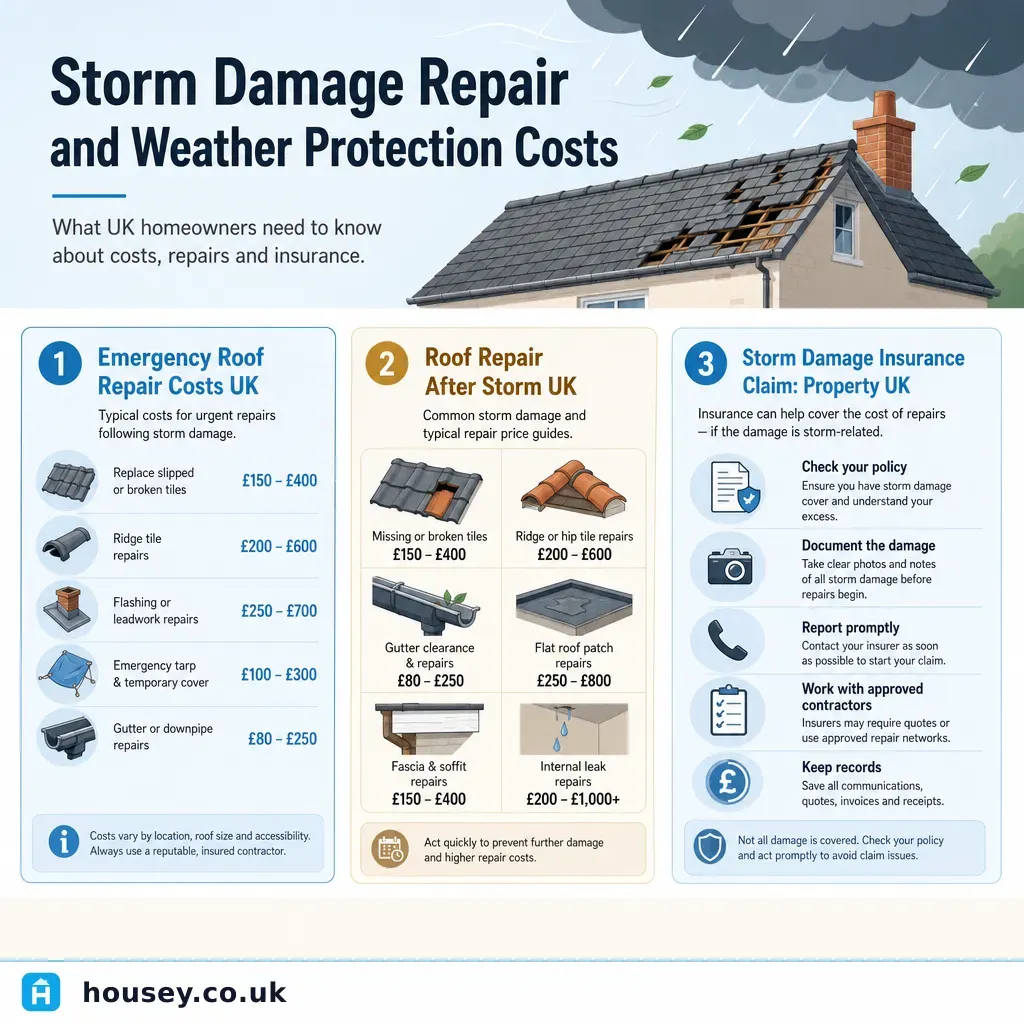
Storm Damage Repair and Weather Protection Costs
Storm damage repair costs in the UK range from around £200–£600 for emergency weatherproofing to £3,000–£15,000 or more for full roof reinstatement. Costs depend on the type and extent of damage, access, and materials. Document damage fully before commissioning permanent repairs, notify your insurer promptly, and instruct only qualified, accredited contractors for any structural or roof-level work.
 Improvement & Build
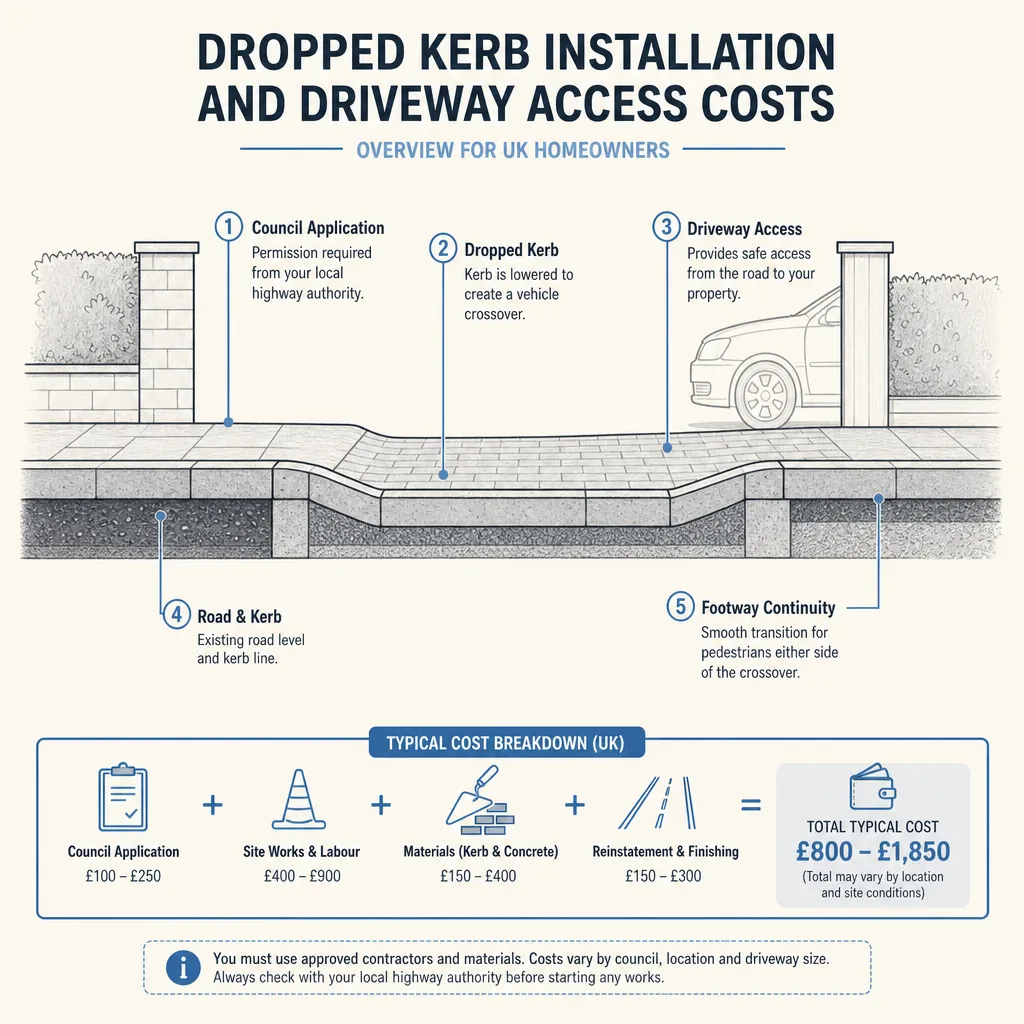
Dropped Kerb Installation and Driveway Access Costs
A dropped kerb in the UK requires approval from your local highway authority before any work begins. Indicative total costs range from £1,000 to £3,500, covering the council's fee for lowering the kerb on the public highway and private groundworks on your land. Working without approval is an offence under the Highways Act 1980 and can result in forced reinstatement at your expense.
 Improvement & Build
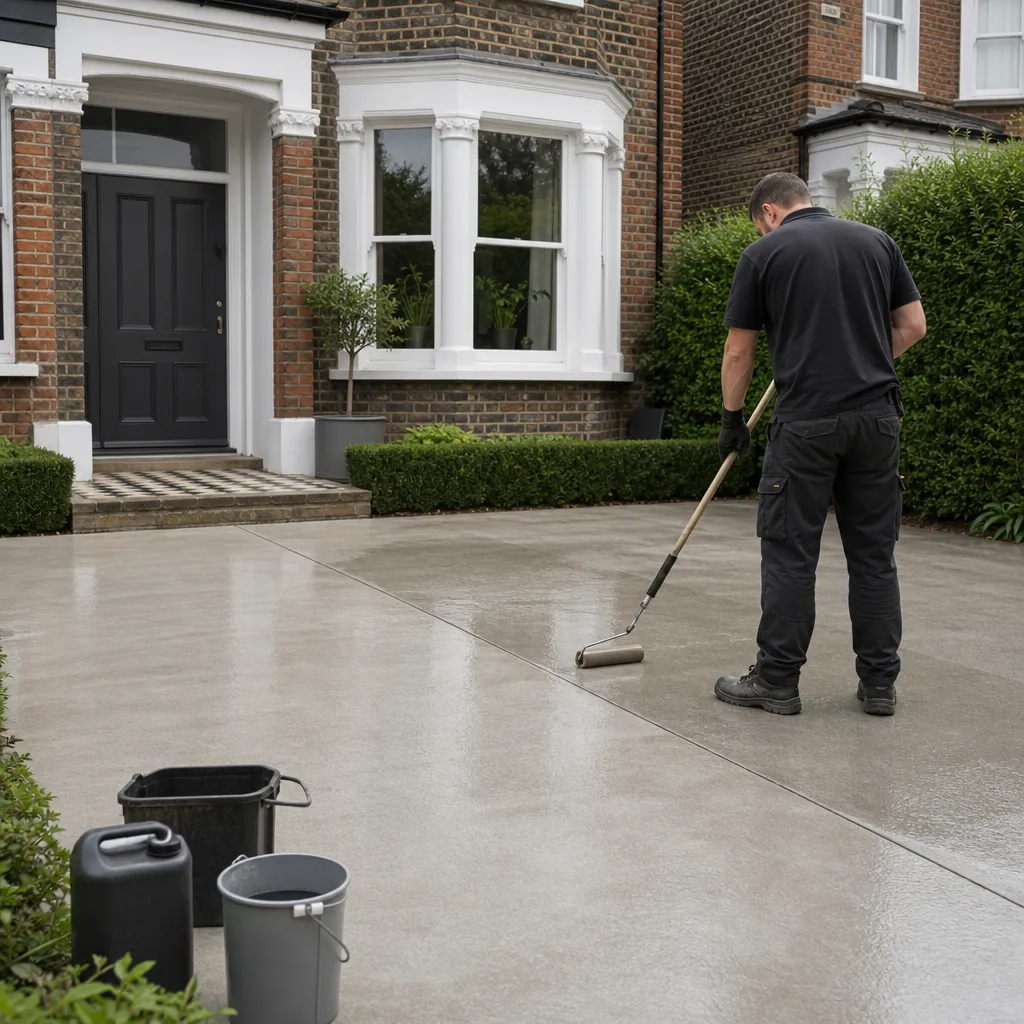
Which products to use for sealing your concrete driveway
Concrete driveway sealers divide into two types: penetrating sealers that absorb into the concrete without changing its look, and film-forming sealers that coat the surface. Silane-siloxane penetrating sealers suit most plain UK driveways and last 5–10 years. Solvent-based acrylic sealers enhance colour on pattern-imprinted concrete but need reapplying every one to three years.
 Energy & Retrofit
Solar Panel Leasing vs. Ownership: Comparing Your Options
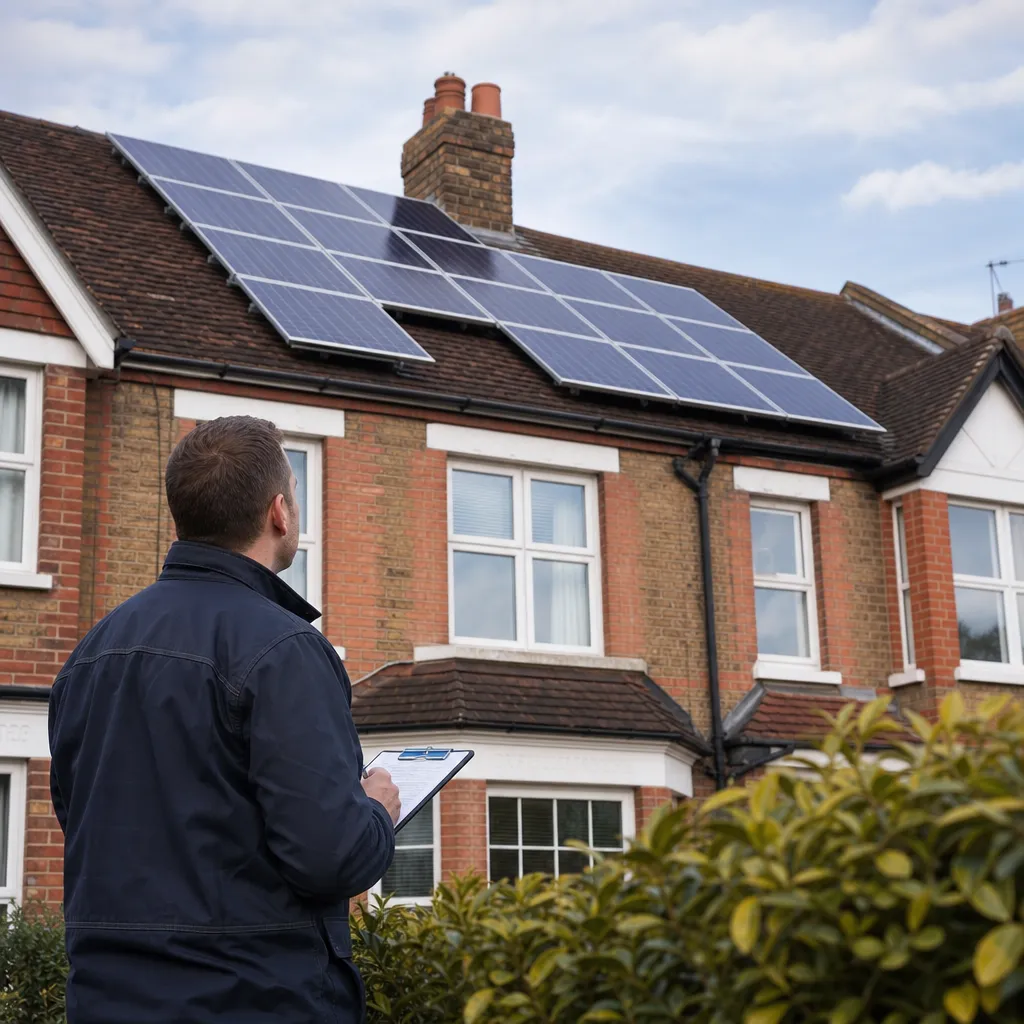
In the UK, owning your solar panels — whether purchased outright or via a loan — entitles you to all income under the Smart Export Guarantee (SEG). A lease or rent-a-roof arrangement typically means the solar company retains SEG payments, and the lease can complicate your property sale or remortgage. Most homeowners benefit more financially from ownership if they can fund it.
 Improvement & Build
What to expect when rendering exterior walls with monocouche finish
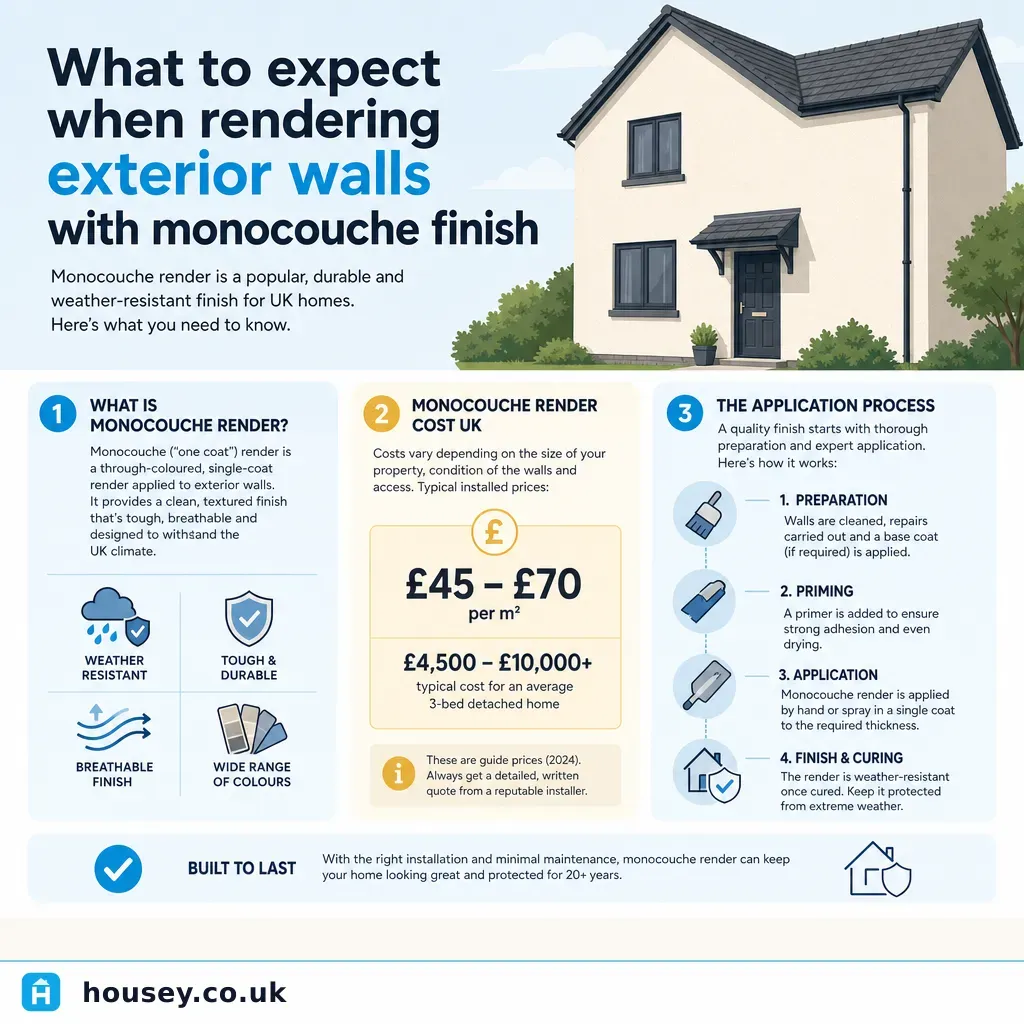
Monocouche is a single-coat, through-coloured cement-based render applied at 15–20 mm onto brick or dense blockwork. A UK contractor will prepare the substrate, embed reinforcement mesh, machine-apply the render, and texture the surface while still green. Expect scaffolding, positioned movement joints, and a 24–48 hour protection period before rain or frost exposure.
 Surveys & Inspections
Sewer Gas Odours in Homes: Causes, Health Risks, and Solutions
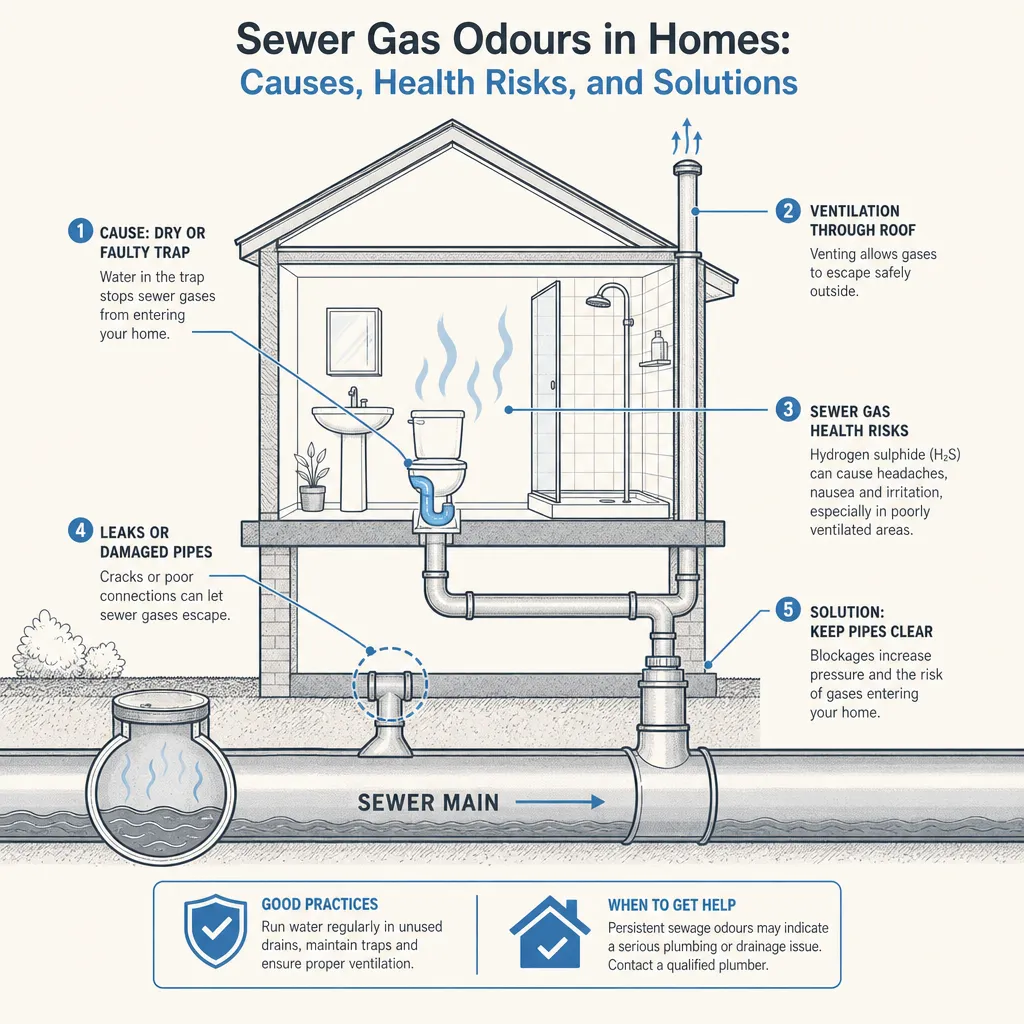
Sewer gas odours in homes are most often caused by dried drain traps, cracked underground pipes, or a blocked soil vent pipe. Refilling evaporated traps resolves many cases. If the smell persists or spreads to multiple rooms, a CCTV drain survey is needed to identify the drainage defect. Hydrogen sulphide and methane in sewer gas present health and fire risks at elevated concentrations.
 Improvement & Build
Built-In Under-Stair Storage Solutions Costs
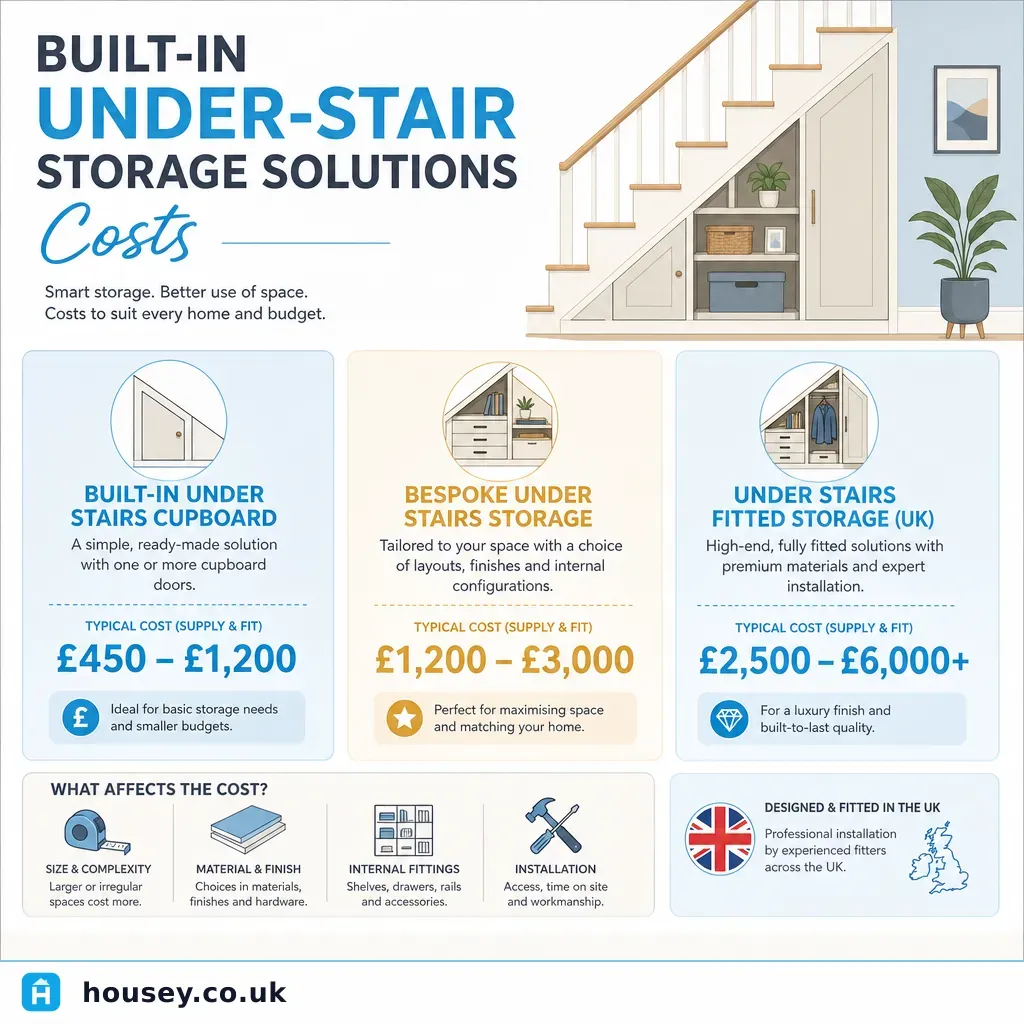
Built-in under-stair storage in the UK typically costs £500–£1,500 for a basic fitted door and shelving unit, rising to £2,000–£5,000 or more for fully bespoke carpentry with drawers and a painted finish. The staircase shape — straight, quarter-turn, or dog-leg — is the main cost driver, along with material choice and whether electrics are included.
 Improvement & Build
UPVC Window and Door Refurbishment Services
UPVC refurbishment — covering colour spraying, seal replacement, and hardware renewal — can extend the life of sound frames without the cost or disruption of full replacement. Indicative spraying costs run from £30 to £80 per window. Refurbishment makes most sense when frames are structurally intact, glazing units are performing, and the goal is aesthetic improvement or minor repair.
 Improvement & Build
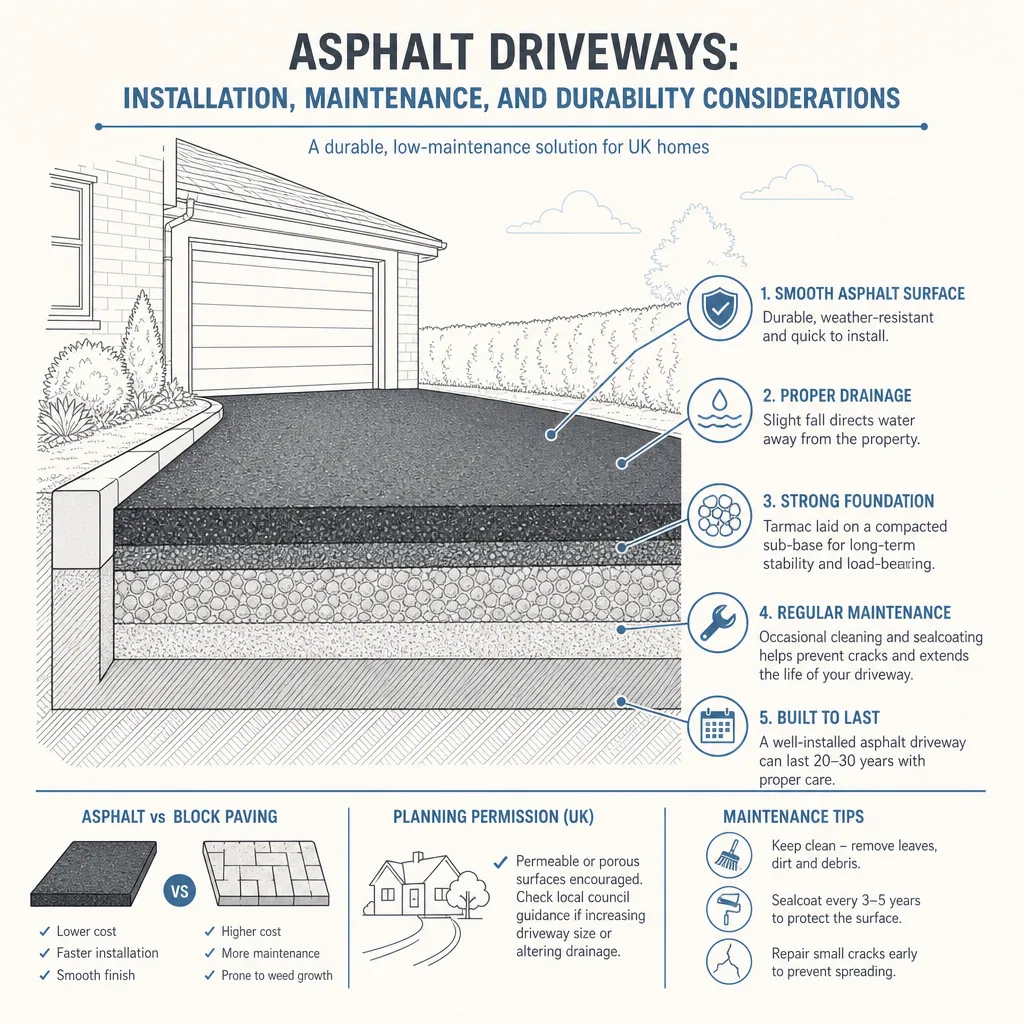
Asphalt Driveways: Installation, Maintenance, and Durability Considerations
An asphalt driveway typically costs £50–£100 per m² in the UK and should last 20–30 years with proper installation and maintenance. You will need planning permission if the surface is impermeable and run-off drains to the highway. A correctly prepared sub-base is the most critical factor in long-term performance — inadequate preparation is the most common cause of premature failure.
 Surveys & Inspections
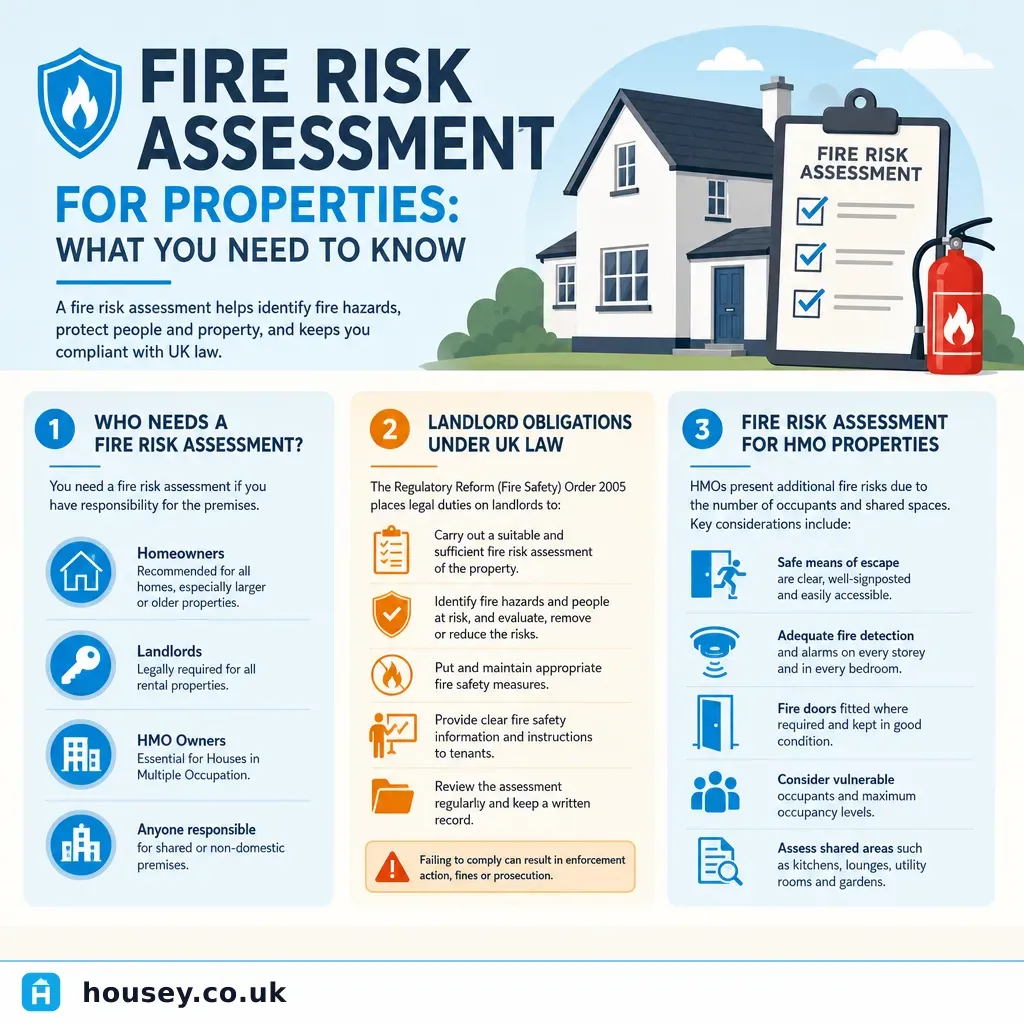
Fire Risk Assessment for Properties: What You Need to Know
Most non-domestic properties in England and Wales require a fire risk assessment under the Regulatory Reform (Fire Safety) Order 2005. Landlords of licensed HMOs and managers of residential blocks must also assess common areas. A competent, certified assessor should carry out the review, document findings, and recommend actions. Assessments must be reviewed after any significant change to the building.