Knowledge Base
Property advice that actually helps
Researched, UK-specific guides for every stage of homeownership — from buying and surveys to retrofit, planning and major works.
 Improvement & Build
What to Do When a Tree Falls on Your House
If a tree falls on your house, evacuate immediately and call 999 if anyone is trapped, you smell gas, or you see sparks or fire. Document the damage safely from outside, contact your buildings insurer as soon as possible, and arrange emergency tree removal through a qualified arborist. Have a structural engineer inspect the property before re-entering, and arrange temporary weatherproofing to limit further damage.
 Improvement & Build
Electric Gate Installation and Access System Costs
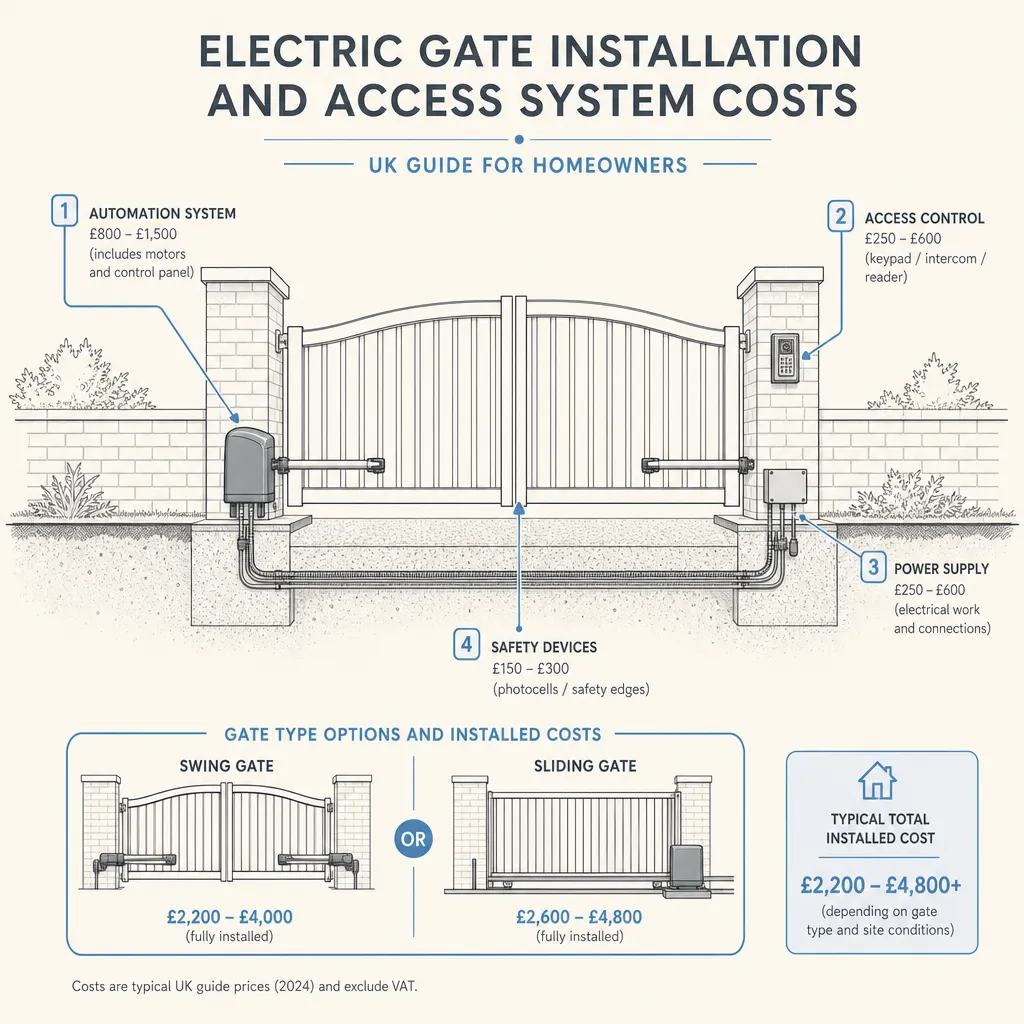
Electric gate installation in the UK typically costs between £1,500 and £8,000, depending on gate type, width, material, and automation system. Double swing steel gates with a standard access system sit in the £2,500–£5,000 range. Sliding gates cost more. Groundworks, bespoke materials, and premium access control can push costs significantly higher.
 Improvement & Build
Choosing Between Sharp Sand and Building Sand for Patio Installation
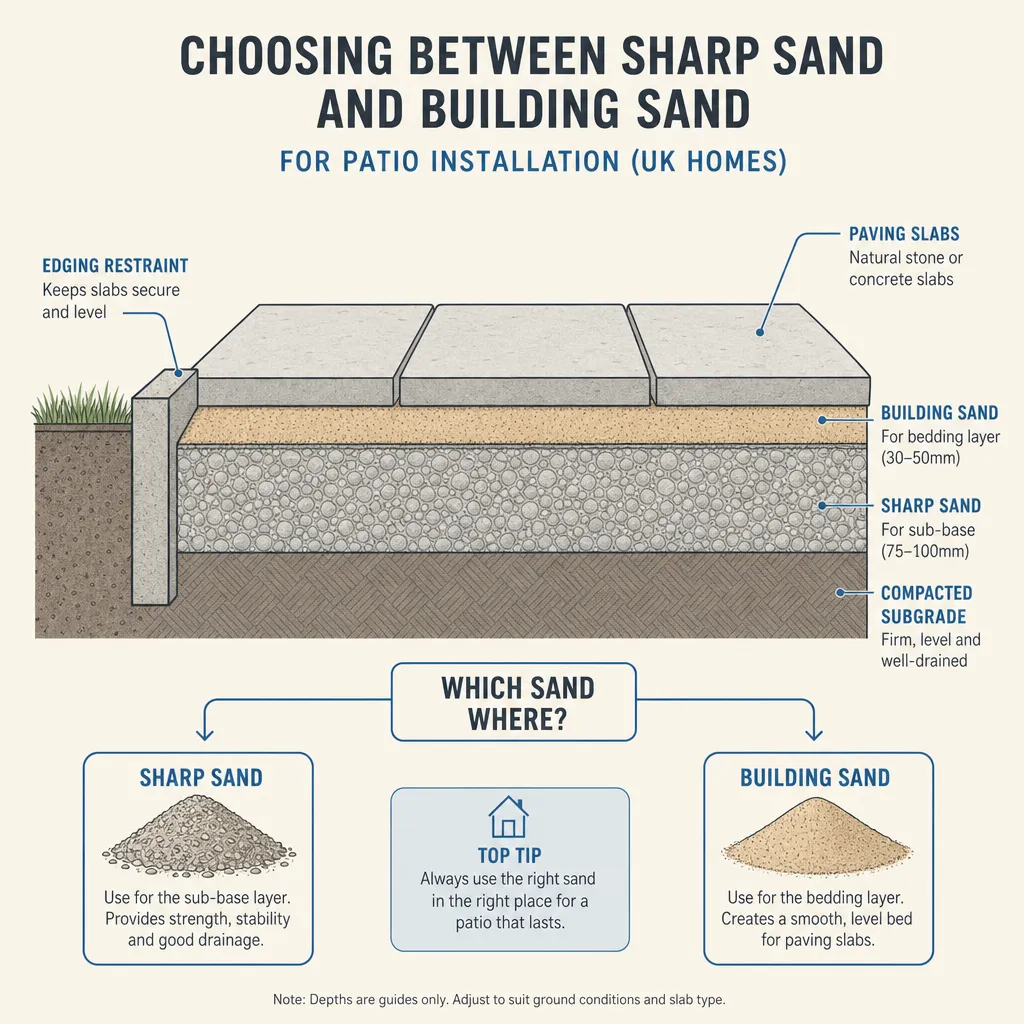
Use sharp sand for the bedding layer beneath paving slabs — its angular particles compact into a stable, well-draining base. Building sand is too fine and compressible for bedding and should only be used for mortar pointing mixed with cement. For block paving joints, use kiln-dried jointing sand, which is a separate product from both.
 Improvement & Build
Essential Window Maintenance Tips for Homeowners
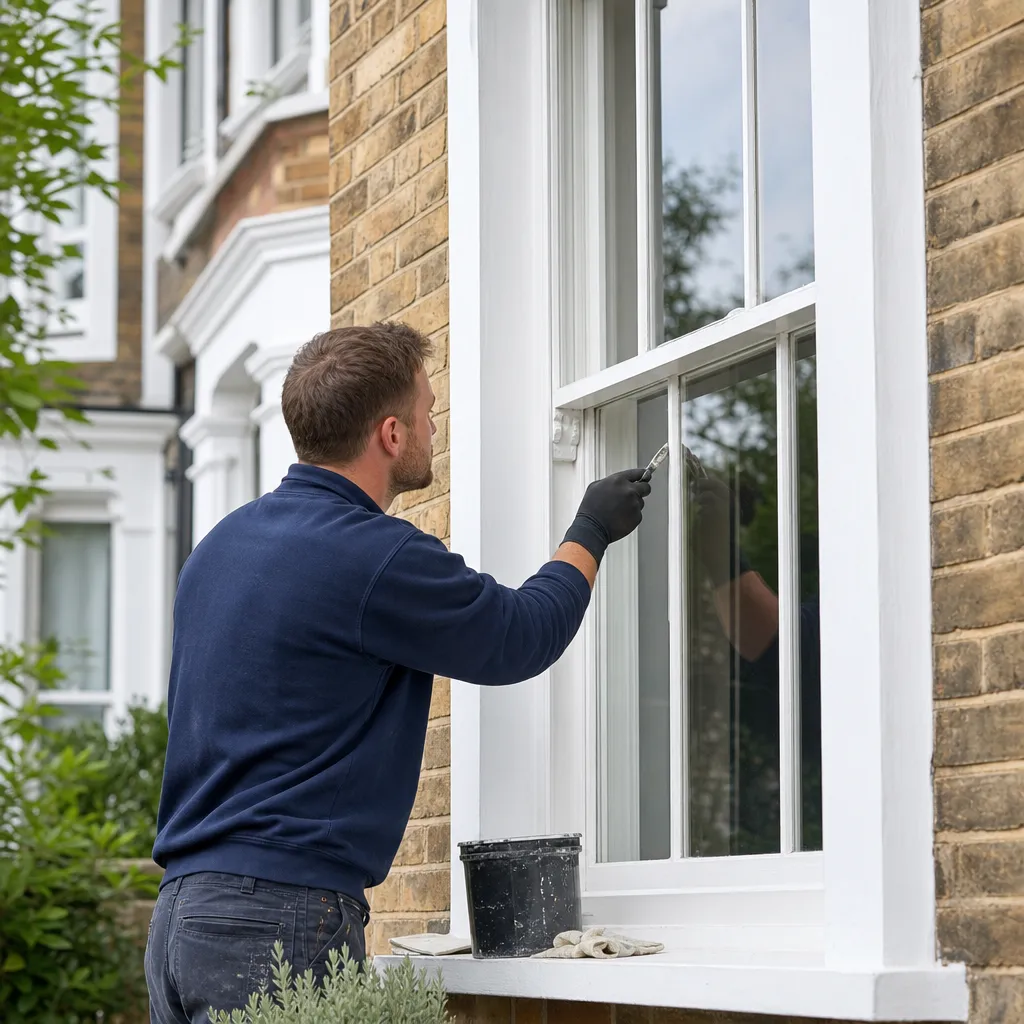
Most UK windows benefit from a thorough check twice a year — spring and autumn. Clean frames, lubricate hinges and stays with a silicone spray, clear drainage holes, and inspect rubber gaskets for cracks. Condensation between the panes signals a failed sealed unit, not a dirty window. Timber frames need repainting every three to five years to prevent rot.
 Energy & Retrofit
Preventing Draught Infiltration: External Foundation Insulation and Air Sealing
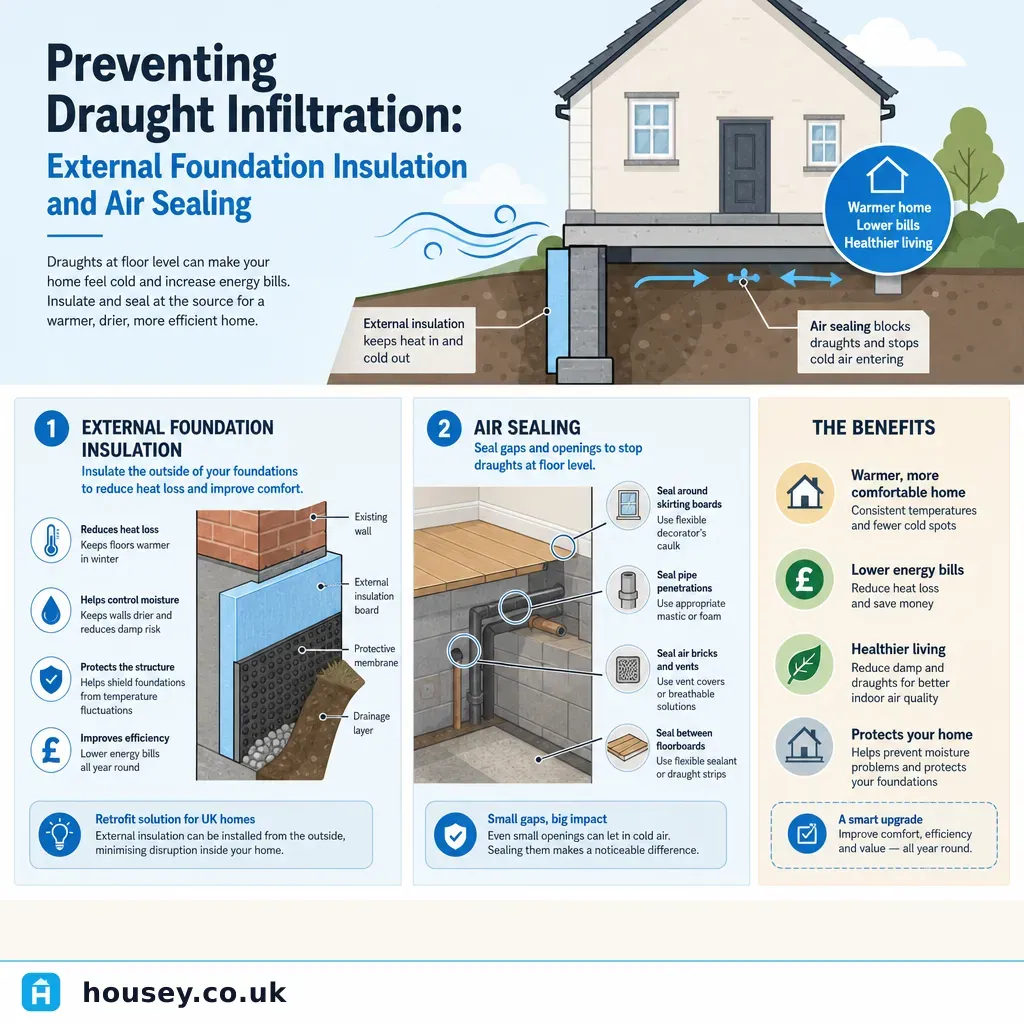
External foundation insulation and air sealing target heat loss and cold draughts at the building's base — particularly common in older UK homes with suspended timber floors or solid masonry. Works should follow PAS 2030/2035 where grant funding is involved, and moisture management is critical to avoid damp or timber decay beneath ground-floor level.
 Improvement & Build
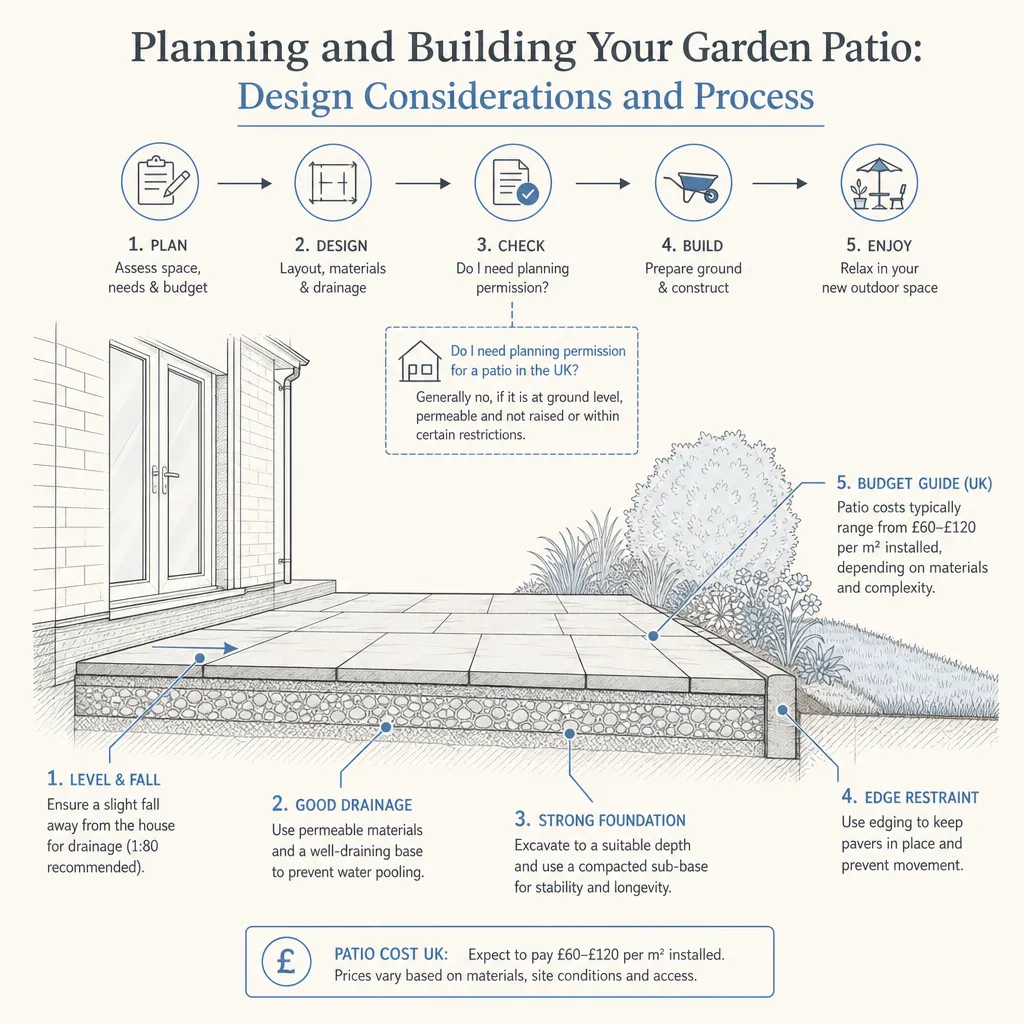
Planning and Building Your Garden Patio: Design Considerations and Process
Most rear garden patios in England and Wales don't need planning permission under Permitted Development rights. Front garden paving over 5 m² in impermeable material does require consent. Success depends on a solid sub-base of at least 100 mm compacted Type 1 hardcore, surface falls of 1:80 directed away from the house, and a paving material suited to your budget and drainage requirements.
 Improvement & Build
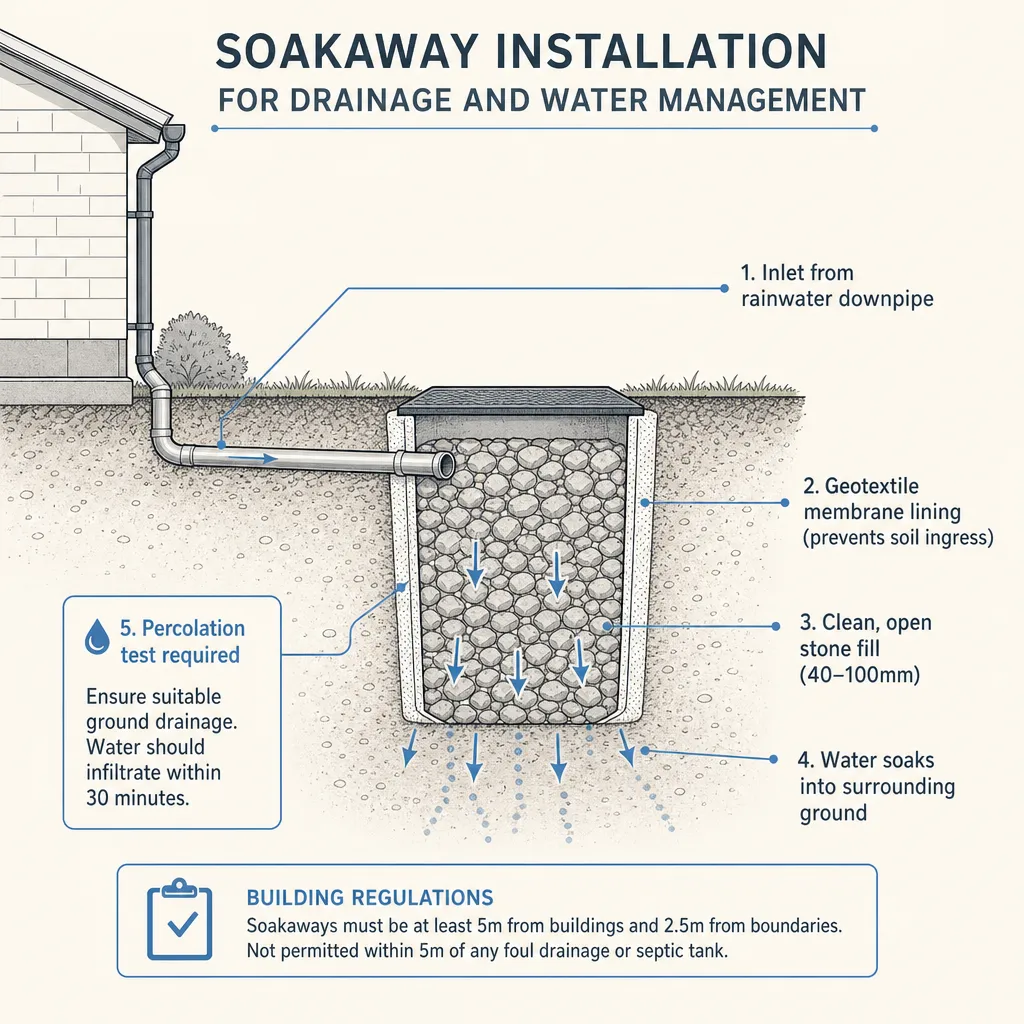
Soakaway Installation for Drainage and Water Management
A soakaway collects surface water or roof drainage and allows it to disperse slowly into the surrounding ground. It works only where soil permeability is suitable — confirmed by a percolation test following BRE Digest 365. Building Regulations require at least 5 metres separation from buildings. Clay soils, high groundwater, and flood zones may rule it out.
 Planning & Pre-Build
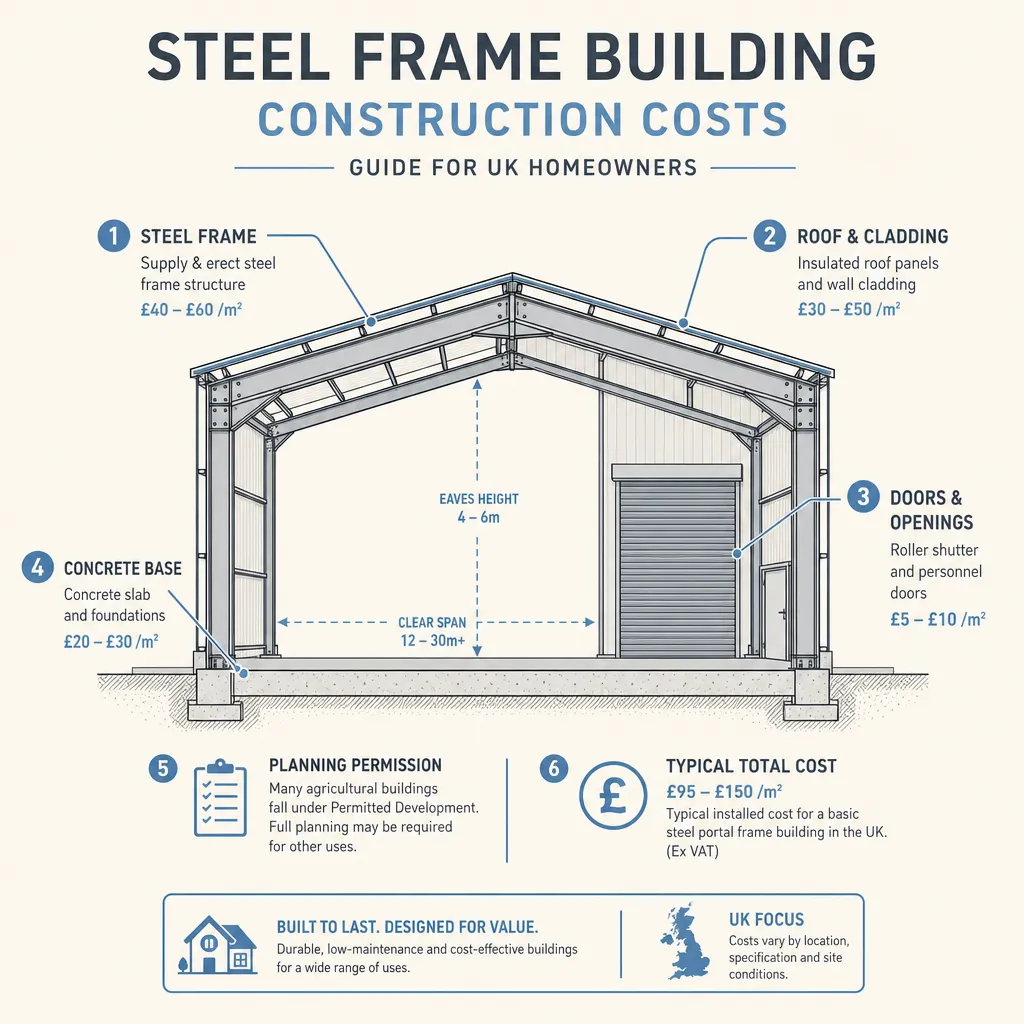
Steel Frame Building Construction Costs
Steel frame buildings in the UK cost from around £400 to over £1,200 per square metre of floor area, depending on building type, size, cladding, insulation, and fit-out level. Agricultural portal frames sit at the lower end; insulated commercial or mixed-use structures with full services cost considerably more. Groundworks, planning fees, and building control are additional costs.
 Planning & Pre-Build
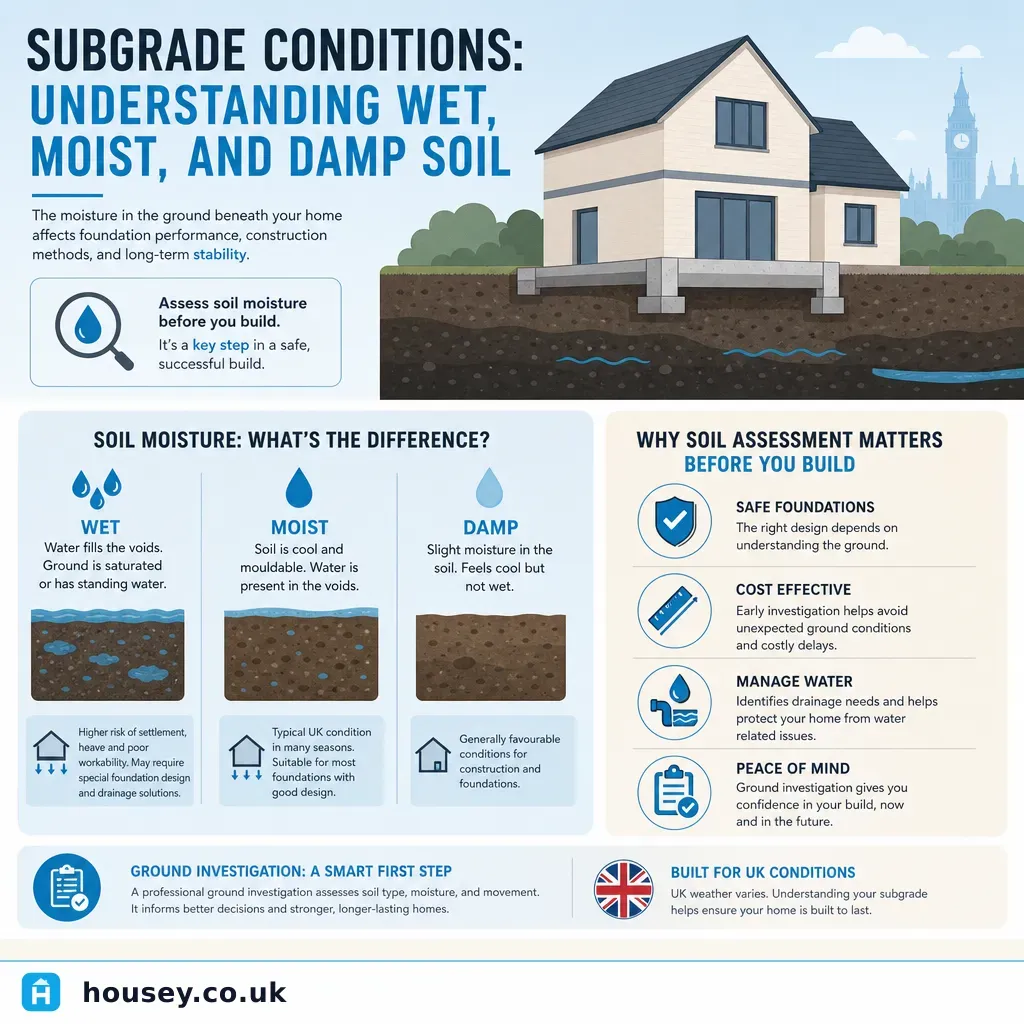
Subgrade Conditions: Understanding Wet, Moist, and Damp Soil
Subgrade condition — whether the soil beneath a foundation is wet, moist, or damp — directly affects foundation type, depth, and long-term structural performance. Building Regulations Approved Document A and BS 8004 require adequate foundation design for the ground class. Wet or soft subgrades may need ground improvement, piling, or raft foundations; a ground investigation report is usually essential before finalising any foundation design.
 Planning & Pre-Build
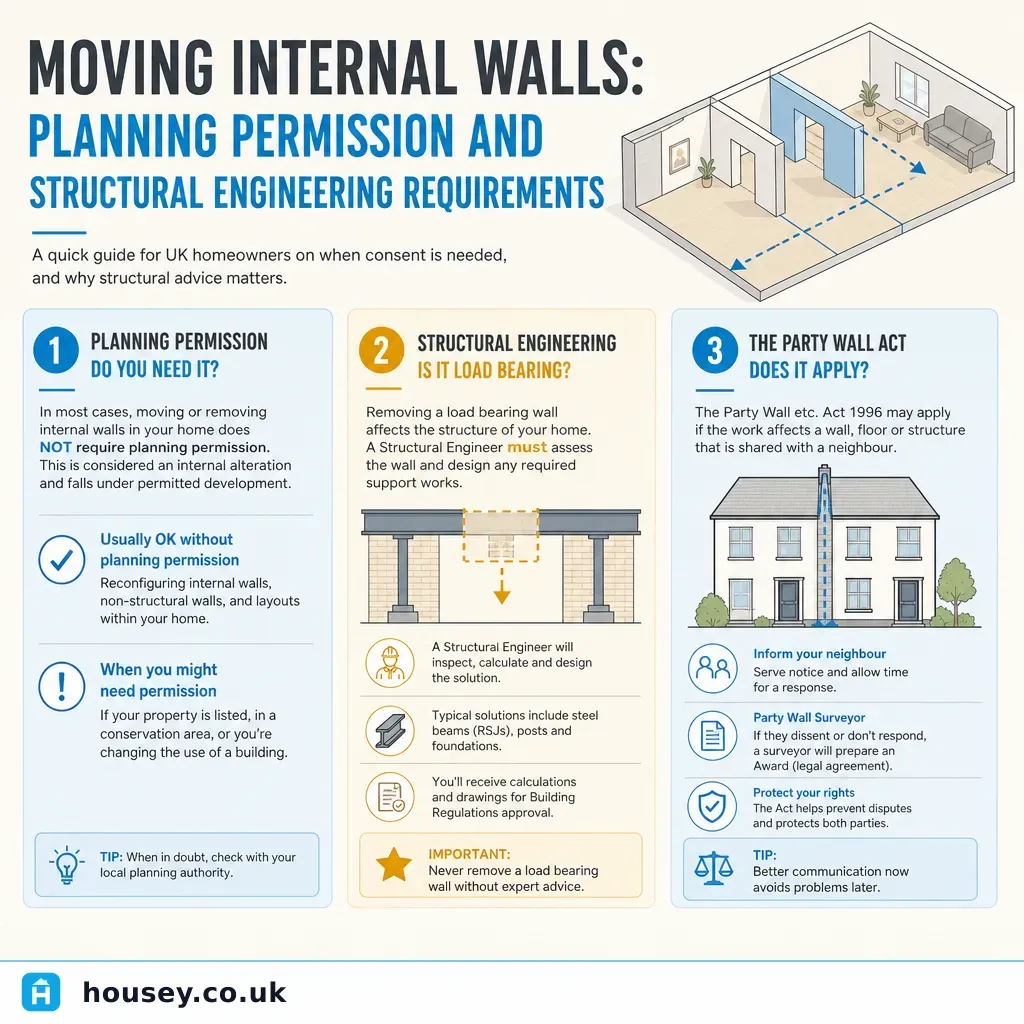
Moving Internal Walls: Planning Permission and Structural Engineering Requirements
Removing an internal wall rarely needs planning permission in England, but Building Regulations approval under Part A is almost always required if the wall is load-bearing. A structural engineer must assess the wall and design a replacement beam before demolition begins. Listed buildings also need listed building consent for internal structural works. Always obtain a completion certificate — solicitors and mortgage lenders will ask for it.
 Improvement & Build
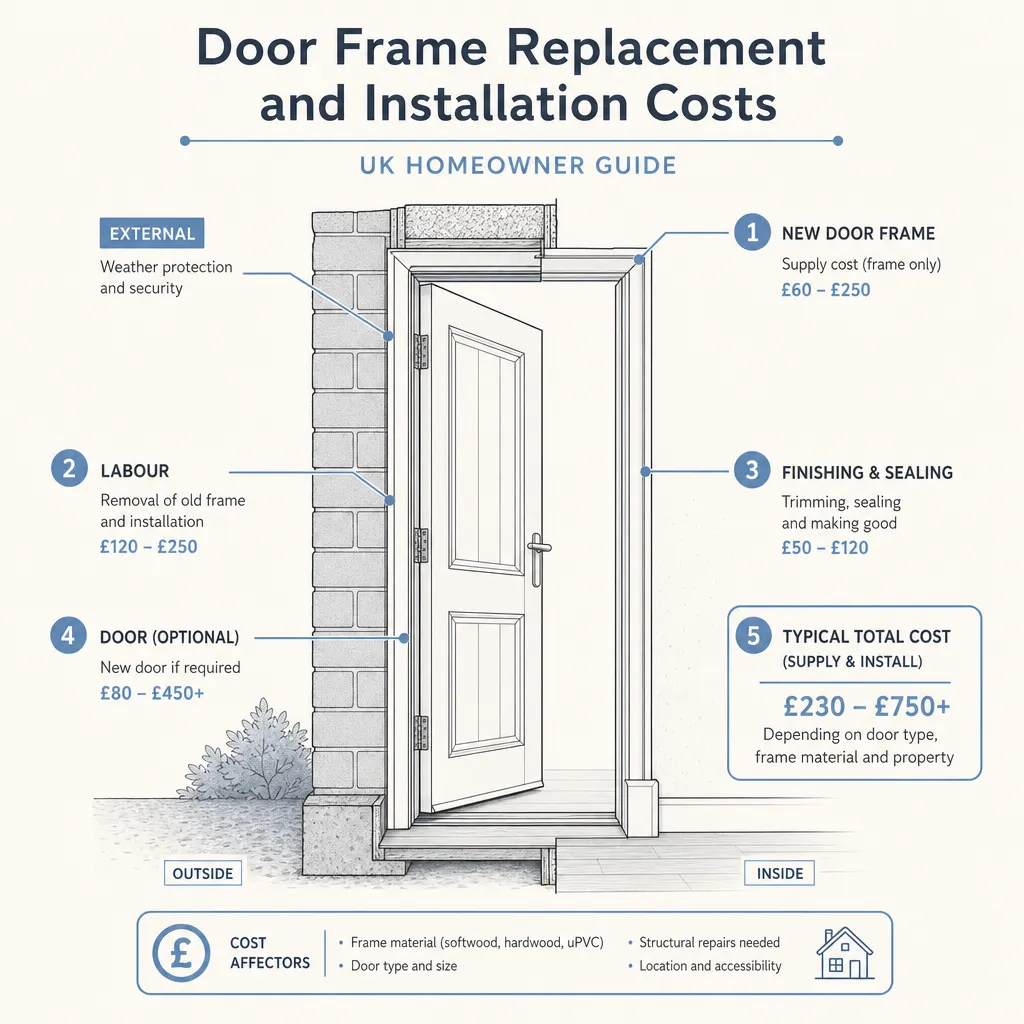
Door Frame Replacement and Installation Costs
Replacing an internal door lining in the UK typically costs £100–£300 including labour; an external door frame costs £300–£800 for softwood or UPVC and £600–£1,500 or more for hardwood or composite. Costs rise if the sill needs replacing, the opening requires structural alteration, or glazed panels need FENSA certification. Like-for-like frame swaps usually need no planning permission.
 Improvement & Build
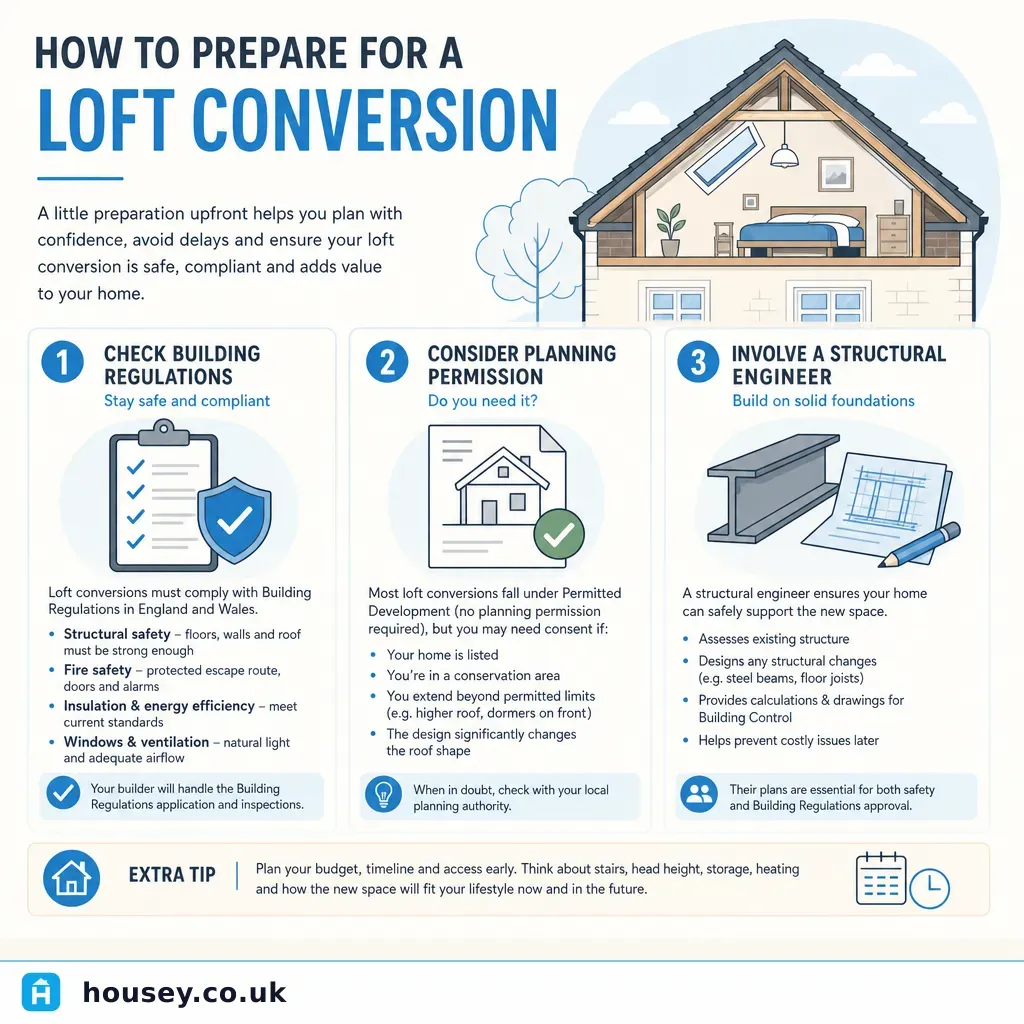
How to Prepare for a Loft Conversion
Before a loft conversion starts, you need a structural engineer to assess your roof, a Building Regulations application covering Parts A, B, F, K, and L, and — where a shared party wall is involved — a notice served under the Party Wall etc. Act 1996 at least two months before work begins. Most conversions in England fall under permitted development, but check with your local authority first.