Knowledge Base
Property advice that actually helps
Researched, UK-specific guides for every stage of homeownership — from buying and surveys to retrofit, planning and major works.
 Energy & Retrofit
Smart thermostats for home heating: cost-benefit analysis and features
A smart thermostat typically costs £150–£350 installed and can reduce heating bills by 15–25% annually, according to the Energy Saving Trust. Savings depend on your current controls, boiler compatibility, and how consistently you use scheduling features. Most UK homeowners break even within one to three years, making smart thermostats a practical energy upgrade for most properties.
 General property advice
Costs for installing livestock fencing or electric boundaries
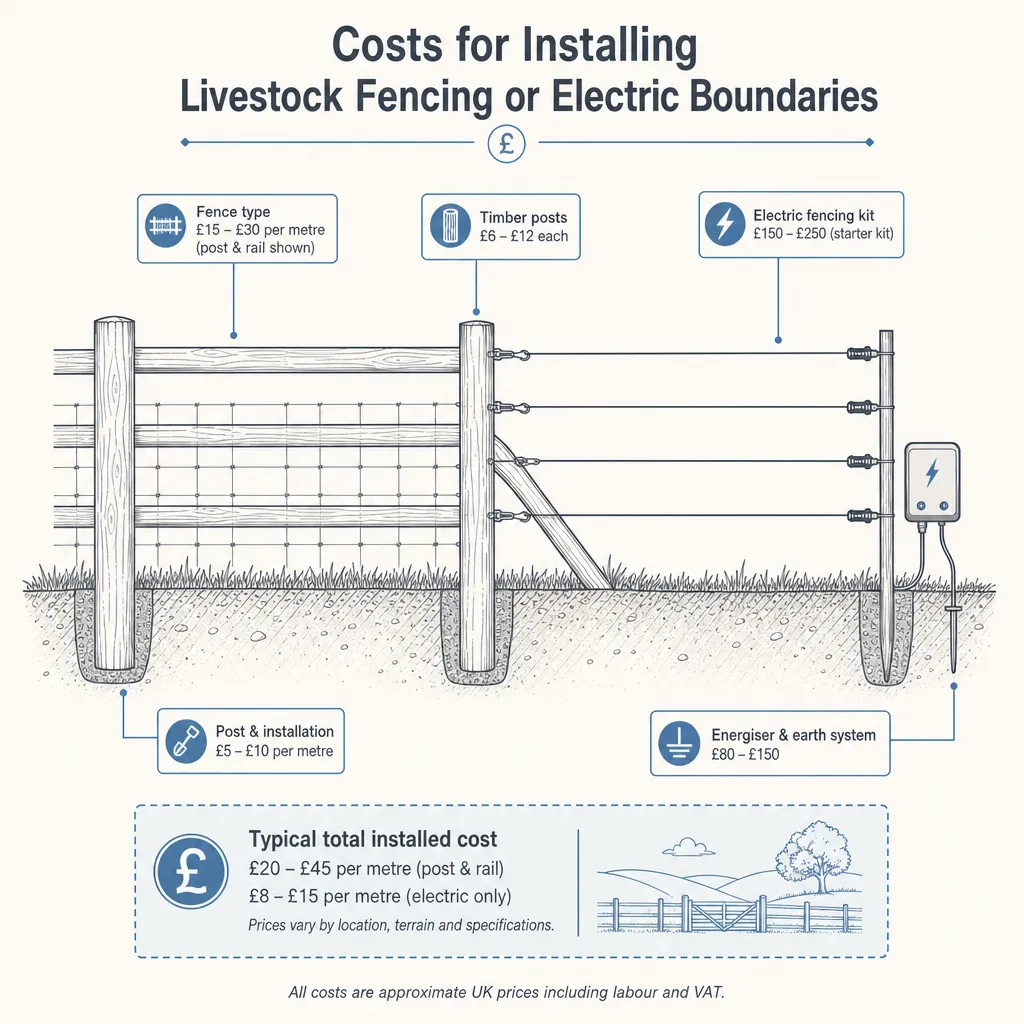
Installing livestock fencing costs £8–£18 per linear metre for standard stock fencing or £20–£45 per metre for post-and-rail timber, including labour. Electric boundary systems add an energiser unit at £50–£400 plus wire or tape costs. Most contractors quote per metre; terrain, ground conditions, and gate requirements all affect the final figure.
 Surveys & Inspections
Cavity Wall Drainage: Understanding Materials and Moisture Control
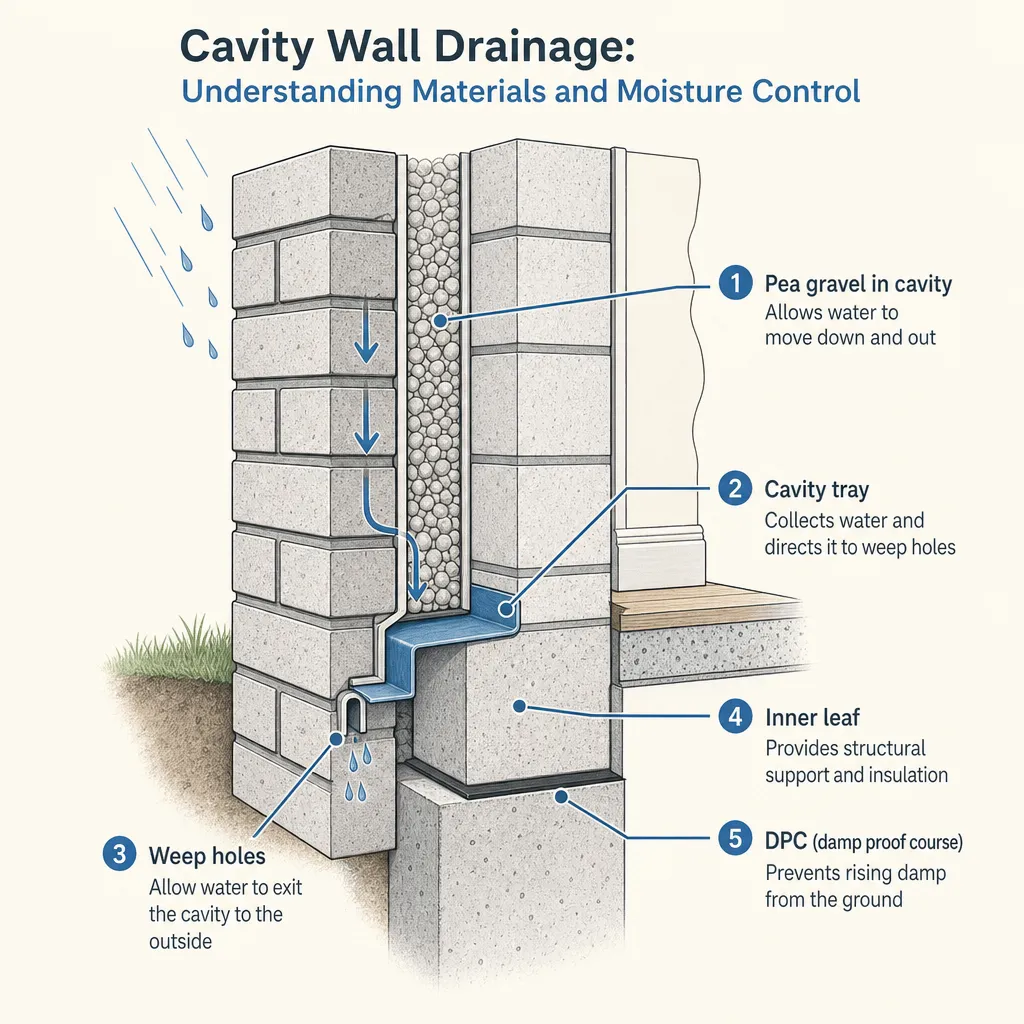
Cavity walls control moisture through a drainage system of weep holes, cavity trays, and DPC at ground level. Water entering the outer leaf runs down the cavity and exits through open perpend joints in the brickwork. Pea gravel, pre-formed trays, and correctly positioned DPC are all part of this system — which can fail if weep holes are blocked or cavity trays are missing above lintels.
 Improvement & Build
Dampproofing vs Waterproofing: Which Solution for Your Property
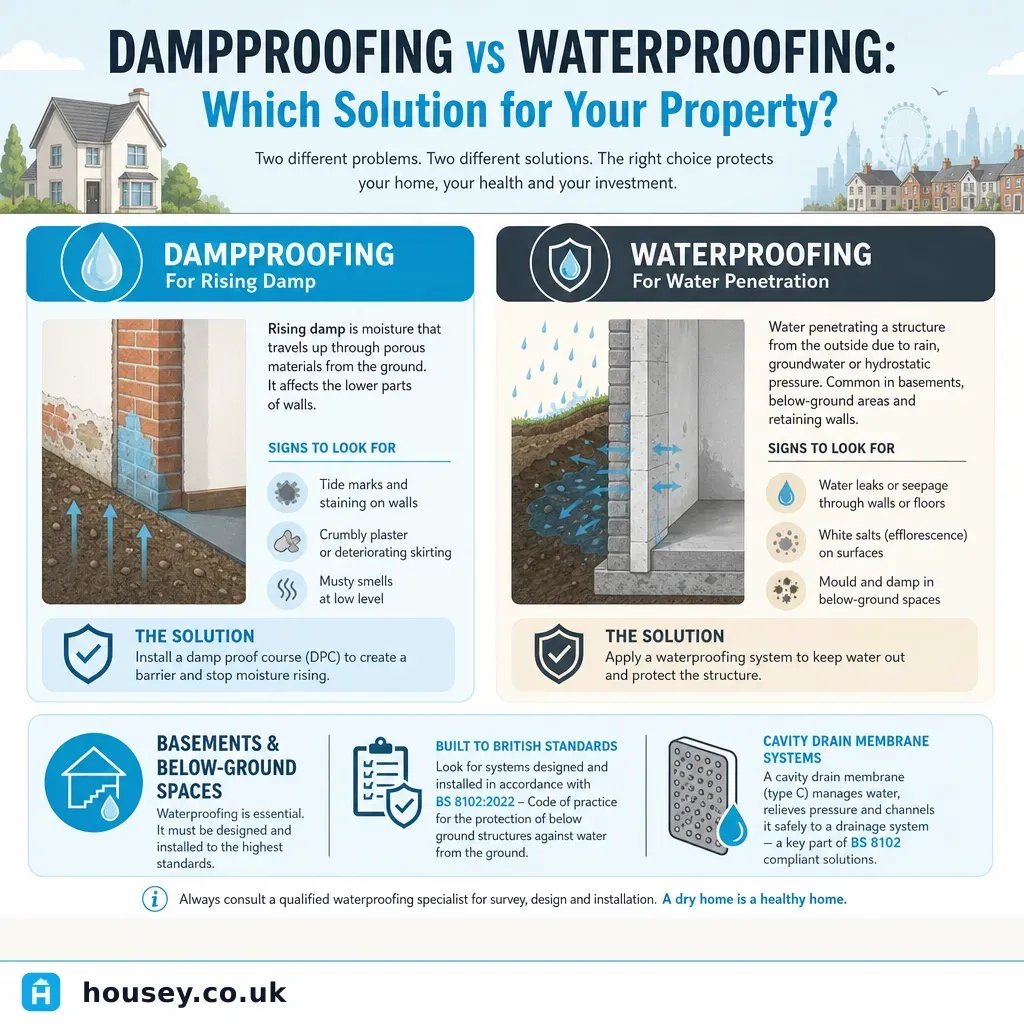
Damp proofing resists moisture vapour and capillary movement through masonry and is the correct treatment for rising damp. Waterproofing resists liquid water under hydrostatic pressure and is governed by BS 8102:2022 for below-ground structures. Choosing the wrong treatment for the underlying cause is a common and costly mistake — a proper diagnosis should always come first.
 Improvement & Build
Preventing and Removing Moss Growth on Roof Tiles: Maintenance and Treatment
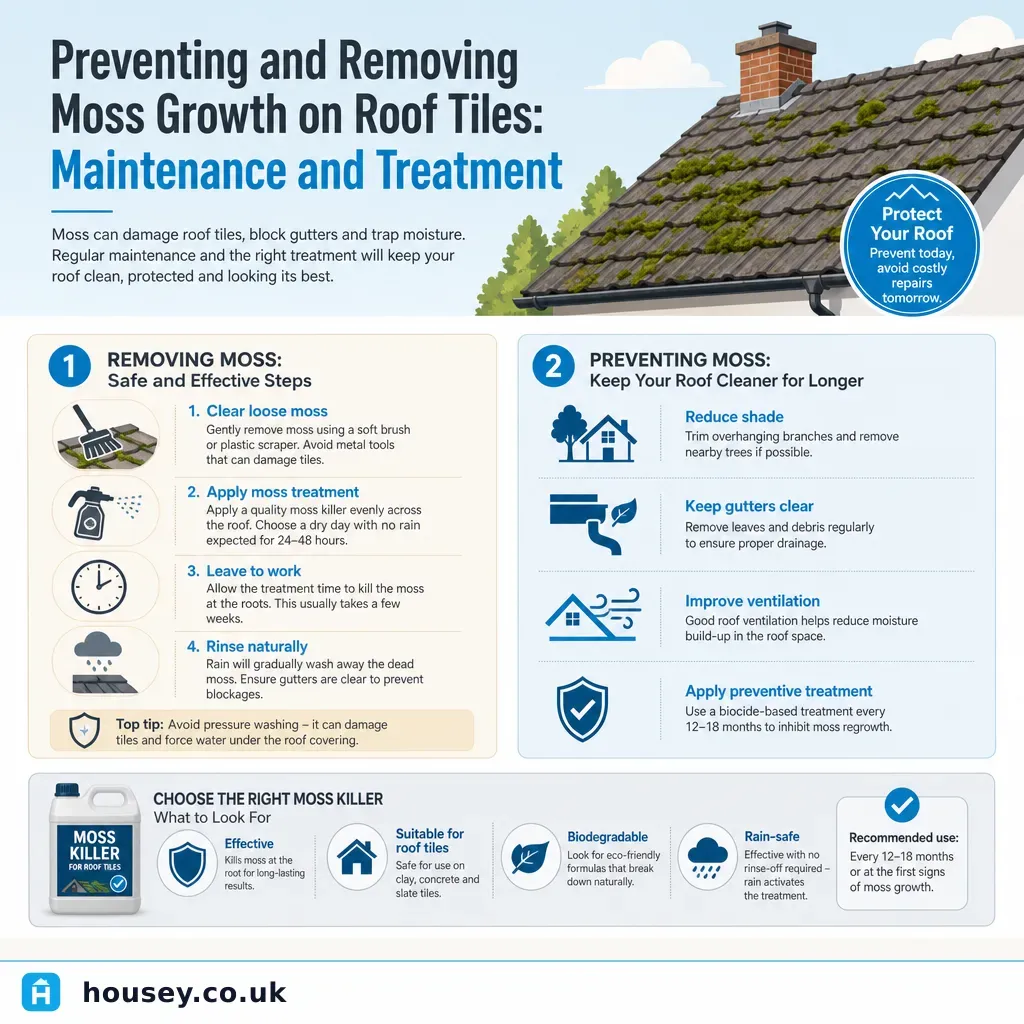
Moss on roof tiles is best treated with a proprietary biocide spray, left to die back over several weeks, then carefully cleared. Prevention involves zinc or copper strips along the ridge line. Avoid pressure washing, which can crack tiles and force water under overlaps. Routine inspections every one to two years help catch early growth before it causes structural damage.
 Improvement & Build
Front Door Painting: Selecting the Right Paint for Exterior Doors
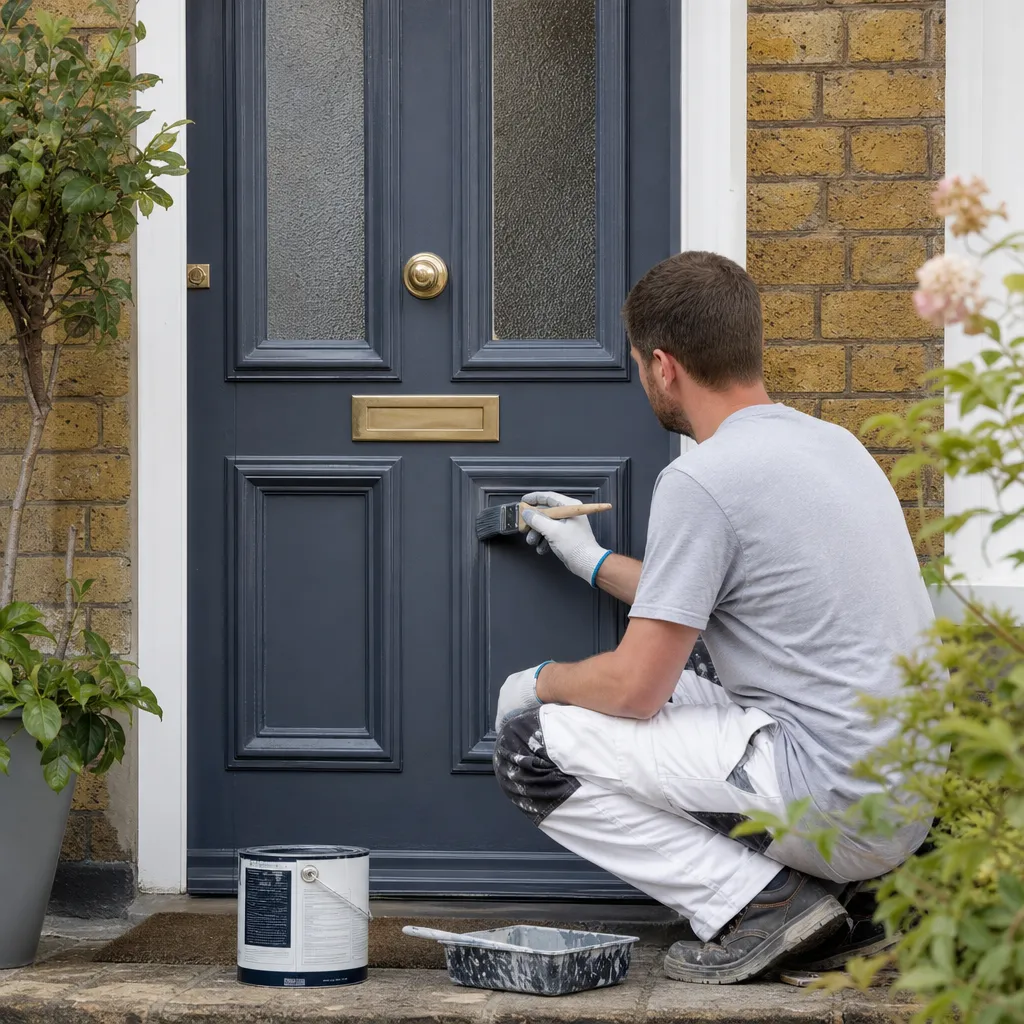
For a timber front door, choose a water-based or oil-based exterior gloss or satinwood rated for outdoor use. Oil-based gives a harder finish; water-based dries faster and holds colour better on pale shades. Always prime bare wood and apply two topcoats. Composite and uPVC doors need specialist adhesion primers and compatible exterior paints.
 Buying & Moving
Rural Relocation Guide: Moving From Urban to Countryside Living
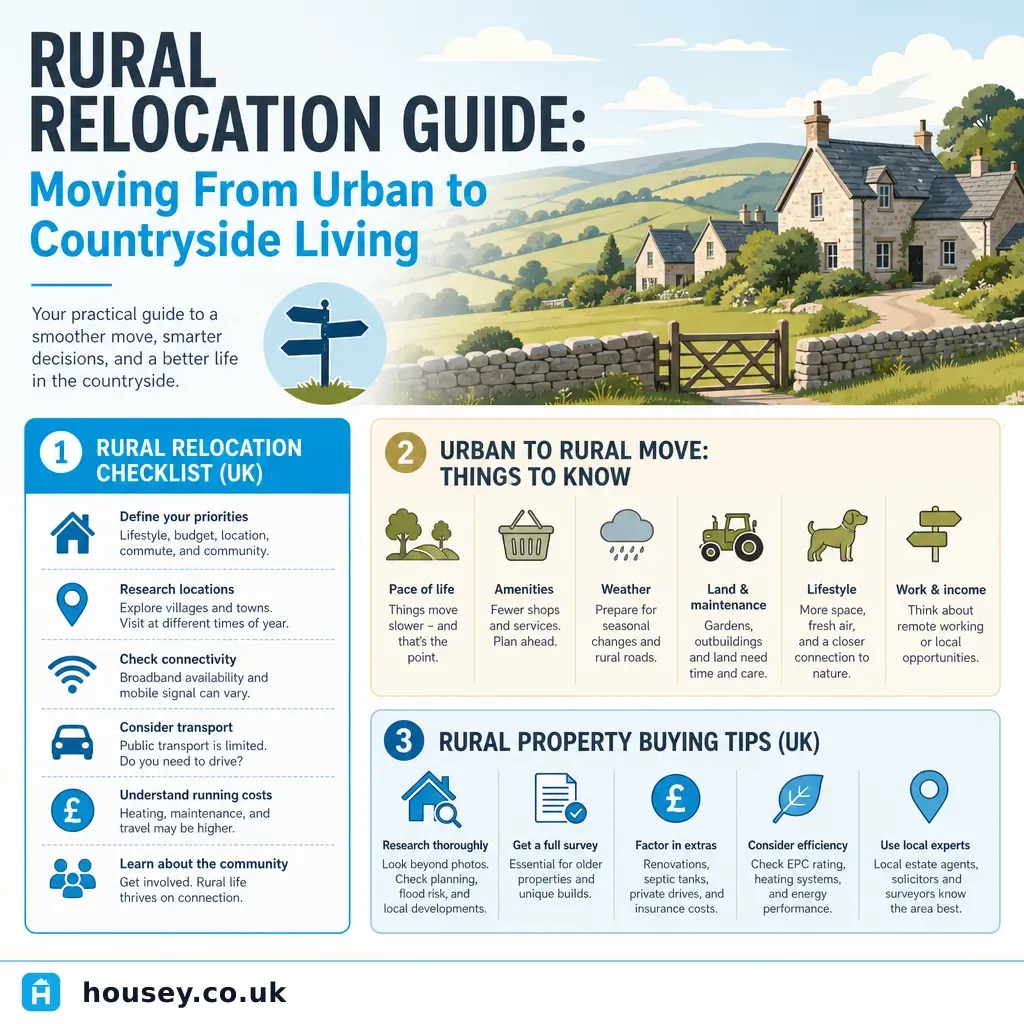
Moving from an urban to a rural UK property means adapting to different infrastructure, heating systems, planning rules, and travel distances. Key checks include broadband speed at the property address, drainage compliance for septic tanks, flood risk, and any planning designations that restrict future works. Rural moves reward thorough preparation more than most property purchases.
 Improvement & Build
Flagstone Paving: Material Costs and Installation Considerations
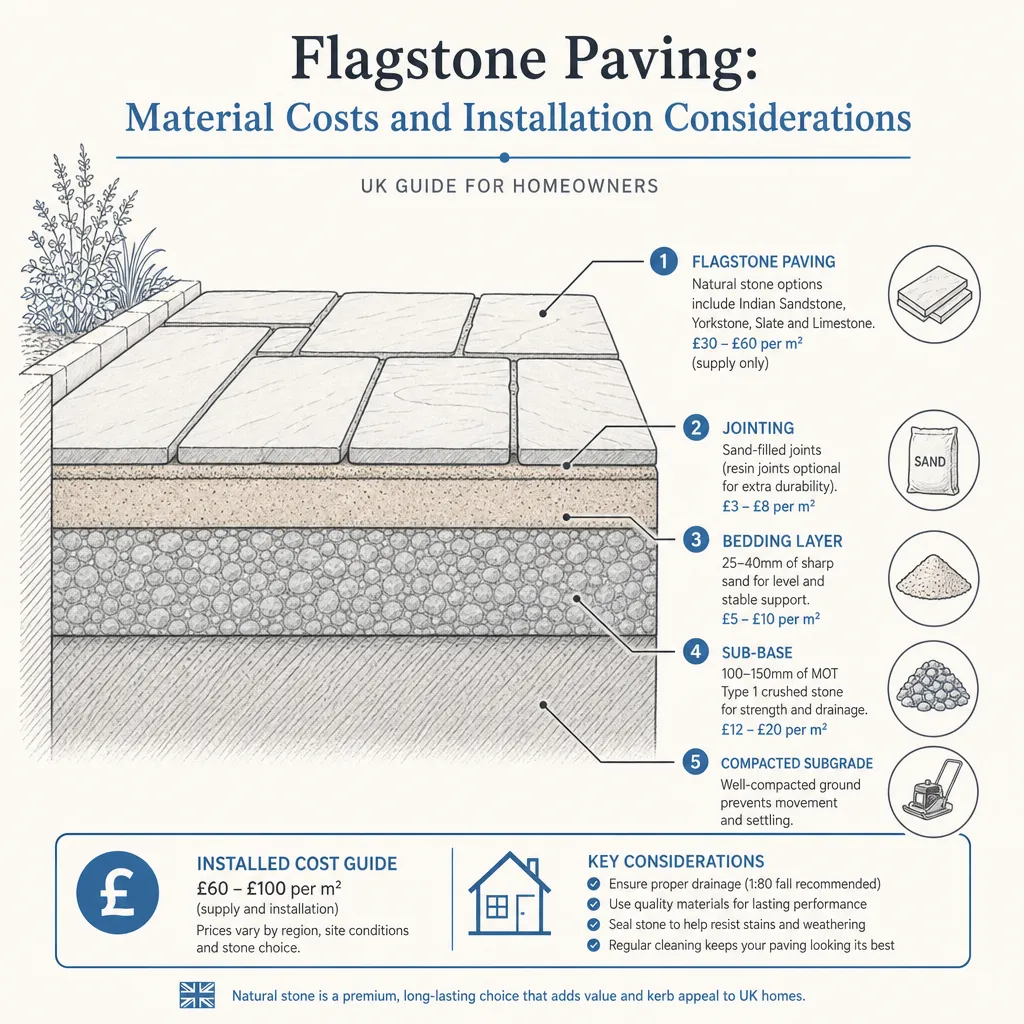
Flagstone paving costs in the UK depend on stone type, sub-base depth, pattern complexity, and pointing method. Indian sandstone is the most popular choice, typically costing £20–£50 per m² for stone alone, with installed patio costs of £80–£160 per m². Limestone and granite offer greater durability and slip resistance but cost more. Front garden paving over 5 m² with a non-permeable surface usually requires planning permission.
 Planning & Pre-Build
Guide to Planning Permission Requirements for Property Development
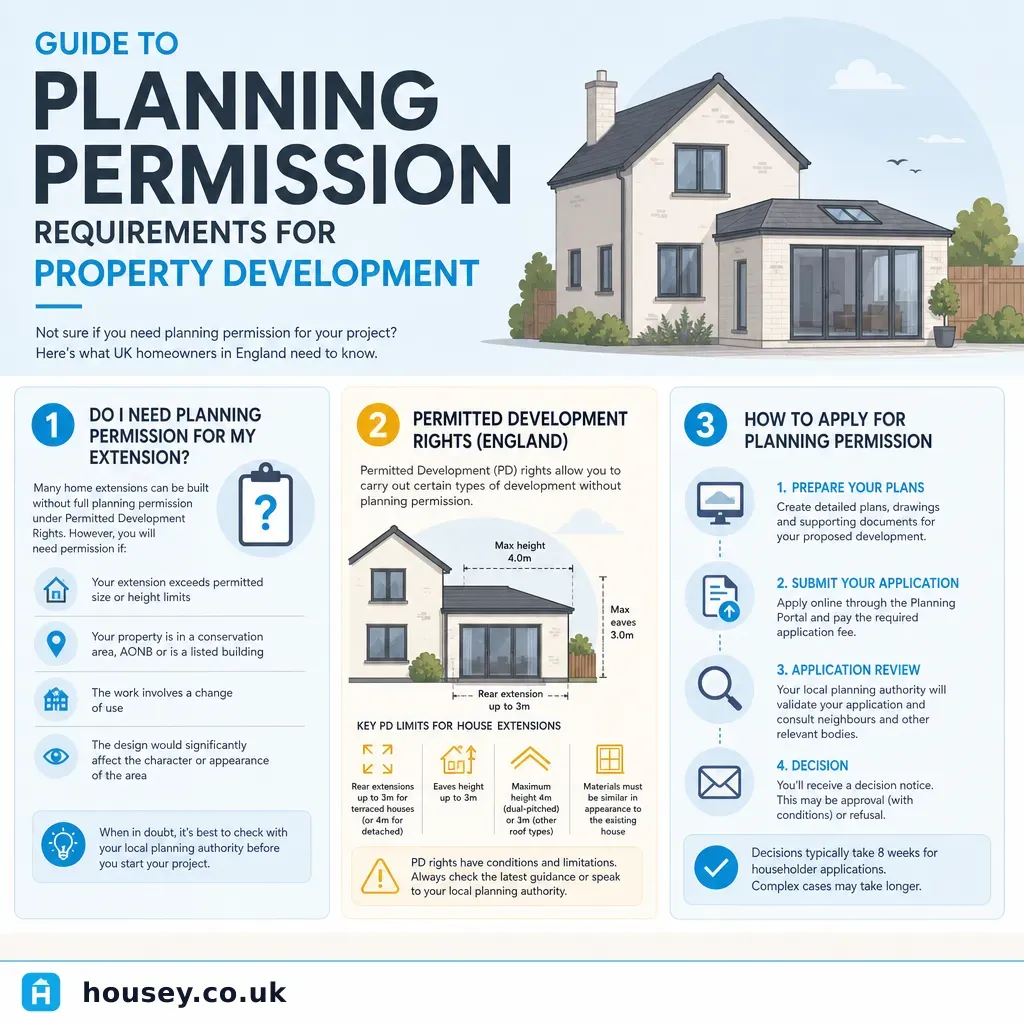
Most home improvements in England fall within permitted development rights and do not need a planning application. You need planning permission for projects exceeding those limits, involving a change of use, or in restricted areas such as conservation areas or listed buildings. A Lawful Development Certificate can confirm lawfulness in writing without a full application.
 Improvement & Build
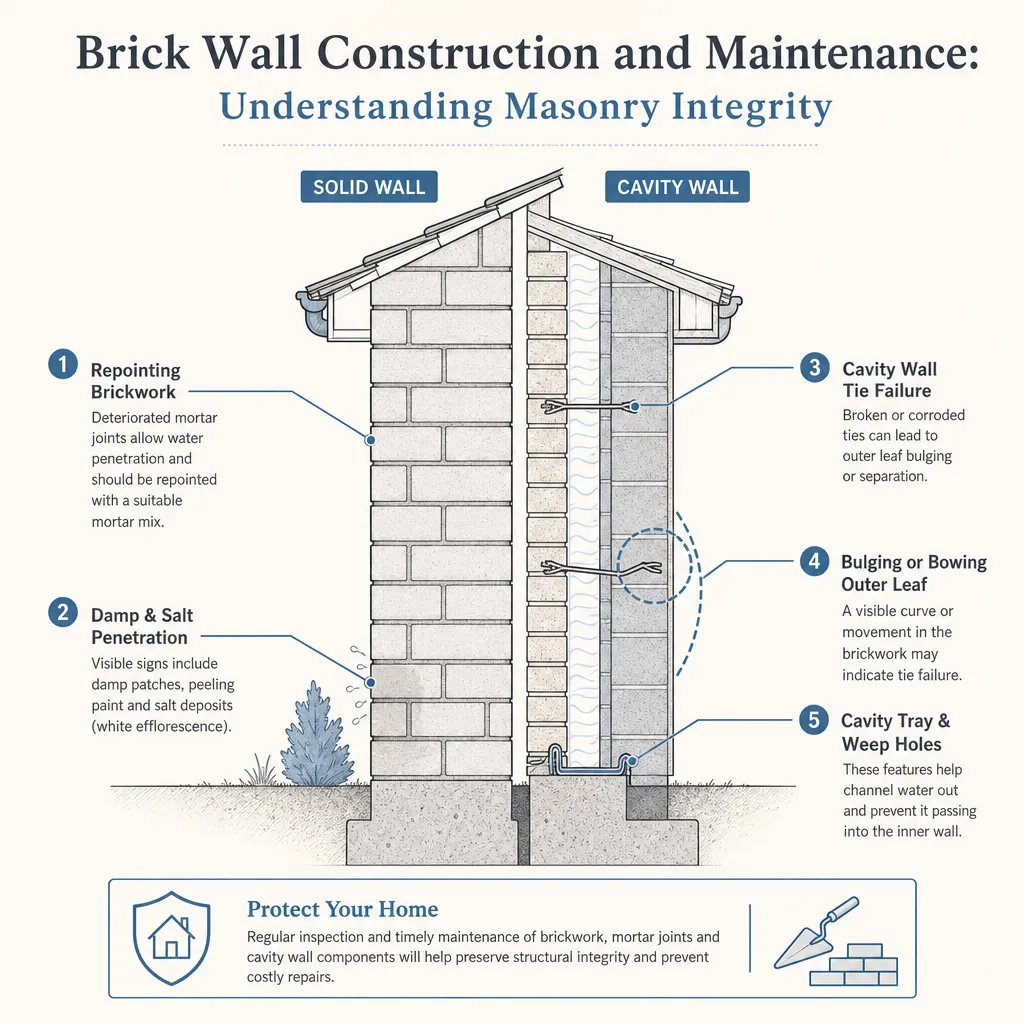
Brick Wall Construction and Maintenance: Understanding Masonry Integrity
Brick walls in UK homes use either solid masonry construction (pre-1920) or cavity construction (post-1920s), with two leaves of brickwork separated by a gap or insulation. Regular inspection of mortar joints, wall ties, and the brick face prevents water ingress and structural deterioration. Repointing is typically needed when mortar recedes more than 10–15 mm below the brick face.
 Improvement & Build
Guide to aerating and scarifying your lawn
Aeration relieves soil compaction by creating channels for air, water, and nutrients; scarification removes the thatch layer that blocks grass growth. Both are best done in UK autumn (September–October) or spring (late March–April) and can be combined in one renovation session, with scarification carried out first.
 Buying & Moving
Scottish Property Transaction Terminology: A Reference Guide
Scottish property law uses distinct terminology with no direct English equivalent. Key terms include missives (binding contractual letters forming the purchase agreement), disposition (the transfer deed), date of entry (the completion date), LBTT (the Scottish equivalent of Stamp Duty Land Tax), real burdens (title conditions binding the property), and servitudes (rights over neighbouring land that pass with ownership).