Knowledge Base
Property advice that actually helps
Researched, UK-specific guides for every stage of homeownership — from buying and surveys to retrofit, planning and major works.
 Buying & Moving
House Removals and Storage Options When Relocating Property
Choosing the right combination of removals service and storage depends on move size, timeline, and budget. Full-service removals firms handle packing, loading, and transport, while self-storage or containerised storage bridges gaps between completion dates. Book BAR or NGRS-accredited firms, confirm Goods in Transit insurance cover, and get at least three written quotes before committing to any provider.
 Planning & Pre-Build
Strategic Guide To Planning And Budgeting Property Renovation Investments
Effective renovation planning requires a clear scope document, a phased budget with 15–20% contingency, and early building control engagement. Identify what needs planning permission separately from what needs building regulations approval, prioritise structural works first, and issue written contracts before trades start. Phasing logically — structure, then services, then finishes — reduces abortive costs and programme delays.
 Improvement & Build
Protecting Trees from Deer Damage: Fencing and Management Strategies
Protect individual trees with mesh tubes or weld mesh cages of at least 1.2 m in height; muntjac and roe deer are the most common offenders in UK gardens. For whole-garden protection, a timber post-and-wire deer fence of 1.8–2.1 m is the most reliable solution. Newly planted trees need guards in place from day one to prevent browsing and bark-stripping damage.
 Improvement & Build
Home Renovation vs House Relocation: Cost and Lifestyle Analysis
Renovating often makes financial sense when a property has strong fundamentals but lacks space or condition, while moving tends to suit those seeking a different location, school catchment, or a fundamentally different type of home. The true cost of moving — typically 3–5% of the property price in stamp duty, agent fees, and legal costs — frequently tips the balance toward renovating.
 Energy & Retrofit
Recycled Building Materials: Integration in Renovation Projects
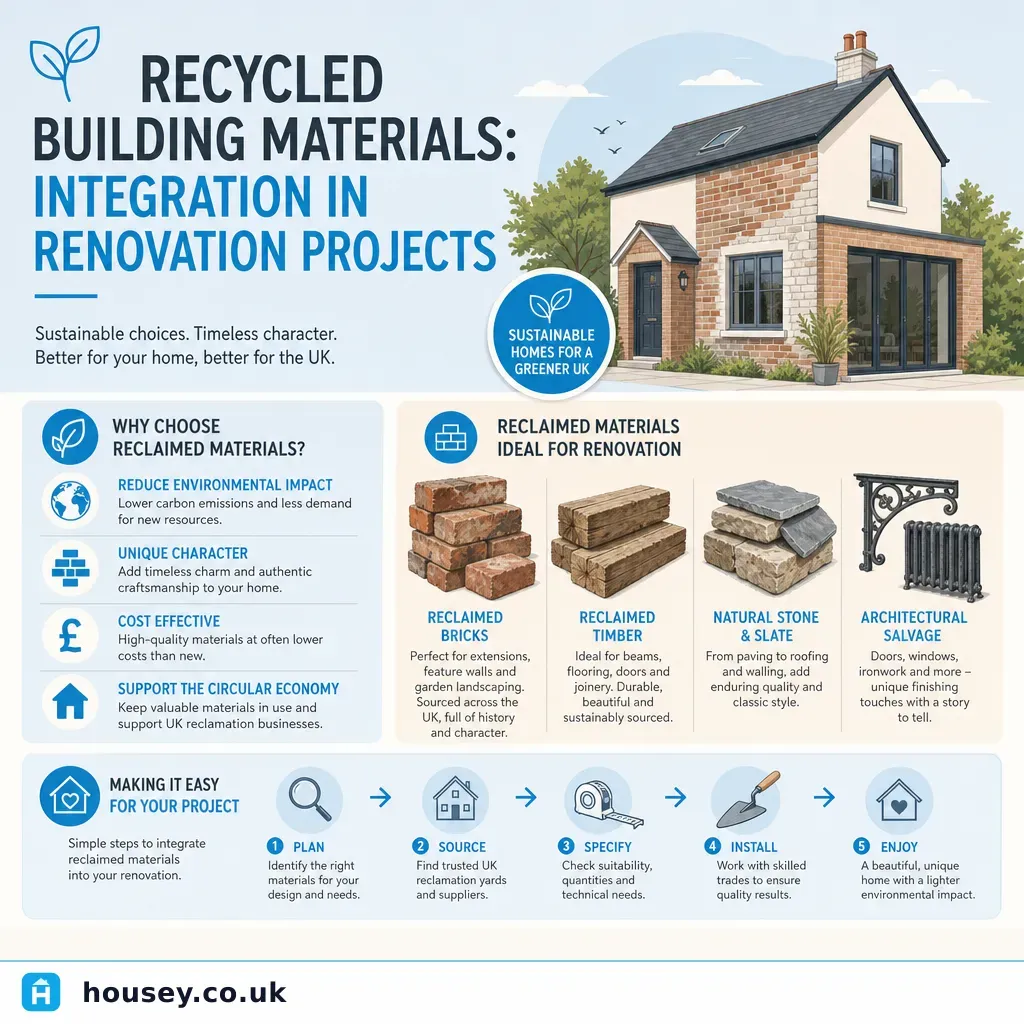
Recycled and reclaimed building materials — from reclaimed bricks and slates to recycled cellulose insulation — can be integrated into UK renovation projects provided they meet the same Building Regulations standards as new materials. Quality checking, asbestos awareness for pre-2000 sources, and compatibility with your retrofit strategy are the key considerations before specifying them.
 Improvement & Build
Studio Flat Design: Space-Maximising Ideas for Open-Plan Living
Effective studio flat design separates sleeping, living, and cooking zones using furniture placement, half-height dividers, or bookshelves rather than fixed walls. Key principles are multifunctional furniture, vertical storage, consistent colour palette, and carefully positioned lighting. In the UK, typical studio flats range from 20 to 40 square metres, so every spatial decision carries significant weight.
 Buying & Moving
Conveyancers vs Solicitors: Understanding the Professional Difference
Licensed conveyancers and solicitors are both regulated to handle residential conveyancing in England and Wales. Licensed conveyancers, regulated by the Council for Licensed Conveyancers (CLC), specialise exclusively in property law. Solicitors, regulated by the SRA, have broader legal training and can advise on connected matters such as family law or probate. For a standard purchase or sale, either is generally suitable.
 Surveys & Inspections
Garage Leaks and Water Damage: Finding a Contractor
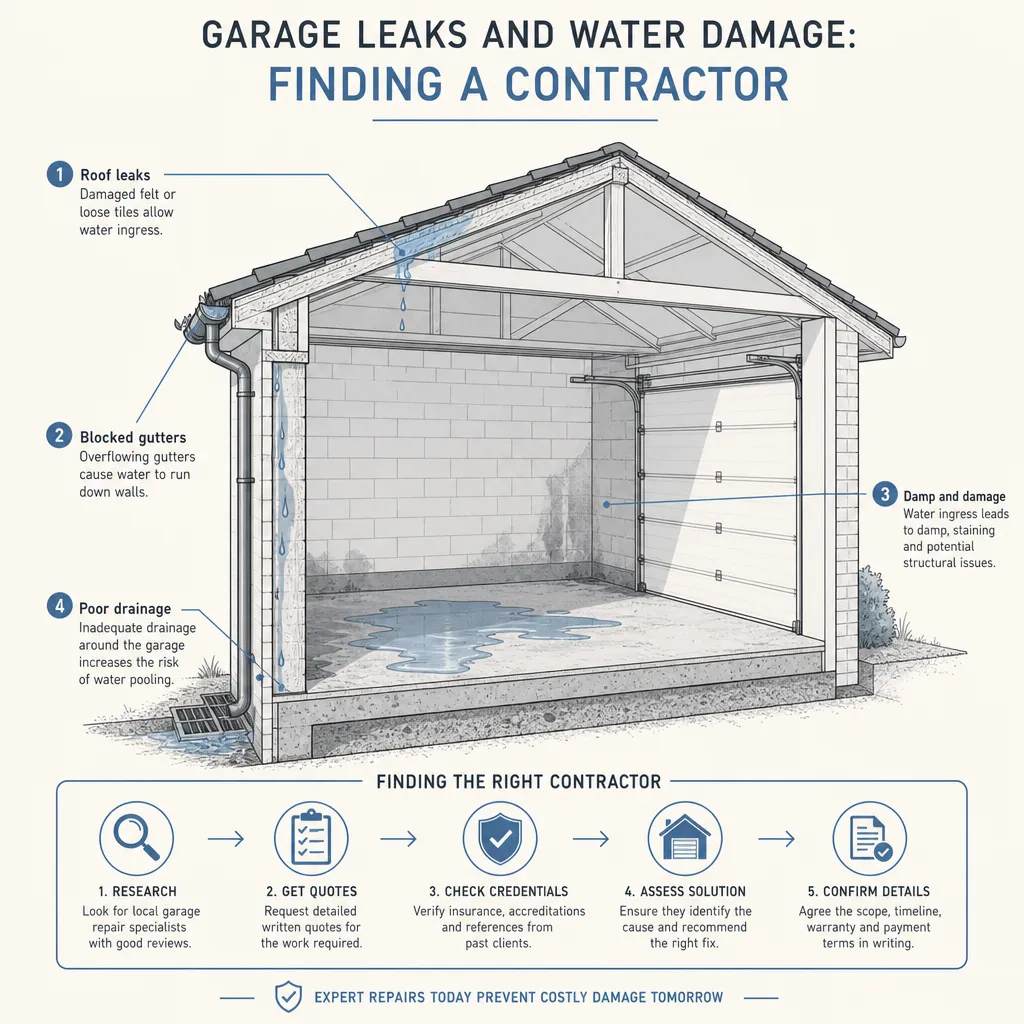
Garage leaks and water damage can stem from a failed roof, blocked gutters, rising damp, poor drainage, or cracked walls. Identifying the correct source is essential before instructing a contractor, as different trades handle different causes. A drainage contractor, roofer, or damp surveyor may each be relevant depending on where water is entering and when.
 Improvement & Build
Restoring Kitchen Cabinets: Refinishing Options and Costs
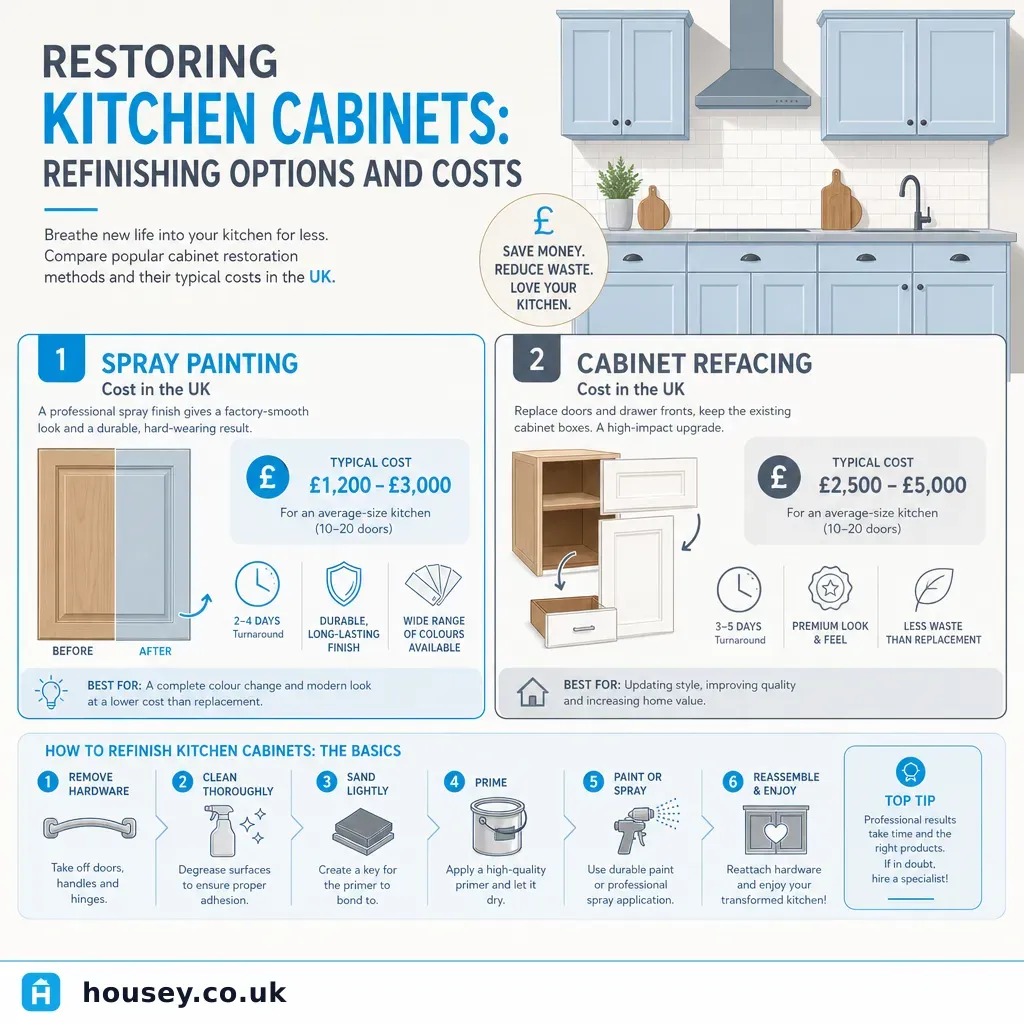
Kitchen cabinet restoration typically involves one of three approaches: professional spray painting (£500–£2,500), cabinet refacing with new door fronts (£1,500–£5,000), or DIY brush repainting for smaller budgets. Spray painting by a specialist delivers the most durable finish for most UK kitchens. The right choice depends on your cabinet material, condition, and how long you want the finish to last.
 Improvement & Build
Strategic Landscaping to Boost Property Value: Practical Tips and Ideas
Landscaping can add 5–15% to a UK property's perceived value, though the return varies by improvement type. Off-street parking, a well-maintained lawn, and a usable patio tend to deliver the clearest gains. Highly personalised features — swimming pools, elaborate water features, artificial turf — often add little or no value in the UK market and may actively deter buyers.
 Improvement & Build
Growing Your Own: Garden Design for Food and Horticulture
A productive food garden starts with assessing your plot's sunlight, soil, and drainage, then choosing the right structures — raised beds, paths, a cold frame, or a greenhouse — to match your space. Plan for crop rotation across at least four zones, a reliable water source, and succession sowing to keep harvests coming throughout the UK growing season.
 Energy & Retrofit
Air Source Versus Ground Source Heat Pumps: Which Is Right for Your Property?
Air source heat pumps (ASHPs) suit most UK properties with modest land requirements and faster installation, while ground source heat pumps (GSHPs) offer higher year-round efficiency but need significant land or borehole drilling and cost considerably more. Both need MCS-certified installers and qualify for the Boiler Upgrade Scheme grant. A heat loss calculation and property assessment should always come before choosing.