Knowledge Base
Property advice that actually helps
Researched, UK-specific guides for every stage of homeownership — from buying and surveys to retrofit, planning and major works.
 Improvement & Build
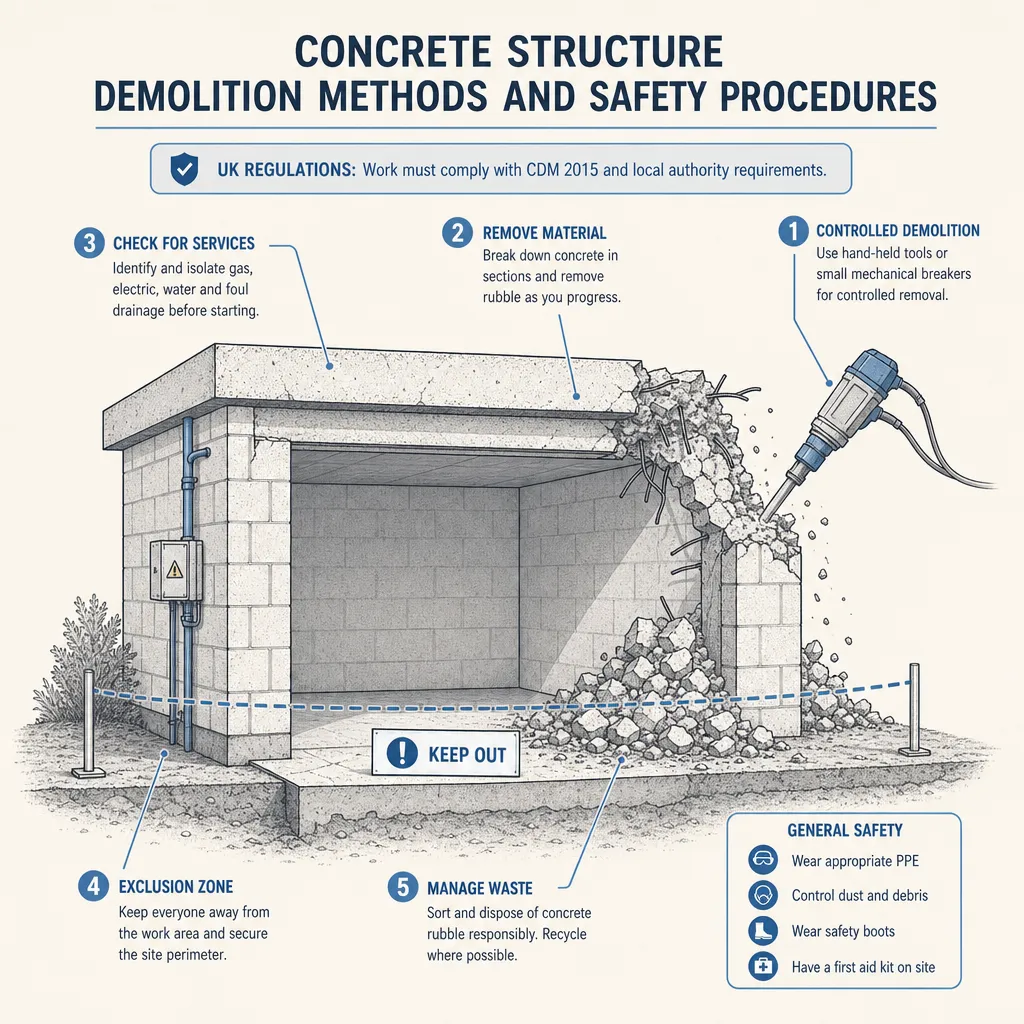
Concrete Structure Demolition Methods and Safety Procedures
Concrete structures on UK residential sites are most commonly demolished using mechanical excavators with hydraulic breaker attachments. Before any demolition, an asbestos refurbishment/demolition survey is legally required under the Control of Asbestos Regulations 2012. CDM 2015 duties apply, building control notification may be needed, and a party wall notice is required if the structure adjoins a neighbour's property.
 Surveys & Inspections
Preparing for a Home Survey: What You Should Know and Do
Preparing for a home survey means giving the surveyor clear access to all parts of the property, gathering relevant documents such as planning permissions and Building Regulations certificates, and knowing in advance which survey level has been instructed. As a buyer, you won't be present during the inspection, but understanding what the surveyor looks for helps you interpret the report and ask the right questions.
 Improvement & Build
Wooden kitchen cabinets: types, costs and installation
Wooden kitchen cabinets in the UK range from around £4,000–£12,000 installed for mid-range painted shaker units to £10,000–£25,000 or more for solid hardwood kitchens. Most UK cabinets use MDF carcasses with real-wood door fronts rather than all-solid construction. Costs vary by timber species, unit count, worktop specification, and whether electrical and plumbing connections are included.
 Energy & Retrofit
Understanding the costs of installing wind turbines on residential property
A roof-mounted domestic wind turbine in the UK costs around £2,000–£4,000 installed; a free-standing pole-mounted turbine suitable for a rural residential plot typically costs £15,000–£30,000 or more. Most urban and suburban properties generate too little electricity to justify the cost. A professional site assessment and wind speed survey are essential before purchasing any system.
 Improvement & Build
Professional Tree Surgery and Arborist Services for Your Property
A qualified arborist can safely prune, reduce, or fell trees on your property. For trees covered by a Tree Preservation Order or in a conservation area, written consent from your local planning authority is required before work starts. Always use an arborist with LANTRA or City & Guilds qualifications and public liability insurance of at least £5 million.
 Improvement & Build
Installing New Composite Doors and Windows at Period Properties
Composite doors at period properties may need Listed Building Consent if the building is listed, or planning permission if the property is in a conservation area with an Article 4 Direction in force. All replacements must meet Building Regulations Approved Document L1B U-value thresholds. Use a FENSA- or CERTASS-registered installer who can self-certify compliance and issue a certificate.
 Planning & Pre-Build
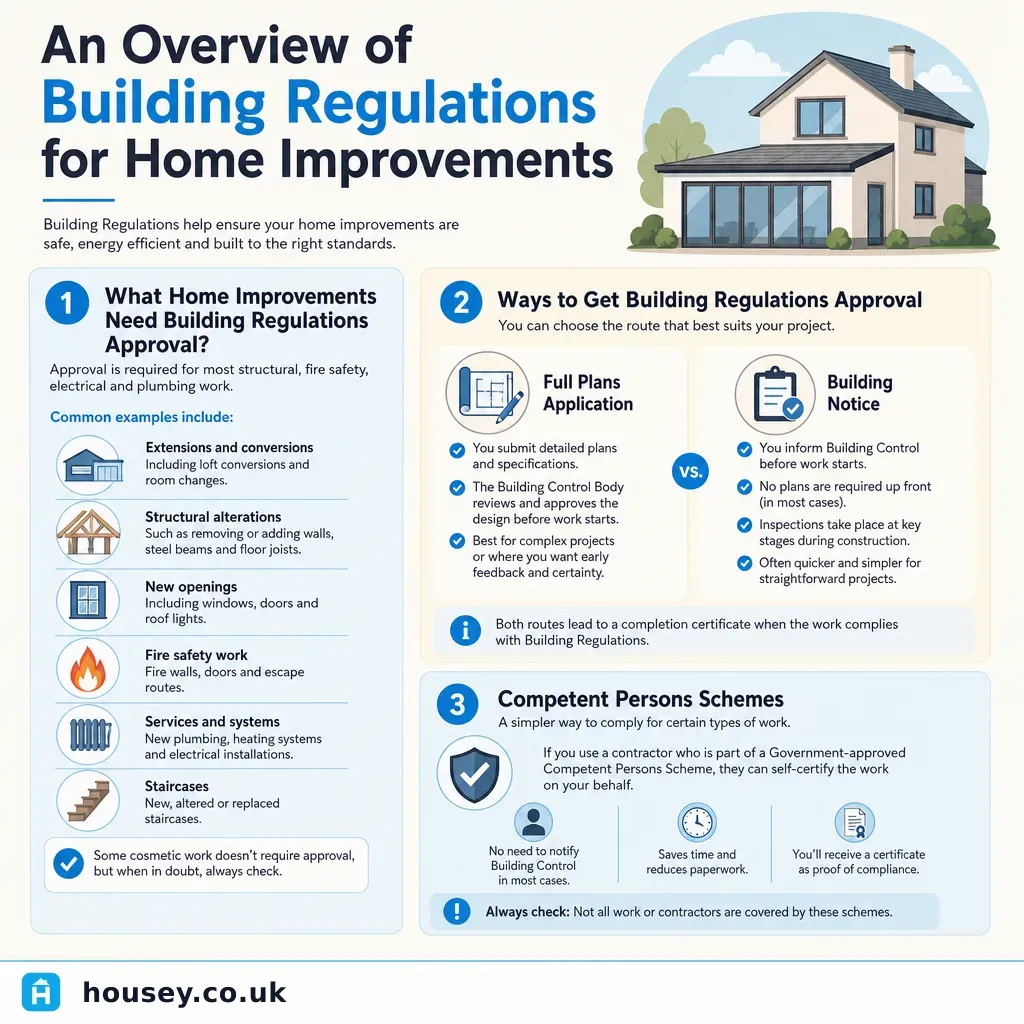
An Overview of Building Regulations for Home Improvements
Building regulations apply to most structural, energy, fire safety, and electrical work in UK homes — but not to like-for-like repairs or maintenance. You can notify building control directly, use a full plans application, or rely on a competent tradesperson to self-certify. Having the right completion certificate matters when you come to sell.
 Improvement & Build
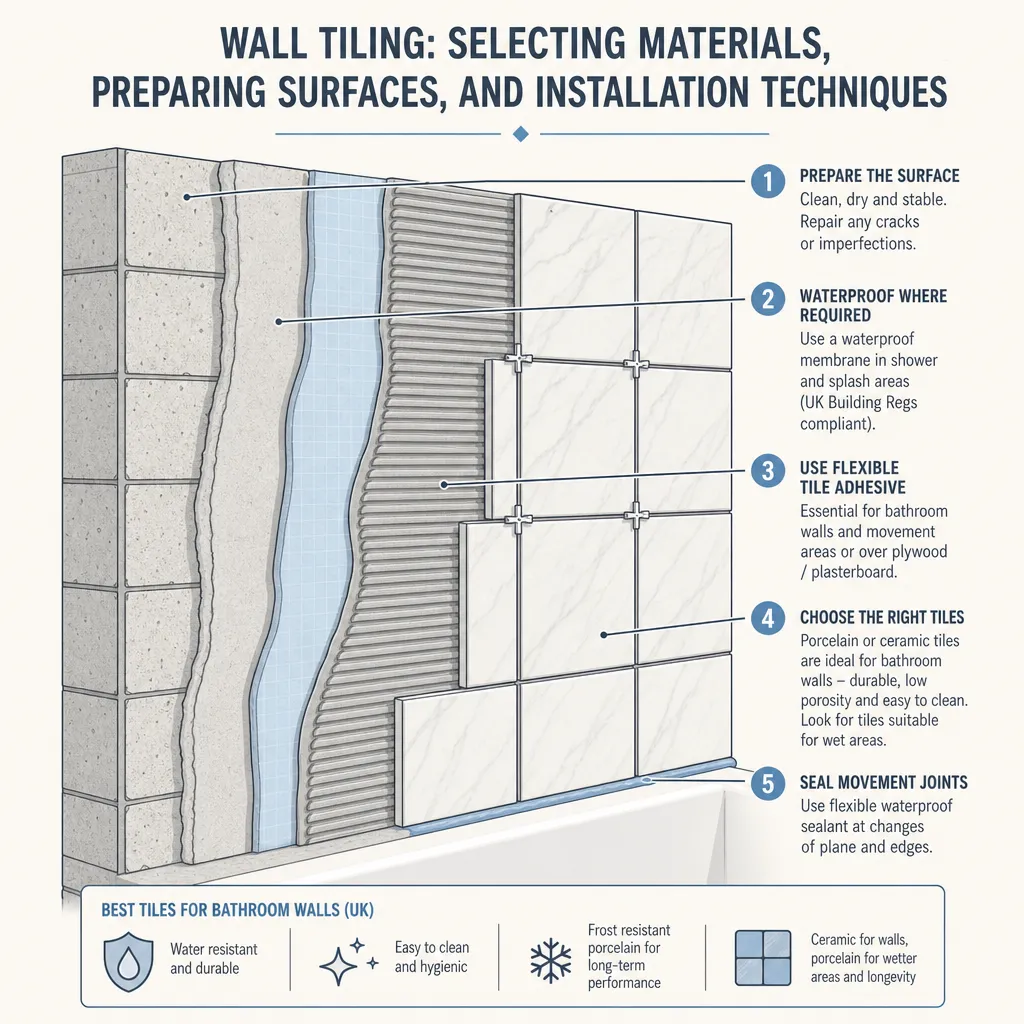
Wall Tiling: Selecting Materials, Preparing Surfaces, and Installation Techniques
Successful wall tiling depends on thorough surface preparation, the correct adhesive class for the tile size and location, and — in wet areas — a tanked substrate before any tile goes on. Choose porcelain for showers and wet rooms, standard ceramic for dry kitchen walls. Allow new plaster to fully cure before tiling, and always plan movement joints at internal corners and around fittings.
 Improvement & Build
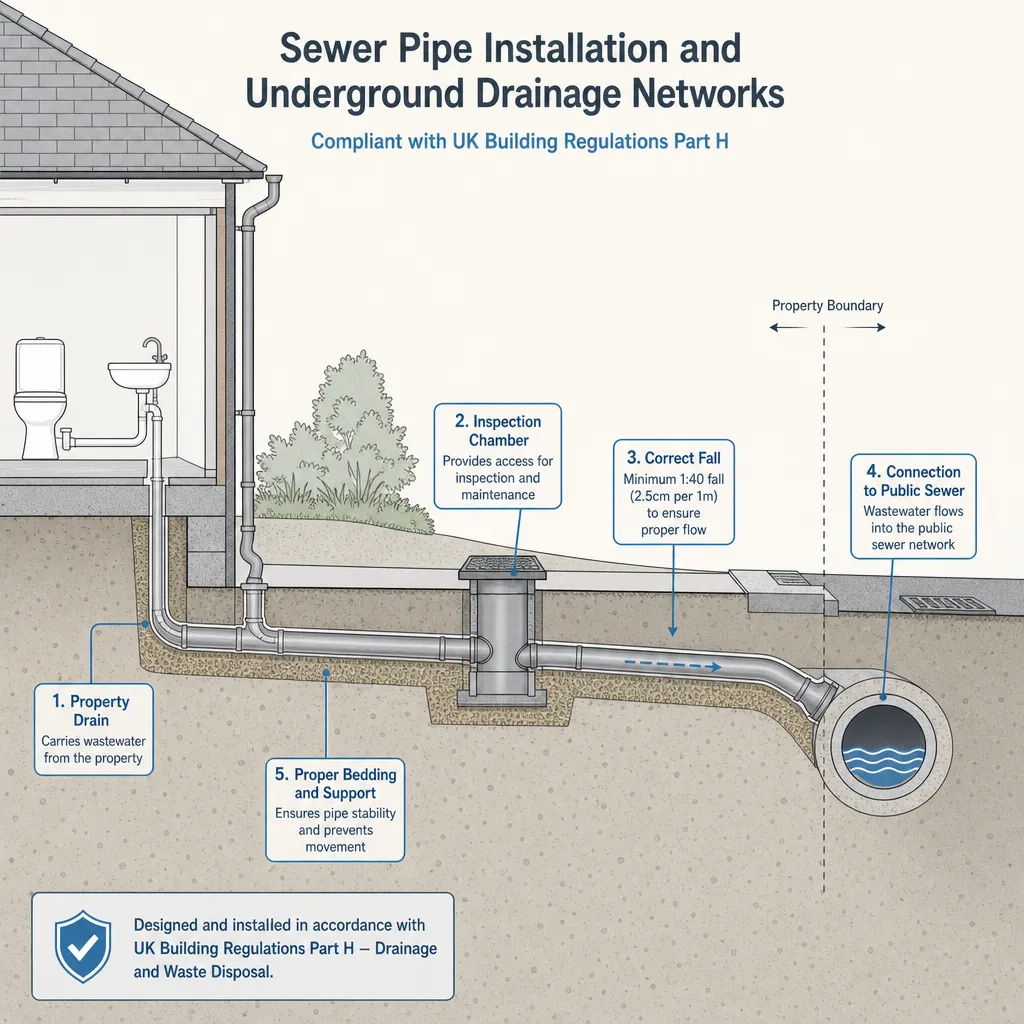
Sewer Pipe Installation and Underground Drainage Networks
Installing sewer pipes and underground drainage in the UK requires compliance with Building Regulations Part H, and connections to a public sewer need formal consent from the water and sewerage company under the Water Industry Act 1991. Work must meet minimum pipe gradients, correct material specifications, and access requirements. A drainage contractor or civil engineer should carry out or oversee the work, with building control sign-off on completion.
 Improvement & Build
Building and Designing Winter Gardens for Year-Round Outdoor Use
A UK winter garden combines a sheltered microclimate, frost-hardy structural planting, and often a covered or glazed structure to make outdoor space usable across all seasons. Focus on south-facing aspects, permeable windbreaks, and plants with winter flower, bark, or seedhead interest. Check permitted development rules before building any garden structure, and consider a garden designer for projects combining structure, planting, and drainage.
 Improvement & Build
Garden Design Alternatives to Traditional Lawns
Popular alternatives to a traditional grass lawn in UK gardens include gravel, wildflower meadow planting, permeable paving, and ground-cover plants. The best choice depends on your garden's aspect, soil type, maintenance budget, and how you use the space. In front gardens, paving with impermeable materials over 5m² generally requires planning permission in England.
 Buying & Moving
Higher education and homeownership: surveys and conveyancing for informed property buyers
Informed property buyers in the UK typically commission a RICS Level 2 or Level 3 survey before exchange, alongside instructing a conveyancer to carry out legal searches and review title. Together, these two services protect against hidden defects and legal complications — and are often the most important investments made during the buying process.