Knowledge Base
Property advice that actually helps
Researched, UK-specific guides for every stage of homeownership — from buying and surveys to retrofit, planning and major works.
 Improvement & Build
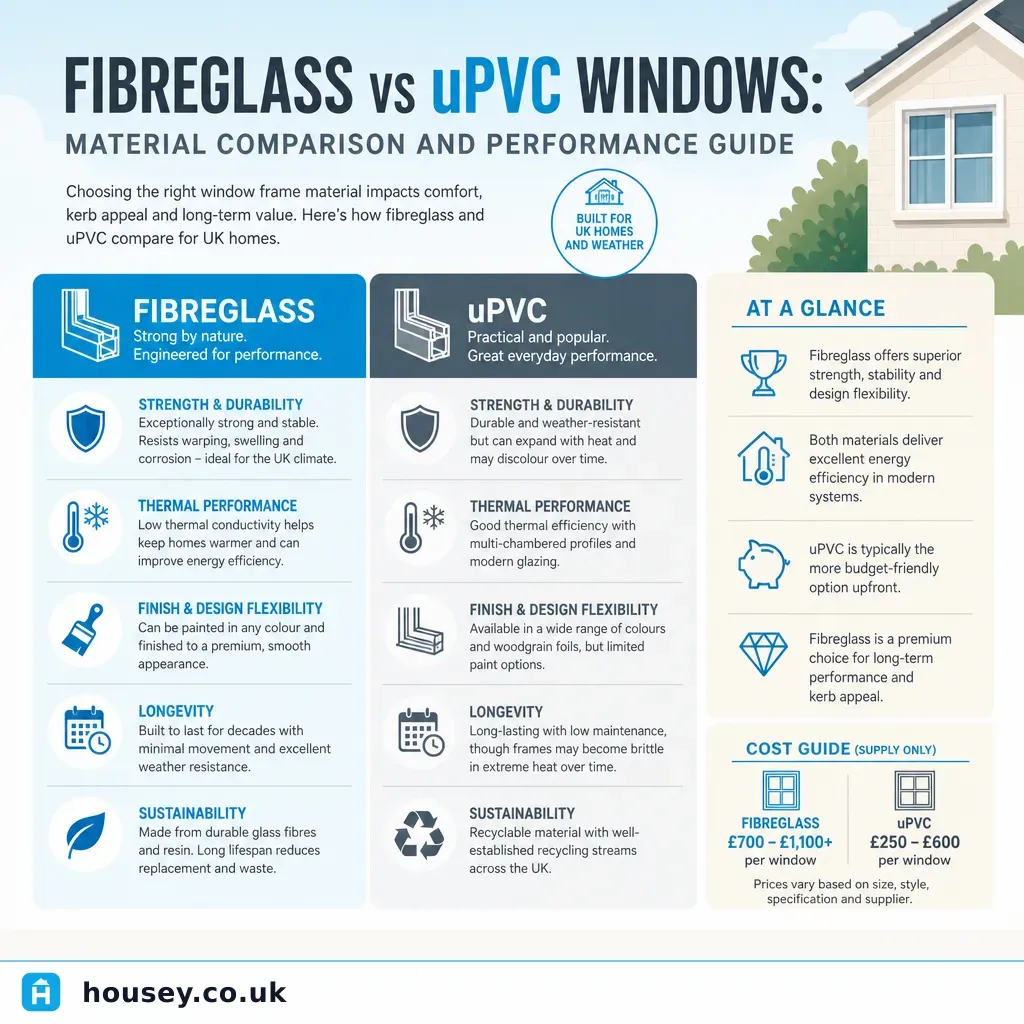
Fibreglass vs uPVC Windows: Material Comparison and Performance Guide
In the UK, vinyl windows are sold as uPVC — the dominant frame material for replacement windows. Fibreglass (GRP) frames offer better thermal stability and a longer lifespan but cost more and are harder to source from UK installers. For most homes, uPVC with a well-specified glazing unit meets Building Regulations Part L and delivers strong energy performance at lower cost.
 Energy & Retrofit
Solar Energy for UK Homes: Benefits and Key Considerations
Solar photovoltaic (PV) panels can reduce electricity bills, generate export income via the Smart Export Guarantee (SEG), and improve a home's EPC rating. Key considerations include roof orientation and pitch, shading from nearby buildings or trees, structural condition, planning restrictions on listed buildings and in conservation areas, and whether a broader retrofit plan requires a PAS 2035 assessment first.
 Improvement & Build
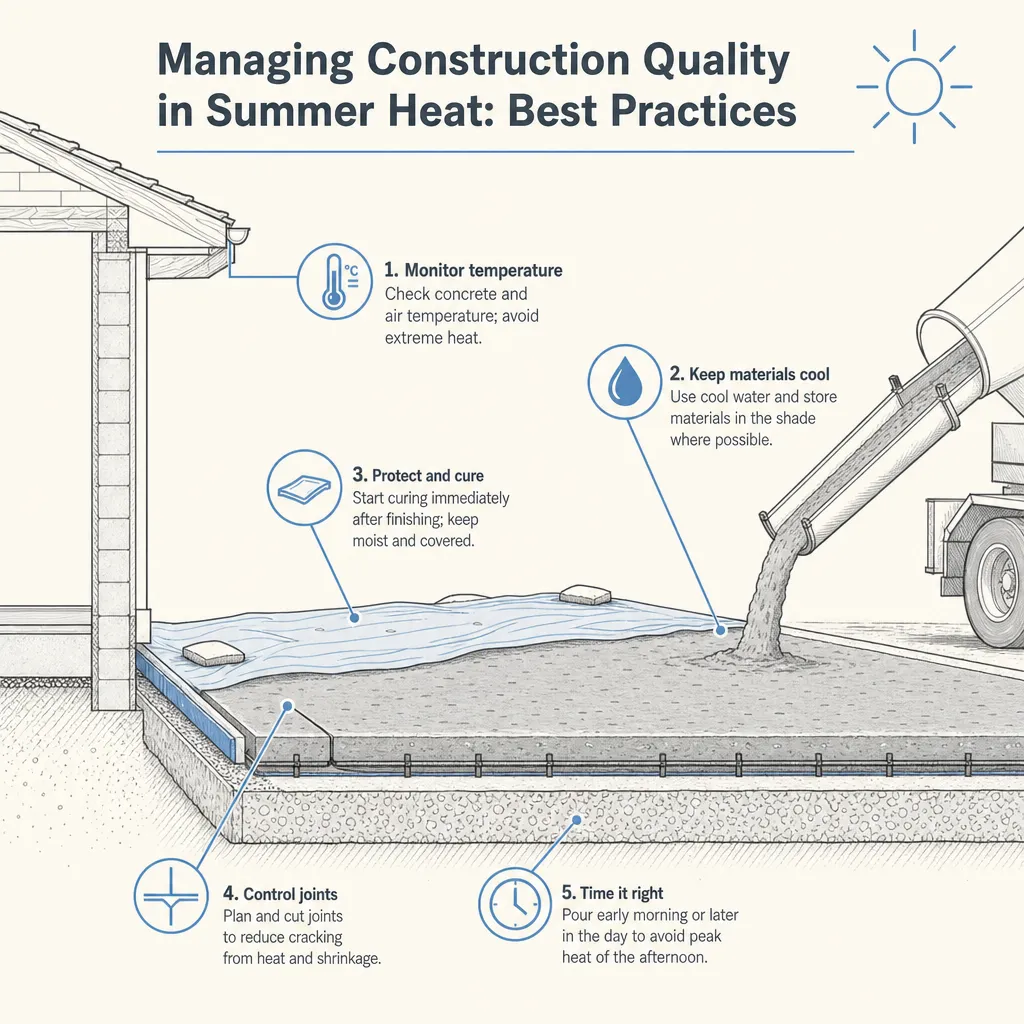
Managing Construction Quality in Summer Heat: Best Practices
Hot weather above 25°C can reduce concrete workability, increase shrinkage cracking, and cause mortar and render to dry before they have properly cured. Good practice includes early-morning pours, wet curing, small mortar batches, and shading work in progress. Most risks are manageable with a competent contractor, but visible cracking within 24 hours of a pour warrants investigation.
 Energy & Retrofit
Selecting an Energy-Efficient Boiler for Your Home
For most UK homes, an A-rated condensing combi boiler is the most efficient and space-saving replacement. System boilers suit homes with two or more bathrooms or high hot water demand. All new gas boilers must be condensing type under Building Regulations Part L, and all installation work must be carried out by a Gas Safe registered engineer.
 Surveys & Inspections
Property Valuations and Appraisals: Understanding the Costs
In the UK, the person with the legal or financial need for a valuation pays for it. Buyers and homeowners pay for RICS Red Book valuations for purchase, probate, or tax purposes. Mortgage lenders instruct and control their own valuations, often at the buyer's expense as a product fee. Indicative fees range from £250 to £900 depending on purpose and property type.
 Buying & Moving
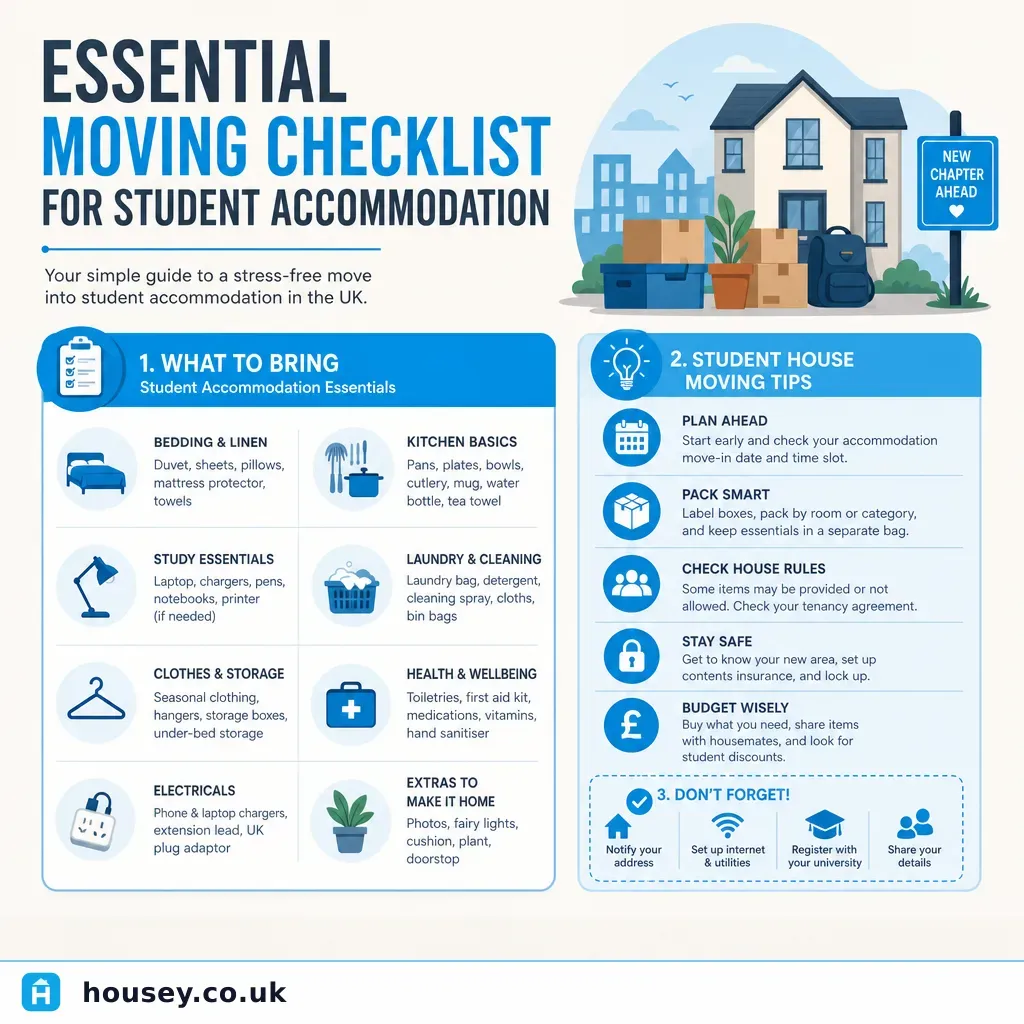
Essential Moving Checklist for Student Accommodation
Moving into student accommodation requires notifying your university and council, checking deposit protection, arranging contents insurance, and booking transport early. For private rentals, conduct a thorough room inventory on move-in day and photograph everything. Starting at least six weeks before move-in reduces the risk of missing key administrative steps that could affect your deposit.
 Improvement & Build
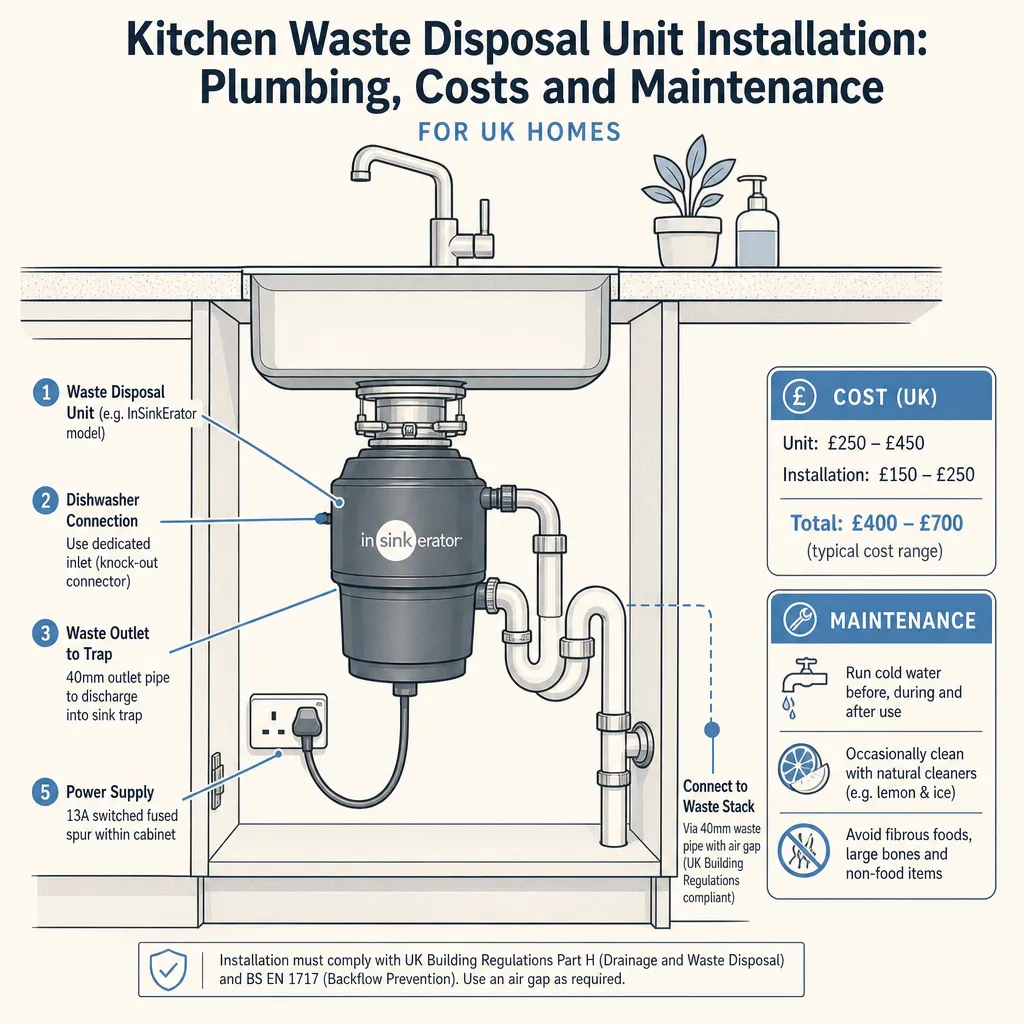
Kitchen Waste Disposal Unit Installation: Plumbing, Costs and Maintenance
Food waste disposal units are legal in the UK but must comply with the Water Supply (Water Fittings) Regulations 1999. Some water companies require notification before installation. A qualified plumber handles drain connections; a switched fused spur electrical connection is also needed. Indicative installed costs run from £200 to £620, depending on the unit and existing pipework.
 Buying & Moving
Preparing Your Property for a House Move: Planning and Logistics
Start preparing for a house move 6–8 weeks before your expected completion date. Declutter and book a removal company early — summer Fridays fill fastest. Gather key property documents such as FENSA certificates and building regulations sign-offs, set up Royal Mail Redirection, and notify utilities, DVLA, and HMRC at least four weeks ahead.
 Planning & Pre-Build
Mountainside Residential Property Design and Construction
Building on a mountainside or steep slope in the UK requires a geotechnical investigation, specialist foundation design, and early engagement with your local planning authority. Many upland sites fall within designated landscapes with restricted planning policies. A team including an architect, structural engineer, and geotechnical engineer is typically needed from the outset of any hillside project.
 Improvement & Build
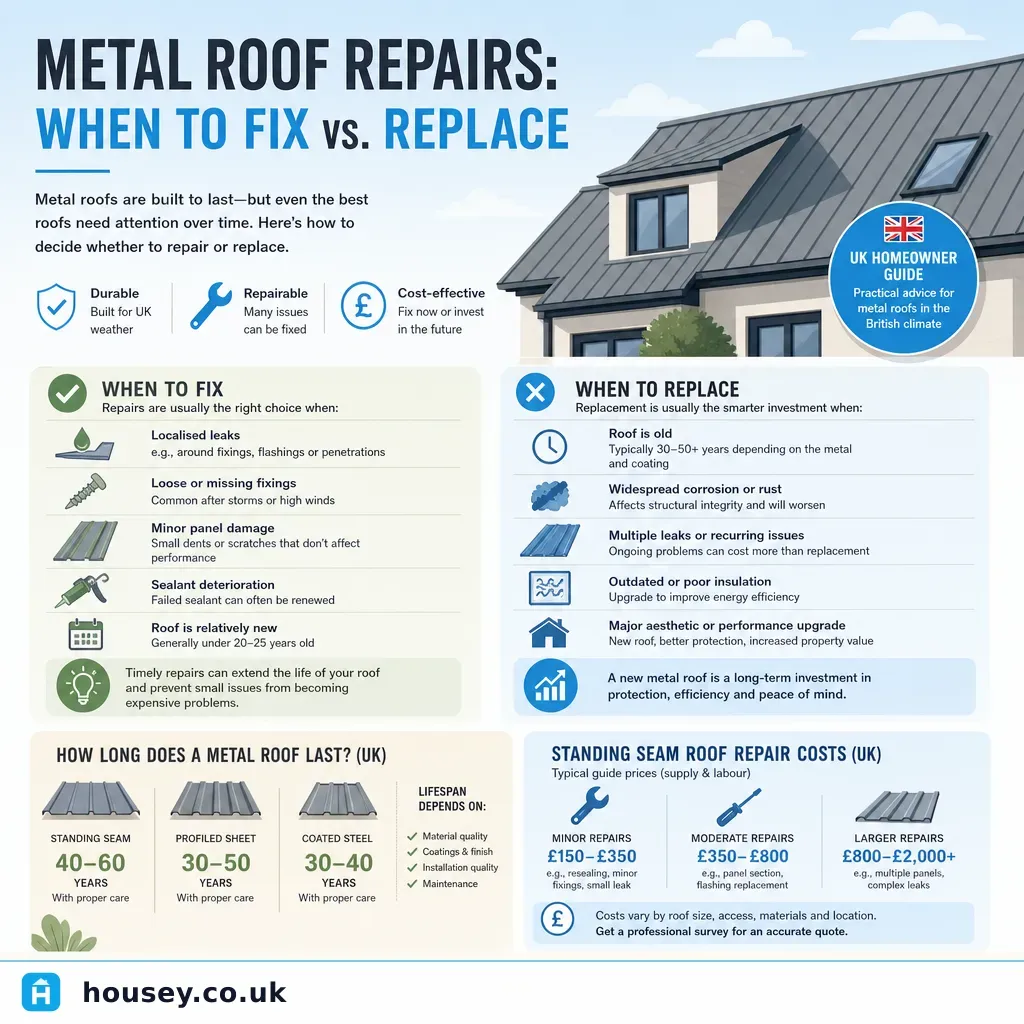
Metal Roof Repairs: When to Fix vs. Replace
For a metal roof, repair is usually right when damage is localised — a failed flashing, isolated corrosion, or one or two damaged panels. Replacement becomes necessary when the roof is past its expected service life, corrosion is widespread, seams are failing systematically, or the underlying structure has been compromised by water ingress.
 Planning & Pre-Build
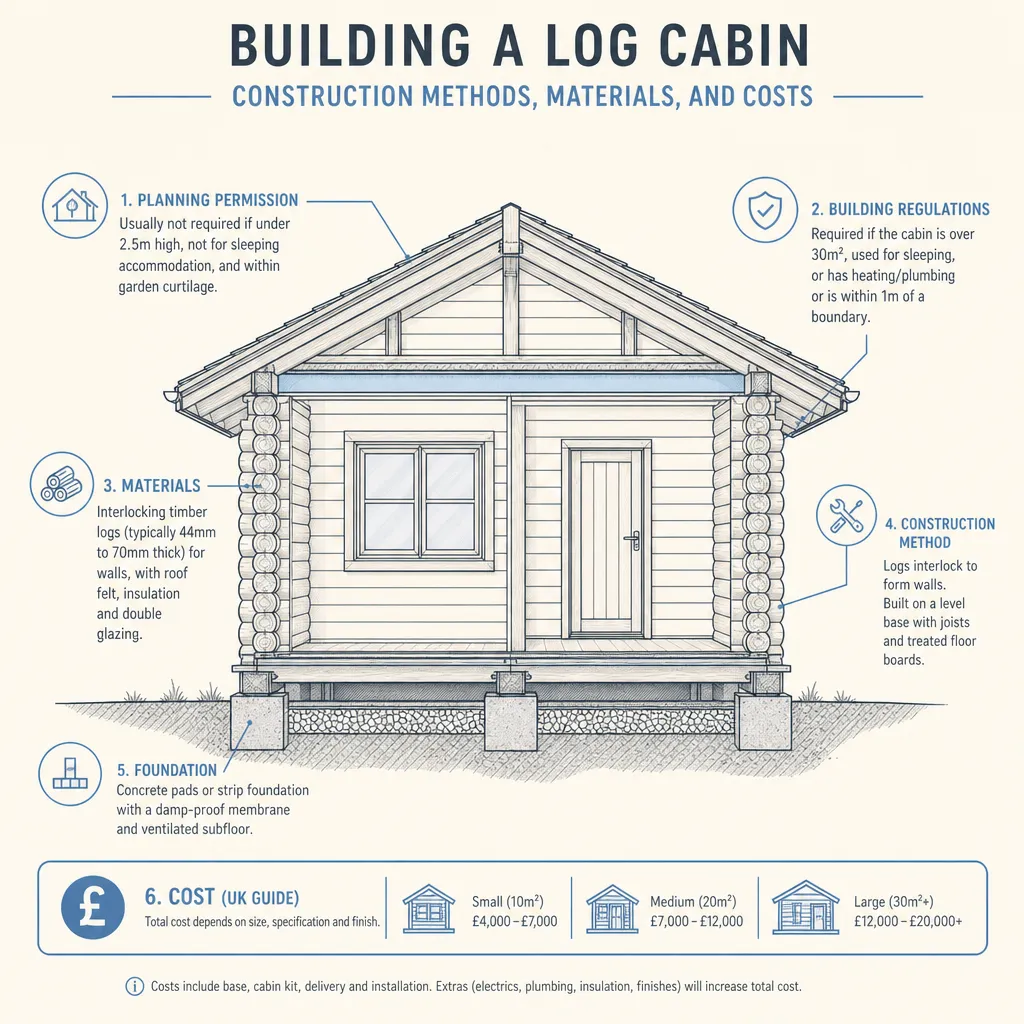
Building a Log Cabin: Construction Methods, Materials, and Costs
Building a habitable log cabin in the UK requires full planning permission and Building Regulations approval, the same as any new house. A small garden outbuilding may qualify as permitted development, subject to strict height and footprint limits. Kit-built habitable log cabins typically cost £800–£2,000 per sq m for supply and erection, with groundworks and internal fit-out additional.
 Energy & Retrofit
Comparing wood burning stoves with gas heating options
Wood burning stoves provide supplementary heat in one room at an installed cost of £1,500–£4,000; gas central heating heats the whole house at a boiler replacement cost of £2,000–£4,500. Stoves require HETAS installation and compliance with Smoke Control Area rules; gas work must use a Gas Safe registered engineer. For most homes, the two systems complement rather than replace each other.