Knowledge Base
Property advice that actually helps
Researched, UK-specific guides for every stage of homeownership — from buying and surveys to retrofit, planning and major works.
 Energy & Retrofit
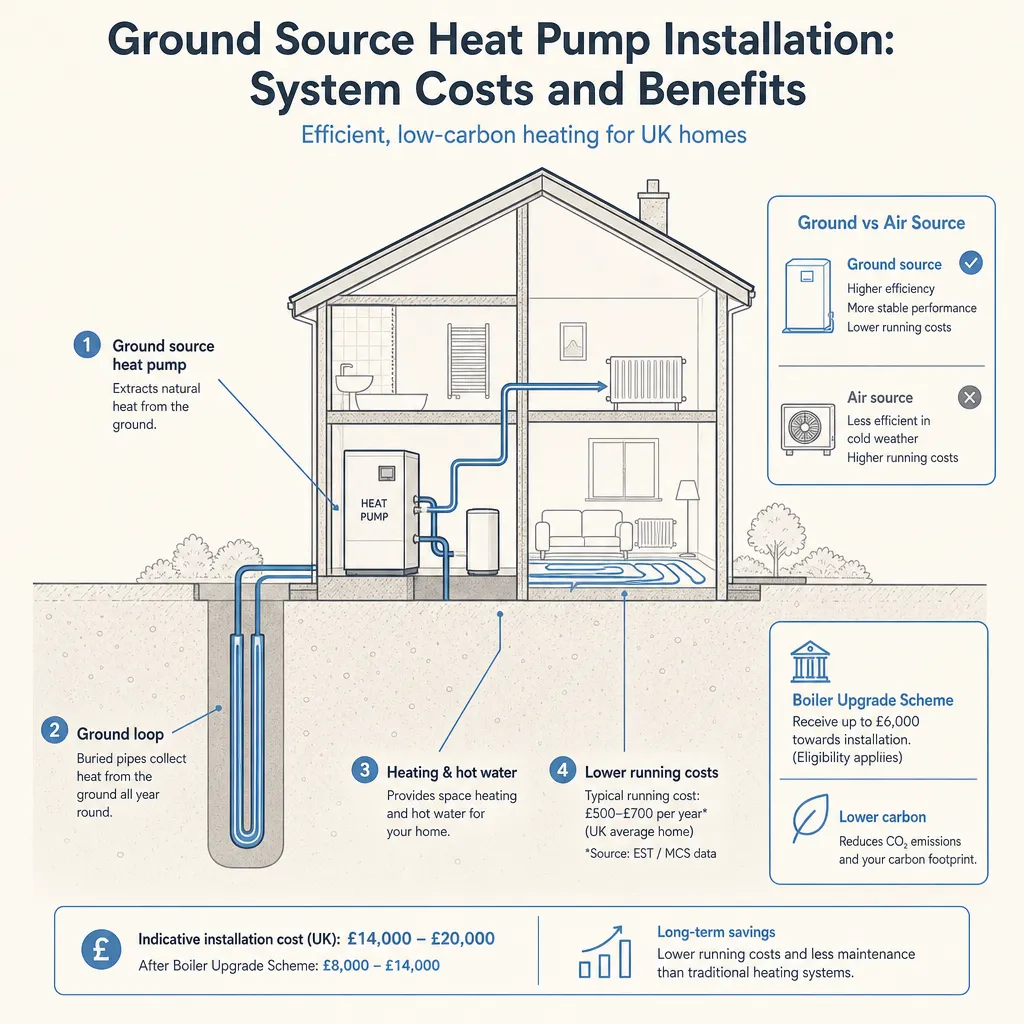
Ground Source Heat Pump Installation: System Costs and Benefits
A ground source heat pump installation costs £20,000–£45,000+ before grants in the UK. The Boiler Upgrade Scheme offers £7,500 toward eligible installations. GSHPs achieve a typical seasonal efficiency (SCOP) of 3–4.5, making them well-suited to off-gas homes with sufficient land for horizontal ground loops or ground suitable for borehole drilling.
 Energy & Retrofit
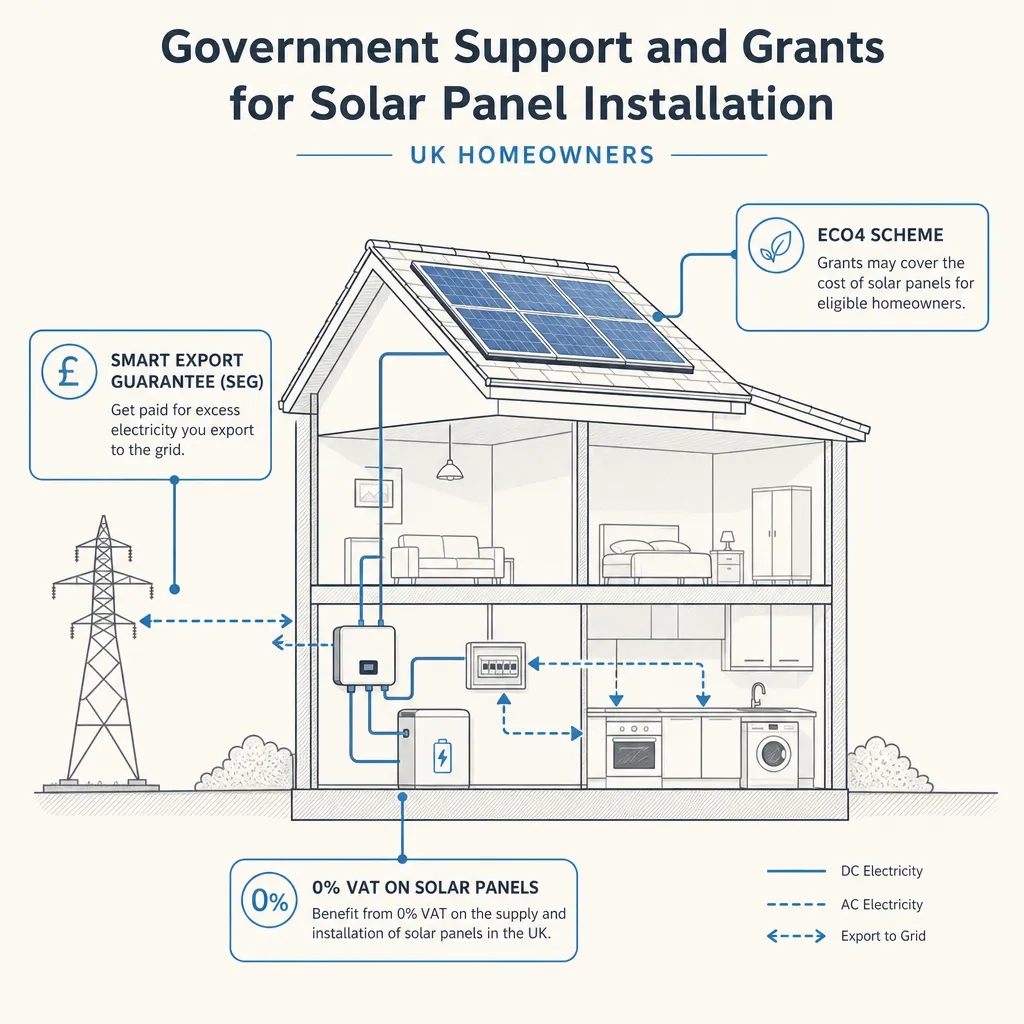
Government Support and Grants for Solar Panel Installation
UK homeowners can benefit from 0% VAT on solar panel installation until at least March 2027, the Smart Export Guarantee for export payments, and means-tested grants such as ECO4 and the Home Upgrade Grant for eligible low-income or off-gas households. No single universal free-solar scheme exists, but combining available support can meaningfully reduce upfront costs.
 Improvement & Build
Gardening in Hot Weather: Growing Successfully in Summer Conditions
In hot weather, UK gardens benefit most from deep watering in the early morning, a 5–7.5 cm mulch layer to reduce moisture loss, and a gradual shift towards drought-tolerant species. Raising the mower height to 5–7.5 cm protects lawns, and water butts connected to downpipes extend water supplies during hosepipe restrictions. Most established lawns recover naturally once rain returns.
 Improvement & Build
Bathroom Design Ideas: Fireplaces and Features
Gas fires in UK bathrooms are effectively prohibited under the Gas Safety (Installation and Use) Regulations 1998. Electric flame-effect fires may be installed in appropriate electrical zones under BS 7671, fitted by a Part P-registered electrician. Bioethanol fires carry significant ventilation risks and are not recommended for sealed bathrooms. Decorative fireplace surrounds with no heat source carry no specific regulatory restriction.
 Buying & Moving
How to find a property that matches your needs and budget
Finding the right property starts with separating non-negotiable needs from preferences, then building a realistic budget that includes SDLT, survey fees, and legal costs — typically 2–4% of the purchase price on top. Checking flood risk, EPC ratings, and tenure type before exchange prevents the most common post-purchase surprises for UK buyers.
 Planning & Pre-Build
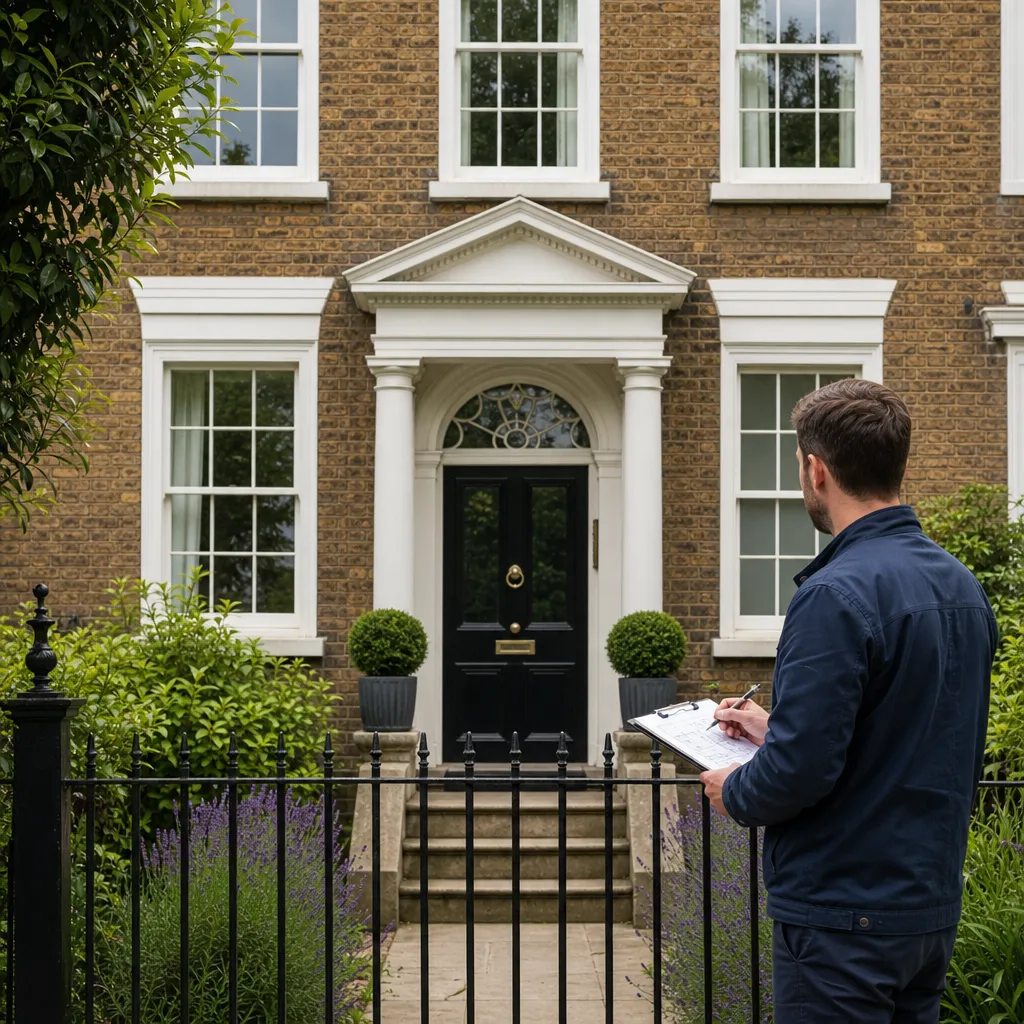
Federal-Style Architecture: Characteristics and Period Features
Federal-style architecture emerged in the USA between roughly 1780 and 1820, drawing directly on the British Adam style and Georgian neoclassical tradition. Its hallmarks include symmetrical brick facades, elliptical fanlights, delicate plasterwork, and Palladian windows. In the UK, the closest equivalent is Adam-style and late Georgian architecture, found in listed townhouses and historic streetscapes across Britain.
 Improvement & Build
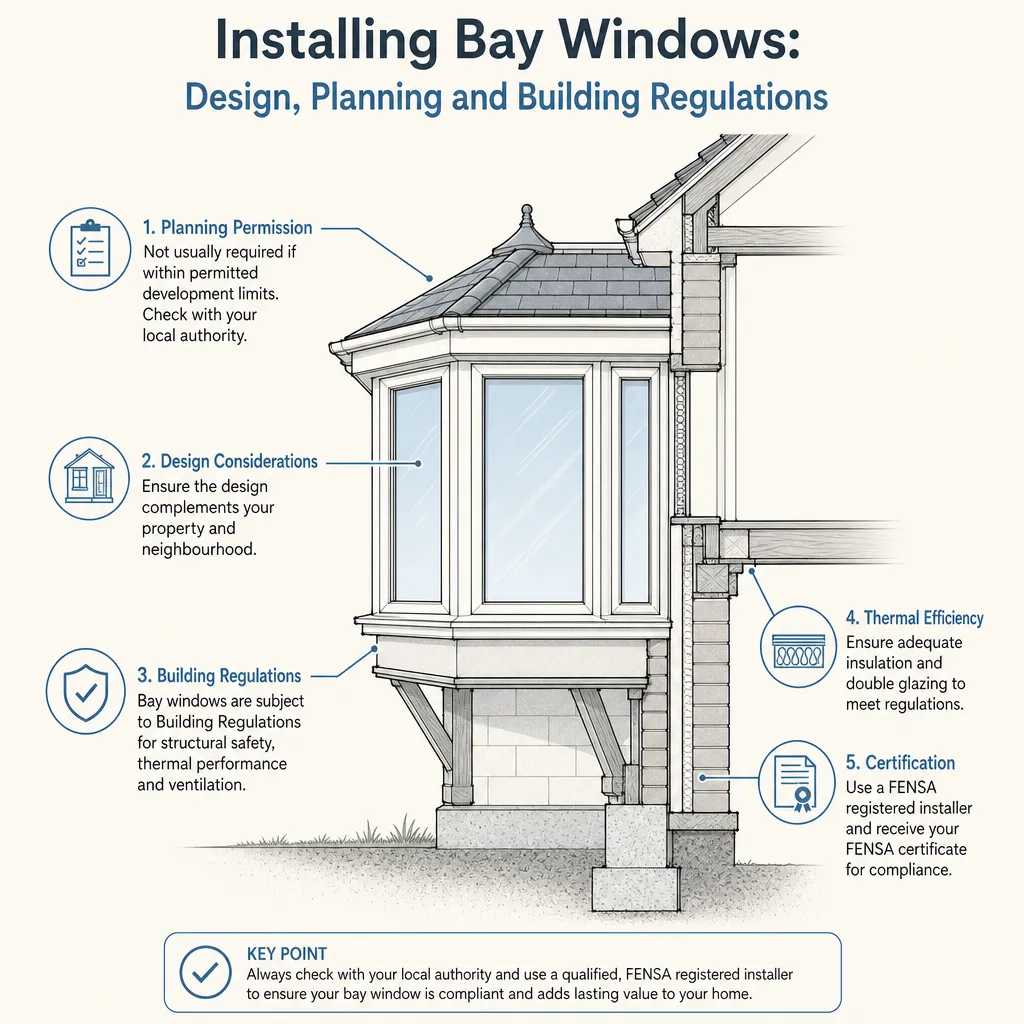
Installing Bay Windows: Design, Planning and Building Regulations
Most like-for-like bay window replacements are permitted development — no planning permission is needed unless the property is listed or in a conservation area. Building Regulations approval is required under Approved Documents L (thermal), A (structural), and N (glazing safety). FENSA or CERTASS-registered installers can self-certify compliance for replacements. Adding a new bay to the building involves structural works and requires full Building Control approval.
 Improvement & Build
What Homeowners Should Expect from Concrete Work: Quality Standards Without Premium Costs
Quality concrete work depends as much on preparation as on the mix itself. For a domestic driveway, expect at least C25/30 concrete over 100–150 mm of compacted Type 1 MOT sub-base. Ask for the mix grade in writing, check the sub-base depth before pouring, and do not allow water to be added on site — that single shortcut causes most early driveway failures.
 Improvement & Build
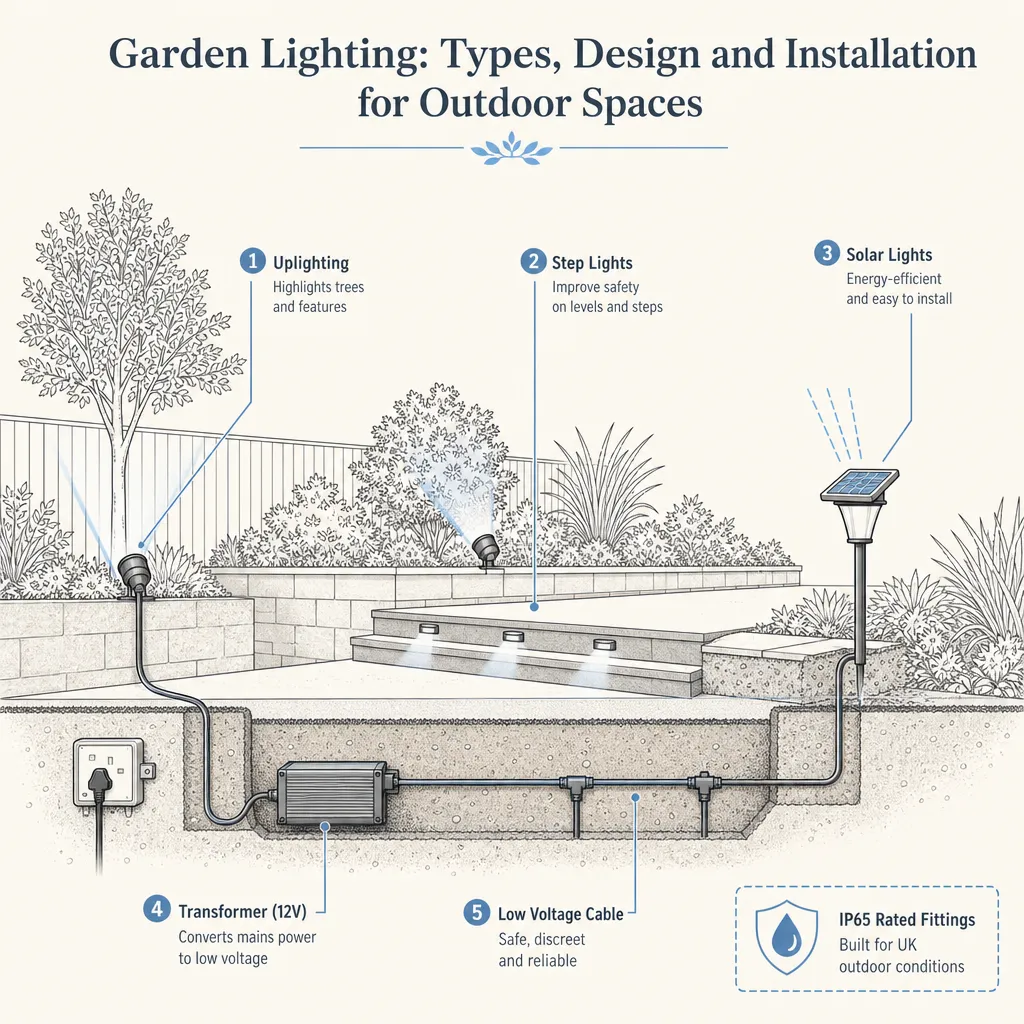
Garden Lighting: Types, Design and Installation for Outdoor Spaces
Garden lighting ranges from low-voltage LED path lights and solar-powered fittings to mains-powered floodlights and feature uplighters. Low-voltage and solar systems are practical DIY options, but any new mains outdoor circuit must be installed by a Part P-registered electrician and is notifiable under Building Regulations. Good design layers ambient, task, and accent light for the best results.
 Improvement & Build
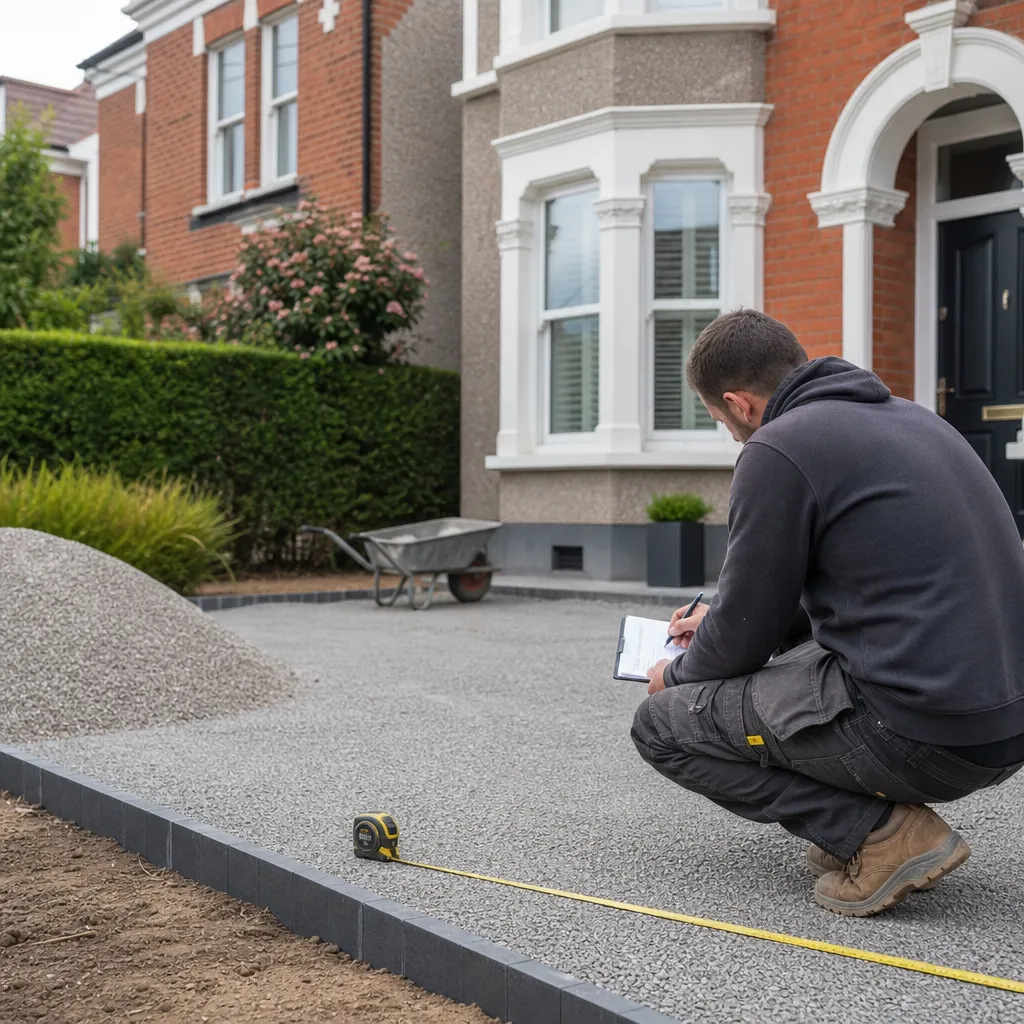
Driveway Type 1 Base Course: Quantity Calculator and Material Estimates
Type 1 MOT aggregate is typically laid at 100–150 mm compacted depth beneath a domestic driveway. To calculate how much to order, multiply your area in m² by the depth in metres, then by 1.25 (the bulking factor), and by 2.1 to convert to tonnes. A 30 m² driveway at 150 mm depth needs approximately 12 tonnes.
 Improvement & Build
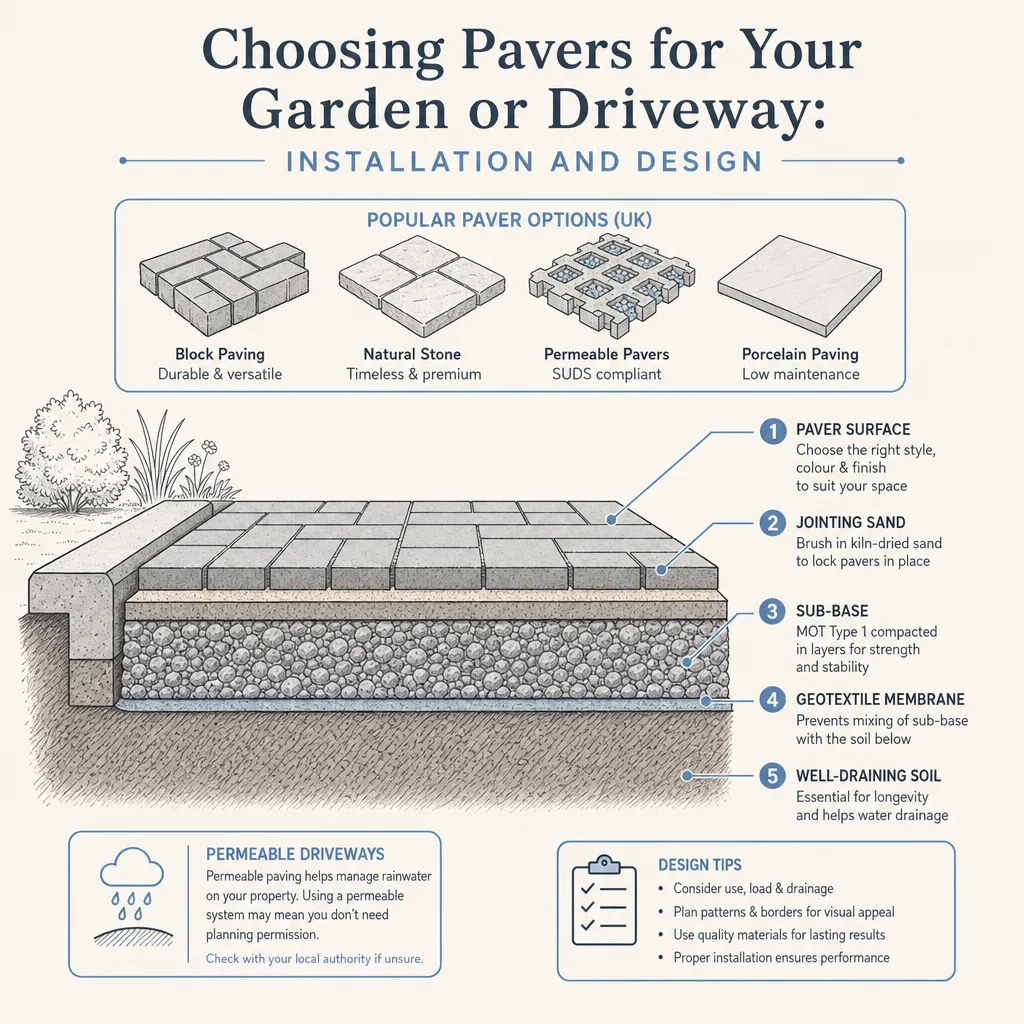
Choosing Pavers for Your Garden or Driveway: Installation and Design
For UK driveways and garden surfaces, block pavers, natural stone, concrete flags, and porcelain are the main options. Driveways over 5m² must use permeable materials or drain to a soakaway under permitted development rules. The right choice depends on budget, load-bearing needs, drainage requirements, and long-term maintenance preferences.
 Improvement & Build
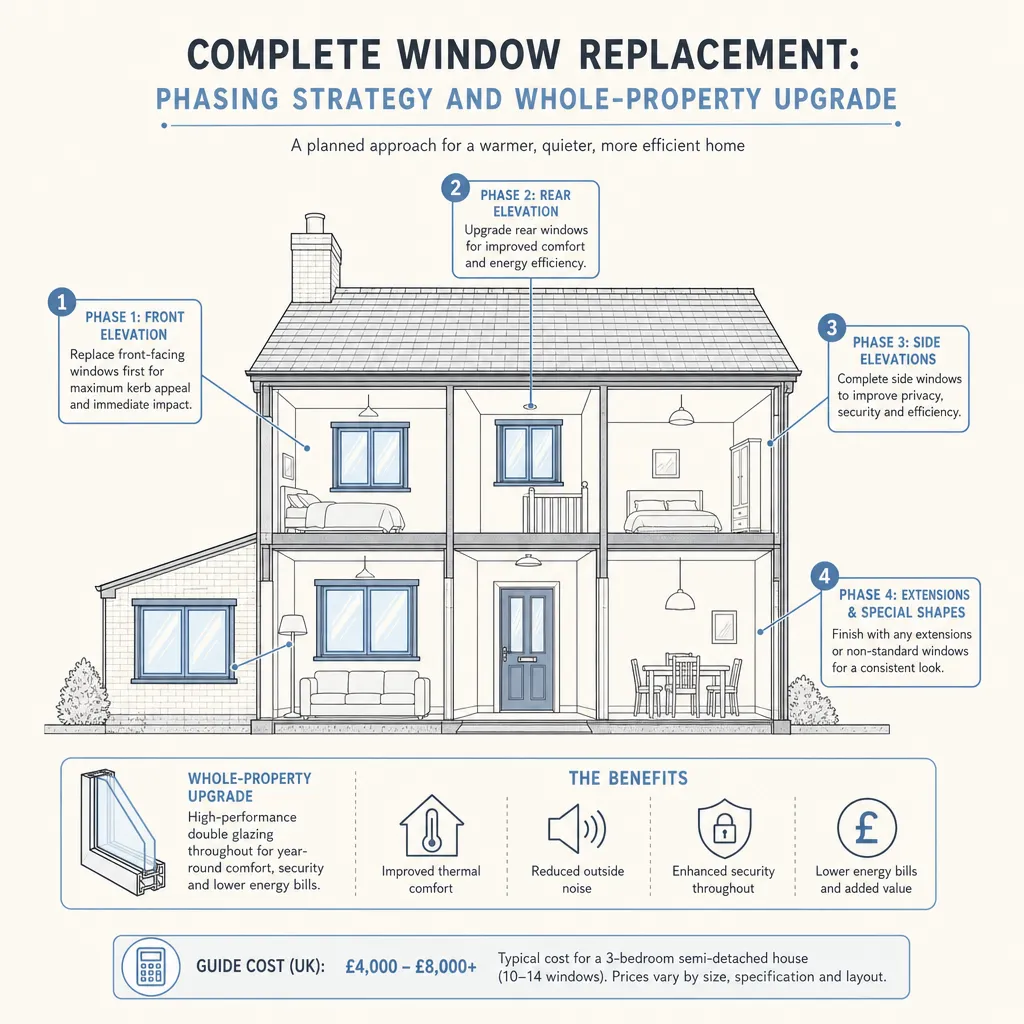
Complete Window Replacement: Phasing Strategy and Whole-Property Upgrade
Replacing all windows in a UK home requires FENSA or CERTASS-registered installers to certify compliance with Building Regulations Part L. Tackle the most deteriorated and least efficient windows first. Expect to spend £5,000–£15,000 for a whole house depending on frame material and glazing specification. Always confirm whether your property needs planning permission or listed building consent before ordering.