Knowledge Base
Property advice that actually helps
Researched, UK-specific guides for every stage of homeownership — from buying and surveys to retrofit, planning and major works.
 Surveys & Inspections
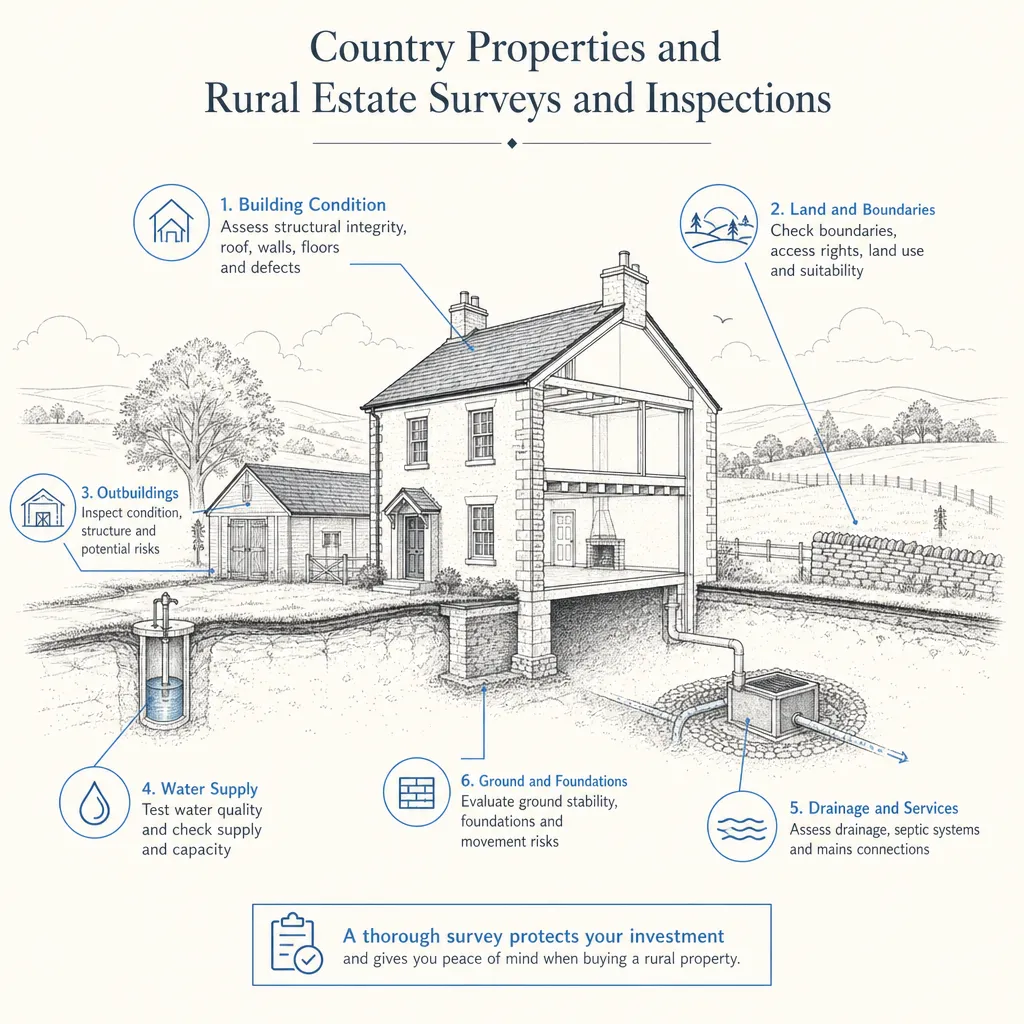
Country Properties and Rural Estate Surveys and Inspections
Country properties and rural estates typically need a broader range of surveys than urban homes, covering boundaries, trees, private drainage, private water supply, ecological constraints, and structural condition. A RICS Level 3 Building Survey is usually the starting point, but rural purchases often also need specialist reports from arboricultural, ecological, boundary, or drainage professionals.
 Planning & Pre-Build
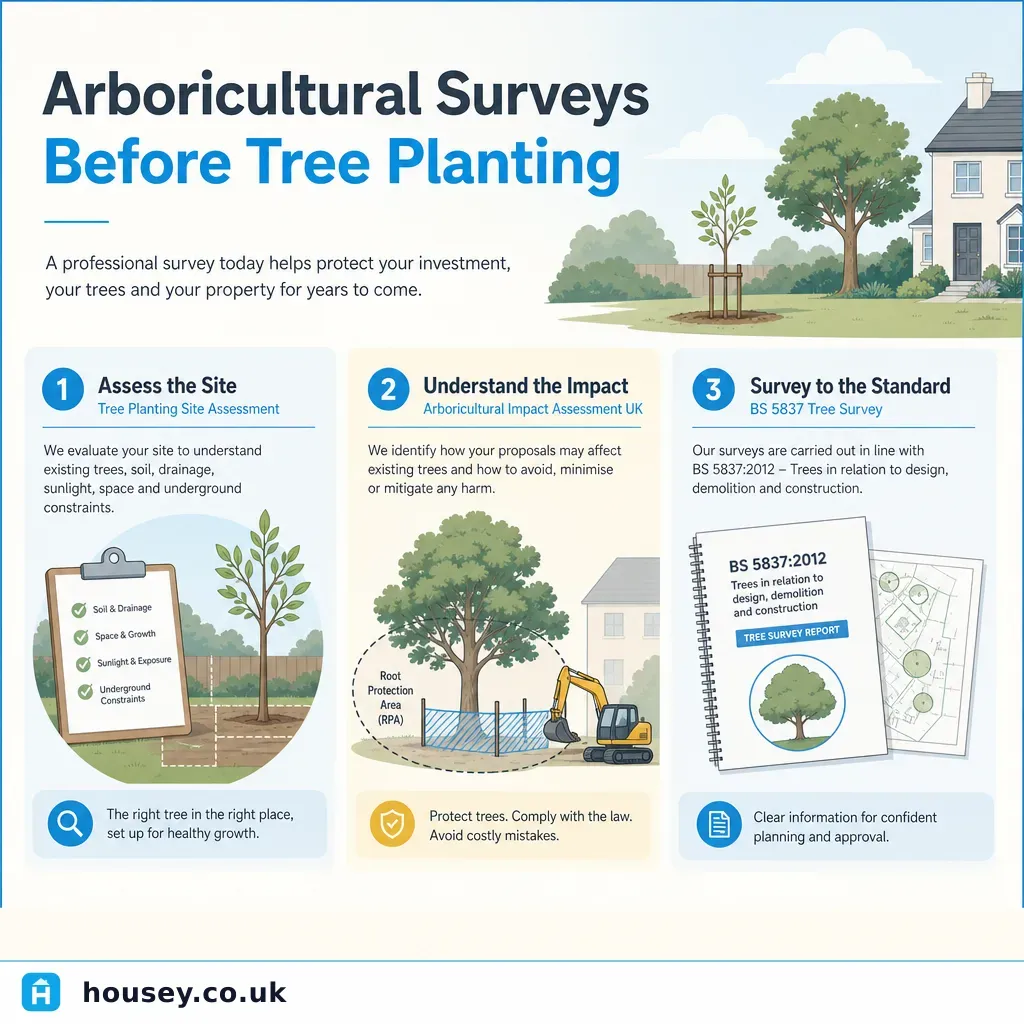
Arboricultural Surveys Before Tree Planting
A pre-planting arboricultural survey assesses soil type, drainage, existing tree root protection areas, and proximity to buildings so you can select species and positions that suit your UK site. Without this information, the wrong tree in the wrong location can damage foundations, block drains, conflict with Tree Preservation Orders, or fail planning requirements — especially on clay soils or sites with existing protected trees.
 Improvement & Build
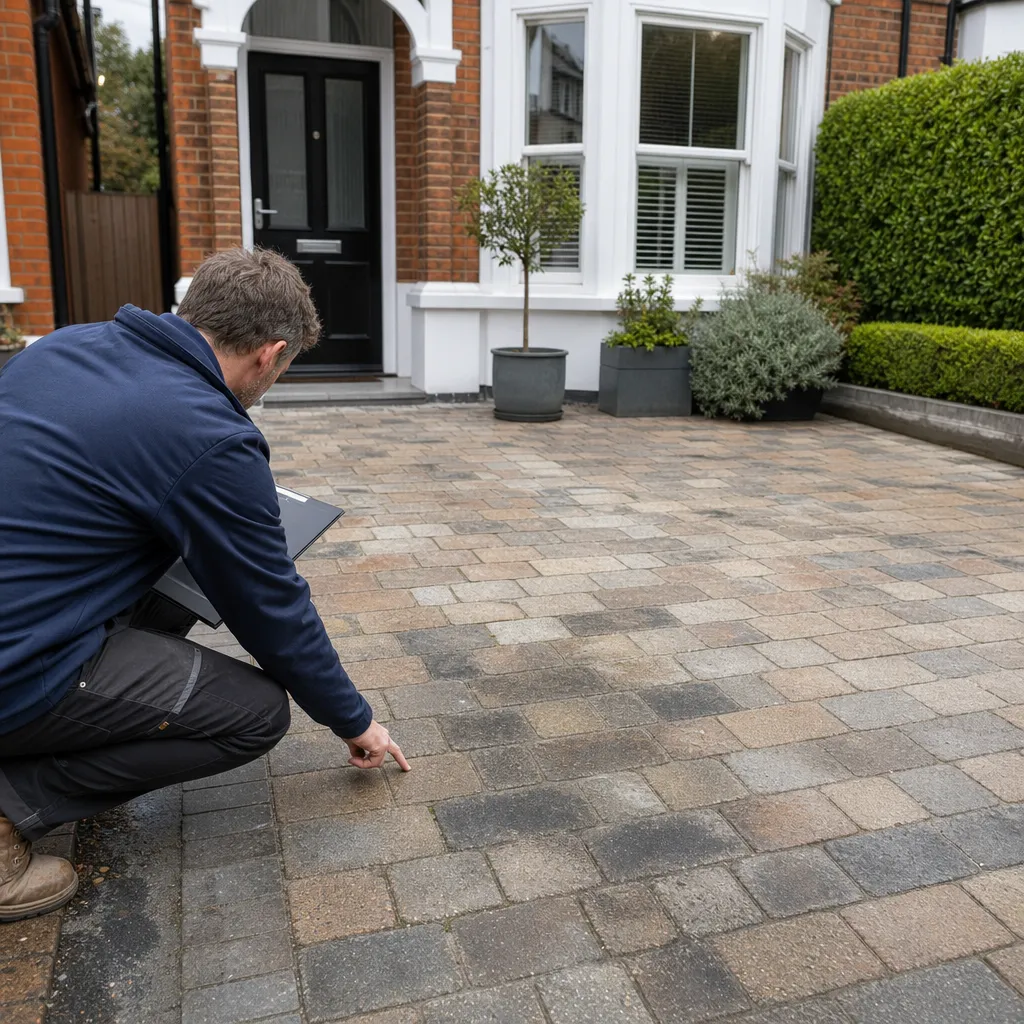
Driveway Aesthetic Issues: Managing Colour Variation and Surface Consistency
Colour variation on a driveway is almost always caused by one of four things: efflorescence in new concrete, manufacturing batch differences in block paving, UV degradation in resin-bound surfaces, or sealer fade in imprinted concrete. The right fix depends on identifying the cause — cleaning, resealing, or replacing affected materials.
 Buying & Moving
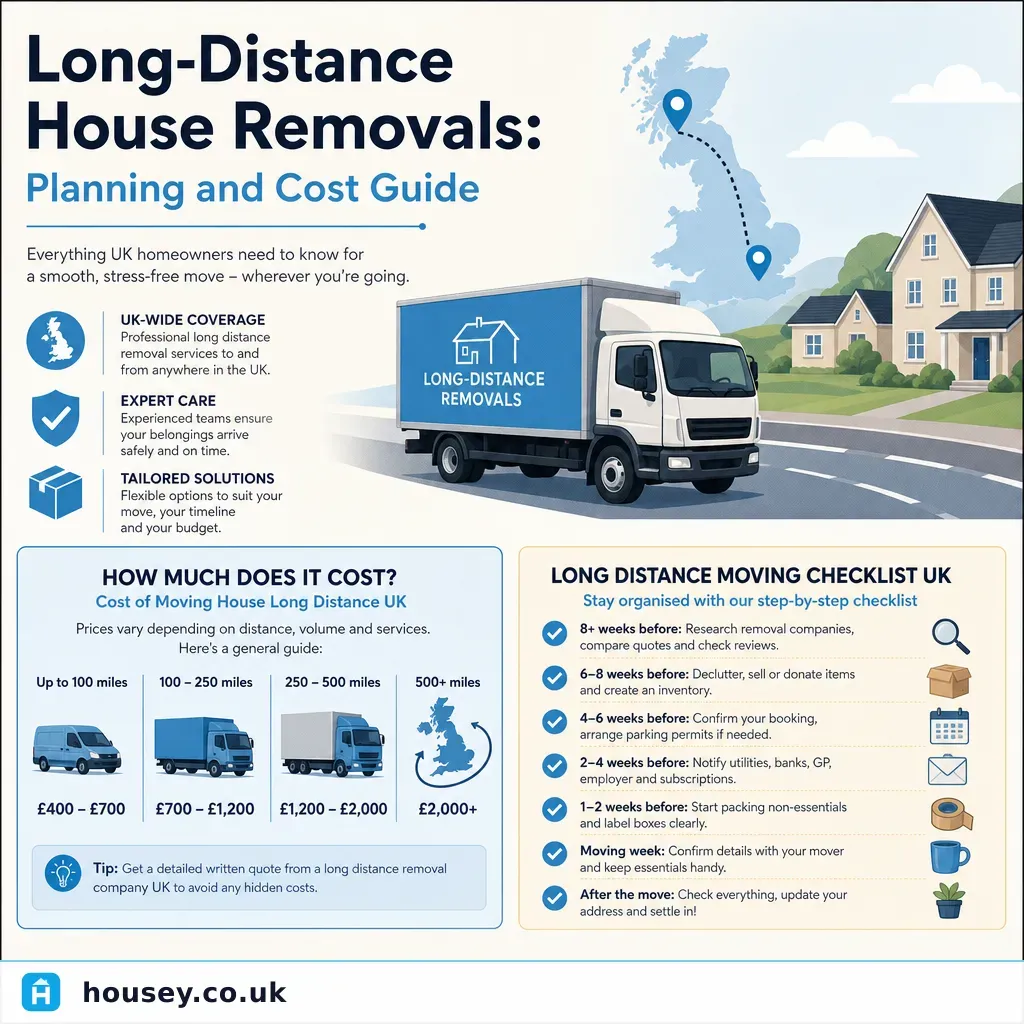
Long-Distance House Removals: Planning and Cost Guide
Long-distance house removals in the UK — typically moves of 100 miles or more — cost around £1,000–£2,500 for a standard 3-bedroom home, depending on volume, packing services, access, and timing. Book at least 8 weeks ahead in peak season, get three written quotes from BAR or RIOS member firms, and check that transit insurance covers replacement value rather than a fixed rate per item.
 Improvement & Build
Planning a Bathroom Renovation: Design, Building Regs and Project Management
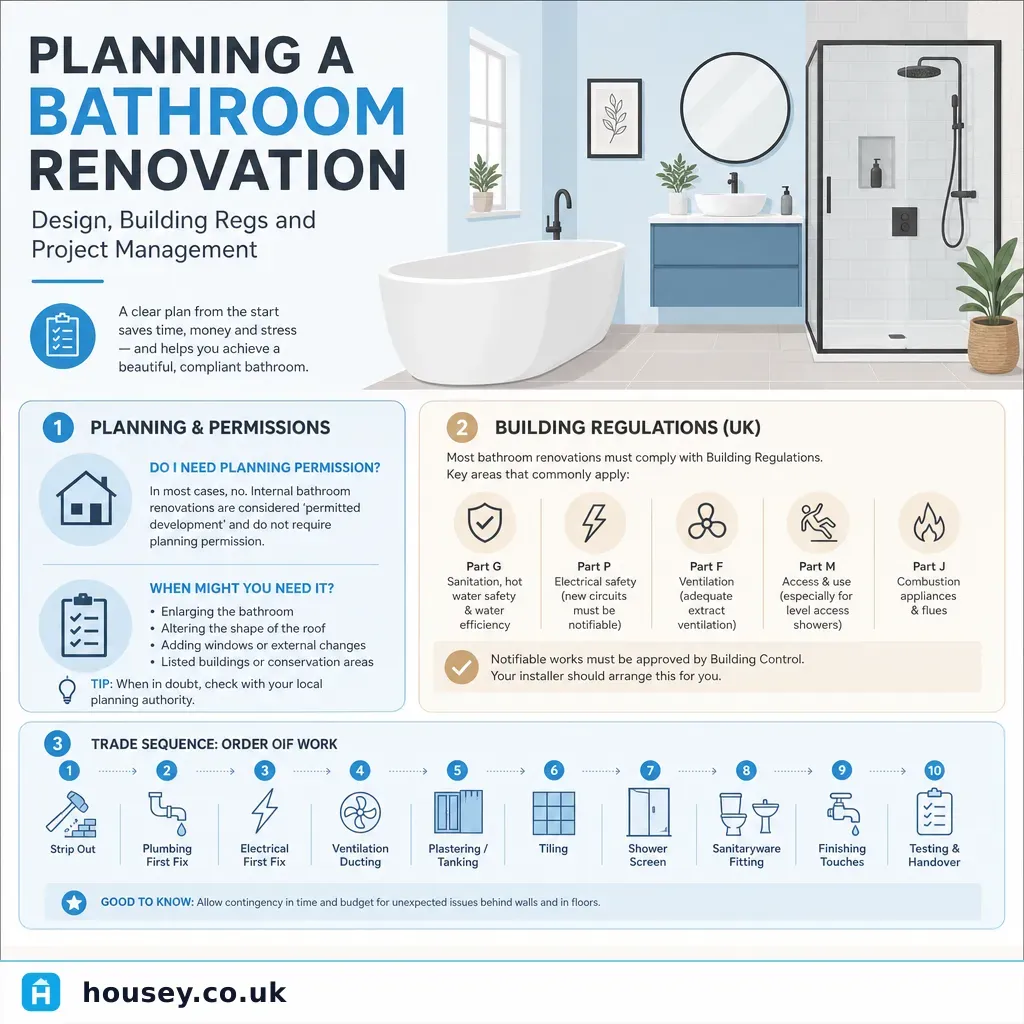
Most bathroom renovations replacing existing sanitaryware in the same location do not need building regs or planning permission. Part G applies when adding a new bathroom or fitting an unvented cylinder, and Part P covers any new electrical circuits. Use the correct trade sequence, get three written quotes, and ensure your electrician holds NICEIC or NAPIT registration.
 Improvement & Build
Memorial Tree Planting: Services and Considerations
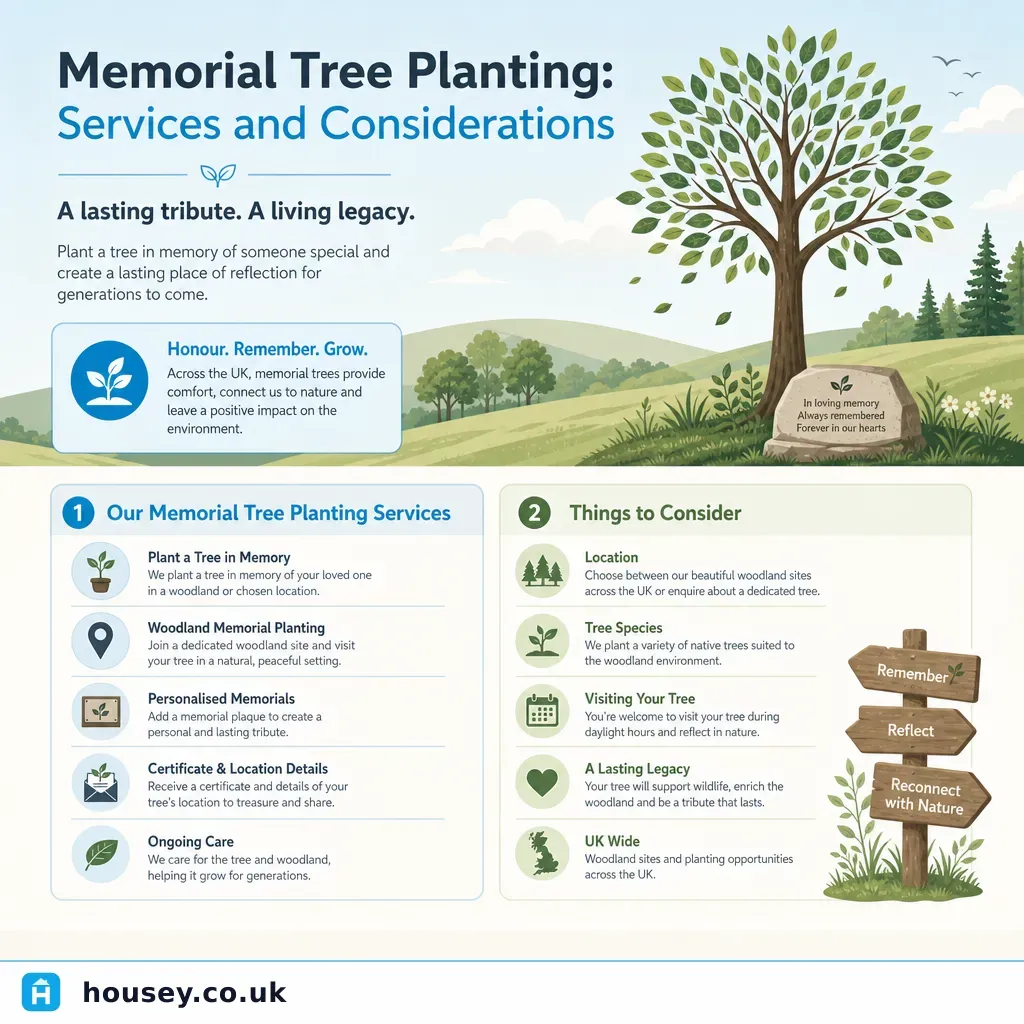
Memorial tree planting in the UK involves choosing a species, selecting a suitable site — your own garden, a managed woodland scheme, or a dedicated memorial ground — and arranging planting with appropriate aftercare. Costs range from £25 for a charity woodland donation to £500 or more for a semi-mature specimen planted by a qualified arborist on private land.
 Improvement & Build
Interior Design Ideas: Painting Doors in Dark Finishes
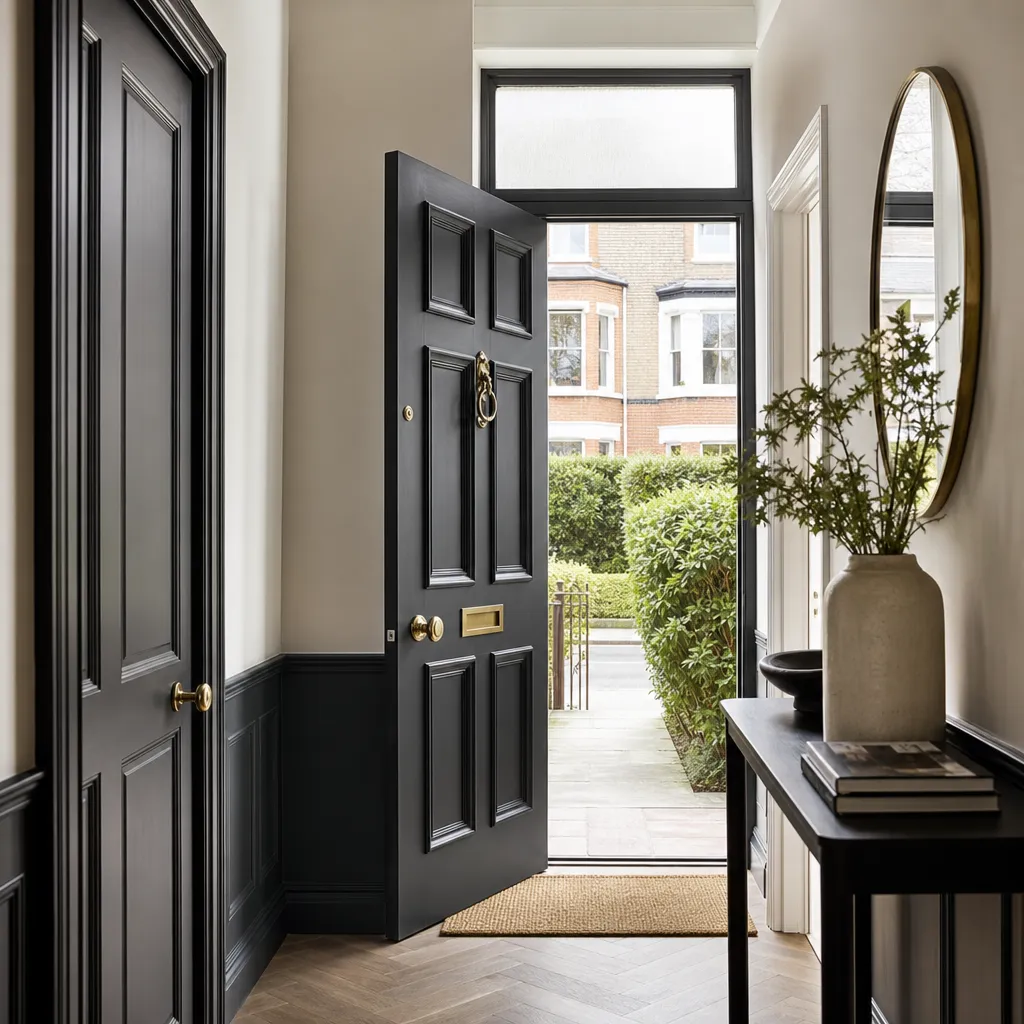
Dark interior doors work well when sheen level, surface preparation, and room lighting are considered together. Satin or eggshell suits most UK interiors; full gloss suits period properties and high-traffic hallways. Thorough preparation — filling, sanding, and applying a tinted primer — determines the quality of the finished result more than the brand or exact shade chosen.
 Planning & Pre-Build
Building Regulations: Contractor Permit Requirements
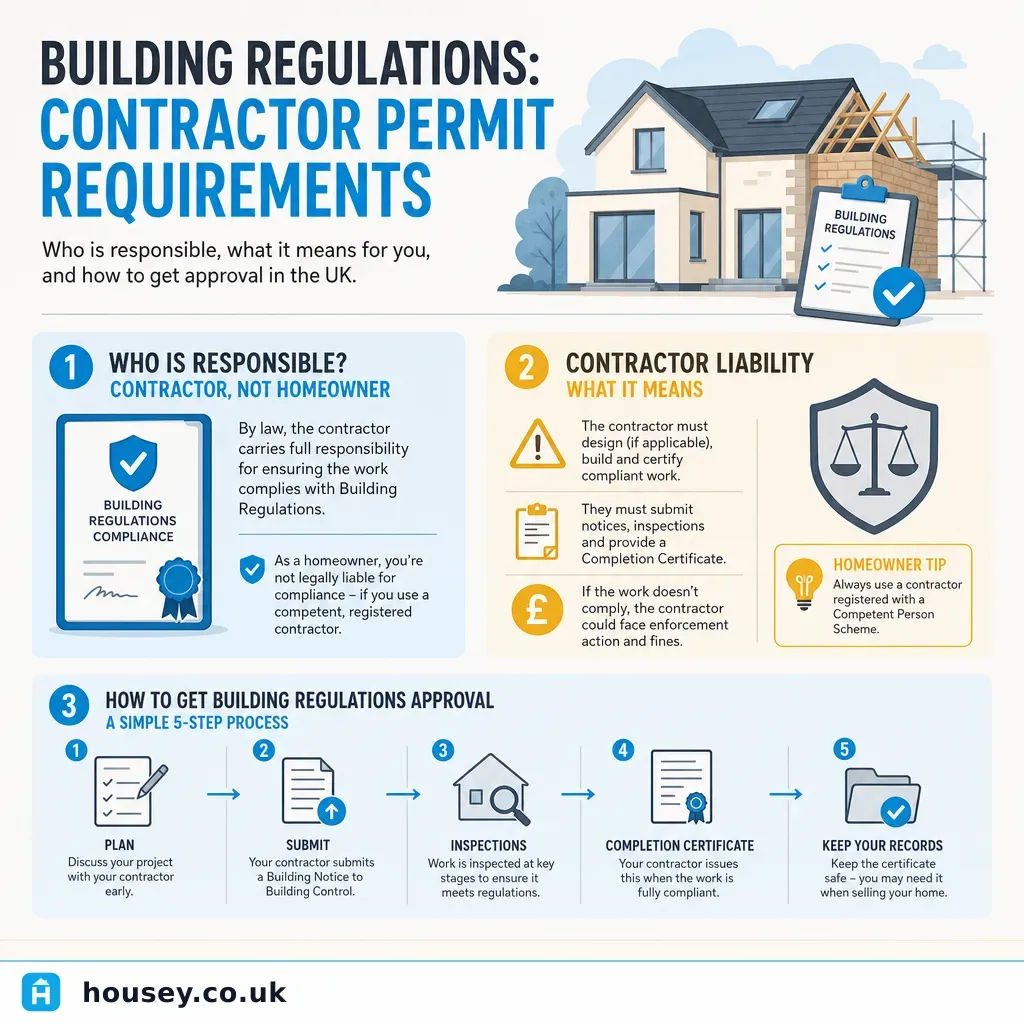
In England and Wales, the person carrying out the building work — usually the contractor — is legally responsible for notifying building control under the Building Regulations 2010. Homeowners become responsible if they manage the project directly. Self-certifiable work such as gas, electrical, and replacement windows can be registered through competent person schemes without a separate application.
 Improvement & Build
Window Replacement Fundamentals: Standards and Best Practice for UK Properties
Replacement windows in England must achieve a whole-window U-value of 1.4 W/m²K or better under Building Regulations Part L. Work must be certified by a FENSA or CERTASS registered installer, or inspected by local authority building control. Properties in conservation areas or listed buildings have additional planning restrictions that can affect both material choice and required consents.
 Surveys & Inspections
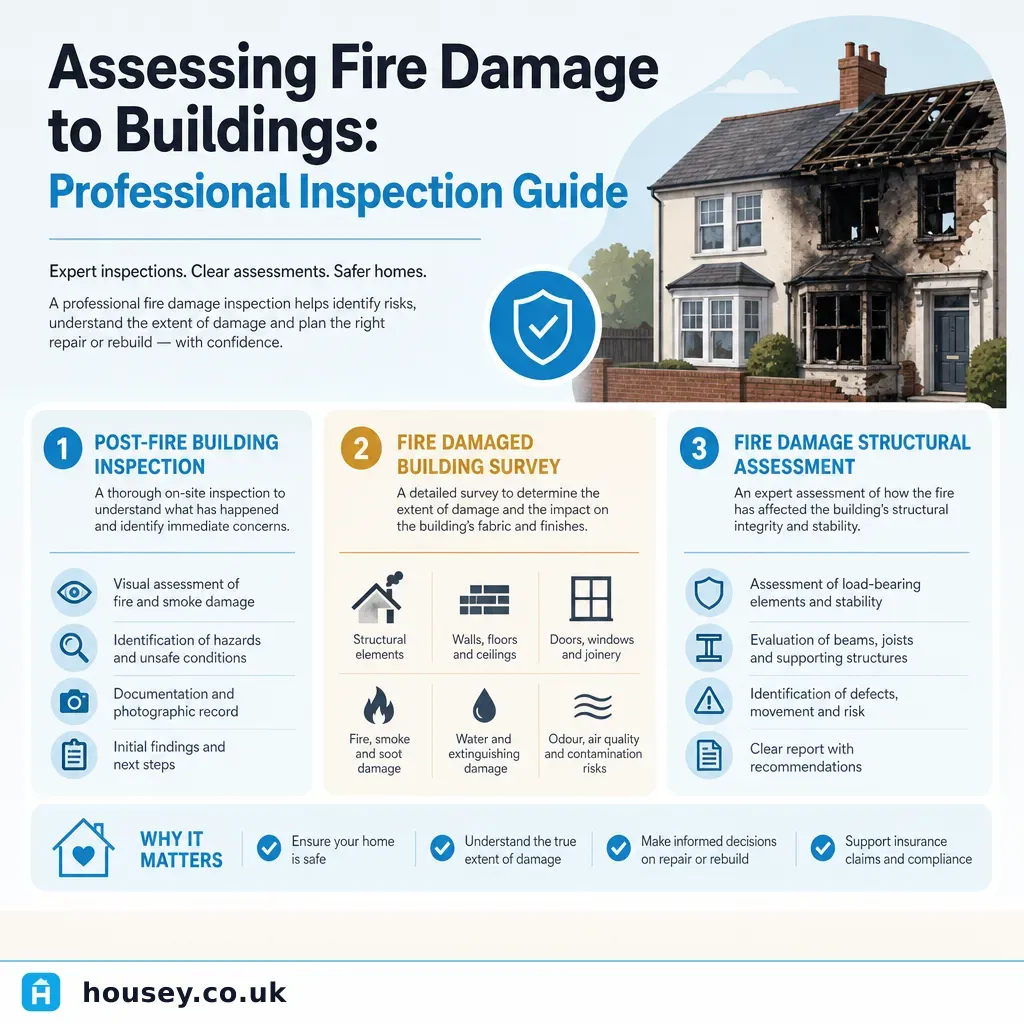
Assessing Fire Damage to Buildings: Professional Inspection Guide
After a fire, do not re-enter a building until the fire and rescue service has formally released the scene. A chartered structural engineer or building surveyor should then assess structural integrity before any repair work begins. Services — gas, electricity, and water — must be independently certified as safe. Smoke, soot, and fire suppression water cause damage well beyond what is visibly obvious.
 Surveys & Inspections
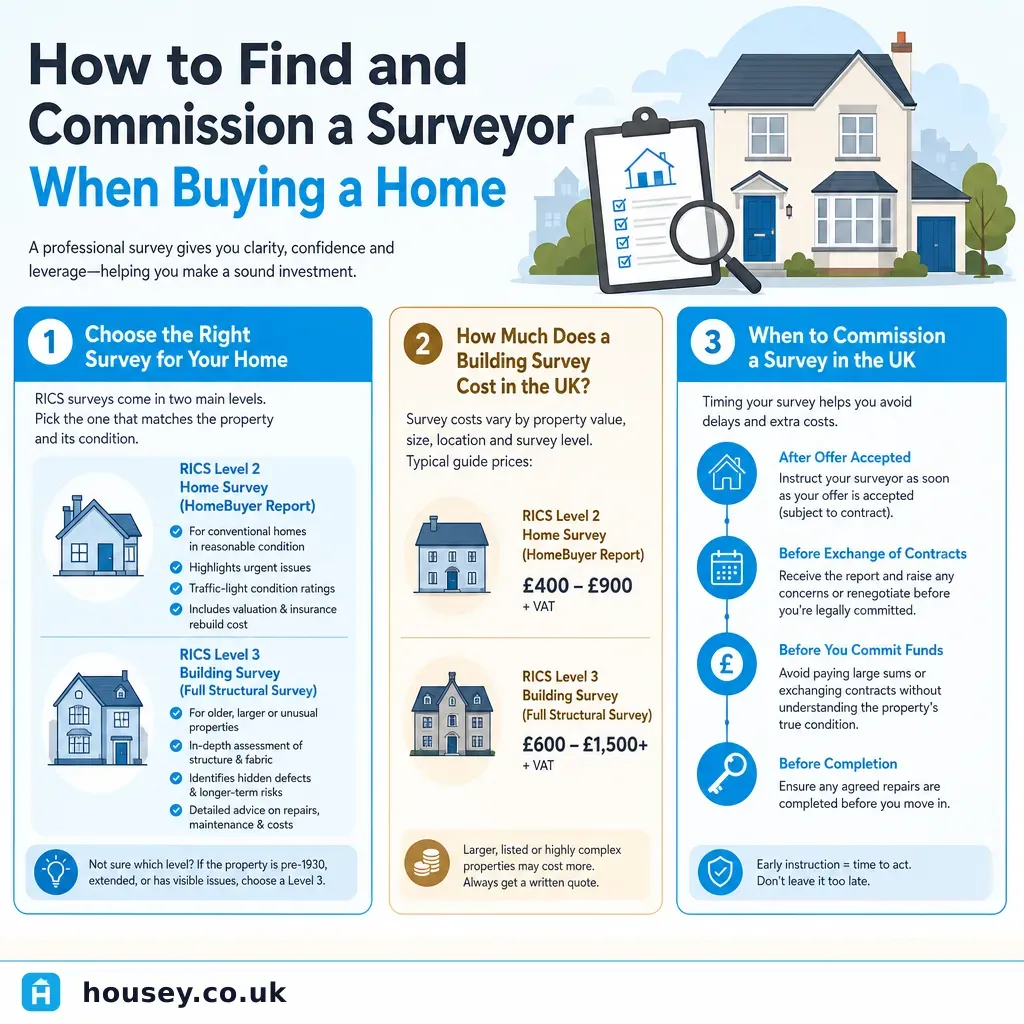
How to Find and Commission a Surveyor When Buying a Home
To commission a surveyor when buying a home, use the RICS Find a Surveyor tool to identify a regulated professional, choose between a RICS Level 2 Home Survey or Level 3 Building Survey based on the property's age and condition, and book as soon as your offer is accepted. Always appoint the surveyor directly rather than through the estate agent so that the duty of care runs to you.
 Surveys & Inspections
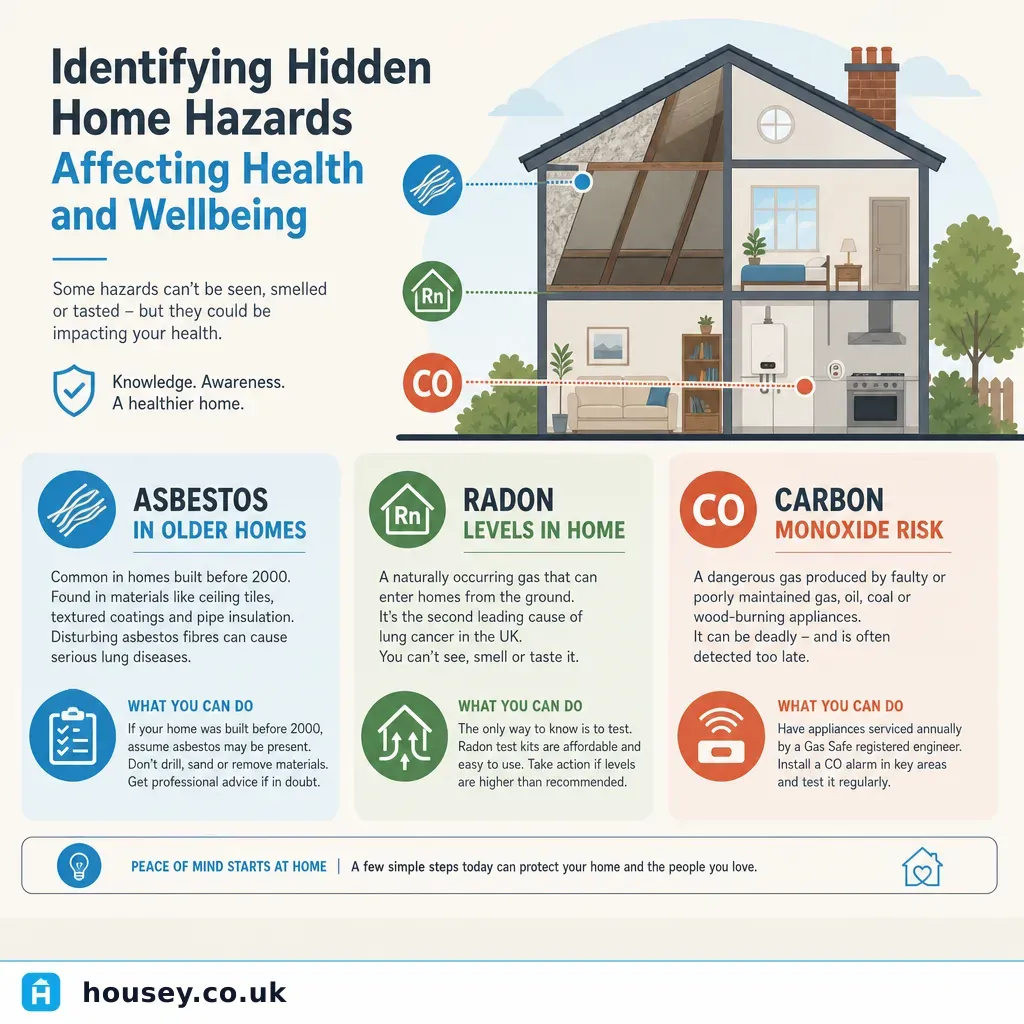
Identifying Hidden Home Hazards Affecting Health and Wellbeing
UK homes may contain multiple hidden health hazards including asbestos (in properties built before 2000), radon gas (particularly in South West England and the East Midlands), carbon monoxide from combustion appliances, lead paint in pre-1970 properties, and damp-related mould. Many hazards are undetectable without specialist testing. The right professional and type of survey depends on the hazard, the property's age, and whether renovation work is planned.