Knowledge Base
Property advice that actually helps
Researched, UK-specific guides for every stage of homeownership — from buying and surveys to retrofit, planning and major works.
 Improvement & Build
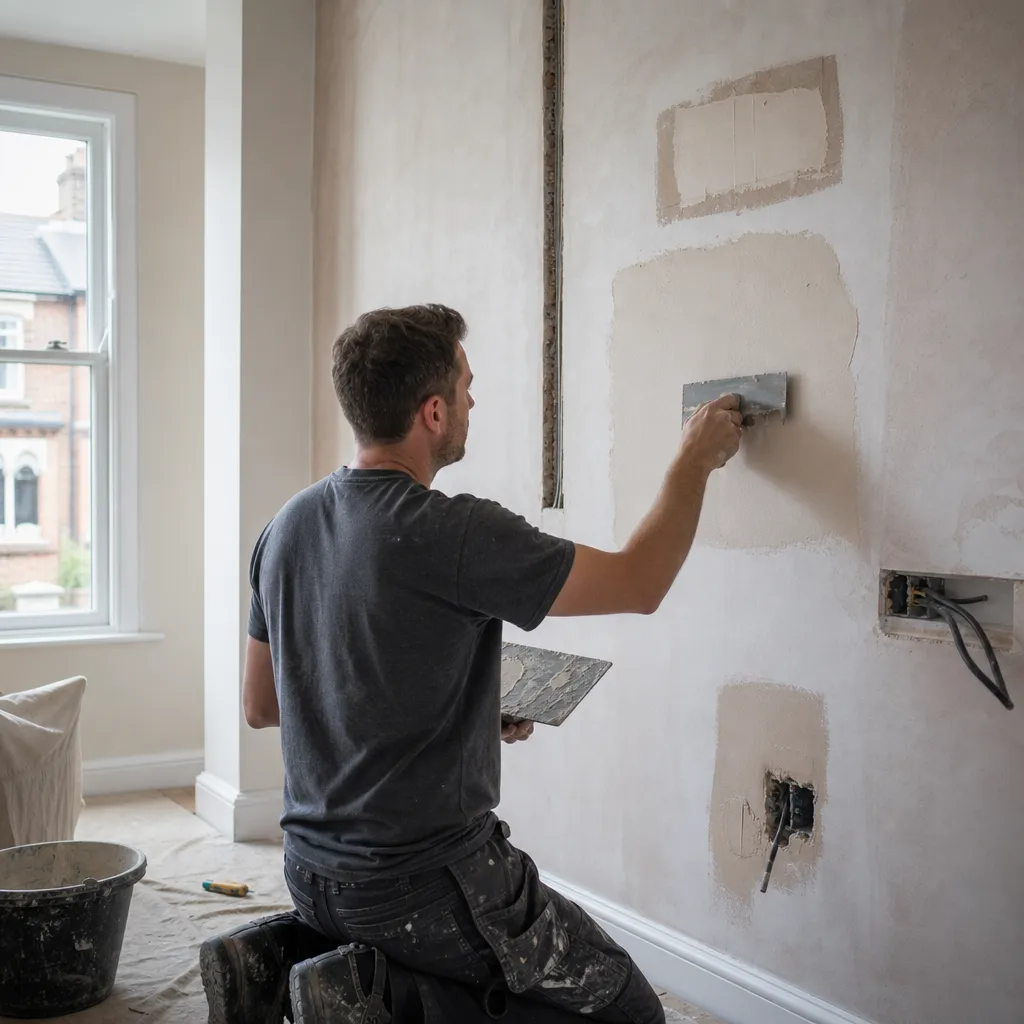
Wall Patching After Plumbing and Electrical Work
Wall patching after plumbing or electrical work typically involves filling the chase or opening with bonding coat plaster or repair mortar, then applying a skim coat. The right approach depends on wall type — plasterboard, solid plaster, or brick — and the depth of the opening. Larger repairs and matching existing finishes usually benefit from a skilled plasterer rather than DIY filler alone.
 Improvement & Build
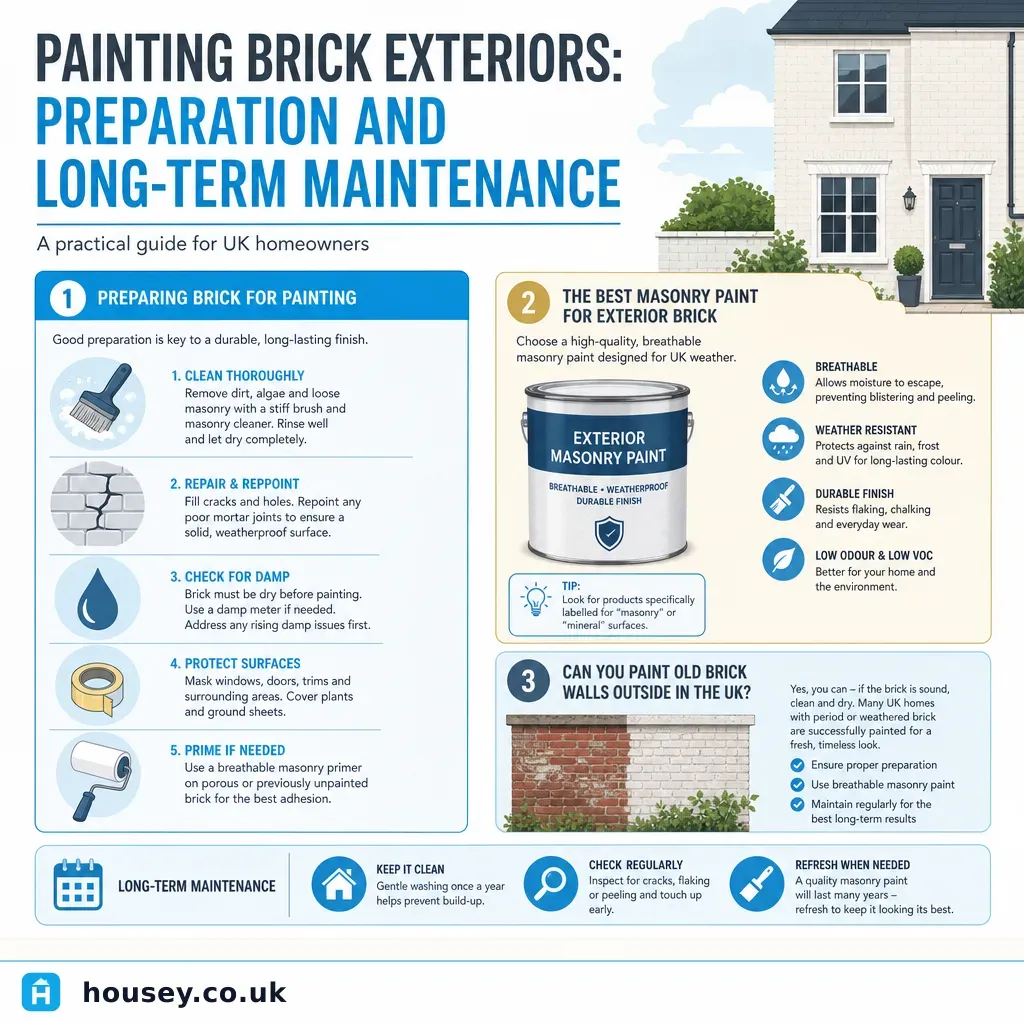
Painting Brick Exteriors: Preparation and Long-Term Maintenance
Painting exterior brick can protect and refresh a façade, but it is a long-term commitment: once painted, brickwork is difficult to restore. Use a breathable, microporous masonry paint, prepare the surface thoroughly, and allow new or repointed brickwork to cure for at least 12 months before painting.
 Surveys & Inspections
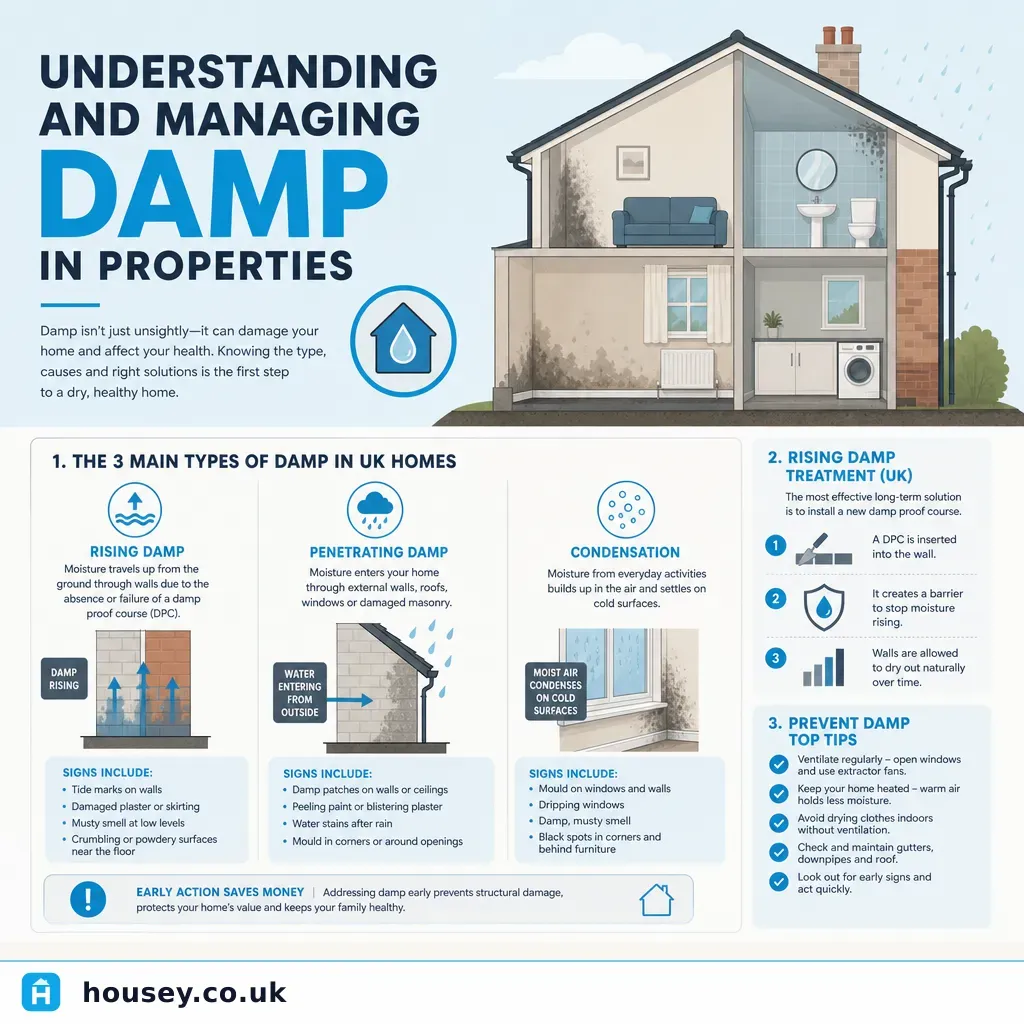
Understanding and Managing Damp in Properties
Damp in UK properties usually falls into three categories: rising damp, penetrating damp, and condensation. Each has distinct causes and treatments, from installing a new damp-proof course to improving ventilation or fixing external defects. A professional damp and timber survey identifies the root cause before any remedial work begins, preventing costly misdiagnosis and ineffective treatment.
 Improvement & Build
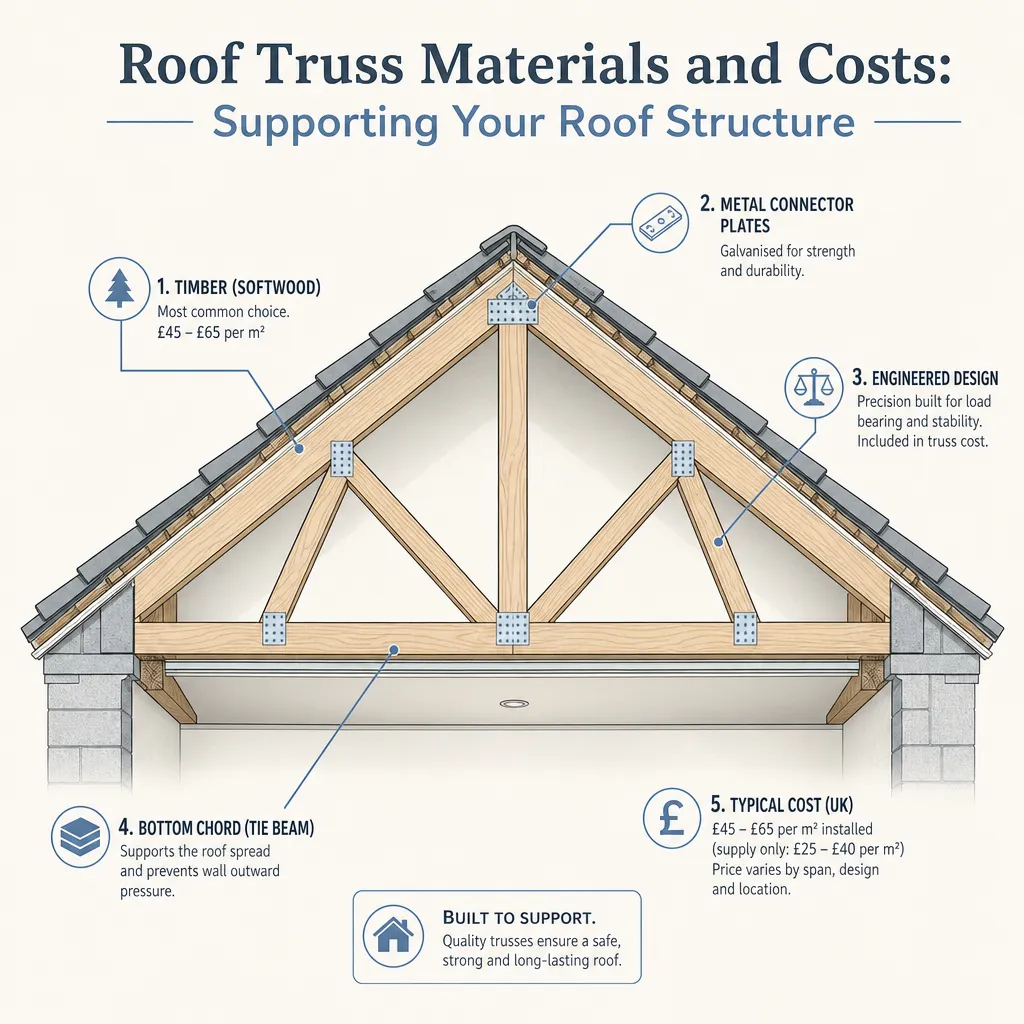
Roof Truss Materials and Costs: Supporting Your Roof Structure
Most UK domestic roofs use prefabricated engineered timber trusses, typically C16, C24, or TR26 stress-graded softwood. Material costs for a standard semi-detached truss set range from around £700 to £3,500; attic trusses for habitable loft space cost more. Any structural alteration to existing trusses requires a structural engineer's design and Building Regulations approval.
 Improvement & Build
Home Improvements That Add Value to Your Property
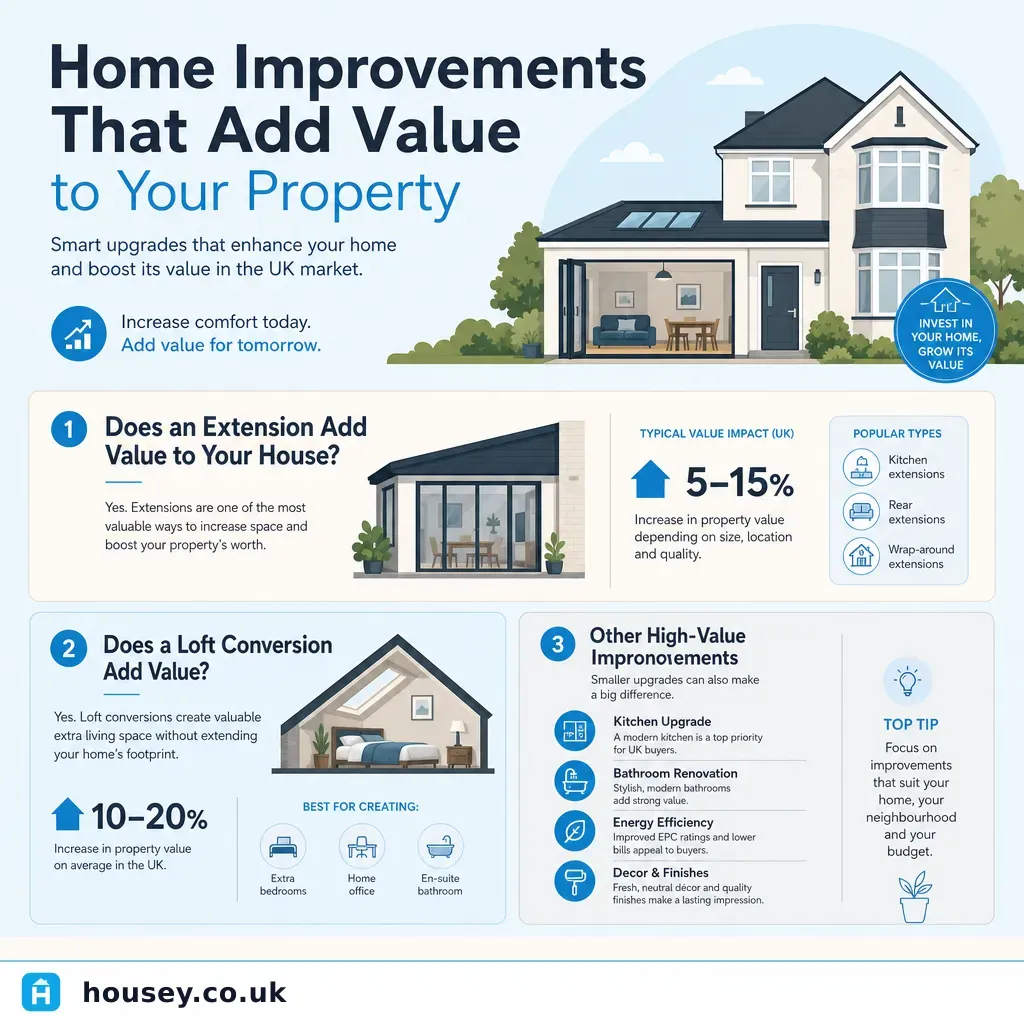
The home improvements most likely to add value in the UK are those that add usable floor space — loft conversions and extensions — or improve EPC ratings. Returns depend on local market ceilings, property condition, and planning constraints. Over-improving relative to neighbouring properties typically reduces returns, so check local ceiling values before committing to a large spend.
 Planning & Pre-Build
Garage Size Limits and Planning Permission: Permitted Development Thresholds
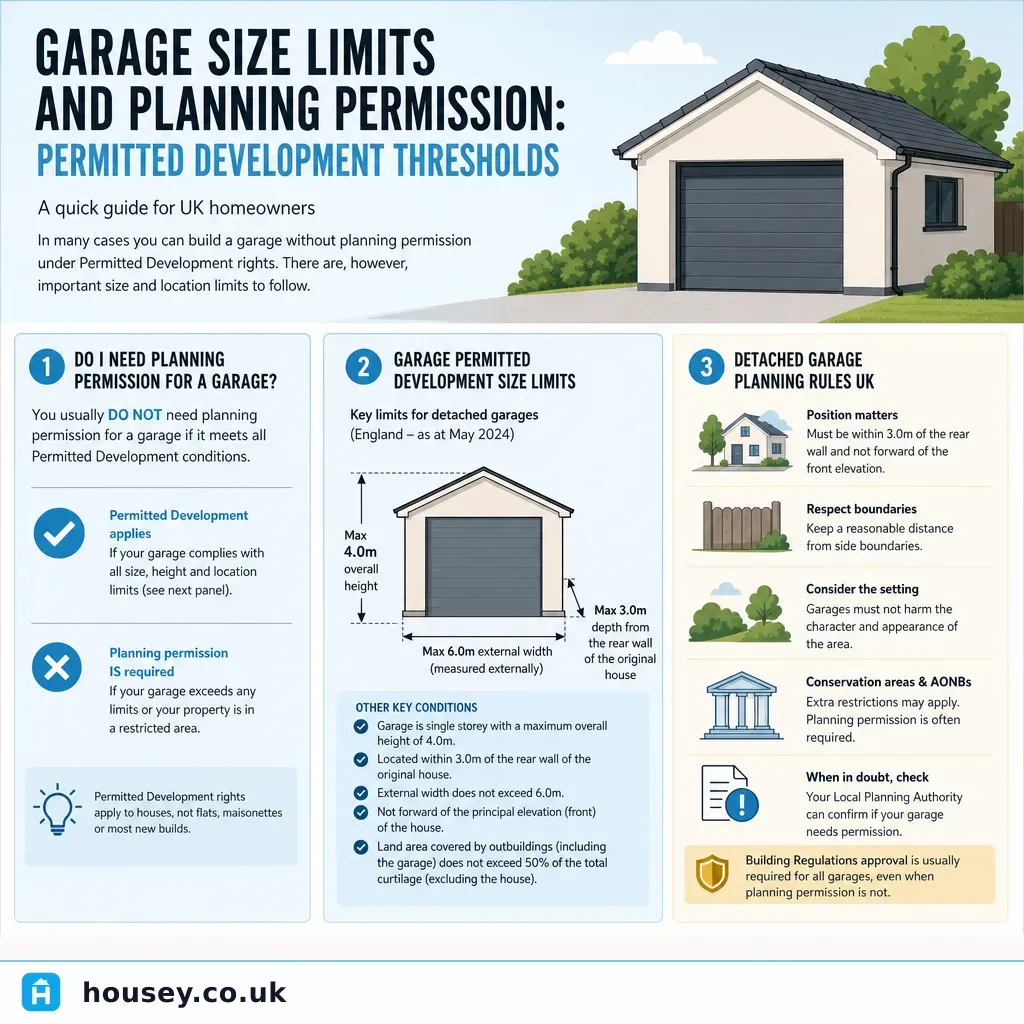
A detached garage is usually permitted development under Class E of the GPDO 2015 if it covers less than 50% of the curtilage and meets height limits. An attached or side garage follows Class A extension rules. Planning permission is typically needed where limits are exceeded, the property is listed, or it sits in a conservation area or other designated land.
 Improvement & Build
How to Calculate Wallpaper Quantities for Any Room
Measure the room's perimeter and multiply by the ceiling height to get the total wall area. Divide by the usable area per roll — roughly 5 m² for a standard UK roll — then add 10–15% waste allowance for pattern repeat. Always buy rolls from the same batch number to ensure consistent colour across the room.
 Improvement & Build
House Extensions: Design, Planning, and Professional Build Services
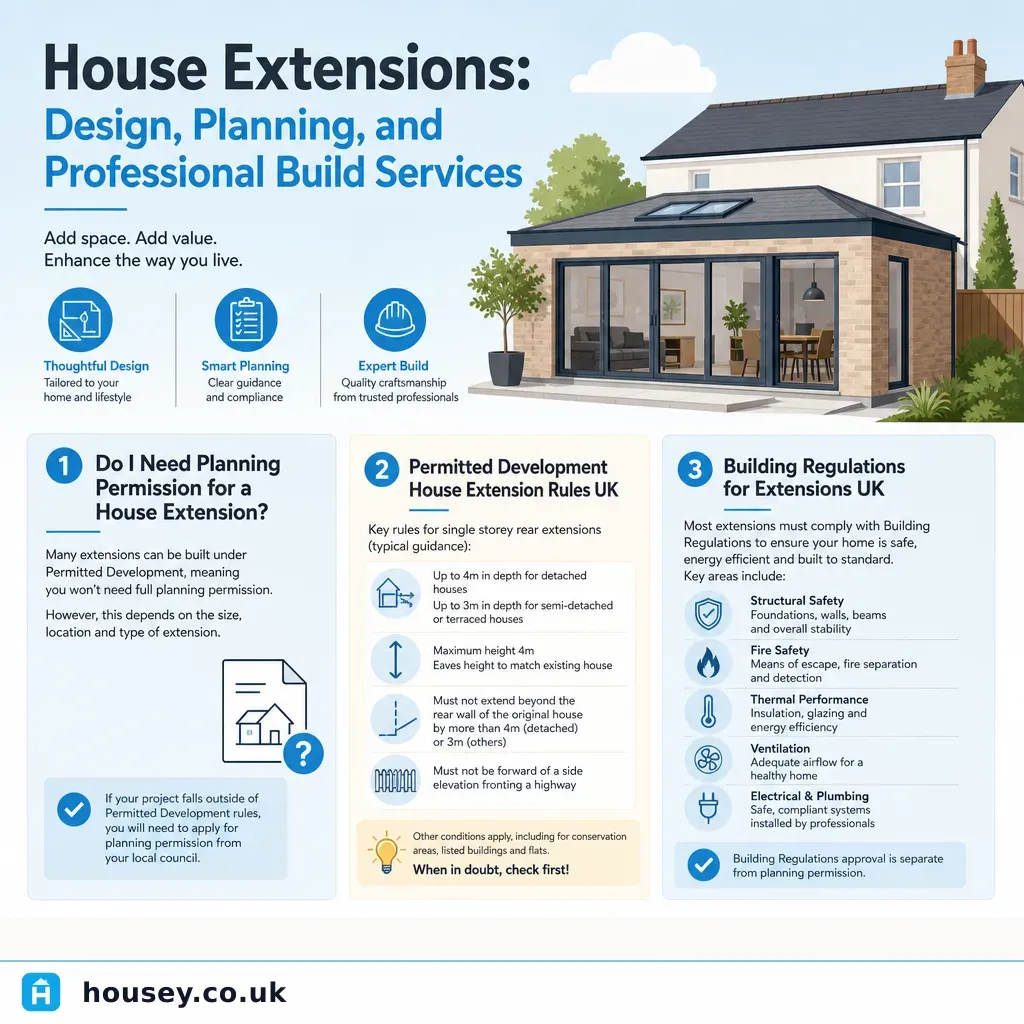
A UK house extension requires careful planning, structural design, and regulatory approval. Many single-storey rear extensions fall under Permitted Development but still need Building Regulations approval, structural calculations, and — if works are close to a neighbour's foundations — a Party Wall Agreement. Appoint an architect early to avoid costly mistakes later.
 Improvement & Build
Renoflation: Understanding Rising Renovation Costs and Market Drivers
Renoflation describes the sharp, sustained rise in UK renovation costs driven by higher material prices, a construction labour shortage, post-pandemic demand, and energy cost volatility. Unlike general inflation, renoflation compounds across a project because materials and labour price rises apply simultaneously. Getting detailed fixed-price quotes and building in a 10–15% contingency are the most effective practical defences.
 Surveys & Inspections
Lease Extension Valuation and Legal Costs
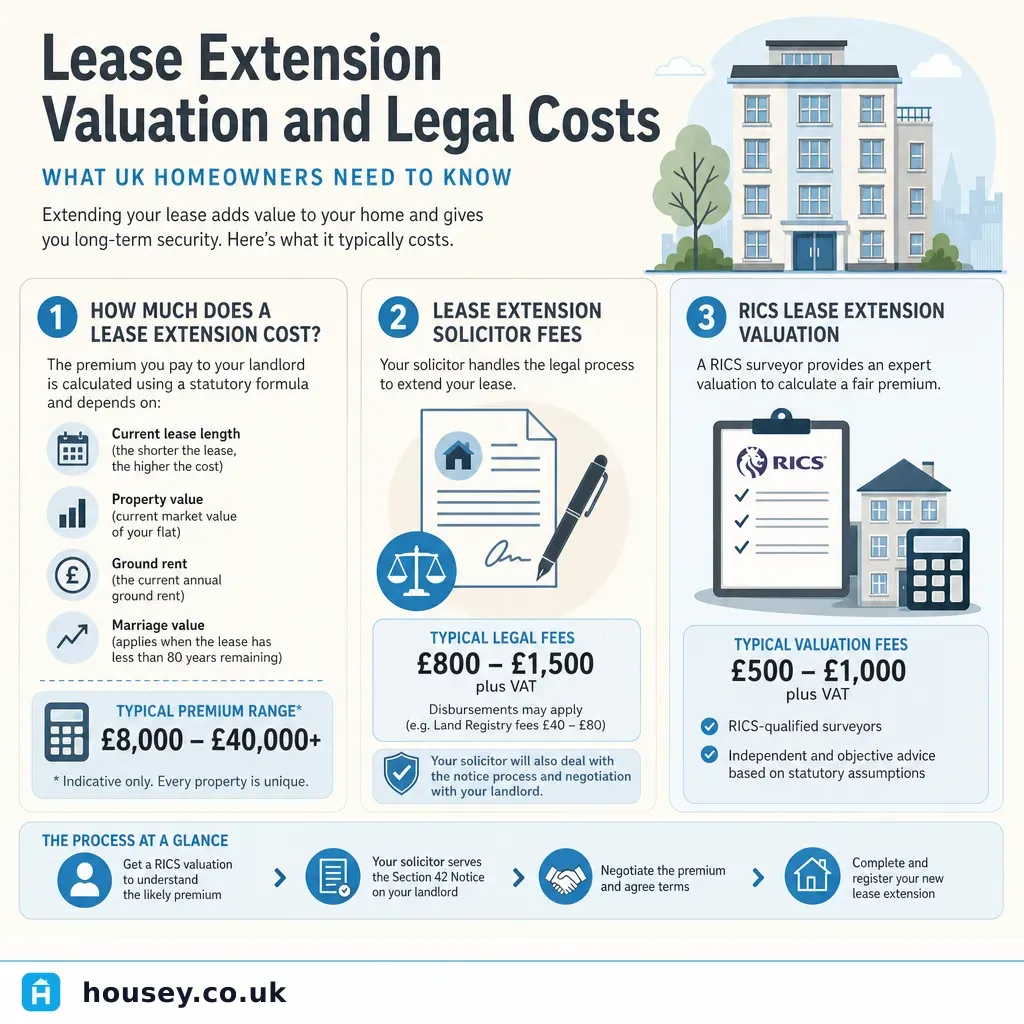
A statutory lease extension involves a premium paid to the freeholder plus your own surveyor and solicitor fees, and the freeholder's professional costs — all typically borne by the leaseholder. Total professional fees commonly range from £3,000 to £7,000, excluding the premium itself. Acting before the lease drops below 80 years usually reduces the premium significantly.
 Improvement & Build
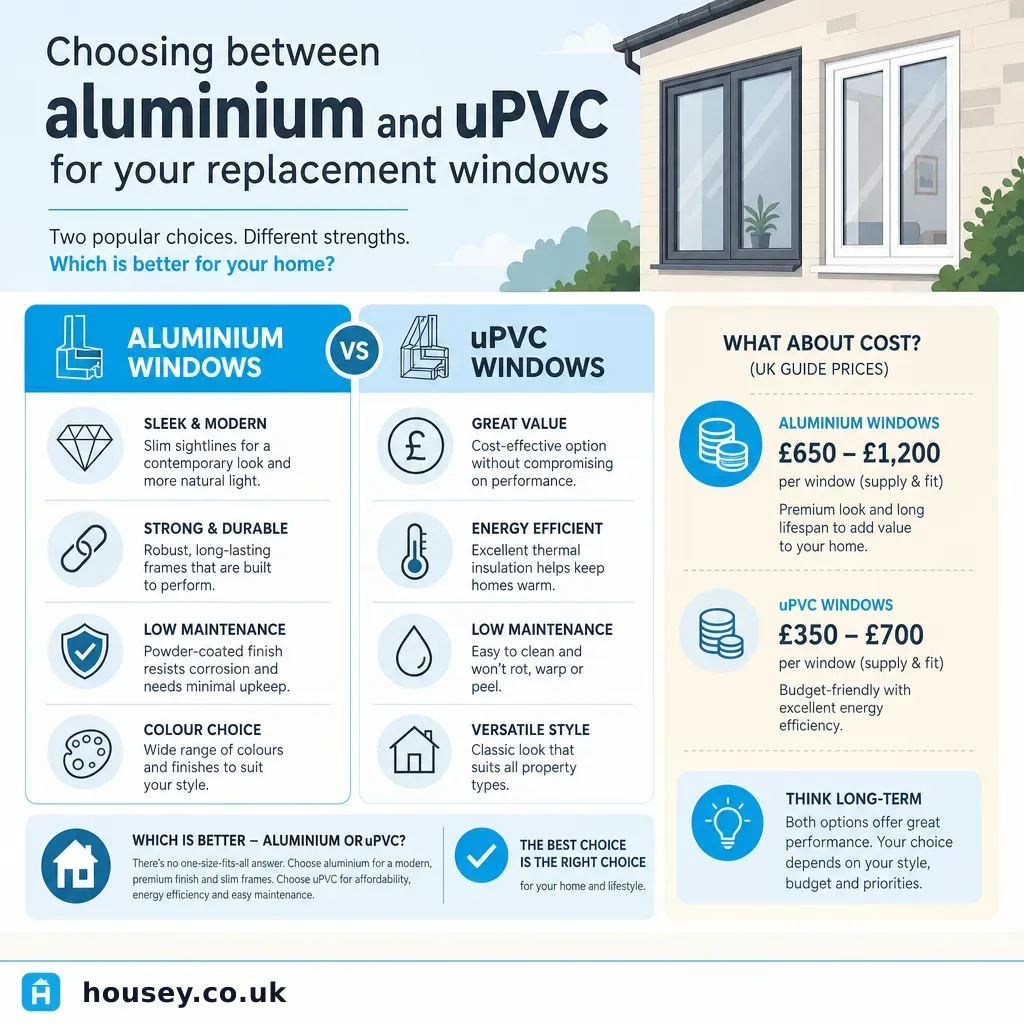
Choosing between aluminium and uPVC for your replacement windows
uPVC windows are typically the more affordable choice, offering good thermal performance and minimal maintenance, making them popular in most UK homes. Aluminium frames are slimmer, longer-lasting, and suit contemporary or period properties, but cost more. The right choice depends on your budget, property style, and how long you plan to stay.
 Improvement & Build
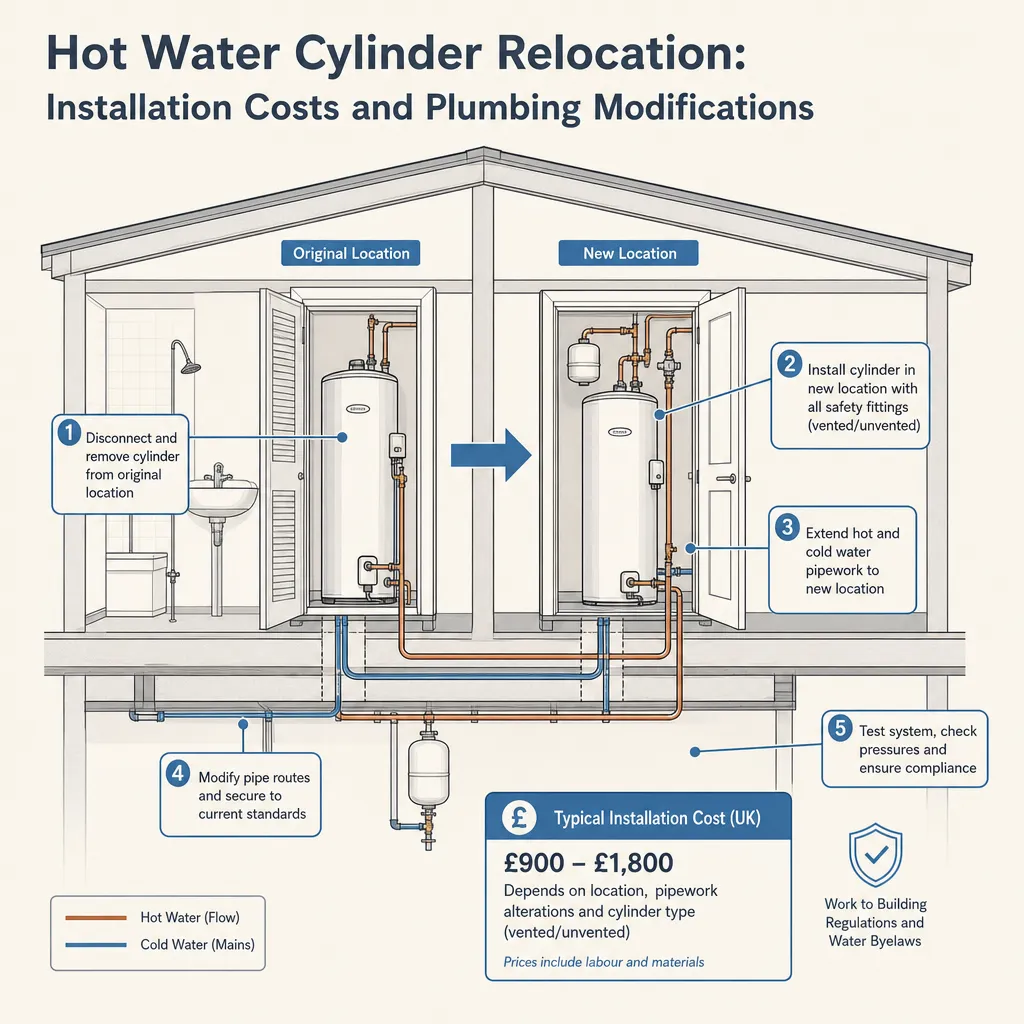
Hot Water Cylinder Relocation: Installation Costs and Plumbing Modifications
Relocating a hot water cylinder typically costs £800–£2,500 in the UK, depending on cylinder type, distance of the move, and the pipework involved. Unvented (pressurised) systems legally require a G3-qualified plumber and Building Regulations Part G notification. Vented systems are less regulated but still need a competent plumber for safe installation and commissioning.