Knowledge Base
Property advice that actually helps
Researched, UK-specific guides for every stage of homeownership — from buying and surveys to retrofit, planning and major works.
 Improvement & Build
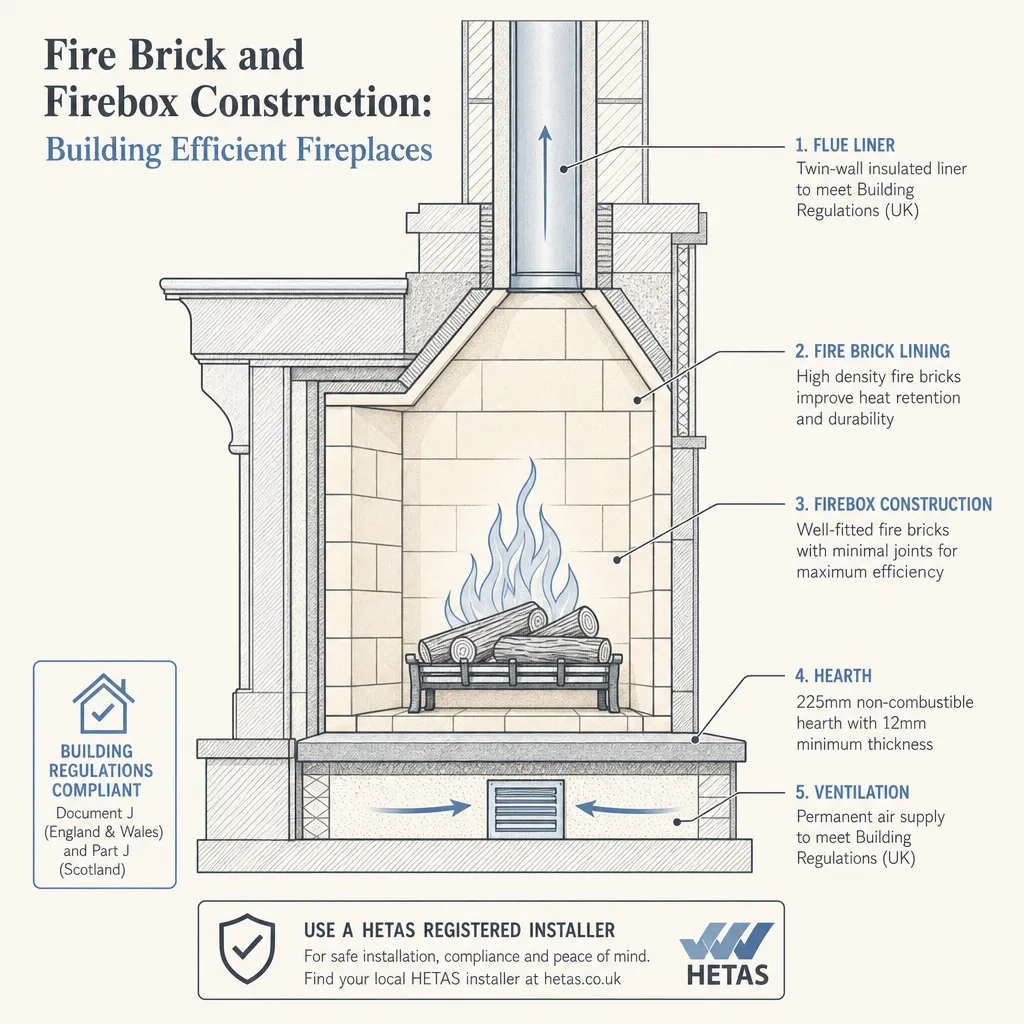
Fire Brick and Firebox Construction: Building Efficient Fireplaces
Building a firebox in the UK requires fire bricks rated for temperatures above 1,000°C and refractory mortar — not standard house bricks. Construction must comply with Building Regulations Approved Document J, including a hearth at least 125 mm thick projecting 300 mm in front of the opening. All installations must be notified to building control or carried out by a HETAS-registered installer.
 Improvement & Build
Evaluating your contractor's green credentials: what to look for
To evaluate a contractor's green credentials, ask for verifiable accreditation numbers rather than accepting marketing language. TrustMark, MCS, and PAS 2030 certifications are independently checked and publicly searchable. A valid waste carrier licence is a basic legal requirement for any contractor removing waste from your property — its absence is a clear red flag.
 Improvement & Build
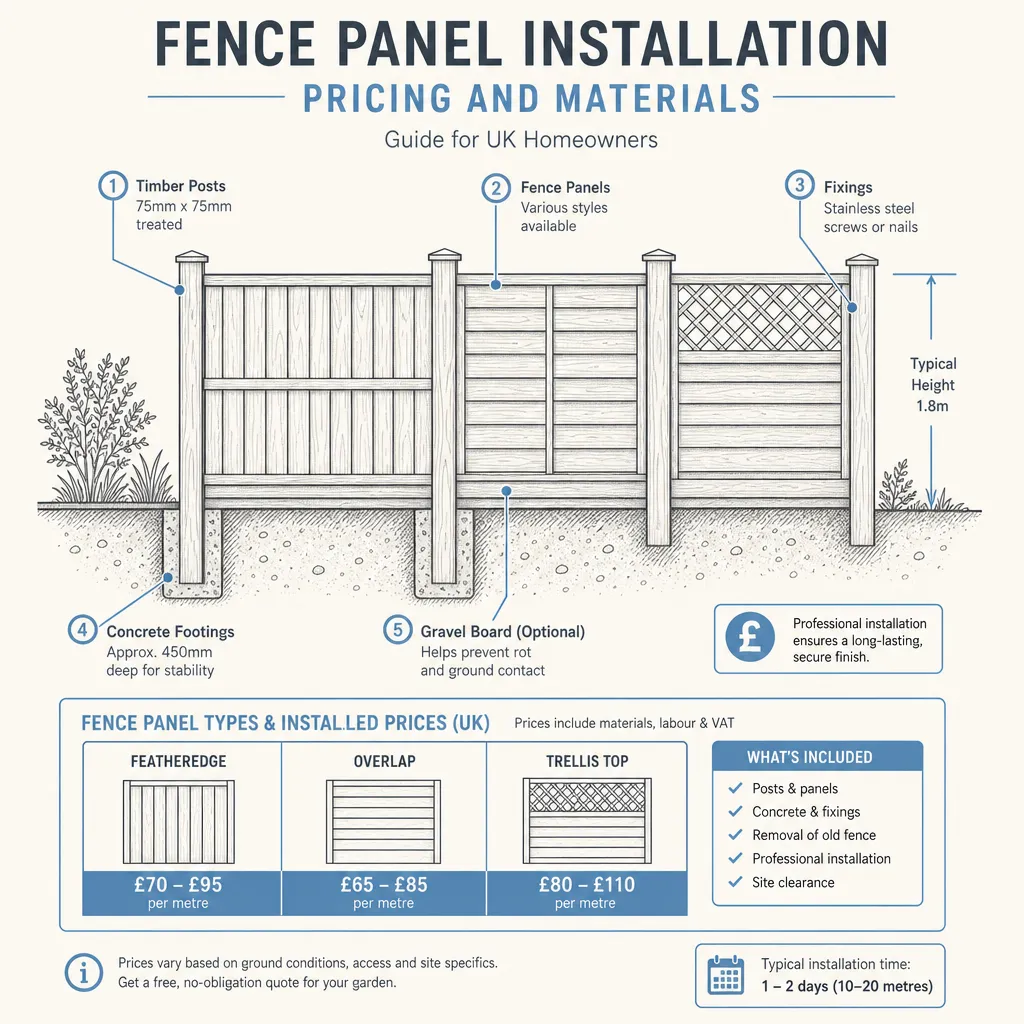
Fence Panel Installation Pricing and Materials
Fence panel installation in the UK typically costs £100–£250 per bay, including posts and labour, though close board and composite panels cost more. A typical 20-metre boundary with 6ft panels runs to £1,500–£3,500 installed. Most garden fencing under 2 metres does not need planning permission, though boundaries adjoining a highway are limited to 1 metre under permitted development rules.
 Improvement & Build
Choosing Between an Architect and Architectural Technologist
An architect (ARB-registered) and an architectural technologist (MCIAT) can both produce drawings for planning applications and building regulations submissions for most domestic projects. Choose an architect for design-led, complex, or listed building work. An architectural technologist is often more cost-effective for extensions and loft conversions where technical compliance is the primary requirement.
 Energy & Retrofit
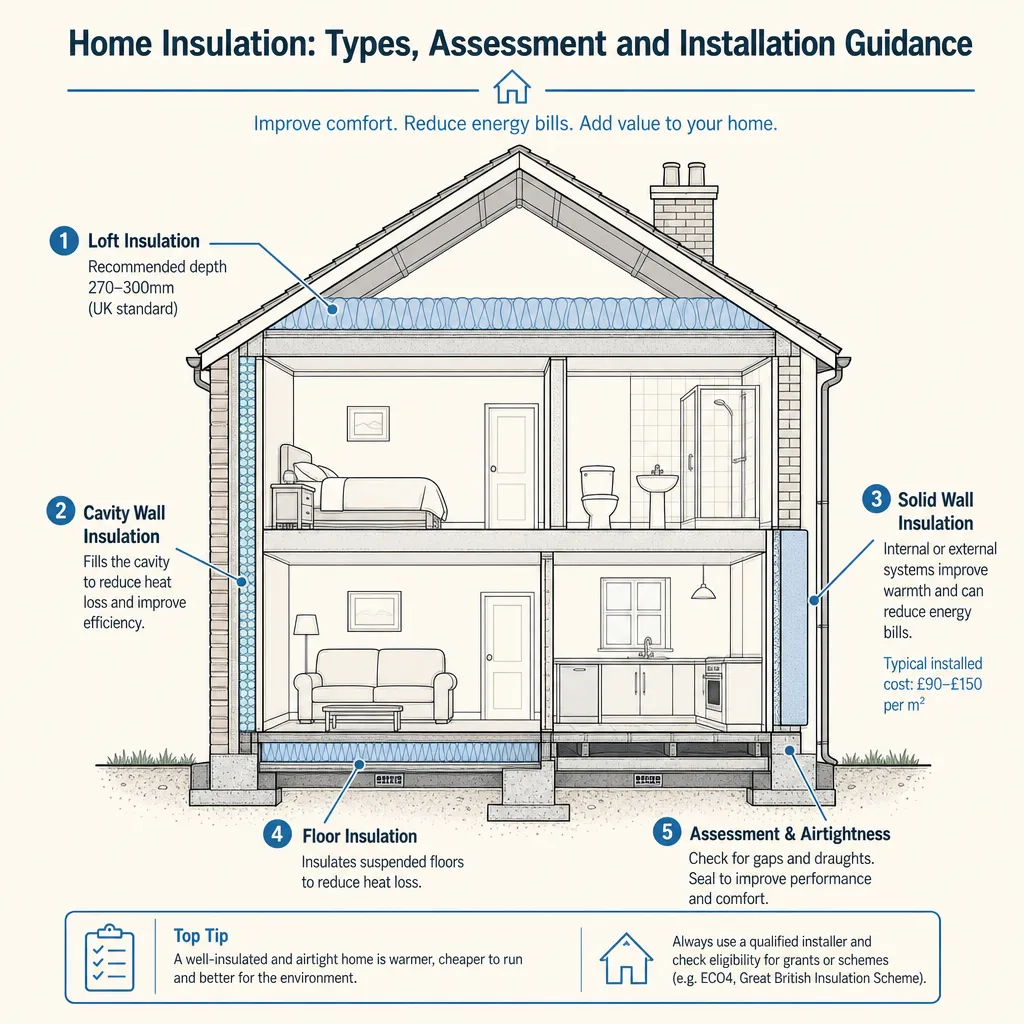
Home Insulation: Types, Assessment and Installation Guidance
Home insulation reduces heat loss through walls, roofs, and floors. The right type depends on your property's construction: cavity wall injection suits most post-1920 homes, solid walls need internal or external insulation, and loft mineral wool works for accessible pitched roofs. A professional assessment identifies the best approach and whether PAS 2035 compliance or grant funding applies.
 Improvement & Build
Garden Water Feature Design and Installation Costs
Garden water feature installation in the UK typically costs £300–£800 for a small self-contained fountain, rising to £3,000–£15,000 or more for a lined pond with filtration and edging. Key cost drivers include feature type, materials, pump specification, site access, electrical work, and whether groundworks are needed. Always obtain at least three quotes from qualified landscapers or garden designers.
 Energy & Retrofit
Government Warm Homes Scheme: Energy Upgrades and Support for UK Homeowners
The Warm Homes Plan coordinates several UK government energy upgrade schemes. The Warm Homes: Local Grant offers up to £15,000 for eligible fuel-poor households. The Boiler Upgrade Scheme gives £7,500 towards a heat pump. ECO4 and the Great British Insulation Scheme help lower-income households with insulation. Eligibility depends on income, EPC rating, tenure, and local authority area.
 Improvement & Build
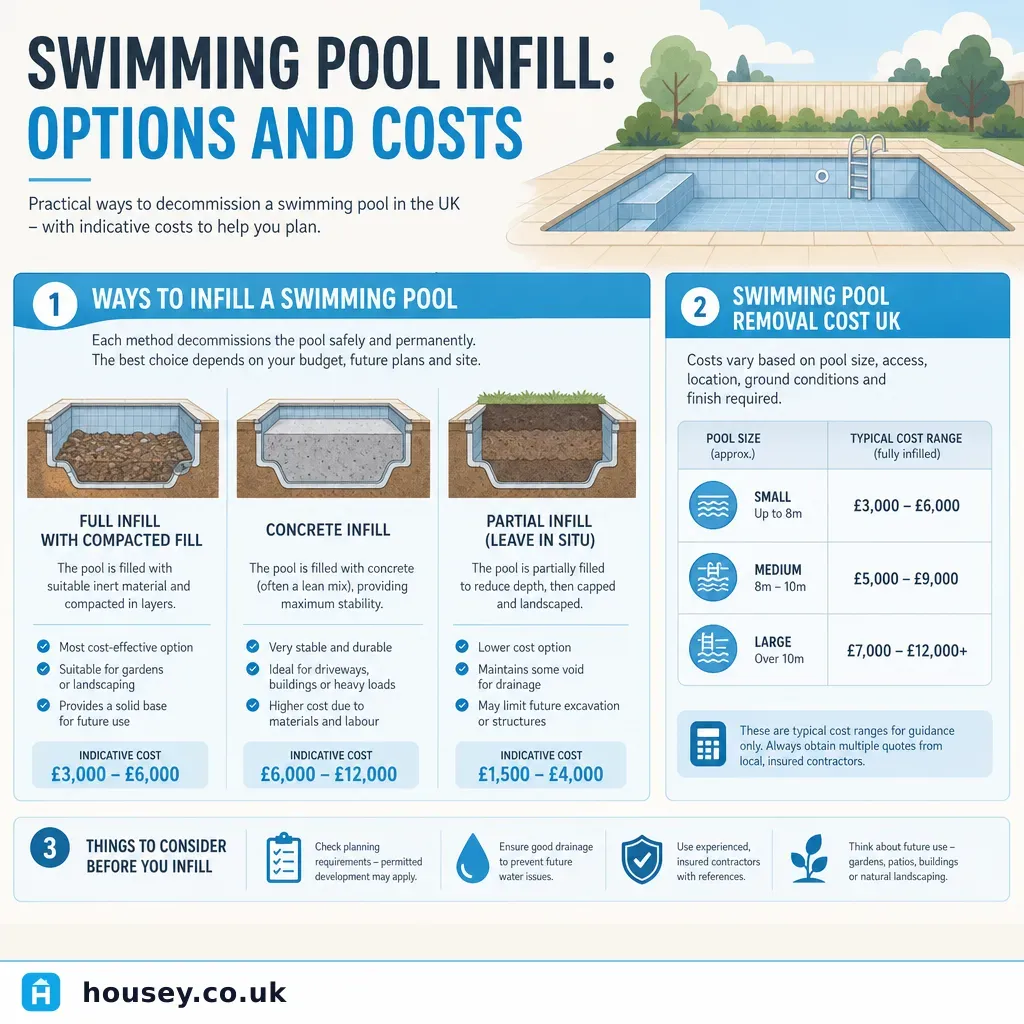
Swimming Pool Infill: Options And Costs
Filling in a UK swimming pool involves either partial infill — breaking the shell and backfilling in place — or full excavation and removal. Partial infill typically costs £2,000–£6,000; full removal and landscaping £10,000–£25,000 or more. Pools built before 2000 may contain asbestos — always arrange a professional survey before demolition. Planning permission is not usually required unless you plan to build over the filled site.
 Improvement & Build
Removing a Fireplace: Costs and Structural Considerations
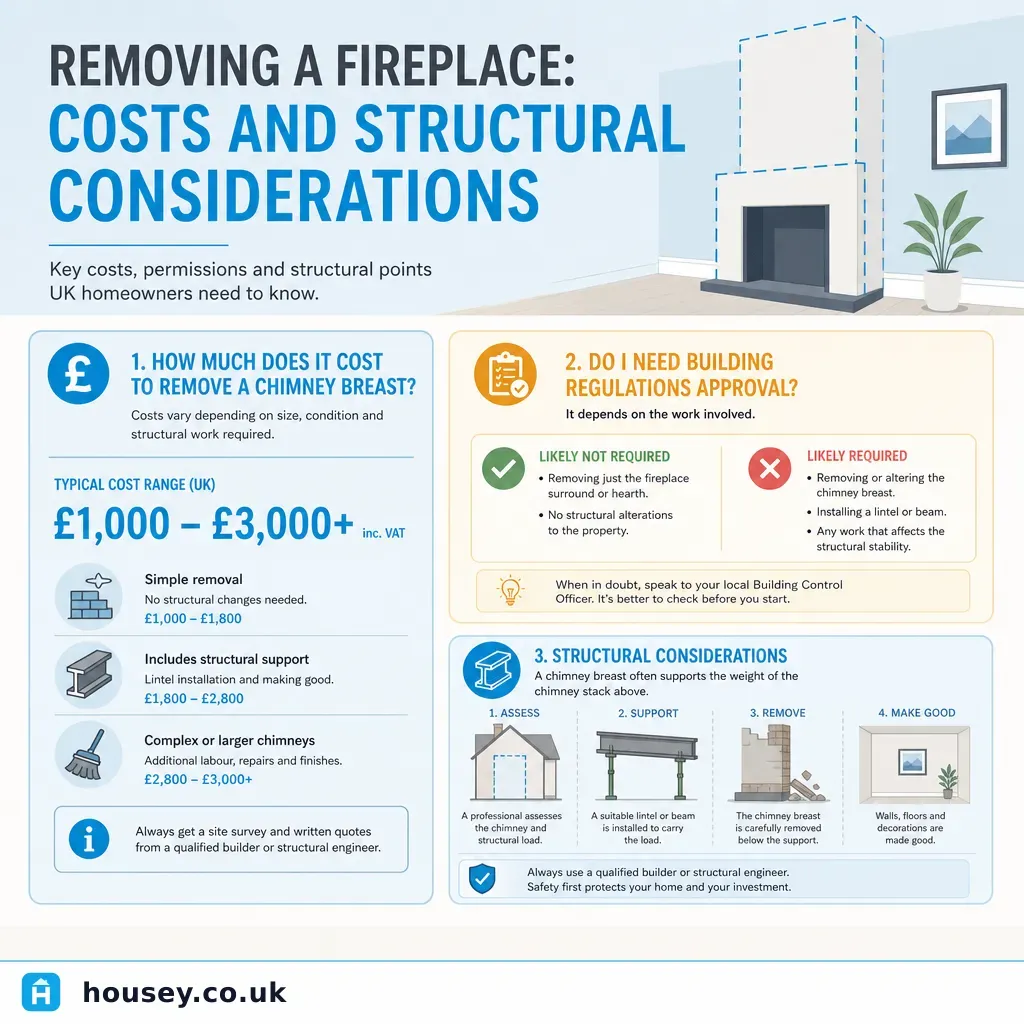
Removing a fireplace surround and hearth is generally non-structural and does not require Building Regulations approval. Removing a chimney breast is structural work requiring a Building Regulations application, a structural engineer's design, and building control inspection. Any gas appliance must first be disconnected by a Gas Safe registered engineer before any other work begins.
 Energy & Retrofit
Heat pump heating and cooling systems explained for homeowners
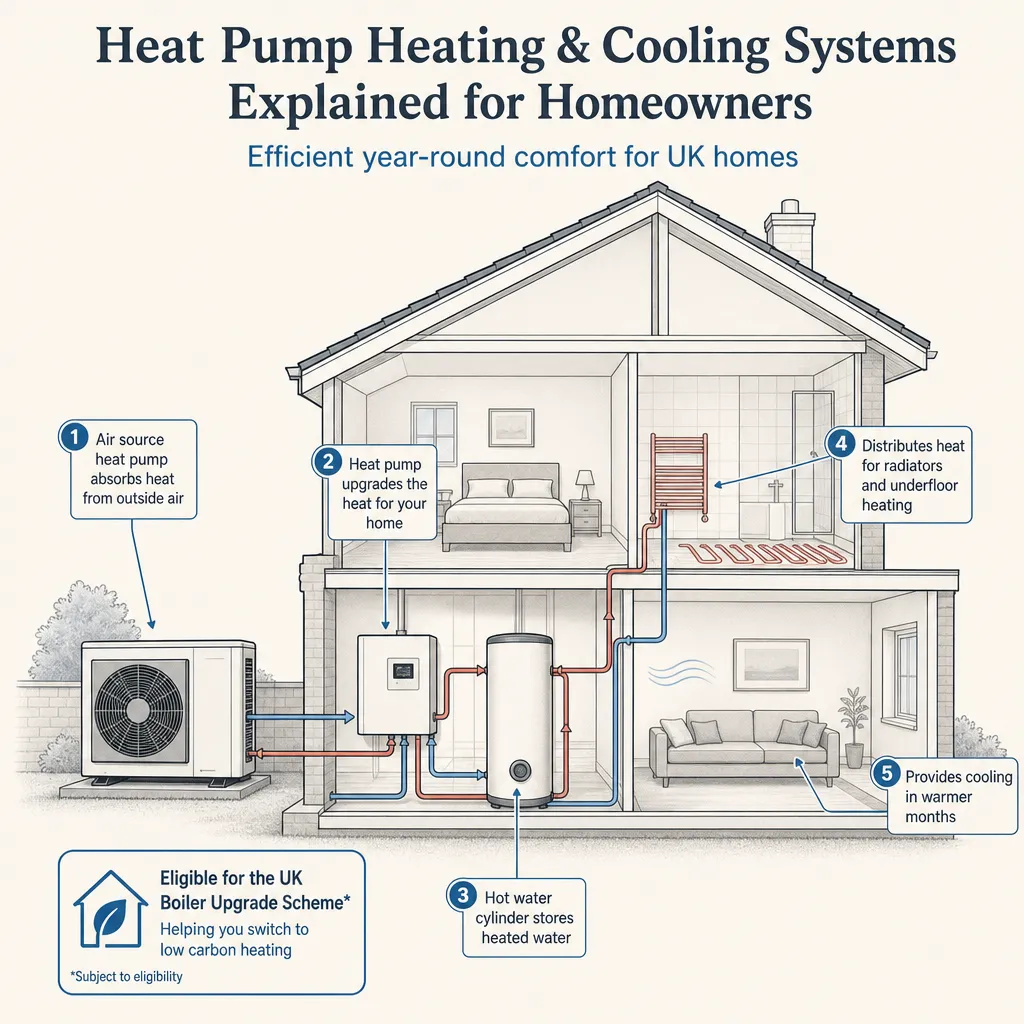
A heat pump extracts heat from air or ground and transfers it indoors for heating, and can reverse the process for cooling. Air source heat pumps (ASHPs) suit most UK homes; ground source (GSHPs) suit properties with adequate land. Both require a well-insulated home, correctly sized radiators or underfloor heating, and professional sizing to work efficiently.
 Improvement & Build
Macerating Toilet Installation and System Costs
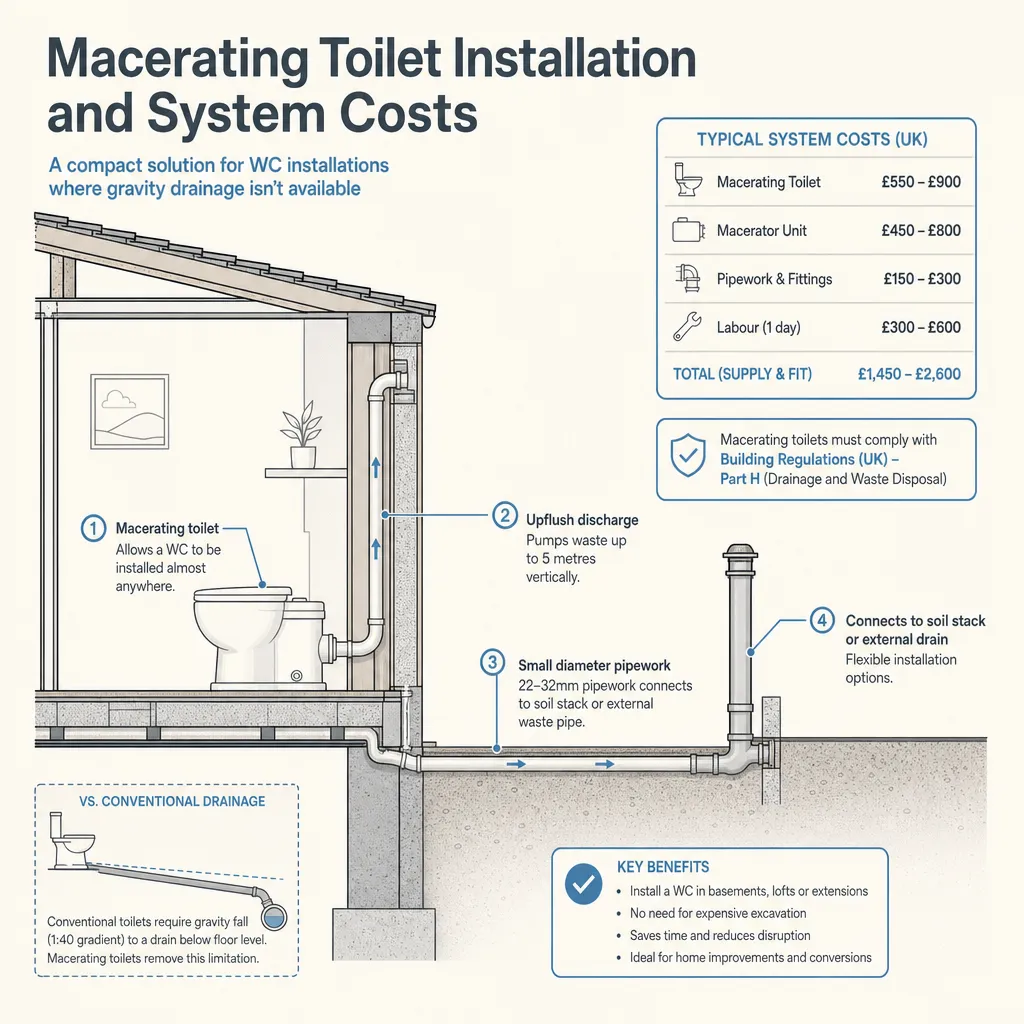
A macerating toilet uses a blade and pump to move waste through a narrow pipe without gravity drainage, making it suitable for basements, loft rooms, and outbuildings where conventional soil pipework would require major structural work. Installed costs in the UK typically range from £400 to £1,500, depending on system specification and the length of the discharge pipe run.
 Energy & Retrofit
Selecting the Right Insulation for Your Home: Types and Benefits
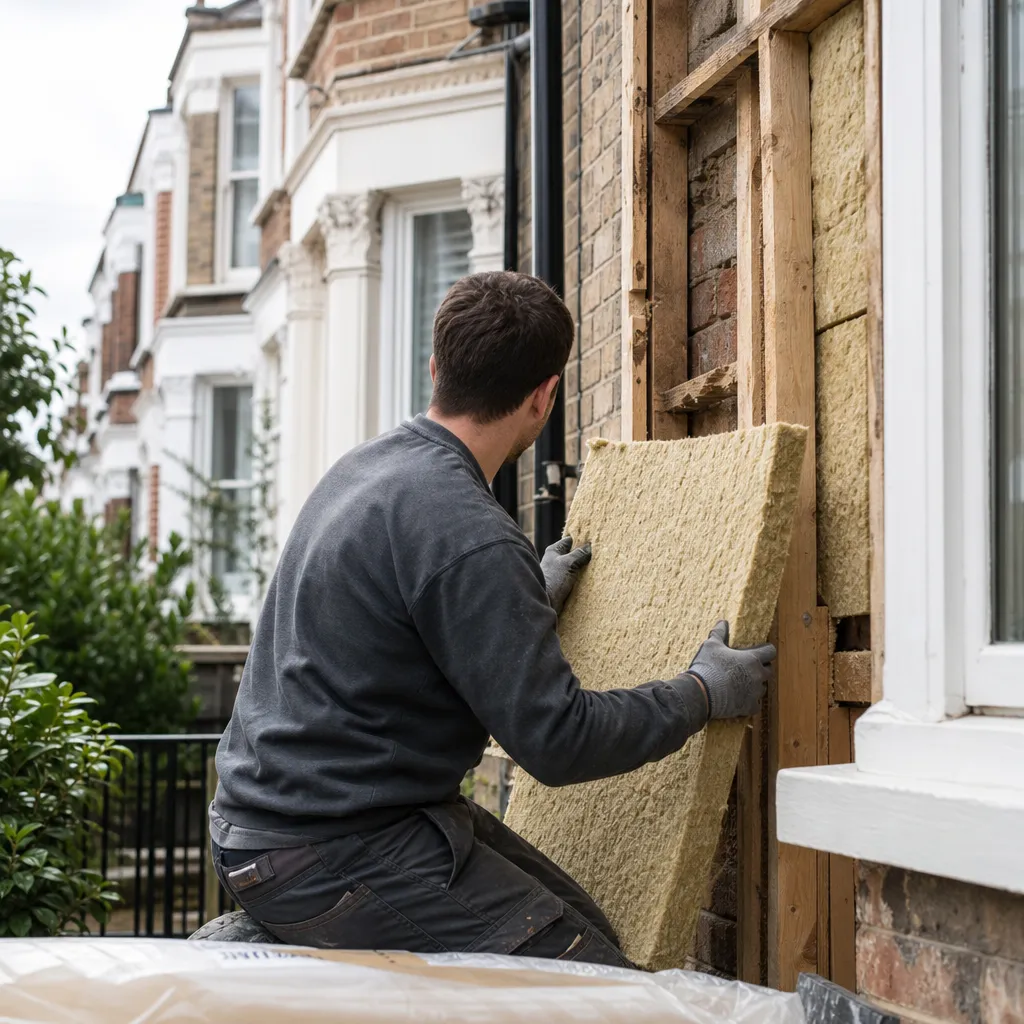
Most UK homes benefit from loft insulation (270mm mineral wool recommended), cavity wall fill for post-1920 properties, or solid wall insulation — either EWI or IWI — for Victorian and Edwardian homes. The right choice depends on your property's construction, condition, and budget. A retrofit assessor can identify the most cost-effective sequence.