Knowledge Base
Property advice that actually helps
Researched, UK-specific guides for every stage of homeownership — from buying and surveys to retrofit, planning and major works.
 Improvement & Build
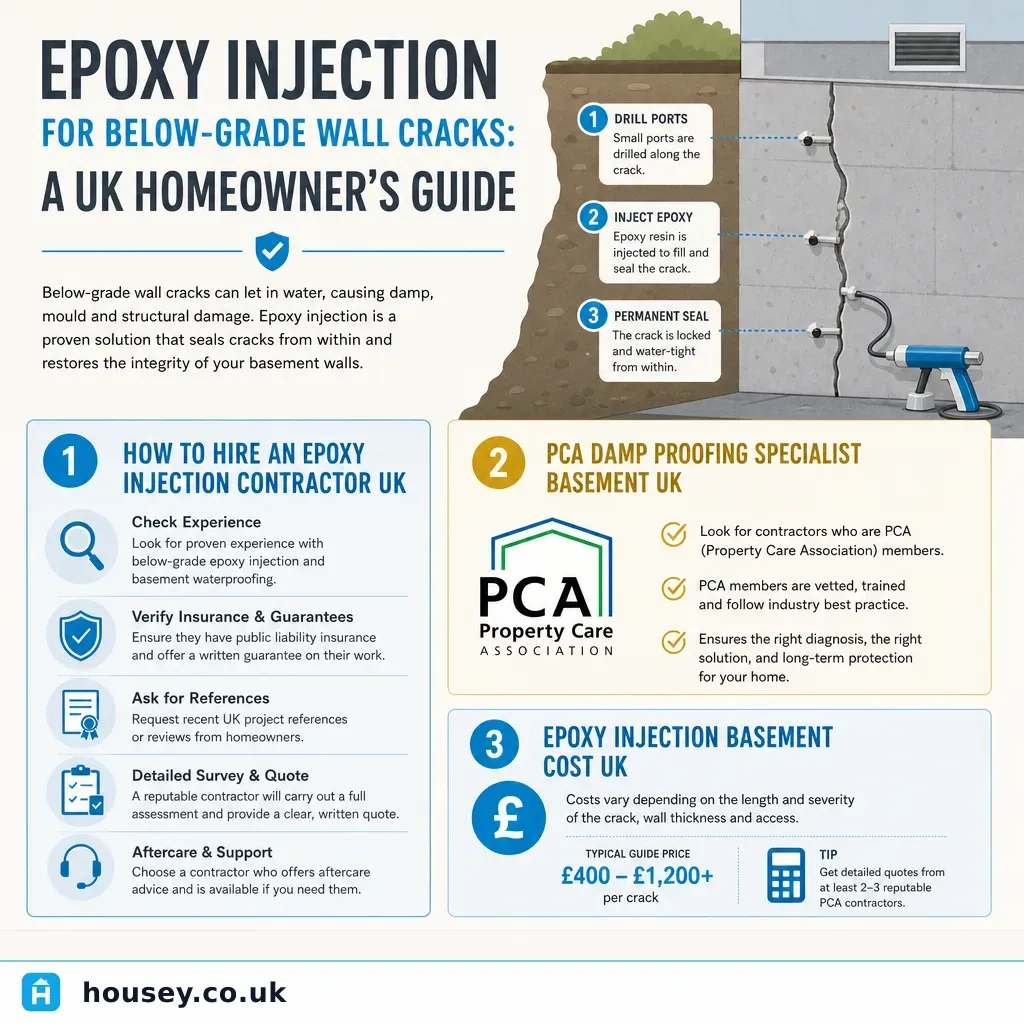
Epoxy Injection for Below-Grade Wall Cracks: A UK Homeowner's Guide
Epoxy injection seals stable, non-moving cracks in below-grade concrete walls but will not work on masonry, actively moving cracks, or as a standalone fix for habitable basement conversions. Before commissioning any works, a PCA-registered contractor should survey the crack, install monitoring gauges to confirm it is static, and produce a specification compliant with BS 8102:2022.
 Buying & Moving
Managing Property Relocation in Major Urban Centres
Urban house moves require planning beyond a standard removal, particularly around vehicle emission zone compliance, parking bay suspensions, and lift access in purpose-built flats. In London, a parking suspension typically needs two to three weeks' notice with your borough council, and the Congestion Charge and ULEZ daily charges are often not included in removals quotes — always confirm in writing before booking.
 Improvement & Build
Planting and Establishing Trees on Your Property
Trees planted in the right season (October to March for bare-root stock), in well-prepared ground, and with appropriate staking and aftercare will establish most successfully. Choosing species suited to your soil, space, and aspect matters as much as planting technique. Check for Tree Preservation Orders and any restrictive covenants before planting near boundaries or structures.
 Planning & Pre-Build
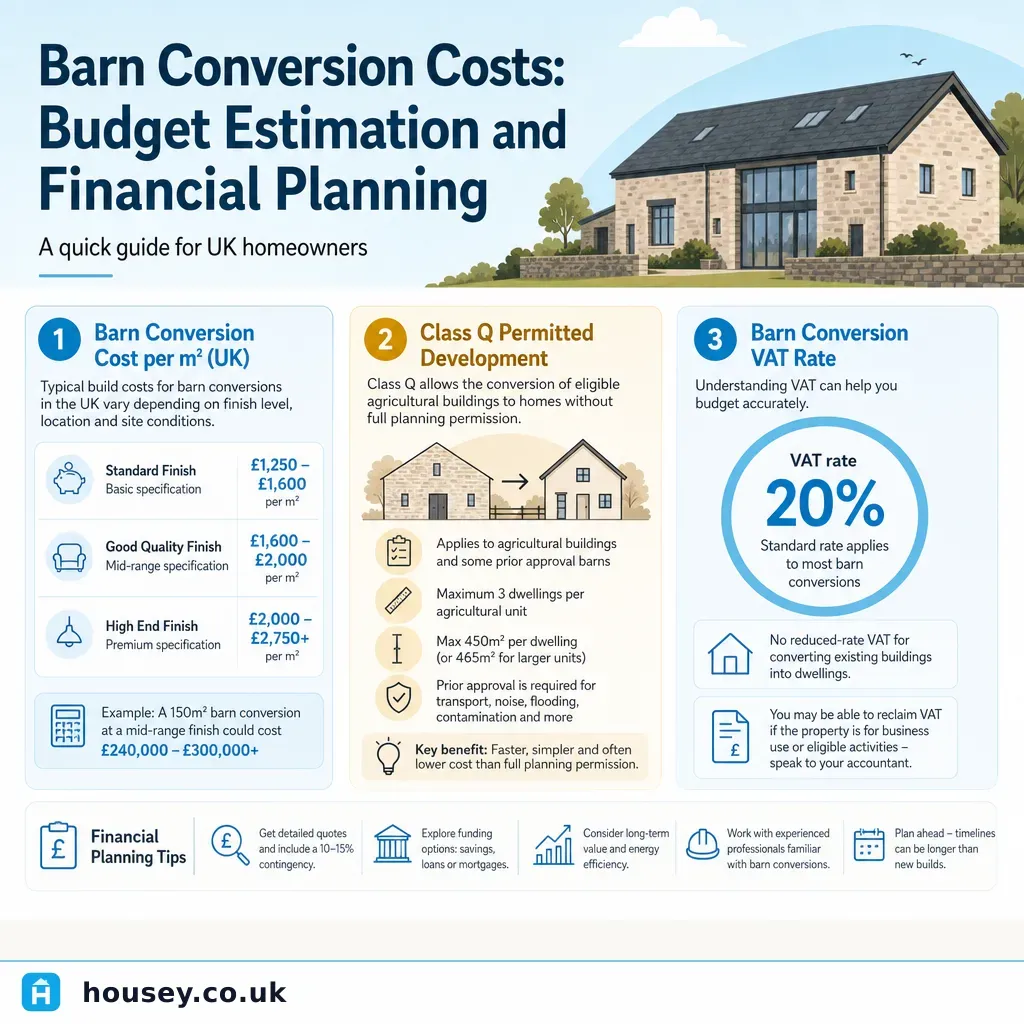
Barn Conversion Costs: Budget Estimation and Financial Planning
Barn conversions in the UK typically cost £1,500–£3,000 or more per square metre depending on structural condition, specification, and location. A 200 m² barn conversion might cost £350,000–£550,000 in construction alone before fees and contingency. Structural repairs, services connections, and insulation are the largest cost variables — always commission a structural survey before finalising any budget.
 Buying & Moving
What House Removers Do: Services, Process, and Costs
House removers load, transport, and unload your belongings between properties. Core services include vehicle hire, crew labour, and Goods in Transit insurance; packing, unpacking, storage, and specialist item handling are usually optional extras. A reputable company will conduct a pre-move survey to estimate volume and provide a written, itemised quote before moving day.
 Buying & Moving
Essential Guidance for Property Landlords and Investors
UK landlords must hold valid gas safety records, electrical installation condition reports, and energy performance certificates before letting a property. Deposits must be protected within 30 days, right to rent checks completed, and the current How to Rent guide provided. Tax rules, licensing requirements, and eviction grounds are all subject to ongoing regulatory change.
 Energy & Retrofit
Optimising Heating Systems for Energy Efficiency
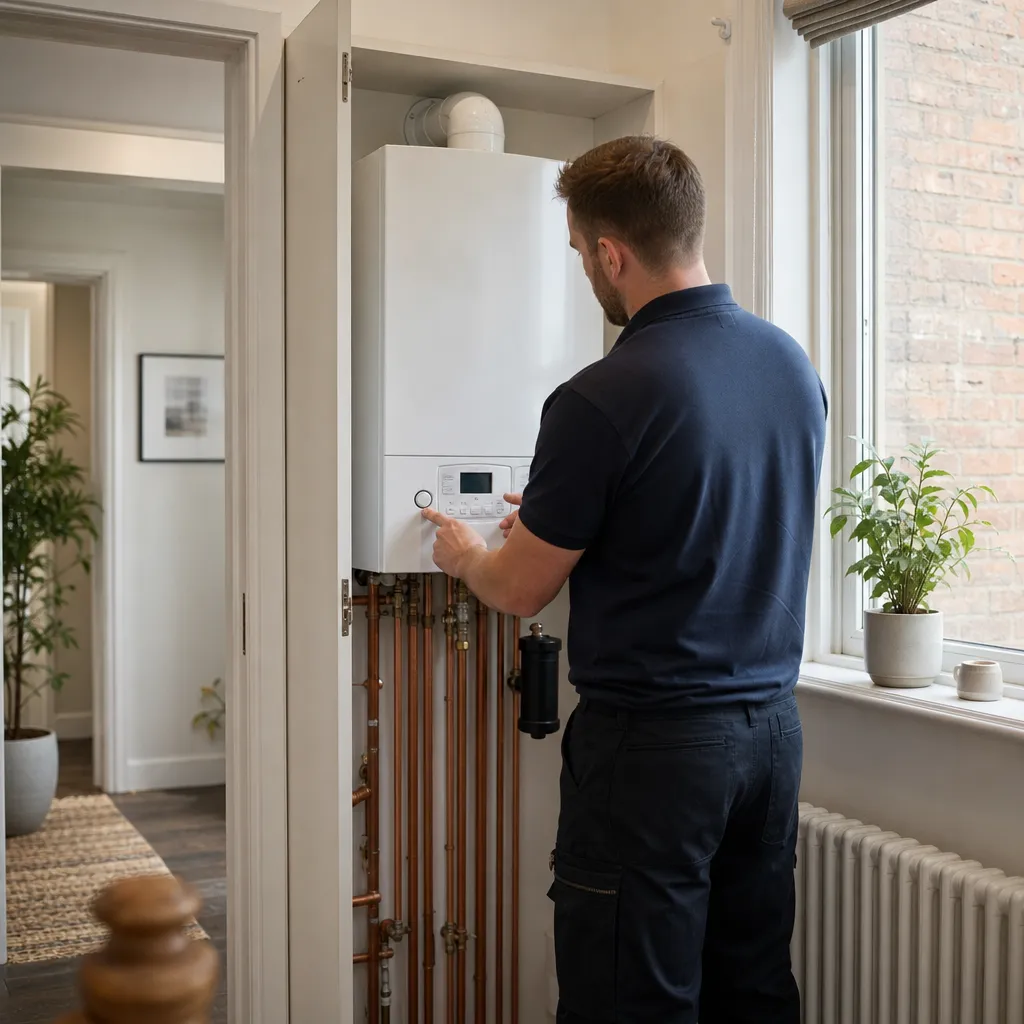
Optimising a UK heating system usually involves improving controls such as smart thermostats and thermostatic radiator valves, ensuring the boiler or heat pump is correctly sized, and upgrading radiators or pipework where needed. For gas boilers, annual servicing by a Gas Safe registered engineer is a legal requirement for rental properties. Heat pump installation requires a room-by-room heat loss calculation to BS EN 12831 before sizing.
 Surveys & Inspections
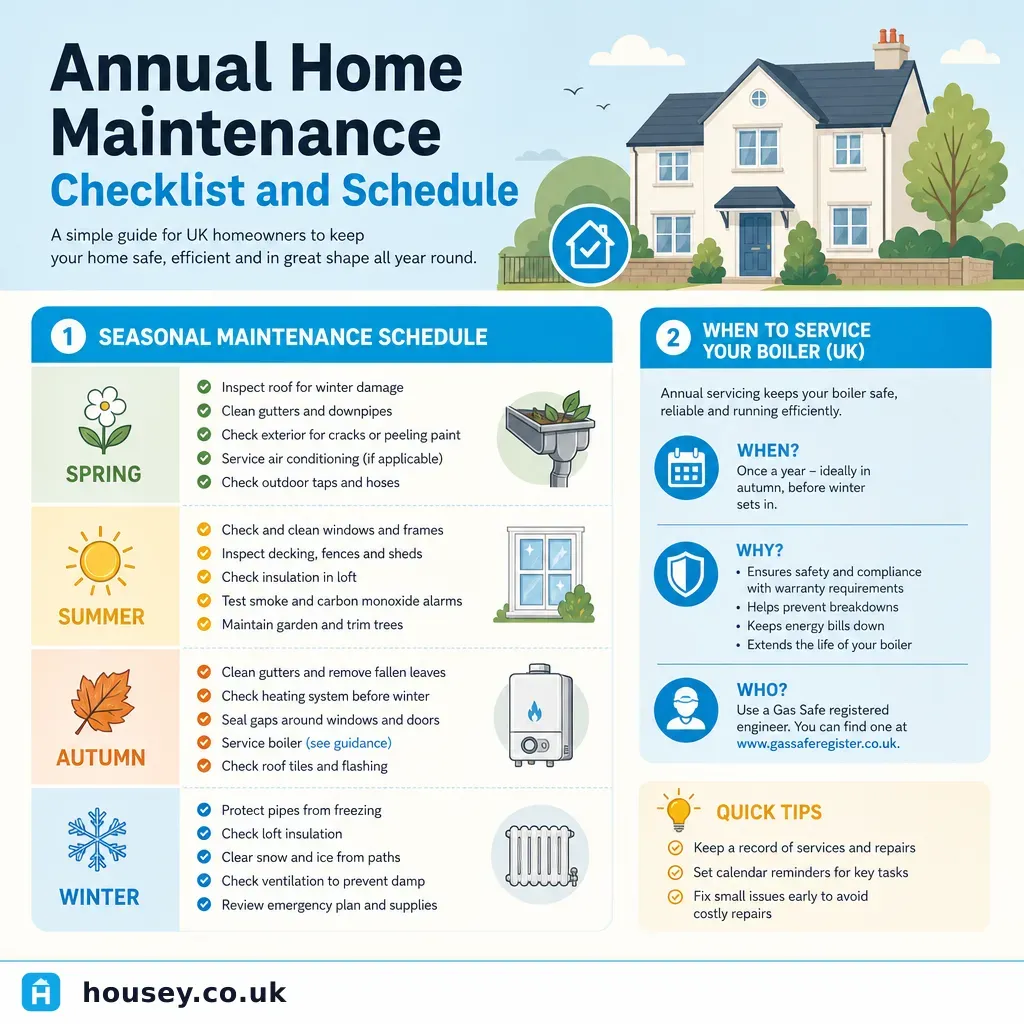
Annual Home Maintenance Checklist and Schedule
A structured annual maintenance schedule helps UK homeowners catch small problems before they become costly repairs. Key tasks include clearing gutters twice yearly, an annual boiler service by a Gas Safe registered engineer, pre-winter draught-proofing, and a post-winter roof and masonry inspection. A RICS survey every five years provides a professional baseline for monitoring your property's condition.
 Buying & Moving
Essential Steps to Selling Your Home Successfully
Selling your home successfully in the UK involves obtaining a valid EPC, choosing an estate agent or alternative method, instructing a solicitor or conveyancer early, and completing the Seller's Property Information Form accurately. Most sales in England and Wales take 4–6 months from listing to completion, with leasehold properties typically taking longer due to the management pack requirement.
 Planning & Pre-Build
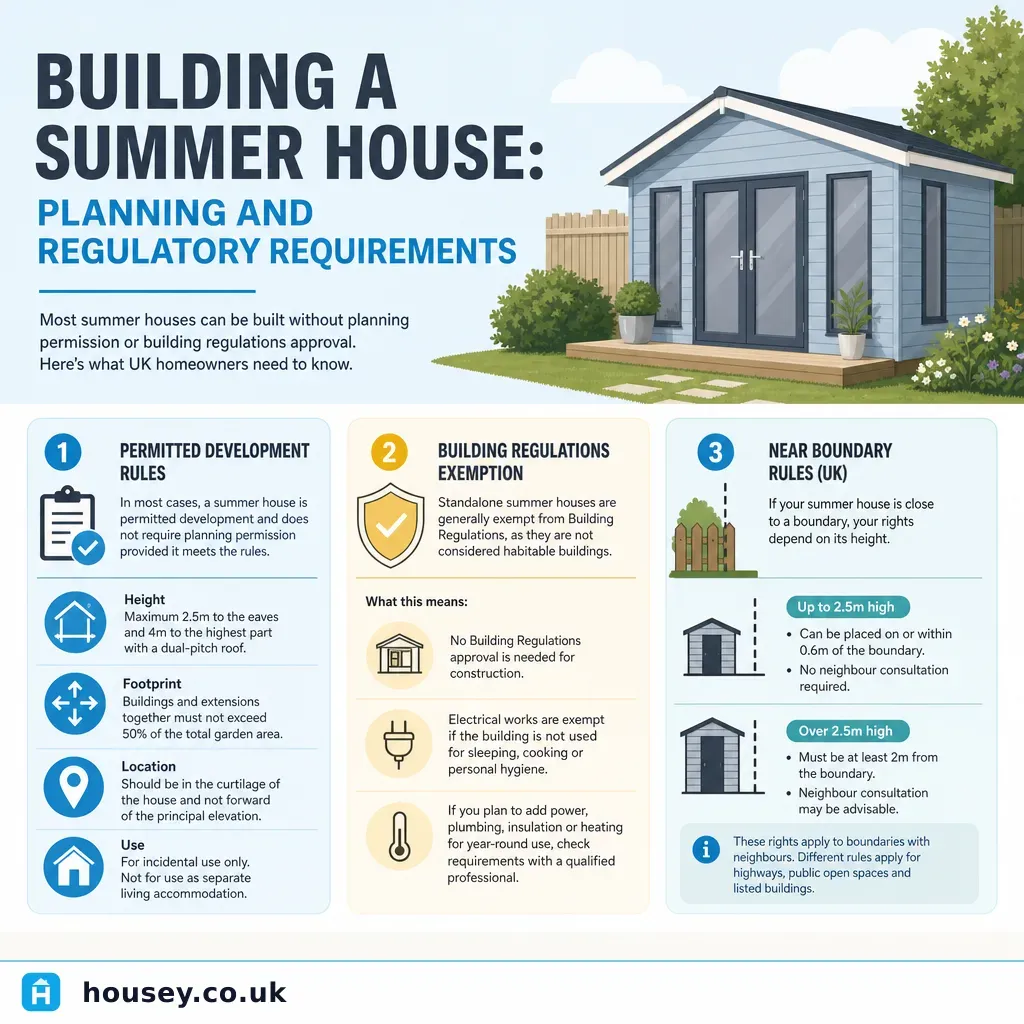
Building a Summer House: Planning and Regulatory Requirements
Most garden summer houses in England fall under Class E permitted development and need no planning permission, provided they are single-storey, within height limits, and not used for sleeping. Buildings under 15 m² are also exempt from building regulations. Conservation areas, listed buildings, and large-scale structures are the main exceptions to both rules.
 Buying & Moving
Conveyancing for Buy-to-Let Properties: A Landlord's Guide
Buy-to-let conveyancing follows the same legal process as any residential purchase but adds several layers: a 5% SDLT additional dwelling surcharge in England, review of any existing tenancy agreements, checking local authority licensing requirements, and ensuring buy-to-let mortgage conditions are correctly recorded. Instructing an experienced conveyancer is essential, and preparing identity, source of funds, and tenancy documents in advance speeds the process considerably.
 Energy & Retrofit
How Solar Water Heaters Work for Residential Properties
Solar water heaters use roof-mounted collectors to capture heat from sunlight and transfer it to a hot water cylinder via a fluid circuit. They can supply 40–60% of a typical UK household's annual hot water demand. Two main collector types are available — flat plate and evacuated tube — each suited to different roof conditions and UK climates.