Knowledge Base
Property advice that actually helps
Researched, UK-specific guides for every stage of homeownership — from buying and surveys to retrofit, planning and major works.
 Improvement & Build
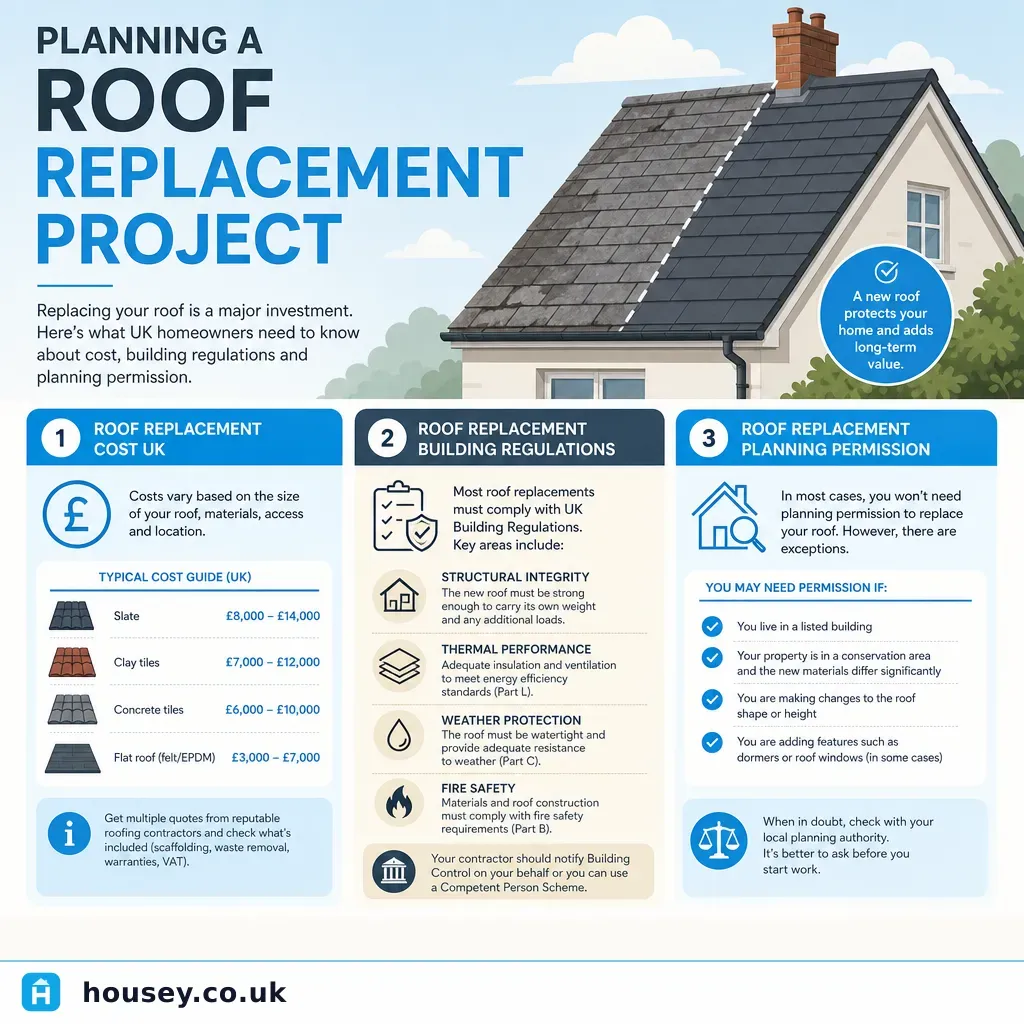
Planning a Roof Replacement Project
A roof replacement project involves stripping the existing covering, renewing the sarking felt and battens, and laying new tiles, slates, or a flat-roof membrane. Most like-for-like replacements fall under permitted development, but Building Regulations approval is needed if more than 25% of the roof area is renewed. Getting at least three itemised quotes — with scaffold costs clearly included — is essential.
 Energy & Retrofit
Thermal Insulation Strategies for Concrete Wall Systems
Concrete walls can be insulated using three main approaches: external wall insulation (EWI), internal wall insulation (IWI), or — where a cavity exists — cavity fill. EWI is generally preferred for solid concrete construction as it avoids condensation risk on the inner wall face, preserves floor area, and treats structural cold bridges. Each option carries different costs, planning implications, and moisture-management requirements.
 Planning & Pre-Build
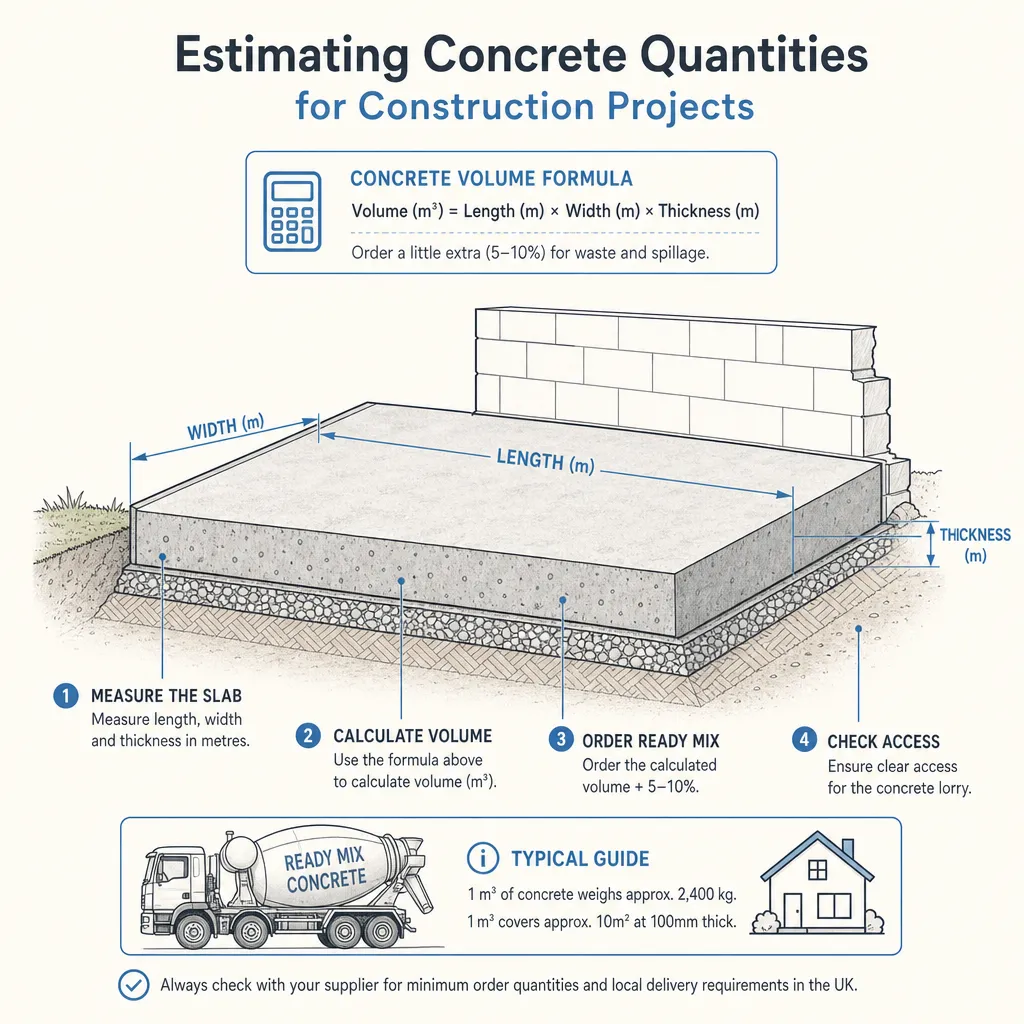
Estimating Concrete Quantities for Construction Projects
To estimate concrete quantities, calculate the volume in cubic metres (length × width × depth), then add a 5–10% wastage allowance. Ready-mix concrete is ordered by the cubic metre; site-mixed concrete requires separate weight-based calculations. Always confirm the mix specification with your structural engineer or building control officer before ordering.
 Surveys & Inspections
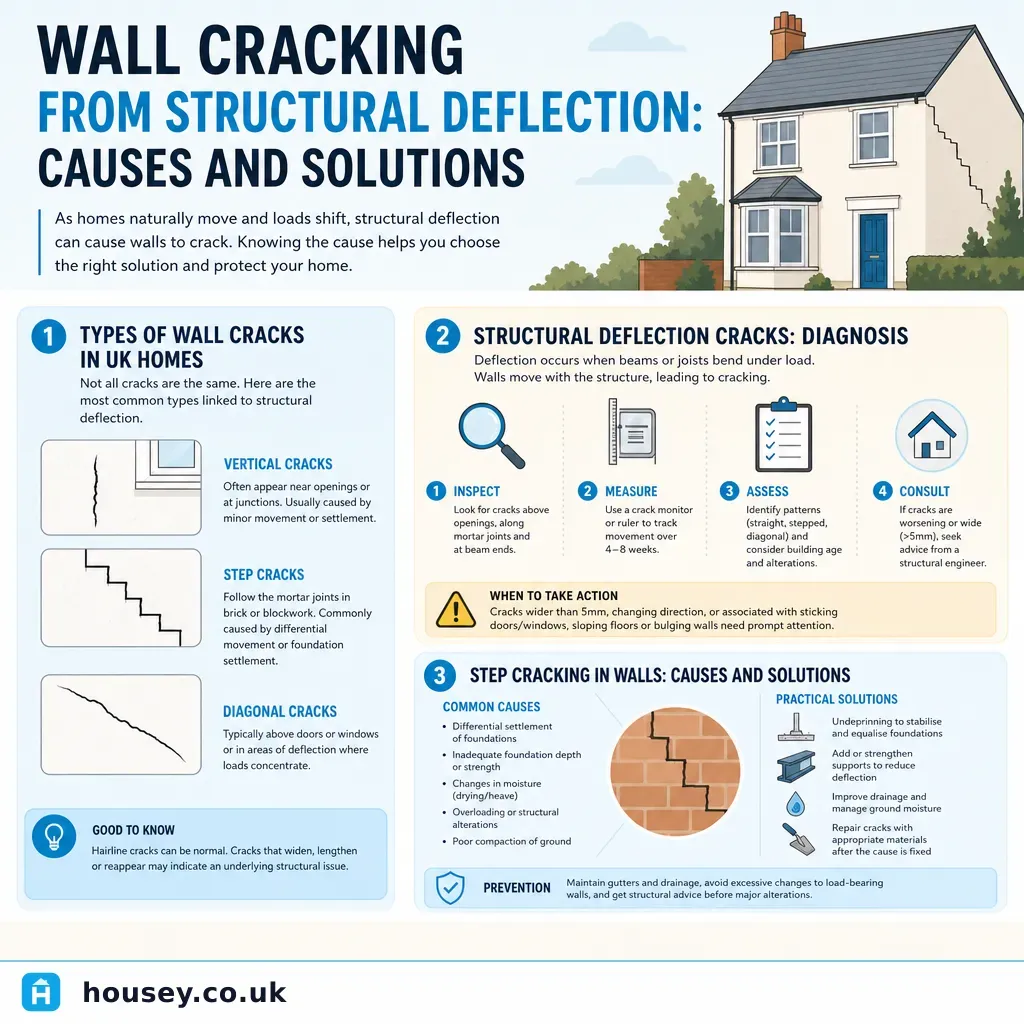
Wall Cracking from Structural Deflection: Causes and Solutions
Structural deflection occurs when a beam, floor, or lintel sags under load, transferring stress into surrounding masonry and causing characteristic cracks. Step cracking through mortar joints often indicates differential settlement; horizontal cracking at regular intervals in an outer brick leaf may signal wall-tie failure. Cracks wider than 5 mm or those that are widening warrant assessment by a RICS surveyor or structural engineer.
 Surveys & Inspections
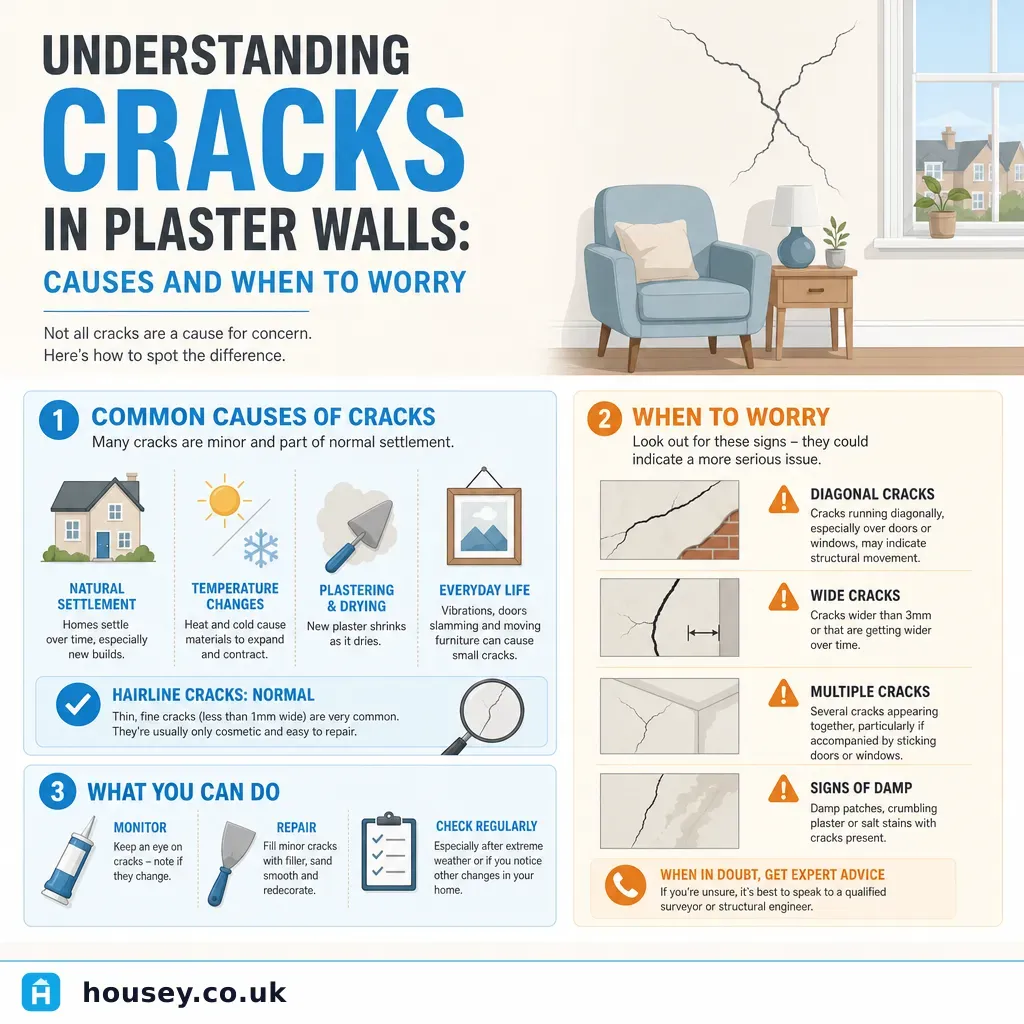
Understanding Cracks in Plaster Walls: Causes and When to Worry
Most hairline plaster cracks are cosmetic, caused by seasonal shrinkage or minor settlement. Cracks wider than 5 mm, diagonal cracks from window or door openings, stepped cracks through mortar joints, or cracks accompanied by sticking doors need professional assessment. A RICS-qualified surveyor or structural engineer can distinguish cosmetic movement from structural concern.
 Improvement & Build
Window Types for Homes: A Comprehensive Overview
UK homes use several main window styles: casement (outward-swinging), sash (vertically sliding), tilt-and-turn, fixed light, and bay or bow. The right choice depends on property age, planning constraints, and performance requirements. All replacement glazing must meet Building Regulations Part L; FENSA-registered installers can self-certify compliance. Conservation areas and listed buildings have additional restrictions.
 Improvement & Build
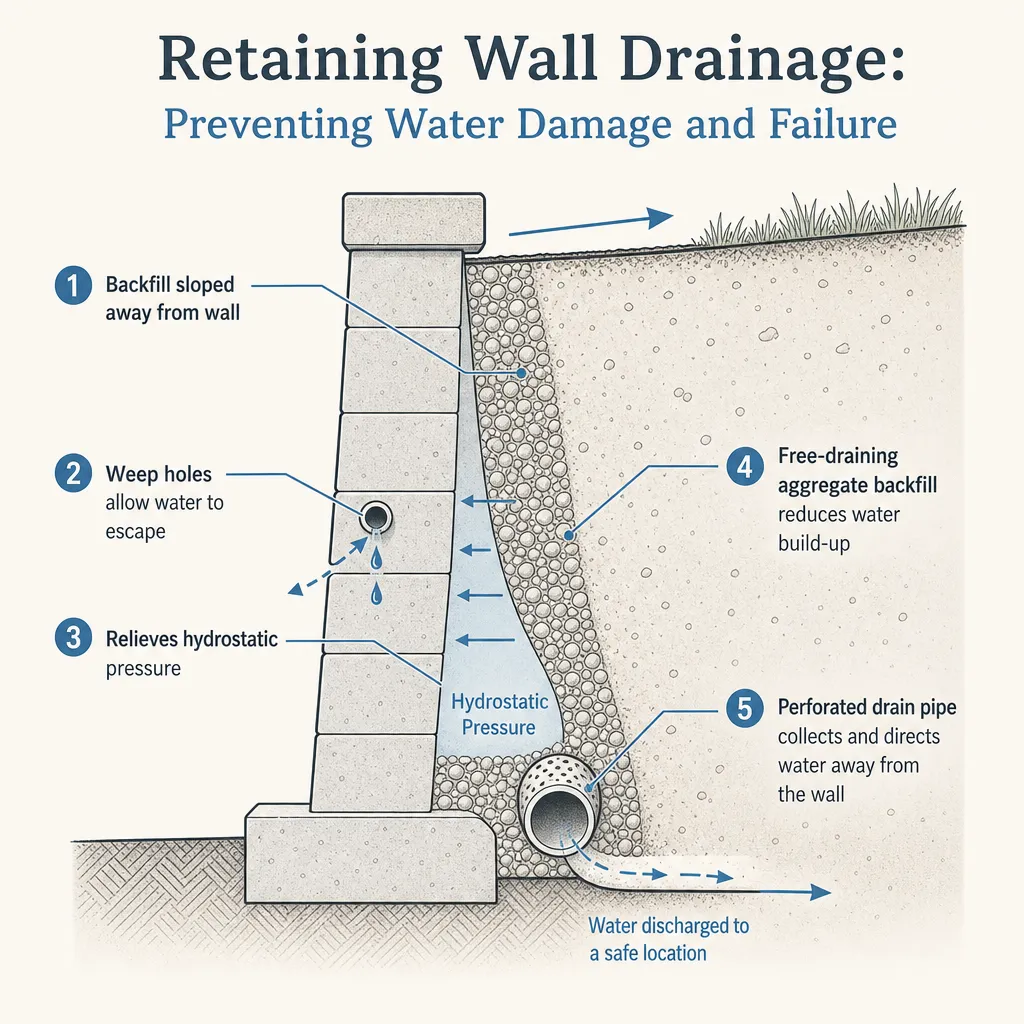
Retaining Wall Drainage: Preventing Water Damage and Failure
Retaining wall drainage fails when hydrostatic pressure builds behind the structure due to poor drainage layers, blocked weep holes, or impermeable backfill. A French drain with granular aggregate, geotextile filter fabric, and weep holes is the standard solution. Walls over about one metre in retained height should be assessed by a structural or geotechnical engineer before building or modifying.
 Energy & Retrofit
Improving thermal efficiency of sliding glass doors in your home
Sliding glass doors lose heat through the glazing unit, the frame, and air gaps in worn seals. Replacing worn brush seals is the cheapest first step; fitting a replacement door with a whole-door U-value of 1.4 W/m²K or better satisfies Building Regulations Part L requirements for replacement doors in existing dwellings in England.
 Planning & Pre-Build
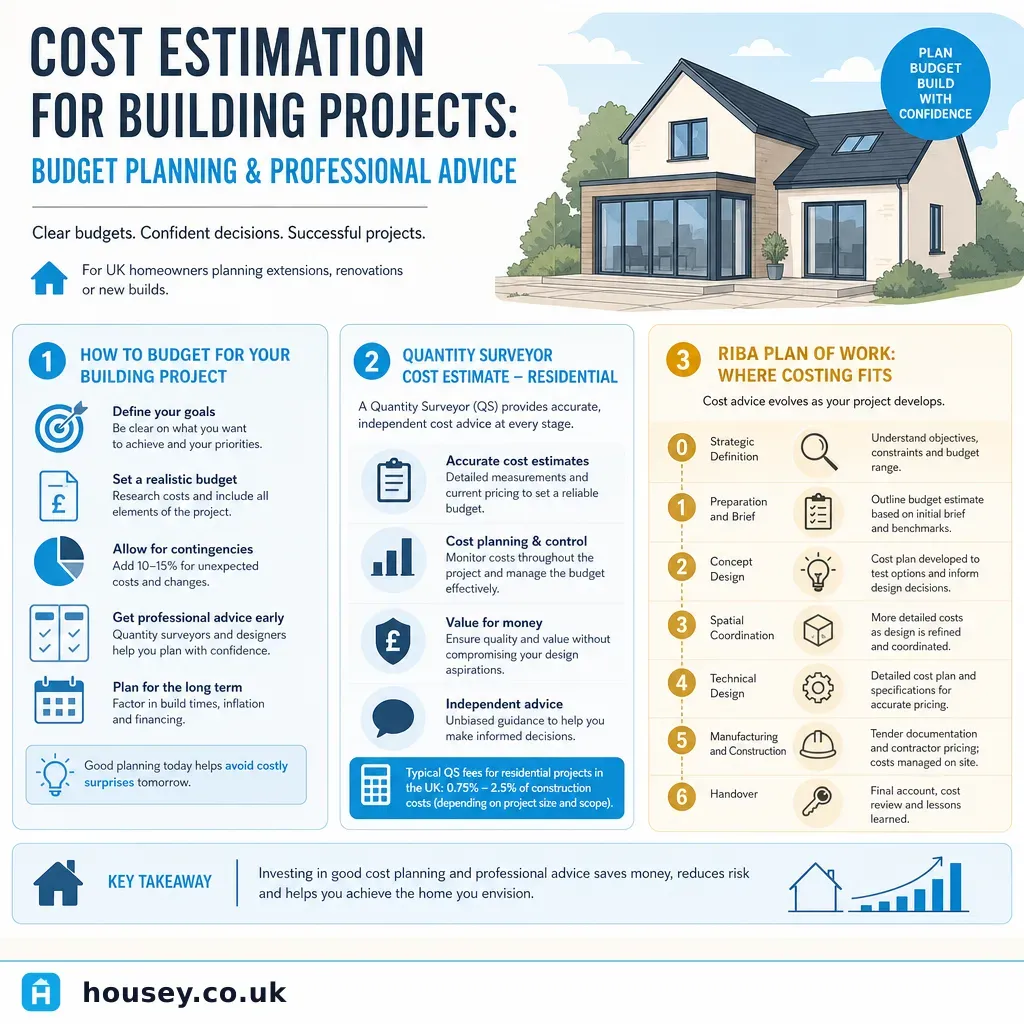
Cost Estimation for Building Projects: Budget Planning and Professional Advice
Build cost estimation involves calculating likely expenditure across design, materials, labour, fees, and contingency before committing to a project. In the UK, a quantity surveyor or cost consultant can produce a formal cost plan at RIBA Plan of Work stages, giving you a reliable budget before you apply for planning permission or appoint a contractor.
 Improvement & Build
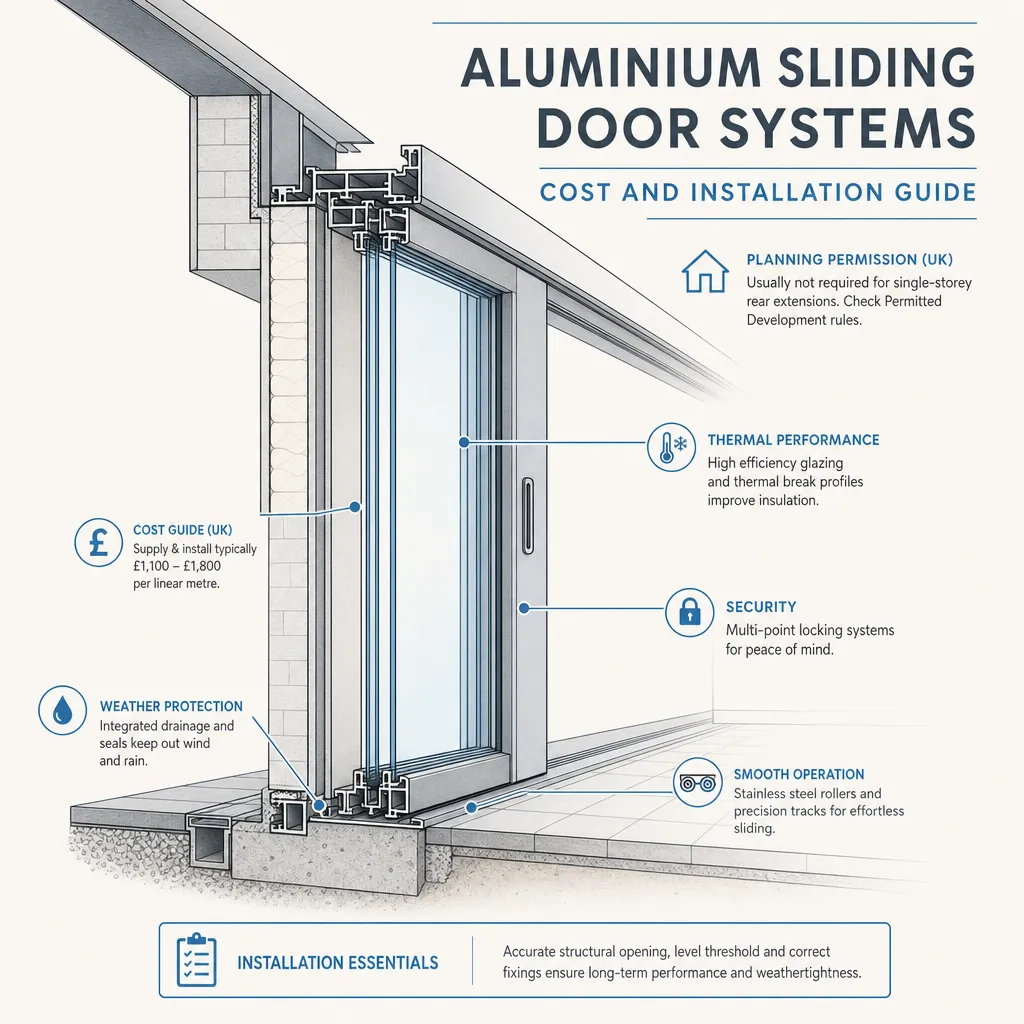
Aluminium Sliding Door Systems: Cost and Installation Guide
Aluminium sliding doors typically cost £2,500–£7,000 supply and fitted for a standard opening. Most rear installations fall under permitted development rights and do not need planning permission, but Building Regulations Part L applies: the glazed unit must achieve a U-value of no more than 1.6 W/m²K. Use a FENSA or CERTASS-registered installer to self-certify compliance.
 Improvement & Build
Installing Peel-And-Stick Wallpaper: Application Techniques
Peel-and-stick wallpaper works best on smooth, emulsion-painted walls cured for at least 30 days, in rooms between 13°C and 30°C. Mark a plumb vertical guide line before starting, peel backing gradually as you work downward, and smooth from the centre outward with a squeegee. Always test adhesion on a small area first, especially in rented properties.
 Improvement & Build
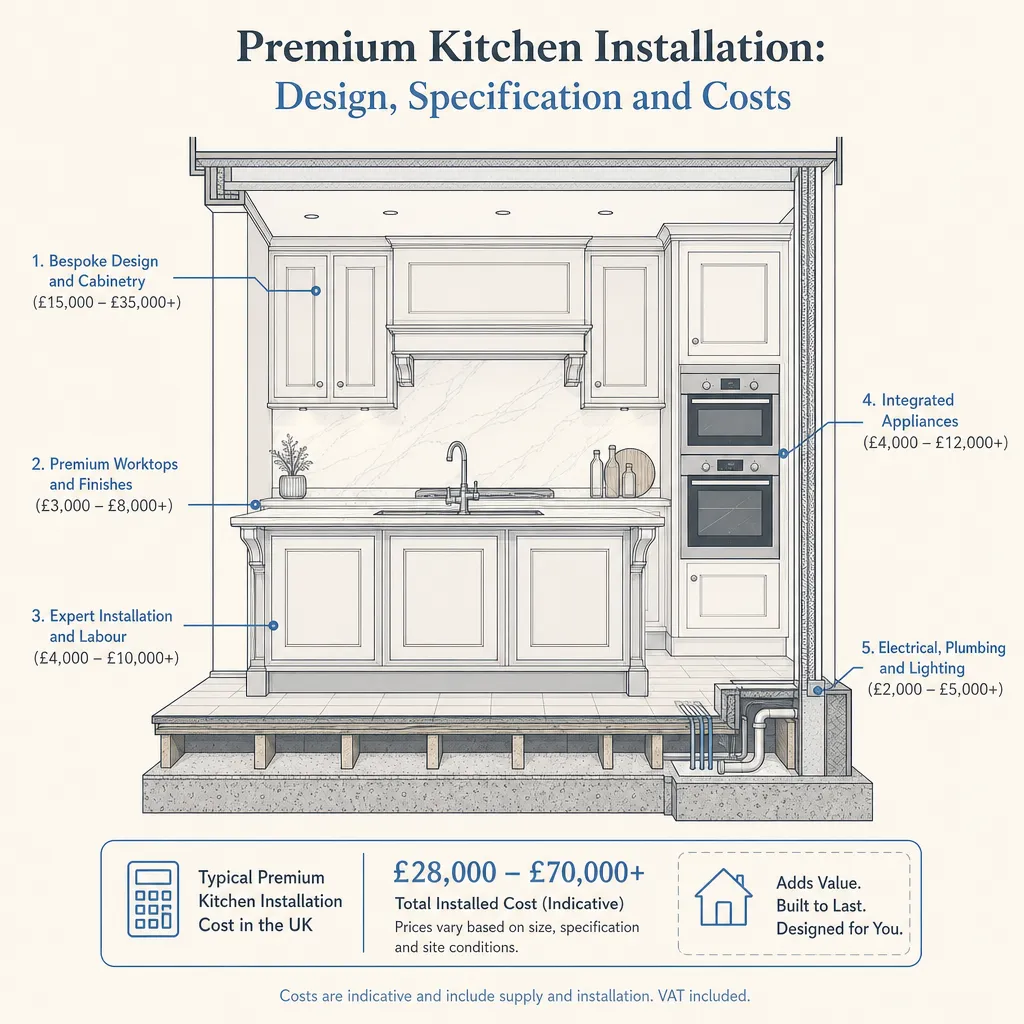
Premium Kitchen Installation: Design, Specification and Costs
A premium kitchen in the UK typically costs £20,000–£80,000 or more installed, depending on cabinetry specification, worktop material, appliance brands, and whether structural changes are needed. Bespoke in-frame kitchens with stone worktops and integrated premium appliances sit at the higher end. Lead times for bespoke cabinetry run 8–16 weeks, so early planning is essential.