Knowledge Base
Property advice that actually helps
Researched, UK-specific guides for every stage of homeownership — from buying and surveys to retrofit, planning and major works.
 General property advice
Mortgage Advice After Rate Changes: Financial Planning for Homeowners
When mortgage rates change, homeowners on tracker or standard variable rate mortgages feel the impact immediately, while those on a fixed deal are protected until the term ends. Review your options around six months before your current deal expires, compare fixed and tracker products, and speak to a regulated whole-of-market broker. Acting early can protect you from reverting to a costly standard variable rate.
 Energy & Retrofit
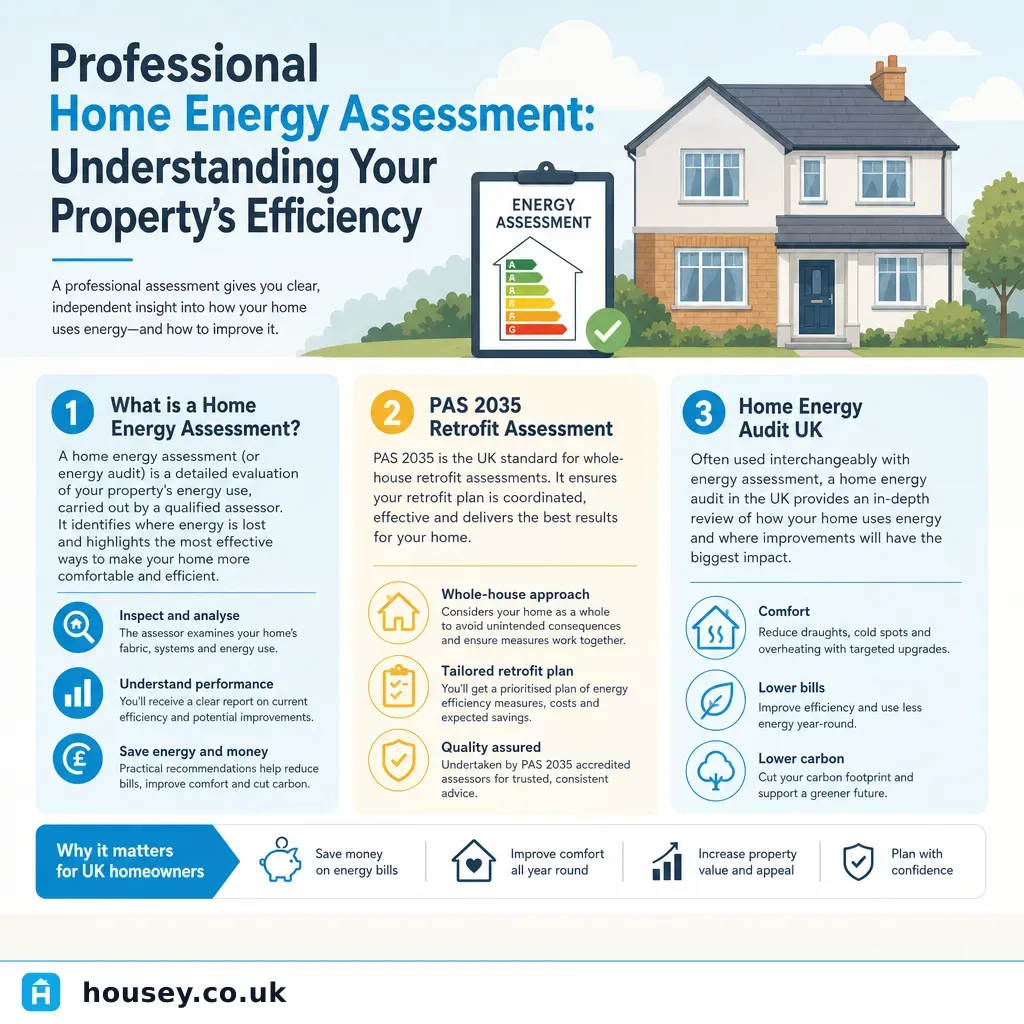
Professional Home Energy Assessment: Understanding Your Property's Efficiency
A professional home energy assessment goes beyond an EPC to evaluate how your property loses heat, where insulation is inadequate, and what improvements should be made in what order. For retrofit work, a PAS 2035 Retrofit Assessment by a qualified assessor is strongly recommended. It covers building fabric, ventilation, heating systems, and the moisture risk that arises if insulation is added without proper analysis.
 Surveys & Inspections
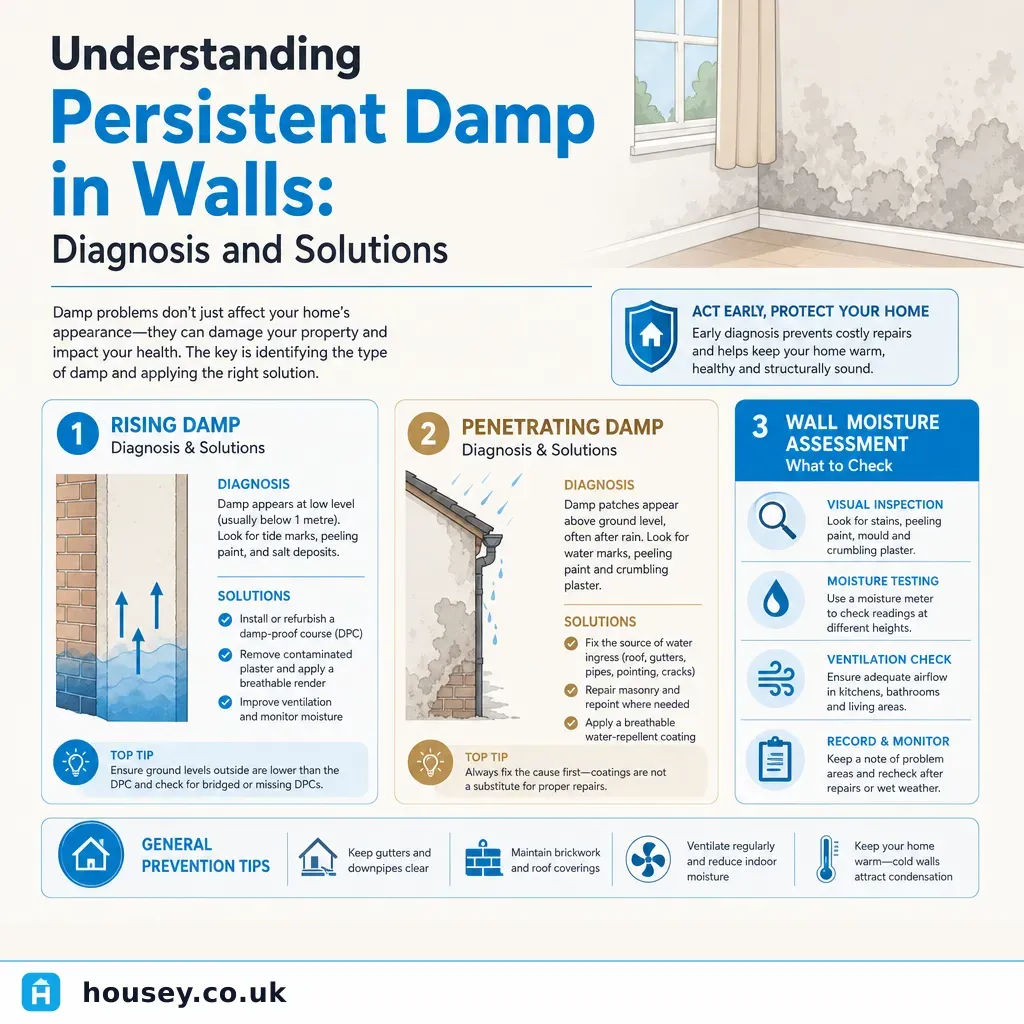
Understanding Persistent Damp in Walls: Diagnosis and Solutions
Persistent wall damp in UK homes most commonly stems from penetrating damp, rising damp, or condensation — and these are frequently confused with one another. Each has a distinct pattern, cause, and solution. A professional assessment using a calibrated carbide meter, external inspection, and contextual analysis is the only reliable way to identify the source before committing to remedial works.
 Improvement & Build
How to plan a tree removal project
Planning a tree removal project starts with checking whether the tree is protected by a Tree Preservation Order or sits in a conservation area, as both require council consent before any work begins. You should hire a qualified, insured arborist for any significant felling, and factor in stump removal and legal waste disposal as part of the overall project.
 Improvement & Build
Window Replacement Guide: Key Considerations for UK Homeowners
Replacing windows in England and Wales requires compliance with Building Regulations Part L, with a minimum whole-window U-value of 1.2 W/m²K. Most homeowners use a FENSA- or CERTASS-registered installer who self-certifies compliance and issues a certificate needed when selling. In conservation areas or listed buildings, planning permission or Listed Building Consent is usually required, and uPVC frames are often refused.
 Surveys & Inspections
Water Leak Detection and Prevention in UK Homes
Water leaks in UK homes are best caught early through routine visual checks, water meter monitoring, and smart sensors placed under sinks and appliances. If you notice damp patches, a rising meter reading with all taps off, or unexplained drops in boiler pressure, act immediately — turn off your stopcock and call a plumber or drainage specialist.
 Improvement & Build
Solarium extensions: costs, design and adding living space to your home
A solarium extension is a predominantly glazed room addition with a structural glass roof, typically costing £28,000–£130,000 in the UK depending on size and specification. Most solariums require Building Regulations approval and planning permission if they exceed permitted development limits. Structural glazing needs specialist installation and engineer-designed fixings, making contractor choice critical to achieving a compliant, comfortable result.
 Improvement & Build
Heated Driveways: Is the Investment Worth Considering?
A heated driveway uses electric resistance cables or hydronic water pipes beneath the surface to prevent ice and snow build-up. Installation in the UK typically costs £3,000–£15,000 depending on system type and area. Running costs can be significant, so they suit steep driveways, northern locations with regular snowfall, or households with mobility requirements.
 Improvement & Build
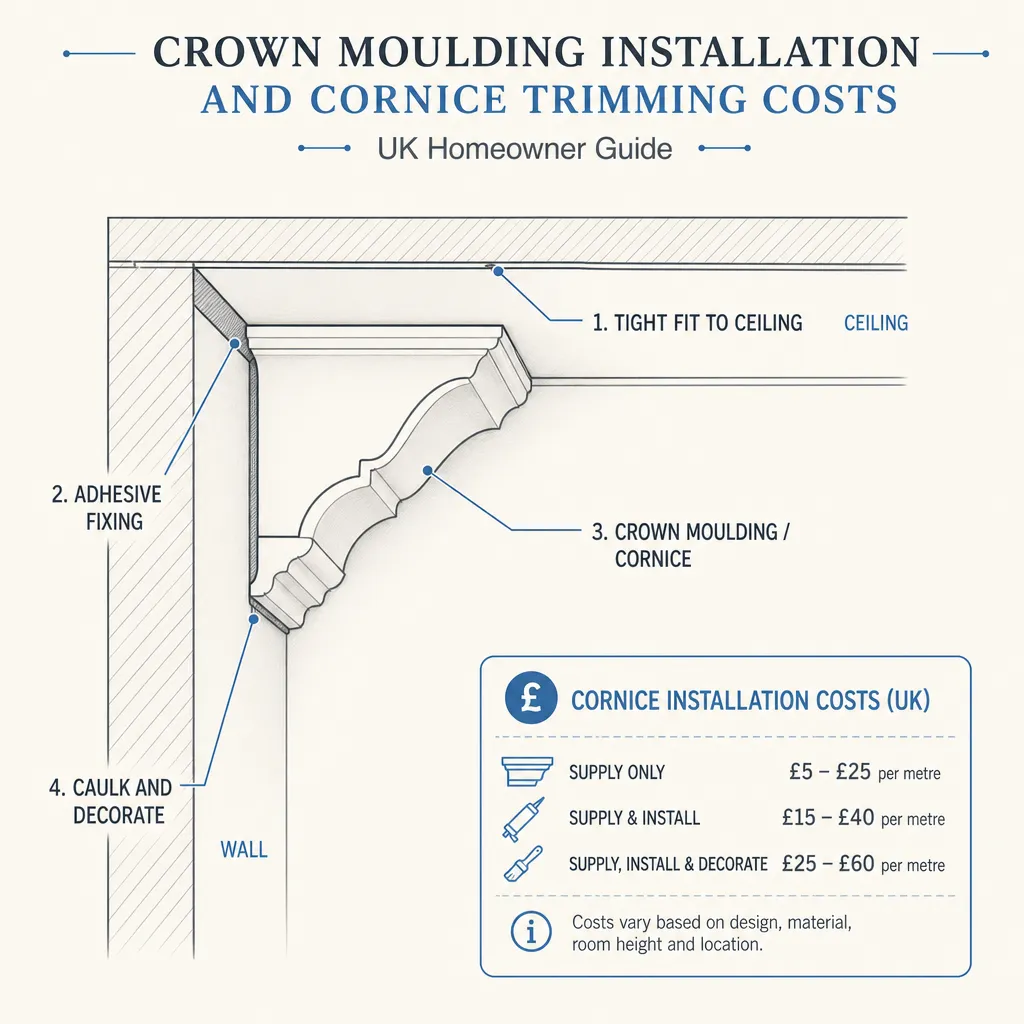
Crown Moulding Installation and Cornice Trimming Costs
Coving and cornice installation in the UK typically costs £15–£45 per linear metre for supply and fit, depending on the material, profile complexity, and whether existing cornice needs removing. A standard room of 15–20 linear metres might cost £250–£700 in total. Plaster, MDF, and polyurethane profiles each have different labour and material rates.
 Planning & Pre-Build
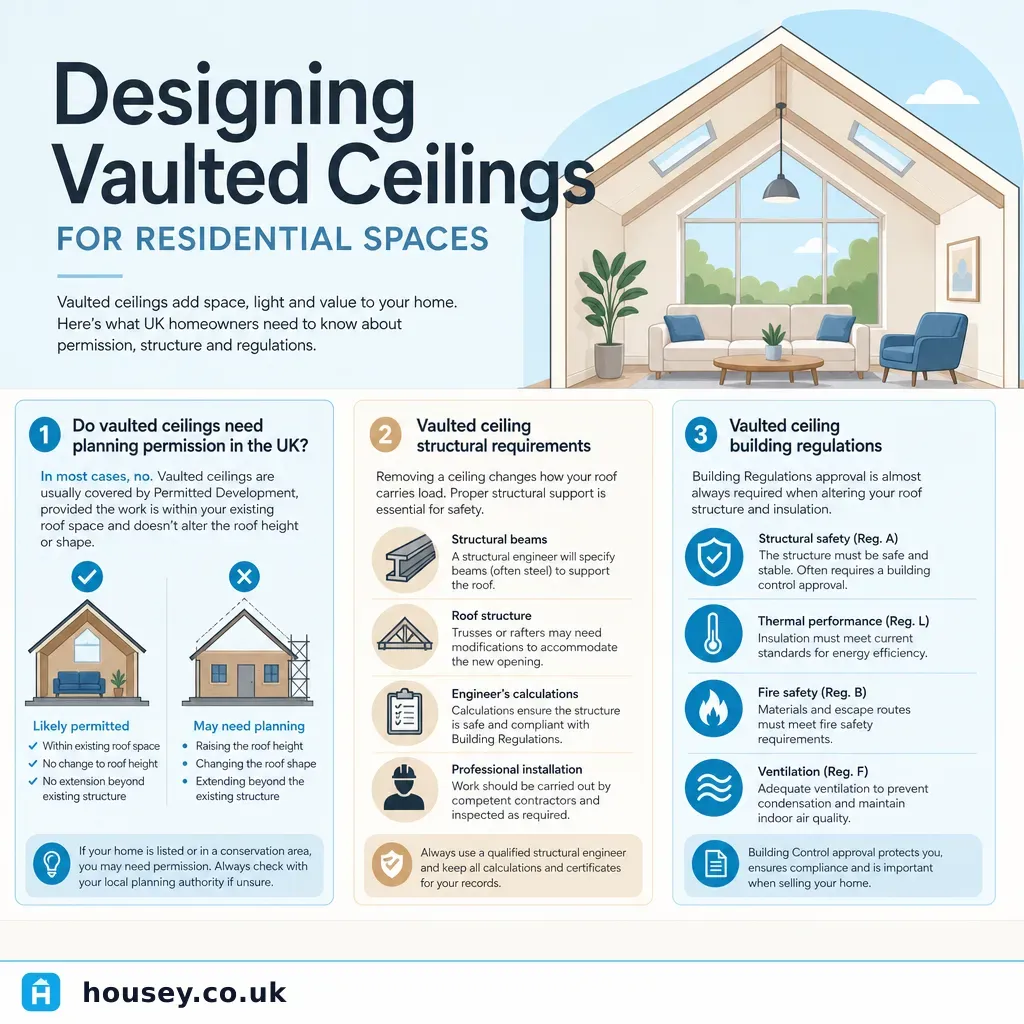
Designing vaulted ceilings for residential spaces
Creating a vaulted ceiling in an existing home involves restructuring the roof timbers that form the structural triangle, which always requires a structural engineer's calculations and Building Regulations approval under Approved Document A. The work typically costs £8,000–£20,000 all-in depending on span and structural solution, and can usually proceed without planning permission unless the property is listed or the ceiling forms part of a loft conversion.
 Improvement & Build
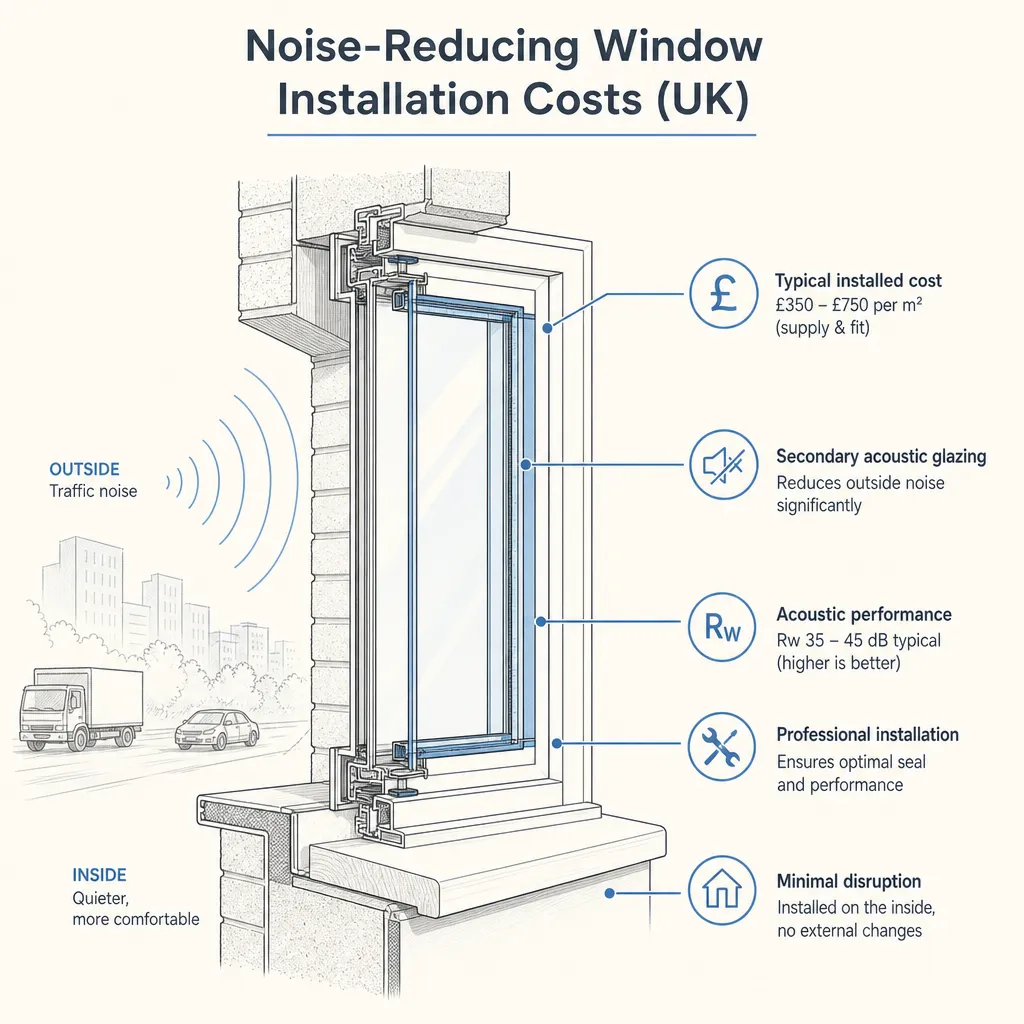
Noise-Reducing Window Installation Costs
Noise-reducing window installation in the UK typically costs £400–£1,500 per window depending on glazing specification, frame material, and property type. Secondary glazing — a separate inner frame fitted on the room side of existing windows — often delivers better acoustic performance and costs £200–£800 per window. The right solution depends on your noise source and whether planning restrictions apply.
 Surveys & Inspections
Sagging Lintel Repair Costs and Structural Solutions
A sagging lintel is a structural defect requiring prompt professional assessment. UK repair costs typically range from around £500 for minor remedial work to £5,000 or more for a full lintel replacement with masonry reinstatement, depending on lintel size, material, access, and the extent of damage. Always commission a structural engineer or chartered surveyor before any repair work begins.