Knowledge Base
Property advice that actually helps
Researched, UK-specific guides for every stage of homeownership — from buying and surveys to retrofit, planning and major works.
 Improvement & Build
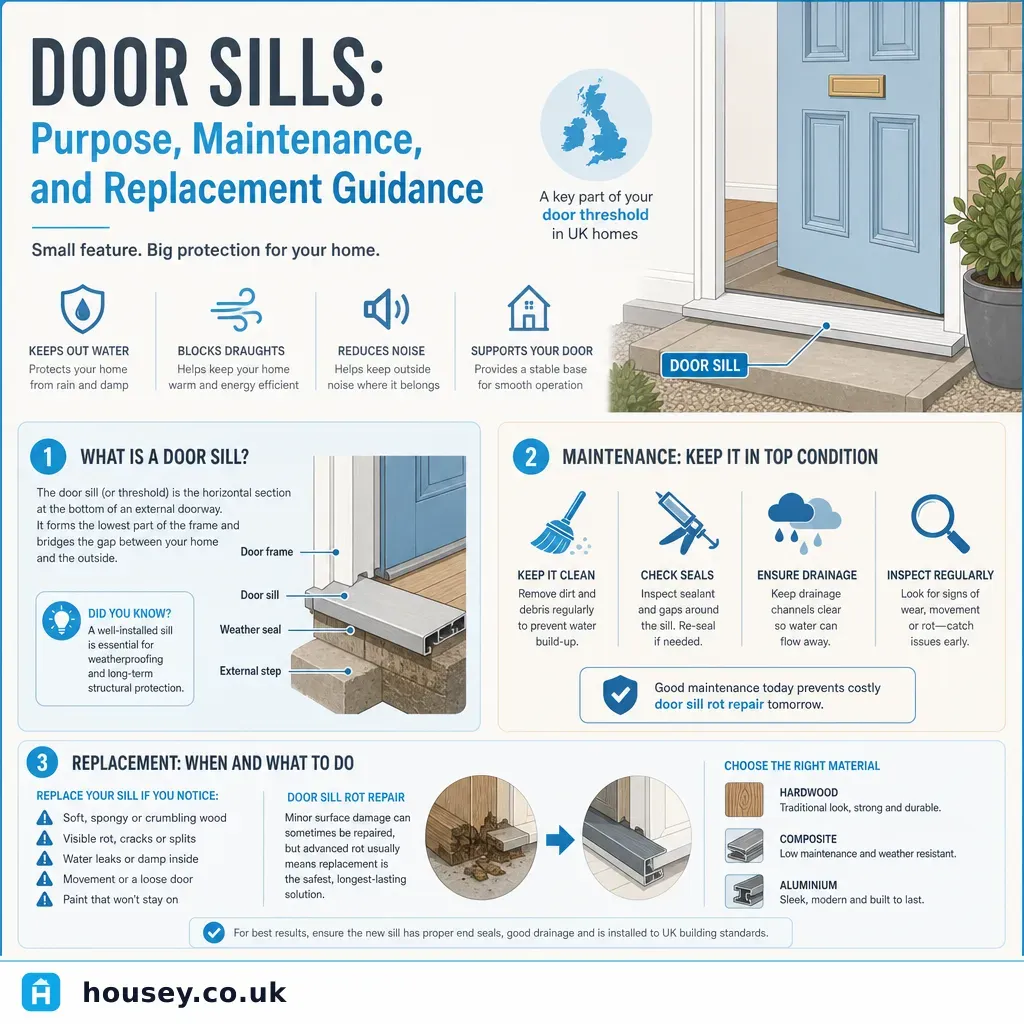
Door Sills: Purpose, Maintenance, and Replacement Guidance
A door sill — also called a threshold — is the horizontal component at the base of an external door frame. It weatherproofs the junction between the door and the floor, preventing water ingress, draughts, and heat loss. Timber sills on older UK properties are prone to wet rot; aluminium and composite alternatives last longer and are available in low-threshold designs for accessibility compliance.
 Buying & Moving
Pre-Purchase Property Assessment: Strategies and Buyer Advisory
A pre-purchase property assessment in the UK typically combines an independent RICS Home Survey, conveyancing searches, and specialist inspections for damp or electrical condition where needed. Identify defects before exchange — sellers have no general duty to disclose physical problems, so the burden falls on the buyer. Survey findings can support price renegotiation and help you make a fully informed decision before committing.
 Planning & Pre-Build
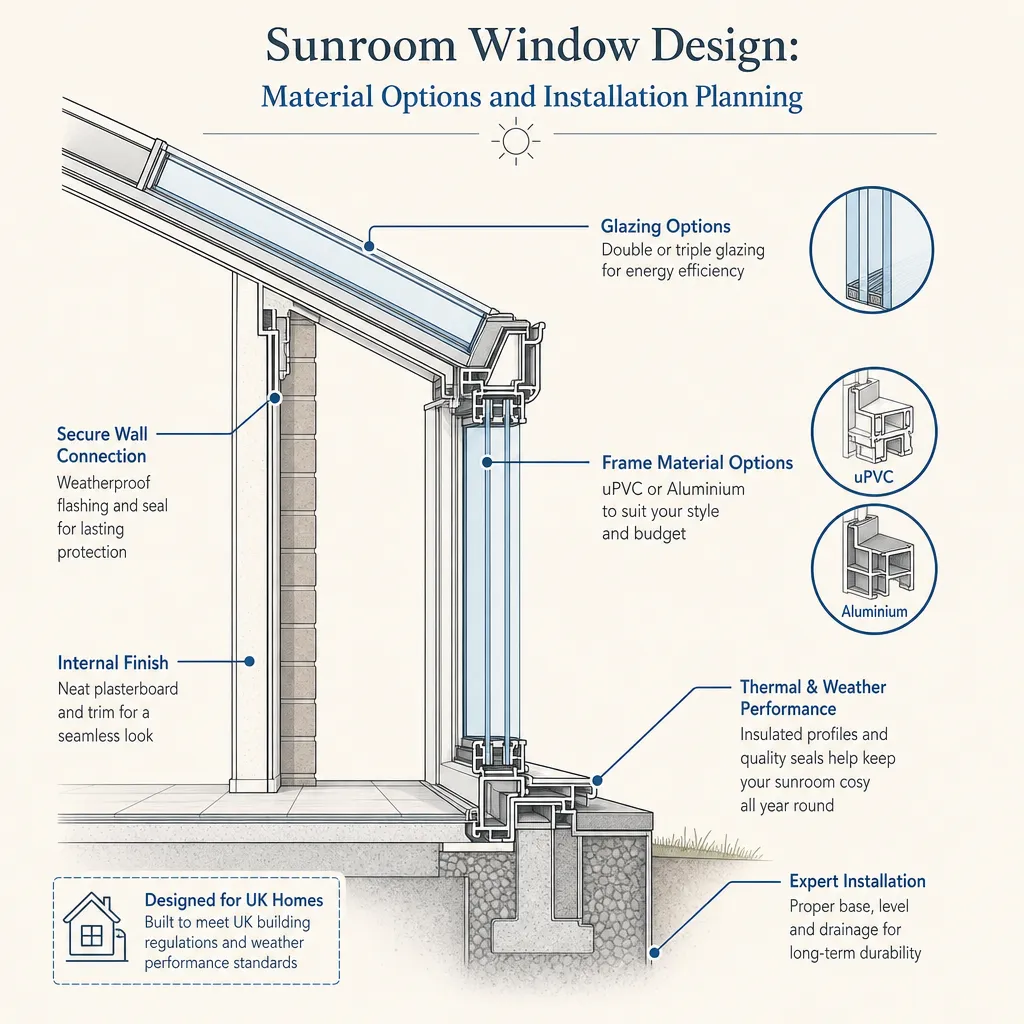
Sunroom Window Design: Material Options and Installation Planning
Sunroom windows in the UK typically use double or triple glazing in uPVC, aluminium, or timber frames. Double glazing suits most builds; triple glazing is worth considering for north-facing or year-round rooms. Building Regulations Part L sets minimum thermal performance standards. Solar-control glass reduces summer overheating in south-facing or fully glazed roof sections.
 Improvement & Build
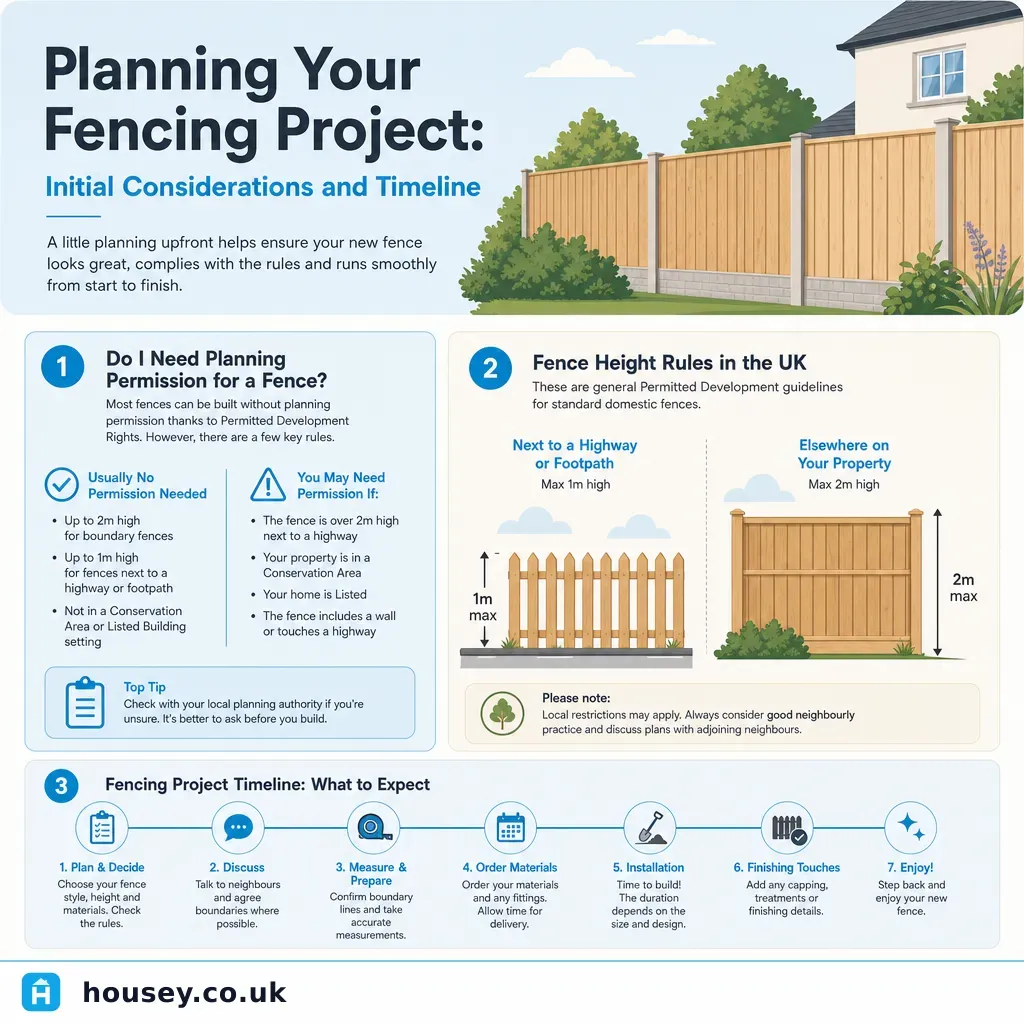
Planning Your Fencing Project: Initial Considerations and Timeline
Planning a fencing project involves checking boundary ownership from your title deeds, confirming planning permission thresholds — 2m maximum height in England, or 1m adjacent to a highway — and choosing a material suited to your climate and budget. Most residential fencing installs in one to three days once groundwork and neighbour discussions are complete.
 Buying & Moving
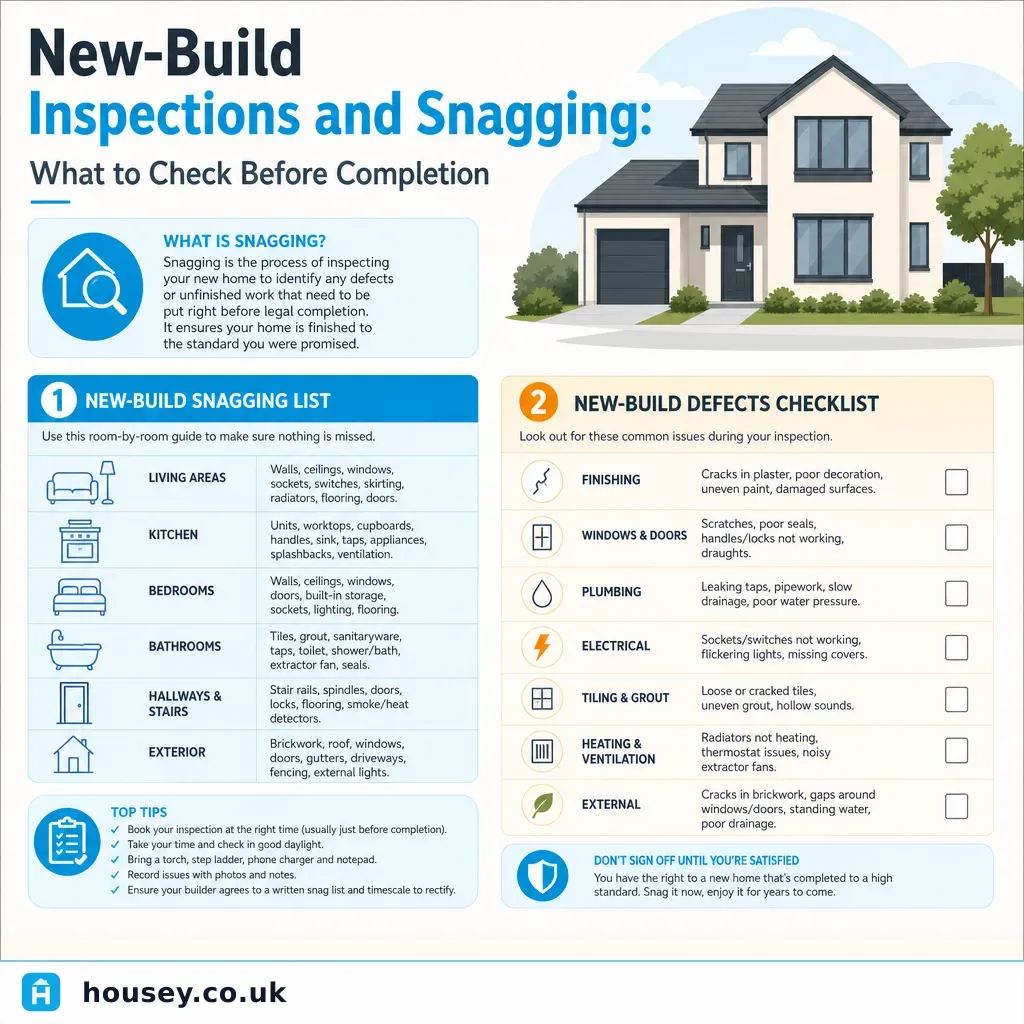
New-Build Inspections and Snagging: What to Check Before Completion
A professional snagging survey inspects a new-build home for workmanship defects, incomplete finishes, and Building Regulations compliance issues before or shortly after legal completion. Most new-build homes carry a 10-year NHBC or equivalent structural warranty, but the developer's obligation to rectify defects usually lasts two years. A specialist snagging inspector — rather than a standard RICS survey — is the appropriate tool for a new-build purchase.
 Improvement & Build
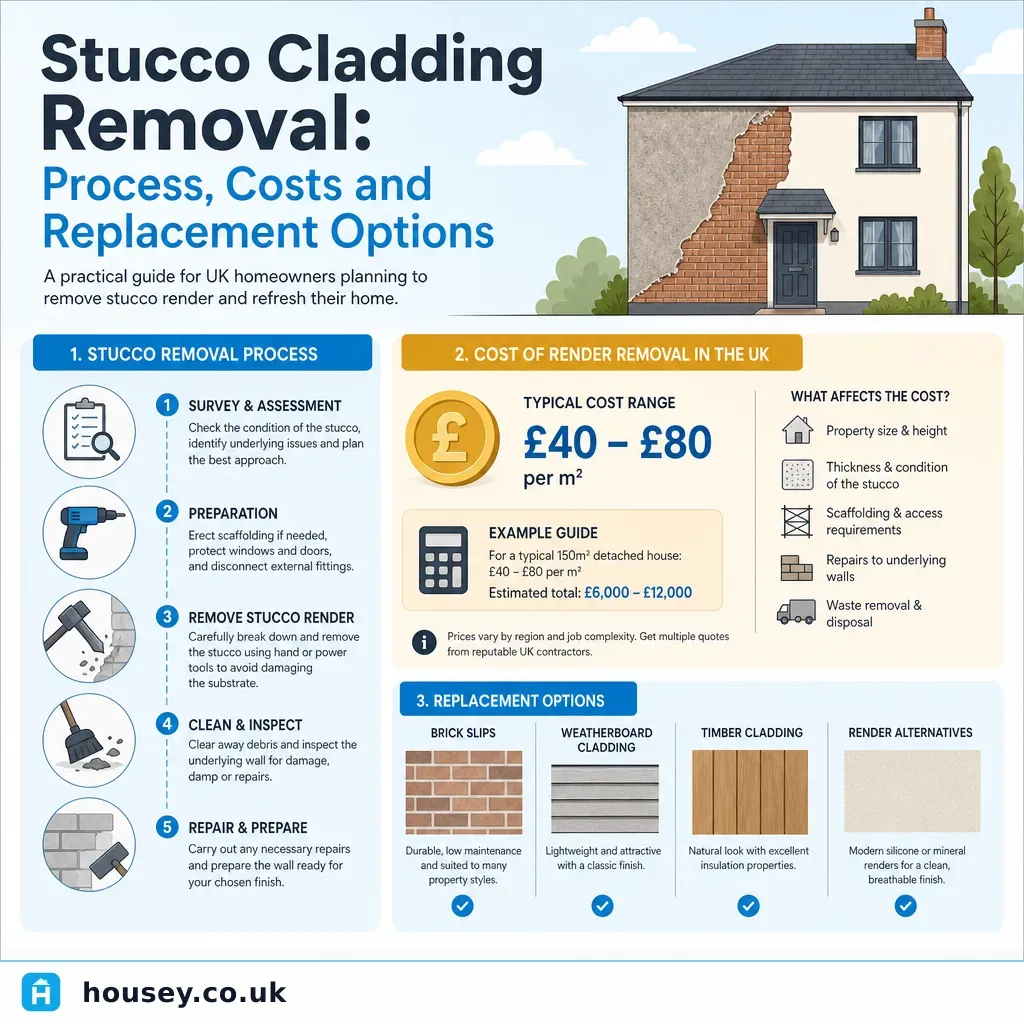
Stucco Cladding Removal: Process, Costs and Replacement Options
Removing stucco or cement render from a UK property typically involves mechanical chiselling or scabbling, followed by structural checks to the underlying masonry before a replacement finish is applied. Costs depend on facade area, access requirements, and whether asbestos testing is needed. Pre-2000 properties should always be tested for asbestos before any render disturbance begins.
 Improvement & Build
Professional Garden Landscaping: Design and Installation Guide
Professional garden landscaping covers hard elements (patios, walls, drainage) and soft elements (planting, lawn, trees). Most domestic projects do not require planning permission, but front garden paving over 5 m² using non-permeable materials does. Get written, itemised quotes specifying materials, drainage provision, and how planting establishment will be guaranteed.
 Improvement & Build
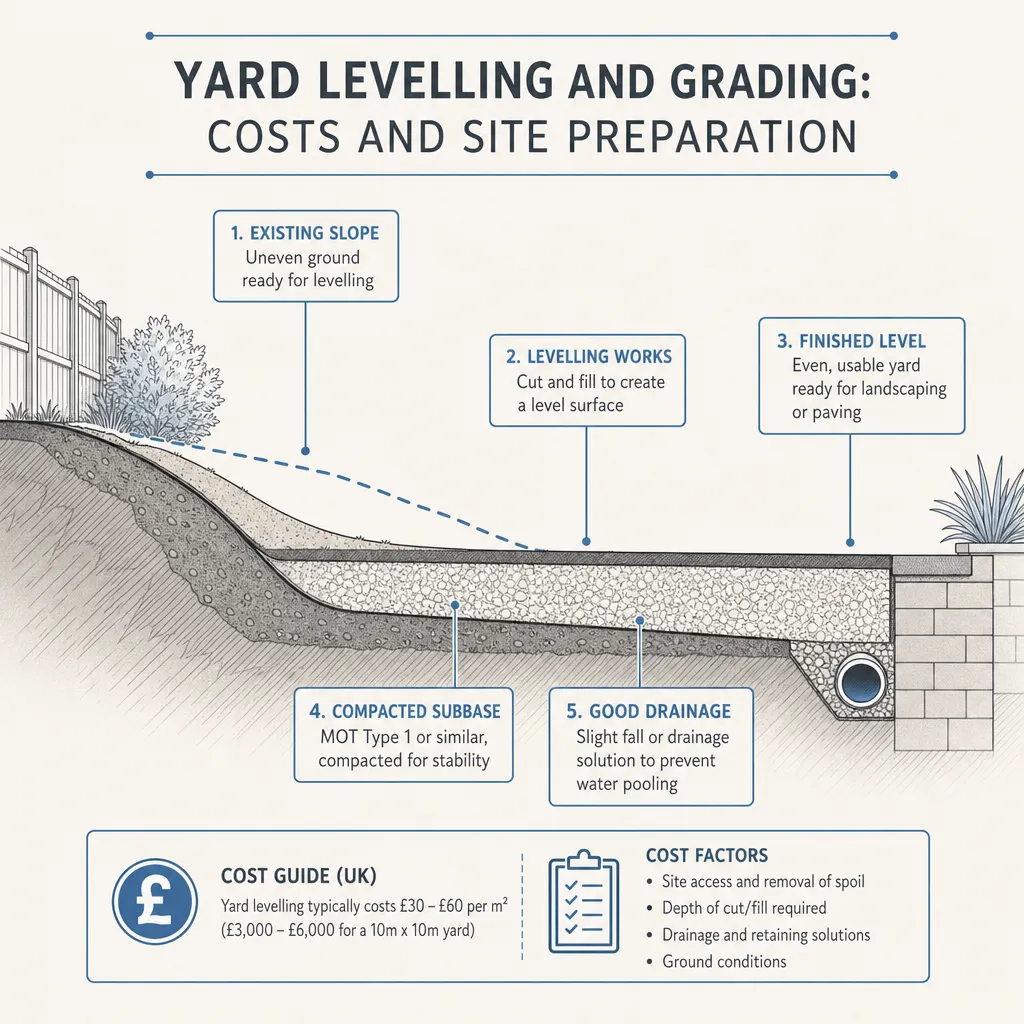
Yard Levelling and Grading: Costs and Site Preparation
Garden levelling in the UK typically costs £500–£3,000 for a standard domestic garden, depending on size, slope, soil type, and whether drainage work is needed. The most important consideration is ensuring the finished gradient directs surface water away from the house. Planning permission is not usually required, though retaining walls over 1 metre adjacent to a highway are an exception.
 Improvement & Build
Repairing Blown Double-Glazing Windows
A blown double-glazed window occurs when the hermetic seal between the panes fails, allowing moisture to enter the cavity. In most cases you only need to replace the glass unit, not the frame, at a typical cost of £80–£200 per unit. Full window replacements require FENSA certification in England and Wales.
 Energy & Retrofit
Diagnosing and Fixing Temperature Imbalances in Your Home
Temperature imbalances in UK homes usually stem from hydraulic imbalance in the central heating system, cold bridging at poorly insulated walls or junctions, air infiltration through gaps and draughts, or problems with thermostat placement. Diagnosing which cause applies determines whether you need a heating engineer, an insulation specialist, or straightforward draught-proofing.
 Planning & Pre-Build
Leasehold Flat Renovation: Key Permissions, Planning and Building Regulations
Most leasehold flat renovations require written consent from your freeholder or managing agent before work begins — this is usually called a licence for alterations. You may also need building regulations approval for structural, electrical, plumbing or drainage work. Planning permission is rarely needed for internal alterations, but always check your lease and contact your freeholder before instructing contractors.
 Improvement & Build
Power Seeding Your Lawn: Costs and Benefits for Garden Renovation
Power seeding uses a slit-seeding machine to cut shallow furrows into an existing lawn and deposit grass seed directly into the soil, giving far better germination rates than surface broadcasting. The best time in the UK is late August to mid-October. Professional treatment for a medium residential garden typically costs £250 to £500, not including preparation such as scarification.