Knowledge Base
Property advice that actually helps
Researched, UK-specific guides for every stage of homeownership — from buying and surveys to retrofit, planning and major works.
 Planning & Pre-Build
Converting Redundant Religious Buildings Into Residential Properties
Converting a redundant religious building to residential use in the UK requires planning permission for change of use from Use Class F.1 to C3, and listed building consent if the building is listed. Most such conversions need full planning applications, specialist structural assessments, and careful handling of heritage, acoustic, and thermal performance requirements under Building Regulations.
 Planning & Pre-Build
Waterproof Earth-Sheltered Property Design and Structural Considerations
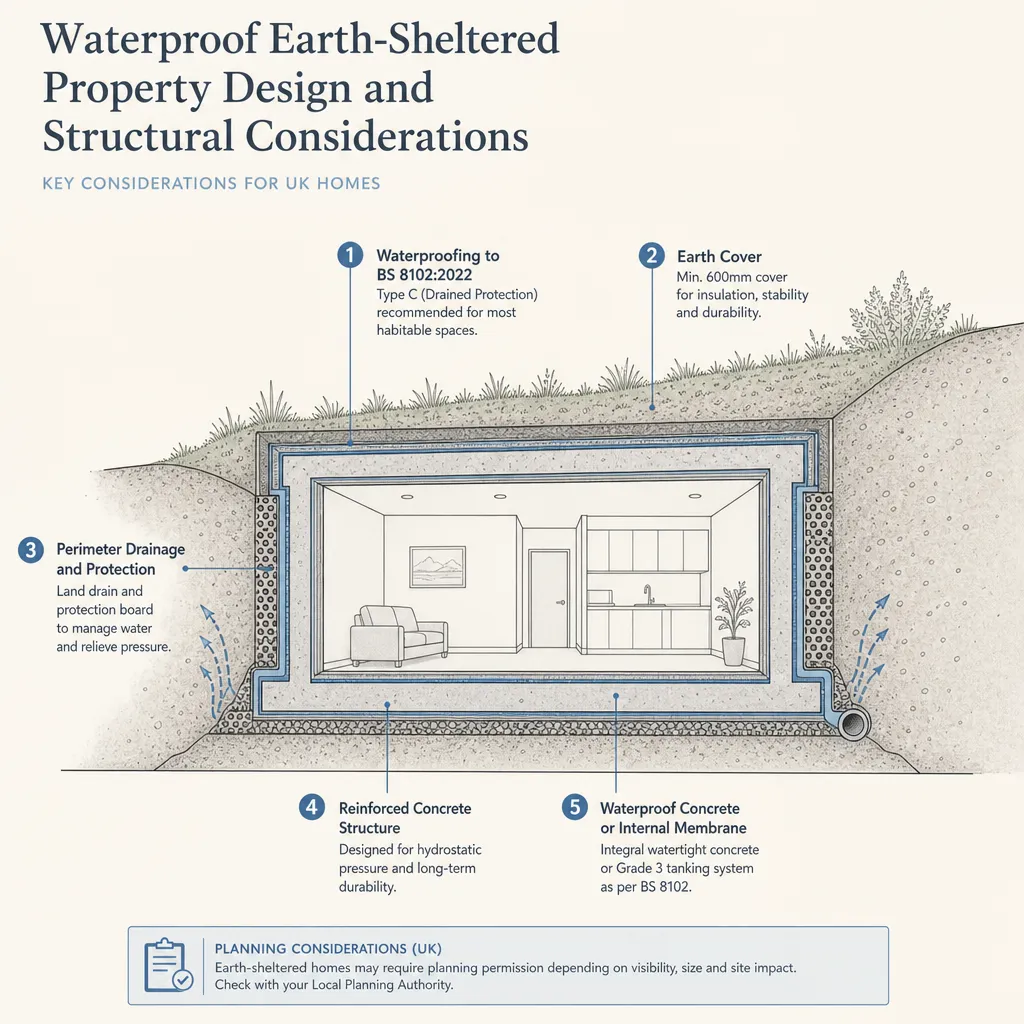
Earth-sheltered homes in the UK require specialist structural design to manage lateral soil pressure and hydrostatic loads, along with a waterproofing strategy compliant with BS 8102:2022. Planning permission is always required and a geotechnical investigation must be completed before structural design can begin. Most habitable earth-sheltered spaces need Grade 3 protection, typically achieved by combining two or more waterproofing types.
 Energy & Retrofit
Garage Insulation: Benefits and Installation Options for Energy Savings
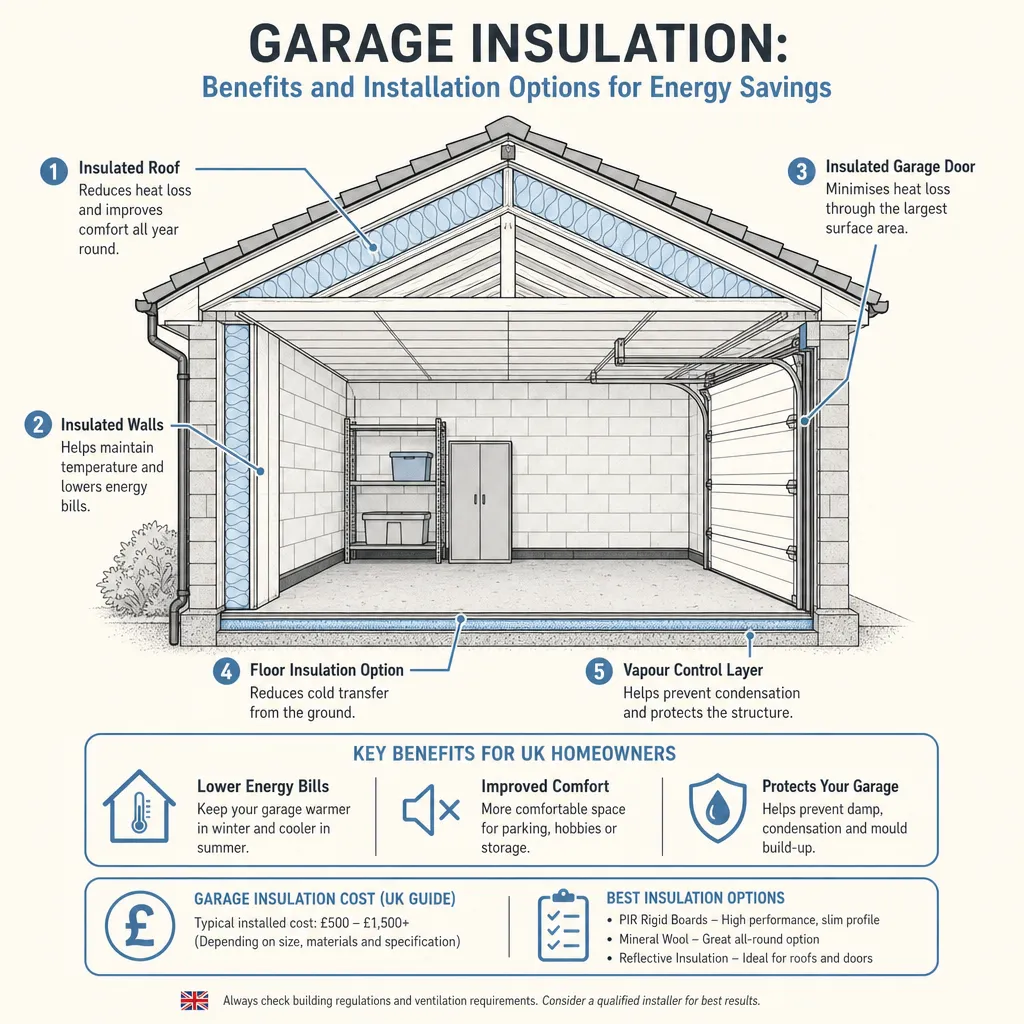
Insulating a garage reduces heat loss, lowers energy bills, and makes an attached garage more comfortable year-round. Common approaches include rigid foam boards for walls and roof, mineral wool between timber framing, and insulated garage doors. If you plan to convert a garage into habitable space, Building Regulations apply and professional installation is advisable.
 Buying & Moving
Expert Moving Services: Trusted House Removal Solutions
A professional house removal company handles packing, loading, transport, and unloading of your belongings. Look for BAR membership, adequate goods-in-transit insurance, and a detailed written quotation. Get at least three quotes, confirm cancellation terms before exchange of contracts, and book early — peak moving periods including June to August and end-of-month dates book up quickly.
 General property advice
Patching and Repairing Holes in Plasterboard (Drywall)
Small holes in plasterboard can be filled with ready-mixed filler. Medium holes (50–150mm) need a mesh patch or backing board. Holes over 150mm require cutting back to studs and fitting a new section. Always detect cables and pipes before cutting, and use fire-rated board in party walls or fire-compartment areas.
 Improvement & Build
Reality TV and Construction: Examining Authenticity in Building Entertainment
UK construction reality TV programmes compress multi-year projects into 60-minute episodes, omitting planning permission timelines, building control processes, contractor disputes, and cost overruns. Grand Designs and similar shows can inspire homeowners but routinely underrepresent the legal obligations, documentation requirements, and professional roles involved in a real UK building project.
 Planning & Pre-Build
Understanding Building Regulations: Compliance, Approvals, and Your Project Requirements
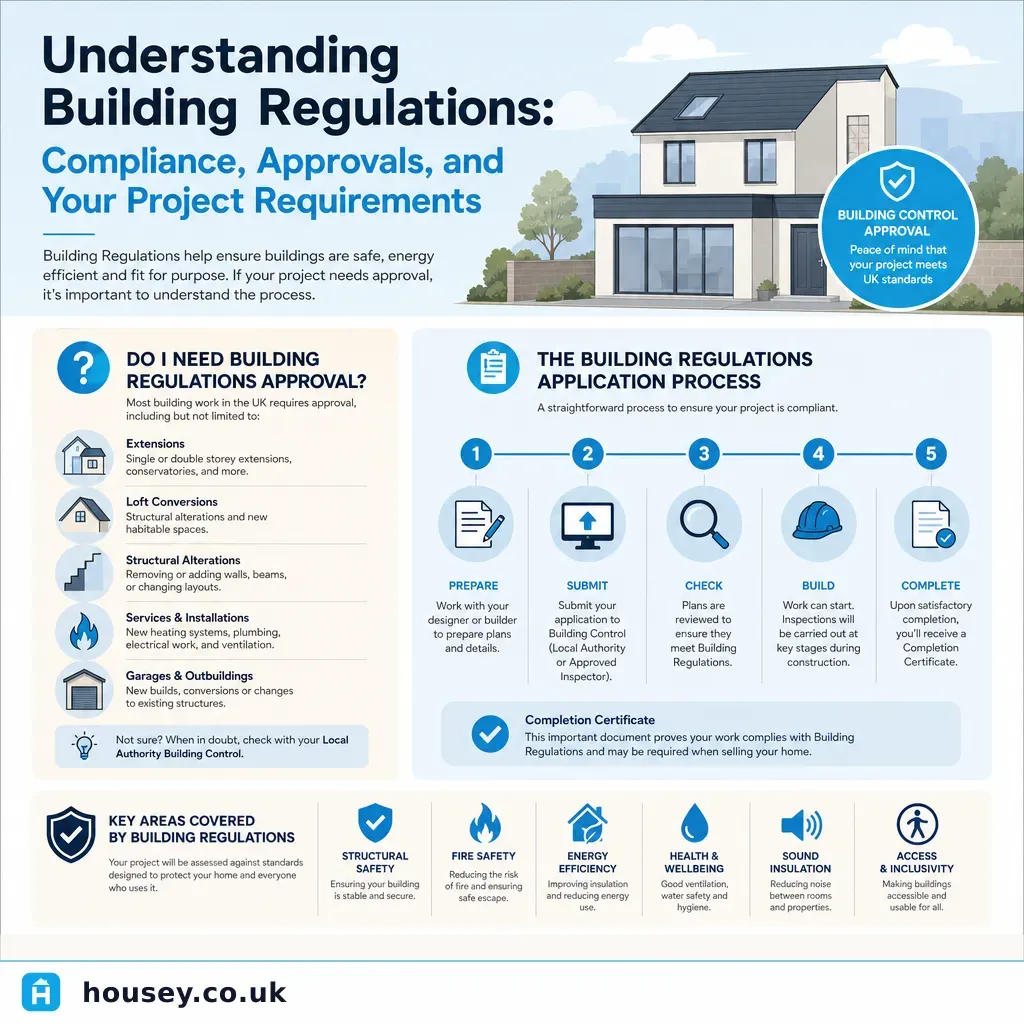
Building regulations set minimum standards for design, construction, and alterations to buildings in England and Wales. Most structural, electrical, plumbing, and energy-efficiency work requires approval before you start. You apply via your local authority building control department or a private approved inspector, and a completion certificate is issued once all inspections pass.
 Surveys & Inspections
Addressing Invasive Species Findings in Property Surveys
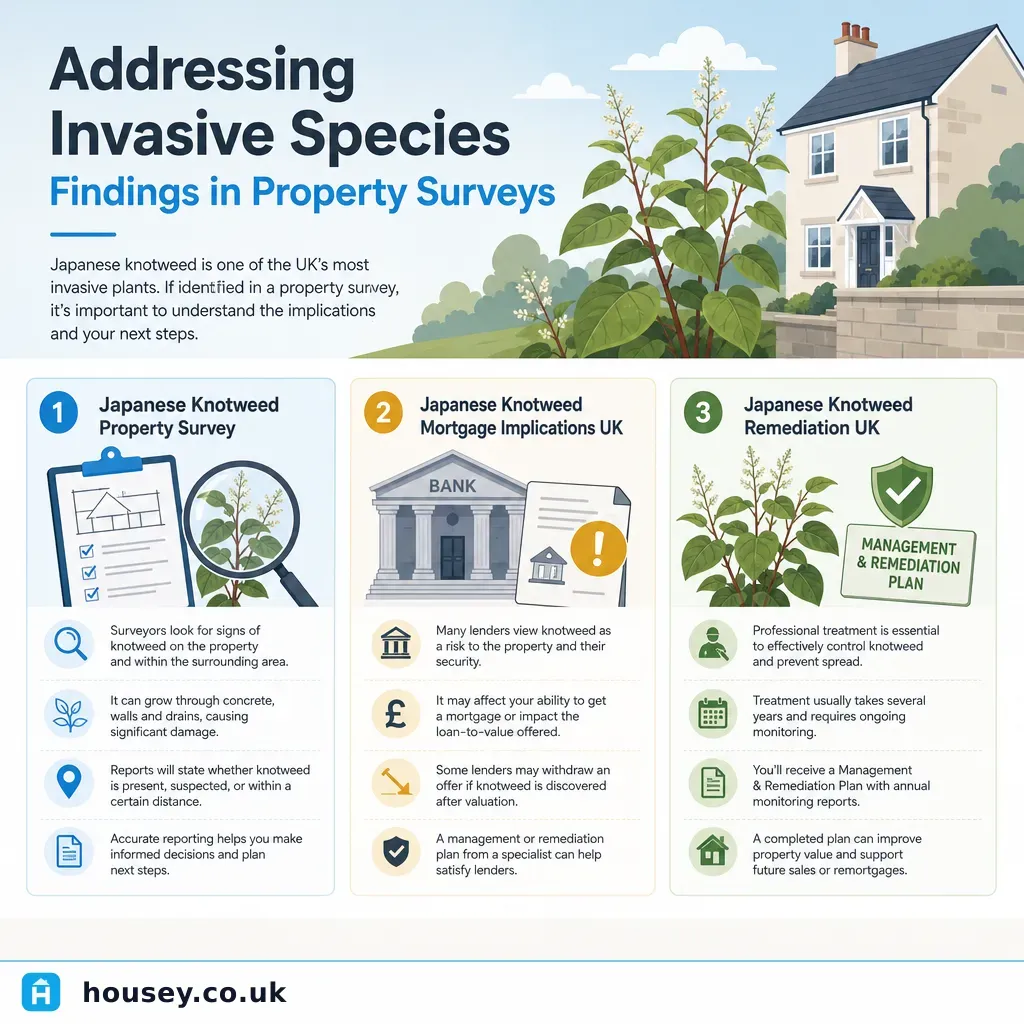
If a property survey flags an invasive species such as Japanese knotweed, you should commission a specialist ecological or knotweed survey to confirm the extent and obtain a management plan. Knotweed within 7 metres of a structure can affect mortgage lending and must be disclosed on the TA6 property information form. Specialist treatment typically takes three to five years.
 Improvement & Build
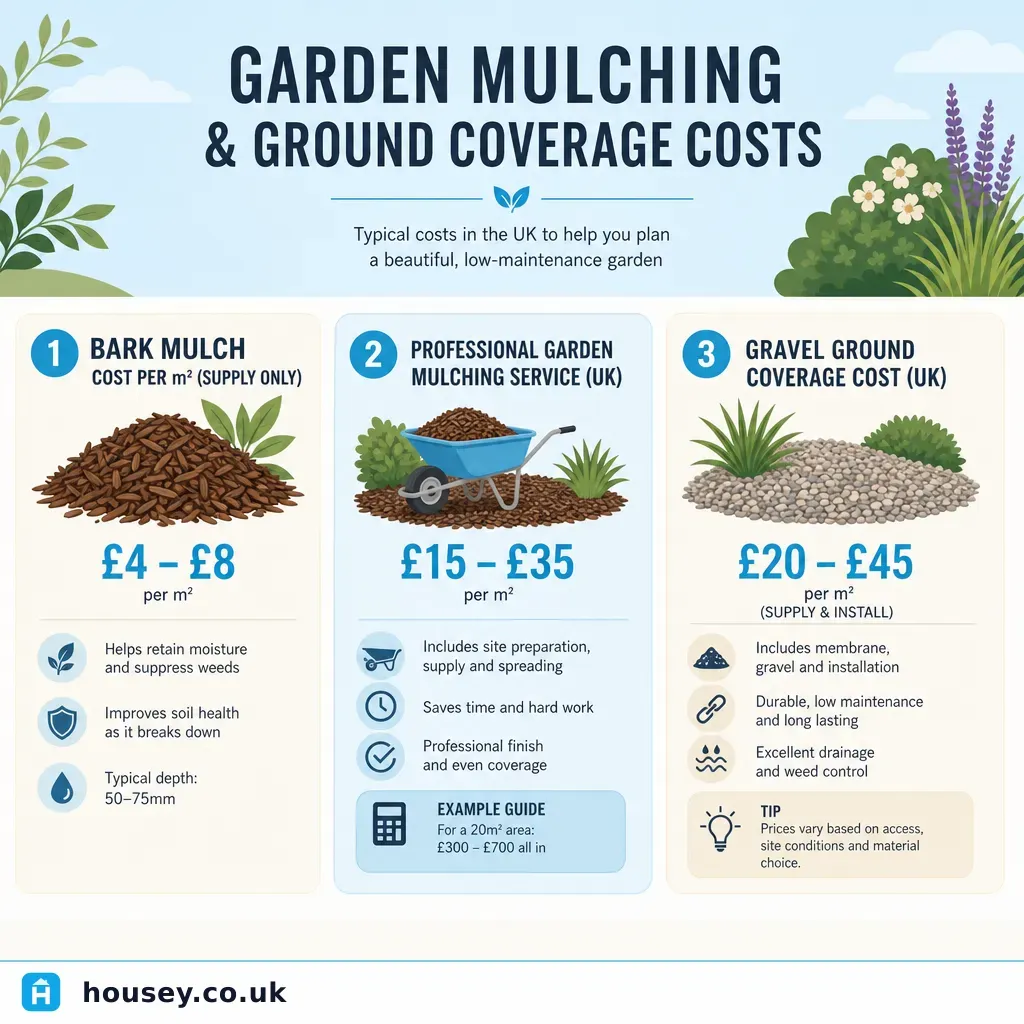
Garden Mulching and Ground Coverage Costs
Professional garden mulching typically costs £150–£600 for an average UK garden, depending on material type, area covered, and whether you hire a landscaper. Bark mulch, gravel, and membrane options vary widely per square metre. Most projects take half a day to a full day. DIY material costs are significantly lower but preparation and site access still matter.
 Improvement & Build
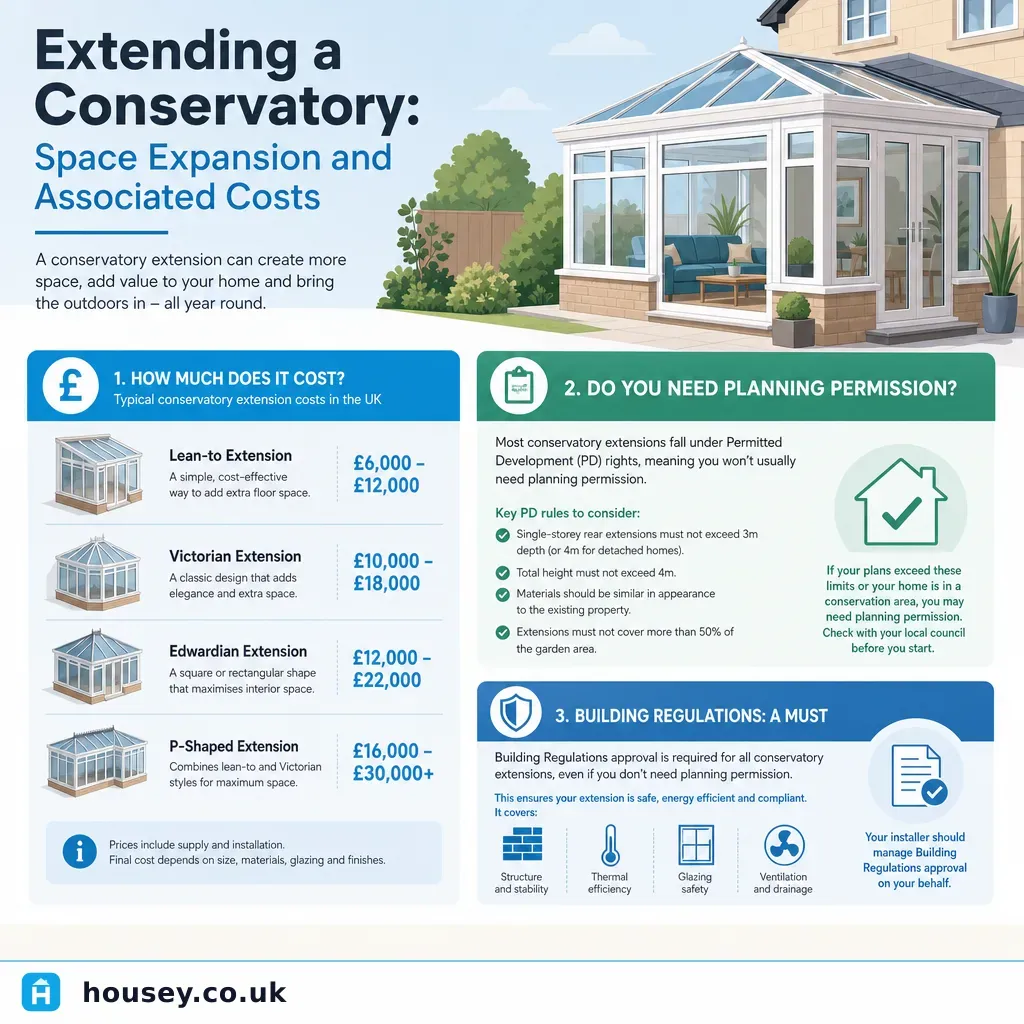
Extending a Conservatory: Space Expansion and Associated Costs
Extending a conservatory usually falls under permitted development rights if the enlarged footprint stays within depth limits — 4m for detached houses, 3m for others. Costs typically range from £8,000 to £50,000 depending on size and spec. Exceeding 30m² or adding a solid roof will likely trigger building regulations approval.
 Improvement & Build
Disposing of Tree Waste from Felled Timber: Options and Removal Services
Tree waste from felled timber can be disposed of in several ways: a tree surgeon can chip or remove it as part of the job, you can hire a skip, take it to a household waste recycling centre, have logs split for firewood, or arrange a wood-chip delivery to a local composting site. Check your local rules before lighting a garden bonfire.
 Improvement & Build
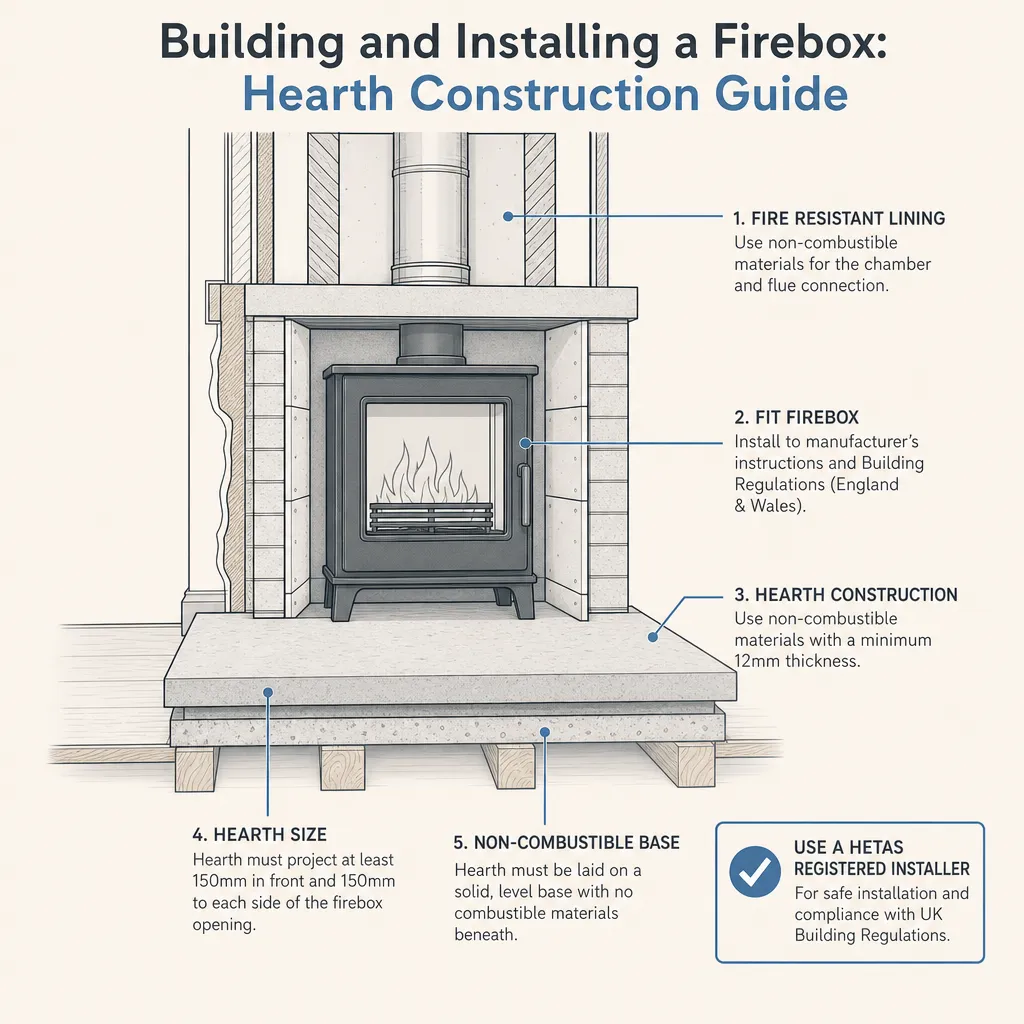
Building and Installing a Firebox: Hearth Construction Guide
In the UK, any new firebox and hearth must comply with Building Regulations Approved Document J, which sets minimum standards including a 125mm non-combustible hearth and 200mm clearance to combustibles. Most new installations require building control notification, and solid-fuel appliances are best installed by a HETAS-registered contractor who can self-certify the work.