Knowledge Base
Property advice that actually helps
Researched, UK-specific guides for every stage of homeownership — from buying and surveys to retrofit, planning and major works.
 Improvement & Build
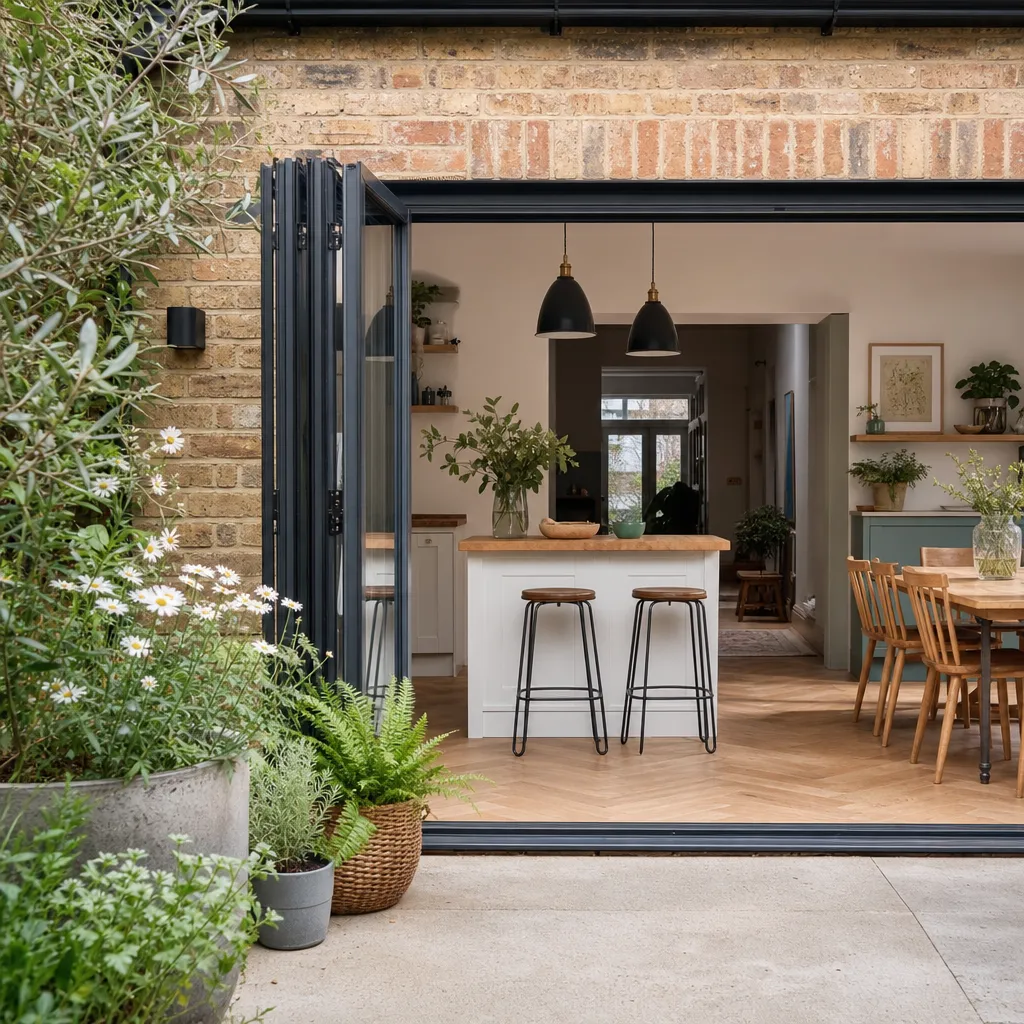
Summer Living: Contemporary Property Styling and Design Inspiration
Contemporary summer styling for UK homes focuses on extending living space outdoors, maximising natural light indoors, and using a palette of natural materials and warm neutrals. Simple changes — such as swapping heavy curtains for linen, introducing potted planting near entrances, and creating a defined outdoor seating area — can noticeably improve a property's comfort and kerb appeal during warmer months.
 Improvement & Build
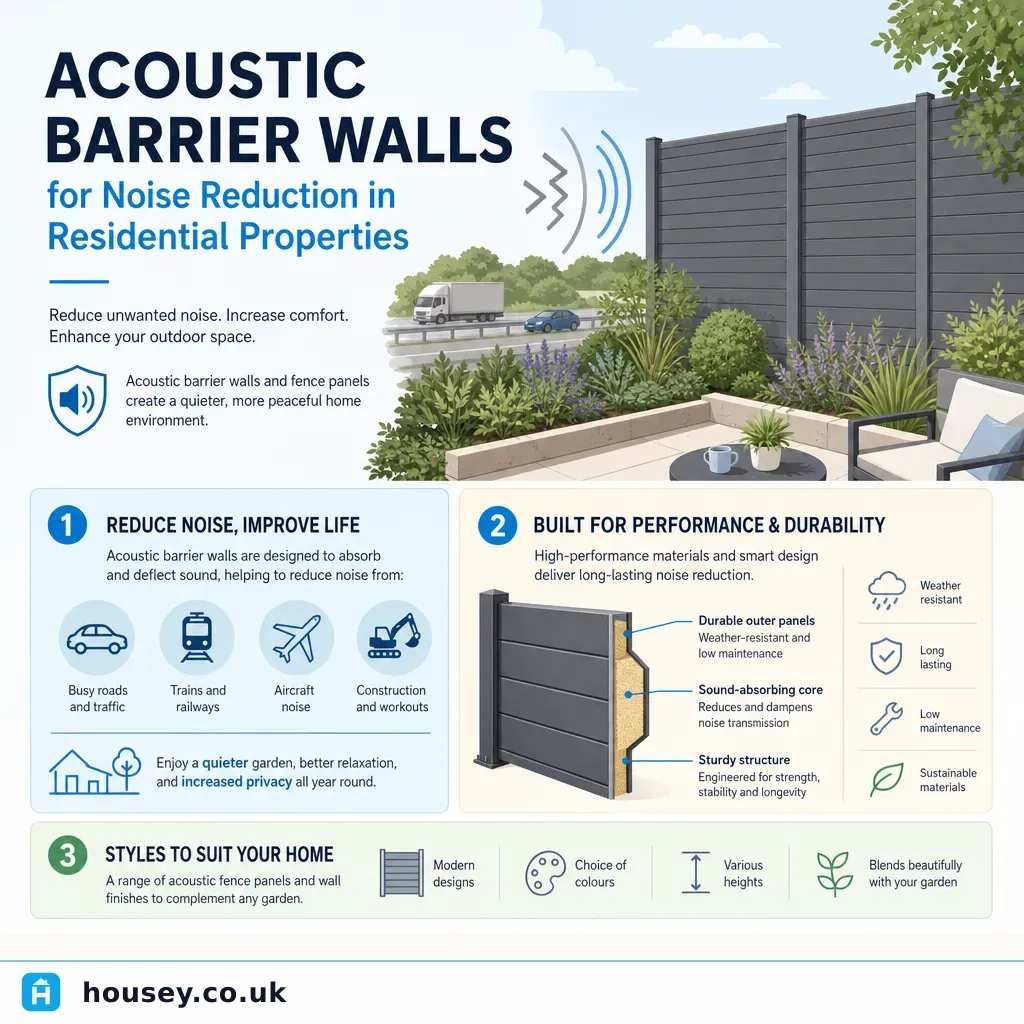
Acoustic Barrier Walls for Noise Reduction in Residential Properties
Acoustic barrier walls reduce noise by blocking and absorbing sound waves. Dense masonry or concrete walls typically achieve 25–40 dB insertion loss. Performance depends on wall height, length, continuity, and proximity to the noise source. Most residential barriers up to 2 m on non-highway boundaries are permitted development in England, but check with your local planning authority before building.
 Energy & Retrofit
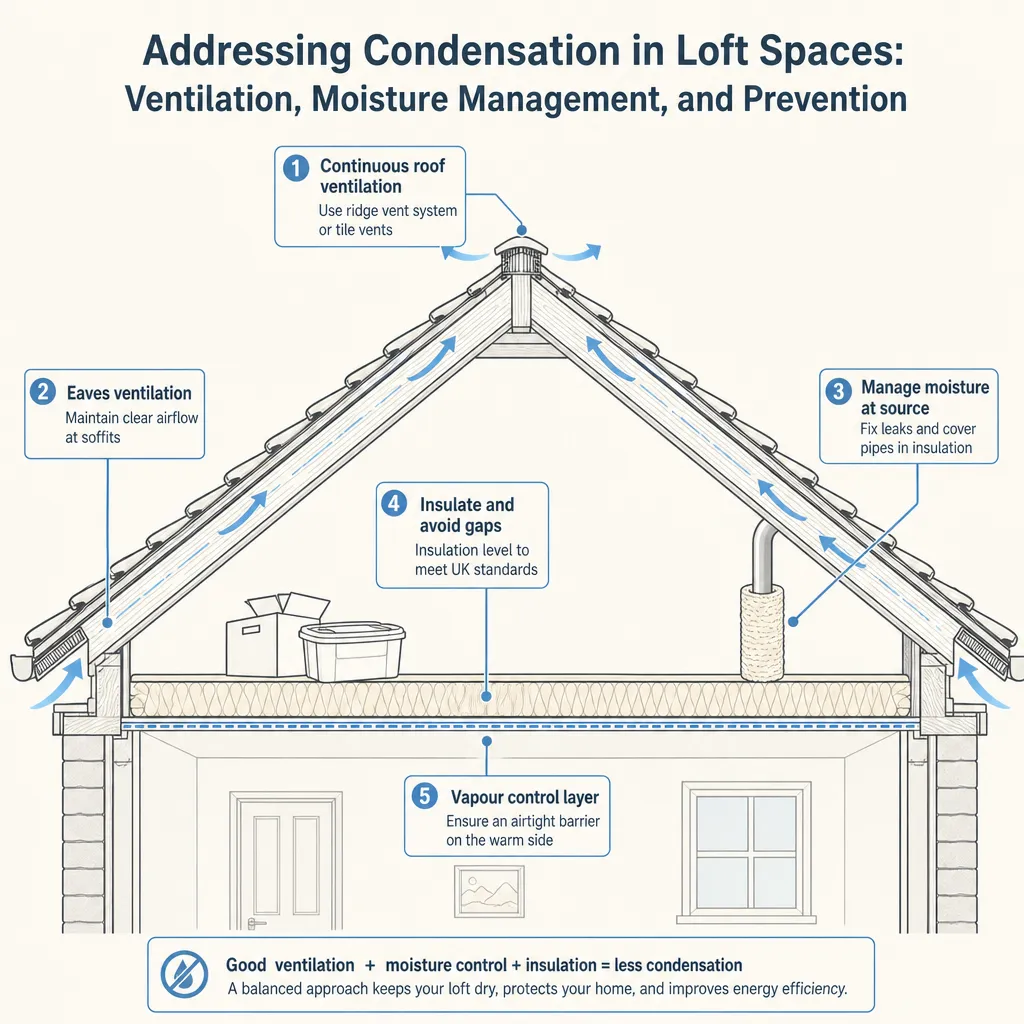
Addressing Condensation in Loft Spaces: Ventilation, Moisture Management, and Prevention
Loft condensation forms when warm, moist air from living spaces passes through ceiling gaps and deposits moisture on cold roof timbers or underfelt. The main remedies are cross-ventilation through eaves and ridge vents, air-sealing ceiling penetrations, and where appropriate a vapour control layer beneath insulation. A professional assessment is advisable before any retrofit insulation is installed.
 Surveys & Inspections
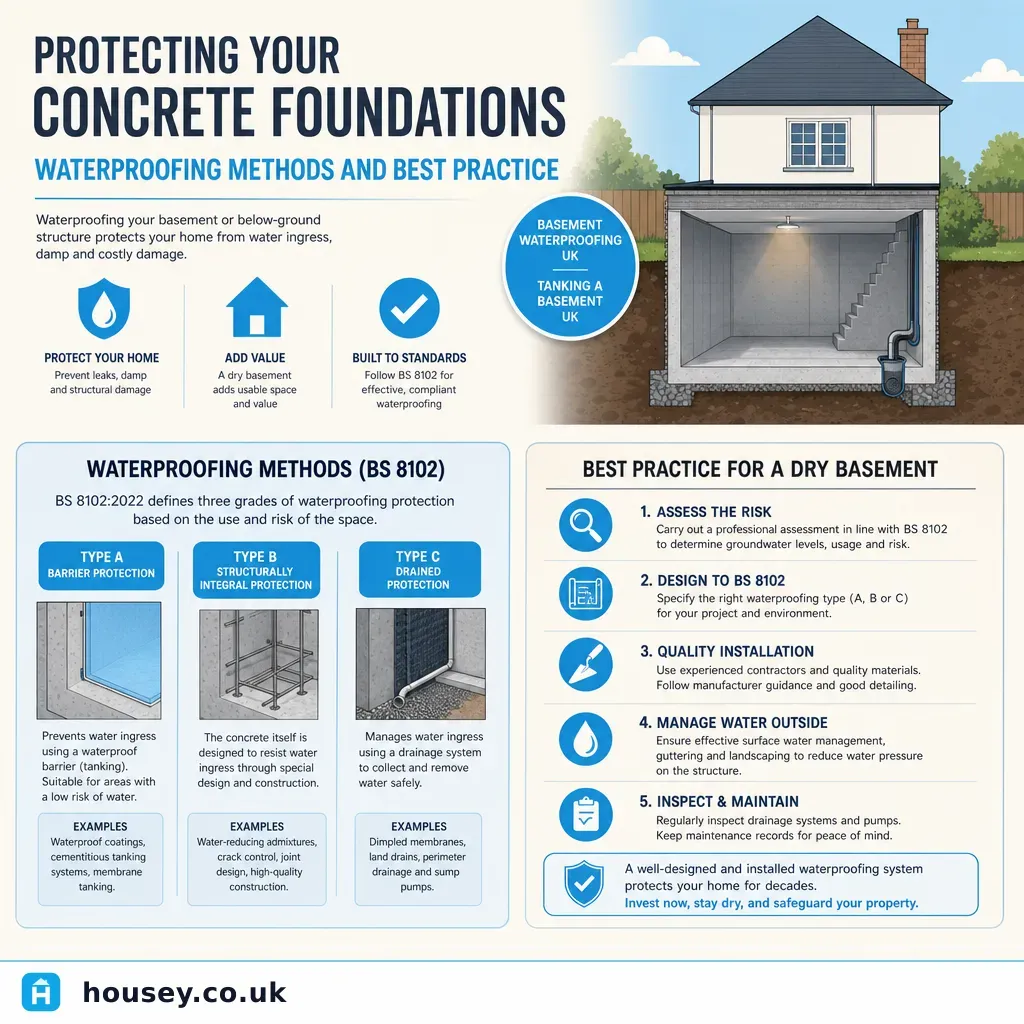
Protecting Your Concrete Foundations: Waterproofing Methods and Best Practice
Foundation waterproofing protects below-ground concrete structures from hydrostatic pressure and soil moisture. Under BS 8102:2022, three technical types are recognised in the UK: Type A barrier tanking, Type B structurally integral waterproof concrete, and Type C drained cavity systems. For habitable basement conversions, a combined Grade 3 system is usually required. A specialist survey should always precede any specification.
 Energy & Retrofit
Comparing Solar Battery Storage with Backup Generators for Energy Independence
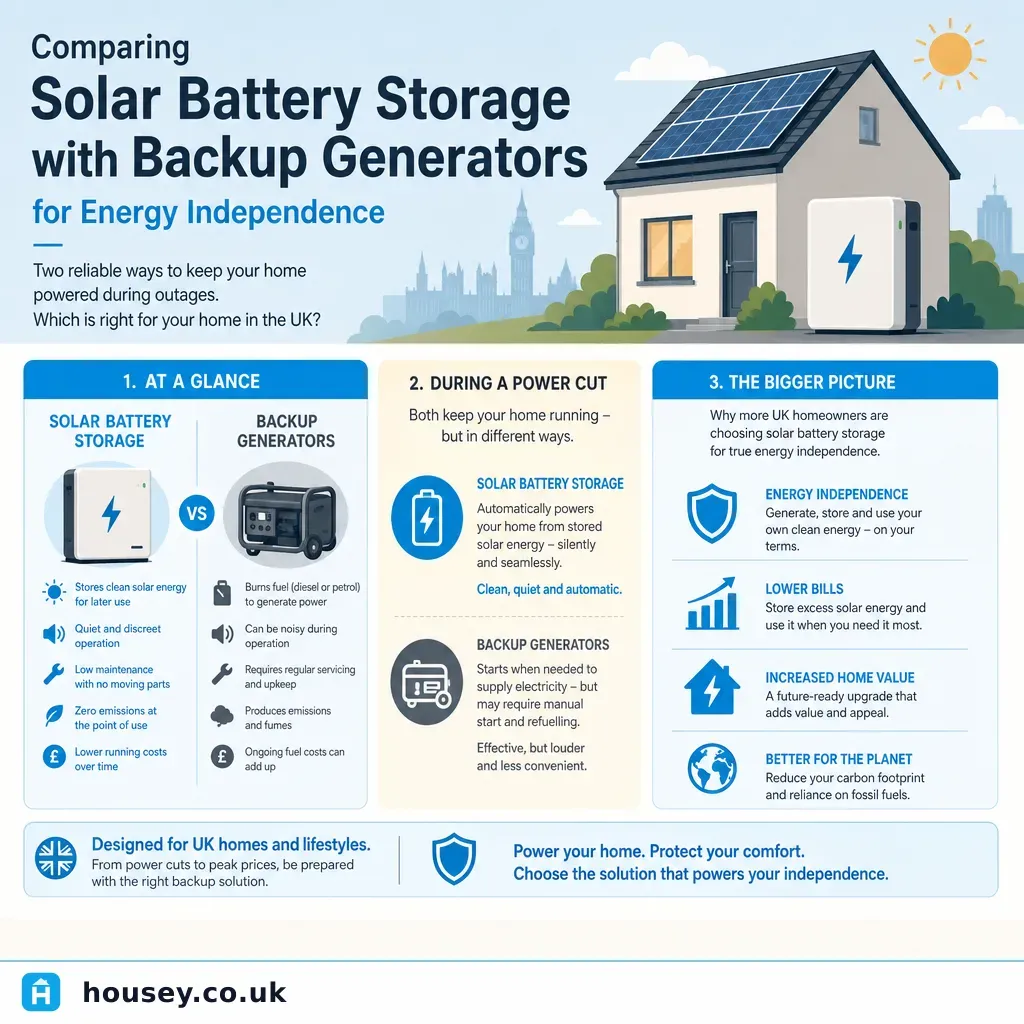
Solar battery storage and backup generators both offer energy resilience but work very differently. Batteries store surplus solar electricity silently and without fuel, making them the stronger long-term choice for PV owners. Generators suit homes needing large on-demand loads or off-grid backup without solar panels. Many households benefit from comparing both carefully before committing to either.
 Improvement & Build
Low-Emissivity Windows: Energy Performance and Modern Glass Technology
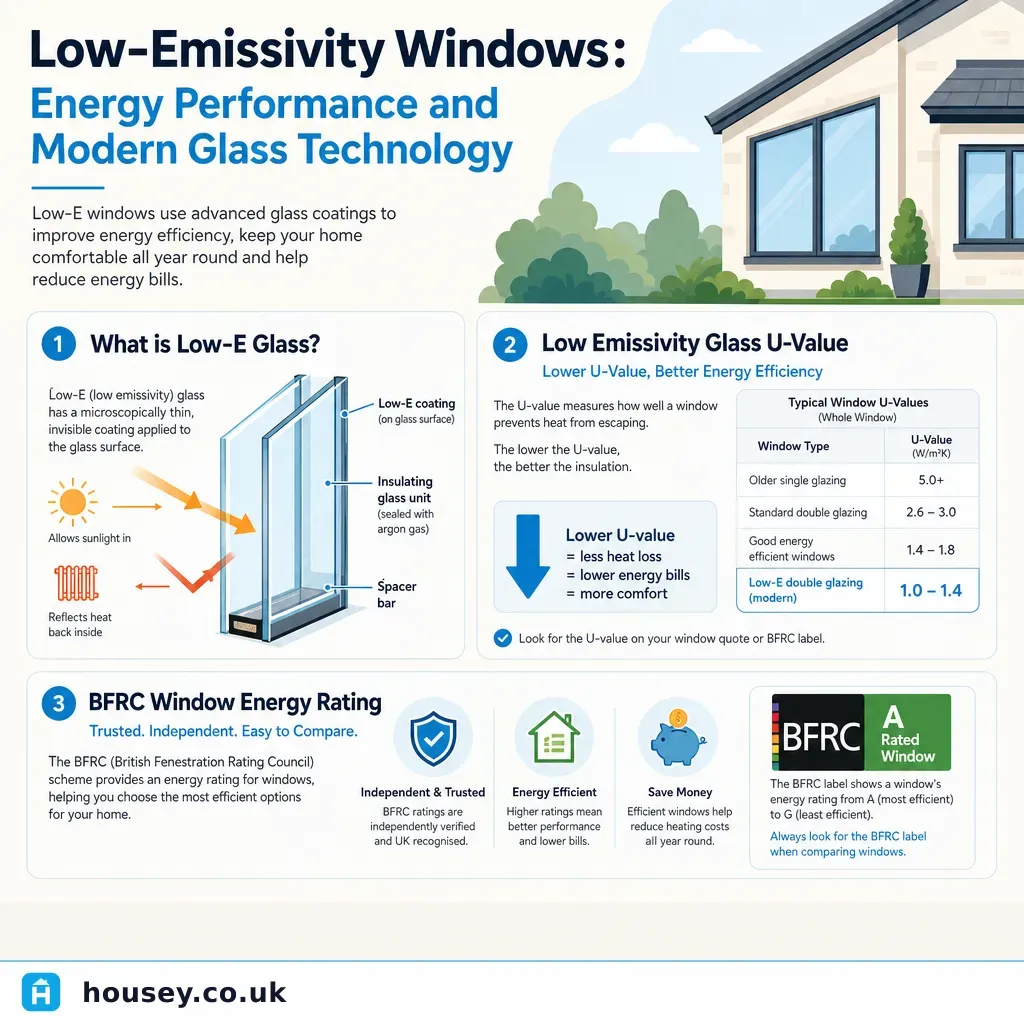
Low-emissivity (low-E) glass has a microscopically thin metallic coating that reflects heat back into a room while allowing daylight through. In double or triple glazing, low-E units typically achieve centre-pane U-values of 1.0 to 1.6 W/m²K, significantly better than standard double glazing at around 2.8 W/m²K. Most replacement windows sold in the UK today include low-E glass as standard.
 Improvement & Build
Stamped Concrete Driveway Installation: Cost and Design Options
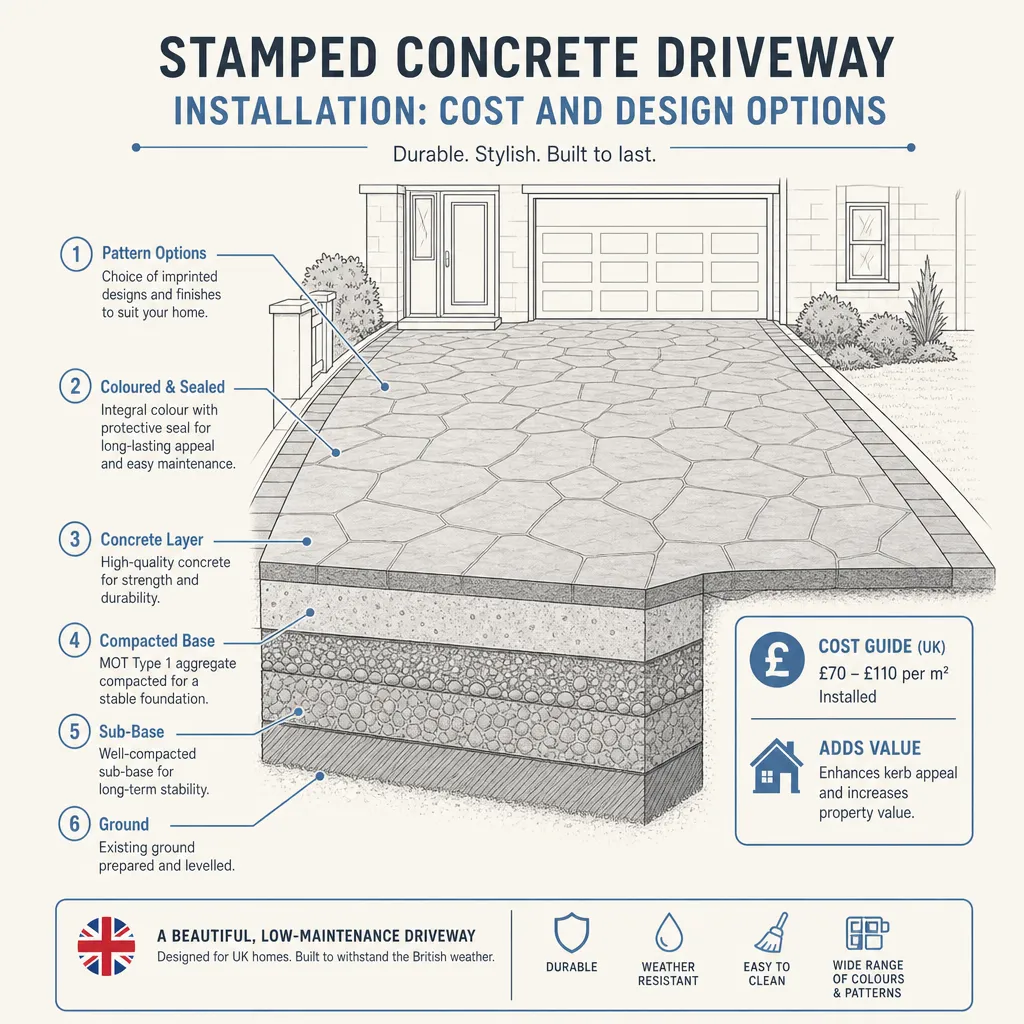
Imprinted (stamped) concrete driveways typically cost £75–120 per square metre installed in the UK, making a 40 m² front driveway around £3,000–£4,800 before preparatory groundworks. Colour, pattern, and edge detailing affect price. Impermeable surfaces on front gardens over 5 m² in England require planning permission under the General Permitted Development Order 2015.
 Energy & Retrofit
Underfloor Heating Running Costs and Energy Management
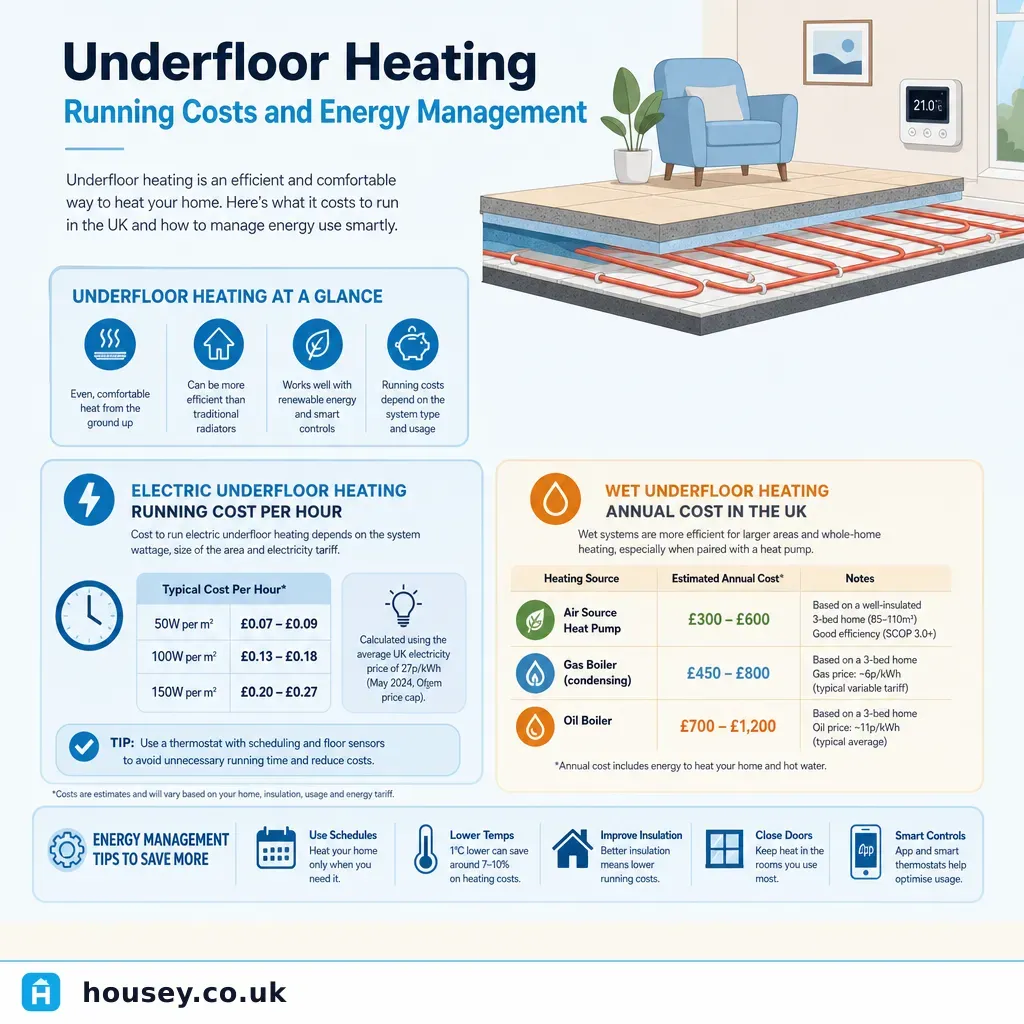
Underfloor heating running costs depend on system type, heat source, insulation, and controls. Electric UFH costs around 22–34p per kWh at 2026 Ofgem price cap rates; wet UFH paired with a heat pump can deliver useful heat at 7–10p per kWh. Smart zoning and good insulation can reduce energy consumption by up to 30%.
 Improvement & Build
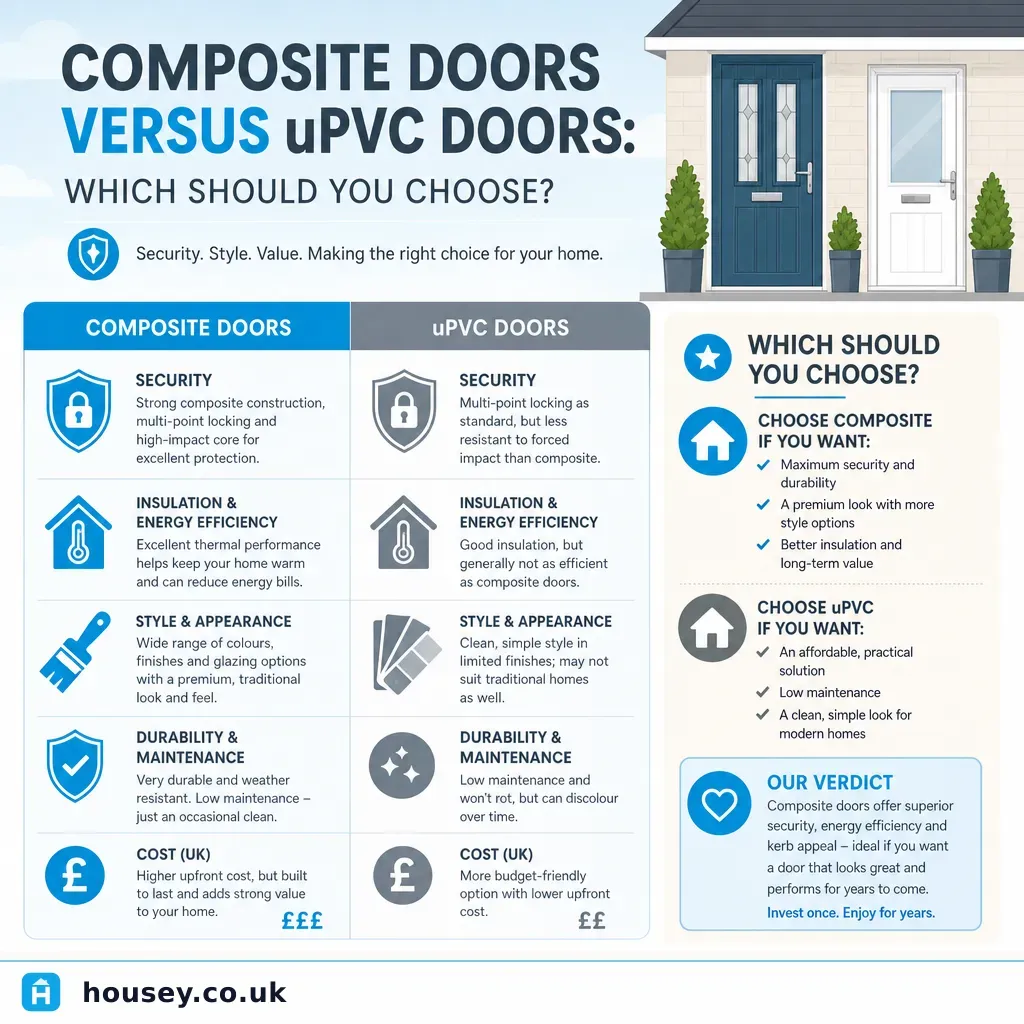
Composite doors versus uPVC doors: which should you choose?
Composite doors have a solid GRP-skinned core, stronger security credentials, and a typical lifespan of 35-plus years, but cost more than uPVC. uPVC doors suit modern homes and tighter budgets. Both can meet Building Regulations Part L thermal requirements. Choose composite for a period property or long-term value; choose uPVC for a rental or modern build.
 Energy & Retrofit
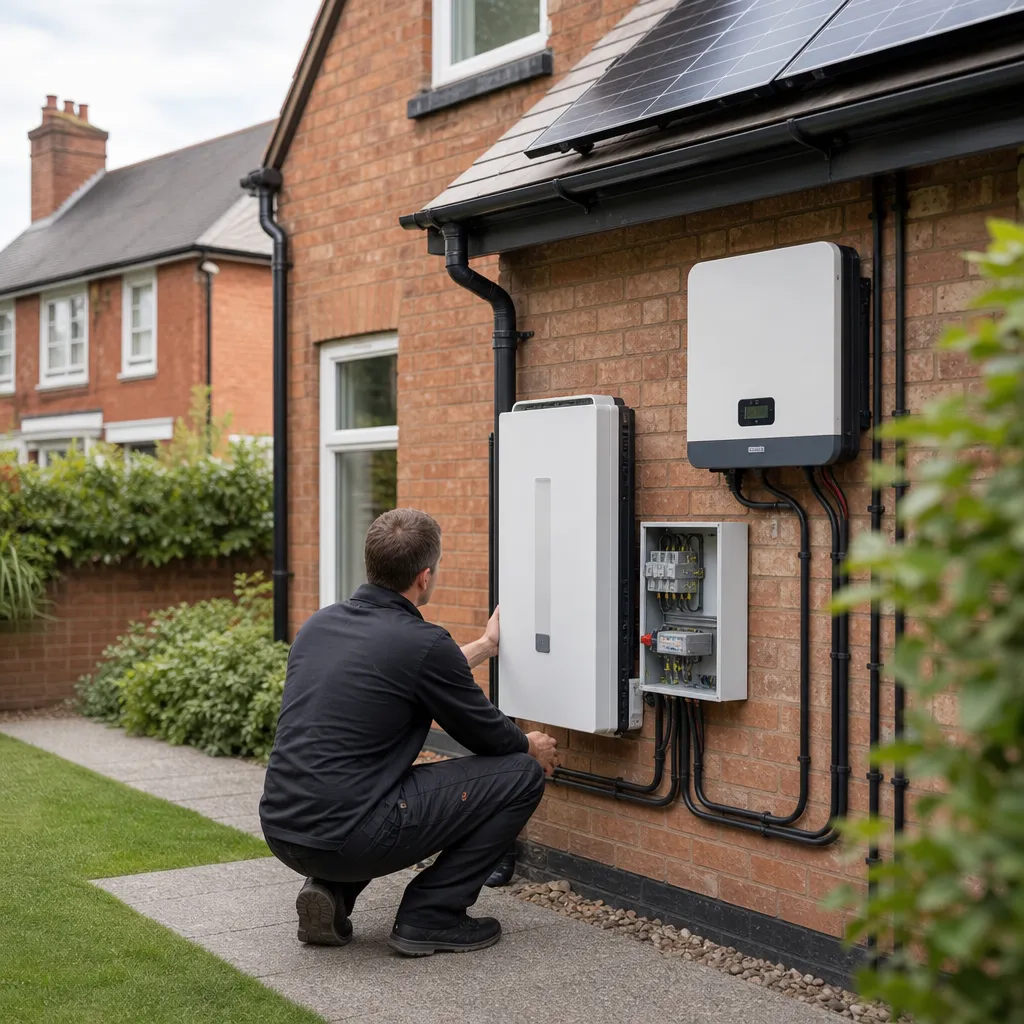
Solar Battery Storage: Surplus Power Management and System Operation
A solar battery stores surplus electricity from your panels during the day and releases it when generation has stopped — typically evenings and overnight. The battery management system prioritises self-consumption, then exports any remaining surplus to the grid under the Smart Export Guarantee. Most UK home systems use lithium iron phosphate (LFP) chemistry and have usable capacities of 5–15 kWh.
 Planning & Pre-Build
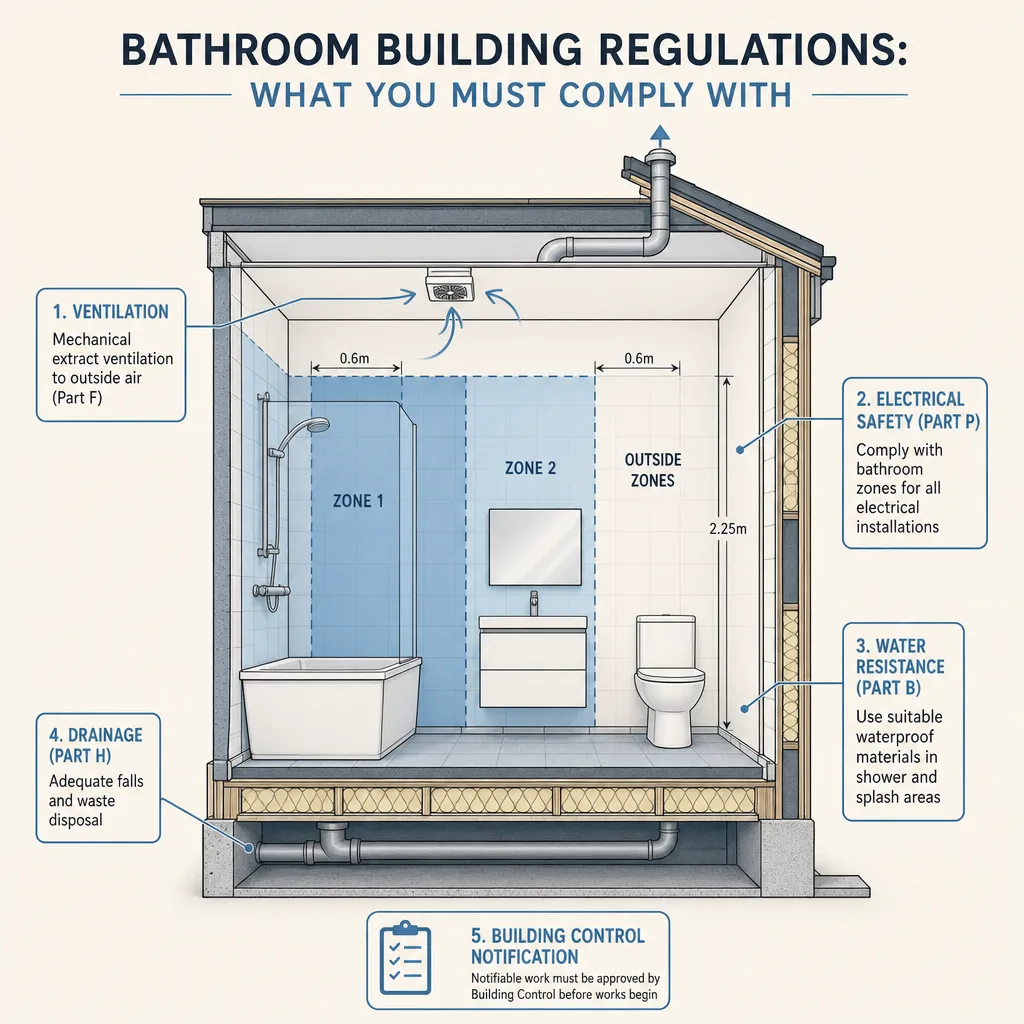
Bathroom building regulations: what you must comply with
Bathrooms in England are subject to several Approved Documents: Part G covers hot water temperature limits and water efficiency, Part F sets minimum ventilation at 15 litres per second, and Part P governs electrical safety in defined zones. New bathrooms, altered drainage, and new electrical circuits are notifiable to building control unless a Part P registered electrician self-certifies.
 Surveys & Inspections
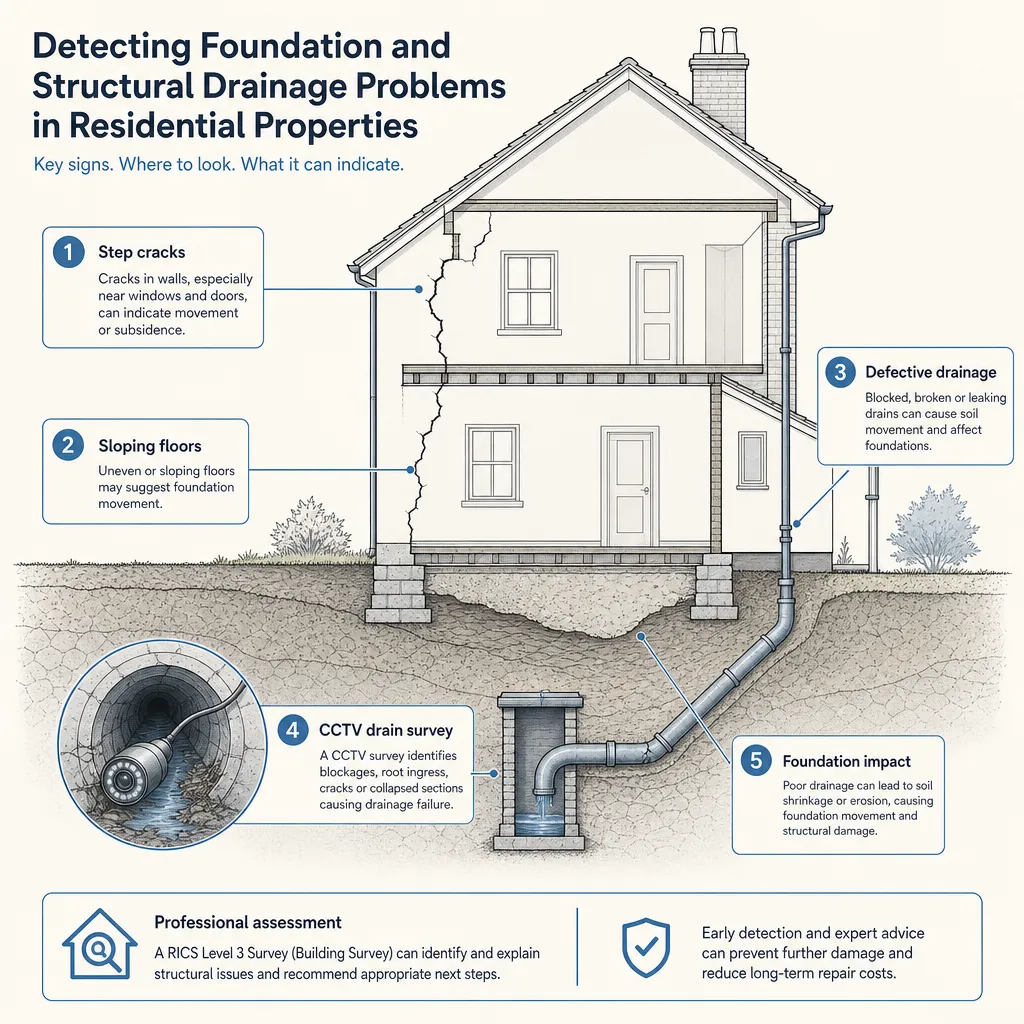
Detecting Foundation and Structural Drainage Problems in Residential Properties
Foundation and drainage problems in UK homes often appear as stepped cracks in brickwork, sticking doors, or slow-draining fixtures. The two issues frequently occur together — a failing drain beneath load-bearing ground can cause ongoing structural movement. A RICS Level 3 Building Survey and a CCTV drain survey are the appropriate professional investigations when these signs are present.