Knowledge Base
Property advice that actually helps
Researched, UK-specific guides for every stage of homeownership — from buying and surveys to retrofit, planning and major works.
 Planning & Pre-Build
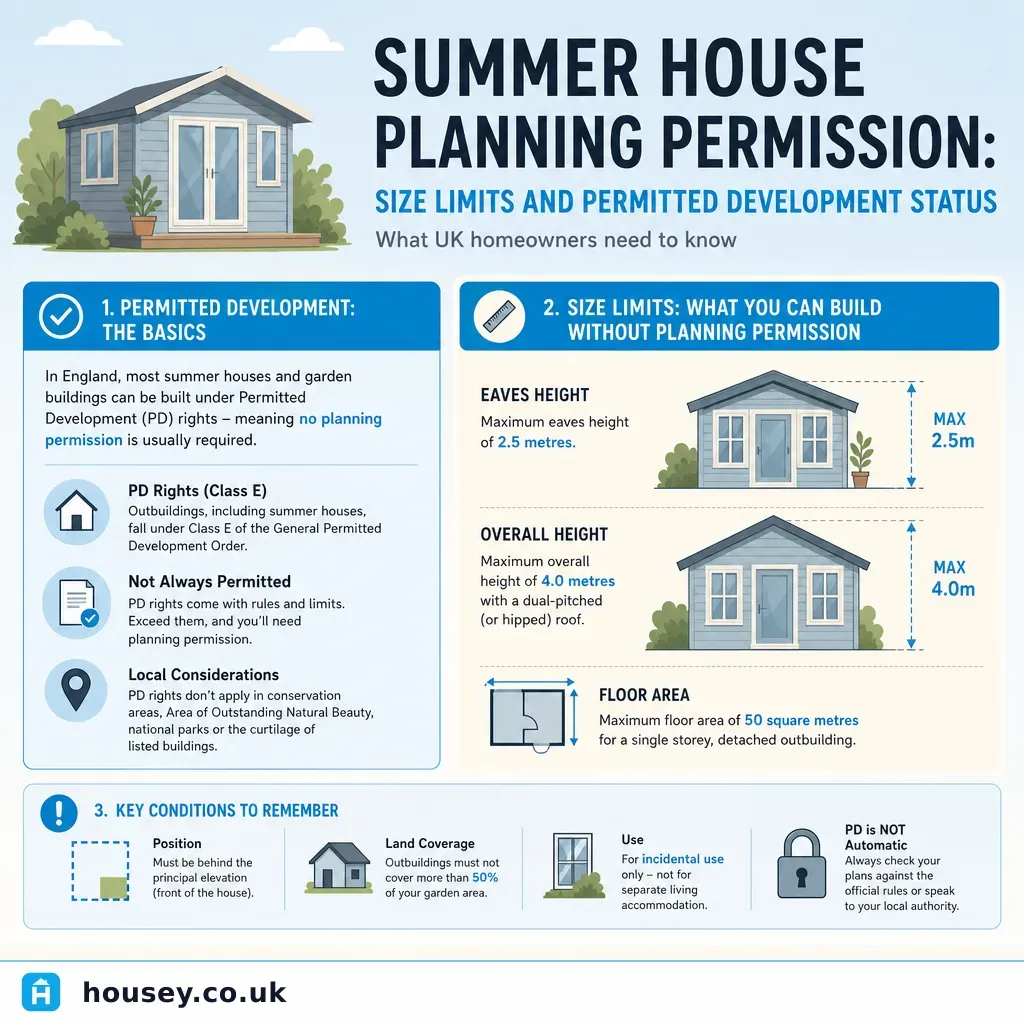
Summer House Planning Permission: Size Limits and Permitted Development Status
Most summer houses in England are permitted development if they are single-storey, sit behind the principal elevation, stay within height limits (2.5 m within 2 m of a boundary; 4 m or 3 m otherwise), and total outbuilding coverage stays below 50% of the original curtilage. Listed buildings and Article 4 Direction areas require a formal planning application.
 Planning & Pre-Build
What Is a Patio Home? Understanding This Property Type in the UK
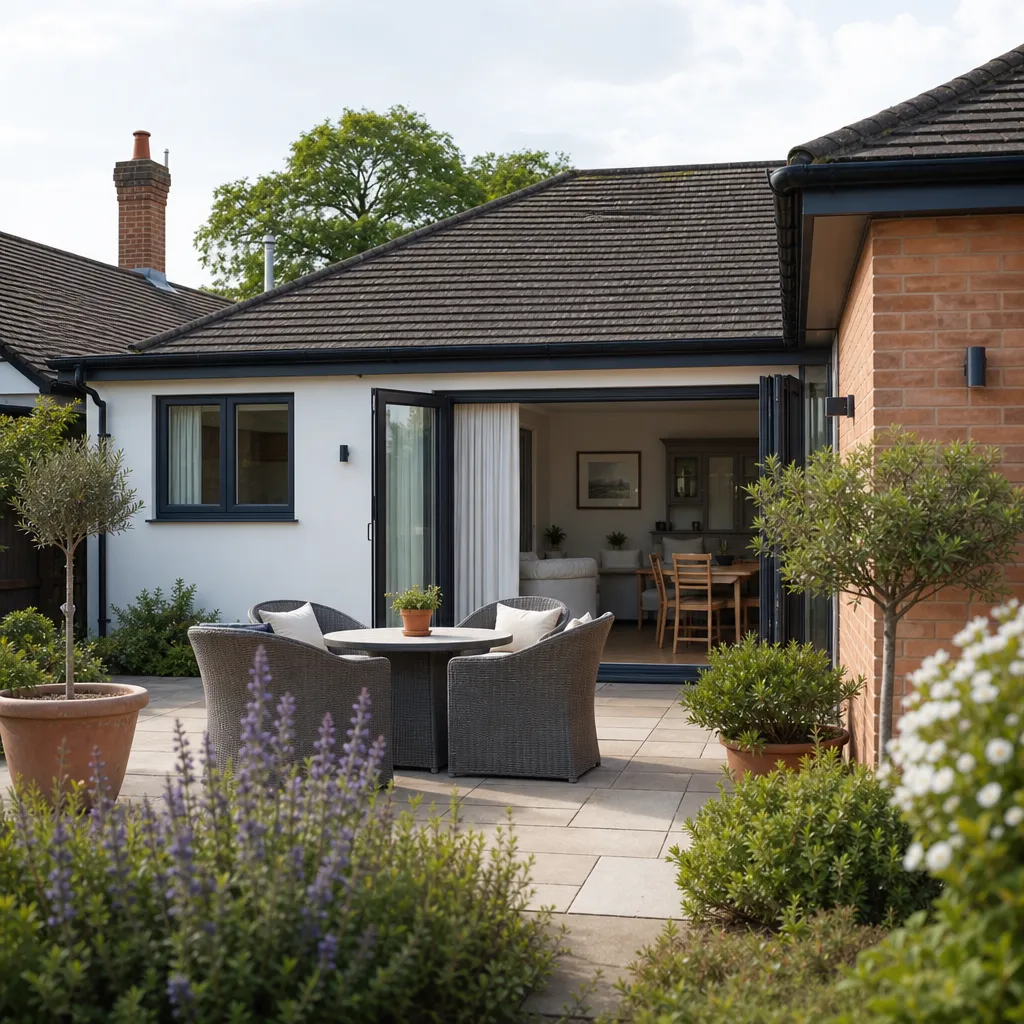
A patio home is a compact, low-maintenance property designed around a private patio or courtyard rather than a traditional lawn garden. The term originates in North American real estate and carries no precise legal definition in UK planning law. In UK new-build marketing, it typically describes a single-storey or ground-floor home with a paved private outdoor space.
 Planning & Pre-Build
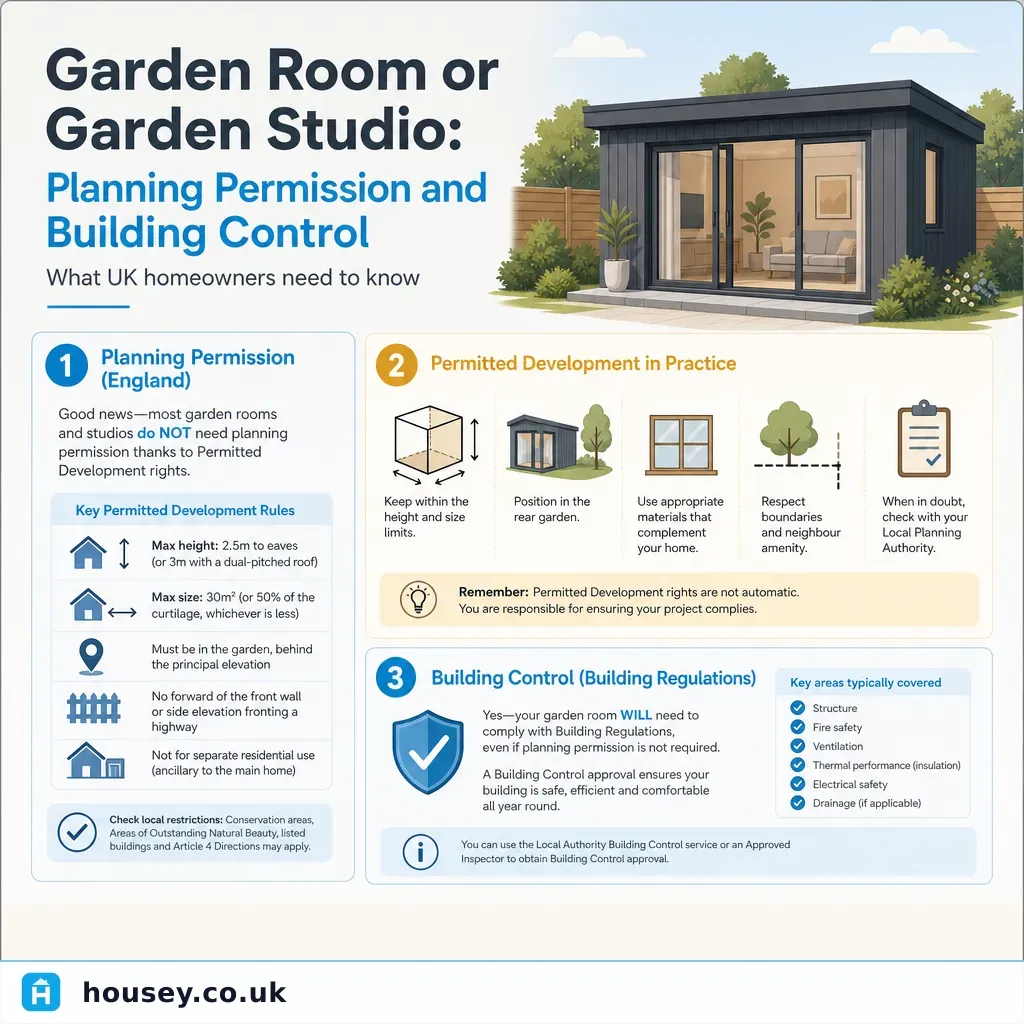
Garden Room or Garden Studio: Planning Permission and Building Control
A garden room or studio often qualifies as permitted development in England, meaning no planning application is needed — provided it occupies no more than 50% of the total curtilage, sits within height limits, and is not used as a separate dwelling. Building regulations may still apply if you add electrics, plumbing, or sleeping accommodation.
 Planning & Pre-Build
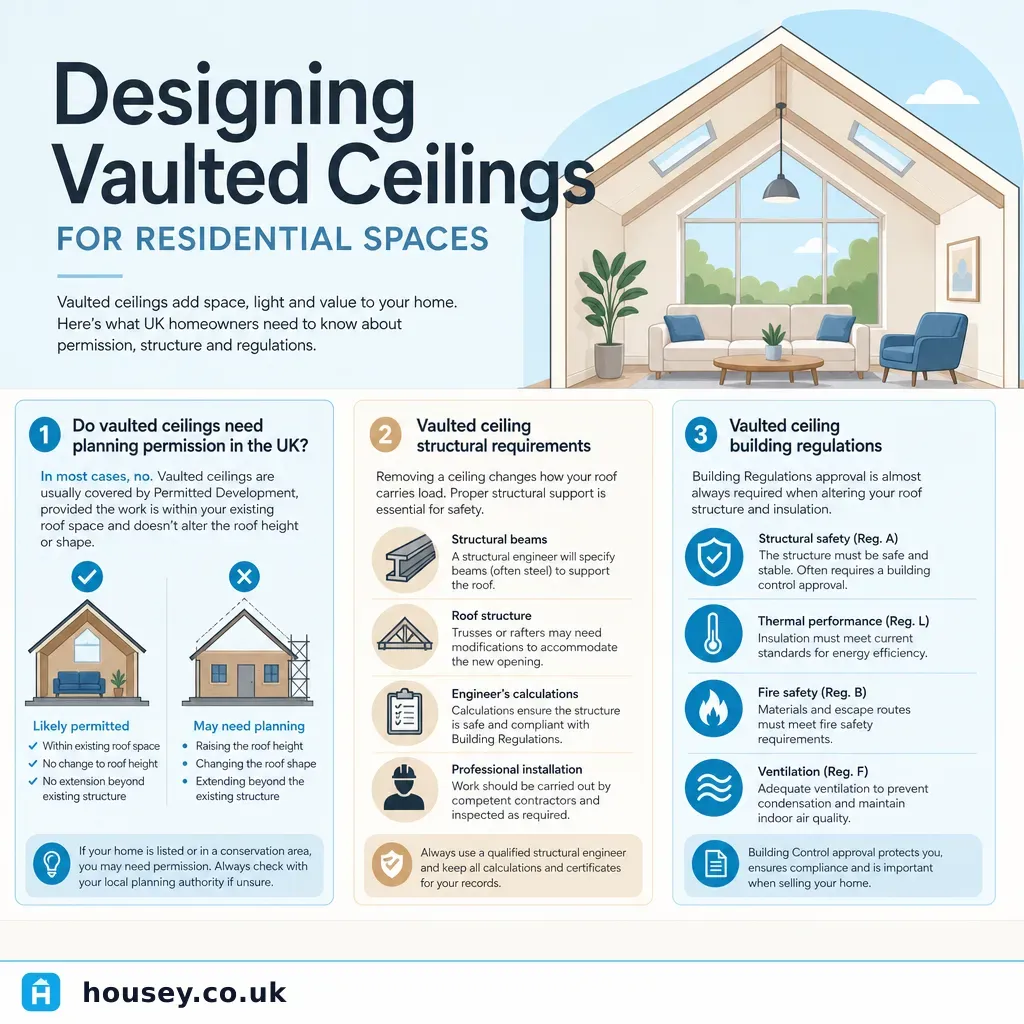
Designing vaulted ceilings for residential spaces
Creating a vaulted ceiling in an existing home involves restructuring the roof timbers that form the structural triangle, which always requires a structural engineer's calculations and Building Regulations approval under Approved Document A. The work typically costs £8,000–£20,000 all-in depending on span and structural solution, and can usually proceed without planning permission unless the property is listed or the ceiling forms part of a loft conversion.
 Planning & Pre-Build
Structural Arching in Walls: Load Distribution and Design
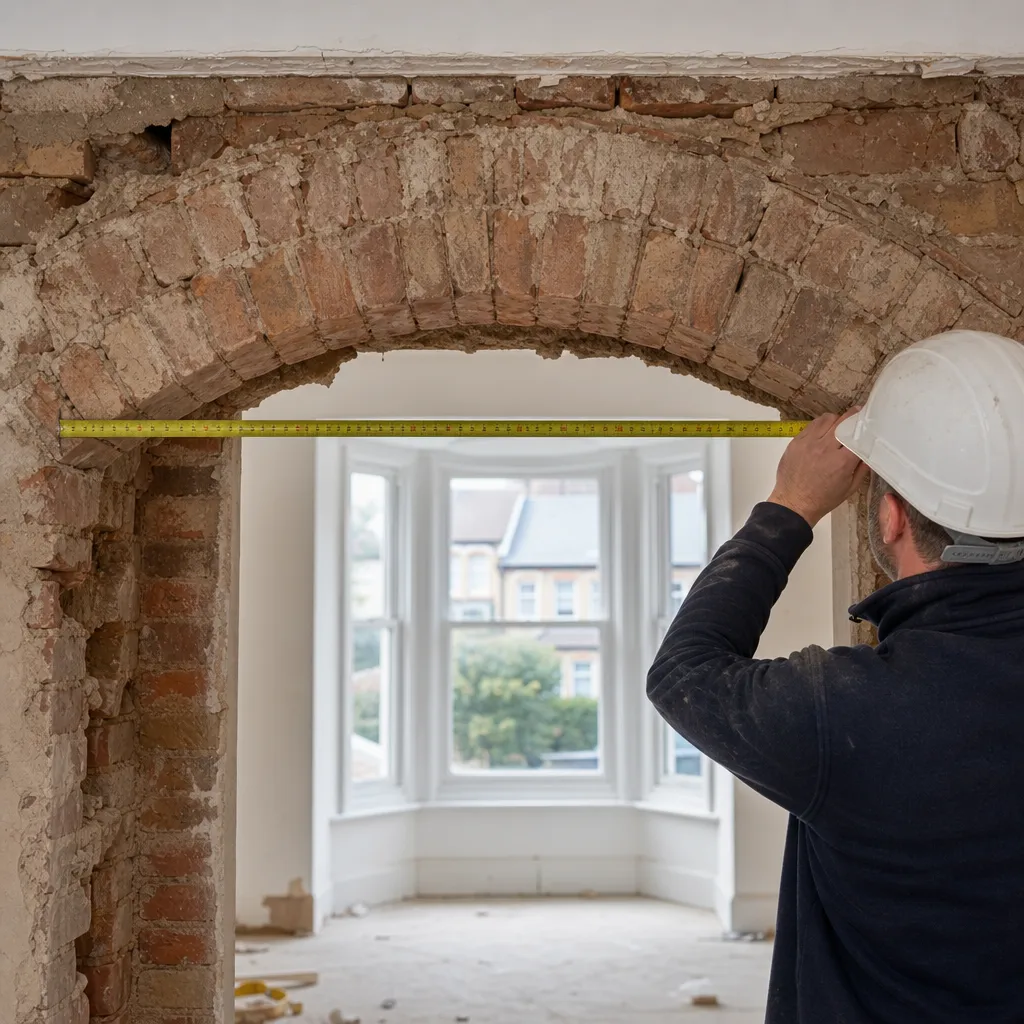
Structural arching occurs when masonry redistributes compressive loads in a triangular or parabolic path around an opening, reducing the load on the lintel below. For it to work reliably, adequate wall mass must exist on either side of the gap. Any reliance on arching action in a residential alteration requires assessment by a qualified structural engineer.
 Planning & Pre-Build
Fire Sprinkler Installation and Fire Safety Systems
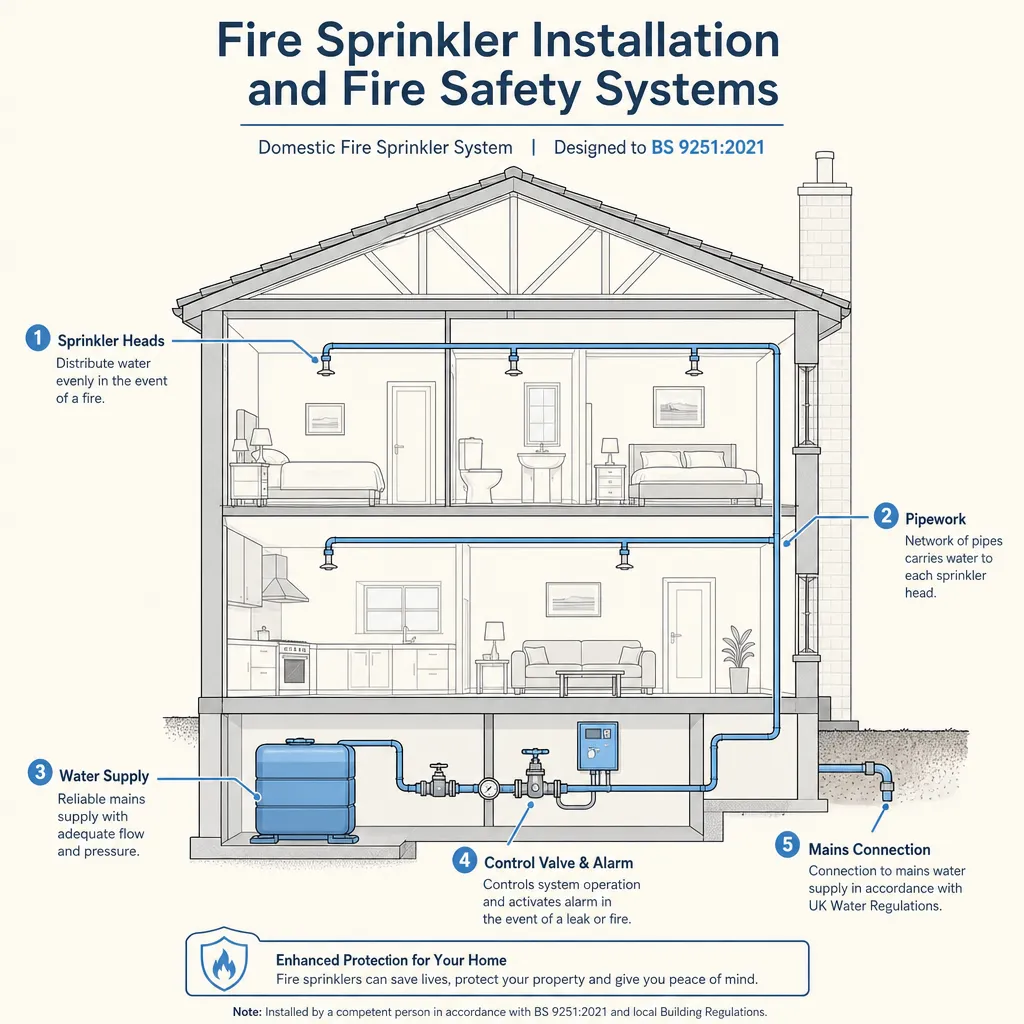
Residential fire sprinkler systems in the UK must comply with BS 9251:2021. New-build homes in Wales require automatic fire suppression by law; in England, sprinklers are required in new flats above 11 metres and in care homes. HMO landlords may also face local licensing requirements. Design and installation must be carried out by a competent, BAFSA-accredited contractor.
 Planning & Pre-Build
What to budget for modifying drainage systems for an extension
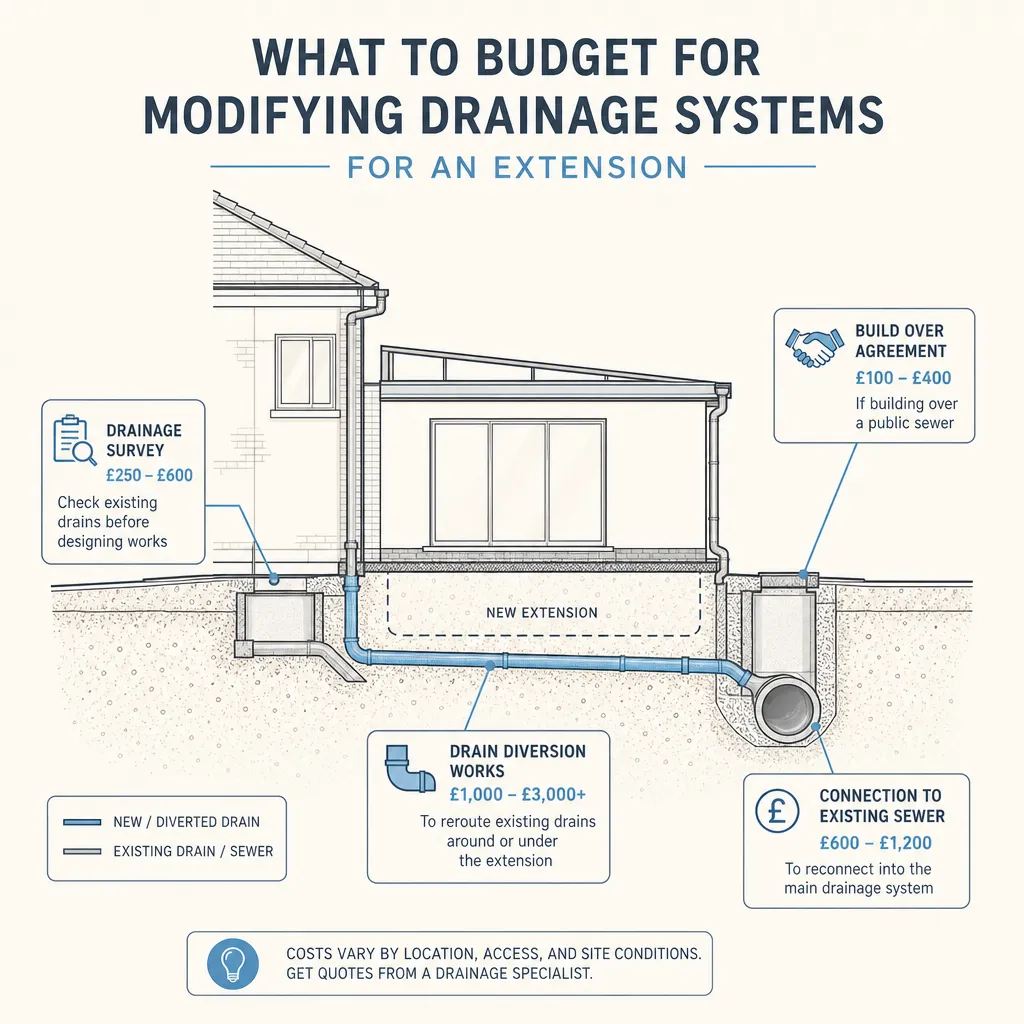
Modifying drainage for a house extension can cost from a few hundred pounds for a Build Over Agreement application to £40,000 or more for diverting a public sewer. A CCTV drainage survey costing £150–£400 should be commissioned before finalising your design. Building Regulations Part H applies to all drainage work on extensions.
 Planning & Pre-Build
Surveying and converting vicarages and period clergy residences
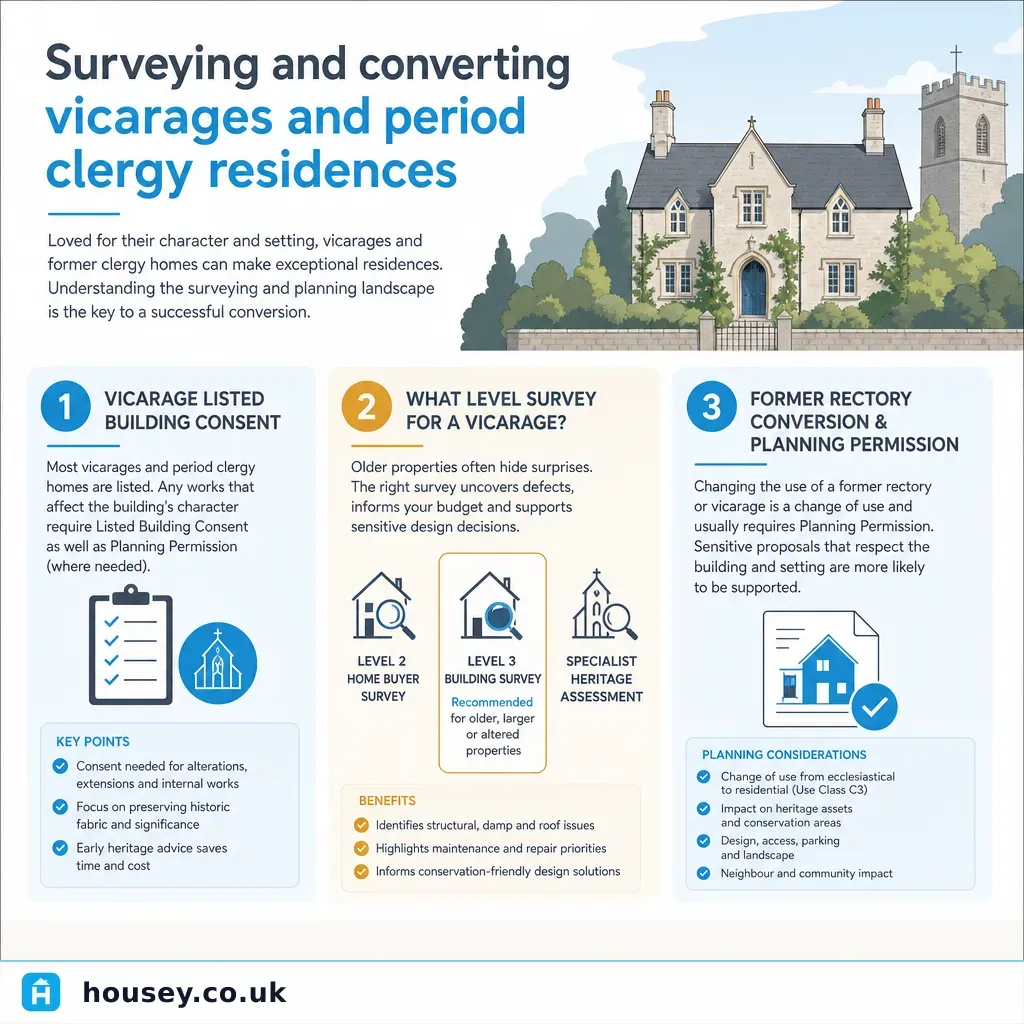
Former vicarages are often listed buildings subject to full planning and Listed Building Consent rules once sold privately. A RICS Level 3 Building Survey is the minimum recommended purchase survey; measured building surveys are needed before planning applications. Heritage and planning advice should be sought before making an offer or instructing any works.
 Planning & Pre-Build
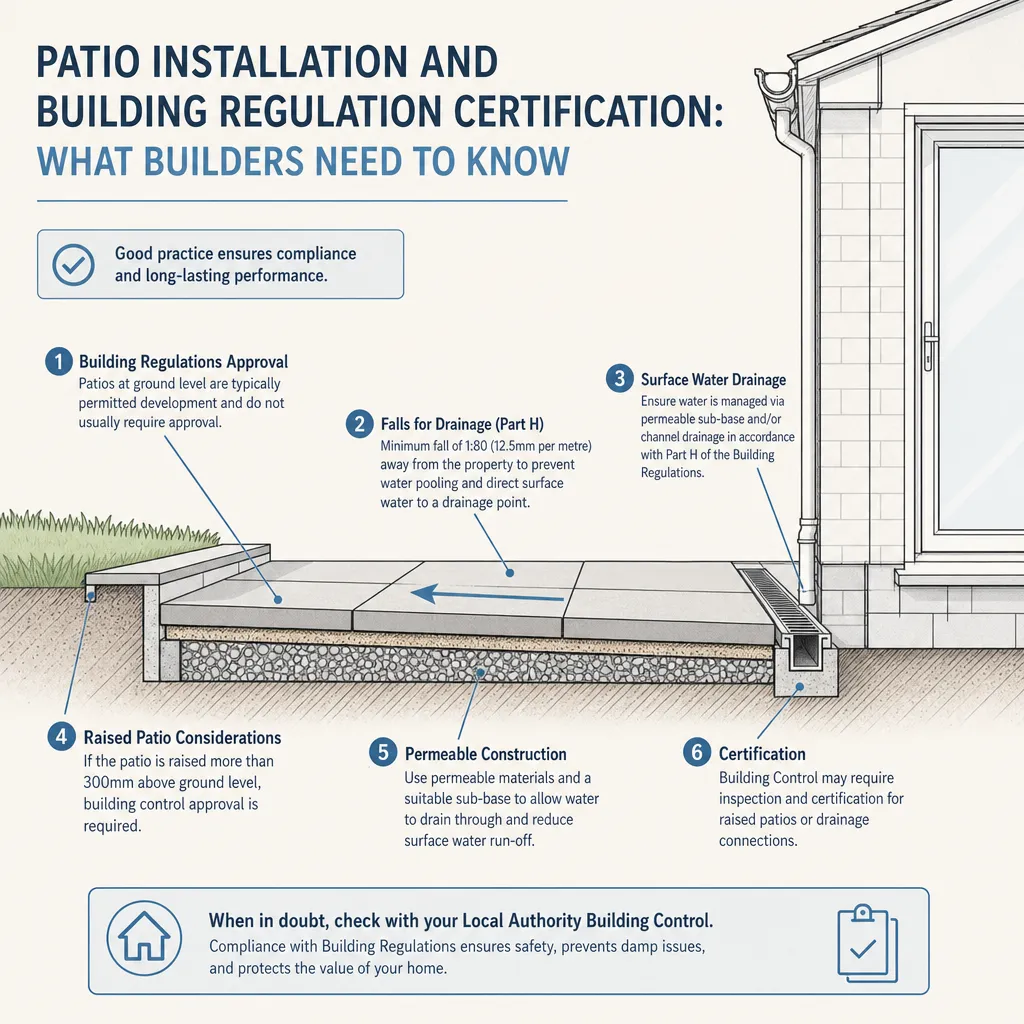
Patio Installation and Building Regulation Certification: What Builders Need to Know
Most ground-level patios in England do not require building regulations approval. However, drainage directed to a public sewer, a raised terrace with a drop over 600mm, or a structural retaining wall can trigger requirements under Approved Documents H or K. Always verify permitted development conditions and drainage arrangements before work begins.
 Planning & Pre-Build
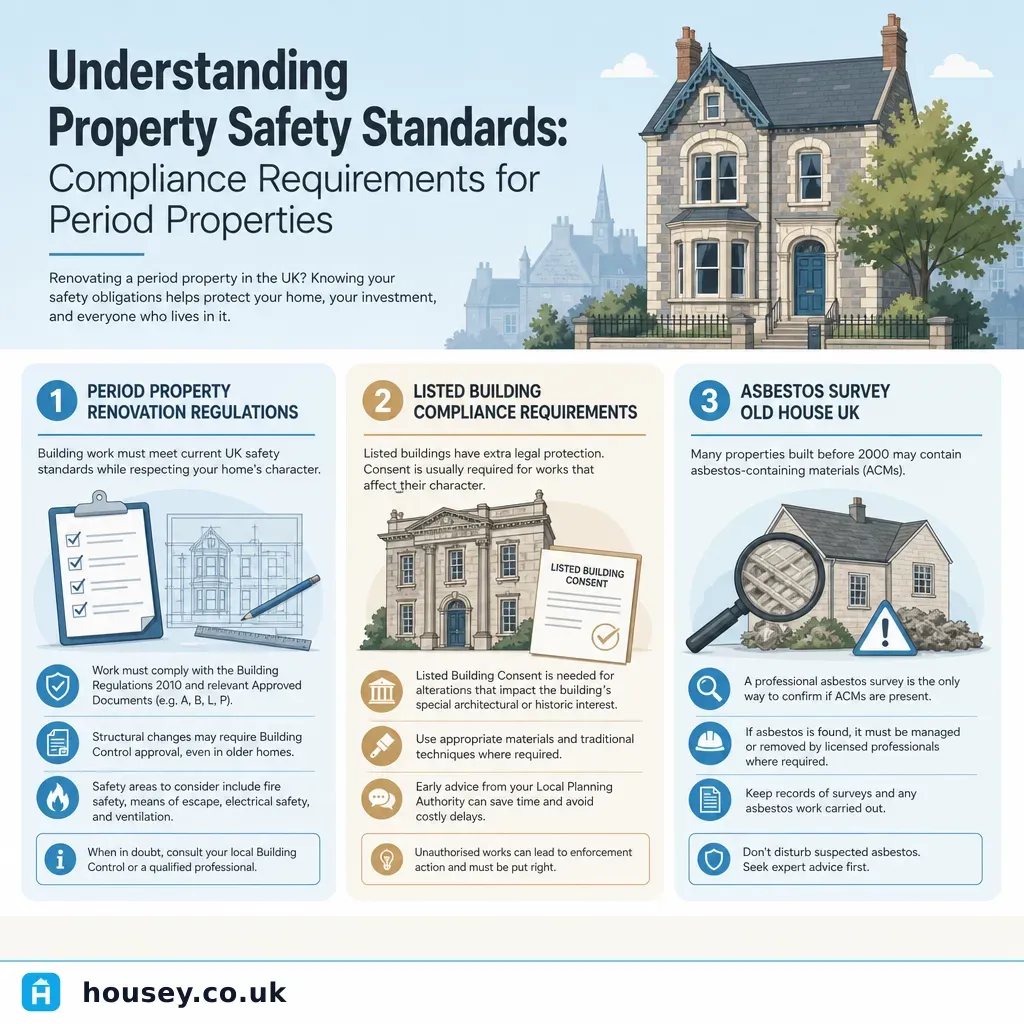
Understanding Property Safety Standards: Compliance Requirements for Period Properties
Period properties in England are not automatically exempt from current Building Regulations — any notifiable work must comply with today's Approved Documents. Listed buildings and conservation area homes face additional consent requirements. Key compliance areas for older homes include fire safety, electrical inspection, asbestos management, gas certificates, and minimum energy efficiency standards for rental properties.
 Planning & Pre-Build
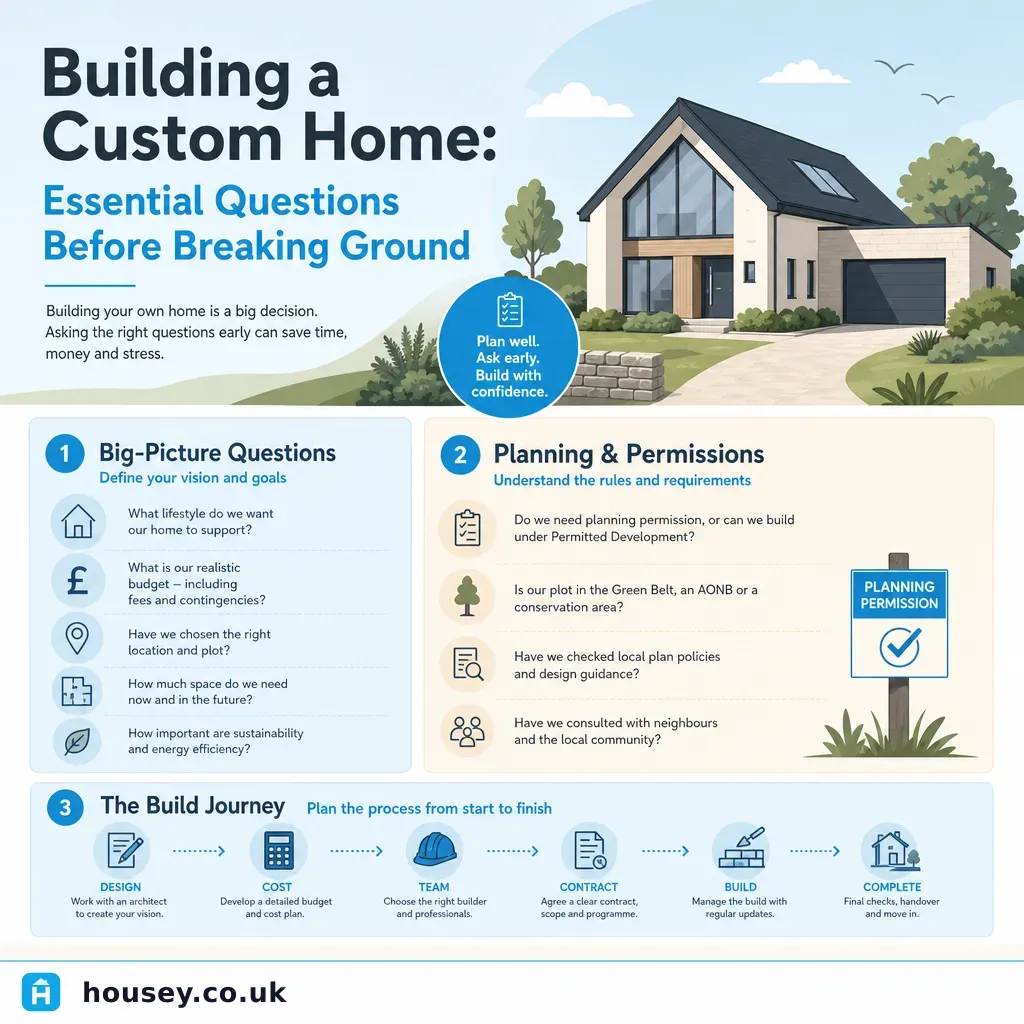
Building a Custom Home: Essential Questions Before Breaking Ground
Building a custom home in the UK requires planning permission, separate Building Regulations approval, and a professional team typically including an architect or architectural technologist, structural engineer, and building control body. The process usually takes 24–36 months from feasibility to completion. Assembling the right professionals before buying a plot helps prevent costly delays and redesigns.
 Planning & Pre-Build
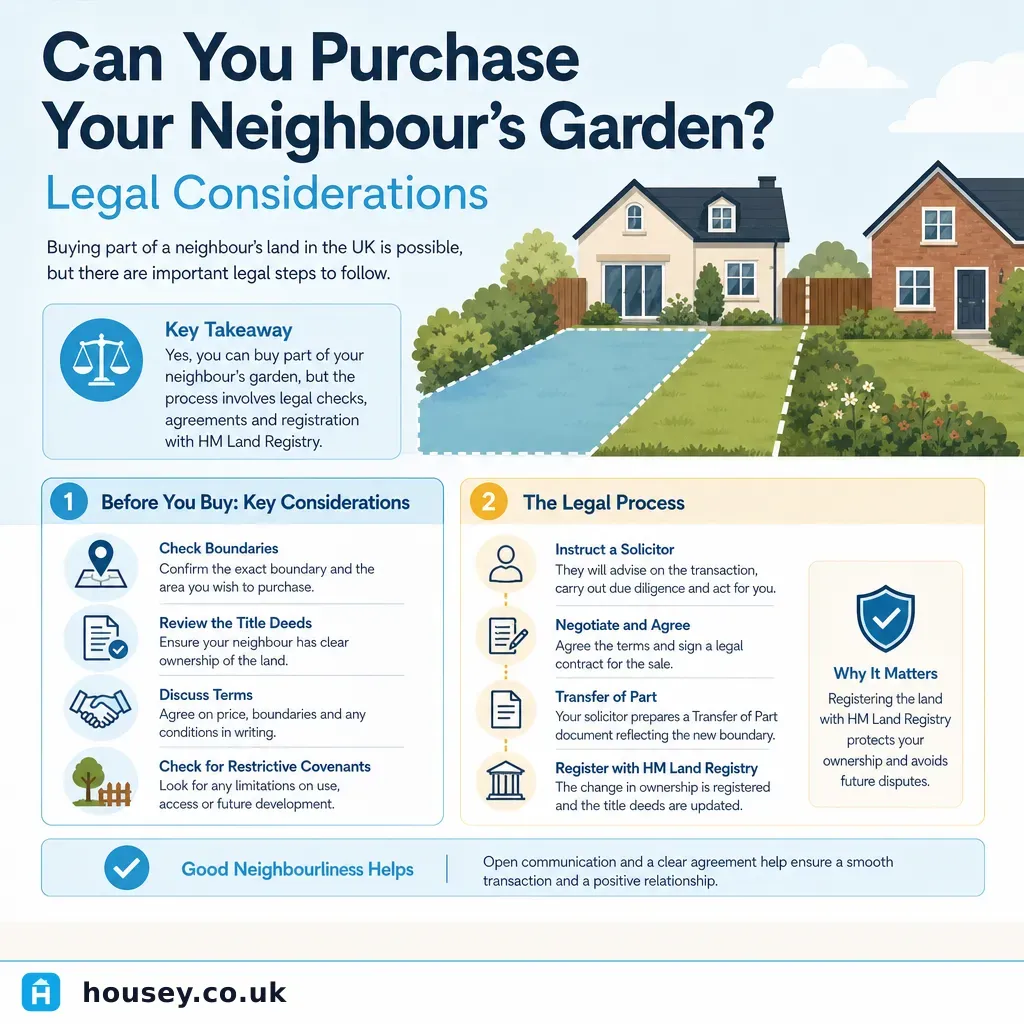
Can You Purchase Your Neighbour's Garden? Legal Considerations
Buying part of a neighbour's garden is legally possible but requires a formal process called a transfer of part, handled by a solicitor and registered at HM Land Registry. Both parties need separate legal advice, your mortgage lender must consent, and a precise boundary plan is essential. Any development on the land — extensions or outbuildings — may require separate planning permission or building regulations approval.