Knowledge Base
Property advice that actually helps
Researched, UK-specific guides for every stage of homeownership — from buying and surveys to retrofit, planning and major works.
 Improvement & Build
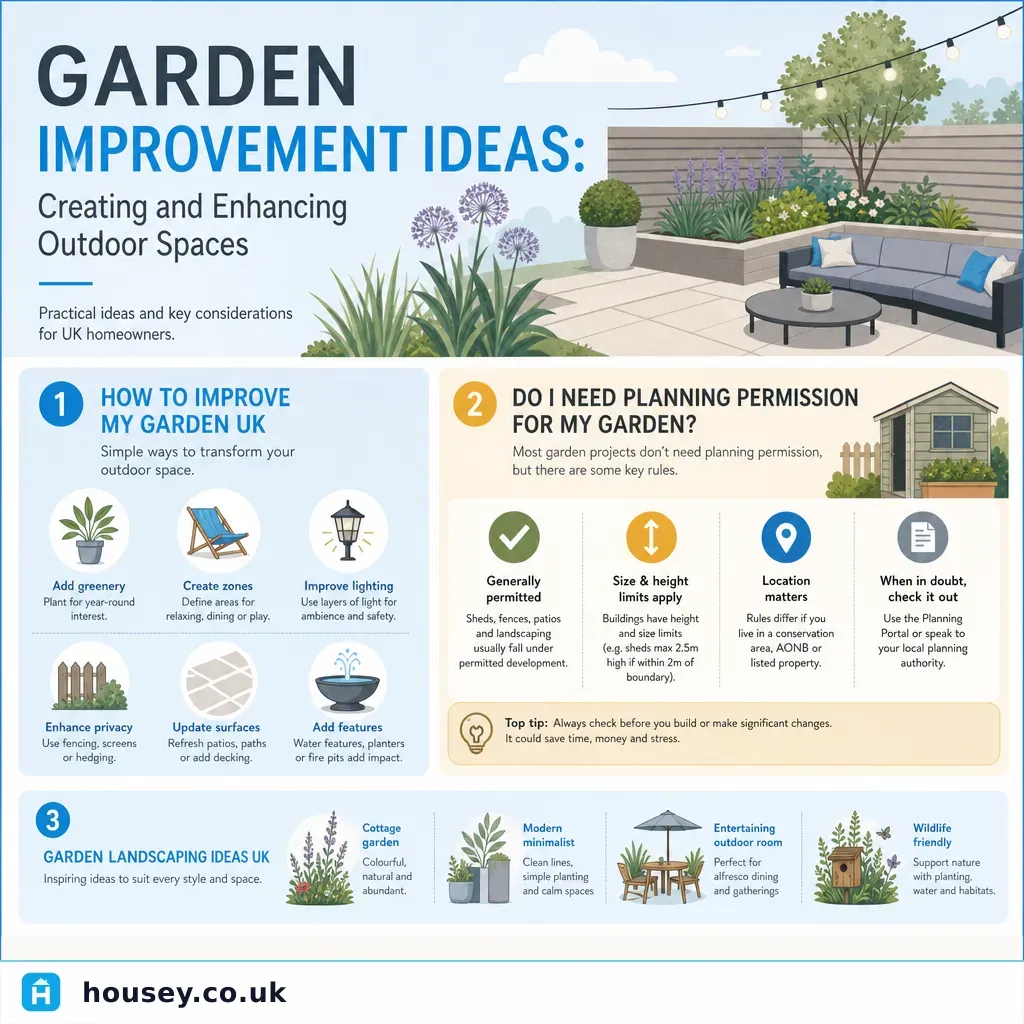
Garden Improvement Ideas: Creating and Enhancing Outdoor Spaces
Improving your garden in the UK usually starts with a clear plan covering hard landscaping, soft planting, and any structural elements. Most garden works are permitted development and need no planning permission, but boundary walls, Tree Preservation Orders, and front garden hard-standing are exceptions. Smaller projects suit DIY; paving, retaining walls, and tree work typically benefit from a qualified professional.
 Improvement & Build
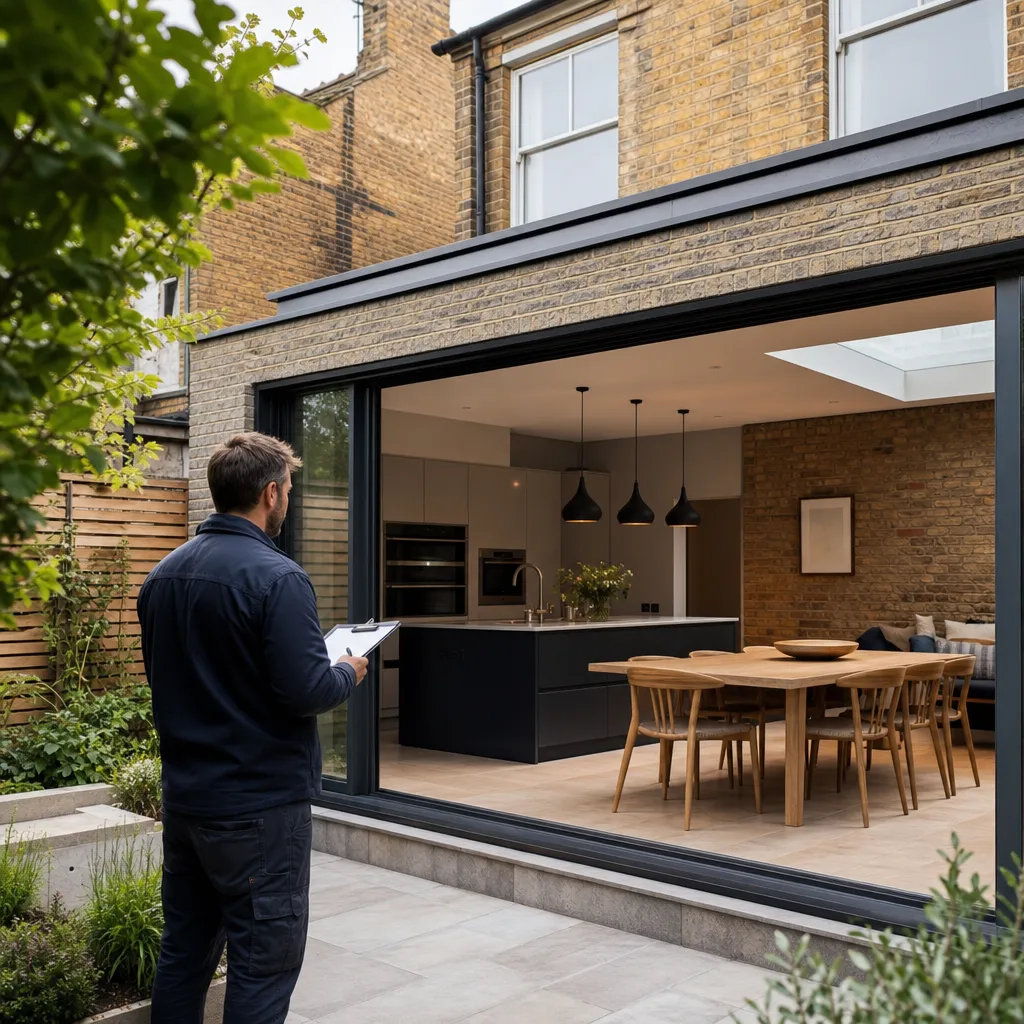
Emerging Design Preferences in UK Home Renovation
UK home renovation aesthetics in 2025 are defined by warm neutral palettes replacing cool greys, biophilic materials such as timber and clay plaster, and multifunctional room layouts driven by hybrid working. Open-plan spaces are being adapted with acoustic zoning rather than left fully open. Energy-conscious upgrades like underfloor heating are increasingly integrated into the design brief from the outset.
 Energy & Retrofit
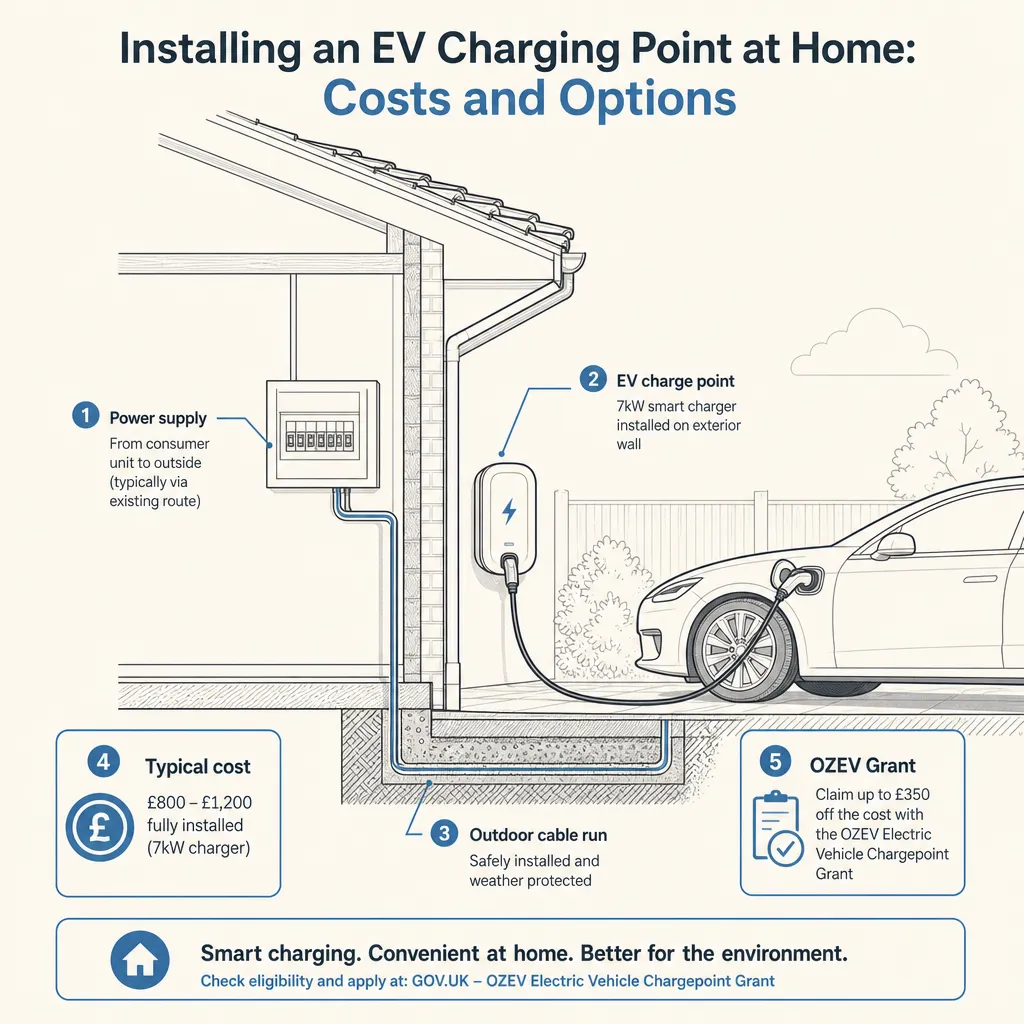
Installing an EV Charging Point at Home: Costs and Options
Installing a home EV charging point in the UK typically costs £300–£800 after the OZEV Electric Vehicle Chargepoint Grant of up to £350. A 7 kW smart wallbox is the standard choice for homes with single-phase supply and off-street parking. Installation must be carried out by an OZEV-approved installer.
 Improvement & Build
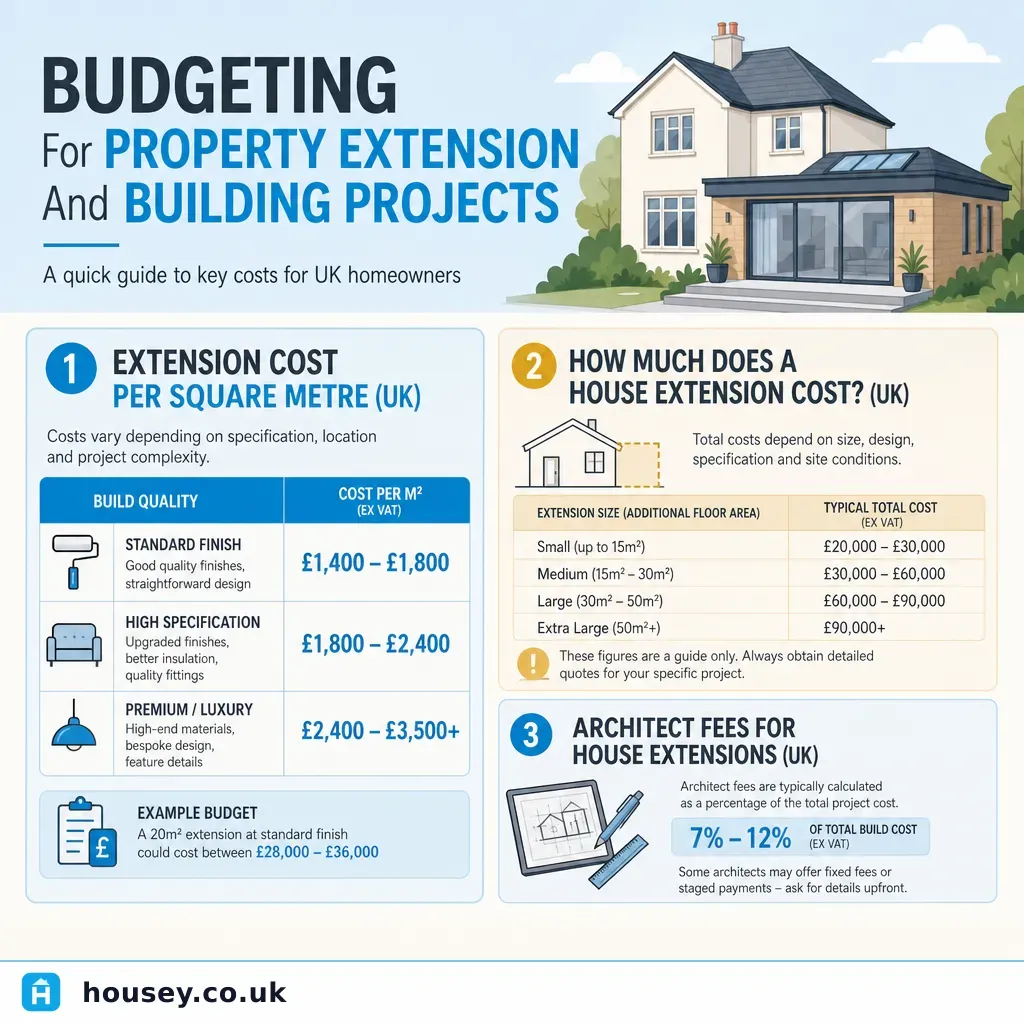
Budgeting For Property Extension And Building Projects
A typical UK single-storey rear extension costs roughly £1,500–£2,500 per square metre to build, before professional fees, planning costs, and VAT. Expect to add 10–15% contingency, 10–15% for design and structural fees, and check whether VAT at 20% applies. Always get at least three itemised quotes before committing to a builder.
 Improvement & Build
Uplighting for Gardens: Design Techniques and Effects
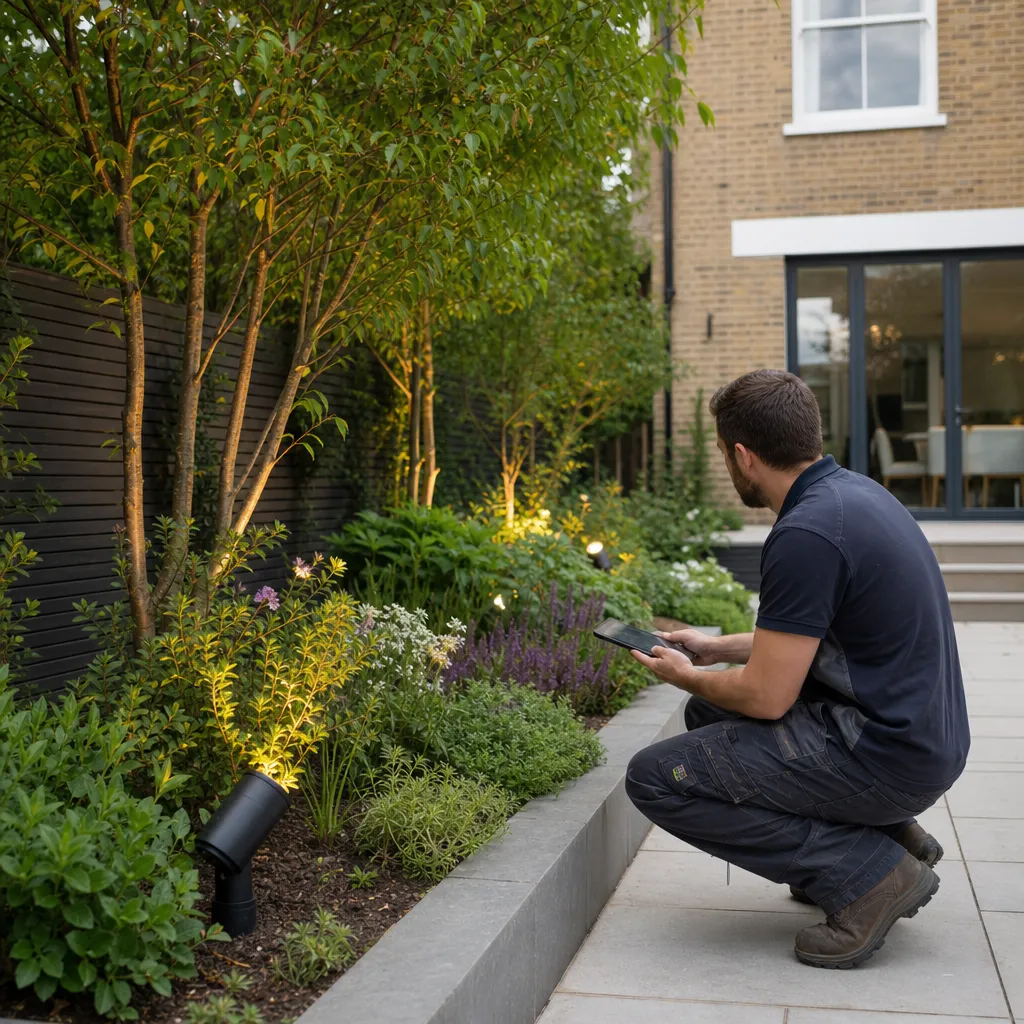
Garden uplighting uses low-level or in-ground fixtures to project light upward onto trees, walls, and architectural plants. Warm white (2700–3000K) suits most UK planting. All mains-voltage outdoor electrical work must comply with Building Regulations Part P and be carried out by a registered electrician. Low-voltage 12V spike systems can usually be installed by a competent homeowner from an existing outdoor socket.
 Improvement & Build
Damp-Proofing and Waterproofing Treatment Costs
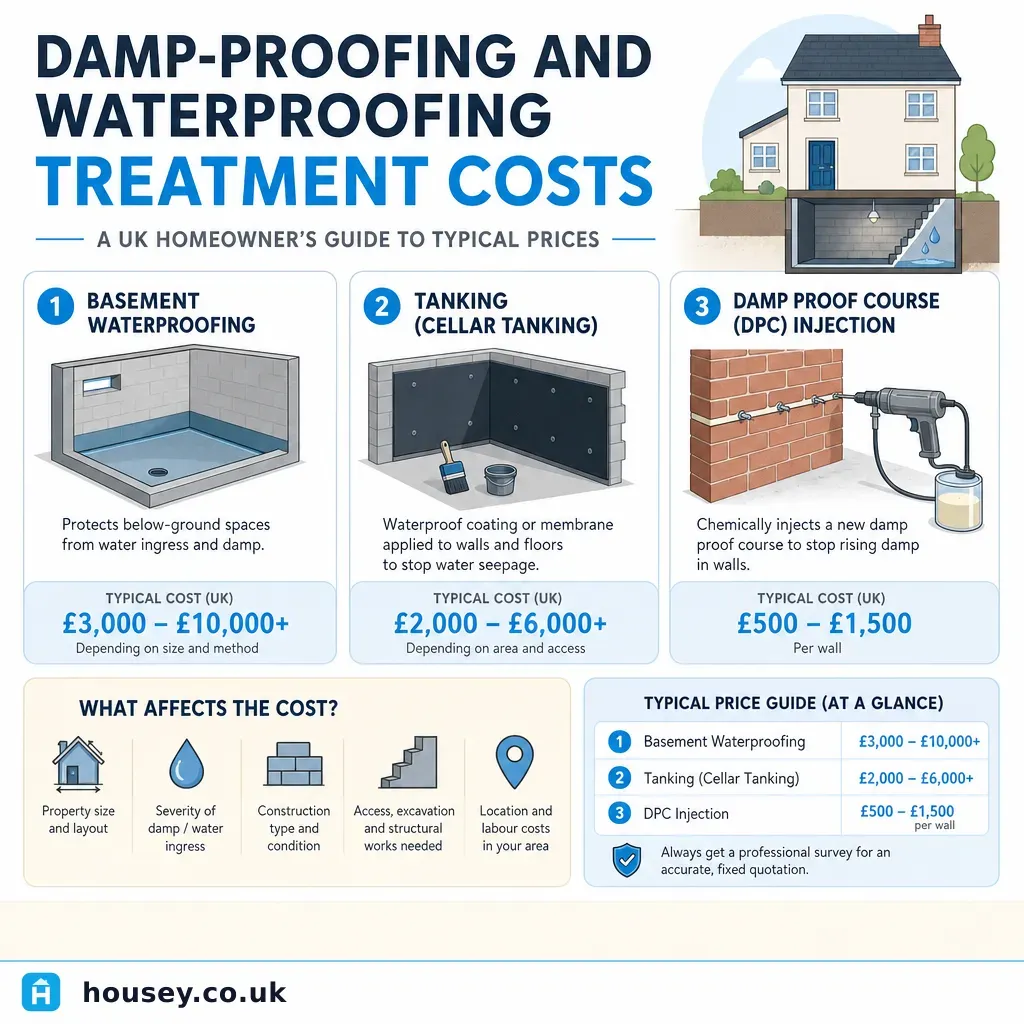
Damp-proofing costs in the UK depend on the treatment type and extent of the problem. Chemical DPC injection for a single room typically costs £300–£800; basement waterproofing with cavity drain membranes usually ranges from £80–£150 per m². Always commission an independent damp survey before treatment to confirm the cause and avoid paying for unnecessary work.
 Surveys & Inspections
What to Expect During a Home Survey
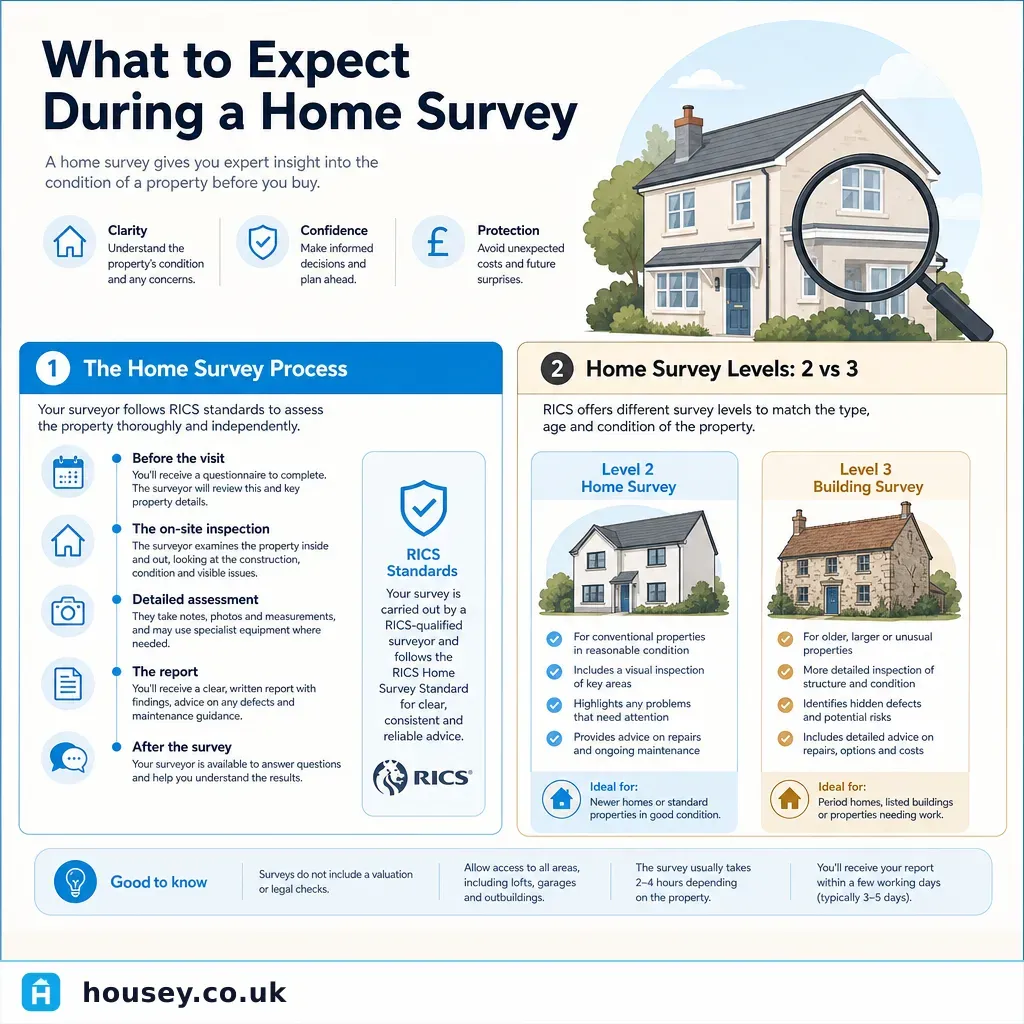
A home survey is a non-invasive visual inspection by a RICS-qualified surveyor, typically instructed between mortgage offer and exchange. Depending on the level chosen — Level 1, 2, or 3 — it covers the property's visible condition, flags defects with a traffic-light rating, and takes two to eight hours on site. The report is usually issued within three to five working days.
 Improvement & Build
Home Storage Solutions: Organisation Ideas for Every Room
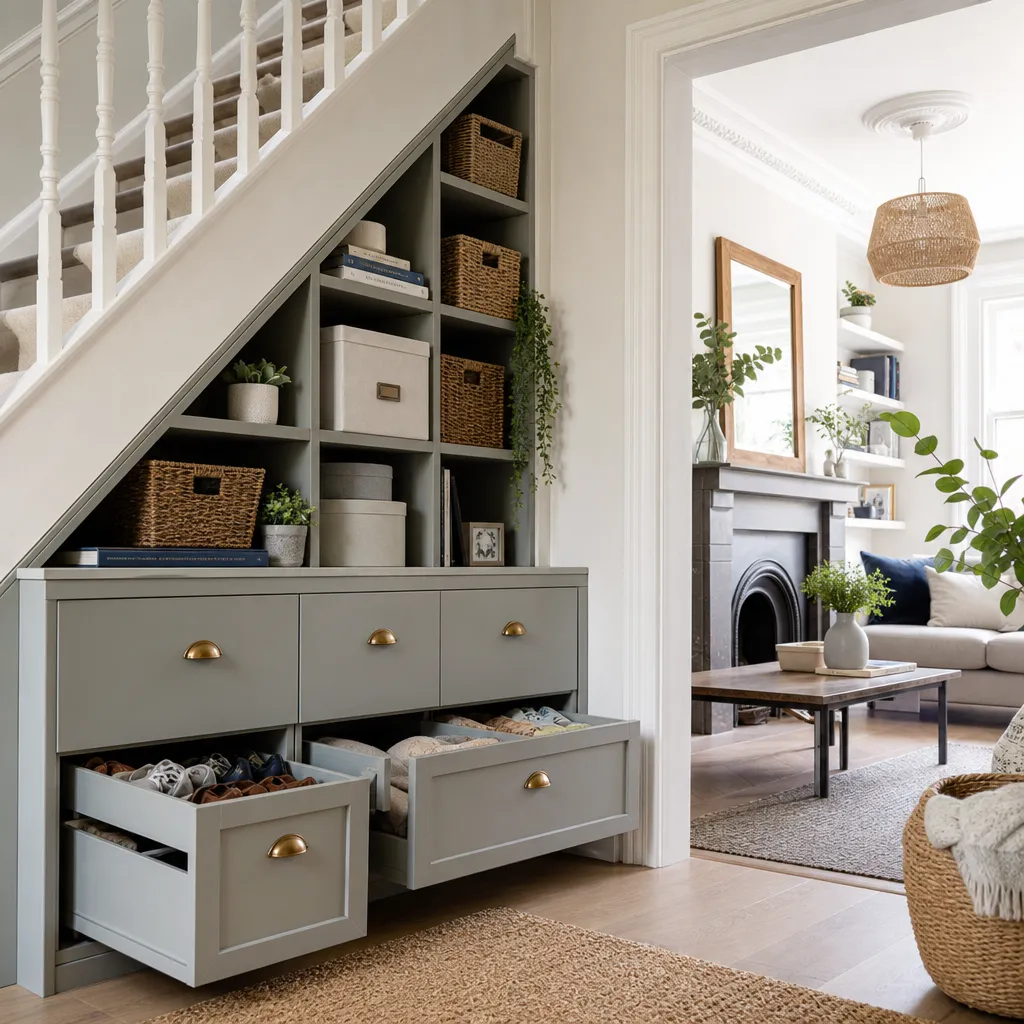
Good home storage starts with measuring available space and understanding exactly what needs to be stored. Built-in solutions — under stairs, in alcoves, in eaves rooms — suit older UK properties where floor space is limited. Every room has different demands: kitchens need accessible depth, bedrooms benefit from floor-to-ceiling wardrobes, and loft boarding needs to protect existing insulation. Decluttering before storing is always essential.
 Planning & Pre-Build
Structural Engineer versus Architect: Key Differences and When to Engage Each
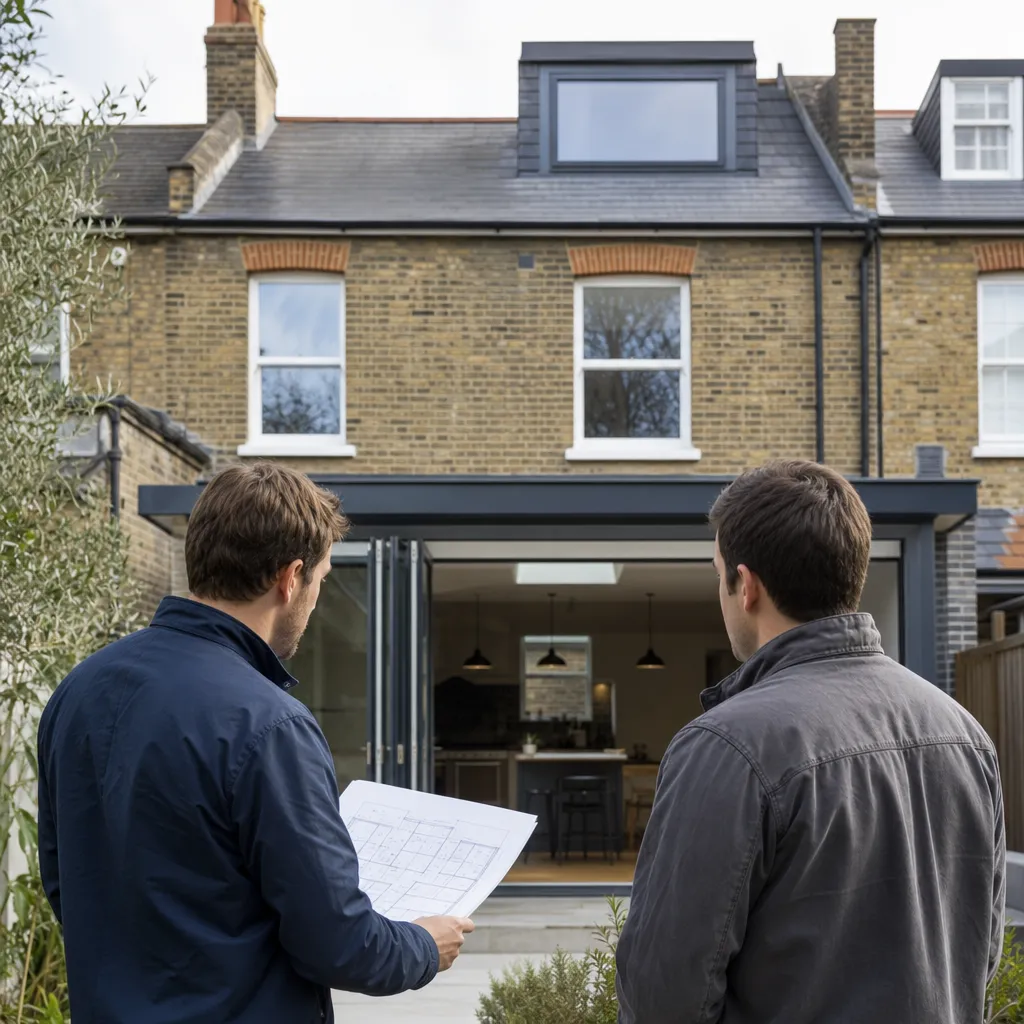
Architects design spaces, manage planning applications, and coordinate construction contracts. Structural engineers ensure buildings are safe by producing structural calculations and assessing load-bearing elements. Most UK extensions and loft conversions need both professionals; a single wall removal or crack assessment typically needs only a structural engineer. Clarify which professional leads your project before instructing.
 Improvement & Build
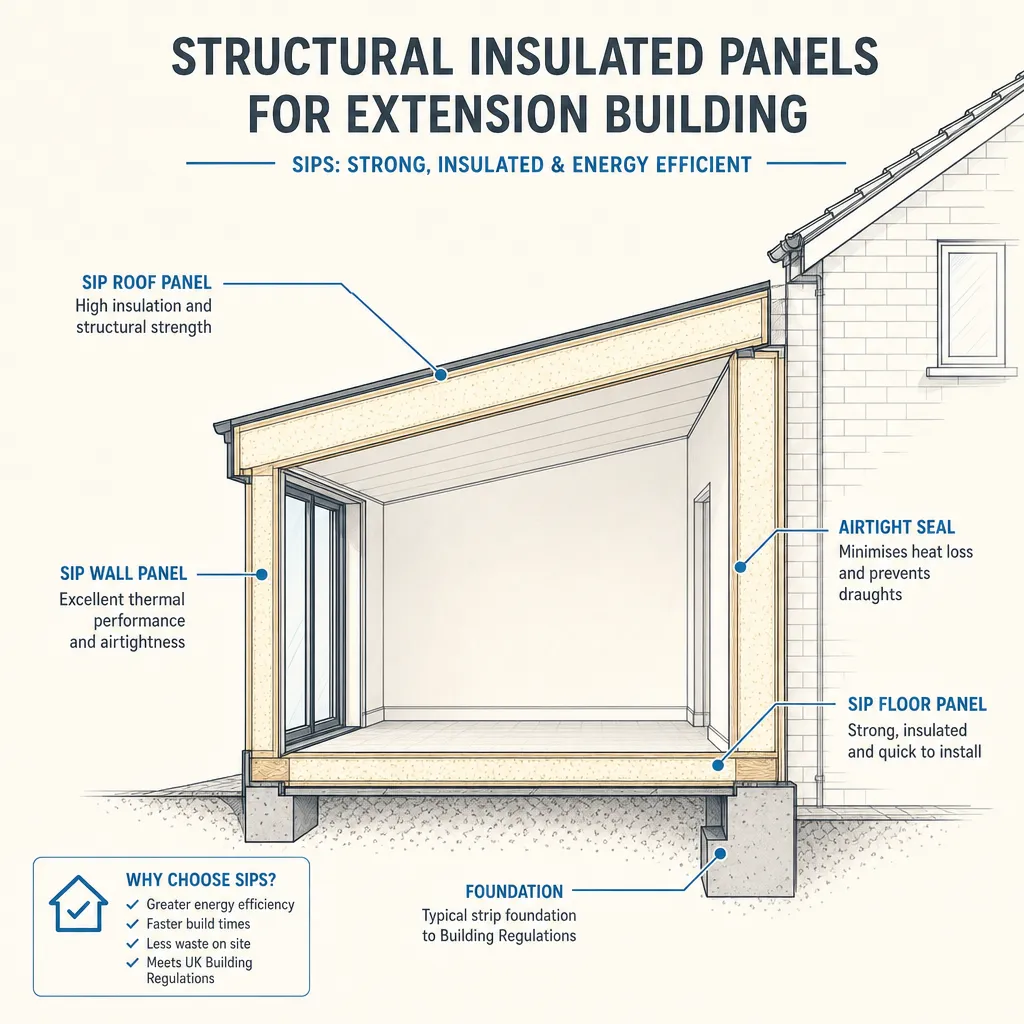
Structural Insulated Panels for Extension Building
SIP panels — a sandwich of rigid insulation between structural board faces — offer rapid erection, high thermal performance, and inherent airtightness. They suit straightforward extension plans and readily meet 2021 Part L requirements. A structural engineer's sign-off and a ventilation strategy are essential from the outset, and specialist installers are required.
 Improvement & Build
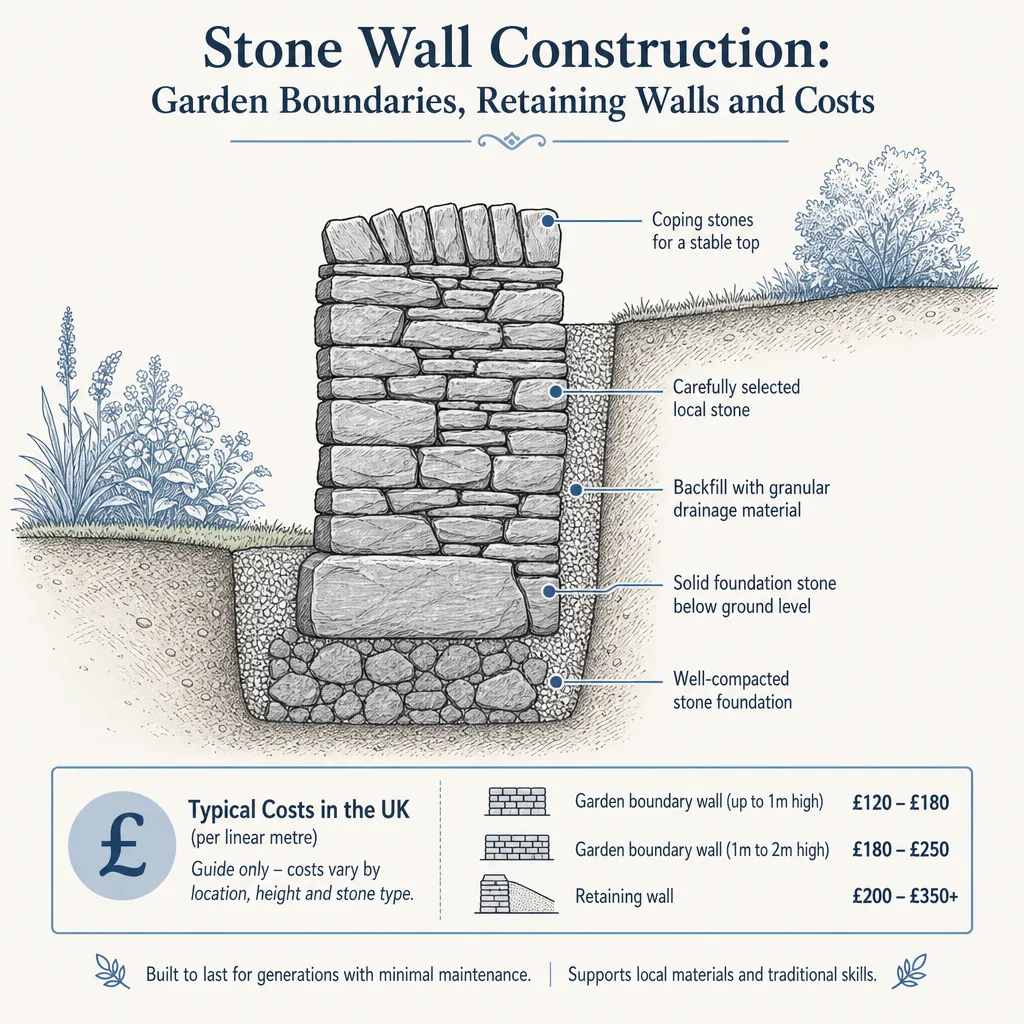
Stone Wall Construction: Garden Boundaries, Retaining Walls and Costs
Stone walls in UK gardens serve as boundary markers, retaining structures, or decorative features. Dry stone walls suit rural and heritage settings; mortared walls suit suburban gardens. Walls over 1 metre on a highway boundary or 2 metres elsewhere generally require planning permission. Retaining walls over 600 mm high should be designed by a qualified professional.
 Buying & Moving
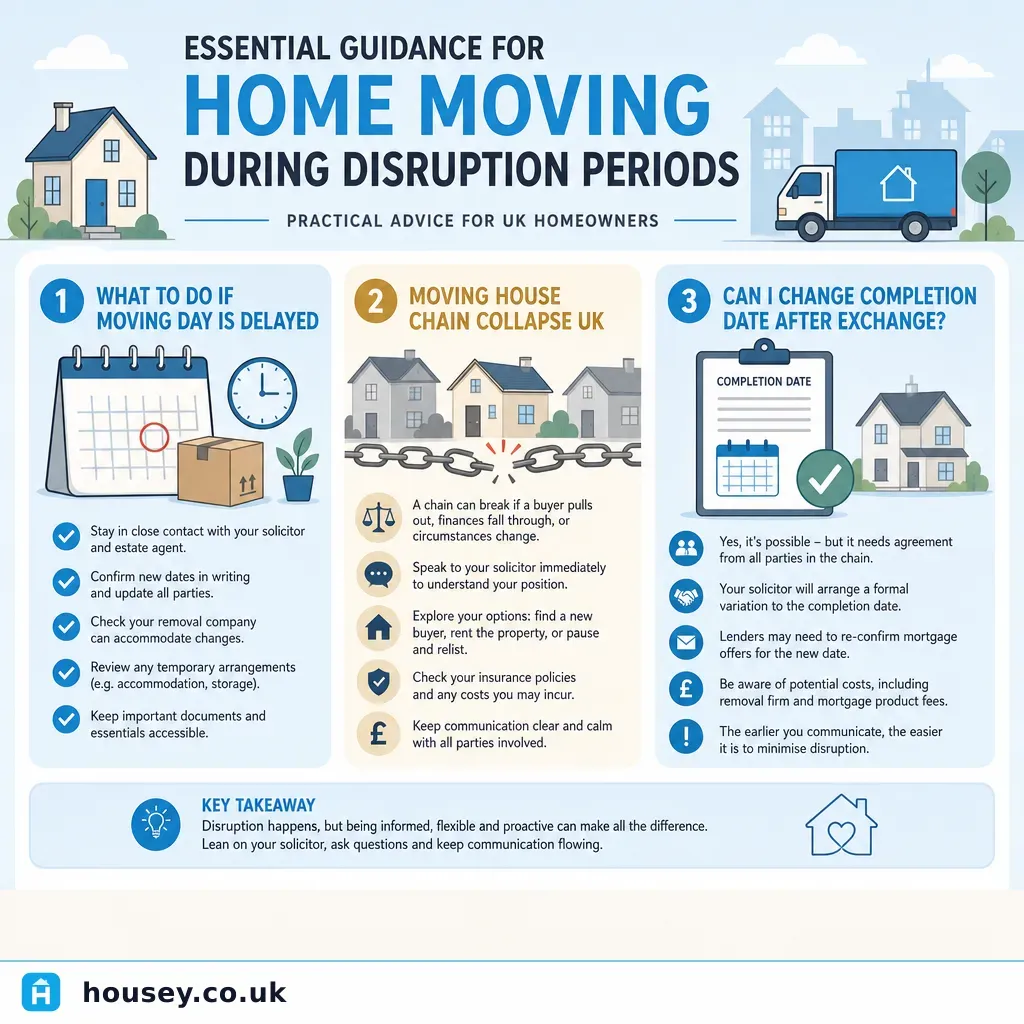
Essential Guidance for Home Moving During Disruption Periods
If disruption affects your move, your options depend on whether you have exchanged contracts. Before exchange, either party can withdraw without financial penalty. After exchange, changing the completion date requires all parties' written agreement and may incur penalties. Contact your solicitor immediately if completion looks impossible — delays can quickly become breaches of contract.